3 Ways the Future of TV Was on Display at CES, According to Experts
The stage is set! Advertisers, don’t miss this cultural moment. ADWEEK House The Big Game is headed to New Orleans on February 7. RSVP.
The future of TV was on display at CES, and data and artificial intelligence were at the center of it.
Media buyers, executives, and leaders in the tech industry flooded the Las Vegas Convention Center at the Consumer Electronics Show earlier this month, seeing the latest tech and trends affecting the TV ad industry.
To learn about where the industry is going next, ADWEEK spoke to several media buyers, executives, and experts in attendance, learning about the latest trends and industry themes to watch out for in 2025 and beyond.
Here are three of the themes that were prevalent at CES this year that could impact the future of TV:
AI and data continue to blur the lines between legacy publishers and tech
AI was the buzzword of CES, with the tech leading to innovation in everything from frequency capping to audience targeting. However, as AI and data become even bigger cornerstones of company offerings, the lines between media companies and tech companies continue to blur.
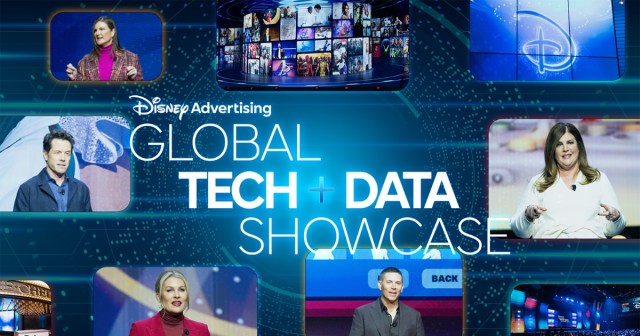
Among the highlights, industry insiders pointed to legacy media companies bolstering their tech. For instance, during Disney’s fifth-annual Global Tech & Data Showcase, the company unveiled a slate of new features with AI capabilities, including Select AI Engine, a tool that allows brands to build custom lookalike audiences and deliver sequential messaging—all while expanding reach without impacting frequency caps.
Not to be outdone, NBCUniversal announced a slate of new advertising features and AI capabilities, including the expansion of its Ad Creative Engine, which uses generative AI, machine learning, and statistical models to understand the historical performance of ad creative within specific content, predicting how creative will perform for various KPIs such as brand awareness and message breakthrough.
Meanwhile, free, ad-supported, and tech-focused streamers are continuing to gain share in a fragmented marketplace as they creep closer to acting like legacy publishers. For its part, Tubi said it had 97 million monthly active users and more than 10 billion streaming hours in 2024, with 77% of its viewers not having cable, according to a November MRI Cord Evolution Study.
Streaming services attempt to improve the user experience
Beyond data, media companies are also looking for improved user experiences as a way to mitigate fragmentation, according to experts. For example, one buyer pointed to DirecTV, which announced last year during Advertising Week that it was launching MyFree DirecTV, a dedicated free, ad-supported streaming TV (FAST) platform.
Like other companies, DirecTV’s move to free, ad-supported video looks to break down barriers to entry among the cash-conscious viewing audience.
Experts suggested that rebundling tied to the user experience is a way the industry is looking to improve viewer satisfaction and reduce fragmentation, with the industry moving away from being an ecosystem of disparate apps and walled gardens.
Roku, which announced that it has more than 90 million streaming households, is one example of how companies can coexist, with the platform having a home screen that provides easy navigation and sponsorship opportunities for brands and streamers.
TVs: bigger, faster, stronger
On the product and consumer-facing side, three media experts told ADWEEK they were also interested in the evolution of TVs.
“The biggest TV trend—and not just this year—and this has been going on since after the pandemic, I do see TV screens losing its status of being a stationery, focal point of the living room and becoming more portable,” Richard Yao, associate director, strategy and content, IPG Media Lab, told ADWEEK. “There’s a lot more experiment with the form factor. It almost feels like TV is not only just TV. It’s like a super tablet display for your home.”
Though TVs are going from stationary to portable, two of the experts also noted that the tech has the potential to be the centerpiece of smart home hubs, displaying information passively while showcasing customizable widgets.
Along those lines, Samsung revealed The Frame Pro, which is optimized for displaying artwork. There’s also the possibility of E-ink art displays for use at home, which mimic the appearance of printed ink on paper and can be mounted permanently, requiring minimal maintenance.
Other futuristic TVs on their way to consumers include weatherproof units, wireless products, and AI offerings, which monitor and manage battery life. There are also products such as JubileeTV, which are designed to simplify the TV experience for seniors, even including features for teleconferencing with doctors.
https://www.adweek.com/convergent-tv/tv-future-ces-experts/