Ad Industry Hasn’t Shaken off the Economic Slump, but Green Shoots Are Sprouting
The brightest minds in marketing and tech converge at NexTech, Nov. 14–15 in NYC. Get your pass for the latest on generative AI, gaming and more.
This summer has given the ad industry several reasons to be cheerful. Not only is “out of office” season well underway, but after a cloudy start to 2023, the market’s outlook is slightly sunnier, too.
The ad revenues of major tech platforms, responsible for driving a downward trend in previous quarters, are sprouting green shoots. Alphabet, Microsoft and Meta all showed growth during their quarterly earnings reports this week, with AI technology proving a catalyst. (See below for detailed earnings)
However, with the global economy flat over the last three years, and inflation remaining stubbornly high, macroeconomic headwinds continue to bear down on the industry.
Signs of life
At the end of July, the International Monetary Fund (IMF) raised its global GDP estimate for the year to 3% (0.2% ahead of its previous forecast in April). It expects the same level of growth next year while global inflation is expected to fall from 6.8% in 2023 to 5.2% in 2024. That will offer some confidence among companies around the ability for consumers and companies to spend more freely in the coming months.
Almost all our advertisers are using at least one of our AI-driven products.
— Mark Zuckerberg, Meta CEO
The first real signs of positivity began to emerge with GroupM and Dentsu’s spend forecasts in the summer.
Dentsu’s bi-annual spend report predicted a 3.3% rise globally in ad investment this year to $727.9 billion—up $23 billion from 2022—followed by a further increase of 4.7% in 2024 and 3.8% in 2025.
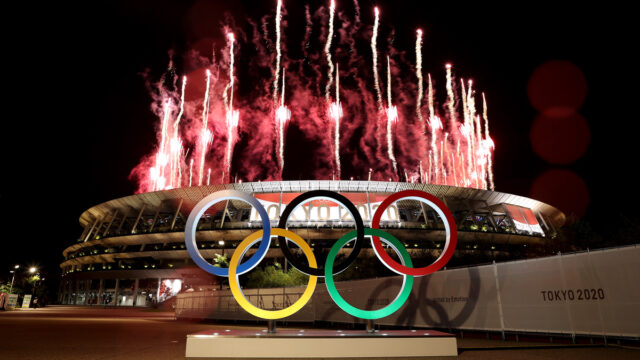
Next year, spend is expected to accelerate again to reach $762.5 billion, partially due to the Paris Summer Olympics and Paralympics, the UEFA European Championship and the U.S. presidential election.
“We still expect global advertising spend to grow despite the economic uncertainty,” Peter Huijboom, CEO of international media at Dentsu said. “However, media price inflation is the true driver of this increase and hides the more lackluster reality: 2023 will be a flat year for ad spend.”
By geography, the fastest growth market is projected this year to be Asia-Pacific by 4.6%, followed by the Americas by 2.9% and EMEA by 1.9%.
Digital spend is also driving growth, forecast to account for 76.7% of all 2023 spend, and 77.6% in 2023, compared to 75.1% in 2022.
“The recent higher-than-expected fall in inflation will hopefully continue and with that we will see confidence begin to build later in the year and into 2024, when the ad market is expected to return to growth,” said Stephen Woodford, CEO of the Advertising Association.
AI’s ad market boost
In late June, WPP’s media business GroupM offered more optimism with a 5.9% growth prediction for advertising revenue for the year to $874.5 billion and a further 6% increase next year (not including political advertising). This is a mixed story from country to country, but the U.S. was predicted to have 5.1% growth to $322.5 billion, with the U.K. growing at 4.8%, China at 7.9%, Germany at 6% and France at 4.2% to highlight a few.
Kate Scott Dawkins, president of GroupM’s Business Intelligence unit, said the impact of AI on the ad market is starting to be felt.
“It touches everything. It’s so pervasive already,” she said. “There is so much here that is going to be developing the way of working into the future.”
Tech platforms are bouncing back
Microsoft
Microsoft posted an 8% increase in revenue at $56.2 billion for its fourth quarter and a 7% increase for the year with $211.9 billion, citing the demand by customers for additional AI support through Microsoft Cloud support which itself drove revenue of $30.3 billion (+21%) with further growth predicted.
For the year, Microsoft recorded an increase in sales and marketing spend to $22.759 billion, up from $21.825 billion in 2022.
Alphabet
Alphabet saw a 7% rise in revenue to $74.6 billion. YouTube revenue was up 4.4% to $7.7 billion. Google Cloud was up +27% to $8 billion, ahead of expectations. Search advertising again took the lion’s share up 3.3% to $58.1 billion.
Overall Google Advertising, Search and Other revenues were up 5% to $42.6 billion with YouTube Ads growing 4% due to a resurgence in brand advertising and direct response.

Speaking during its results call, Sundar Pichai, CEO of Alphabet and Google said that the business was testing and evolving placements and formats and using generative AI technology to improve advertiser performance.
“Ads will continue to play an important role in this new search experience,” added Pichai. “Many of these new queries are inherently commercial in nature.”
Meta
In its second quarter earnings, during its “Year of Efficiency,” Meta reported that across its family of apps, including Facebook, Instagram, Messenger and WhatsApp, advertising revenue was $31.498 billion (up from $28.152 billion during the same period the year before.)
During the results call, chief executive Mark Zuckerberg outlined how AI was being used to drive results through its automated ad products – Meta Advantage.
“Almost all our advertisers are using at least one of our AI-driven products. We’ve also deployed Meta Lattice, a new model architecture that learns to predict an ad’s performance across a variety of datasets and optimization goals. And we introduced AI Sandbox, a testing playground for generative AI-powered tools like automatic text variation, background generation and image outcropping,” he explained.
Elsewhere
And there is hope that major conglomerates will also increase their marketing spend going into H2. Unilever, which increased its marketing spend by $569 million last year, and plans to increase that again this year.
P&G has yet to outline its spend plans but it has reported a 2% net growth in sales for the year which would suggest a need to up its game on the marketing front for the coming year to beat that by any considerable margin next year.
In February, on an investor call, Coca-Cola CEO James Quincy also indicated that marketing spend would continue to grow this year as it had done in previous years.
https://www.adweek.com/media/ad-industry-hasnt-shaken-off-the-economic-slump-but-green-shoots-are-sprouting/