Adhesive Bandages Have Become an Adult Fashion Accessory
The Metropolitan Museum of Art in New York has 1.5 million works in its collection, about 4% of which are on display at a given time. Using the average visit duration of three hours, then, that means a guest who wants to see everything should be prepared to admire 111 pieces of art every minute.
So what are the odds that the average tourist has gazed upon Katsushika Hokusai’s 1831 woodblock print The Great Wave Off Kanagawa?
Probably not great.
But take heart, art lovers. Today, Band-Aid is debuting a new collection that will feature Hokusai’s Great Wave and other artworks faithfully reproduced on its adhesive bandages. With guidance from Met curators, the brand chose three of Hokusai’s pieces to use.
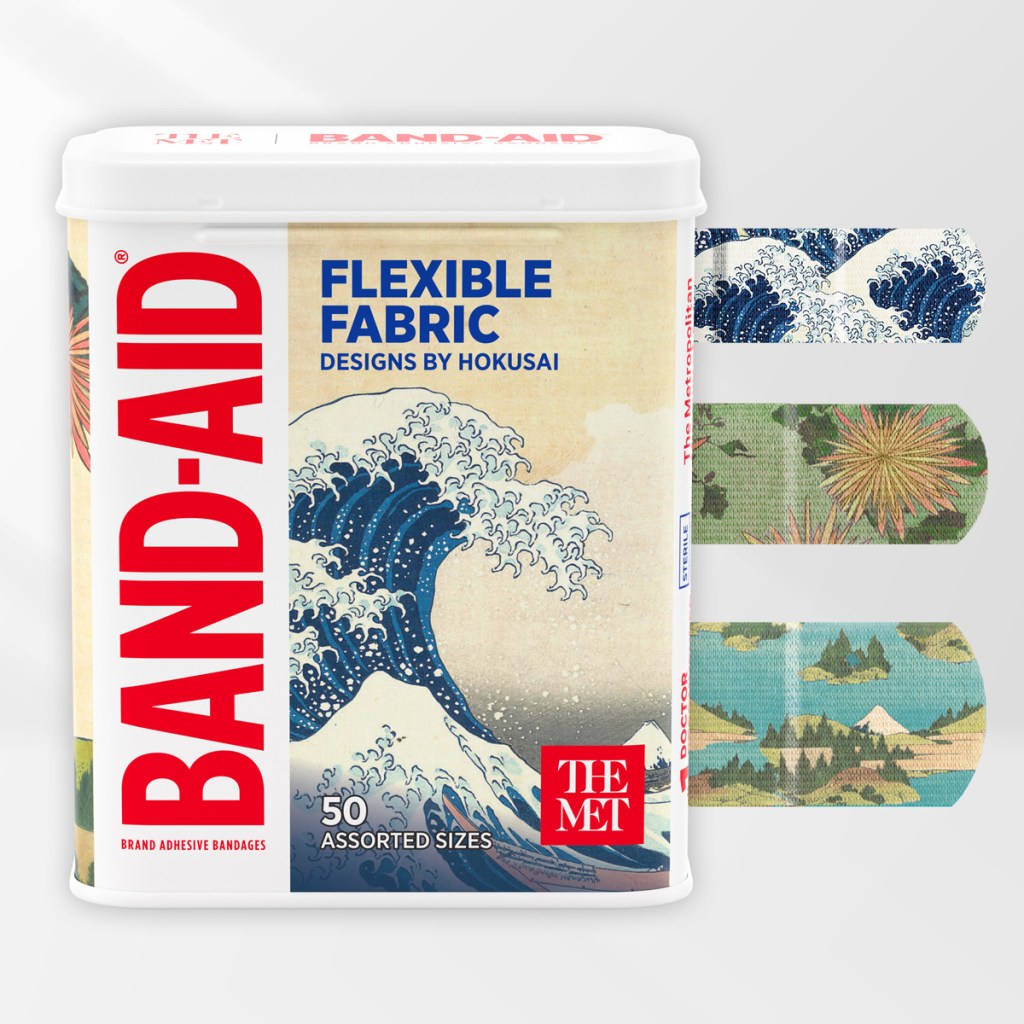
Target will stock the collection—which includes a first aid kit adorned with Brother Rabbit, an 1881 textile print by the British artist William Morris—with additional artworks to appear in the months ahead.
For Band-Aid parent Kenvue (known as Johnson & Johnson until 2022), the new collection is a variation on a familiar theme. The $15.5 billion consumer health giant has long featured licensed cartoon and movie characters on its bandages—Spiderman, Barbie, Yoda, Mario, Kermit the Frog, Pikachu, et al. The aim there was to make children feel better about covering their boo-boos.
But with the Met collection, “we’re looking at a more adult consumer than [we do with] some of our cartoon characters,” head of U.S. wound care Steven Maseda told ADWEEK.
A first-aid staple evolves
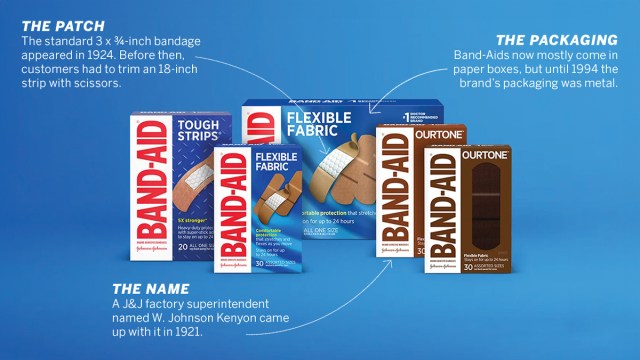
That’s not just a change in the target consumer, it’s a shift in psychology. From the ivory-hued Band-Aids introduced in 1921 on up to 2021’s Ourtone line for consumers of color, the whole point of adhesive bandages is to be invisible, or at least not obvious.
But a Hokusai piece stuck to your arm? That’s hard to miss. And it marks a trend that’s been underway for a couple of years now: the bandage’s transition from first-aid remedy to fashion accessory.
“Originally, bandages were kind of seen as, ‘Let’s blend it in and cover it up,’” Maseda said. “But they’re becoming a little bit of a self-expression tool as well.”
Taking the sting out of cuts
Last September, pharmacy giant CVS began selling two collections of decorative bandages under its in-house CVS Health brand. Its Mother Nuture collection features leafy motifs, while Retro Wraps features pastels and parabolic shapes straight out of postwar suburbia.
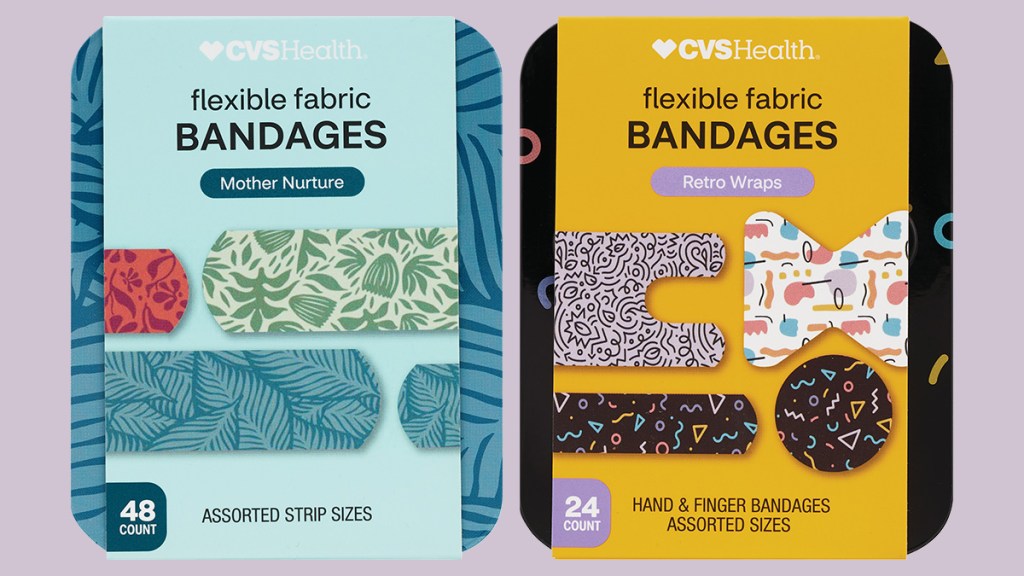
CVS isn’t aiming for a specific demographic, but judging from some of the online reviews, adults are clearly among the collections’ devotees. (A CVS spokesperson declined to elaborate on the new product.) “What really stands out is the design,” posted one consumer. “Vibrant, fun patterns that make wound care less mundane.”
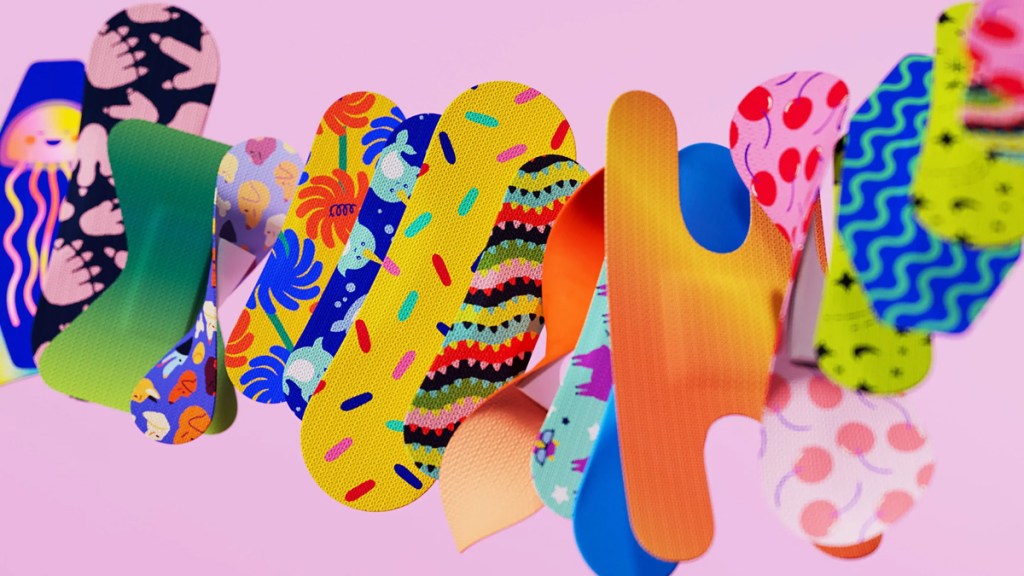
Newcomer brand Welly, started in 2019 by Method co-founder Eric Ryan, also sells an extensive line of decorative bandages. Admittedly, most are geared toward children, but some crossover designs lurk there, too, including a batch that includes cherries and rainbow sprinkles and one that glows in the dark. (Welly did not respond to Adweek’s request for comment by press time.)
Might triumphs over malady
BioSwiss, whose bandages appeared on Amazon in 2020, is another brand that saw opportunity in prettier poultices. Here too, some of its offerings skew decidedly young (unicorns, dinosaurs, Gummy Bears, and the like), but it’s easy to see adults slapping on some of the brand’s more eccentric offerings, notably bandages that look like—and are shaped like—tennis balls, bacon strips and pickles.
“While many parents and grandparents gift our bandages to their little ones, we’ve surprisingly built a huge community of adult fans,” Raymond Zeitouny, CEO of parent company Donnamax, told ADWEEK.
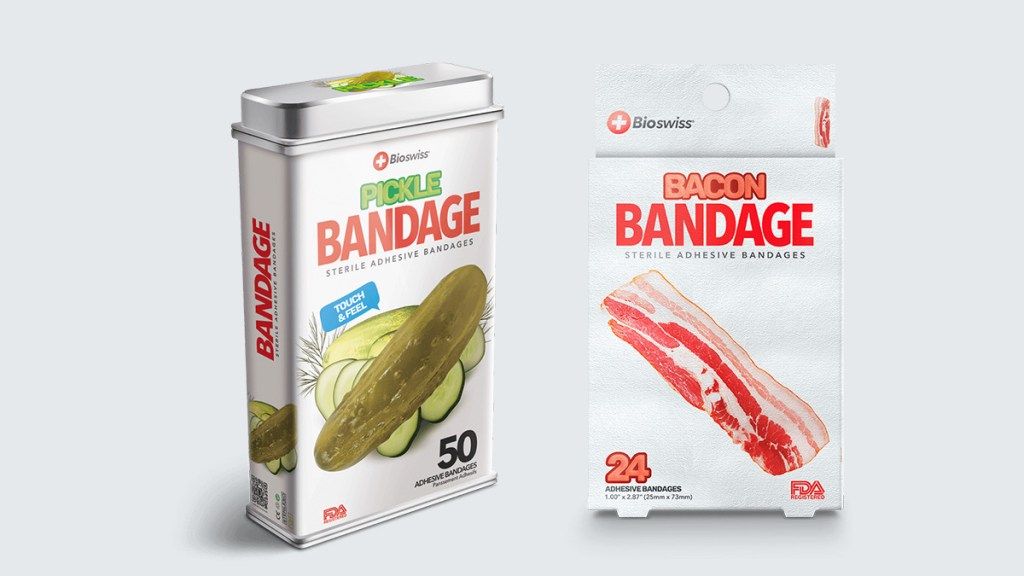
The appeal goes beyond whimsy. For patients with chronic health issues that require weekly injections, a waggish bandage can be a way of asserting some much-needed agency over an otherwise harrowing condition.
“People undergoing chemotherapy, managing diabetes, arthritis, and many other conditions find joy in picking out a pickle, bacon, dinosaur, or unicorn to protect their injection site and bring a little laughter to the room,” Zeitouny said.
An fashion influencer’s approval
Bandages worn as a style statement isn’t as new an idea as it may seem.
Band-Aid issued a patriotic Stars and Stripes collection in 1956. In his renowned 1974 book Where the Sidewalk Ends, poet Shel Silverstein enthused about wearing bandages all over his body and keeping “a box of thirty-five more,” even though “I don’t have a cut or a sore!” Anime characters have long worn bandages across the bridges of their noses for no other reason than to add a swashbuckling touch.
Meanwhile, style authority and influencer Olivia Palermo will be unveiling the Met x Band-Aid Brand First Aid Collection today, and supporting it via social media in the weeks ahead. Palermo grew up on Manhattan’s Upper East Side not far from the Met, which she visited often, so it wasn’t a tough sell to interest her in publicizing bandages adorned with great artworks.
“I’m all for self-expression,” Palermo said in a statement. “What struck me the most about this collection is the ability to embrace … creativity in moments of everyday living.”
https://www.adweek.com/brand-marketing/adhesive-bandages-adult-fashion-accessory-band-aid-bioswiss-welly/