Advertisers Say OpenAI Is Extending Its Ad Pilot Beyond April
OpenAI is extending its ad pilot program beyond April, according to two agency executives briefed by the company—giving advertisers more time to test how ads might eventually show up across its fast-growing AI assistant. The pilot was initially slated to end in March.
OpenAI confirmed the pilot program’s extension in a blog post after ADWEEK reached out for comment, noting that the program will also begin expanding internationally. “In the coming weeks, we’ll begin expanding beyond the U.S., starting with pilots in Canada, Australia, and New Zealand,” the blog reads.
OpenAI remains in an experimentation phase, increasing the group of advertisers to test ads, targeting and measurement ahead of any broader rollout. Currently, the pilot involves sponsored messages appearing after a response from ChatGPT.
In this post, OpenAI emphasized that ads will not influence ChatGPT’s answers and users will retain control over their experience—points addressed previously over early concerns around trust and commercialization.
OpenAI is beginning to ask advertisers in its ad pilot for insertion order (IO) commitments—legal agreements that lock in spend, timelines and campaign terms—signaling a shift from early testing toward a more structured ad business, according to at least one agency executive briefed by the company.
IOs are standard in the advertising industry and typically mark the point where a platform moves from open-ended experimentation to guaranteed revenue, with advertisers committing budgets over defined periods and placements.
“We’re being asked for an IO commitment, and the expectation of the IO going over a two-month period,” said Jai Amin, chief strategy officer of media activation at Jellyfish.
Sam Huston, svp of media at DEPT, which was also briefed by OpenAI on the pilot’s extension, said the ad-serving process still lacks full transparency but appears to rely on a mix of query intent and advertiser inputs.
“It hasn’t been entirely clear how [OpenAI] is making those decisions,” Huston said. “But it seems like it’s both the nature of the query—given how close this is to search—and a set of keywords we provide that determine whether an ad is served.”
Lumen Technologies—a client of DEPT—began testing ads on ChatGPT in March.
With roughly 920 million weekly active users most of whom use the product for free, ChatGPT presents a clear opportunity for advertisers and OpenAI alike.
Early tests point to a OpenAI adopting a premium approach, with CPMs hovering around $60. The platform is also developing an in-house ads manager signaling ambitions to build a full-stack ad business.
OpenAI is asking for a minimum of $200,000 of ad commitment, ADWEEK previously reported.
Advertising on chatbots might not be as lucrative as advertising on Google search. Some advertisers report click-through rates as low as 0.91%—well below the roughly 6.4% benchmark typical for Google Search—underscoring the gap between OpenAI’s early efforts and more mature ad platforms, ADWEEK previously reported. Of course, it may be too early to compare OpenAI’s nascent ad product to Google’s, which has spent decades refining its search advertising machine.
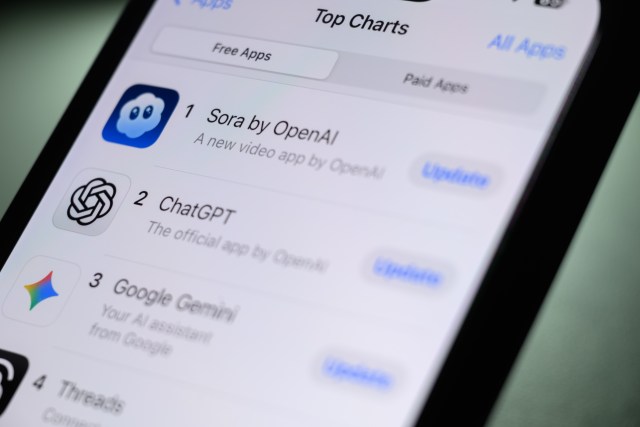
The focus on ads and enterprise tools comes as OpenAI pares back other experimental bets, including shelving Sora and putting plans for an erotic chatbot on hold—suggesting a more deliberate shift toward scalable, revenue-generating products.
https://www.adweek.com/media/openai-ads-pilot-extension/