American Coup Reveals How Journalism Aided the 1898 Wilmington Massacre
Stop us if this scenario sounds familiar: A closely-watched election; voters split along party—and racial—lines; misinformation circulated as journalism; and an undercurrent of violence that grows stronger as voters head to the polls.
That may sound like the presidential election cycle Americans just lived through, but those same events played out over 126 years ago in Wilmington, North Carolina. While we’re on the cusp of a peaceful transfer of power from President Joe Biden to President-elect Donald Trump in the present day, the events of 1898 culminated in one of America’s most notorious race massacres, and the country’s first—and so far only—successful coup d’état.
That’s the subject of the new American Experience documentary American Coup: Wilmington 1898, currently streaming now on most PBS platforms. Directed by Brad Lichtenstein and Yoruba Richen, the film reconstructs the series of events that resulted in a group of white supremacists overthrowing North Carolina’s legally elected biracial government.
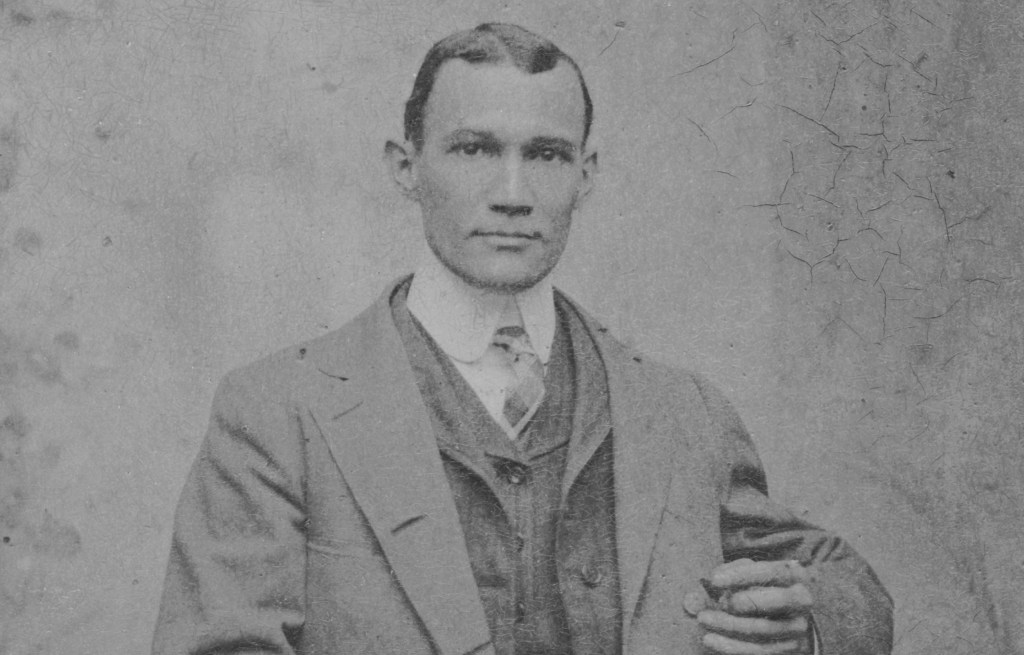
And local newspapers played a key role in bringing the coup to fruition. Josephus Daniels, editor of Raleigh’s News and Observer broadsheet, was among the conspirators and used the pages of his paper to stoke the embers of white grievance.
“It’s incredible to look at the disinformation and misinformation that perpetuated the events of 1898, and how partisan these papers were,” Richen—an associate professor at CUNY’s Craig Newmark Graduate School of Journalism—tells TVNewser about the way journalism operated in 19th century America. “Daniels was a partisan Democrat and that was the mission with his newspaper.” (At that point in time, the Democratic party stridently opposed Reconstruction and other attempts to lessen racial inequality in post-Civil War America.)
But American Coup also spotlights the voices in the press that tried to push back on the not-so-hidden agenda of white supremacists. Black editor Alex Manly owned and edited Wilmington’s Daily Record paper, and directly addressed spurious claims in a landmark editorial that laid bare the hypocrisy surrounding prevailing attitudes in white society towards interracial couplings.
“That was something that Black newspapers did all over the country in terms of reporting on what was happening within communities and counter the misinformation,” Richen says, drawing a connection to the dearth of local news outlets that exist today. “We have to continue supporting local news—a majority of counties don’t have a local news outlet today.”
We spoke with American Coup’s directing team about how the past seen in their film informs our present and their feelings about the current and future state of journalism.

It’s always interesting to me how the HBO series Watchmen helped bring the Tulsa massacre into the pop culture consciousness in a big way. Could your film be the step in that process for the Wilmington massacre?
Richen: We haven’t been asked that question! You know, I think all of these things build on each other. Watchmen was an HBO series with famous people and all of that, so it’s a little bit of a different beast. But there was an independent film about Wilmington that came out a few years ago, which is when I first heard about it. Then the David Zucchino book won the Pultizer Prize in 2021, and now there’s this film. Let’s hope Wilmington continues to get into the public consciousness in the same way Tulsa has. These events of racial terror need to be a part of our history.
Lichtenstein: I do want to add that Yoruba is a really good actor, so if a series does happen, I think she should be in it. [Laughs]
We’ve seen a concerted attempt in conservative circles to dismiss the kind of historical reckoning that your film deals with as being “too woke.” The Wilmington residents that you interview in the film don’t seem feel that way, though. What’s the disconnect between that larger messaging versus what you saw on the ground?
Lichtenstein: One of the things that happens over and over in America’s history is that America tries to write a narrative that puts itself in a position of being that shining beacon on the hill. The desire to look at ourselves honestly gets pushed down in favor of that exceptionalism narrative. Wilmington is a great example of a story that was deliberately buried for so long. When we talked to white descendants, many of them told us that they never really knew about what happened or that they were told something different than what the truth was. We’ll never be the country we try to be if we don’t have some reckoning with our past and be accountable to it.
Richen: What I’ve found in making these kinds of films is that people are hungry to be awake. And that is what gives me hope, quite frankly. So whenever I hear that phrase “woke,” I always feel that we need to counter that with, “You want to be asleep?”
How did you divide up the interviews for the film?
Lichtenstein: One of the advantages of being a Black and white directing team is that to the degree that interviewees might feel more comfortable [with one of us], we’re able to accommodate them. But Yoruba and I also have a seamless division of labor: some things tended to fall into my purview, and some fell into hers. I think she interviewed more scholars than I did, and I interviewed more descendants than she did. And some of that also just came down to our schedule and the fact that we trusted each other.
Richen: I will say that Brad definitely took on the task of reaching out to the white descendants. And that makes sense, because it was sensitive material. We had people who agreed to talk and people who did not want to be a part of it. I wasn’t all that hopeful of how many white descendants that we would eventually get, and I’m really grateful for the ones that participated. It’s not easy, but it’s so necessary.
Speaking to the journalism piece of the film, the newspapers of the time in some ways resemble social media today in terms of the way information was communicated. Where do you see social media fitting into the news space now?
Richen: So many people we know are getting their news from social media, and what that means is one of the things I think about with my journalism students. How do we teach them to distinguish misinformation from real news? That was worrisome before the recent election, and Donald Trump has made it clear that journalists are not his best friends. It’s a very worrisome time. Schools have to recalibrate what it means for the journalism and for students.
Lichtenstein: It’s scary because the form of social media is so short and its half-life is even shorter, but its cultural impact is amplified. That just seems like a recipe for an uninformed citizenry. At the time of Wilmington, newspapers had agendas they were pushing, but even the most racist and skewed articles had anywhere from nine to 12 paragraphs!
American Coup was made for PBS, and there’s a concern that public television could see its budget slashed under the new administration. Are you concerned about getting future projects set up at these outlets?
Lichtenstein: I’m less concerned about where my next project will be, but I think public media always needs to make the case for itself in the framework our democracy. Commercial media has to pay attention to the financial bottom line, but public media is accountable to democracy and what a democracy demands of people and its citizens. I know that sounds highfalutin, but if you just compare Netflix’s release schedule to public media’s release schedule, you’re going to see that the latter is taking Americans inside communities and periods of history, and asking hard questions.
Richen: And it’s free! That says it all, quite frankly. And yeah, also what Brad said. [Laughs]
https://www.adweek.com/tvnewser/american-coup-wilmington-massacre-pbs/