An end to in-flight Wi-Fi misery is at hand with Gogo’s 2Ku
If you’re one of those people with the misfortune to follow me on Twitter, you might have noticed the occasional complaint about the poor state of in-flight Internet service. After all, it’s incredibly frustrating when you’re on a deadline and unable to get any work done because you can’t even load the Ars CMS. But there is light at the end of the tunnel, as I discovered late last year. Gogo Air, which provides in-flight connectivity on most of the major US airlines, noticed one of my frustrated outbursts and invited me to try out its latest service, a satellite-based system called 2Ku. Compared to the ATG4 system that most flyers are currently saddled with—including this author right now, currently on AA2617 at 37,000 feet—the difference is night and day.
Gogo Air provides in-flight Internet connectivity to most US passenger airlines (and quite a few international ones) and has been doing so since 2008. Originally, that was with a cellular service called ATG—for Air-To-Ground—which leveraged the old Airfone cellular network. More recently, Gogo Air upgraded that system to ATG4, bumping per-plane bandwidth from 3.1Mbps to 9.8Mbps. (For a much more in-depth look at the state of in-flight Wi-Fi back in the day, check out this comprehensive feature from 2011.)
Now, you don’t need to be a math genius to realize that even a half-full plane of people trying to use the Internet will saturate 9.8Mbps pretty quickly. Thankfully, this is where 2Ku enters the picture.

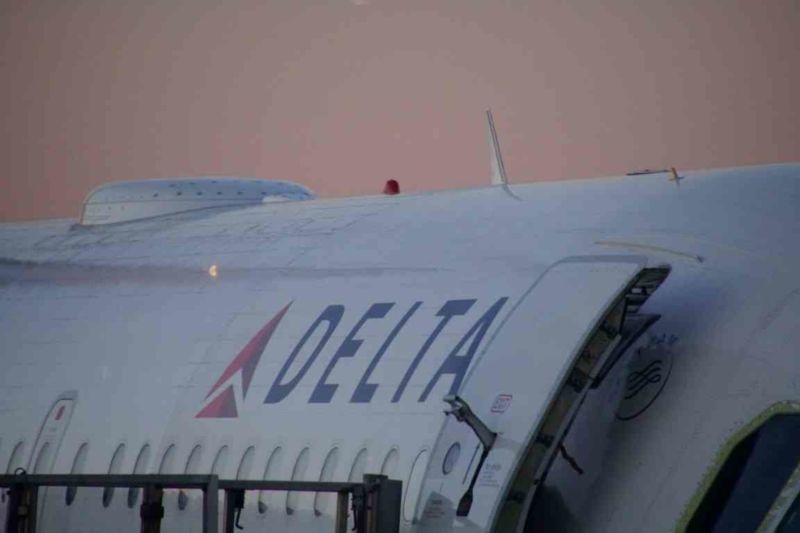
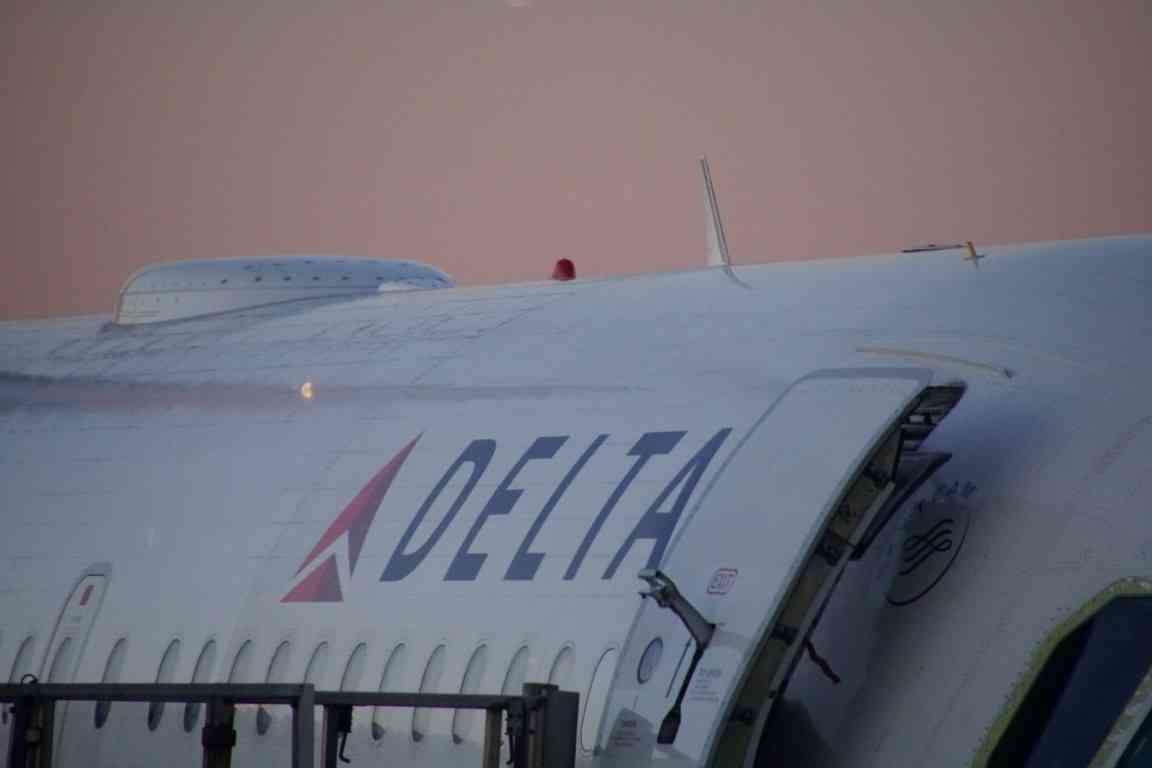
Unlike ATG4, 2Ku uses satellites to relay traffic from the plane. Atop the plane, underneath a blister fairing, live a pair of low-profile mechanically phased array antennae. According to Blane Boynton, vice president of product management at Gogo, this setup is a much simpler design, with many fewer moving parts than an ATG system. It’s even simpler than one of the older satellite systems that use gimbaled antennae. (Low profile is good because a smaller bump means less drag on the airplane.)
These connect to one of 180 Ku satellites in orbit from which Gogo leases bandwidth. “We’d much rather lease and build a network of focused capacity where aircraft fly, than carry a bunch of unused capacity over desolate oceans,” Boynton told me. As for speeds, they’re greatly increased: “between 40 and 100Mbps, depending on the satellite,” he explained.
But rather than just take Boynton’s word for it, Gogo arranged a demo for me on a 2Ku-equipped airplane, in this case Delta Air Lines 1731 (DCA to DTW) then back again (DL591, DTW to DCA).
Works right away, works right
The difference in service was noticeable immediately upon boarding Delta’s 737. For one thing, the connection was already active—being satellite based it doesn’t require the plane to reach 10,000 feet (3,048m) before it starts working.
The next readily apparent difference? You can access streaming media, something that’s blocked—or is meant to be blocked—on ATG4 services. I chose the rather excellent documentary on the Voyager missions, now on Netflix. It played like a champ on my iPhone, remaining in HD quality the whole time. Uploading files was also painless; I added 23 images to our CMS (totaling 26.3MB) in 2 minutes and 13 seconds. By contrast, the four screenshots you see in the gallery below, totaling just 1.5MB, took four minutes (!) to upload using ATG4. As you’ll see from the screenshots, the various speed tests show a world of difference between the old and new systems.
-
Testing Gogo Air’s 2Ku service on Delta 1731, DCA to DTW, December 11th 2017.Jonathan Gitlin
-
Fast.com and speedtest.net don’t often give the same numbers, and that’s the case here. But even 4.6Mbps is a lot faster than I’ve ever experienced using Gogo Air’s ATG4 service.Jonathan Gitlin
-
The new, non-flash version of Speedtest won’t work on airplanes.Jonathan Gitlin
-
ATG4 service on American Airlines 2617, DCA to PHX, January 22nd 2018. (The first time I ran this test, I got 41kbps…)Jonathan Gitlin
-
In this case, speedtest.net figured ATG4 as slightly faster than fast.com.Jonathan Gitlin
Unfortunately, further testing on the return leg to DC ran into a hitch. Detroit is a cold place in December, and since ice and airplane control surfaces don’t mix, a deicing stop on the way to the runway is often necessary. On this occasion, the deicing stop also wreaked havoc with the antennae. “Much like a DirecTV dish has problems in heavy rain, deicing fluid is like a concentrated thunderstorm,” Boynton told me. A flight attendant initiated a reset of the system just as it was about to finish rebooting, and since the rebooting process takes around 20 minutes, that basically ate up the entire flight time. Oh well.
Call your airline
Technical glitch aside, my demo flight proved that better in-flight Internet is possible—as long as you’re on the right plane. Delta was the first US-based carrier to start upgrading its planes, and you can tell if it has 2Ku by the larger radome blister on the roof. “We want to get 2Ku in as many hands as possible,” Boynton told me. “We did 500 installs in 2017—each taking about 30 hours—and we’re looking at 550-650 in 2018.” All told, Gogo Air says it has about 2000 commitments on the books worldwide. Sadly for your scribe, none of those have been on any of the American Airlines aircraft I’ve had the pleasure of spending time on recently.
Hanging over all of this, of course, is the thorny question of price. On the Delta flight, I noticed that I had different options available; a cheaper tier for “light Web browsing, email, and messaging” and a more expensive one that also allowed streaming video. (Travel pros will know it makes more sense to buy the Internet pass before you get on board, and I’m not 100 percent sure the $16 Delta day pass is for the higher or lower tier, but I’m guessing it’s the higher one.) Boynton told me he didn’t think faster service would mean higher fees, though.
“Because we have more capacity on 2Ku, we’re seeing pass prices come down. It’s allowed us to work with partners to provide a mediated price point; we want to provide something through the airlines for everyone,” he said, referring to deals such as those with T-Mobile that let users of that cellphone network get free browsing on some flights.
https://arstechnica.com/?p=1247669