Bluesky Is Having a Moment, But Most Brands Aren’t Ready to Jump In Yet
Bluesky is booming as internet users seek out the comfort of a controlled social media environment. However, the opportunity for marketers remains limited, due to a lack of ad products and a relatively restrictive audience scale.
Brands who are actively posting organically on Bluesky are typical first movers, the likes of Duolingo, Hulu, and Netflix. Others like Red Bull and Xbox appear to have secured their handles; there is no business verification on Bluesky as yet so some users have secured brand handles to troll or impersonate brands, such as @cocacolagb, an expletive-filled account which claims to be the official brand feed, and @facebook, which is being used to “troll the libs.”
“For any brand considering launching on Bluesky, it’s important to think about [whether] the juice is worth the squeeze when the scale just isn’t quite there yet,” said Dana Neujahr, managing director of We Are Social. “I don’t think we’re bullish enough to say all of our clients should be publishing on Bluesky today.”
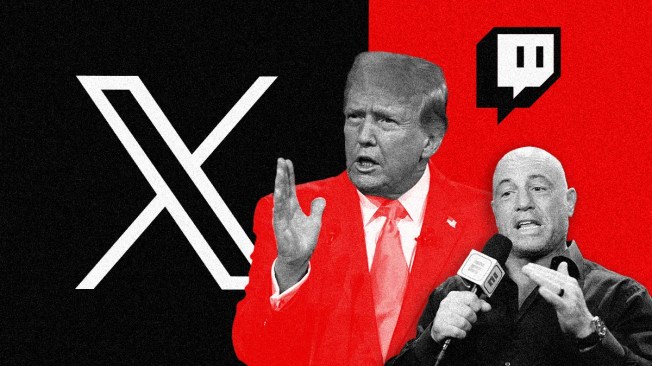
The social network’s audience growth has come mostly at the expense of X, Bluesky’s larger rival that has struggled to keep users under Elon Musk’s reign. Musk’s 2022 acquisition of the platform formerly known as Twitter—and his subsequent gutting of its staff and policies—prompted a handful of alternative networks to spring up.
These alternatives promised to act as a safer, more controlled environment than the mayhem that had been unleashed at X. But where Mastodon is too complicated for users and Meta’s Threads too corporate, Bluesky appears to be best primed to actually realize this mission.
The public benefit corporation’s model places transparency and autonomy at the core; Bluesky was born in 2019 from Twitter cofounder Jack Dorsey’s vision to build an “open and decentralized” social network. Rather than being controlled by a single company, Bluesky has been built on an open-source framework that enables users to control what they see in their feeds and select their own moderation filters.
It’s a strategy that appears to be working. Bluesky’s user base has more than doubled since October, per monitoring service Similarweb, with more than one million new users a day flocking to the service immediately after the U.S. presidential election. Musk’s close ties to the U.S. president-elect Donald Trump seemingly triggered an exodus that Bluesky has gained the most from, with more than 282,000 users deactivating their X accounts on November 6, according to Similarweb estimates.
Not yet a priority for brands
Despite the recent surge, Bluesky’s user base is still dwarfed by its rivals. As of Nov. 21, it had over 21 million users, a fraction of the 275 million monthly users that Meta’s Threads claimed in October and 600 million that Musk’s X claimed in May.
For most brands, it’s enough of an opportunity to reserve their handles on Bluesky, but that’s it.
Media buyers and social media managers think the platform could be a promising new playground for brands eventually, but it’s too early to tell.
“It’s a long way from having the kind of scale that matters to cause advertisers to care,” said Brian Wieser, principal at Madison and Wall.
Sustaining growth as a social network is hard: the past few years are littered with fleeting moments and few success stories, with giants like Meta hoovering up the majority of people’s time and marketer’s dollars.
“Commercially speaking, there hasn’t been a meaningful new platform since TikTok,” said Wieser.
Bluesky doesn’t currently have an advertising offering and CEO Jay Graber has expressed a reticence to change that, telling Wired in February that “we can’t enshittify the network with ads.”
Should it embrace ads, it would be unlikely to do so in a traditional way. Bluesky’s design necessitates the least annoying ads possible, otherwise users, in control of their algorithms, could simply filter them out.
“The brand potential is not going to look like what advertisers have come to expect from new social media platforms because Bluesky is not looking to make advertising a core revenue source,” said Elijah Harris, EVP of impact investment at IPG Mediabrands. “For advertisers, that means adapting video content for a new platform is likely not going to cut it.”
Courting creators
Marketing to Bluesky’s users through creators might be the most logical path ahead for brands.
The platform has already drawn in a crop of celebrities and journalists who have been encouraging their followers to decamp from the “toxicity” of X over the past few weeks.
To many, Bluesky represents a return to early Twitter, a platform where users could engage with like-minded people “without the noise, without the ads, and without the divisiveness,” that has become synonymous with X, said Neujahr.
Bluesky could also benefit from creators’ growing frustration with shadow bans on TikTok, where the platform reduces the visibility of some accounts without notification.
“There’s an opportunity for Bluesky to make sure that creators are respected and nurtured,” said Amy Luca, EVP, global head of social at S4 Capital’s Monks.
“Right now, the number one priority is getting more people to sign up for accounts, and the only way you can do that is if the content on the platform is what they want to consume, and there’s creators that they want to follow,” she added.
https://www.adweek.com/social-marketing/bluesky/