Brands Beloved by People Risk Being Invisible to AI
Iconic brands from Starbucks to Nike to Burberry have dusted off their origin stories, recentering on their founding purpose and leaning hard into what made them matter in the first place.
It’s a great reset, with each returning to the story that made them matter, after they all hit a wall.
Early results suggest the instinct is right.
Nike’s shares had fallen nearly 60% from its 2021 peak. When 32-year vet Elliott Hill returned, he reorganized the company around sport categories, reinvested in “relentless brand storytelling,” and used the global “Why Do It?” campaign to reestablish a single center of gravity for the first time in years.
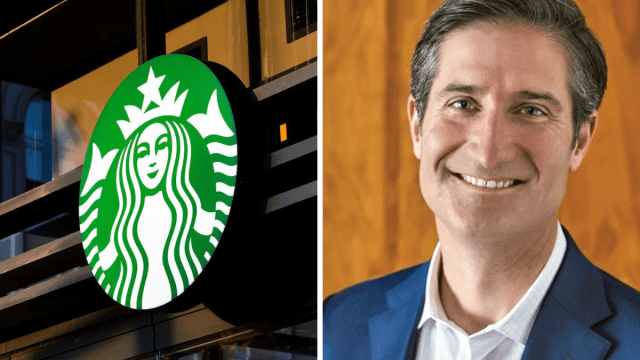
Starbucks had strayed from its core by the time Brian Niccol took the helm in September 2024. His “Back to Starbucks” strategy focused on coffee, community, and the experience. By Q1 2026, revenue rose by 5% to $9.9 billion, and U.S. transactions grew across all customer types for the first time in eight quarters.
Burberry followed the same logic with “Burberry Forward” returning the brand to its British heritage. Although revenue dipped initially, shares rose by 20%.
Three of the biggest brand turnaround stories of the past 18 months point back to origin, clarity, and the brand’s foundational story.
None of these moves happened because of AI. Yet, the same qualities driving these turnarounds, a clear founding story, a consistent narrative, a documented sense of what the brand is and who it’s for, are precisely what a new and rapidly growing audience needs to make sense of a brand.
And that audience isn’t human.
The audience you haven’t accounted for
AI is becoming an increasingly powerful intermediary between brands and the humans who buy from them.
Autonomous agents discover, evaluate, recommend and in some cases, complete purchases on behalf of the people they serve. Traffic to U.S. retail sites from generative AI sources increased 4,700% year-over-year in July 2025. Bain reports that 80% of consumers rely on AI-written summaries for at least 40% of their searches. And Gartner projects traditional search volume will fall by 25% this year.
The problem is that many established brands are what’s known as “high-street heroes”: established amongst people, but unknown to AI, according to researchers at INSEAD.
The gap between those two goal posts is where the next generation of brand value will be won and lost.
Organizations are built to communicate with humans with visual interfaces, emotional storytelling, and campaigns that machines can’t feel—they only parse documented history, consistent narrative, and clear, specific claims about what a brand is and who it’s for.
Fragmented or absent signals cause the machine to fill the gaps with inference. The brand has no idea this misrepresentation is happening, because it’s not involved in the conversation, even as its prospective customer gets steered elsewhere.
And unlike search, which has a page two, brands that haven’t established themselves clearly don’t exist in AI-generated responses. There’s either presence or absence.
The most clear-eyed brands are auditing how machines understand.
Danone, owner of Activia, Evian, Oikos and dozens of other household names, has tested what happens when a consumer asks an AI assistant to recommend a probiotic yogurt or a premium water, and whether the answer includes Danone’s products or steers toward a competitor. A 110-year-old food company is now optimizing for an audience that has never tasted its products and never will.
Luxury eyewear brand Gentle Monster used an AI perception tools to analyze how language models described its products, then restructured its Google Performance Max search campaigns to align with the language and themes those models were already using to surface the brand. It got a 39% increase in return on ad spend during a critical pre-holiday period.
Beloved on the ground, absent in the algorithm
So what does this have to do with Starbucks, Nike, and Burberry?
Iconic brands that return to their roots are dismantling the unnecessary architecture that turned them into shapes too complicated for anyone to hold. What emerges is a brand that knows what it is, can document it, and is accurately represented by systems it will never directly control.
And even though that strategy was built to attract humans and not AI, it sets them up nicely for the future. Brands need to carry enough emotional truth to earn loyalty when a human is in the room, and enough clarity to be accurately represented when a machine handles the evaluation.
The brands that skip this work will find themselves in a new kind of trouble, where they’re loved by some, but unreachable by most. The machine will get them wrong or leave them out entirely. And the consumer, guided by their AI of choice, will simply never arrive.
https://www.adweek.com/brand-marketing/brands-beloved-by-people-risk-being-invisible-to-ai/