Red Bull Illume Special Image Quest 2020

Red Bull Illume is always bringing us the world’s greatest adventures and action through photography. The new contest – Red Bull Illume Special Image Quest 2020 – will start on June 1 and it celebrates the outstanding creative works that are being posted on Instagram throughout 2020. This contest always aims to showcase the passion and dedication that push the boundaries of content creation.

This year’s edition has three categories, where you can submit your still and moving image, and a fourth category which calls for the most creative adventure and action sports stories.

Photographer: Fabrice Wittner ; Athletes: Julien Lange, Pierre Chedal, Flo Bastien, Yann Barthelemy ; Location: Val d’Isère, France ; Camera: Nikon NIKON D700 ; Lens: AF NIKKOR 20mm F2.8 ; ISO: 200 ; F-Stop: 7.1 ; Shutter Speed: 1/125 ; Flash Systems: Elinchrom, Elinchrom, Nikon SB800

Photo- and videographers can enter their best still and moving image  – up to one minute – into any of these categories: Throwback – a comparison between then and now in one image; Homework – adventure and action sports content in or around your home; Inseen – purely creative content that showcases a different angle, perspective.

To enter the categories follow these easy steps:

  1. Share your still and moving images (up to 1 minute) on your public Instagram feed.
  2. Tag @redbullillume, use the hashtag #rbi20submission and the category, e.g. #rbi20throwback
  3. Tag a friend to invite him to take part as well.

Photographer:Michael Burnett ; Athlete: Ryan “Peabody” McWhirter ; Location: Paris, France ; Camera: Nikon NIKON D3 ; Lens: 16mm f/s.8 ; ISO: 200 ; F-Stop: 6.3 ; Shutter Speed: 1/250th ; Flash System: lumedyne

For the first time in the history of this contest, there is a special category – Storytale – specifically for Instagram stories. This category will give the creators complete freedom, giving them the chance to tell their story in any way they choose. Each submission can consist of maximum 6 stories and have to be added to the Highlight tab so they won’t be lost.

To submit an Instagram story into the category follow these steps:

  1. Share your Instagram story and tag @redbullillume and #rbi20submission. Make sure your profile is public and that the tags are visible but not prominent, after all it’s about your story.
  2. Each entry can have up to 6 Instagram stories.
  3. Add the entry to ‘Highlights’ with the title ‘RBI 2020’
  4. To submit another entry, just upload your Instagram Stories and add them to a new Story Highlight in your profile and add a number to the Highlight title e.g. ‘RBI 2020 #2’

The competition will run for from June 1 until July 5. The jury will then select the five best still and moving images per each category, plus the five best stories every week. This selection will be displayed on Red Bull Illume where also the community will have the power to vote for their favourite weekly finalists in each category.

The community will vote every week from Thursday to Sunday. The first round of voting is open from June 11 till June 14, during the second week of the submission phase. The weekly winners will be announced every Monday after the voting has closed.

Photographer: Paris Gore ; Athlete: Steven Bafus ; Location: Seattle, WA, United States ; Camera: Nikon D3 ; Lens: AF-S Nikkor 24-70mm f/2.8G ED ; ISO: 800 ; F-Stop: 6.3 ; Shutter Speed: 1/400 ; Flash System: none

Each category (with the exception of Storytale) will have a moving image winner and a still image winner, resulting in: 1 Overall Still Image Winner, 1 Overall Moving Image Winner, and 1 Overall Storytale Winner. The winners will be announced on July 30, 2020.

The overall winners will earn the title of being an official Red Bull Illume Winner and receive an incredible experience from Red Bull. The winning content will also be added to the Red Bull Illume Exhibit Tour that’s currently traveling all around the world, providing great exposure for anyone passionate about the creative and adventure and action scene.

Check it out the 2019 competition here

Follow @positive_mag on twitter for the last updateshttps://www.positive-magazine.com/red-bull-illume-special-image-quest-2020/?utm_source=rss&utm_medium=rss&utm_campaign=red-bull-illume-special-image-quest-2020



Peloteros

Baseball is considered by Dominicans as “The King of Sports”. Introduced to the country by Cuban immigrants in the 19th century, it is today a sign of identity for its inhabitants, being the largest exporter of major leagues in the United States. But not all Dominicans who play baseball (or “pelota” as they call it) outside the Dominican Republic do so in the important clubs of the National League or the American League. The vast majority are immigrants who have had to leave their country in search of better living conditions and a better working future.

In Spain, the Dominican community constitutes one of the most important immigrant communities and, of course, they still play baseball and softball. With the arrival of good weather, season starts and improvised baseball fields begin to emerge on hundreds of Spanish cities. It is the players themselves who prepare the fields to leave them in the best conditions.

Every Sunday becomes a holiday where not only a ball is hit and bases are run. It is also a day to live in community and remember the roots of a country that has been left behind. The players and their families get together to live a day in the Dominican way and enjoy food, drink, music and above all, a good game of “pelota”. The games begin at noon and do not stop until the sun sets. During the breaks, the Latin music starts playing and the cold beer makes its presence felt on the benches. In spite of the festive atmosphere, the games are played to the fullest and there are many tense moments. Each ball is played as if it were the last one.

Let the game begin. Pleibol!!

About the author:
Born in 1980 in Madrid (Spain), Juan Rodríguez Morales is a documentary photographer based in Madrid. In 2003, he completed his studies in psychology. Afterwards, he studied photography in Alcobendas (Madrid) at People´s University. In 2011, he  participated in a photo workshop with Alex Webb and Rebecca Norris Webb, which changed his vision on photography. In 2015 he receives an Honorable Mention for the FotoVisura Grant for Outstanding Personal Photography Project with his work “Ghost world”. As part of the collective “Contemporaries” has participated in few collective exhibitions and published the book “Contemporaries” in 2015. His works have been published in digital media such as: C41 Magazine, Clavoardiendo, Mutant Space, For Example, AYE Magazine, PhotoArt Magazine, Dodho Magazine, The Hidden Photo, Eyeshot Magazine.
Follow @positive_mag on twitter for the last updateshttps://www.positive-magazine.com/peloteros/?utm_source=rss&utm_medium=rss&utm_campaign=peloteros


Messages from Venice

Follow @positive_mag on twitter for the last updateshttps://www.positive-magazine.com/messages-from-venice/?utm_source=rss&utm_medium=rss&utm_campaign=messages-from-venice


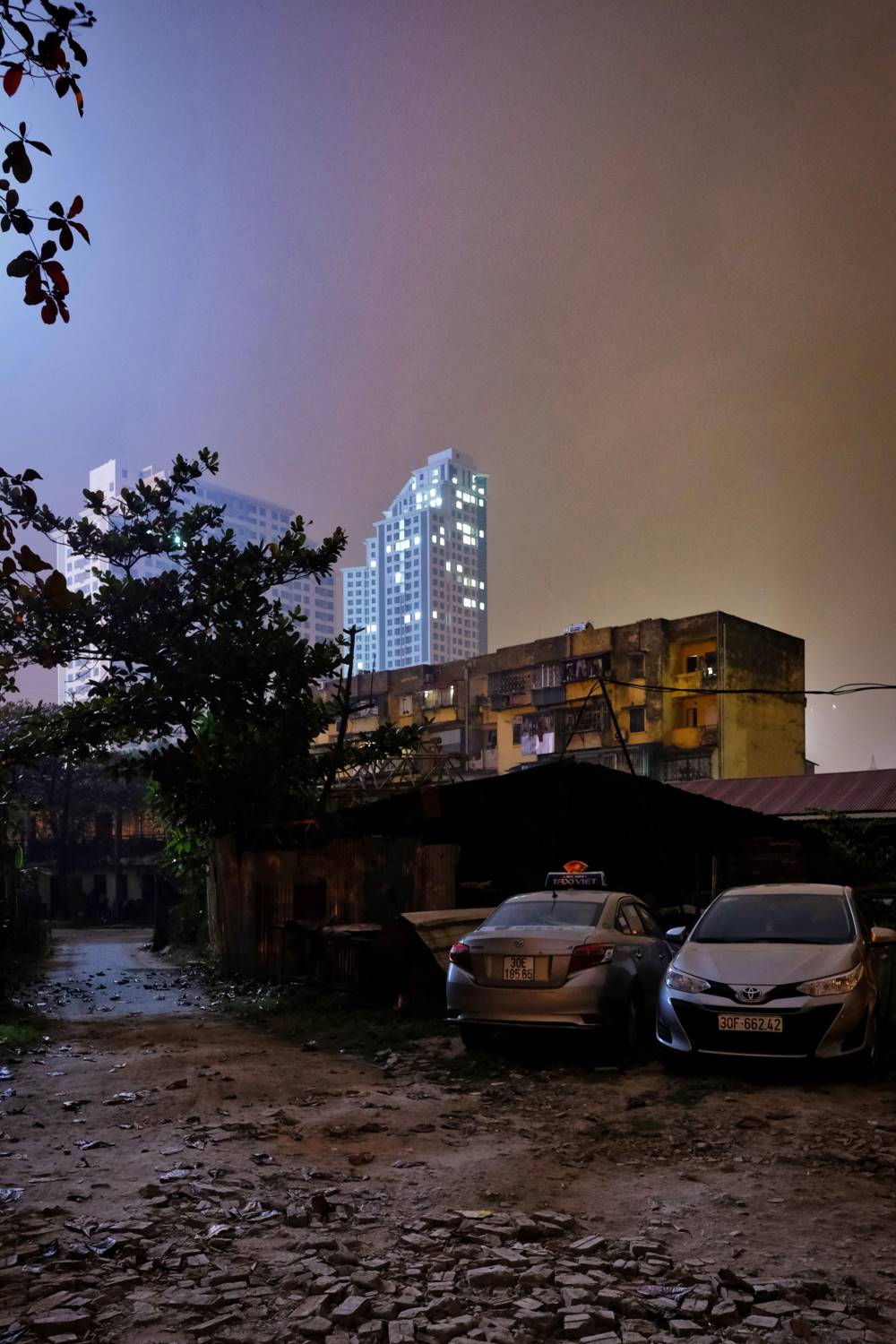
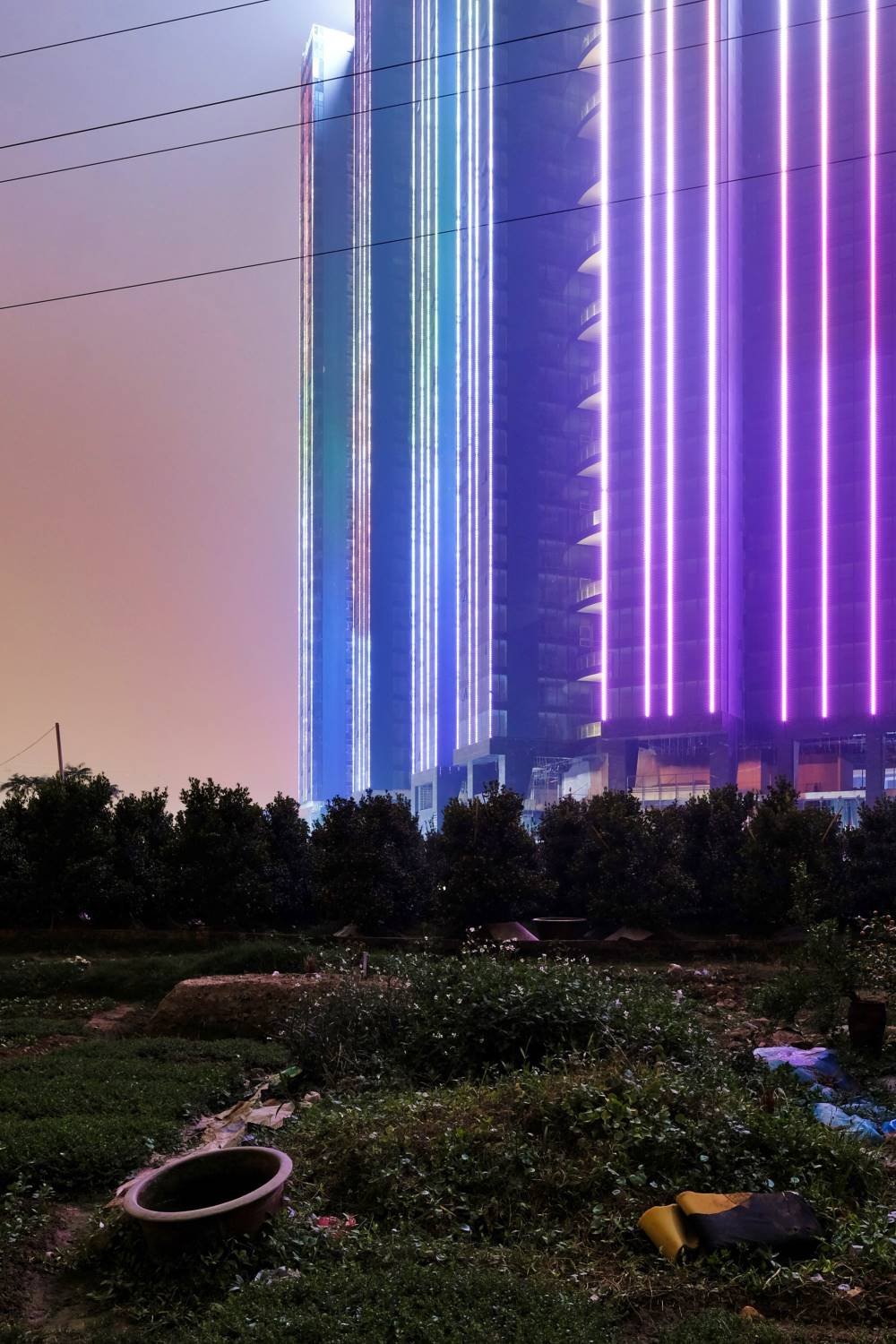
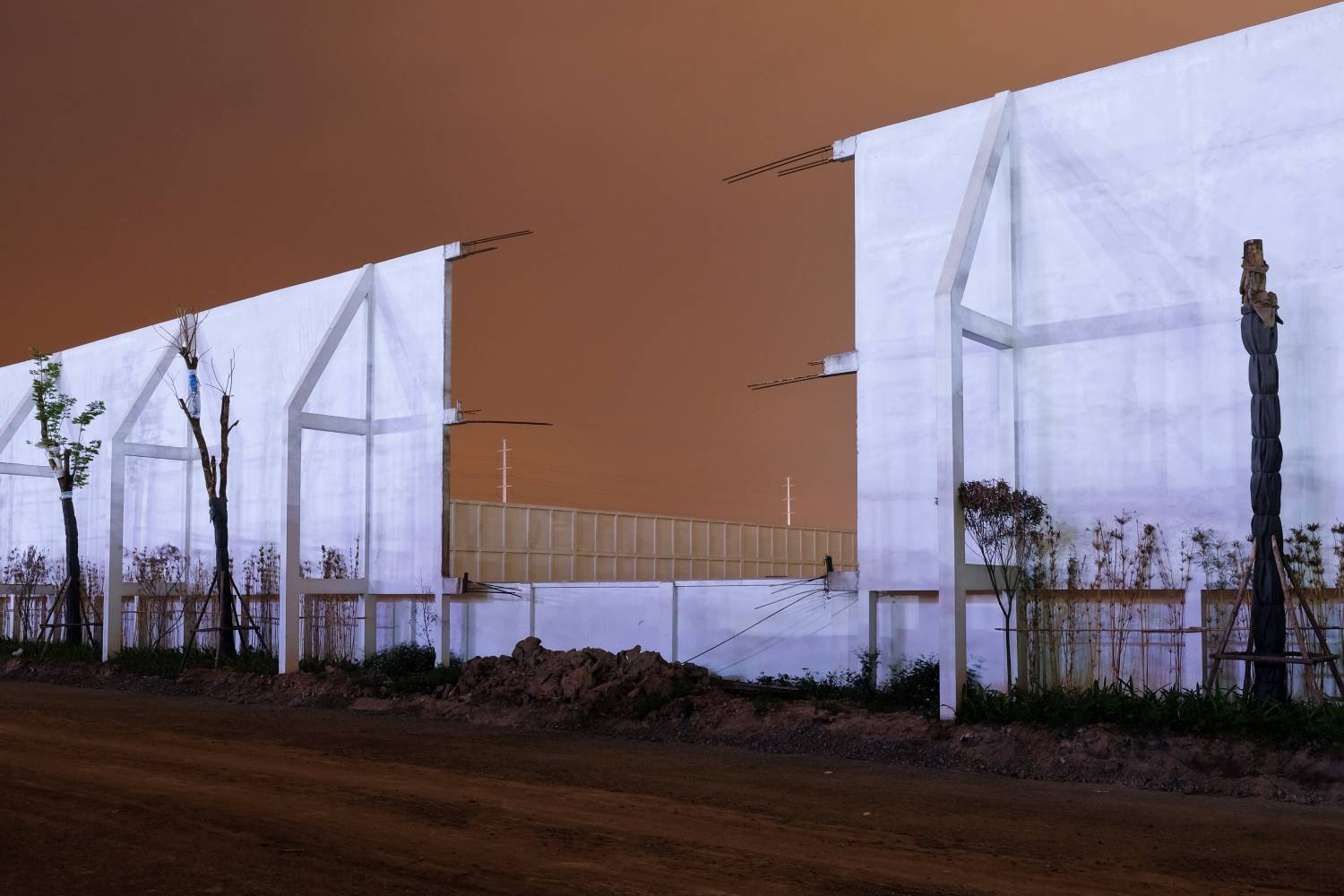
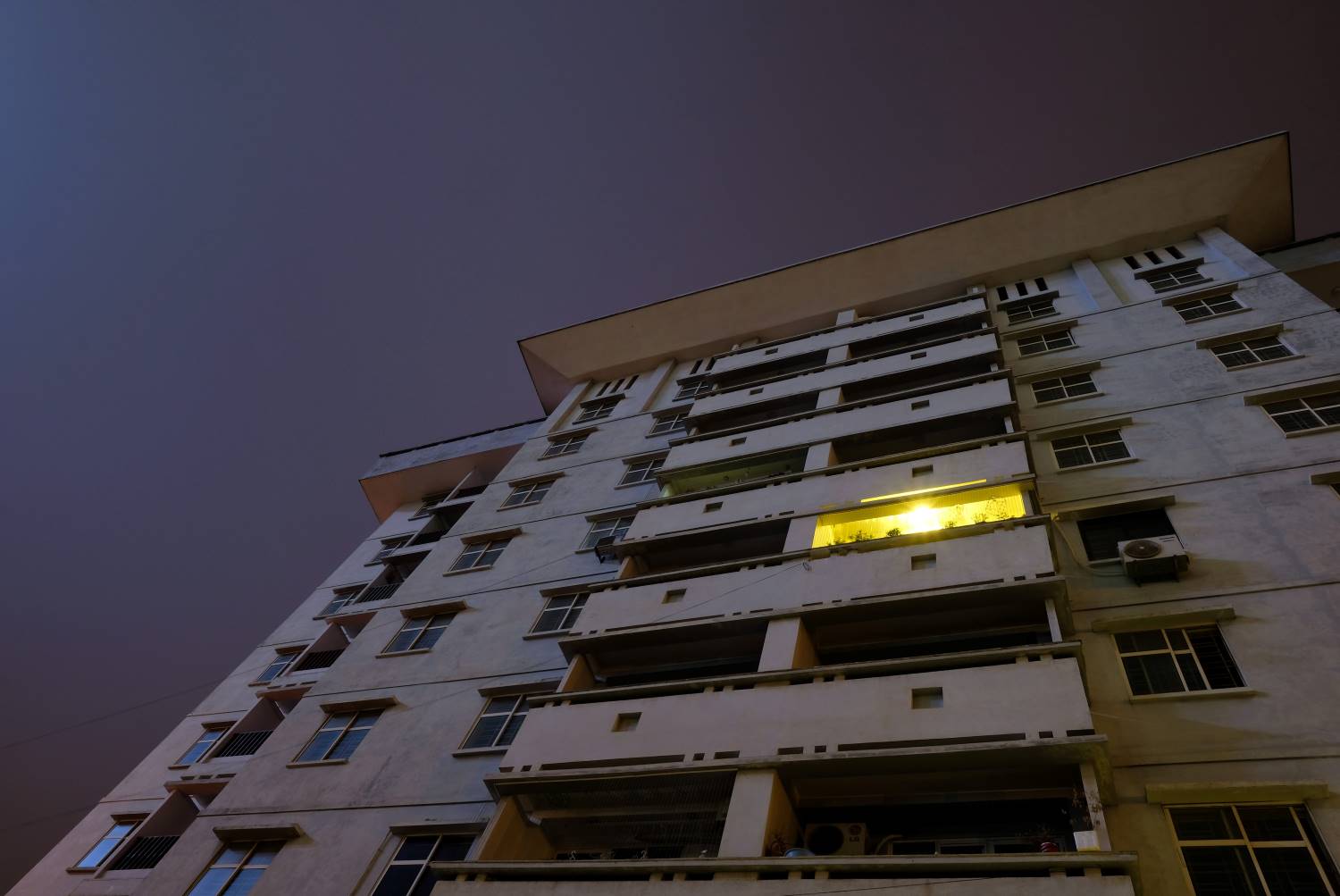
Nocturnal isolation in Hanoi

.

“We shall not cease from exploration

And the end of all our exploring 

Will be to arrive where we started 

And know the place for the first time.” 

T.S. Eliot, Little Gidding (1942)

When does one really know a place? Does it take one year? Or a few? Maybe a lifetime?
Having lived in Hanoi for five years, I’m still trying to make sense of it: venturing out after dusk, going from district to district and alley to alley.

This process of looking for light and truth feels familiar by now. Comfortable even. But, serene as the search might be, maybe it’s time to come to terms with the fact that this city will never truly reveal itself?

Hanoi’s physical space has been changing radically over the past thirty years. While the city consisted of just a handful of urban districts in the past, new suburbs, rife with modernity, have and continue to be built for the inner-city population to move to.

As Vietnam’s economy opened up, new wealth was created which impacted the agricultural lands and villages surrounding Hanoi. Families began to replace their traditional rural homes with multi-storey urban houses. Informal and small-scale at first, these conversions turned into formal rural-to-urban transitions, fueling the expansion of the city.

Throughout these past few decades, Hanoi saw the initiation and development of the transformative state in which it exists today: an ever-expanding mosaic of wards and districts, a labyrinth of lanes, streets and alleys, and a patchwork of demographic, economic, and socio-cultural situations.

I see Hanoi’s old scales fall to the ground and new skin appear. But its winter air is transluscent at best: it lets the shapes, forms and colors pass through, but leaves many blanks to be filled in.

And so the question keeps lingering in my mind: at the end of all this exploring, will I arrive where I started and know this place for the first time?

About the author:

Wouter Vanhees (1978) is a Belgian photographer, who has been living and working in Vietnam since 2015. Living in Hanoi sparked an interest in the rapid rate of urbanization of Vietnamese cities. Wouter often wanders the cities after dusk, hunting for eye-catching and colorful slices of life and turning these into compelling visual stories. He continuously adds new images to his body of work, and has been published in The Washington Post, Urbanautica, Dodho Magazine, Plain Magazine, etc.

Follow @positive_mag on twitter for the last updateshttps://www.positive-magazine.com/hanoi-nocturnal-isolation/?utm_source=rss&utm_medium=rss&utm_campaign=hanoi-nocturnal-isolation


Empty streets and Isolation

It is now the 16th day since the beginning of the quarantine. Reality slapped me on Thursday the 12th, when I was stopped by a policeman who asked my papers: “where are you going and why…” he said, he was not rude, nor there was coldness in his voice, just the mere fact that he was there to check my intentions made me realize that what was happening in my country was real. I read the news daily: I was fairly informed on the horror, on the numerous deaths, the sacrifices that doctor and nurses were enduring to keep up with this silent monster, but everything was processed by my brain as “far-away”.

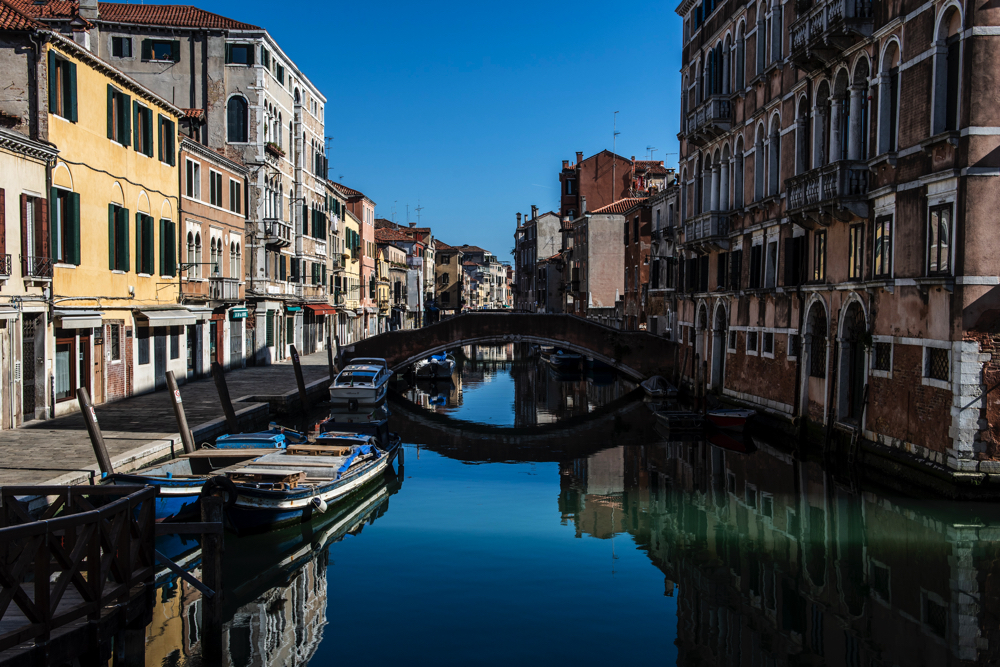
Cannaregio area, Venice during COVID 19

I read an interview of a man who lost both his parents to the virus; he was sick, too and emotionally falling apart not because of the virus, but because he could not be with his mother and father one last time.

In the meantime, the virus keeps on spreading and the army is facing an ungrateful task, as they have to move coffins across the region to momentarily clear the mortuaries while the other bodies are entombed or cremated. These people died alone, no one to hold their hand while they drew their last breath, not a familiar face to look at, only the yellowish neon of an isolation ward. This virus leaves no space for anything else, as it seems to absorb everything like a black hole. The information obsesses about it with a 24h live coverage on what is happening. The other side of the coin? It is affecting people’s mental health and there are more and more cases of individuals who are experiencing “Coronavirus (COVID-19) anxiety”.

isolation

isolation

isolation

isolation

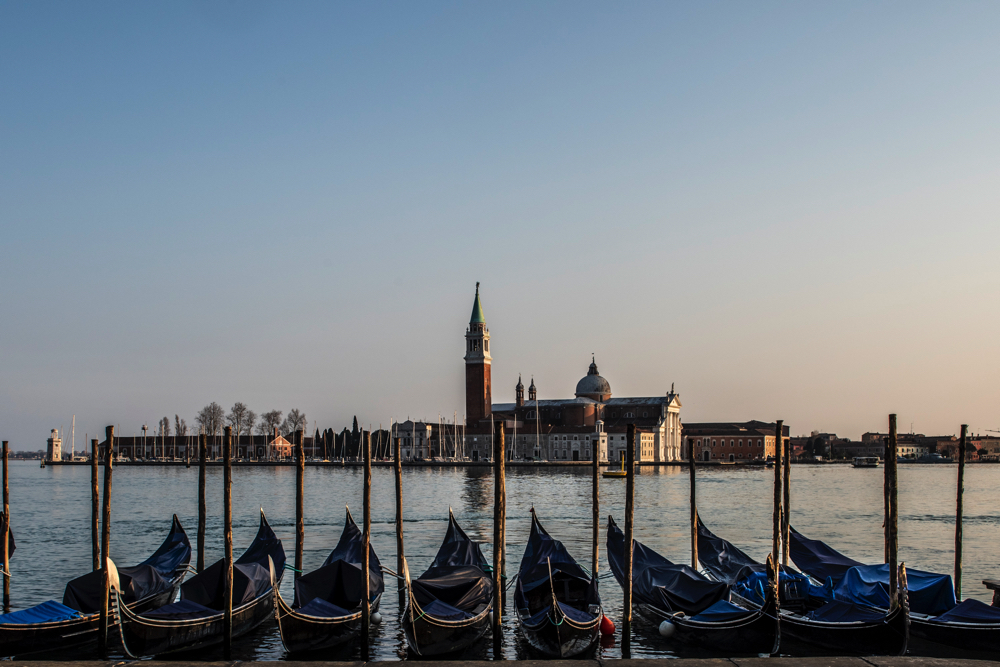
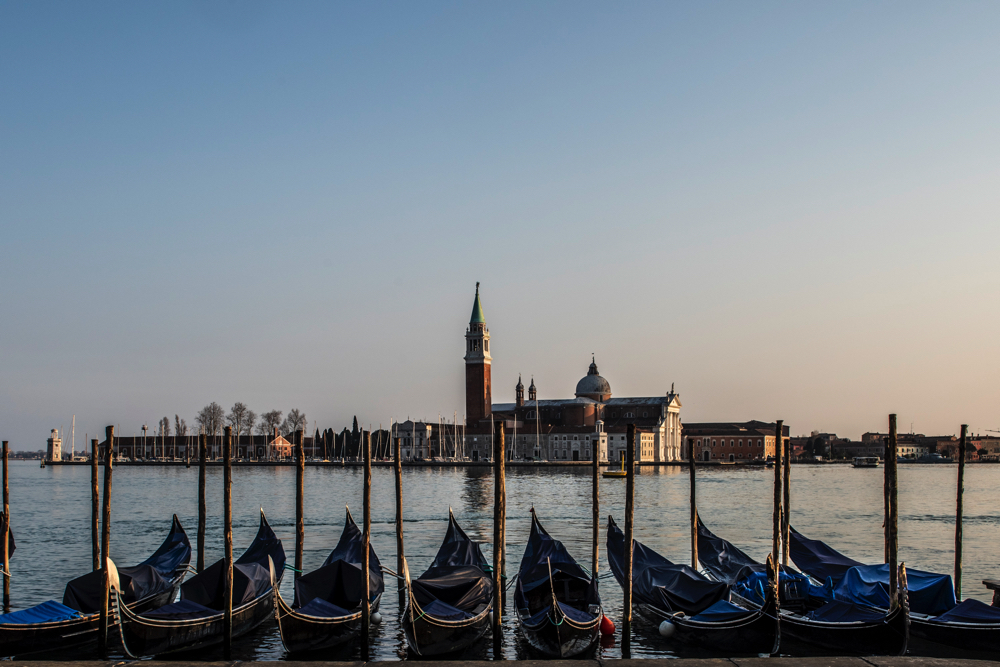
S.Giorgio Island in Venice during COVID-19 Emergency

To live in the constant reminder of the death toll rising, of the criticality of the situation, of the adversities encountered by the national health system and of a near-to-collapse economy can leave you panicked in a corner, so one has no choice but to become estranged, at least temporarily, from the news and withdraw in the realms of one’s intimacy, hoping to find calmness.

isolation

isolation

isolation

isolation

Strada Nuova in Cannaregio, Venice during COVID19

Being a natural-born paranoid – well, I say to myself that I am a realist – I deal with persistent negative inner-monologues and, particularly in this situation, it is was doing me no good: the only way I found to cope with it was to keep myself busy and when I get the blues I get myself even busier. I know it sounds like a “this is such a second-week-of-quarantine-thing to say”, but is nevertheless true.

It feels like a post-apocalyptical situation from a dystopic novel, but instead it’s Italy’s every day routine since the beginning of March.

The Venice Architecture Biennale Opening moved from May to the end of August due to COVID19

This morning I woke up to the sound of an empty street. As I opened my shutters the light poured in my room: I was hit by the sweet smell of the calycanthus my parents planted when I was born. The poor plant, that usually blossoms in the cold, is still undecided on how to behave in this lunatic season. A gentle breeze danced with the leaves and the air smelled clean and fresh. I don’t usually have the time to appreciate such things. My morning routines are erratic: I rush to make my coffee, rush to get ready and rush to the bus stop. I always end up confused, sitting on a bus, too sleepy to be capable of cognitive thinking. These mornings, instead, I have the time to pick-up my pace: I wake up enjoying the small repetitive movements that make my routine; I get to be extra attentive to the music that will keep me company during the day and to what I will do with my time.

isolation

isolation

isolation

isolation

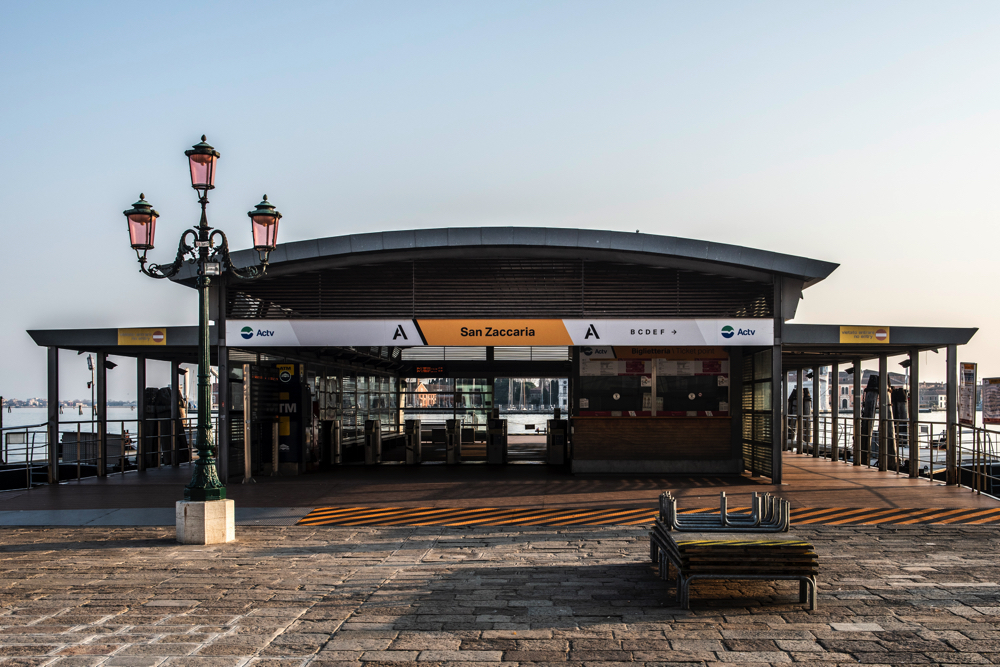
San Zaccaria waterbus stop close to S.Mark square in Venice during COVID19

It’s in times like these that you realize how many things you take for granted. Having a beer at the pub? Going to the cinema? Going to the supermarket whenever you want? Driving wherever you want? Travelling? All these things are now forbidden – for a good cause, but still -, we have always considered them obvious, part of our lives, almost as if they were part of our bodies. And now we had to cancel travel plans, we had to post-pone all the cool events, we have to drink our beer with friends in front of a webcam.

isolation

isolation

isolation

isolation

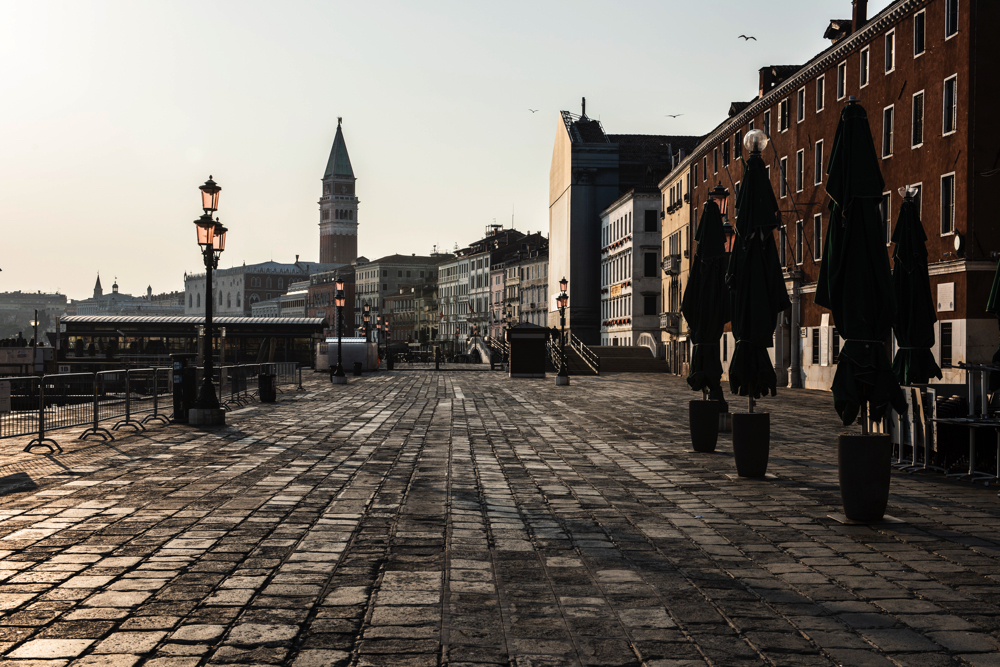
Riva degli Schiavoni, Venice

I found comfort in the black-and-white pages of a long-forgotten book; I found peace in the pictures of my beloved Venice framed by beautiful clear waters populated by tiny fish and ducks; I found reassurance in the therapeutic process of kneading homemade bread and trying new dishes; I found myself capable of constancy and I am finally being persistent with my bass guitar exercises. I keep in touch with friends and family as much as I can, nurturing relationships despite the distance. Most of all I remember to myself to breathe in a moment where all the air seems to have vanished and that, for now, is enough to me.

The old jewish Ghetto square in Venice

But whenever this ends, remember the desert roads, the absence of people, laughter and party in your city. Remember the closed shops and the struggles. Remember this because it’s not enough to start playing the Italian national anthem from the windows everyday at 6pm, if when this finishes you forget to help the economy. Don’t forget about the country you loved during the quarantine, because after this lockdown it will need a lot of help to get back on its legs.

Article written by Positive Magazine editors Carmen McIntosh & Francesca Vanin
Photography by Giacomo Cosua

isolation

isolation

isolation

isolation

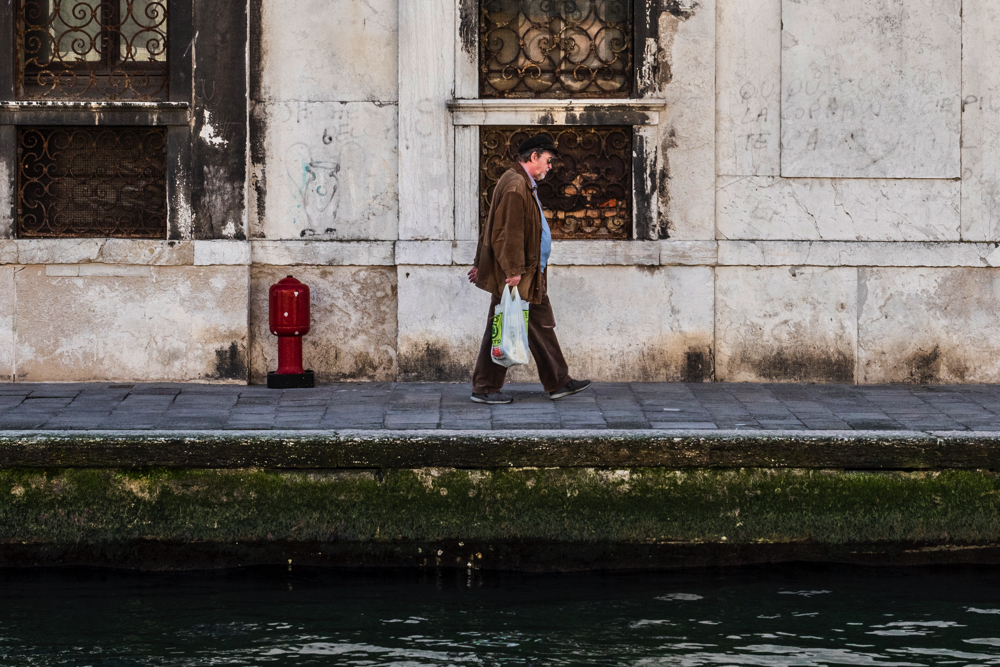
Cannaregio, Venice

Follow @positive_mag on twitter for the last updates https://www.positive-magazine.com/empty-streets-and-isolation/?utm_source=rss&utm_medium=rss&utm_campaign=empty-streets-and-isolation


Empty streets and Isolation

It is now the 16th day since the beginning of the quarantine. Reality slapped me on Thursday the 12th, when I was stopped by a policeman who asked my papers: “where are you going and why…” he said, he was not rude, nor there was coldness in his voice, just the mere fact that he was there to check my intentions made me realize that what was happening in my country was real. I read the news daily: I was fairly informed on the horror, on the numerous deaths, the sacrifices that doctor and nurses were enduring to keep up with this silent monster, but everything was processed by my brain as “far-away”.

Cannaregio area, Venice during COVID 19

I read an interview of a man who lost both his parents to the virus; he was sick, too and emotionally falling apart not because of the virus, but because he could not be with his mother and father one last time.

In the meantime, the virus keeps on spreading and the army is facing an ungrateful task, as they have to move coffins across the region to momentarily clear the mortuaries while the other bodies are entombed or cremated. These people died alone, no one to hold their hand while they drew their last breath, not a familiar face to look at, only the yellowish neon of an isolation ward. This virus leaves no space for anything else, as it seems to absorb everything like a black hole. The information obsesses about it with a 24h live coverage on what is happening. The other side of the coin? It is affecting people’s mental health and there are more and more cases of individuals who are experiencing “Coronavirus (COVID-19) anxiety”.

isolation

isolation

isolation

isolation

S.Giorgio Island in Venice during COVID-19 Emergency

To live in the constant reminder of the death toll rising, of the criticality of the situation, of the adversities encountered by the national health system and of a near-to-collapse economy can leave you panicked in a corner, so one has no choice but to become estranged, at least temporarily, from the news and withdraw in the realms of one’s intimacy, hoping to find calmness.

isolation

isolation

isolation

isolation

Strada Nuova in Cannaregio, Venice during COVID19

Being a natural-born paranoid – well, I say to myself that I am a realist – I deal with persistent negative inner-monologues and, particularly in this situation, it is was doing me no good: the only way I found to cope with it was to keep myself busy and when I get the blues I get myself even busier. I know it sounds like a “this is such a second-week-of-quarantine-thing to say”, but is nevertheless true.

It feels like a post-apocalyptical situation from a dystopic novel, but instead it’s Italy’s every day routine since the beginning of March.

The Venice Architecture Biennale Opening moved from May to the end of August due to COVID19

This morning I woke up to the sound of an empty street. As I opened my shutters the light poured in my room: I was hit by the sweet smell of the calycanthus my parents planted when I was born. The poor plant, that usually blossoms in the cold, is still undecided on how to behave in this lunatic season. A gentle breeze danced with the leaves and the air smelled clean and fresh. I don’t usually have the time to appreciate such things. My morning routines are erratic: I rush to make my coffee, rush to get ready and rush to the bus stop. I always end up confused, sitting on a bus, too sleepy to be capable of cognitive thinking. These mornings, instead, I have the time to pick-up my pace: I wake up enjoying the small repetitive movements that make my routine; I get to be extra attentive to the music that will keep me company during the day and to what I will do with my time.

isolation

isolation

isolation

isolation

San Zaccaria waterbus stop close to S.Mark square in Venice during COVID19

It’s in times like these that you realize how many things you take for granted. Having a beer at the pub? Going to the cinema? Going to the supermarket whenever you want? Driving wherever you want? Travelling? All these things are now forbidden – for a good cause, but still -, we have always considered them obvious, part of our lives, almost as if they were part of our bodies. And now we had to cancel travel plans, we had to post-pone all the cool events, we have to drink our beer with friends in front of a webcam.

isolation

isolation

isolation

isolation

Riva degli Schiavoni, Venice

I found comfort in the black-and-white pages of a long-forgotten book; I found peace in the pictures of my beloved Venice framed by beautiful clear waters populated by tiny fish and ducks; I found reassurance in the therapeutic process of kneading homemade bread and trying new dishes; I found myself capable of constancy and I am finally being persistent with my bass guitar exercises. I keep in touch with friends and family as much as I can, nurturing relationships despite the distance. Most of all I remember to myself to breathe in a moment where all the air seems to have vanished and that, for now, is enough to me.

The old jewish Ghetto square in Venice

But whenever this ends, remember the desert roads, the absence of people, laughter and party in your city. Remember the closed shops and the struggles. Remember this because it’s not enough to start playing the Italian national anthem from the windows everyday at 6pm, if when this finishes you forget to help the economy. Don’t forget about the country you loved during the quarantine, because after this lockdown it will need a lot of help to get back on its legs.

Article written by Positive Magazine editors Carmen McIntosh & Francesca Vanin
Photography by Giacomo Cosua

isolation

isolation

isolation

isolation

Cannaregio, Venice

Follow @positive_mag on twitter for the last updates https://www.positive-magazine.com/empty-streets-and-isolation/?utm_source=rss&utm_medium=rss&utm_campaign=empty-streets-and-isolation


5 Fashion Tips for Nurse Leaders

Feeling good about yourself and looking good can make you feel more confident, which is much needed with the busy lifestyle of a nurse, or nurse leader. The confidence that you get with feeling stylish is exactly what you need to become the amazing nurse that has made it through medical school. 

The problem is that most of the available style tips online need too much time or money spent on them, meaning it will be hard for you to fit it into your hectic daily routine. Here are some of our top fashion tips that have been shown to work and will transform you into the most stylish nurse leader on the ward:

  1. Being Healthy is Fashionable

In order to look good on the outside, you need to feel good on the inside. The first step to achieving this is to look at your food. Try and have a clean diet with less fatty, greasy foods. It’s also a good idea to add more vegetables and fruits to your diet. Healthy living can have a huge impact on:

  • The way we feel about ourselves
  • Our skin 
  • Our health 
  • Our mobility

Eating more vegetables has even been shown to give people a suntanned appearance. A sun-kissed glow always makes you look more stylish and fashionable. 

Food plays a large role in our health, but we also need to make sure that we are physically fit too. Simple exercises can increase your self-esteem and make you feel great about yourself. You will also benefit from being fitter while at work. If you haven’t done a lot of exercise in the past, then it’s a good idea to start off slow and gradually increase the amount you do. 

Staying healthy is extremely important to all healthcare practitioners. Whether you’re a newly qualified nurse, thinking of undertaking a DNP executive leadership qualification, or you’re already qualified as a nurse leader, your health is important. If you don’t look after yourself, then you won’t be able to take care of your patients. Nurse leaders in particular need to set a good example to their patients by showing them that they take good care of their physical and emotional needs. 

  1. Choose the Right Scrubs for You

Your uniform can have a huge effect on how you are viewed by others. It’s a good idea to spend a little bit of time thinking about this before choosing the right scrubs for you. Many nurse leaders choose a fitted wrap scrub top to make them look at their best.

All nurses have to wear scrubs. This makes it hard for you to stand out and express your personality or look fashionable, but there are ways that you can do this. You could get your scrubs personalized with an embroidery of your name or you could add some accessories to your scrubs to make you stand out from others. 

  1. Your Hair Needs to Work for You

Nurse leaders have an extremely busy lifestyle, so it might be hard for them to find time to style their hair every day, but there are options available to you:

There are numerous hairstyle tutorials available on the internet that can be done in under 5 minutes. This is perfect for all nurses who have a busy schedule. After all, you don’t want to spend too much time before work making your hair look good. 

If the tutorials are a bit over the top for you, then why not consider a more traditional nursing hairstyle. There are lots of fast and simple ideas available that will leave you looking fashionable and make you feel great about yourself. They just take a bit of practice. 

  1. Wear Stylish Shoes

Most nurse leaders choose to wear clogs due to how practical they are, but there are other options. Clogs don’t say much about your personality, and you certainly won’t be making a fashion statement if you choose to wear them. Clogs come in a variety of designs, but they are ultimately bulky shoes that aren’t very comfortable.

There are other options available to nurses including:

  • Dolly shoes – they have covered toes, they’re comfortable and they’re stylish
  • Walking shoes – for nurse leaders who are on their feet most of the day, these are the perfect option. They come in a variety of different designs to suit your tastes and they’re extremely comfortable to wear.
  • Sneakers – there aren’t many shoes more stylish than sneakers. There’s a huge range of options to choose from that will suit your personality and needs. Nurses find that after a long day at work, their feet don’t ache as much if they wear sneakers. 
  • Crocs – these shoes are lightweight but aren’t ideal if you get cold feet. They are wipeable though, so they’re good for busy nurses. 

  1. You Can Be Fashionable without Spending a Fortune

Nurse leaders may have to wear a uniform to work, but there’s nothing stopping them from accessorizing it in some way. Little things like wearing a nice colored lipstick can make you feel more stylish. 

You may be under the impression that accessories cost a lot of money, but they last a long time, so they actually cost very little compared to the amount of use you get out of them. If you’re wanting to be a fashionable nurse leader, then you need to make time in your routine to spoil yourself. You will not know what works well for you and what doesn’t until you’ve given it a go. 

Looking and feeling good will really help to increase your self-confidence. It will also help you to focus on the job in hand instead of thinking and worrying about looking unattractive. By following some of these top tips, you’ll soon become the most fashionable nurse leader on the ward. 

Follow @positive_mag on twitter for the last updateshttps://www.positive-magazine.com/5-fashion-tips-for-nurse-leaders/?utm_source=rss&utm_medium=rss&utm_campaign=5-fashion-tips-for-nurse-leaders


Turning a Standard Upside Down

By Skip Cohen

Sponsored

For those of you who don’t know my background, I’ve spent my life in the photography industry. And in all those years, I’ve never been involved with any company or products I didn’t honestly believe in.

When asked to join the Platypod team last September, l accepted because of two things – the owners of the company and the quality of the products. While I wasn’t involved in Platyball’s design, I’ve been part of the team every step of the way, helping to educate the industry, starting with why the world needed to be turned upside down.

Tripods haven’t changed since the 1820s. Years later, tripod heads came along, and it wasn’t until the 90’s that Arca Swiss set the standard for release plates. So, for all those years, artists have been leveling from the ground up with a never-ending flow of evolutionary redesigns, but never revolutionary.

Time to turn the tripod world upside down!

“Dr. T” came along and, as he’s done with Platypod, felt there was a better solution. If leveling is from the top, instead of the bottom, the horizon will always be level. It’s especially apparent when panning.

Next on his list was to redefine the meaning of “ergonomic design.”  We’ve all worked with tripod heads with multiple buttons and dials, and everybody has had one not line up in the direction you want when tightening it down. 

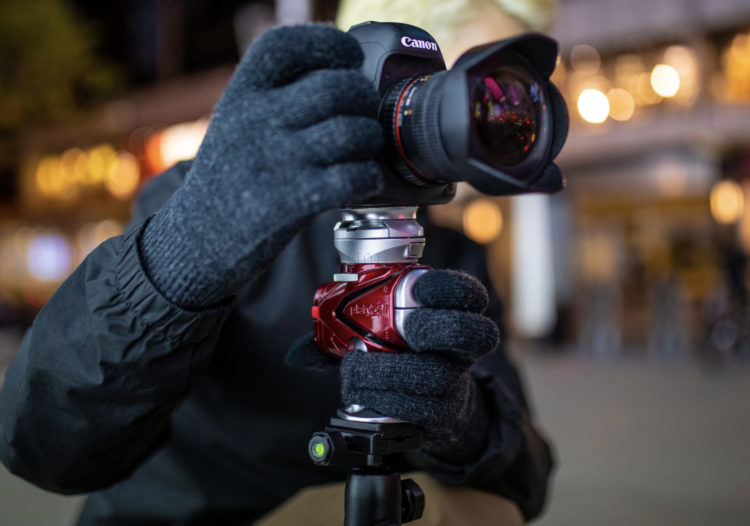
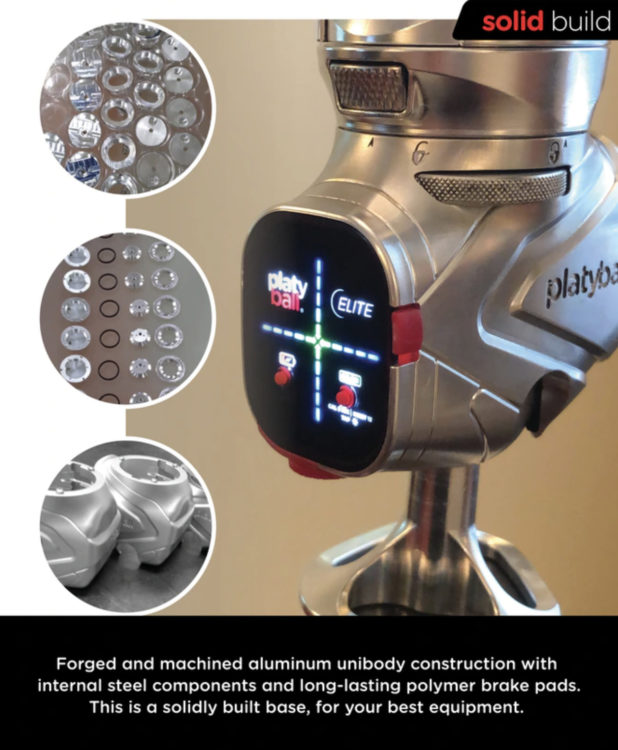
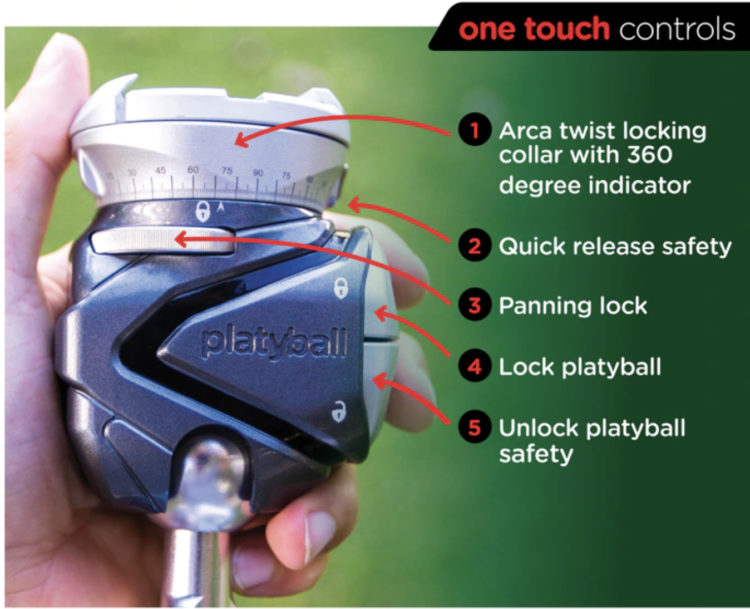
Wanting to give photographers more control, the process needed to be streamlined. Dr. “T” chose to bring technology, simplicity, and efficiency together with a ball head that had just two buttons and could be adjusted with only one hand, even while wearing gloves in winter!

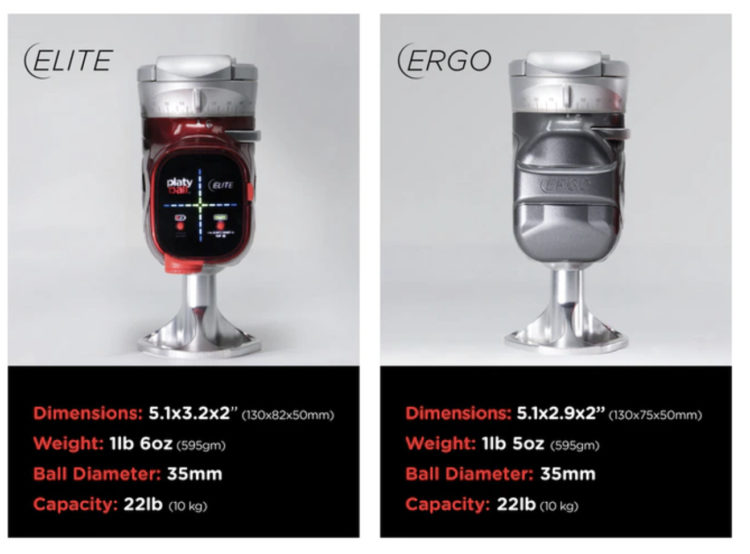
As Scott Kelby demonstrated in his video, two buttons with a new standard of quality manufacturing and material was all “Dr. T” needed – one to loosen the ball head, the other to tighten it. Next, bring in the best materials, weather sealing and the strength to hold 22 pounds of gear in place and *poof* Platyball was in the news.

Now, add in the patented electronic indicator on the Elite model, powered by an easy to find over-the-counter A23 battery, with the ability for photographers to level outside the camera’s system. There are no blocked bubble levels and based on the position of the ball head, it can be viewed from the front of the camera or back. This is especially effective in tight spaces for meeting the demands of architectural photography, shooting at night and simply expanding creativity.

But there was one last addition, the Arca Swiss release, complete with an Arca twist locking collar and 360-degree indicator plus a quick release safety lock.

Remember, where I started in this post? I said two things made me want to be part of the Platypod team. Well, the first was the attention to detail and design of all their products like Platyball. The second was the quality and integrity of the people.

I’ve never met anybody more focused on Customer Service, quality, and keeping his promises than “Dr. T.” This is Platypod’s third Kickstarter campaign. He’s always delivered on time with products exceeding expectations – precisely what he’s always committed to doing.

We call him “Dr. T” because he really is a doctor, not of engineering but a full-time working pediatrician with a practice in New Jersey. Fortunately for our industry, photography became a passion for him forty years ago, and he never does anything halfway.

He told me a story once about his interest in photo. His father gave him a book about photography and told him to learn everything in the book BEFORE he could have his first camera. Everything under the imaging umbrella became a passion, and as the industry changed, so did “Dr. T’s” focus.

Whether it’s his love for medicine and finding answers to health challenges that set the standard or his passion for solutions and engineering contributing to Platypod’s reputation, he’s created a company built on listening to its customers.

Platyball’s arrived, has turned the tripod world upside down, and in the process, our lives as artists are about to get better. We’re all about to have more time to create and waste less time in setup.

With just four days left in the Kickstarter campaign, this is the community’s last chance to save 20% on the new Platyball. That’s a significant saving on the Ergo of $50 and $76 on the Elite. But in addition to the savings, you’ll be part of a revolutionary new approach to leveling and using a ball head.

Visit www.platyball.com for more information.

Turning a Standard Upside Down


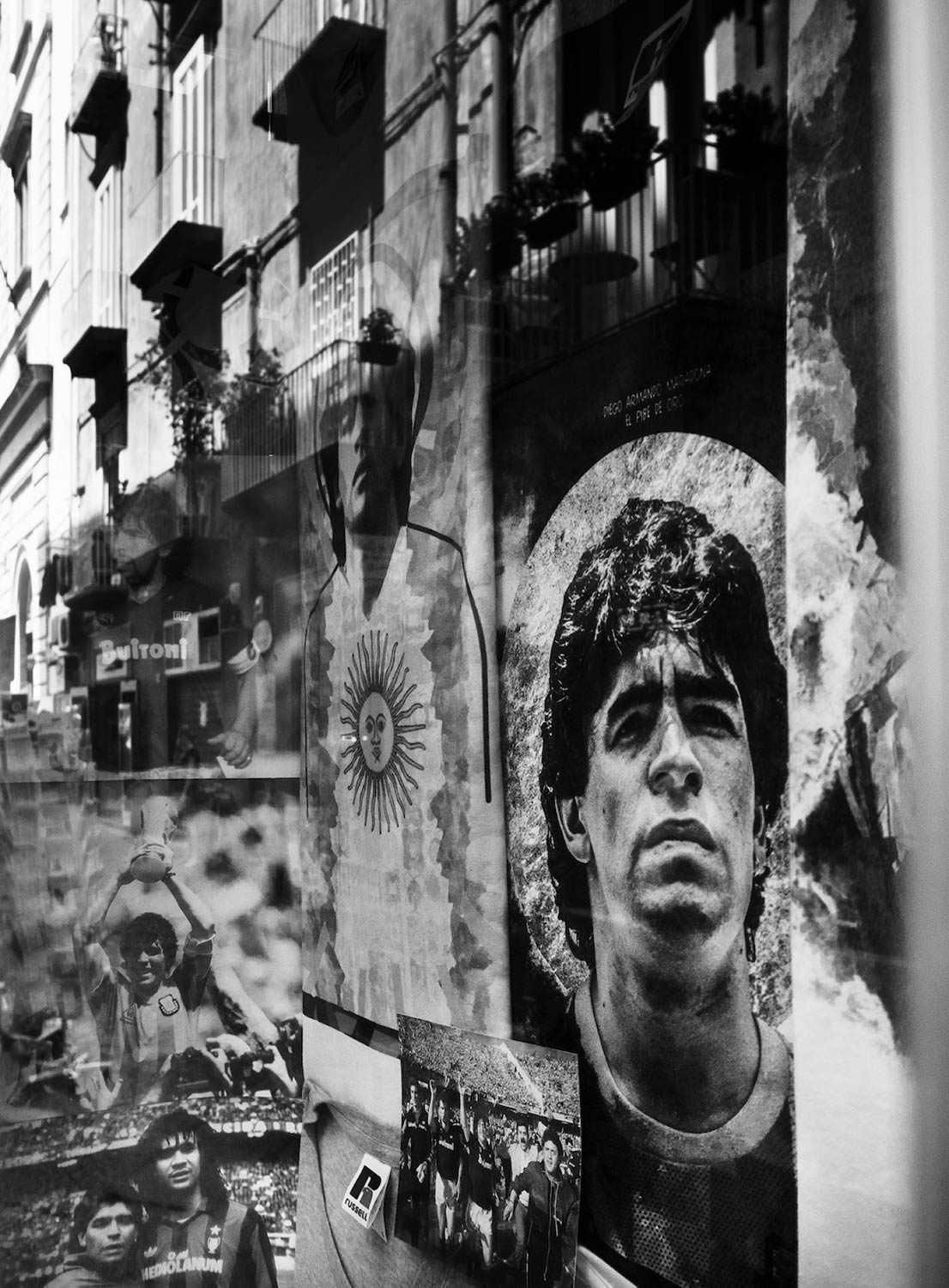
I_MAGO MARADONA

“Do you have any idea what scoring six goals to Avvocato Agnelli means for a South Italy soccer team?”
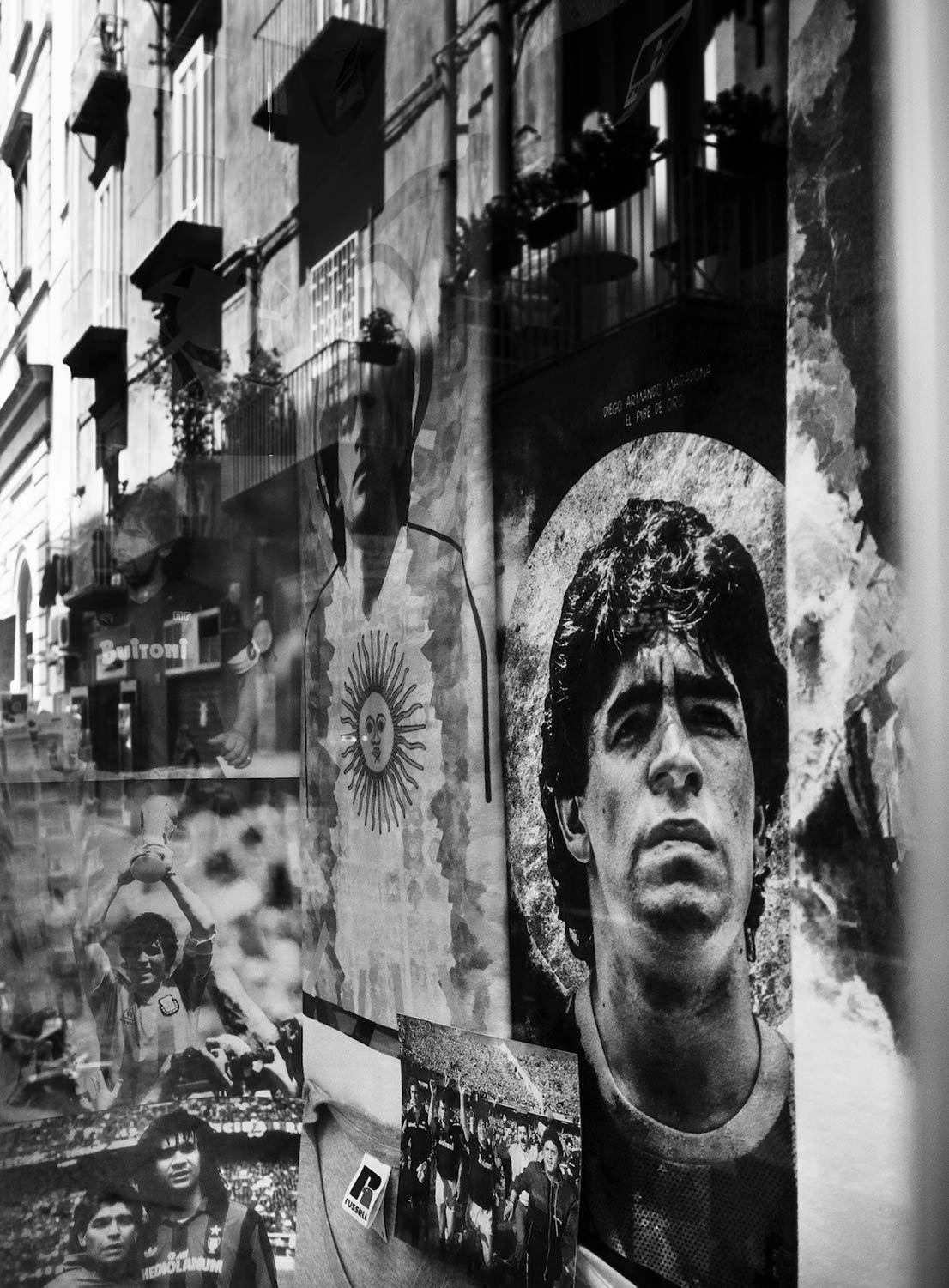
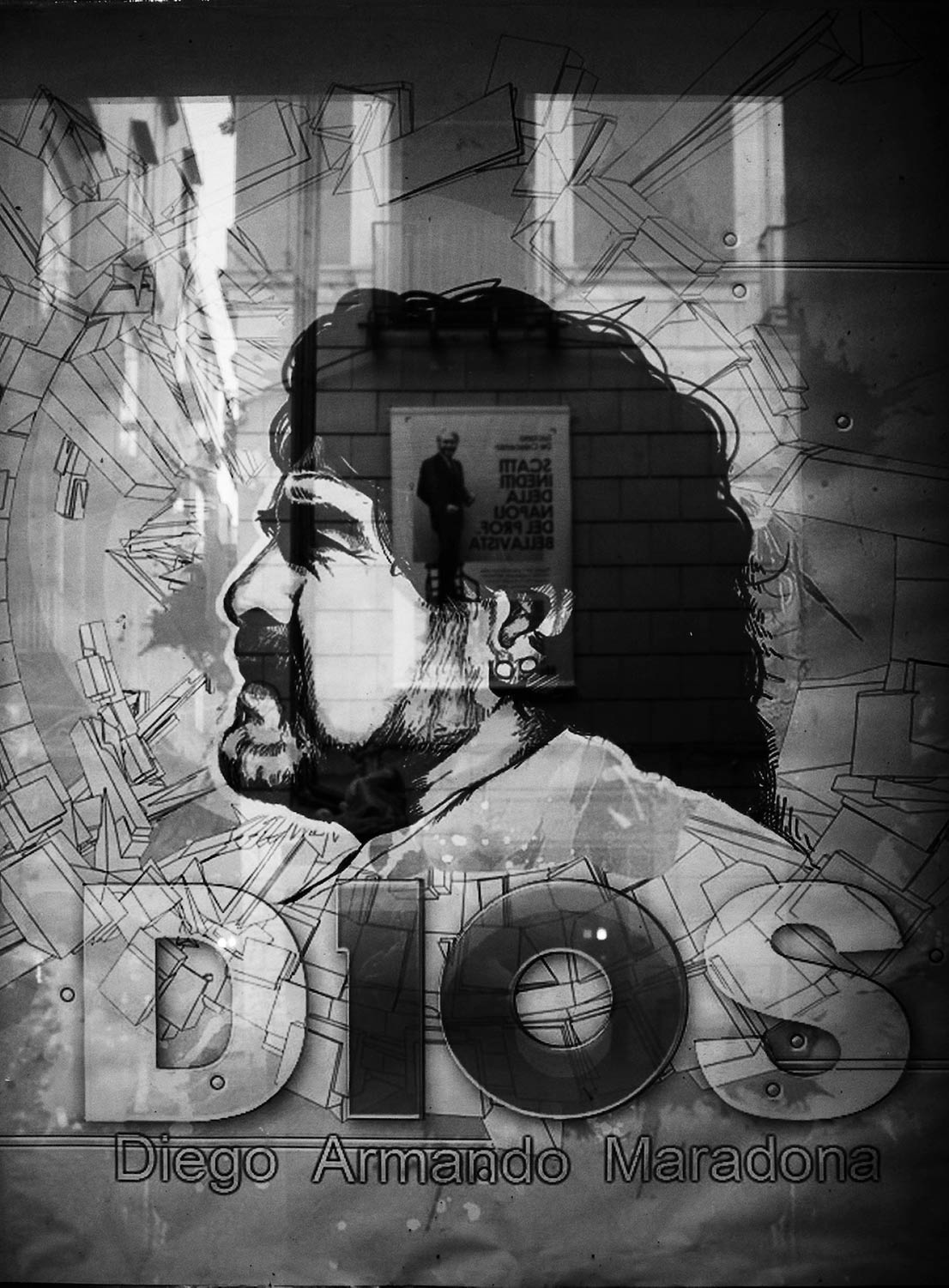
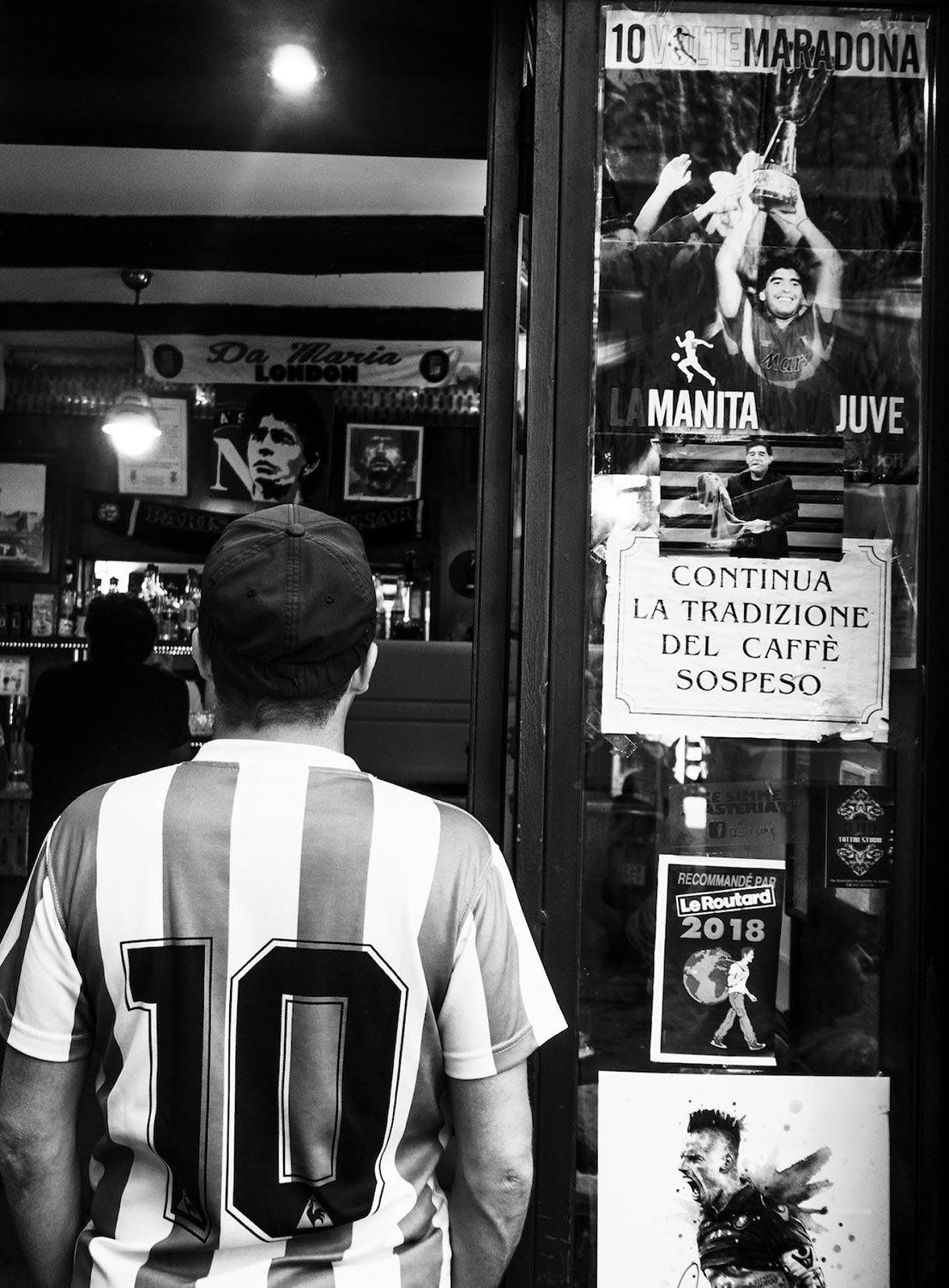
This is what Diego Armando Maradona asked the filmmaker Emir Kusturica in his famous documentary about the life of the Argentinian. It means that almost thirty years after his last season in Naples, where in seven years everything wins, (two national championships, an Italian Cup, a UEFA Cup and an Italian Super Cup), the iconic image of Pibe de oro is still alive, above all in the heart of that old city which placed him on the altars alongside San Gennaro and consecrated Maradona prophet of himself.

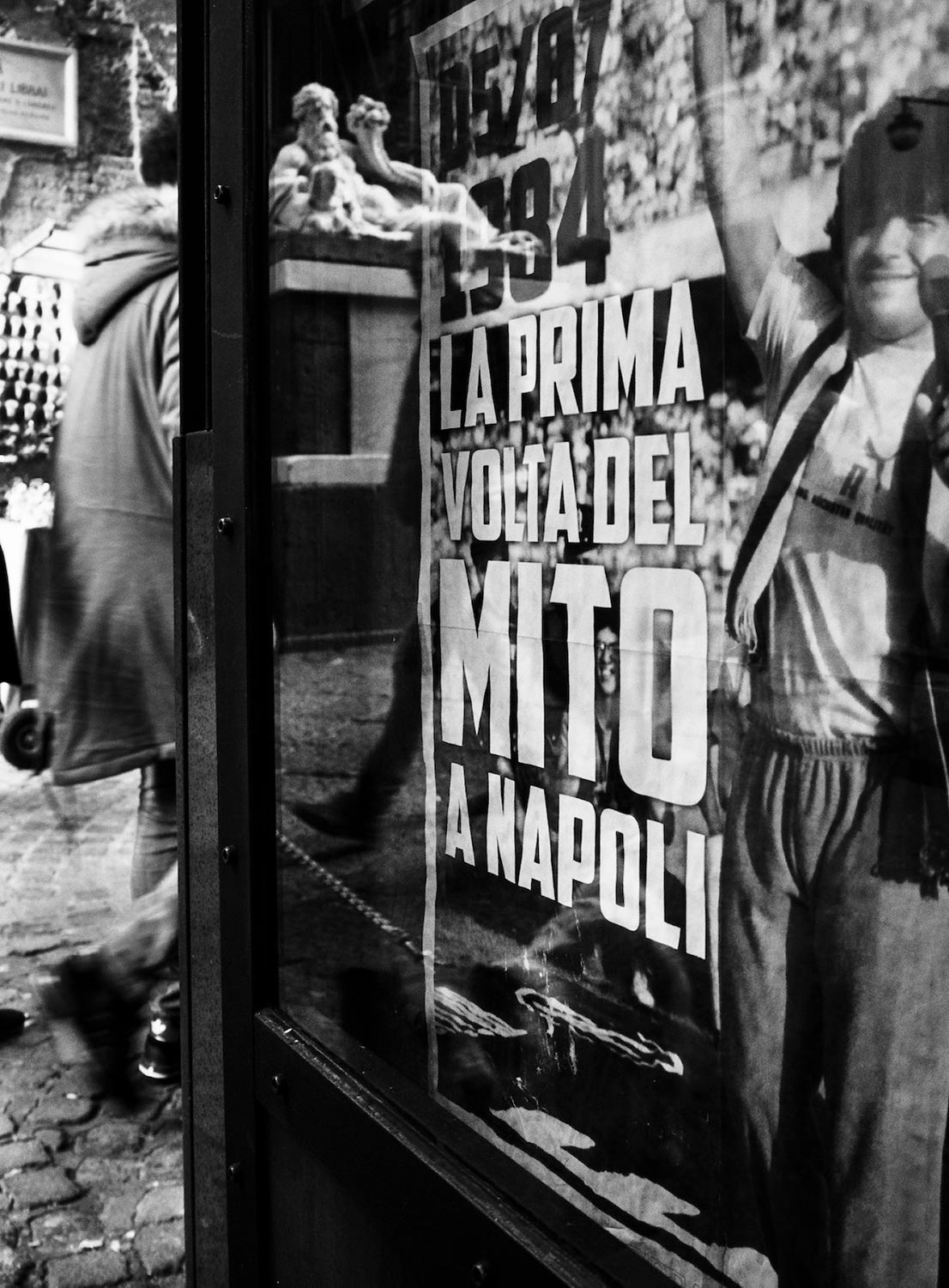
“The Naples public loves me. I want to be Naples poor children’s idol because they are what I was in Buenos Aires”, said Maradona on 5th of July 1984 during his introduction at San Paolo Stadium welcomed by eighty thousand people who marked the beginning of a very long love story and of his election as a pop icon of the twentieth century.

I_mago Maradona aims to be the photographic telling of a never broken bond (from Latin imago, word used by Jung to mean a maternal as well as paternal and brotherly figure loved in the childhood which projected into adulthood unconsciously becomes an example to follow). Maradona, “the wizard of the dribble” who “did with oranges what we footballers seemed impossible to do with the ball” as stated by Franco Baresi, left but his image still lives because in that image still lives, crystallized, the dream and the redemption of a southern football team as well as of a whole city.

About the author:
Antonella Cappuccio was born in Avellino in 1980. She graduated in Naples with a thesis in History of Art Criticism and obtained in Milan the Diploma of Specialization in History of Medieval and Modern Art. In 2013 she was qualified as a teacher of art history in secondary schools and since 2018 she has been a lecturer. In 2017 she realized with Filippo Cristallo the photographic project Memorie di palazzo (Memories of a Palace), exhibited as part of the European Photography Festival in Reggio Emilia, at the Anthropological and Visual Museum of Lacedonia and in 2018 at PAN (Palazzo delle Arti in Naples).

Follow @positive_mag on twitter for the last updates https://www.positive-magazine.com/i_mago-maradona/?utm_source=rss&utm_medium=rss&utm_campaign=i_mago-maradona


I_MAGO MARADONA

“Do you have any idea what scoring six goals to Avvocato Agnelli means for a South Italy soccer team?”
This is what Diego Armando Maradona asked the filmmaker Emir Kusturica in his famous documentary about the life of the Argentinian. It means that almost thirty years after his last season in Naples, where in seven years everything wins, (two national championships, an Italian Cup, a UEFA Cup and an Italian Super Cup), the iconic image of Pibe de oro is still alive, above all in the heart of that old city which placed him on the altars alongside San Gennaro and consecrated Maradona prophet of himself.

“The Naples public loves me. I want to be Naples poor children’s idol because they are what I was in Buenos Aires”, said Maradona on 5th of July 1984 during his introduction at San Paolo Stadium welcomed by eighty thousand people who marked the beginning of a very long love story and of his election as a pop icon of the twentieth century.

I_mago Maradona aims to be the photographic telling of a never broken bond (from Latin imago, word used by Jung to mean a maternal as well as paternal and brotherly figure loved in the childhood which projected into adulthood unconsciously becomes an example to follow). Maradona, “the wizard of the dribble” who “did with oranges what we footballers seemed impossible to do with the ball” as stated by Franco Baresi, left but his image still lives because in that image still lives, crystallized, the dream and the redemption of a southern football team as well as of a whole city.

About the author:
Antonella Cappuccio was born in Avellino in 1980. She graduated in Naples with a thesis in History of Art Criticism and obtained in Milan the Diploma of Specialization in History of Medieval and Modern Art. In 2013 she was qualified as a teacher of art history in secondary schools and since 2018 she has been a lecturer. In 2017 she realized with Filippo Cristallo the photographic project Memorie di palazzo (Memories of a Palace), exhibited as part of the European Photography Festival in Reggio Emilia, at the Anthropological and Visual Museum of Lacedonia and in 2018 at PAN (Palazzo delle Arti in Naples).

Follow @positive_mag on twitter for the last updates https://www.positive-magazine.com/i_mago-maradona/?utm_source=rss&utm_medium=rss&utm_campaign=i_mago-maradona