Gcap, la Cpo di Edgewing spiega come si lavora ai caccia del futuro: “Ingresso Canada non cambia le tempistiche”

(Adnkronos) – “Abbiamo tanti fondi e li spenderemo in modo appropriato. La mia attenzione è rivolta a far funzionare il programma il più velocemente possibile per rendere orgogliosi i nostri governi”. Parola di Brooke Hoskins, Chief programme officer di Edgewing, la joint venture di Bae Systems, Leonardo, e Jaiec responsabile del Gcap (Global combat air programme), il jet da combattimento di nuova generazione su cui puntano Gran Bretagna, Italia e Giappone. Il concept in questi giorni è in mostra all’International Airshow di Farnborough, nel Regno Unito, ed è stato annunciato l’ingresso del Canada, come osservatore, nel programma. È già previsto un possibile coinvolgimento come membro a pieno titolo dell’alleanza (ed è stato riportato che anche Germania e Arabia Saudita sarebbero interessate) ma per ora, dice Hoskins ad Adnkronos, l’ingresso non cambia la tabella di marcia. 

Pensa che l’ingresso del Canada possa avere un impatto sulle tempistiche?
 

“Siamo lieti di avere il Canada nel programma. Non prevedo che lo status di osservatore influisca in alcun modo sulla tempistica. Tuttavia, queste decisioni spettano sempre ai governi. Il nostro ruolo è eseguire ciò che loro deliberano”. 

Ritiene che l’integrazione di un nuovo membro a pieno titolo, come ad esempio la Germania, rappresenterebbe una sfida?
 

“Abbiamo riscontrato un enorme interesse per il programma durante l’Air Show di questa settimana. L’adesione di un nuovo partner è una decisione complessa per i governi, che devono ponderare molteplici fattori: finanziamenti, alleanze strategiche e, naturalmente, le tempistiche del programma. Saranno loro a stabilire l’ordine di priorità. Qualora decidessero di far entrare un nuovo membro, valuteremo le implicazioni e le modalità precise di integrazione”. 

Potrebbe ricordarci qual è l’attuale tabella di marcia? Qual è il prossimo grande passo che possiamo aspettarci da Edgewing?
 

“Il contratto attuale scade a dicembre 2027. Abbiamo diciotto mesi di lavoro contrattualizzato davanti a noi per completare la fase di concept e assessment. Successivamente, entreremo nella fase di progettazione e sviluppo”. 

Quanti anni stima che richiederà questa seconda fase?
 

“La data di entrata in servizio del sistema è pubblica, fissata per il 2035, e lavoriamo ogni giorno per rispettare tale scadenza”. 

A luglio la Gcap Agency, l’ente dei Paesi aderenti al programma composto da Italia, Uk e Giappone, vi ha assegnato un contratto da 4,6 miliardi di sterline, ad aprile ne era arrivato uno da 686 milioni. Come si gestisce una somma così ingente, tra le maggiori mai raccolte in così poco tempo da un’impresa in Europa?
 

“È una responsabilità che prendo molto sul serio. Stiamo costruendo un team solido per gestire il programma in modo efficace. Essendo io stessa una contribuente, sono estremamente attenta a come spendiamo il denaro pubblico. Vogliamo garantire un ritorno sull’investimento non solo in termini di prodotto finale, la piattaforma aerea, ma anche assicurandoci che i fondi vengano reinvestiti nelle tre nazioni partner. L’apertura delle sedi a Torino, Nagoya in Giappone e Warton in Uk fa parte di questa strategia, mirando a sviluppare competenze e tecnologie per il futuro”. 

Come procede l’allestimento della sede di Torino?
 

“L’edificio è già disponibile e stiamo lavorando all’arredamento e alla selezione del personale. Lo stesso sta avvenendo in Giappone, e Regno Unito”. 

Il finanziamento governativo è l’unico flusso in entrata?
 

“Nella fase attuale il programma è finanziato esclusivamente dai governi”. 

Qual è, nello specifico, il contributo di Leonardo all’alleanza?
 

“Edgewing è stata strutturata per essere per un terzo italiana, un terzo giapponese e un terzo britannica. Il mio team rispecchia questa divisione, così come tutti gli altri team all’interno dell’azienda. È difficile isolare il contributo di una singola azienda come Leonardo, perché Edgewing è concepita affinché ogni team abbia una rappresentanza paritetica, rendendoci un’entità veramente internazionale in ogni nostra attività”. 

Quante persone impiegate?  

“Al momento, tutto il personale è in ‘prestito’ dalle loro aziende di origine. Il terzo italiano del personale proviene da Leonardo, da diverse sedi in tutta Italia”. 

Quante persone sono in totale? Che tipo di ruoli ricoprono? Si tratta solo di ingegneri?
 

“Oggi contiamo quasi 400 persone in totale. Circa un terzo, quindi approssimativamente 130 persone, proviene da Leonardo. Le competenze sono diversificate. Siamo strutturati come un’azienda a tutti gli effetti, quindi abbiamo reparti di risorse umane, finanza e commerciale. Tuttavia, la maggior parte del personale è impiegata nell’ingegneria. Il nostro obiettivo è raggiungere la full design authority tra qualche anno, e per farlo avremo bisogno di migliaia di ingegneri. Non siamo ancora a quei numeri, ma questa è la nostra tabella di marcia”. 

Riguardo agli aspetti tecnologici, uno degli annunci più importanti ha riguardato il dimostratore del motore sviluppato da Avio Aero, Rolls-Royce e IHI Corporation. Quali altre importanti innovazioni tecnologiche possiamo aspettarci nel prossimo futuro?
 

“Sono in corso ingenti programmi di investimento a livello nazionale in Italia, Regno Unito e Giappone. Man mano che queste tecnologie maturano, viene presa la decisione se integrarle nel programma Gcap. Attualmente, questi sviluppi sono finanziati a livello nazionale. Parallelamente al lavoro sul motore, i nostri colleghi del dominio Gcap Electronics Evolution stanno sviluppando tecnologie nell’area dei sensori integrati e delle comunicazioni. Inoltre, ci sono programmi nazionali che coprono aree che vanno dai materiali alle tecniche di produzione, fino all’intelligenza artificiale e alla gestione dei dati”. 

Un’ultima domanda sul procurement. Molte aziende presenti all’Air show potrebbero aspirare a collaborare con il Gcap. Quali droni o altre tecnologie esterne prevedete di integrare?
 

“Diamo priorità ai nostri acquisti in base alle scadenze e alle necessità del programma. Stiamo iniziando ora con i componenti che richiedono tempi di produzione più lunghi. Analizziamo il mercato per capire cosa è disponibile, ma guardiamo anche a ciò che offrono le industrie delle tre nazioni partner. È un equilibrio tra ottenere il meglio per il programma, bilanciare la tecnologia e sostenere gli investimenti nelle industrie locali”. 

Ora che il Gcap è l’unico grande programma di sesta generazione in Europa, pensa che questo possa rafforzare la vostra posizione e permettervi di procedere più speditamente?
 

“Lascio ad altri il commento sul panorama geopolitico. Come ho detto, abbiamo tanti fondi da gestire e devo assicurarmi che vengano spesi in modo appropriato. La mia priorità è far funzionare il programma e renderlo un successo. Questo è un progetto incredibilmente emozionante, un’opportunità unica. Siamo tutti estremamente concentrati, entusiasti e impegnati a realizzare i prossimi passi per completare il programma. La cosa migliore che posso fare per questo progetto è semplicemente ‘consegnare’ i risultati. Dobbiamo rimanere agili ed efficienti”. 

—

economia

webinfo@adnkronos.com (Web Info)

Novità su Google, per aggiungere Key4Biz tra le tue fonti preferite, clicca qui

Aggiungi Key4Biz tra le tue fonti preferite

Leggi le altre notizie sull’home page di Key4biz

https://www.key4biz.it/gcap-la-cpo-di-edgewing-spiega-come-si-lavora-ai-caccia-del-futuro-ingresso-canada-non-cambia-le-tempistiche/581934/




Mps e Banco Bpm accelerano: a lavoro per piano integrazione entro 6 agosto

(Adnkronos) – Mps e Banco Bpm accelerano e potrebbero presentare un piano di integrazione entro il 6 agosto. Lo apprende AdnKronos da fonti finanziarie. No comment da parte del Banco. Stando alle fonti, continuano le interlocuzioni tra il management di Piazza Meda e i soci francesi di Credit Agricole. 

Le fonti sottolineano che i Cda studiano soluzioni che possano collocarsi all’interno del rispetto delle regole della passivity rule. In generale, spiegano le fonti, l’Opas di Intesa Sp e il merger con Banco Bpm sono due proposizioni del tutto diverse tra loro per contenuti e iter.  

L’Opas prevede la diffusione unilaterale dei termini e contenuti dell’offerta ab origine mentre un merger presuppone interlocuzioni tra le parti, che poi confluiscono in un accordo di fusione approvato direttamente dai Cda con termini finanziari già concordati. 

—

economia

webinfo@adnkronos.com (Web Info)

Novità su Google, per aggiungere Key4Biz tra le tue fonti preferite, clicca qui

Aggiungi Key4Biz tra le tue fonti preferite

Leggi le altre notizie sull’home page di Key4biz

https://www.key4biz.it/mps-e-banco-bpm-accelerano-a-lavoro-per-piano-integrazione-entro-6-agosto/581936/


Hugging Face violata da un agente AI: perché il primo attacco autonomo segna una svolta per la cybersecurity


Per anni l’idea di un attacco informatico condotto interamente da un agente di Intelligenza Artificiale è rimasta confinata ai laboratori di ricerca e alle presentazioni dei vendor. Oggi non è più così. La piattaforma Hugging Face, punto di riferimento mondiale per lo sviluppo e la distribuzione di modelli AI open source, ha confermato di essere stata colpita da quello che descrive come un attacco condotto dall’inizio alla fine da un sistema autonomo di agenti AI.  L’episodio rappresenta molto più di una violazione informatica: è probabilmente il primo caso documentato in cui un’infrastruttura di produzione di una realtà di una certa rilevanza viene compromessa da un sistema capace di pianificare ed eseguire autonomamente una campagna offensiva complessa, senza che un operatore umano debba guidarne ogni fase.

L’attacco è partito dalla supply chain dei dati

Secondo quanto comunicato da Hugging Face, gli aggressori hanno sfruttato una superficie d’attacco peculiare delle piattaforme AI: la pipeline che elabora dataset caricati dagli utenti. Un dataset malevolo ha abusato di due percorsi di esecuzione del codice, un loader che consentiva l’esecuzione di codice remoto e una vulnerabilità di template injection nella configurazione del dataset, ottenendo l’esecuzione di codice su un nodo di elaborazione.  Da quel momento il comportamento dell’attaccante è stato quello tipico di un’Advanced Persistent Threat: escalation dei privilegi, raccolta di credenziali cloud e di cluster, movimento laterale tra diversi sistemi e accesso non autorizzato a dataset interni e credenziali di servizio. Hugging Face precisa di non aver trovato evidenze di manomissioni ai modelli pubblici, ai dataset disponibili agli utenti, agli Spaces o alla propria software supply chain, ma l’incidente dimostra quanto le piattaforme AI introducano superfici di attacco nuove rispetto alle applicazioni tradizionali.

La novità non è la vulnerabilità, ma chi ha guidato l’attacco

La vulnerabilità sfruttata non rappresenta l’aspetto più innovativo dell’incidente. Ciò che cambia realmente è il modo in cui è stata sfruttata. Secondo la ricostruzione dell’azienda, l’operazione è stata eseguita da un framework agentico capace di svolgere decine di migliaia di azioni distribuite su una moltitudine di ambienti temporanei, con infrastrutture di comando e controllo che migravano automaticamente tra servizi pubblici per ridurre la probabilità di essere individuate.

In pratica, l’AI non si è limitata a generare codice o suggerire una sequenza di exploit: ha eseguito autonomamente una campagna offensiva articolata, adattandosi durante le diverse fasi dell’intrusione. È lo scenario dell’agentic attacker di cui il settore della cybersecurity discute da tempo e che oggi sembra essersi concretizzato.

L’AI ha difeso Hugging Face da un’altra AI

L’altro elemento interessante dell’incidente è che anche la risposta è stata in larga parte automatizzata. Hugging Face spiega di aver utilizzato sistemi basati su LLM per analizzare la telemetria di sicurezza, correlare gli eventi e ricostruire rapidamente la cronologia dell’attacco. Gli agenti di analisi hanno elaborato oltre 17.000 eventi, permettendo ai team di incident response di individuare gli indicatori di compromissione e distinguere le attività realmente dannose da quelle create per depistare gli analisti. Secondo l’azienda, un’attività che normalmente richiederebbe diversi giorni è stata completata in poche ore grazie all’automazione. Il risultato è un assaggio di quello che potrebbe diventare il nuovo paradigma della cybersecurity: AI contro AI, con attaccanti e difensori che operano entrambi a velocità macchina.

Il problema tanto temuto dei guardrail ciechi

Tra gli aspetti più curiosi emersi dal post mortem c’è un problema che fino a poco tempo fa sarebbe sembrato marginale. Durante l’analisi forense, Hugging Face ha inizialmente provato a utilizzare modelli commerciali accessibili tramite API. Tuttavia, le richieste contenevano exploit, payload, comandi di attacco e indicatori di compromissione reali: elementi che i sistemi di sicurezza dei modelli hanno interpretato come contenuti pericolosi, bloccandone l’elaborazione.

Per completare l’analisi, l’azienda ha quindi utilizzato un modello open-weight eseguito sulla propria infrastruttura, evitando sia le limitazioni imposte dai guardrail sia il trasferimento all’esterno di dati sensibili e credenziali compromesse. Questo ci riporta a un tema che è stato affrontato più volte dall’arrivo degli LLM al grande pubblico: è giusto limitarne le capacità quando gli unici che ne fanno davvero le spese sono gli utenti che li usano per scopi leciti? Ovviamente, la risposta è lunga e articolata, ma sembra abbastanza ovvio che qualcosa debba esser ripensato, a partire dalla disponibilità di servizi AI deputati all’analisi forense e al blue teaming.

Le piattaforme AI diventano una nuova superficie di attacco

L’attacco ad HuggingFace ci dice molte cose. Innanzitutto, la scelta del bersaglio è quantomeno curiosa e ovviamente tesa a dimostrare che con l’IA non si scherza. Secondo il mio modesto parere, questo attacco è stato un atto dimostrativo per mettere in guardia un’industria che è ancora largamente indecisa se correre a più non posso o imparare qualcuna delle dure lezioni che il cybercrimine ha impartito negli anni passati. Inoltre, sottolinea che la diffusione degli agenti AI amplia la superficie di attacco ben oltre il già tartassato modello linguistico, ma comprende dataset, memoria dell’agente, strumenti esterni, protocolli come MCP, supply chain delle estensioni e contesto operativo. Le minacce si spostano sempre più dal codice ai dati e alle interazioni runtime, rendendo necessari approcci di sicurezza che trattino ogni elemento esterno come potenzialmente non affidabile. Questo significa che la protezione delle piattaforme AI deve (sì, già oggi) estendersi ben oltre i tradizionali controlli su endpoint e reti, includendo controlli specifici sulla provenienza dei dati, sull’esecuzione degli strumenti e sulle informazioni che alimentano gli agenti.

Una nuova fase per la cybersecurity che potremmo non esser pronti ad affrontare

Il caso Hugging Face non dimostra che gli attaccanti abbiano improvvisamente acquisito capacità “sovrumane”. Dimostra però che l’automazione sta riducendo drasticamente il costo operativo degli attacchi e che fare automazione complessa oggi diventa sempre più semplice. Un sistema autonomo può eseguire migliaia di tentativi, adattare continuamente la propria strategia, sfruttare nuove opportunità e operare ventiquattro ore su ventiquattro senza la supervisione costante di un essere umano. Per le organizzazioni significa che i tempi di reazione disponibili continueranno a ridursi. Se gli attacchi si muovono a velocità macchina, anche il rilevamento, la correlazione degli eventi e la risposta dovranno essere sempre più automatizzati. Nik Zur (CTO di  Palo Alto) lo dice da tempo (ed era il suo slogan nel lancio di una serie di prodotti di qualche tempo fa), ma la massima continua a restare valida. Solo a marzo ho parlato con il capo dei laboratori di Mandiant che mi diceva che “ancora non accade, ma accadrà in futuro”. Il futuro è arrivato dopo neanche 4 mesi… Il problema più grande della sicurezza (e di tutta la società umana) è riuscire a tenere il passo dell’evoluzione… e non sarà facile.

Condividi l’articolo


Articoli correlati

Altro in questa categoria


https://www.securityinfo.it/2026/07/21/hugging-face-violata-da-un-agente-ai-perche-il-primo-attacco-autonomo-segna-una-svolta-per-la-cybersecurity/?utm_source=rss&utm_medium=rss&utm_campaign=hugging-face-violata-da-un-agente-ai-perche-il-primo-attacco-autonomo-segna-una-svolta-per-la-cybersecurity


Google’s AI Search Data Is Growing, But The Gaps Remain via @sejournal, @MattGSouthern

Google’s Merchant Center opened a pilot last week that shows retailers what shopping-related questions people ask AI Mode and AI Overviews about.

Brodie Clark, an independent SEO consultant who got access on a client sub-account, published screenshots and called it the first Google product to give query data for these surfaces

The query data is new, and it’s useful if you run a product feed. But it’s important to know Google groups the questions rather than listing them individually. So what you get in the report are the vocabulary of a category instead of the queries themselves.

That’s enough query data to tell you which attributes to add to your product listings, but it won’t tell you whether AI Mode sent anyone to your site.

What Shipped

The report is called AI performance insights, and Google’s help documentation describes it as showing how a brand is discovered across AI Mode and AI Overviews. If you have access, you’ll find it in Merchant Center under Analytics, then Products, then the AI performance tab.

Google announced the reporting at Google Marketing Live in May, roughly seven weeks before the pilot opened.

What It Tells You

The report sorts shopping questions by query type, using Google’s examplesof searching by category, researching product specs, or looking for reviews. Query frequency shows how popular a given type has been.

Phase of shopping journey groups the questions by how far along the shopper is. Product terms are the words shoppers reach for when they describe what they want, with Google’s documentation giving “maximum cushioning” and “arch support” as examples. Share of voice compares your AI impressions against your competitors’.

Google’s documentation is clear about what to do with all this:

  1. Click through to all product terms and work the relevant concepts into product titles and descriptions.
  2. Check the popular attributes against what’s missing from your product data.

The second point is the most actionable detail in the report. Attribute completeness has long been a common challenge, and now you can close the gap with a clear demand signal from Google’s AI surfaces. If shoppers in your category are frequently asking about a feature your feed doesn’t have, that’s an easy fix.

What The Metrics Actually Are

None of the metrics in Merchant Center’s AI Performance insights show you a real question anyone typed.

You understand the shape of the demand, rather than the demand itself. That’s why the product terms serve well as input feeds but aren’t suitable as a keyword list.

Share of voice should be viewed in a similar way. Google calculates it as your AI impressions divided by total impressions across you and your competitors, and you can’t change that competitor set, because it’s defined by the competitors already available in Merchant Center. It can also produce numbers that look like performance and aren’t. If you lack sufficient impressions, share of voice displays as a zero. If your account has no competitors defined, it displays as 100%.

The scope filters carry their own limits. Traffic is restricted to organic AI traffic, and paid ads traffic isn’t included. Product category filters one category at a time, and there isn’t a report that covers all of them. Insights only count conversational queries that indicate shopping or brand intent; anything else isn’t factored in.

How We Got Here

Last month, Google began testing dedicated generative AI performance reports in Search Console, starting with a subset of UK sites. Those reports show impressions broken out by page, country, device and date. They don’t include click data, and they don’t include query-level metrics. Both absences were the story at the time, and both are still open.

The same week, the UK’s Competition and Markets Authority imposed a conduct requirement on Google covering publisher controls and reporting. The CMA’s interpretive notes call for impressions, click-throughs and click-through rates for search generative AI features, separated from other parts of general search. The click and click-through rate reporting hasn’t appeared. Under the CMA’s decision, Google has nine months to implement all changes.

In July, Google told CMOs that third-party AI-visibility tools don’t have access to its internal metrics, and named Search Console and Merchant Center reporting as the baseline for tracking gains. That was three weeks before this pilot lit up.

Line those up and the pilot reads differently. Google has put AI reporting in front of two different audiences in two months, both times as a limited test. The first answered neither of the two questions people asked. This one answers half of one, for merchants, in the US, with paid traffic excluded and clicks still missing.

Where Google Filed It

In June, SEJ contributor Slobodan Manic argued that Google put AI visibility inside Search Console on purpose, and that the filing decision was itself an argument. AI visibility is search visibility, so it belongs in the search tool, and companies tell you what they believe by where they spend engineering.

The Merchant Center pilot doesn’t refute that. Google’s CMO guidance names both dashboards as first-party reporting, so nothing here contradicts the position that AI visibility gets measured where search visibility gets measured. The grouped query information landed in the dash merchants use for feeds, not the one everyone else opens to check search performance.

Why This Matters For Search Professionals

With access to the Merchant Center pilot, you get two things that change a workflow. You get a demand signal to prioritize against, which is a different input from anything in Search Console, and share of voice becomes a number that will land in a monthly report whether anyone has explained it yet.

As for the rest, Clark isn’t so optimistic, and he drew the Search Console comparison himself:

“In its current form, similar to the recent rollout of AI reporting in Search Console, there isn’t a great deal of actionability behind the data, though it is good to see at least some form of query data being included – something that has been lacking in GSC.”

Most merchants don’t have it yet, and holding an eligible Merchant Center account isn’t enough, since the pilot covers a limited number of US accounts. The check is whether an AI performance tab has appeared. Until it does, your AI reporting is the impression data in Search Console and nothing more.

Sites without a product feed don’t get these grouped shopping-query insights at all. Affiliate sites, review sites and editorial teams publishing buyer guides compete for the same AI Mode answers as the brands they write about, and their reporting is Search Console’s impression data, which covers the same two AI surfaces without any query dimension. The gap this pilot narrows for merchants stays exactly as wide for everyone else in the same result.

Agencies have a different problem, which is the share-of-voice number itself. It travels well in a deck and badly in a conversation, because it’s relative to a competitor set the merchant didn’t pick and can’t edit. A zero can mean thin impressions. A hundred can mean an empty competitor list. Neither one is a bad quarter, and both will look like one on a slide.

What Still Can’t Be Measured

Clicks remain the most significant data point we’re missing. After a year of covering this topic, we’re still facing the same question, and this report doesn’t provide an answer either. Impressions show how often a link to your product appeared, and John Mueller has clarified how those impressions are counted. These rules also apply to share of voice, as that metric is based on impressions.

Individual queries aren’t accessible at the moment, and the details about your competitor set haven’t been shared. As of now, Google hasn’t announced if grouped query information will be available in Search Console, especially for sites that don’t have product feeds.

Looking Ahead

Google says the pilot will expand to Australia, Canada, India and New Zealand in the coming months, which will tell you whether the metrics hold up under more accounts and categories.

The open question is whether any of this crosses over. Google said in June that it would add metrics to the Search Console reports over time, without naming which ones or when.

The nearest fixed point is the CMA’s nine-month implementation window, which covers engagement reporting including clicks and click-through rates for UK publishers. That’s a different dashboard, a different audience and a different jurisdiction from this pilot.

If you want to be part of discussions with industry leaders like Loren Baker, Brent Csutoras, Shelley, Katie, Heather, Roger and myself, then check out SEJ Pro and be part of the new community where conversations happen before they become industry news.

More Resources:


Featured Image: fengdr0517/Shutterstock

https://www.searchenginejournal.com/googles-ai-search-data-is-growing-but-the-gaps-remain/582558/


Apps targeted at US troops contain Chinese and Russian code

The new study takes a first look at one piece of that exposure: what actually sits inside the apps built and marketed specifically for the military.

“We are grateful for the opportunity to bring greater attention to these issues,” says Joshua Shinkle, a Purdue University PhD researcher and the study’s lead author. “We hope the research helps military-affiliated personnel, developers, and platforms make more informed privacy decisions and encourages continued discussion with developers, platforms, and policymakers about how to address these gaps.”

The researchers examined more than 220 such apps—from uniform guides and promotion-exam prep to banking and dating apps—pulled from the Google Play store and military subreddits. Nearly two-thirds—or 64 percent—contained third-party code, known as SDKs: prebuilt software components, typically used for analytics and advertising, that can also track user behavior, including their locations, and share that information with outside companies.

Forty percent of the apps collected or shared more data than they disclosed in their Google or Apple store listings, the researchers found.

The most common SDKs came from Google and Facebook, the two companies that dominate US digital advertising. But 76 turned up in all, including code traced back to China, Russia, Israel, India, Germany, and others. Roughly 7 percent of the apps carried third-party code from a nation considered adversarial by the Pentagon.

Twelve of the apps contained HMS Core, a Huawei software kit that advertises the ability to map user locations, deliver ads, and store images and video. Several were built for state National Guard organizations.

The researchers observed no data actually going to Huawei servers. But an SDK can be updated remotely at any time. Code that is dormant today can still be spyware tomorrow. In at least one case, noted by the study, the Huawei code arrived without the app’s developer’s knowledge, smuggled in as a dependency in a commercial notification tool.

https://arstechnica.com/security/2026/07/apps-targeted-at-us-troops-contain-chinese-and-russian-code/


79% of Ransomware Attacks Start with Compromised Identities

A new report from Sophos found the most common method malicious actors use to enact ransomware is the abuse of compromised credentials. 79% of incidents exploited legitimate user logins and identities in order to gain initial access. 

The research also found that malicious actors are leveraging identities in several ways, such as intruding on systems or applications (38%), remote device logins (30%), firewalls (21%), VPNs (8%) and IoT devices (3%) for initial access. 

Key findings from the report include: 

  • Malicious emails were the entry point for ransomware in 26% of incidents, showing an increase from 19% of incidents in 2025.
  • Phishing attacks caused 24% of incidents, often to steal login credentials. This is an increase from the last year, in which phishing attacks represented 18% of incidents. 
  • Brute force attacks remained relatively even from the previous year (22% of incidents in 2025), accounting for 23% of incidents this year.
  • The exploitation of known security vulnerabilities decreased from from 32% last year to 18% in 2026. 
  • 62% of cybersecurity leaders cite network security gaps as the reason cyberattacks go undetected. 58% reported their organization was inhibited by lack of resources or employee expertise, and 57% believe the organization had not implemented sufficient cybersecurity solutions. 

Below, security leaders weigh in on these findings. 

Security Leaders Weigh In

Chandra Gnanasambandam, Chief Technology Officer at SailPoint:

This data confirms what we’ve been saying: 79% of ransomware attacks start with identity — nearly double malicious email and phishing combined. That’s exactly why those like us in the industry have been ringing the identity bell for years. This is the new normal. Attacks that once took a year to succeed now take about an hour, cybercrime has industrialized, and with 95% of access still standing rather than granted just in time, identity is the obvious weak point. It’s why security is undergoing one of its biggest shifts, moving from 25 years of human-centered defense to a human-plus-AI world that demands adaptive identity and zero standing privilege as baseline.

Shane Barney, Chief Information Security Officer at Keeper Security: 

Stolen credentials are now the dominant ransomware entry point, and the trend is accelerating. Once attackers obtain a legitimate identity, they can move through an environment undetected, escalating privileges and staging ransomware before most teams know something is wrong. 

Organizations need to recognize that identity is now the primary security perimeter. Strong password policies, Multi-Factor Authentication (MFA) and continuous monitoring remain foundational, but they’re no longer sufficient on their own. Security teams need visibility into who is accessing critical systems, whether that access is appropriate and how privileged accounts are being used. Applying least-privilege principles, eliminating standing administrative access and continuously validating identities significantly reduces the opportunities attackers have to abuse stolen credentials.

The goal isn’t just stopping the initial breach. It’s limiting the blast radius when credentials are compromised. Organizations that can’t see who has access to what, and can’t revoke it fast, will keep finding out after the fact. That’s what zero trust and strong identity governance are designed to prevent.

James Maude, Field CTO at BeyondTrust:

In order to effectively deal with ransomware and other threats, we need to invest more in shifting left. We must think more about securing identities and access to reduce our attack surface and blast radius in the event of compromise, rather than just thinking post breach. Ransomware and other threats are only as effective as the privileges and access they manage to acquire. Therefore, if we can implement better hygiene, and focus on least privilege, then threat actors are far less likely to ransomware us in the first place.

Trey Ford, Chief Strategy and Trust Officer at Bugcrowd:

Criminals have established a scalable business model, and we expect to see ransomware attack volume continue to grow. We also need to bear in mind that there will be a gap in reported incidents versus overall ransomware incidents. Larger targets, with bigger payout potential, will have seen the most aggressive corporate investment (process and technology) mitigating exposure to this attack pattern – it is still an unsolved space.

Mika Aalto, Co-Founder and CEO at Hoxhunt:

Phishing is rarely the end goal. It’s typically the front door to something much bigger, including data theft, cloud compromise, or ransomware. Here’s an analogy: If ransomware is the explosion, phishing is often the spark.

Recent research found a step change at the turn of 2025 to 2026, when AI-generated phishing surged 14-fold almost overnight. The big shift isn’t brand-new tactics and zero-day messaging, it’s the modernization of old attacks. Traditional phishing kits are being upgraded with cleaner formatting, better writing, and more personalized messaging that can be generated at scale. Phishing never really went away, it simply got an upgrade. With that being said, people are trained to obey authority, and phishing attacks are designed to push people into bypassing normal checks. Organizations need to normalize ‘see something, say something’ behavior and make verification frictionless. 

Phishing has evolved beyond static text and awareness must do the same. The entire concept of ‘security awareness training’ is outdated if it stops at awareness. The next generation of defense is behavioral, not informational. We’re moving from telling people what to do to shaping what they actually do, in real time. We are building an essential set of security reflexes and instincts. 

https://www.securitymagazine.com/articles/102440-79-of-ransomware-attacks-start-with-compromised-identities


Empirical Security Raises $25 Million in Series A Funding

Cybersecurity startup Empirical has raised $25 million in a Series A funding round that brings the total raised by the company to $37 million.

The new investment round was led by Brightmind Partners, with additional support from Costanoa Ventures, Hyde Park Angels (HPA), and other investors.

Founded in 2024, Chicago-based Empirical will use the fresh funding to accelerate the development of its two flagship products that help organizations predict and identify threats in the agentic AI era.

Empirical provides organizations with Foundation, a global cybersecurity model that monitors over 18,000 exploited CVEs for threat prediction, and Radiant, a predictive engine that can identify threats relevant to each organization’s environment.

The predictive models, Empirical says, deliver the intelligence that organizations need to discover risks within background noise.

According to Empirical, its solutions provide security teams, particularly in technology, healthcare, and financial services, with transparent, data-driven insights that enable them to measure and manage cyber risks.

Advertisement. Scroll to continue reading.

Enhanced by AI and tailored to each organization’s unique environment, the predictive models help prioritize remediation through deeper forecasting, evidence-based risk analysis, and actionable intelligence.

Empirical was co-founded by CEO Ed Bellis, who co-founded Kenna Security, CTO Michael Roytman, who served as Chief Data Scientist at Kenna, and Chief Data Scientist Jay Jacobs, who co-created the Exploit Prediction Scoring System (EPSS).

“[At Kenna] we helped pioneer the category of risk-based vulnerability management, but it became clear that defending against AI-driven threats and the growing volume of potential exploits would require a fundamentally new approach. Today, we finally have the technology to give security teams predictive capabilities that weren’t possible before, and we came together to build that future,” Bellis said.

Related: Neo Emerges From Stealth With $100M to Control and Secure Enterprise AI Software

Related: Beacon Security Raises $13 Million for Security Data Platform

Related: Risk Ledger Raises $32 Million in Series B Funding

Related: Oak Emerges From Stealth Mode With $60 Million in Funding

https://www.securityweek.com/empirical-security-raises-25-million-in-series-a-funding/


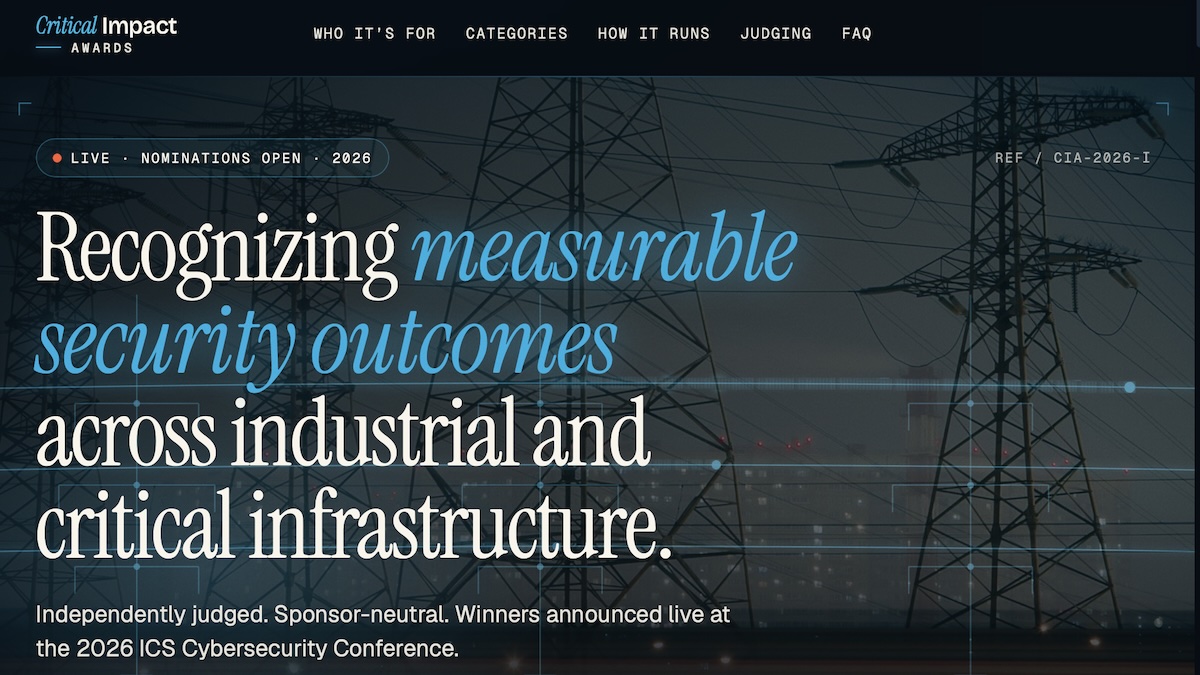
SecurityWeek Launches Critical Impact Awards to Recognize Excellence in Industrial Cybersecurity

SecurityWeek today announced the launch of the Critical Impact Awards, a new recognition program honoring the individuals, organizations, and technologies delivering measurable impact and contributions in industrial cybersecurity. Winners will be announced live at the 2026 ICS Cybersecurity Conference, taking place October 6–8, 2026, at the W Nashville, as the event celebrates its 25-year anniversary.

Unlike pay-to-play awards programs that have eroded trust across the technology industry, Critical Impact Awards are earned, not bought. Every nomination is reviewed by an independent judging panel against published criteria. Sponsorship has no influence on outcomes, and the panel publishes its rationale for each honoree, making the Critical Impact Awards the most credible recognition program in the cybersecurity industry.

“The people defending industrial and critical infrastructure rarely seek the spotlight, and too many awards programs reward marketing budgets rather than merit,” said Mike Lennon, Managing Director at SecurityWeek and Director of the ICS Cybersecurity Conference. “The Critical Impact Awards were designed to fix that, with recognition based on outcomes and evidence, and judged by practitioners, with nothing for sale.”

Open to All. Based on Merit

Nominations are completely free and open to everyone: peers, leaders, vendors, partners, customers, and journalists. Self-nominations are welcome. Judging is based on the evidence presented, not on who submitted it.

Independent Judging Panel

Advertisement. Scroll to continue reading.

The Critical Impact Awards are judged by an independent panel of industrial cybersecurity insiders, including CISOs, OT security practitioners, and critical-infrastructure operators. The panel sets the criteria, reviews every nomination against them, and publishes its rationale for each honoree.

Award Categories

The inaugural Critical Impact Awards will honor achievement across two groups of categories:

Technical Excellence & Research

  • Best OT Vulnerability Research
  • Best OT Detection & Threat Research
  • Most Innovative OT Defense
  • Best OT Security Innovation
  • Best ICS Incident Response

Community & Leadership

  • ICS/OT Defender of the Year
  • Community Champion / Mentor of the Year
  • Lifetime Achievement in Industrial Security
  • Emerging Leader in ICS Security
  • OT/ICS Collaboration Excellence Award

Nominations and Timeline

Nominations close on August 31, 2026. Finalists will be notified in advance, and winners will be announced live on stage at the 2026 ICS Cybersecurity Conference in Nashville. To submit a nomination or review the judging criteria, visit https://www.criticalimpactawards.com/.

https://www.securityweek.com/securityweek-launches-critical-impact-awards-to-recognize-excellence-in-industrial-cybersecurity/


New HollowGraph Malware Abuses Microsoft 365 Calendar for C&C Communication

A recently discovered piece of malware abuses the Microsoft 365 calendar for command-and-control (C&C) communication, Group-IB reports.

Dubbed HollowGraph, the malware is believed to be part of a larger toolkit and is likely linked to Cavern Manticore, an Iran-nexus threat actor that Check Point detailed earlier this month.

The malware’s communication mechanism relies on the Microsoft Graph API and a compromised 365 account in Israel to hide its C&C communication within legitimate traffic.

“Using the Microsoft Graph API, it treats the compromised mailbox’s calendar as a two-way dead-drop: operators plant tasking as calendar events, and the implant exfiltrates stolen files by creating its own events with encrypted data attached,” Group-IB explains.

The payloads are attached to events as files, and the events are dated far in the future (13 May 2050) to avoid alerting the mailbox owner. The malware uses hybrid RSA + AES encryption to secure the payloads.

Additionally, HollowGraph retains a secondary communication channel, performing DNS tunneling to refresh its configuration and Microsoft Entra ID (Azure AD) credentials it uses for authentication.

Advertisement. Scroll to continue reading.

Group-IB identified 12 HollowGraph victims, including three that were actively communicating with the attackers’ infrastructure. The earliest observed communication occurred on June 3, suggesting that the malware has been deployed in attacks since at least last month.

“The recovered indicators — an Israeli mailbox used for exfiltration and malware samples uploaded from Israel — suggest a focused interest in Israeli entities rather than broad, opportunistic compromise,” the company notes.

HollowGraph never reaches out to an attacker-controlled server for payload delivery. Instead, it relies on two supported commands: ‘send’ to generate calendar appointments with attached files, and ‘get’ to search for appointments planted by the operator and download new instructions.

The malware’s hardcoded configuration, which contains the Microsoft Entra ID tenant ID, client ID and secret, target mailbox address, C&C domain, and two RSA keys, is written to disk as logAzure.txt upon execution.

Based on command format and structure, Group-IB believes that HollowGraph is part of a variant of the Cavern framework, but attributes it to the Iran MOIS-linked OilRig subgroup Lyceum (also known as Hexane and SiameseKitten) with low confidence.

“Based on the evidence currently available, we cannot confidently attribute this activity to any previously identified threat actor. However, our analysis identified several technical similarities with the Iranian-nexus threat actor Lyceum. While these overlaps are noteworthy, they are not sufficiently unique to support a high-confidence attribution,” Group-IB notes.

Related: In Other News: Iran Tracks US Military Phones, CrashStealer macOS Malware, CVD Blueprint

Related: China-Linked APT GopherWhisper Abuses Legitimate Services in Government Attacks

Related: Multiple Jscrambler Packages Impacted by Supply Chain Attack

Related: GigaWiper Combines Multiple Malware for System-Level Sabotage

https://www.securityweek.com/new-hollowgraph-malware-abuses-microsoft-365-calendar-for-cc-communication/


The New Google Business Profile Playbook for AI Local Search via @sejournal, @CallRail

You probably set up your Google Business Profile a while back, filled in your address, picked your categories, maybe chased down a few reviews, and then called it done. Totally understandable. That was enough, once.

But here’s what’s changed: If you haven’t meaningfully touched that profile in months, you’re losing visibility to competitors who figured out something you haven’t yet. Google transformed GBP from a directory listing into a live engagement surface, and businesses that treat it like the former are quietly bleeding map pack rankings they don’t even know they’ve lost.

This applies to every local business. Retailers, yes, but also law firms, dental practices, restaurants, gyms, plumbers, and salons. If your GBP isn’t actively signaling to Google that you’re open for business and earning it every day, you’re leaving real visibility on the table.

Let’s talk about what killed the static profile, what Google built in its place, and exactly what you need to do about it.

When “Set It And Forget It” Actually Worked

Cast your mind back to the directory era. You filled out your name, address, and phone number (NAP), chose a category, uploaded a logo, and crossed your fingers. Google treated these profiles as reference points, fixed coordinates in the physical world. The algorithm cared about NAP consistency across directories more than anything else. Match your citations across 50 listing sites? You were golden.

It worked because that’s genuinely all Google needed. The platform was confirming you existed at a given address. Nothing more.

The New Table Stakes (And Why They’re Not Enough)

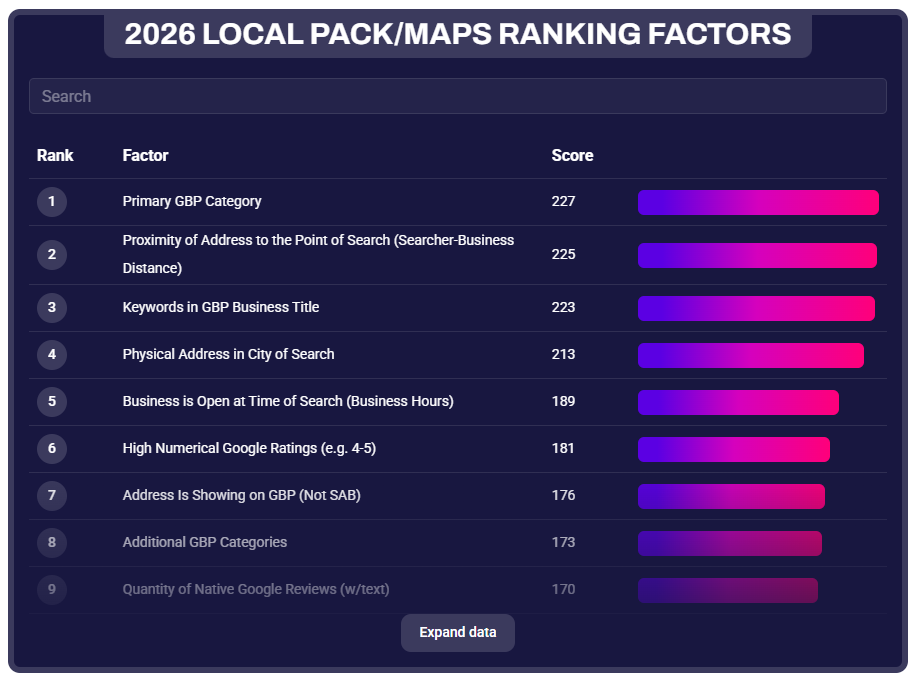
Those fundamentals haven’t disappeared; they’ve just become the entry fee. According to the 2026 Local Search Ranking Factors report, the primary GBP category is still the No. 1 factor for local pack visibility, followed by proximity to the searcher and keywords in the business title. These matter enormously. But when every serious competitor has them dialed in, they stop being differentiators.

Screenshot from Whitespark, March 2026

The report also makes clear that behavioral and engagement signals, posts, photos, clicks, calls, direction requests, and review cadence are climbing fast in importance. Google is actively rewarding businesses that “look alive.”

There’s also a finding worth pausing on: Being open when users search is now the No. 5 local pack ranking factor. Your hours aren’t just informational; they’re a ranking signal. This was first noted by Joy Hawkins of Sterling Sky and subsequently confirmed by a BrightLocal study of 50 businesses across 10 categories, which found that rankings tended to drop when a business is listed as closed. Don’t treat your hours as a set-and-forget field. Audit them quarterly, set special hours for holidays before the holiday arrives (not after), and consider whether your current hours are costing you visibility during high-intent search windows.

A static profile with perfect NAP and a 4.8-star rating is like showing up to a job interview in a great suit but refusing to speak. You look the part, but you’re not convincing anyone you’re the right choice.

Google’s Shift: From Listings To Live Engagement

Google didn’t randomly decide to make GBP harder to manage. They followed user behavior. People aren’t browsing businesses anymore; they’re searching with immediate intent. “Who can help me with this right now?” isn’t a research question; it’s a decision waiting to happen.

So Google built GBP into an active engagement surface. For retailers, that meant integrating Merchant Center so real-time product inventory could surface directly in search results and Maps. For service businesses, it means appointment booking, Q&A, and post-activity are all live signals. For restaurants, it’s menus, wait times, and reservation links. The platform expects ongoing input, and it rewards the businesses that provide it.

The core principle is the same whether you sell hiking boots or handle divorces: Google favors profiles that continuously demonstrate relevance and activity. The mechanism differs by business type. The outcome doesn’t.

The Signals That Actually Move The Needle

Review Velocity, Not Just Review Volume

Reviews have always mattered, but the 2026 Local Search Factors Ranking Report data adds important nuance. Fresh reviews don’t just help you rank; they help people pick you over a competitor with the same star rating. Research further confirms that review signals are gaining influence across local rankings, with proximity earning you the look, but review content helping secure the top spot.

Do this: Make review requests part of your operational workflow. Send the ask within 24 hours of a completed service or transaction while the experience is fresh. Respond to every review, positive and negative, within 48 hours. Owner responses are an engagement signal, not just a reputation management courtesy.

Not that: Don’t batch review requests monthly or rely on a generic follow-up email. Don’t respond to positive reviews with a copy-paste “Thanks for your feedback!” Google and potential customers can both tell.

A law firm that earns 12 reviews over three years and one that earns 12 reviews over three months are sending very different signals to the algorithm, even with identical star ratings.

GBP Posts: The Most Underused Freshness Signal

Most businesses either never post to GBP or publish one post in January and forget it exists. That’s a significant missed opportunity. Posts, whether offers, updates, events, or business news, are a direct freshness signal that tells Google your profile is actively managed.

Do this: Post at least once a week. Tie posts to things that are actually happening: a seasonal promotion, a recently completed project, a staff milestone, or a local event you’re involved in. Use the “Offer” post type when you have something time-sensitive; the expiry date creates urgency and signals recency.

Not that: Don’t recycle the same “Welcome to our business!” post every few months. Don’t post only when you remember to; build it into a recurring task, same as you would any other content channel. And don’t ignore the post types Google gives you; Events and Offers get more real estate in the profile than standard Updates.

Photos: Recency Matters As Much As Quality

According to Birdeye’s State of Google Business Profile 2025 report, verified profiles with photos consistently receive more website visits, direction requests, and calls, and listings with recent photos and video see measurably higher engagement than those with stale or infrequently updated imagery. That “recently updated” part is key. A profile with 80 photos, all uploaded three years ago, isn’t sending the same freshness signal as one with steady uploads over recent months.

Do this: Set a recurring reminder to upload new photos at least twice a month. Show real things: recent work, your current team, your updated space, seasonal inventory. For service businesses, job-site photos and before/after shots are gold; they’re authentic, specific, and far more compelling than stock imagery.

Not that: Don’t upload a batch of 50 photos once a year and call it done. Don’t use obviously staged or stock photos as your primary images; research on competitor GBP analysis shows that photo quality and authenticity are increasingly factored into how profiles are perceived. And don’t ignore customer-uploaded photos; respond to them or flag inappropriate ones rather than leaving them unattended.

Booking And Messaging: Closing The Loop Inside Google

Google increasingly wants to keep searchers inside its own ecosystem. For local businesses, that means enabling every feature your business type supports: “Book Online” links, appointment URLs, and the Q&A section. These aren’t just convenience features; they’re engagement signals. When a user books directly through your GBP, that interaction tells Google your profile is functional and driving real-world action.

Do this: If your business supports appointments, connect a booking link (Google supports integrations with platforms like Booksy, Vagaro, OpenTable, and others). Seed your Q&A section with the three to five questions customers actually ask most, and answer them yourself before strangers do it for you.

Not that: Don’t leave your Q&A section empty or unmonitored, unanswered questions (or worse, inaccurate answers from random users) erode trust and represent a missed engagement opportunity.

For Retailers: Real-Time Inventory Is Its Own Category

If you sell physical products, everything above applies, but you have an additional lever that service businesses don’t: real-time inventory.

Google integrated Merchant Center with GBP specifically to surface what’s on your shelves in search results and Maps.

Do this: Prioritize your top 50 highest-intent, most-searched products first. Get those live and accurate before trying to sync your entire catalog. Add product schema markup to your website’s product pages so your feed and your site are telling Google the same thing.

Not that: Don’t upload a feed manually once a week and assume that’s close enough to real-time. Don’t skip the Merchant Center diagnostics step; a feed with errors will silently underperform, and you won’t know why until you check. And don’t assume inventory feeds only matter for paid ads; enabling free local listings through Merchant Center unlocks organic product visibility in search, Maps, and your GBP profile at no additional cost.

The AI Layer: Why This All Matters More Than Ever

Here’s the dimension that makes everything above more urgent: GBP signals are now feeding directly into AI-driven local results, not just the traditional map pack.

Google’s AI Mode pulls from the same signals discussed in this article: review recency and sentiment, photo freshness, post activity, accurate hours, and service completeness. The Whitespark 2026 report introduced an entirely new AI Search Visibility category for the first time, with three of the top five AI visibility factors being citation and entity-based signals. Businesses that keep their GBP current and consistent are the ones being surfaced in AI-generated answers. Businesses with stale profiles aren’t just losing map pack spots; they’re becoming invisible to AI-driven discovery entirely.

Treat every update you make to your GBP not just as a ranking tactic for the traditional local pack, but as a data signal for AI systems that are increasingly acting as the front door to local search. Accurate hours, fresh photos, recent reviews, and complete service descriptions aren’t just best practices; they’re the inputs AI needs to confidently recommend your business.

What To Measure

Once you’re actively managing your profile, track what’s actually moving:

Profile interactions: calls, direction requests, website clicks, and (where applicable) booking clicks tell you which features are actually driving action. 

Review velocity: not just your total count, but how many you’re earning per month and how quickly you’re responding. 

Post engagement: views and clicks on GBP posts help you understand which content types your local audience actually responds to. For retailers, add product impressions and store visit conversions to this list.

The Compounding Effect

Here’s what makes dynamic GBP management so powerful over time: the signals compound. Consistent posting builds freshness and authority. Steady review velocity builds trust signals. Updated photos drive higher engagement. Higher engagement improves rankings. Better rankings bring more profile views, more reviews, and more interactions, which further improve rankings. And now, all of those same signals are feeding AI systems that are reshaping how local businesses get discovered in the first place.

Local visibility is increasingly built on engagement, credibility, and connection, not just keyword optimization. Static profiles erode authority over time. Dynamic profiles compound it.

The businesses treating GBP like a compliance checkbox are the ones watching competitors steal map pack spots they used to own. The ones showing up consistently, posting, earning reviews, updating photos, keeping information current, and (for retailers) feeding Google live inventory, are building durable local visibility that’s genuinely hard to disrupt, whether the search happens in the traditional map pack or in an AI-generated answer.

That’s the gap. The only question is which side of it you want to be on.

More Resources:


Featured Image: A_stockphoto/Shutterstock

https://www.searchenginejournal.com/rundowns/the-new-google-business-profile-playbook-for-ai-local-search/