Week of July 6 Cable News Ratings: MS NOW Grows in Demo and Viewers

This is TVNewser’s basic cable network ranker and cable news report for the week of July 6, 2026.

MS NOW finished the first full week of July as the only network with gains in total viewers and the Adults 25-54 demo during primetime and total day. Making it even more impressive was that the network was up by double digits in both measured categories during primetime.

Meanwhile, Fox News and CNN came down from their Independence Day celebration coverage highs to finish the week down across the board. However, Fox News was still the most-watched cable news network.

This week also featured the cable news networks covering the shocking news of South Carolina Senator Lindsey Graham’s passing early Sunday morning. MS NOW was the first to break the news at 2:49 a.m. ET, followed by Fox News at 2:52 a.m. ET,  and not too far behind at CNN at 2:53 a.m. ET.

NETWORKS:

According to Nielsen big data + panel for the week of July 6, Fox News averaged 2.109 million total viewers and 164,000 A25-54 viewers during primetime. The network was down -15% in total viewers and -25% in the demo compared to the week prior (the week beginning June 29). 

During total day viewing, Fox News averaged 1.429 million total viewers and 127,000 A25-54 viewers. Based on its average from the previous week’s measurements, the network was down -12% in total viewers and -17% in the demo.

Fox News remained in first place in total primetime viewership and slipped to third in demo viewership among all basic cable networks. During total day, it continued to be No. 1 in total viewers and was second in the total day demo.

MS NOW averaged 1.028 million total viewers and 94,000 viewers in the A25-54 demo for the week. The network grew by +11% in total viewers and +19% in the demo compared to its primetime average the week prior.

During total day, MS NOW averaged 606,000 total viewers and 59,000 demo viewers. It was up +2% in total viewers and +4% in the demo compared to the network’s average the week prior—the only network to gain viewers in both categories across the two measured dayparts.

Among all basic cable networks, MS NOW finished in second place in total primetime viewers and was 15th in the demo. It was No. 2 in total viewers and in ninth place in the total day demo. 

CNN averaged 582,00 total primetime viewers and 95,000 A25-54 viewers during primetime for the week of July 6. The network saw declines of -13% in total viewers and -8% in the demo compared to the previous week. 

During total day, the network had 442,000 total viewers and 58,000 viewers in the demo. CNN was down by -4% in total viewers and -3% in the demo during this daypart.

Among all cable networks, CNN dropped from third to fifth in total viewers and was 14th in the demo during primetime. It remained in fourth place in total day among total viewers and was 10th in the demo. 

When looking at these networks’ performance during the same period a year ago:

  • During primetime, Fox News was down -13% in total viewers and -37% in the A25-54 demo. During total day, the network posted losses of -7% in total viewers and -33% in the demo. 
  • MS NOW was up +16% in total viewers and +9% in the demo. During total day, the network grew by +14% in total viewers and +13% in the demo.
  • In primetime, CNN saw gains of +20% in total viewers and +7% in the demo. During total day, it grew by +20% in total viewers but was down -5% in the demo.

PROGRAMMING:

Fox News had 13 out of the 15 spots of the most-watched cable news shows of the week, with The Five on top with 3.331 million total viewers at 5 p.m. ET. MS NOW was represented in the chart by the Monday airing of The Rachel Maddow Show at 9 p.m. ET, with 1.829 million total viewers at No. 8, and by The Last Word with Lawrence O’Donnell, airing weeknights at 10 p.m. ET, with 1.396 million total viewers at No. 15.

The Five also finished first in the Adults 25-54 demo, averaging 279,000 viewers at 5 p.m. ET. Fox News held 13 of the 15 top spots in the demo, with The Rachel Maddow Show in 14th place with 141,000 viewers. The Last Word with Lawrence O’Donnell finished with 134,000 viewers at No. 15.

July 6, 2026 (Nielsen Big Data + Panel):

Prime Time

Fox News MS NOW CNN
• Total Viewers: 2,109,000 1,028,000   582,000
• A25-54: 164,000 94,000   95,000

Total Day

Fox News MS NOW CNN
• Total Viewers: 1,429,000 606,000   442,000
• A25-54: 127,000 59,000   58,000

Week 7-6-26 Cable Ranker P25-54 BDP by Adweek

https://www.adweek.com/tvnewser/week-of-july-6-2026-cable-news-ratings/


5 Lessons From the World Cup’s Best Marketing Plays—and Those That Missed the Mark


/* ========================= Base container ========================= */ .article-body-promo-ad { border: 1px dotted #f53c60; background-color: rgba(245, 60, 96, 0.05); border-radius: 8px; margin-top: 2em; position: relative; padding: 30px 16px 16px 60px; } @media (min-width: 768px){ .article-body-promo-ad{ margin: 1em max(13%, 26px); } } .ad-bookmark-icon::before { content: ""; background-image: url("https://static-www.adweek.com/wp-content/uploads/2026/02/bookmark.svg"); background-size: contain; background-repeat: no-repeat; position: absolute; left: 15px; top: 50%; transform: translateY(-50%); width: 40px; height: 40px; } /* Floating label */ .article-body-promo-ad::after { content: "Register Now"; position: absolute; top: -14px; background: #fdebed; color: #f53c60; font-size: 13px; font-weight: 600; padding: 4px 12px; border-radius: 999px; letter-spacing: 0.04em; white-space: nowrap; } [data-bs-theme="dark"] .article-body-promo-ad::before { filter: invert(1) brightness(1); } /* Typography */ .article-body-promo-ad p { font-size: 18px; line-height: 28px; letter-spacing: 0.03em; margin: 0; } /* Links */ .article-body-promo-ad a { font-weight: 700; text-decoration: none; color: inherit; } .article-body-promo-ad a:hover { color: #F6486A; } /* Dark mode */ [data-bs-theme="dark"] .article-body-promo-ad { background-color: rgba(245, 60, 96, 0.12); } [data-bs-theme="dark"] .article-body-promo-ad::after { background: #2a0f14; } @media (max-width: 576px) { .article-body-promo-ad::after { transform: translateX(-50%); top: -10%; left: 50%; font-size: 12px; } } @media (max-width: 576px) { .article-body-promo-ad { display: flex; align-items: center; gap: 10px; padding: 14px; margin: 2em 0; } } @media (max-width: 576px) { .article-body-promo-ad::before { display: none; } } .article-body-promo-ad::before { width: 28px; height: 28px; background-size: 28px 28px; } }

The future of brands gets decided here. Join the industry’s top marketers at Brandweek for the ideas, insights, and connections shaping what’s next. Get your ticket.

The 2026 FIFA World Cup captured more than $10 billion in global ad spend, according to WARC Media estimates. That’s on top of the $2.8 billion FIFA collected from its 20 official sponsors, and before counting the dozens of non-sponsor brands that piled on for free.  

That’s an extraordinary amount of noise fighting for the same six billion potential viewers in the same six weeks. 

And that’s the main question the C-suite at these advertisers will be asking of their CMOs: Did their marketing break through and, ultimately, drive commercial success? 

Here are five lessons they can learn from the brands who did it right—and a few who missed opportunities along the way.

1. Build for the long-tail, not just the peak

Most World Cup advertisers planned a six week run and stopped there. Adidas did it differently. Starting with its five minute film starring Timothée Chalamet, the campaign was built on a long marketing runway and attached to real commercial goals. 

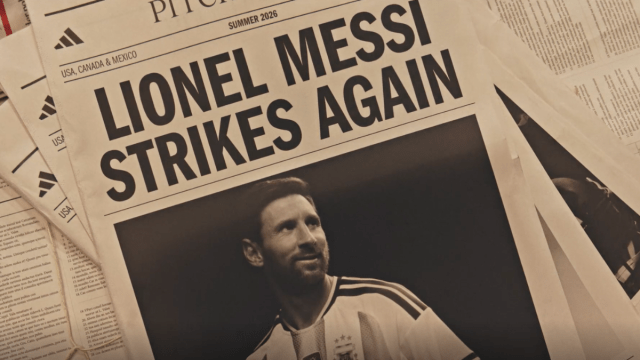
“Backyard Legends” is the latest chapter of “You Got This,” a campaign that’s been running since the 2024 Paris Olympics. It was preceded by successful product drops from Bad Bunny and Messi in early 2026, and followed by nationwide pop-ups inside Nordstrom stores, a Dick’s retail push timed to Messi’s Algeria hat-trick, and fan experiences across five host cities through its app.

The widespread effort paid off. On its April 2026 earnings call, Adidas said it booked roughly $292 million in World Cup product sales before kickoff, driving revenue up 7% to €6.6 billion. CEO Bjørn Gulden tied the campaign to Adidas closing the U.S. gap with Nike and guiding its full year to high-single-digit growth.

In that way, the World Cup became fuel for Adidas’ whole year, not a standalone spike.

Lesson No. 1: Start the drip months before your next tentpole and integrate retail, product, app, and content from the start to keep the campaign working well after the event is done.  

2. Find the unclaimed stories 

Many brands leaned into similar messages of communal joy, tension, the sheer love of “footie.” But hiding in plain sight, the tournament was telling a sharper story that no brand tapped into: the underdog against Goliath, the comeback from behind, the will to win that defines a champion. 

Cabo Verde, a nation of 500,000 ranked 67th, held Spain scoreless and took Messi’s Argentina to extra time before falling 3-2; Spain and Argentina overcame all odds to win against France and England, respectively; and Spain ultimately beat out defending champs Argentina for the World Cup Championship title. This is what the internet talked about. 

Brands like Nike missed the opportunity to tap into that conversation. Its “Rip the Script” platform was expansive enough to embrace all the content it developed, but failed to celebrate what the world was discussing as it happened. That dynamism would have given Nike’s campaign even greater relevance.

Lesson No. 2: Find the story not being told. Create a platform that has the flexibility to pivot from pre-produced content to on-the-field surprises so you can stay relevant throughout the tournament and after.

3.  Audit your talent

Another familiar playbook this year was using celebrities to make the game accessible to a new audience, honoring both the familiar legends and the new guard.  

That’s exactly where things went wrong. Suddenly, everyone was casting the same eight celebs. Beckham appeared in ads for more than ten sponsors. Messi showed up in almost 25% of tournament spots. It became hard to know which brand featured which player.   

YouGov found roughly 40% of U.S. World Cup followers noticed sponsors, but noticing and attributing are different. Shared casting erodes brand recognition massively.

Lesson No. 3: Brands avoid getting lost in a sea of celeb-sameness by ensuring their category conflict clauses extend to adjacent categories and by standing up social listening tools that track share of voice by talent.

4. Make the brand central to the story

The best work made the product and brand inseparable from the event itself.  

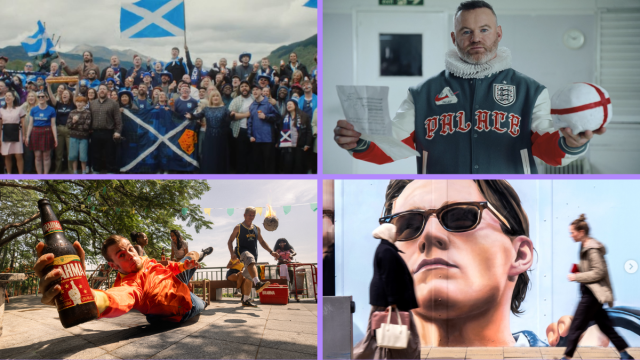
Brahma Beer’s World Cup ad exuded the sheer joy of Brazil, as well as its cultural pride in football and the attendant skepticism about it, while keeping the product central to the storyline. Nike, conversely, could have been any brand’s sports marketing. 

Lesson No. 4: Could you swap your product for a rival’s without changing the ad? If so, that’s a prop, not a winning proposition.

5.  Don’t broadcast, have a conversation

So many brands missed an opportunity to create the two-way dialogue crucial to reaching Gen Z and Millennials.

Packaging—the most underrated medium in brand-building—had a great highlight in Café Bustelo’s “Game Face” campaign. The brand shipped more than one million cans, designed by hyper-local artists across Mexico, Brazil, Argentina, and Colombia, with temporary face-tattoo kits. The tattoos went viral, as people used them to promote their flag, their country, their teams, themselves, and the product—in one fell swoop. 

Lesson No. 5: When trying to reach younger audiences, don’t broadcast your message; make it a conversation they can be a part of.

https://www.adweek.com/brand-marketing/5-lessons-from-the-world-cups-best-marketing-playsand-those-that-missed-the-mark/


SonicWall Zero-Days Exploited to Deliver Custom Malware for Weeks Before Patch

Two recently patched SonicWall appliance zero-days were exploited by threat actors for weeks before patches were released, according to cybersecurity firm Volexity.

SonicWall released a public advisory for the vulnerabilities on July 14, informing customers that CVE-2026-15409 and CVE-2026-15410 had been exploited in the wild.

Remote, unauthenticated attackers can exploit the flaws to hack SMA1000 secure remote access appliances. SonicWall has made available hotfix releases to address the security holes.

Volexity, which assisted the vendor’s investigation into the attacks, attributed the exploitation of the zero-days to a threat actor it tracks as UTA0533. 

The security firm believes exploitation started as early as June 22.

The company on Friday shared IoCs and other technical details related to the attacks, but it has not linked UTA0533 to any known threat actor and the group’s motivation remains unclear. However, based on Volexity’s description, the attack appears more consistent with state-sponsored APT activity rather than a profit-driven cybercrime operation.

Advertisement. Scroll to continue reading.

Once the attackers compromised the targeted SonicWall appliances, they deployed custom malware named KnuckleBall, which injected two other tools into legitimate processes: a tailored Java webshell named OrangeTail, and an open source proxy named Suo5.

“With root access, the threat actor could access stored or cached credentials, capture network traffic, and potentially intercept credentials processed by the appliances,” Volexity said. 

The security firm added, “Although UTA0533 demonstrated significant capability in compromising the SonicWall appliances, available evidence suggests the threat actor was less successful moving laterally or gaining access to other systems.”

CISA has added CVE-2026-15409 and CVE-2026-15410 to its KEV catalog, which currently includes 17 flaws affecting SonicWall products.

Related: WP2Shell WordPress Vulnerabilities Exploited in the Wild

Related: Fresh SharePoint Vulnerability Exploited Soon After Disclosure

Related: Splunk, Zoom Patch Critical Vulnerabilities

Related: Nightmare Eclipse Drops ‘LegacyHive’ Windows Zero-Day

https://www.securityweek.com/sonicwall-zero-days-exploited-to-deliver-custom-malware-for-weeks-before-patch/


Pay up or not? Ransomware surge has victims facing tough choices

Nearly half of companies that are targets of a ransomware cyber attack end up paying a ransom to release their data or systems, according to 2025 research from cyber security group Sophos, while the median amount demanded is rising.

Globally, some jurisdictions are responding by banning payments to hackers. In the UK, for example, the government is advancing plans to prohibit public sector bodies and critical national infrastructure groups—including the National Health Service, local councils and schools—from making payouts.

The potential veto comes as ransomware hackers have become more advanced and meticulous in their targeting of companies, particularly vulnerable small and medium-sized businesses, over time.

“In 2026, the ransomware landscape has evolved into a highly sophisticated, corporate-style ecosystem,” says Haydn Brooks, chief executive of supply chain security group Risk Ledger. “While ransomware groups operate like smart B2B operations to ensure data return, the legal and sanction risks of paying are at an all-time high.”

This has been powered by the rise of malicious AI hacking tools such as WormGPT, FraudGPT and BruteForceAI, according to Dave Spillane, systems engineering director at Fortinet, who notes that confirmed ransomware victims rose 389 percent year-on-year in 2025, from around 1,600 in 2024 to 7,831 globally.

“In the time it would have previously taken to commit one ransomware attack, hackers can now target four separate organizations simultaneously,” he says.

“The cost per attack has dramatically decreased, commoditising sophisticated attacks, whereas the cost to defend is increasing,” agrees Shashi Kiran, chief marketing officer of tech group Nile. “What required nation states earlier can be accomplished by individuals with half-baked skills leveraging the power of AI.”

https://arstechnica.com/security/2026/07/pay-up-or-not-ransomware-surge-has-victims-facing-tough-choices/


Social Marketing That Moves at the Speed of Sports

/* ========================= Base container ========================= */ .article-body-promo-ad { border: 1px dotted #f53c60; background-color: rgba(245, 60, 96, 0.05); border-radius: 8px; margin-top: 2em; position: relative; padding: 30px 16px 16px 60px; } @media (min-width: 768px){ .article-body-promo-ad{ margin: 1em max(13%, 26px); } } .ad-bookmark-icon::before { content: ""; background-image: url("https://static-www.adweek.com/wp-content/uploads/2026/02/bookmark.svg"); background-size: contain; background-repeat: no-repeat; position: absolute; left: 15px; top: 50%; transform: translateY(-50%); width: 40px; height: 40px; } /* Floating label */ .article-body-promo-ad::after { content: "Register Now"; position: absolute; top: -14px; background: #fdebed; color: #f53c60; font-size: 13px; font-weight: 600; padding: 4px 12px; border-radius: 999px; letter-spacing: 0.04em; white-space: nowrap; } [data-bs-theme="dark"] .article-body-promo-ad::before { filter: invert(1) brightness(1); } /* Typography */ .article-body-promo-ad p { font-size: 18px; line-height: 28px; letter-spacing: 0.03em; margin: 0; } /* Links */ .article-body-promo-ad a { font-weight: 700; text-decoration: none; color: inherit; } .article-body-promo-ad a:hover { color: #F6486A; } /* Dark mode */ [data-bs-theme="dark"] .article-body-promo-ad { background-color: rgba(245, 60, 96, 0.12); } [data-bs-theme="dark"] .article-body-promo-ad::after { background: #2a0f14; } @media (max-width: 576px) { .article-body-promo-ad::after { transform: translateX(-50%); top: -10%; left: 50%; font-size: 12px; } } @media (max-width: 576px) { .article-body-promo-ad { display: flex; align-items: center; gap: 10px; padding: 14px; margin: 2em 0; } } @media (max-width: 576px) { .article-body-promo-ad::before { display: none; } } .article-body-promo-ad::before { width: 28px; height: 28px; background-size: 28px 28px; } }

The future of brands gets decided here. Join the industry’s top marketers at Brandweek for the ideas, insights, and connections shaping what’s next. Get your ticket.

This post was created in partnership with Viral Nation

Dynamic action and big plays are what make live sports so compelling to audiences, but traditional brand partnerships that take time to plan and execute are too slow to keep up.

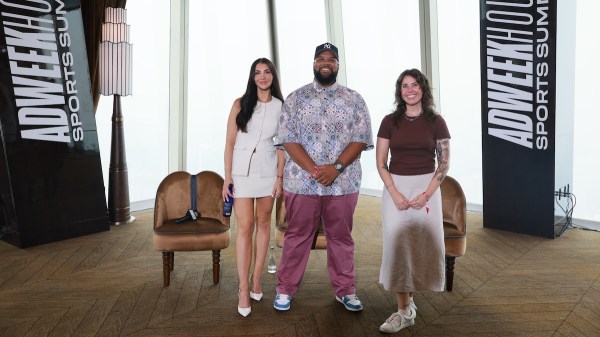
During an ADWEEK House Sports Summit panel co-hosted with Viral Nation, industry leaders sat down with Chelsea Bakken, head of audience development and social at ADWEEK, to discuss how brands can match the fast pace of sports by leveraging social media channels and working with creators.

The power of social media to elevate

Brandon Lentino, chief creative officer at Viral Nation, kicked off the conversation by talking about social media’s role during the recent FIFA World Cup. He specifically called out the channel’s power to amplify mom-and-pop businesses, such as the New Jersey deli that went viral for welcoming a British visitor with open arms.

“On a macro level, social media has been such fertile soil to share those stories,” Lentino said. “The only reason we’re hearing about that deli in Jersey is because there’s content getting created around it.”

Smaller businesses with a social media presence were able to capitalize on the tournament’s global appeal in real time with a “communal wave of user-generated content,” he added.

“When you take that already-existing groundswell of using social to get these local businesses out there, and then you mix in all of these different cultures experiencing them for the first time, it’s created this really beautiful showing of the world coming together in a way that I don’t think you’ve seen in previous FIFA tournaments,” Lentino explained.

Creators as the new broadcasters

Amber Balcaen, a professional racecar driver and entrepreneur, thinks of social media creators as broadcasters. And because of their emotional connection to creators, fans feel more like participants in sporting events than like passive viewers.

“Creators are able to give the fans that type of perspective that they might not be able to see by just turning it on TV,” Balcaen shared. “It makes that emotional attachment deeper and makes them be more invested in what they’re cheering for.”

Lentino agreed, mentioning IShowSpeed as a creator who became “as much a face of the World Cup as some of the actual athletes were.” Lentino attributes IShowSpeed’s success to remaining authentic in his own appreciation of the athletes. For brands, that combination of audience and authenticity is unmatched.

“You’re going to penetrate these communities more effectively with a voice that they actually want to hear from,” Lentino said. “And that’s not to say that traditional media can’t work or can’t be authentic, but it is a whole new wave of spending that needs to be considered.”

Advice for brands

Balcaen wrapped up the panel with some advice for brands working with creators. Her headline was to allow the creator freedom to make it authentic rather than impose certain requirements on a piece of content.

“When brands are asking us creators to push their product within the first three seconds of a video, people are going to scroll right past that because they’ll know it’s an ad,” Balcaen explained. “If you truly want people to trust the creator that you’re working with, you need to be able to let them integrate your product or your brand in an authentic way.”

https://www.adweek.com/social-marketing/social-marketing-that-moves-at-the-speed-of-sports/


The Key to Building More Durable Brand Relationships

/* ========================= Base container ========================= */ .article-body-promo-ad { border: 1px dotted #f53c60; background-color: rgba(245, 60, 96, 0.05); border-radius: 8px; margin-top: 2em; position: relative; padding: 30px 16px 16px 60px; } @media (min-width: 768px){ .article-body-promo-ad{ margin: 1em max(13%, 26px); } } .ad-bookmark-icon::before { content: ""; background-image: url("https://static-www.adweek.com/wp-content/uploads/2026/02/bookmark.svg"); background-size: contain; background-repeat: no-repeat; position: absolute; left: 15px; top: 50%; transform: translateY(-50%); width: 40px; height: 40px; } /* Floating label */ .article-body-promo-ad::after { content: "Register Now"; position: absolute; top: -14px; background: #fdebed; color: #f53c60; font-size: 13px; font-weight: 600; padding: 4px 12px; border-radius: 999px; letter-spacing: 0.04em; white-space: nowrap; } [data-bs-theme="dark"] .article-body-promo-ad::before { filter: invert(1) brightness(1); } /* Typography */ .article-body-promo-ad p { font-size: 18px; line-height: 28px; letter-spacing: 0.03em; margin: 0; } /* Links */ .article-body-promo-ad a { font-weight: 700; text-decoration: none; color: inherit; } .article-body-promo-ad a:hover { color: #F6486A; } /* Dark mode */ [data-bs-theme="dark"] .article-body-promo-ad { background-color: rgba(245, 60, 96, 0.12); } [data-bs-theme="dark"] .article-body-promo-ad::after { background: #2a0f14; } @media (max-width: 576px) { .article-body-promo-ad::after { transform: translateX(-50%); top: -10%; left: 50%; font-size: 12px; } } @media (max-width: 576px) { .article-body-promo-ad { display: flex; align-items: center; gap: 10px; padding: 14px; margin: 2em 0; } } @media (max-width: 576px) { .article-body-promo-ad::before { display: none; } } .article-body-promo-ad::before { width: 28px; height: 28px; background-size: 28px 28px; } }

The future of brands gets decided here. Join the industry’s top marketers at Brandweek for the ideas, insights, and connections shaping what’s next. Get your ticket.

This post was created in partnership with Strava

Professional sports offer brands compelling moments to reach audiences, but these are often one-off opportunities, like a championship game or an all-star weekend. How can brands move beyond such fleeting events to create authentic, lasting engagement?

During an ADWEEK House Sports Summit panel co-hosted with Strava, industry leaders sat down with Bill Bradley, deputy TV, media, and sports editor at ADWEEK, to discuss how brands should position themselves within the daily fitness routines of everyday people.

Brands as part of a ritual

Jen Starr, director of North America at Strava for Business, opened the discussion by explaining that Strava’s goal is to help brands find ways to be part of a consumer’s daily fitness ritual organically.

“Instead of looking at it as a one-time campaign-based activation or impression-based activation, we look for an opportunity to consistently motivate their audience and to reward them for their effort,” Starr said.

As an example, she cited a recent collaboration with Starbucks that challenged Strava users to walk or run for 22 minutes a day for 10 days or more. Those who did were entered to win a limited-edition Starbucks weighted vest.

Jared Shulman, SVP, head of strategy at CAA Brand Consulting, noted that brands have to target the exercise moment as well as the routines before and after.

“It’s not just about running. “It’s how you get ready to run. It’s how you recover from running,” Shulman pointed out. “Look at Therabody—they are at run clubs and at fitness spaces because of the recovery. It’s this whole kind of ecosystem surrounding it that comes back to the routine and the rituals.”

The power of social fitness

Starr talked about the importance of run clubs within Strava’s ecosystem, which have become so popular that celebrities such as DJ and record producer Diplo have started their own and host events that are open to the public.

Their unique intersection of social connection and fitness, Starr noted, allows brands to show up to a targeted audience. One example she gave was a beauty brand that wanted a club to try a new line of SPF products by routing the runners to the store.

“There is opportunity for an authentic way in for so many brands who are really deeply understanding their audience and their customer and showing up where they are, which is at our run club,” Starr explained.

How storytelling goes beyond a moment

Baker Machado, host, producer, and moderator at Front Office Sports, shared how brands that partner with athletes and celebrities can outlast a moment by telling a story.

Machado mentioned NFL quarterback Fernando Mendoza’s partnership with LinkedIn as a “perfect example.” Throughout his NCAA championship season at Indiana University, Mendoza built a presence on the social networking platform that culminated on the night of the NFL Draft.

“In that period when he gets drafted by the Raiders at No. 1, he’s this LinkedIn spokesperson, and we’re all waiting for him to update his LinkedIn status to being selected as the No. 1 pick,” Machado said.

However, Machado cautioned that the story being told must be authentic, as Mendoza was with LinkedIn. “If the person who’s trying to sell me this product doesn’t love the product, I’m not going to love the product,” he concluded.

https://www.adweek.com/brand-marketing/the-key-to-building-more-durable-brand-relationships/


How Snacking Brands Turn Sports Into Spending

/* ========================= Base container ========================= */ .article-body-promo-ad { border: 1px dotted #f53c60; background-color: rgba(245, 60, 96, 0.05); border-radius: 8px; margin-top: 2em; position: relative; padding: 30px 16px 16px 60px; } @media (min-width: 768px){ .article-body-promo-ad{ margin: 1em max(13%, 26px); } } .ad-bookmark-icon::before { content: ""; background-image: url("https://static-www.adweek.com/wp-content/uploads/2026/02/bookmark.svg"); background-size: contain; background-repeat: no-repeat; position: absolute; left: 15px; top: 50%; transform: translateY(-50%); width: 40px; height: 40px; } /* Floating label */ .article-body-promo-ad::after { content: "Register Now"; position: absolute; top: -14px; background: #fdebed; color: #f53c60; font-size: 13px; font-weight: 600; padding: 4px 12px; border-radius: 999px; letter-spacing: 0.04em; white-space: nowrap; } [data-bs-theme="dark"] .article-body-promo-ad::before { filter: invert(1) brightness(1); } /* Typography */ .article-body-promo-ad p { font-size: 18px; line-height: 28px; letter-spacing: 0.03em; margin: 0; } /* Links */ .article-body-promo-ad a { font-weight: 700; text-decoration: none; color: inherit; } .article-body-promo-ad a:hover { color: #F6486A; } /* Dark mode */ [data-bs-theme="dark"] .article-body-promo-ad { background-color: rgba(245, 60, 96, 0.12); } [data-bs-theme="dark"] .article-body-promo-ad::after { background: #2a0f14; } @media (max-width: 576px) { .article-body-promo-ad::after { transform: translateX(-50%); top: -10%; left: 50%; font-size: 12px; } } @media (max-width: 576px) { .article-body-promo-ad { display: flex; align-items: center; gap: 10px; padding: 14px; margin: 2em 0; } } @media (max-width: 576px) { .article-body-promo-ad::before { display: none; } } .article-body-promo-ad::before { width: 28px; height: 28px; background-size: 28px 28px; } }

The future of brands gets decided here. Join the industry’s top marketers at Brandweek for the ideas, insights, and connections shaping what’s next. Get your ticket.

This post was created in partnership with Ibotta

Live sports draw some of the largest audiences on the planet, and every watch party is a chance for snack brands to win the grocery basket.

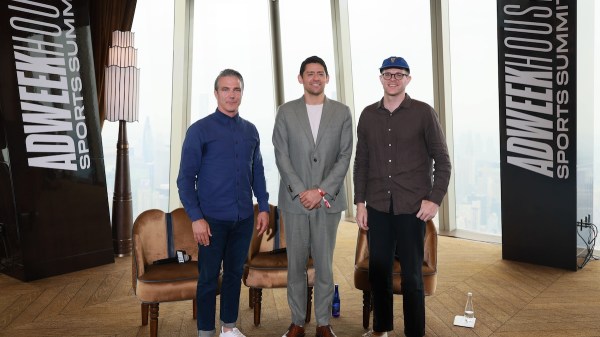
During an ADWEEK House Sports Summit fireside chat co-hosted with Ibotta, Sara Wallace, head of brand marketing at Ibotta, sat down with Justin Parnell, SVP of marketing and insights at Mondelēz International, and Chris Dungan, VP of client partnerships at Ibotta, to discuss how brands connect cultural moments to real performance.

Standing out on the field and in-store

For a leading snacking company like Mondelēz, live sports are what Parnell described as a “critical moment of consumption.” They let brands be present with consumers and their families as they gather to enjoy their favorite sports and snacks. Stretching five weeks, the World Cup offered a long runway to sustain that relationship.

“We can have a continuous pulse of always being on with our consumer,” Parnell explained. “We partnered with celebrities. We had one-of-a-kind special experiences that fans and consumers were able to win, and we did special limited-edition packs and flavors all focused around the World Cup. That really helped us win in store.”

As consumers get more conscious about discretionary spending, brands find new ways to stand out.

“We spend a lot on displays and merchandising in store to ensure that we are getting that really valuable shelf space,” Parnell said. “And then where Ibotta comes in, we overlay specific coupons against the right audiences and incentives to ensure that we are closing that deal.”

From his bird’s-eye view at Ibotta, Dungan sees brands leaning in on promotions as a way to meet consumers where they are. “It’s not just with these cultural moments and sporting events, but all the time now, just making sure we’re putting the right offers to help deliver on consumer needs,” he observed. “We’re seeing a tremendous uptick in overall engagement with promotions right now.”

Real relationships, real loyalty

One example of that current engagement and promotions approach is SnackWorks Perks, a rewards program Mondelēz recently launched with Ibotta. Spanning Mondelēz brands from Oreo and Chips Ahoy to Ritz and Sour Patch Kids, the platform rewards consumers for buying across the portfolio. The goal is to drive frequency and loyalty over time.

In contrast to the vast Ibotta Performance Network, through which Mondelēz can reach hundreds of millions of consumers with strategic offers, SnackWorks Perks is a more bespoke platform for building personalized relationships with consumers who opt in.

“We’re learning from those consumers, and we’re building better relationships with them,” Dungan explained. “We’re seeing environmental things, like high-fiber trends and high-protein trends, and all of that data begins to show up in the understanding that we’re capturing in this network’s program.”

Such rich insights open up a new world of precision marketing. “Gone are the days of blanketing the world with one big message,” Parnell said. “We’re getting very specific: What is the consumer’s shopping behavior, what is their challenge, and how do we reach them in the most relevant way?”

Leveraging Ibotta’s transactional data, Mondelēz can build unique audiences—loyal buyers, for instance, or shoppers leaning toward competitors—and tailor offers accordingly.

“We can actually tailor our messages in a more direct and impactful way through the value of data,” Parnell concluded. “Ibotta is one of the partners that we are working closely with to unlock and unleash that capability.”

https://www.adweek.com/brand-marketing/how-snacking-brands-turn-sports-into-spending/


How Sports and the Big Screen Deliver Unique Advertising Opportunities

/* ========================= Base container ========================= */ .article-body-promo-ad { border: 1px dotted #f53c60; background-color: rgba(245, 60, 96, 0.05); border-radius: 8px; margin-top: 2em; position: relative; padding: 30px 16px 16px 60px; } @media (min-width: 768px){ .article-body-promo-ad{ margin: 1em max(13%, 26px); } } .ad-bookmark-icon::before { content: ""; background-image: url("https://static-www.adweek.com/wp-content/uploads/2026/02/bookmark.svg"); background-size: contain; background-repeat: no-repeat; position: absolute; left: 15px; top: 50%; transform: translateY(-50%); width: 40px; height: 40px; } /* Floating label */ .article-body-promo-ad::after { content: "Register Now"; position: absolute; top: -14px; background: #fdebed; color: #f53c60; font-size: 13px; font-weight: 600; padding: 4px 12px; border-radius: 999px; letter-spacing: 0.04em; white-space: nowrap; } [data-bs-theme="dark"] .article-body-promo-ad::before { filter: invert(1) brightness(1); } /* Typography */ .article-body-promo-ad p { font-size: 18px; line-height: 28px; letter-spacing: 0.03em; margin: 0; } /* Links */ .article-body-promo-ad a { font-weight: 700; text-decoration: none; color: inherit; } .article-body-promo-ad a:hover { color: #F6486A; } /* Dark mode */ [data-bs-theme="dark"] .article-body-promo-ad { background-color: rgba(245, 60, 96, 0.12); } [data-bs-theme="dark"] .article-body-promo-ad::after { background: #2a0f14; } @media (max-width: 576px) { .article-body-promo-ad::after { transform: translateX(-50%); top: -10%; left: 50%; font-size: 12px; } } @media (max-width: 576px) { .article-body-promo-ad { display: flex; align-items: center; gap: 10px; padding: 14px; margin: 2em 0; } } @media (max-width: 576px) { .article-body-promo-ad::before { display: none; } } .article-body-promo-ad::before { width: 28px; height: 28px; background-size: 28px 28px; } }

The future of brands gets decided here. Join the industry’s top marketers at Brandweek for the ideas, insights, and connections shaping what’s next. Get your ticket.

This post was created in partnership with Screenvision Media

Sports and cinema drive emotional experiences among communities of passionate viewers.

During an ADWEEK House Sports Summit panel co-hosted with Screenvision Media, Mark Stenberg, senior media reporter at ADWEEK, sat down with industry leaders to discuss why culturally relevant sports and moviegoing experiences are ideal settings for creating lasting brand impact.

Similarities in sports and cinema fandom

Kevin McGaw, SVP and head of marketing at Screenvision Media, a cinema advertising organization, began the discussion by sharing the numerous parallels between cinema and sports fandom.

“There are people who are huge fans of sports who wear jerseys and paint their faces. Moviegoers will wear costumes and paint their faces,” McGaw shared. “That communal experience you only get from sports and moviegoing.”

Using World Cup watch parties as an example, McGaw pointed out that consumers enjoy experiences more when they get to do them with fellow fans.

That’s precisely why Diageo, which includes spirit brands like Guinness, Johnny Walker, Smirnoff, and Don Julio, leans into sports marketing as a brand driver.

“If you think about a game, if you think about going to a stadium, if you think about going to a bar and restaurant to watch the World Cup, our products, more often than not, are already part of that experience,” explained Rick Pineda, VP of global sports at Diageo.

The goal is for Diageo brands to complement and enhance the sports-watching experience, not hijack it. “So, as people are experiencing this amazing moment in sports, we are along for the ride and are additive, not distracting or trying to interject into a place where we don’t belong,” said Pineda.

Likewise, Screenvision Media, which runs 20-minute shows that include regional and national advertising before feature films across 14,000 screens, has been experimenting with new interactive and immersive experiences before moviegoers tuck their phones away, shared McGaw. These experiences include using mobile phones to interact with on-screen trivia, QR codes, or shopability.

“We recognize that earlier on the show, folks are on their phone,” McGaw said. “How do we give opportunities for advertisers to be a part of that process as well?”

Cultural moment connections

The discussion shifted to explore the brand opportunities possible with the World Cup, as well as with award shows and big films.

Pineda shared that Diageo is the first-ever spirits partner for FIFA and they’ve run with it, creating tailored campaigns based on location. In Mexico, for example, they developed a huge campaign with Don Julio, including a limited-time Don Julio bottle that’s an homage to the World Cup trophy.

“People will pick the bottle up and showcase it, much like soccer players that win the trophy do at the end of the World Cup,” explained Pineda. “So, it’s about finding those moments of connection.”

McGaw agreed that there is power in community connection, sharing that Screenvision Media is leaning more toward in-person experiences as well, including recent watch parties for the BET Awards in three cities and product sampling with L’Oreal around The Devil Wears Prada 2 before and after the show.

“The experiential opportunity that cinema delivers for your creative—in addition to a 40-foot screen and surround sound—is very unique,” said McGaw. “It’s this opportunity for advertisers to have consumers not just experience their brand on a screen, but experience the brand in real life, in person, when they’re in an environment that is already leaning into being out more and more likely to shop before or after a movie.”

https://www.adweek.com/brand-marketing/how-sports-and-the-big-screen-deliver-unique-advertising-opportunities/


OpenSSL Silently Fixes ‘HollowByte’ DoS Vulnerability

A vulnerability in OpenSSL could allow attackers to cause a server’s memory to be exhausted before any security handshake, Okta’s red team discovered.

Referred to as HollowByte, the denial-of-service (DoS) bug could be triggered via a malicious payload of only 11 bytes that declares a larger incoming message body to trigger a buffer pre-allocation that is not immediately freed.

HollowByte existed because older OpenSSL iterations pre-allocated receive buffer sizes based on the incoming message body length declared in the handshake message’s 4-byte header.

The pre-allocation occurred before any data arrived, and an attacker could send an 11-byte payload to trigger an unvalidated buffer allocation of up to 131 KB.

“The worker thread then blocks, waiting indefinitely for data that will never arrive,” Okta explains.

Additionally, because the GNU C Library (glibc) retains small-to-medium memory allocations for potential reuse and does not immediately return them to the OS when a connection drops, although OpenSSL frees the buffer, multiple successive payloads could be sent to exhaust the server’s memory.

Advertisement. Scroll to continue reading.

“By launching waves of connections with randomized claimed sizes, an attacker prevents the allocator from reusing those freed chunks,” Okta explains.

“Even after the attacker disconnects, the server remains permanently bloated. The only way to reclaim that memory is to terminate the process,” it adds.

In real-world testing, a 1 GB RAM system became unresponsive after 547 MB of memory was fragmented and frozen.

On a 16 GB RAM system, “the attack successfully locked up 25% of the system’s total memory while staying safely under the connection ceiling, meaning standard connection-limiting defenses won’t stop it,” Okta says.

Apache, NGINX, Node.js, Python, Ruby, PHP, MySQL, PostgreSQL, and other types of applications, servers, runtimes, and databases that use OpenSSL are impacted unless they upgrade to a patched version of the open source library.

Patches for HollowByte were silently included in OpenSSL version 4.0.1 and silently backported to versions 3.6.3, 3.5.7, 3.4.6, and 3.0.21. Now, the library increases the buffer size as bytes actually land and no longer trusts the handshake header for buffer growth.

Related: Chrome 150 Update Patches Severe Memory Safety Bugs

Related: Nightmare Eclipse Drops ‘LegacyHive’ Windows Zero-Day

Related: Vulnerabilities Patched by Fortinet, Ivanti, ServiceNow

Related: SonicWall Issues Urgent SMA Patch Warning for Two Zero-Day Exploits

https://www.securityweek.com/openssl-silently-fixes-hollowbyte-dos-vulnerability/


New Index Tracks Material Breaches — And Refuses to Add Up the Losses

A longtime cybersecurity executive has built a website that tracks disclosed material breaches, aiming to give cybersecurity professionals, journalists, policymakers, and everyday citizens a resource that doesn’t currently exist.

The tracker was created by Richard Bird, who is currently Chief Strategy and Chief Security Officer at enterprise AI governance company Singulr AI. He previously held leadership roles at JPMorgan Chase and several cybersecurity companies. 

Unrelated to his role at Singulr AI, Bird is an author, and in preparation for his upcoming book — Built Wrong: Why Cybersecurity Keeps Failing and How We Can Rebuild It — he has launched a new project named The Hacker in a Hoodie (HIH) Index. 

The core of the site is a pair of ledgers that update on what Bird describes as a daily or near-daily basis, pulled by pollers and tracers he built and runs himself. 

The first ledger draws from SEC EDGAR, the agency’s public filing database, tracking the 8-K disclosures that public companies are required to file when they experience a material cyber incident — a requirement that has existed only since 2023. The second ledger is based on news articles and companies’ own statements.

The data arrives as raw, inconsistent text, with some entries naming a dollar loss while most don’t. Bird’s ledger organizes those scattered records into one running list.

Advertisement. Scroll to continue reading.

At the time of writing, the index contains information on more than 100 incidents. The most current entries cover data breaches reported by Coca-Cola’s Fairlife, Centers Lab, Mount Royal University, and Accenture.  

The HIH Index grades every entry by how solid its sourcing is: a primary SEC filing counts as ‘verified’, a company’s own statement as ‘attested’, and a news report as ‘inferred’. That grading lets a reader tell at a glance how much weight a given entry can actually carry.

Separate from both ledgers, the site includes a static reference chart that pulls annual figures from the FBI’s Internet Crime Complaint Center (which shows nearly $20.9 billion in reported losses for 2025) and IBM’s Cost of a Data Breach report (which shows an average of $4.44 million per breach). 

These reports provide context for the project’s argument. They show that per-incident cost has barely moved in a decade, even as total reported losses have compounded at roughly 35% a year.

“This means only one thing — the hackers aren’t making more money from the same number of victims,” Bird told SecurityWeek. “More companies are failing (way more) at cybersecurity every year and the bad guys are functionally printing money by capitalizing on how poorly cybersecurity is actually being executed at these companies.”

He added, “The [upcoming] book, and the index, are not pointing fingers of blame. What we’ve built in cybersecurity is rational. But it is rational based on the wrong data and inputs — we measure activity, we don’t measure performance and outcomes.”

Bird’s case against summing the HIH Index data is straightforward: most of the ledger’s entries are marked ‘not yet quantified,’ and the ones that do carry a figure come from different evidence tiers — a verified dollar loss in an SEC filing isn’t the same as an inferred estimate drawn from a news report. Treating those as interchangeable and adding them together would produce a number that looks precise but is not backed by anything solid. 

He points to the industry’s favorite trillion-dollar cybercrime estimate, a controversial Cybersecurity Ventures projection, as exactly the kind of number his project aims to avoid manufacturing.

“Summing the numbers creates a myth — it is no longer data; it becomes a prediction at best and a forecast at worst,” Bird explained. “The losses are so grossly underreported that if I took that sensationalist approach, I’d be creating another version of the same problem. A bunch of guessing that is perceived as being better but only because it has more citations.”

What makes the ledgers useful isn’t the total — it’s the ability to check. A reporter or analyst can look up what a specific company actually disclosed, how the filing was worded, and what evidence grade it carries. In an industry where cyber loss reporting leans heavily on marketing-driven estimates, having a citable, source-graded reference to check claims against fills a gap that has largely gone unfilled.

Bird maintains the entire project alone — no editorial team, no outside data vendor, just the scrapers he built to keep both ledgers current. He is also upfront about the dataset being young: the SEC requirement it’s built on is relatively new, and he draws a direct comparison to Troy Hunt’s Have I Been Pwned data breach notification service, which also started small and grew because there was nowhere else to look.

That absence is the point he’s really making. Everything else in a company gets measured in dollars, except cybersecurity, which Bird says has been treated as overhead instead of a tracked outcome. In his words:

“Business keeps score in dollars, governments keep score in dollars, consumers keep score in dollars — cybersecurity is the only business function that isn’t measured in dollars from a performance perspective. It’s treated as a ‘cost of business’. There is only one other corporate ‘cost of business’ in the enterprise world — whether it is large, medium or small businesses. And that is taxes. We built cybersecurity as a tax, not as a value-added business function. The entire industry and practice has created an ecosystem over the last 30 years that not only emphasizes that truth, it actually rewards the continuation of the flawed model.”

Related: Meet AIVEX, a New Triage Model Built to Reduce Supply Chain Threat and Risk

Related: New Platform Uses Cryptographic Invisibility to Protect AI-Built Applications

https://www.securityweek.com/new-index-tracks-material-breaches-and-refuses-to-add-up-the-losses/