In Other News: Iran Tracks US Military Phones, CrashStealer macOS Malware, CVD Blueprint

SecurityWeek’s weekly cybersecurity news roundup offers a concise overview of important developments that may not receive full standalone coverage yet remain relevant to the broader threat landscape.

This curated summary highlights key stories across vulnerability disclosures, emerging attack methods, policy updates, industry reports, and other noteworthy events to help readers maintain a well-rounded awareness of the evolving cybersecurity environment.

Here are this week’s highlights: 

Dutch authorities eye local actors in Odido telecom breach

Law enforcement in the Netherlands suspects domestic cybercriminals played a role in the recent network intrusion at telecom operator Odido. Investigators are focusing on local hacking groups that may have facilitated or directly executed the data theft. 

Advertisement. Scroll to continue reading.

Third-party vendor breach exposes Lidl customer information

A cyberattack targeting an external IT service provider for supermarket giant Lidl has resulted in the theft of customer data. The compromise led to the exposure of personal details, prompting the company to issue warning notices to affected consumers in Belgium and the Netherlands. Security teams are working to determine the full scope of the supply chain incident.

Cyberattack triggers bankruptcy for German manufacturer after extended downtime

A German manufacturing company has filed for insolvency following a devastating cyberattack that forced a complete production shutdown lasting six weeks. The prolonged operational stoppage caused severe financial losses that ZEGO Textilveredelungszentrum, a firm specializing in textile finishing and customization, was ultimately unable to recover from. 

Major Japanese transport network takes systems offline following hack

Nihon Kotsu, Japan’s largest taxi operator, was forced to deactivate its IT and dispatch systems after detecting a cyberattack on its network. The proactive shutdown disrupted booking services and administrative operations across the country as response teams worked to contain the threat. Analysts suspect the incident involved a ransomware group named AiLock. 

New CrashStealer macOS malware masquerades as system crash reporter

Security researchers have uncovered a novel macOS information stealer written in C++ that disguises itself as a legitimate crash reporting application. Dubbed CrashStealer, the malware exfiltrates sensitive user data, credentials, and system information from compromised Apple devices. Its stealthy design allows it to evade standard operating system defenses by mimicking native password prompts.

Cellular roaming and ad data exploited to track American troops

Foreign threat actors linked to Iran are leveraging advertising technology metadata and global cellular roaming protocols to track and target the smartphones of US military personnel, FT reported [paywalled]. By exploiting location data and device identifiers embedded in commercial ad networks, adversaries can monitor the movements of service members. 

Federal agencies publish blueprint for building effective bug bounty and disclosure initiatives

CISA and its international partners have released a joint guide outlining framework recommendations for establishing a Coordinated Vulnerability Disclosure program. The publication provides enterprises with step-by-step instructions on handling external bug reports, establishing legal safe harbors, and collaborating with ethical hackers. 

AI vulnerabilities allow arbitrary code execution via WhatsApp

A security researcher has demonstrated an architectural vulnerability in an OpenClaw AI agent integrated with WhatsApp that permits remote code execution on the underlying host system. By sending a specially crafted message, the researcher bypassed validation checks to force the AI into executing arbitrary system commands. 

Sophisticated Spirals ransomware targets IT firm

A newly discovered ransomware variant named Spirals has been deployed in an attack against an IT services firm operating in Asia. Investigators report that the unidentified threat group behind the operation is combining file encryption with data theft tactics to demand a ransom.

Cybercrime group claims naval defense manufacturer hack

The cybercrime collective known as The Gentlemen posted Thyssenkrupp Marine Systems (TKMS) and its subsidiary Atlas Elektronik to its leak portal, claiming the exfiltration of more than 1TB of data. Although the parent organization acknowledged a network compromise at an isolated North American unit, officials stated that the impacted environment was segmented from the core corporate infrastructure and contained no classified military records. 

Related: In Other News: Canadian Hacker Jailed, Open Source Zero-Days, Two Sentenced for ATM Jackpotting

Related: In Other News: Chinese Mythos-Like AI, Tata Electronics Breach, Snyk Layoffs

https://www.securityweek.com/in-other-news-iran-tracks-us-military-phones-crashstealer-macos-malware-cvd-blueprint/



An Insider’s Look at How Telemundo Scored Viewership Goals During World Cup


The World Cup final may not have been played, but NBCUniversal’s Telemundo is already hoisting its trophy over how it covered the month-long tournament.

On Wednesday, the broadcast network held a FIFA World Cup Playmakers Summit at the famous Studio 8H, home to Saturday Night Live at 30 Rockefeller Plaza in New York. At the summit, which explored the intersection of sports, media, and culture, Cesar Conde, chairman, NBCUniversal News Group, praised the Spanish-language network’s multiplatform coverage, saying, they’ve been able to bring “a unique authenticity to the coverage of this World Cup.”

Speaking to NBC Nightly News anchor Tom Llamas, who moderated the session, Conde explained some of the strategies that led to the network’s success.

Conde noted that Telemundo has been able to get local with its coverage, which has resonated with its audiences, who are primarily from Hispanic communities across the U.S. and the diaspora, and follow the sport in large numbers.

Additionally, Telemundo brought iconic soccer figures from Spanish-speaking countries participating in the World Cup together with the network’s expert soccer analysts: “So that when audiences are watching from Colombia or from Argentina or from Mexico, they’re not only seeing our great Telemundo team, they’re also seeing the stars and the icons of their past from soccer,” Conde said.

Kicking up the viewership

To date, the World Cup coverage through the quarterfinals across Telemundo, Universo, Peacock, and Telemundo streaming platforms is averaging 5.9 million total viewers, up +150% from the 2022 tournament in Qatar, which averaged 2.4 million during the same period.

Since the start of the World Cup on June 11, Telemundo has ranked as the No. 1 Spanish-language television network for all 30 matchdays during Total Day from 7 a.m. to 2 a.m., averaging 1.9 million total viewers. It has also captured 76% of the share among the three Spanish-language networks.   

When asked by Llamas whether the sports economy has undervalued the Hispanic community, Conde said that for any company that wants growth in the U.S., they need to focus on the three Ms—millennial, multicultural, and mobile—qualities already indicative of the Hispanic community.

“I think America, and specifically corporate America, is increasingly still waking up to the opportunity that we have in the Hispanic community,” Conde said.

Telemundo’s success with this year’s World Cup has led to the belief that NBCUniversal may put its hat in the ring for both the Spanish media rights and the English media rights for the 2030 World Cup and beyond.

FIFA is considering selling those rights as a single package rather than individually, with bidding estimated to reach $2 billion.

CTV is crowded—want to learn how brand fundamentals cut through the noise? Enroll in The ADWEEK MiniMBA in Marketing and build a strategy designed to last. Sign up here.

https://www.adweek.com/convergent-tv/telemundo-scored-viewership-goals-during-world-cup/


Over half a million power tool batteries have been recalled due to a USB-C charging fire risk

Greenworks Tools has issued a recall for around 554,780 Kobalt-branded power tools designed for yard work because of a battery issue “posing a risk of serious injury from fire hazard.” There have been 34 reports of the tool’s batteries “producing smoke, sparking or catching fire while the batteries are inserted in the tool and charging with the USB-C port,” according to the US Consumer Product Safety Commission (USCPSC). No injuries or property damage have been reported.

The recall includes several models of Kobalt trimmers, blowers, chainsaws, mowers, and pruning saws that use 24V/48V lithium-ion batteries with a built-in USB-C charging port. The full list of affected models is available on both the USCPSC’s website and a dedicated recall page on Greenworks’ website. The tools were sold through Lowe’s retail and online stores from January 2026 to May 2026 for between $20 and $482.

Although the risk of short-circuits and fires is limited to when the batteries are being charged over USB-C while still inserted into the tools, it’s still recommended that consumers with affected hardware contact Greenworks Tools through a registration form to receive a free replacement battery. The new batteries come with a charging adapter instead of a USB-C port, as well as an updated product manual, a warning sticker for the tool, and a prepaid shipping label for returning the original recalled battery, according to the USCPSC.

https://www.theverge.com/tech/967049/greenworks-kobalt-power-tools-lithium-ion-battery-recall


Bethesda teases Fallout 5 soon after Xbox’s mass layoffs

Xbox is currently in a “reset” period that includes laying off around 3,200 employees over the next year, involving deep cuts at beloved studios like id Software and Obsidian Entertainment. Now, in an attempt to show that things are still running fine, the company has announced a slate of upcoming projects at Bethesda Game Studios — which itself was hit with layoffs — including official confirmation that Fallout 5 is in the works.

“We’re investing more deeply in the worlds players love, giving creators a bigger role in shaping their experiences, and bringing our teams closer together so we can get our games into your hands sooner, support them longer, and continue building them alongside you for decades to come,” Bethesda director Todd Howard said in a statement.

There are no details yet on the next Fallout, and it sounds like the project is currently a ways off. Howard says simply that “Fallout is one of our biggest priorities today” and “Fallout 5 remains our long-range destination,“ while the game is described as being in a preproduction phase. The confirmation of the game’s existence comes more than a decade after the launch of Fallout 4, the last mainline entry in the series. Since then, the franchise has expanded with the online spinoff Fallout 76 and a live-action TV series.

Howard also revealed that a new Fallout game is in development at Obsidian, which developed 2010’s Fallout: New Vegas — “We’ll have more to share in the future,” he says — and that remasters of both Fallout 3 and New Vegas are in development, though neither has a release date.

As for The Elder Scrolls VI — which was announced way back in 2018 — Howard didn’t provide a release window but said that the game will utilize the same technology platform as Fallout 5. He says that the game is “our primary development focus today, with the majority of our team currently working on the next chapter of the franchise.” Howard added that “we’re where we planned to be, loving how it looks, and playing it every day.”

Oh, and for those wondering about the fate of Starfield, Howard noted that the franchise “remains an important part of our future.”

https://www.theverge.com/entertainment/966724/fallout-5-bethesda


The manosphere’s testosterone obsession reaches the highest levels of US military

This is Optimizer, a weekly newsletter sent from Verge senior reviewer Victoria Song that dissects and discusses the latest gizmos and potions that swear they’re going to change your life. Opt in for Optimizer here.

I was in the middle of writing a different Optimizer column this week when I learned that Pete Hegseth is getting ready to roid out America’s armed forces.

The announcement came in an X post, because of course it did. “The High-T Department of War,” the post read. There was a two-minute, 30-second video underneath. As I hit play, my soul morphed into that meme of a screaming, crying cat.

“We have a sacred duty to maintain that advantage, which is why we must constantly look for ways to optimize your performance, your resilience, and your long-term health,” Hegseth says, addressing America’s “war fighters,” before announcing a new, mandatory program annually screening service members over 30 years old for testosterone deficiency. (The test will also be available on a voluntary basis for those under 30.) If a deficiency is found, service members can opt into — but will not be required to accept — testosterone replacement therapy (TRT). According to The New York Times, these screenings will also include women.

“This initiative, it’s not about artificial enhancement. It’s about restoring and optimizing your natural capabilities, protecting your longevity, and ensuring you have the biological foundation required to sustain the fight,” Hegseth says toward the end of the video. “As we know, the modern battlefield is brutal and unrelenting. It requires and demands maximum psychological and mental readiness. And by addressing these health markers early, we’re keeping you on the leading edge of lethality…”

If that’s not an Optimizer bat signal to break down how testosterone is being run through the wellness grifter playbook, I don’t know what is.

MAHA and the broader manosphere’s obsession with testosterone levels is not new. Like any wellness fad, it starts with broad scientific truths. After age 30, testosterone levels in men naturally decline by about one percent each year on average. Male fertility levels — as in sperm count and quality — have declined compared to previous generations, which has fueled fear in the MAHA and biohacker movements, as fertility is often considered a proxy for overall health. Average testosterone levels in men have also halved in the last 50 years or so. This has led to a dramatic increase in testosterone supplementation, with The NYT reporting that prescriptions jumped from under a million in 2000 to 12 million by 2025.

Outside of falling fertility levels, testosterone deficiency, or hypogonadism, is a genuine problem. The clinical definition is a total testosterone level under 300ng/dL, but it’s a problem that usually occurs later on in life. So if a man is found to have 350ng/dL, a biohacker might deem that suboptimal, but it’s not considered a clinical deficiency. According to the Endocrine Society, hypogonadism affects roughly 35 percent of men older than 45 and between 30 and 50 percent of men with type 2 diabetes or obesity. (Never mind that active duty in most branches of the military ends around 42 and that service members are required to meet strict body fat limits.) Low testosterone can result in decreased sperm counts, erectile dysfunction, lowered libido, fatigue, mood swings, and muscle loss. Added to this, exogenous testosterone — or not naturally produced testosterone — has long been used in gyms and in professional sports to enhance performance because it helps with muscle growth and bone density and accelerates recovery from intense exercise.

Given all this, it’s unsurprising that biohackers and the manosphere have concluded that men should be taking testosterone. You can see why RFK Jr. has called the so-called “male fertility crisis” an “existential problem,” why infamous looksmaxxer Clavicular started taking testosterone at 14 years old, why Bryan Johnson ices his balls while in the sauna, and why 91 percent of athletes at the Enhanced Games — also known as the “Steroid Olympics” — were taking some form of testosterone or testosterone ester. Many manfluencers, including Joe Rogan and Andrew Huberman, have touted TRT as a pseudo fountain of youth. Combine the science with the cultural preoccupation with masculinity, and you can understand why Hegseth wants to screen our troops for low T.

But if you take some time to investigate what Hegseth seems to think TRT will do for the military, a lot of this rhetoric starts to fall apart.

A visualization shows the sperm race finish line between Tristan Mykel of USC overtaking the Asher Proeger of UCLA in the Sperm Racing competition championship in Los Angeles, California on April 25, 2025. At the Los Angeles event on Friday night, a man in a lab coat used pipettes to place samples of semen — collected from contestants ahead of time — onto tiny two-millimeter-long “tracks.” The race track is magnified 100 times by a microscope, then filmed by a camera that 17-year-old high schooler Eric Zhu says transfers the image to a 3D animation software before the final video is broadcast to the audience. The unusual sport was invented by Zhu, who raised over a million dollars to organize the event to raise awareness of male infertility.

Sperm racing is an actual thing and it’s led some influencers to realize they should maybe get off testosterone.
Photo: Patrick T. Fallon /AFP via Getty Images

For starters, Hegseth claims this screening is in the interest of long-term health. (So far, doctors are skeptical.) It should be noted that many looksmaxxers and Silicon Valley biohackers are actually getting off testosterone, thanks to concerns about exactly that.

Case in point, sperm racing has recently taken off in Silicon Valley. Yes, you read correctly. Instead of whipping out and measuring their schlongs, tech bros in San Francisco are masturbating into cups and then watching their sperm samples race across a lab-engineered racetrack to see whose swimmers are the fastest. As ridiculous as this sounds, sperm racing has also made some looksmaxxers and biohackers realize that, perhaps counterintuitively, TRT can kill your sperm and therefore your fertility. Earlier this week, I sat in a hyper-packed back room of a bitcoin bar and watched Julius Ritter, a peptide advocate and biotech entrepreneur, give a lecture to curious would-be biohackers about his stack. Ritter cheekily joked that he had recently stopped taking TRT because, while sperm racing, he learned that he had the slowest (albeit biggest) load — his words, not mine. Likewise, Clavicular also announced recently that he had stopped TRT in a bid to fix his swimmers.

This is because when you take exogenous testosterone — be it an injection, gel, or pill — the body receives signals that it doesn’t need to actually make any of its own. That in turn hinders sperm motility in the testes because the body stops making the other reproductive hormones needed for healthy sperm development. The effect is generally temporary and reversible. But considering that service members in their 30s, and possibly 20s, are at peak ages for baby-making, unnecessary testosterone supplementation may not be ideal.

Sperm shaped confetti rests on the floor after a Sperm Racing competition in Los Angeles, California on April 25, 2025. At the Los Angeles event on Friday night, a man in a lab coat used pipettes to place samples of semen — collected from contestants ahead of time — onto tiny two-millimeter-long “tracks.” The race track is magnified 100 times by a microscope, then filmed by a camera that 17-year-old high schooler Eric Zhu says transfers the image to a 3D animation software before the final video is broadcast to the audience. The unusual sport was invented by Zhu, who raised over a million dollars to organize the event to raise awareness of male infertility. (Photo by Patrick T. Fallon / AFP) (Photo by PATRICK T. FALLON/AFP via Getty Images)

Sperm shaped confetti from an in-person sperm racing event. Apparently, they’re going to have a World Cup too.
Photo: Patrickk T. Fallon/AFP via Getty Images

Meanwhile, the concept that testosterone can make a person into a better athlete is hotly debated. Sure, it might help you develop musculature over a long period of time. It might help you recover faster. But there are dozens of factors that go into whether someone is a good athlete, let alone a good “war fighter.” A couch potato who takes testosterone is not going to become an elite athlete or a supersoldier without the right skills, training, genetics, nutrition, or equipment. And even if you were gifted, big muscles aren’t necessarily a performance boost. Prior to the Enhanced Games, Olympian James Magnussen “juiced to the gills” and bulked up until his muscles were busting out of his swimsuit. It made him sink in the water. He’d somewhat slimmed down at the inaugural Enhanced Games, but I witnessed the man finish last in each of his races. Of course, Hegseth hasn’t clearly stated what the “goal” of TRT would be in active duty members besides ensuring a “biological foundation” to “sustain the fight.”

Neither has Hegseth released detailed information on how the military’s medical staff is gauging and diagnosing testosterone deficiency. In its 2024 guidelines for treating hypogonadism, the American Urological Association says that a diagnosis should only be made after two separate measurements combined with symptoms and signs. This is because testosterone levels naturally fluctuate. The guidelines also state that patients should be informed that TRT may not improve cognitive function, diabetes management, energy, fatigue, lipid profiles, or quality of life. As it turns out, multiple studies have found no convincing evidence that TRT is a so-called fountain of youth as influencers claim. Despite these established criteria, the AUA also says that up to a third of men who engage in TRT don’t meet the clinical criteria for testosterone deficiency. It also states that it is “clear from clinical practice that there are many men using testosterone without a clear indication.” In medical terminology, an indication refers to a valid cause for a particular test or treatment.

It’s not inherently bad to make testosterone screening and therapy available to service members. Addressing any kind of deficiency or hormonal imbalance can be a good thing for those who genuinely need it. This also isn’t about admonishing men who have ever felt curious about TRT. Given the zeitgeist and increased societal pressures on men, it’s only human to wonder.

17 April 2025, Hamburg: Testosterone packaging lies on a table during the presentation of seized doping agents, drugs and assets such as cash and gold in a hall on the premises of the Hamburg Customs Investigation Office. Hamburg customs have broken up an illegal doping agent and drug distribution operation. Assets amounting to 189,000 euros in cash and gold worth 50,000 euros were seized. Photo: Marcus Brandt/dpa (Photo by Marcus Brandt/picture alliance via Getty Images)

Testosterone comes in many form factors
Photo: Marcus Brandt/picture alliance via Getty Images

A fundamental philosophical tension in modern wellness — and this case in particular — is whether a person should voluntarily supplement for “optimal” health or only supplement when there’s a deficiency to return them to baseline. Biohackers, optimizers, and MAHA would likely argue the former. Most doctors would argue the latter. In his X post, Hegseth tries to play both sides. While he says in the video that this mandate isn’t about artificial enhancement, his statement is peppered with biohacking buzzwords like longevity, long-term health, mental acuity, and performance.

The problem with wellness brain is that correlation doesn’t equal causation. It’s silly to assert that widespread vitamin D deficiencies are a sign that increased sunscreen use is bad. Likewise, lower testosterone levels are not proof that men are inherently weaker than previous generations. Scientists debate the causes, but many believe they could be a result of modern life increasing exposure to environmental pollution, obesity, metabolic conditions like diabetes, stress, and poor sleep. In other words, while healthy men might have normal testosterone levels, hyperfocusing on a nebulous “optimal level” via TRT won’t make you into a better man, soldier, friend, colleague, or spouse.

Whenever faced with a potential wellness grift, it’s important to identify what a grifter is trying to sell you and ask the right questions. In this case, it seems that ought to be “What does Pete Hegseth get out of a flashy PR move promoting a beefed-out military?”

Follow topics and authors from this story to see more like this in your personalized homepage feed and to receive email updates.


https://www.theverge.com/column/966770/optimizer-manosphere-testosterone-troops


Even Microsoft couldn’t make Windows 11 work well on 8GB of RAM

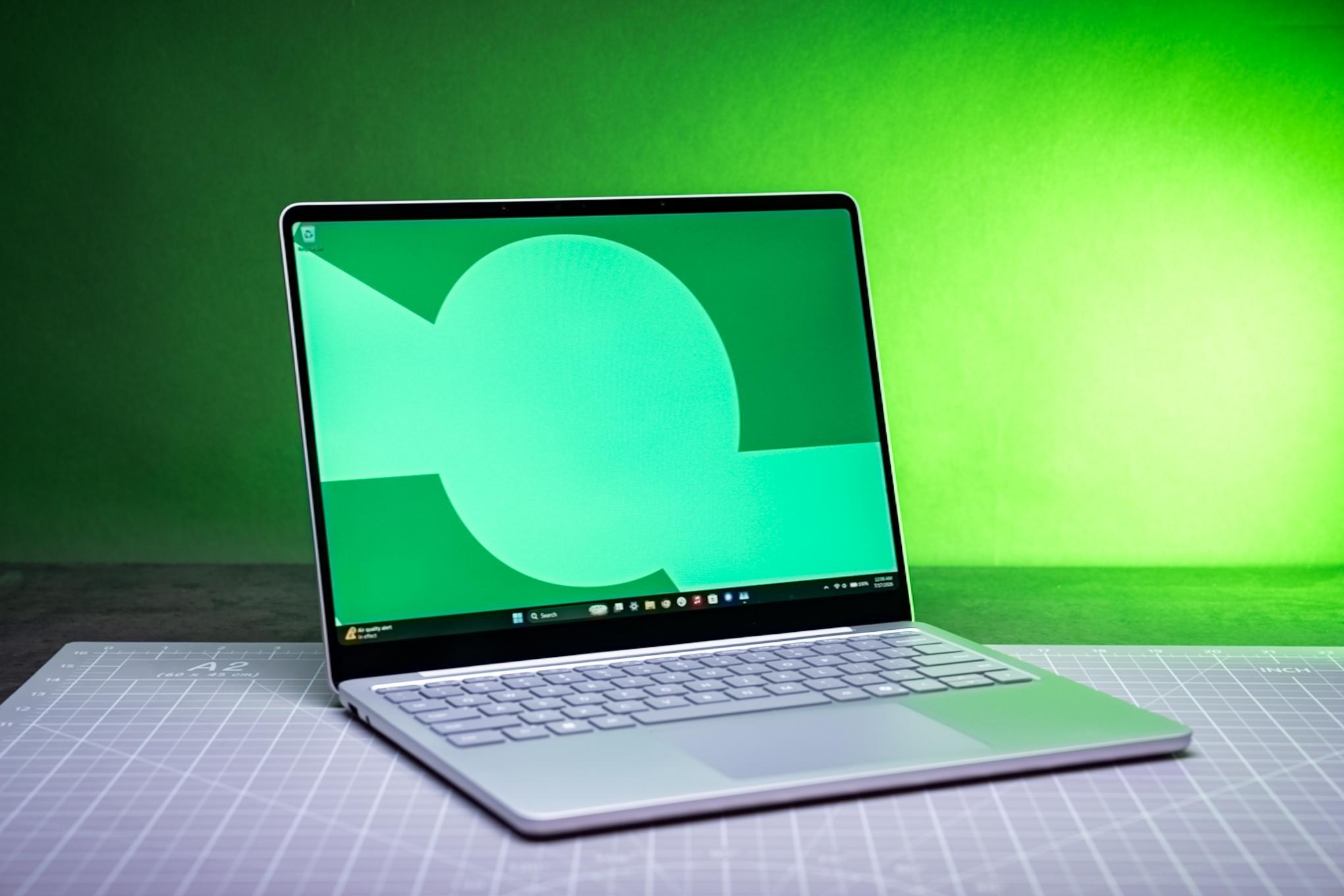
Last year, Microsoft’s 13-inch Surface Laptop quickly became one of my favorite thin-and-light Windows notebooks. At $900, it was easy to recommend to anyone wanting MacBook Air–like build quality and battery life on Windows — I even convinced my sister to buy one on sale.

But that was last year. This year, thanks to RAMageddon, that same laptop costs $950, and now that price gets you half as much RAM — just 8GB. It’s the same great hardware on the outside, but it’s not the same laptop on the inside.

It’s been a long time since we tested a Windows laptop with so little RAM. We’ve been saying for years that 8GB isn’t enough. But this is Microsoft’s laptop, and Windows 11 is Microsoft’s operating system. Maybe it’ll be good enough.

It’s not.

6

Verge Score

$950

The Good

  • Same great build, hardware, and battery life as last year

The Bad

  • 8GB of RAM on Windows 11 isn’t enough
  • Costs more than last year’s model, and with worse specs
  • 256GB of storage feels more limiting now that SSD prices are through the roof

All the good things I wrote about last year’s hardware still ring true: The keyboard is nice and tactile, the trackpad is great (only outdone by ones that allow you to click corner-to-corner), the webcam is sharp and clear, and the battery goes and goes — easily lasting 10 hours. The processor, an eight-core Snapdragon X Plus, is nearly identical to the one in the Surface Laptop I reviewed last year. In fact, it has a slightly faster boost speed. In last year’s Surface Laptop, it was a solid performer and could even handle light photo editing in Lightroom Classic. But last year’s model had 16GB of RAM. It turns out that makes a big difference.

Component report card

  • Screen: B
  • Webcam: B
  • Keyboard: B
  • Trackpad: B
  • Port selection: C
  • Speakers: C
  • Number of ugly stickers to remove: 0

While the 8GB Surface was usually fine for basic web browsing or video streaming, I occasionally nudged it a bit too far in everyday use. I was on a Microsoft Teams call (using the app, not a browser) when the host streamed a brief video, which made the whole laptop hang for several seconds. At the time, I had about 10 Chrome tabs open across two desktops, alongside Slack and Signal — not an obscene level of multitasking. And we didn’t even have our webcams on.

The Surface Laptop would hang for a few seconds like this several times a day, even when I thought I wasn’t pushing it too hard. I’ve had these temporary freezes while just working in some Google Docs — no Teams call running or anything streaming in the background. It’s only a couple times a day on average, but that’s still too often.

Still a great build and feel.

Still a great build and feel.

Keeping the Performance tab open in Task Manager showed I was almost always using around 6.7GB of the available 7.6GB of available memory. After a fresh reboot with bare minimum startup apps running, Windows was using 4.2GB of RAM. That’s around the minimum Microsoft requires just to run Windows 11, highlighting how little headroom there is with 8GB of RAM. Limiting myself to about six Chrome tabs, closing Signal, and refraining from using any virtual desktops kept the memory usage to about 5.5GB.

Is this all workable for light loads? Yes. Do I want to live my life being super cautious about how many apps I’m running and how many tabs I leave open on a brand-new $950 laptop? Absolutely not. And if it’s choking on day one, how usable is it going to be in five years?

The same concerns can be said of the MacBook Neo, which also has just 8GB of RAM. But macOS is a bit better with RAM — and more to the point, in my testing, the Neo could handle more multitasking. A Neo won’t have the shelf life of a MacBook Air, but it also costs $250 less than the Surface Laptop (even after Apple’s recent price increase).

Microsoft has claimed its focus this year is improving the performance of Windows 11 and making it more reliable, especially for lower-cost hardware, to compete with the Neo. But if we’re really going back to 8GB as the starting point for Windows laptops, there’s a lot more work to be done. It’s of course ironic that Microsoft needs to address this problem when it’s one of the major perpetrators of the ongoing RAM crunch. Perhaps Microsoft doesn’t care that its flagship Surface line will suffer for its AI obsession, but it still sucks to see.

We haven’t reviewed a Windows laptop with just 8GB of RAM in more than three years. Unfortunately, the Surface Laptop won’t be the last. The recent Computex show also brought announcements for upcoming laptops with 8GB of memory from Dell, Acer, and Asus. With the RAM shortage likely to last years, we’re going to see more and more 8GB offerings so manufacturers still have something “entry-level” to offer.

But if even Microsoft can’t make a Windows laptop that runs well on 8GB RAM, what hope do OEMs have? 8GB is not enough for a Windows laptop in 2026. Barring Microsoft actually de-bloating Windows 11 enough to accommodate lower-spec computers, your best bet is to spend more and get something with 16GB of RAM — like the same Surface Laptop for $1,150, something from another manufacturer that still sees some decent sales, or look into refurbs and open-box models from reputable sources. Or just cop out and get a MacBook Neo.

Prices could still go up. The $950 8GB Surface Laptop of today could very well be the $1,050 8GB Surface Laptop of next year, or the $1,200 8GB Surface Laptop of the following year.

This is our new normal for computing. The 13-inch Surface Laptop initially offered respectable tradeoffs for a fair discount — “a little less for a little less,” as I put it then. Now the new base model offers even less for more. RAMageddon has altered the deal. It’ll probably get worse.

2026 Microsoft Surface Laptop 13-inch (8GB) specs (as reviewed)

  • Display: 13-inch (1920 x 1280) 60Hz touchscreen
  • CPU: Qualcomm Snapdragon X Plus X1P-46-100
  • RAM: 8GB LPDDR5X (non-replaceable)
  • Storage: 256GB UFS
  • Webcam: 1080p
  • Connectivity: Wi-Fi 7, Bluetooth 5.4
  • Ports: 1x USB-A 3.1, 2x USB-C 3.2, 3.5mm combo audio jack
  • Biometrics: Fingerprint sensor in power button
  • Weight: 2.7 pounds
  • Dimensions: 11.25 x 8.43 x 0.61 inches / 285.8 x 214.1 x 15.5mm
  • Battery: 50Wh
  • Price: $949.99

Photography by Antonio G. Di Benedetto / The Verge

Benchmark comparisons

Microsoft Surface Laptop 13-inch (2026) / Qualcomm Snapdragon X Plus X1P-46-100 / 8GB / 256GB

Microsoft Surface Laptop 13-inch (2025) / Qualcomm Snapdragon X Plus X1P-42-100 / 16GB / 512GB

MacBook Neo / Apple A18 Pro / 8GB / 256GB

MacBook Air 15 / Apple M5 / 16GB / 1TB

Acer Aspire 14 AI / Intel Core Ultra 7 256V / 16GB / 1TB

Lenovo IdeaPad Slim 3x / Qualcomm Snapdragon X X1-26-100 / 16GB / 256GB

CPU cores 8 8 6 10 8 8
GPU Adreno X1-45 Adreno X1-45 A18 Pro (5 GPU cores) M5 (10 GPU cores) Intel Arc 140V (8 GPU cores) Adreno X1-26
Geekbench 6 CPU Single 2348 2437 3402 4175 2769 2137
Geekbench 6 CPU Multi 9421 11427 8508 16567 10930 9728
Geekbench 6 GPU (OpenCL) 9554 9391 19798 47661 28556 9689
Cinebench 2026 Single 442 417 518 727 Not tested Not tested
Cinebench 2026 Multi 2458 2643 1466 3413 Not tested Not tested
PugetBench for Photoshop 2887 4773 Not tested 11513 Not tested Not tested
PugetBench for Premiere Pro (2.0.0+) Crashed Crashed Not tested 61861 Not tested Not tested
Blender classroom test (seconds, lower is better) 509 486 Not tested 46 Not tested Not tested
Premiere 4K Export (lower is better) Crashed Crashed 8 minutes, 30 seconds 2 minutes, 53 seconds 7 minutes, 28 seconds 12 minutes, 59 seconds
Sustained SSD reads (MB/s) 3804.31 3840.78 1735.91 7049.45 6391.51 5738.86
Sustained SSD writes (MB/s) 3310.94 3476.62 1684.05 7480.55 5524.22 2801.02
Price as tested $949.99 $1,249.99 $699 $1,799.00 $1,049.99 $749.99
Follow topics and authors from this story to see more like this in your personalized homepage feed and to receive email updates.


https://www.theverge.com/tech/966937/microsoft-surface-laptop-13-inch-8gb-ram-2026-review


Podcast: Broken Governance, Agentic AI, and the MindStone Agent Exclusive

[embedded content]

In this exclusive SecurityWeek interview, Brian “SchleiF” Schleifer sits down with Clint Bodungen, Director of AI/ML Engineering at Arcovo, founder of ThreatGen, and one of the industry’s leading voices in industrial cybersecurity.

Together they tackle why traditional governance often fails practitioners, how cybersecurity has evolved over the past two decades, and why the biggest vulnerability is still people not technology. Clint also shares, for the first time publicly, the story behind the MindStone Agent, his open-source agentic AI project designed to bring persistent memory, identity, and continuity to AI assistants. The conversation concludes with a real-world ransomware response where autonomous AI agents coordinated incident response, forensic analysis, recovery, and infrastructure migration with minimal human intervention. (SecurityWeek TV)

Learn More at the ICS Cybersecurity Conference | Nasvhille

https://www.securityweek.com/podcast-broken-governance-agentic-ai-and-the-mindstone-agent-exclusive/


Preparation Spreads the Value of the World Cup Across the Entire Sports Marketing World

/* ========================= Base container ========================= */ .article-body-promo-ad { border: 1px dotted #f53c60; background-color: rgba(245, 60, 96, 0.05); border-radius: 8px; margin-top: 2em; position: relative; padding: 30px 16px 16px 60px; } @media (min-width: 768px){ .article-body-promo-ad{ margin: 1em max(13%, 26px); } } .ad-bookmark-icon::before { content: ""; background-image: url("https://static-www.adweek.com/wp-content/uploads/2026/02/bookmark.svg"); background-size: contain; background-repeat: no-repeat; position: absolute; left: 15px; top: 50%; transform: translateY(-50%); width: 40px; height: 40px; } /* Floating label */ .article-body-promo-ad::after { content: "Register Now"; position: absolute; top: -14px; background: #fdebed; color: #f53c60; font-size: 13px; font-weight: 600; padding: 4px 12px; border-radius: 999px; letter-spacing: 0.04em; white-space: nowrap; } [data-bs-theme="dark"] .article-body-promo-ad::before { filter: invert(1) brightness(1); } /* Typography */ .article-body-promo-ad p { font-size: 18px; line-height: 28px; letter-spacing: 0.03em; margin: 0; } /* Links */ .article-body-promo-ad a { font-weight: 700; text-decoration: none; color: inherit; } .article-body-promo-ad a:hover { color: #F6486A; } /* Dark mode */ [data-bs-theme="dark"] .article-body-promo-ad { background-color: rgba(245, 60, 96, 0.12); } [data-bs-theme="dark"] .article-body-promo-ad::after { background: #2a0f14; } @media (max-width: 576px) { .article-body-promo-ad::after { transform: translateX(-50%); top: -10%; left: 50%; font-size: 12px; } } @media (max-width: 576px) { .article-body-promo-ad { display: flex; align-items: center; gap: 10px; padding: 14px; margin: 2em 0; } } @media (max-width: 576px) { .article-body-promo-ad::before { display: none; } } .article-body-promo-ad::before { width: 28px; height: 28px; background-size: 28px 28px; } }

The future of brands gets decided here. Join the industry’s top marketers at Brandweek for the ideas, insights, and connections shaping what’s next. Get your ticket.

The FIFA World Cup 2026 is not even over, yet its ripple effects within the marketing space are beginning to be felt.

Just as it takes years of preparation by both teams and host cities to be ready for the biannual tournament, marketers have to get certain campaign elements in place as well as anticipate what may happen to be ready for the unexpected.

At the ADWEEK House Sports Summit in New York City, the World Cup and the many lessons learned from the successful tournament was the hot topic at the Marketing at Match Speed session, moderated by ADWEEK editor in chief Ryan Joe and featuring a squad of panelists: Chaucer Barnes, CMO at Translation; Amanda Calabrese, co-counder and CMO at Sequel; Radhika Duggal, SVP & CMO at Major League Soccer; Adam Lynn, co-founder and CEO at Breakaway; and Laura Petro, VP of brand and fan experience at Gotham FC.

Duggal said when it comes to live entertainment, many of the elements surrounding a campaign are controllable, “especially if you’re thoughtful and methodical.” This type of preparation ahead of time leaves for, what she says, “mind space and the ability to be thoughtful around all the elements that arise in the moment.”

Another theme associated with preparation during the session was capturing and exploiting the moment. Duggal spoke about how MLS worked closely with FIFA and Fox Sports months in advance to set up World Cup viewing parties. This type of association provided visibility for the league during this off-period and ensured that the soccer league remained in conversation even though it had no live offerings.

Petro shared the example of how her team and the National Women’s Soccer League (NWSL) fed off the World Cup vibes to create a historical moment. With their home stadium used for World Cup viewing festivities, Petro and Gotham FC decided to channel the tournament’s buzz for their own benefit.

Working in concert with Citi Field, home of the New York Mets baseball team, Petro and her team set an NWSL record by staging the highest-attended women’s sporting event in New York City history. With Citi Field hosting the match the same day as the second World Cup semifinal, Gotham FC was able to feed off the energy and awareness from the earlier match to drive attendance for its night-time match.

Barnes provided a historical anecdote about how advance planning by audio brand Beats during an NBA All-Star Weekend in Toronto in 2016 led to the creation of the reality show The Shop, which was later popularized by LeBron James and picked up by HBO.

A weekend with frigid temperatures made moving around unappealing and celebrity appearances sporadic. Additionally, Beats’ activation was not directly tied to the NBA. With this knowledge in hand, Barnes and his team built a 72-hour roundtable scenario in preparation for the celebrities to stop by when they were available. The set was not too far from the main action, and the cameras were running the entire time. They also brought three identical pairs of clothes for the host to maintain continuity of the show.

“That level of preparedness put us in a position where we’ve got content for the year, because these are topics that are going to be popping across the year,” Barnes said.

He added that he and his team prefer to spend time in preparation rather than in response: “Preparation is the fruit of knowing that these are the constraints … and those are the ingredients of an execution.”

https://www.adweek.com/brand-marketing/marketers-at-the-adweek-house-sports-summit-speak-on-the-value-of-preparation/


Turning Sunscreen Into a Lifestyle Brand: Lessons from Roy Fleeman

In this episode of Adspeak by ADWEEK, host Brittaney Kiefer sits down with Roy Fleeman to explore how Vacation transformed sunscreen from a functional necessity into an immersive lifestyle brand. 

Roy shares how the team uses nostalgia, sensory design, and meticulous attention to detail to create products that feel joyful and collectible. They discuss why brands should be informed by trends without being defined by them, how packaging can become a powerful storytelling tool, and why designing every customer touchpoint matters.

From fragrances and campaign concepts to shipping experiences and social content, Roy reveals how Vacation builds cultural relevance by creating moments that customers want to share, remember, and revisit long after their vacation-inspired purchase.

What You’ll Learn:

  • How to reposition a commodity category by identifying emotional gaps
  • The “This Not That” design framework for authentic brand differentiation
  • Why broad nostalgia outperforms decade-specific retro aesthetics
  • How to weaponize packaging inconsistency as a collectibility strategy
  • The power of hyper-specific moment marketing to drive product narrative
  • How to design every touchpoint as an immersive brand experience

[embedded content]

About the Guest:

Roy Fleeman is VP of Design at Vacation, the leisure-enhancing sunscreen brand that’s revolutionizing how consumers think about sun protection. With a background in advertising and brand design, Roy has spearheaded Vacation’s distinctive visual identity, transforming sunscreen from a clinical necessity into a coveted lifestyle product through meticulously crafted packaging, nostalgic aesthetics, and immersive brand experiences.

https://www.adweek.com/brand-marketing/turning-sunscreen-into-a-lifestyle-brand-lessons-from-roy-fleeman/


Beacon Security Raises $13 Million for Security Data Platform

Cybersecurity startup Beacon Security has announced raising $13 million in a seed funding round led by Notable Capital.

AlphaDrive Ventures, Holly Ventures, Jefferies Family Office, SVCI, and dozens of angel investors also participated in the investment round.

Based in New York, Beacon was founded in 2024 by IDF veterans Gal Tal-Hochberg (CEO), Or Mattatia (CPO), and Iddo Israely (CTO).

Beacon is providing organizations with a agentic security data platform that enables defenders to prevent, detect, and respond to threats with critical context, history, and real-time visibility.

The platform combines telemetry from multiple sources, normalizing and enriching it for both AI agents and human analysts. It continuously maps sources against threats and compliance to surface weaknesses before they can be exploited.

Beacon enables security teams to leverage AI agents for building detections, investigations, shadow AI analysis, and other tasks. Defenders can run agentic workflows or build new ones tailored to their needs.

Advertisement. Scroll to continue reading.

Additionally, the platform provides a library of specialized cybersecurity agents connected to Beacon’s context layer that can catch AI attacks, emerging techniques, and other types of threats that traditional tools may miss.

Beacon says its solution is seeing rapid adoption across enterprise customers, including Fortune 500 companies.

“The acceleration of AI agents in the enterprise is creating a distinct need for a legible context layer for cyber defenders, which is fueling a fundamentally new security architecture. We built Beacon to solve these challenges by providing the trusted data layer that allows organizations to deploy security agents compliantly and effectively,” Tal-Hochberg said.

Related: Risk Ledger Raises $32 Million in Series B Funding

Related: QIZ Security Raises $17 Million for Cryptographic Governance Platform

Related: 8Layers Raises $2.9 Million for Identity Security Platform

Related: Dawnguard Raises $6.3 Million for Security Architecture Automation Platform

https://www.securityweek.com/beacon-security-raises-13-million-for-security-data-platform/