AI Search: Is Your Content Strategy Accidentally Recommending Your Competitors?

This post was sponsored by FirstPromoter. The opinions expressed in this article are the sponsor’s own.

For years, software companies have published pages that rank the best tools in a category and place their own product at the top. The tactic was cheap and easy to scale, and for a long time it helped shape what buyers saw.

In AI search, comparison listicles backfire. Google’s AI Overview quotes the listicle as a source, then recommends a competitor from your own cited list.

Your content only gets the citation. Meanwhile, your competitor gets the recommendation and the click. Your competitor gets the sale.

What makes your cited content recommend competitors?

Lily Ray quantified how often a brand’s own listicle earns the citation but loses the recommendation to a competitor.

In research published in June 2026, she analyzed 100 B2B “best [category] software” queries in Google’s AI Overviews and checked the same queries three times between April and June.

The Results

Across the 80 queries that produced an AI Overview, self-ranked listicles were cited 323 times. In 224 of those cases, Google named a brand’s own page, then recommended a rival ranked inside it.

In other words, when a brand’s own listicle was cited, that brand was left out of the recommendation 69% of the time.

What’s the Difference Between Being Cited & Being Recommended in AI Search?

AI search produces two separate outcomes, and only one of them drives sales.

A citation means the engine named a page as one of the sources behind its answer.

A recommendation means the answer told the reader which product to choose.

The recommendation is what buyers act on.

A citation is easy to mistake for progress, because the brand still appears on the screen.
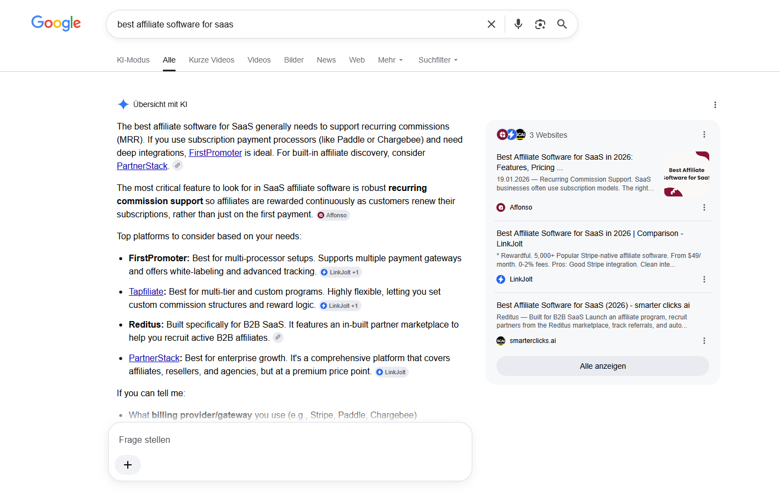
What an engine cites depends on the content of the page. What it recommends depends on what the rest of the web says about a brand: how many independent sites mention it, link to it, and review it.

Your goal should be to increase recommendations.

Why Does Self-Promotional Content Backfire in AI Search?

Google now treats self-ranked pages differently in its AI answers, Ray found.

The brands that win recommendations are the established names the web already covers.

Recommended brands had far more referring domains, and far more mentions across AI Overviews and ChatGPT, than brands that were cited and passed over.

On-page changes can’t fix this. The gap isn’t on the page; the citation-recommendation gap lies within how often the rest of the web covers the brand.

How to Measure Whether AI Search Recommends Your Brand

You can run this check for any category without special tools. Because citations and recommendations carry different intent, the goal is to separate two figures that usually get combined:

  • How often your brand is cited (informational intent).
  • How often it is recommended (transactional intent).

Step 1: Build Your Query List

Start with the questions a buyer would type, such as “best project management software,” “Notion alternatives,” or “best [category] software.”

Step 2: Record Citations & Recommendations Separately

Run each one in Google and record two things: the pages Google cites as sources, and the products it recommends in the answer.

Step 3: Repeat Each Query

Run each query more than once, since AI answers shift from session to session.

Step 4: Score Your Share of Voice

Then score the share of recommendations won, rather than the number of citations earned.

Step 5: Extend the Audit Beyond Google

The pattern is documented for Google’s AI Overviews, so begin there. Run the same queries through ChatGPT and Perplexity to map which publishers those engines surface for your category.

Ray’s research shows what the exercise produces. For “best LMS for selling courses,” Google cited Oasis LMS repeatedly, in the body of the answer and in the sidebar. Oasis ranks itself number one in that article. Google recommended Kajabi, Thinkific, LearnWorlds, and Teachable instead, each of them named inside the Oasis piece.

Ray found the same split across categories, from CRM to help desk to SEO software.

Finding 2: Do AI Recommendations Come From Coverage You Don’t Publish? Yes.

Ray’s data shows where AI recommendations originate. Google leans heavily on third-party and user sites, with Reddit, Forbes, and YouTube among the most-cited domains. Content independent from the brand earns a recommendation: reviews, comparisons, and walkthroughs published by someone other than the vendor.

How Do You Get More Independent Brand Mentions That Win AI Recommendations?

You need to increase the number of web pages about your product on domains you don’t control, such as more:

  • Reviews.
  • Comparisons.
  • Walkthroughs.

Each of these should be published by third parties. Not one placement at a time, but as ongoing output.

How Do You Do This Quickly?

Give creators a financial reason to publish. When a creator earns money each time their coverage converts a customer, they keep writing reviews, updating comparisons, and publishing walkthroughs, without you commissioning each piece.

You can start with a handful of creators and a revenue-share agreement. What that produces is coverage. What it does not produce, on its own, is consistency.

How Do You Keep A Consistent Flow Of Mentions?

Run an always-on channel: an affiliate program. Paying creators piece by piece gets you a review here and a comparison there. Mention velocity stays flat because every new URL requires new outreach. Consistent output takes structure: recruiting good partners, tracking what each one produces, rewarding the ones who perform, and paying them on time. An affiliate program is that structure.

Affiliates are third parties who earn a commission when a customer they refer makes a purchase. They include niche site owners, YouTube reviewers, newsletter writers, and media publishers. To earn it, they write reviews, record walkthroughs, and publish side-by-side comparisons on their own sites and channels. That content is what Google draws from when answering a “best [category] software” query.

Proof of Concept: The Brands That Dominate AI Answers Already Run Programs At This Scale.

Run any “best [category] software” query and the same names recur. Behind them sit networks of third-party sites reviewing and comparing those products, earning a commission on the customers they refer. Their referring domain counts keep climbing because the program funds new coverage continuously.

Programs built for editorial output win; programs built for referral volume don’t. A program aimed at raw referral volume tends to attract coupon and deal sites, which drive clicks but rarely publish the editorial content AI Overviews cite. A program aimed at AI recommendations recruits partners who write and review for a living, and favors partners with real audiences over partners who only distribute discount codes.

Telling a strong partner from a weak one takes judgment. The signals worth checking are long-term organic search performance, credible mentions on sites the partner doesn’t control, and a presence across more than one platform. Partners who rank well in AI Overviews usually have that track record already.

“Affiliates are one of the biggest sources of AI citations right now, and yet most brands don’t even think about it. A citation in an AI Overview today doesn’t mean much on its own, because we’re seeing AI-generated sites get cited for a few weeks and then disappear once Google catches up to them. So check the organic history behind it first, look at the fluctuations, scroll through the content. And do that for every partner type, not just websites. A YouTube channel or an influencer can end up in an AI answer too, and they need the same check.” – Tautvydas Vasiliauskas

A referring domain earned this quarter doesn’t keep earning on its own. The brands that hold AI recommendations are the ones whose third-party coverage keeps growing, and that output depends on partners staying active.

Partners stay active when the program is run well. Each task involved is simple. Done by hand, together they consume the hours the program was supposed to save.

Time is not the only thing at stake. AI systems draw recommendations from the pool of referring domains that mention a brand. Low-quality affiliates and self-referrals pollute that pool., and when they do, the citations a program earned stop counting in the brand’s favor.

Keeping the pool clean requires detecting fraud, vetting partners, and blocking self-referrals, continuously, not as a one-time cleanup.

This is the operational work FirstPromoter handles. It tracks each partner’s performance and ties it to revenue, so you can see which partners produce sales, and which produce the coverage AI Overviews cite. It keeps partners motivated with contests, performance tiers that pay higher commissions, one-time placement fees, and target bonuses. Payouts run on a scale from do-it-yourself to fully managed, and setup requires little to no developer resource.

The software won’t choose partners or brief them; that judgment stays with you. It handles the operations, so the coverage keeps compounding without constant hands-on work.

Stop Building Content That Benefits Your Competitors. Start Building Connections That Reinforce Your Brand.

The self-ranked listicle had a good run, and that run is ending. In AI search, Google gives the recommendation to the brands the wider web already trusts, and it builds that trust out of independent content.

An affiliate program is one of the most direct ways to produce content that gets you brand recommendations, and you pay for it based on results rather than adding headcount. It’s worth considering whether you’re starting a program or already run one. FirstPromoter offers a free trial to test the approach.


Image Credits

Featured Image: Image by FirstPromoter. Used with permission.

In-Post Images: Images by FirstPromoter. Used with permission.

https://www.searchenginejournal.com/ai-search-recommending-competitors-firstpromoter-spa/581579/




SEO Study: 5 Lessons From Running AI Agents Across Every Search via @sejournal, @lorenbaker

Last year, 2.5% of Writesonic’s leads came from AI search. As of March, 35% do.

Samanyou Garg, Founder and CEO of Writesonic, showed the system behind that number in his Search Engine Journal webinar: agents surface what moved across every search platform, practitioners prioritize and act. “AI search didn’t necessarily kill SEO, but it turned it into an engineering problem,” he said.

The session covers new citation research and 5 lessons from the field, including the 6-stage loop his team runs on every published page and the workflow that wins citations on pages you don’t own.

Watch the full webinar on demand.

96% Of AI Citations Point To Pages You Don’t Own

Where do AI answers pull citations from? Mostly from pages outside your website.

In Writesonic’s latest research, 96% of AI search citations pointed to third-party sources: Reddit, YouTube, forums, industry publications. A few months ago that figure sat near 80%.

Model updates reshuffle the mix. Reddit, forum, and YouTube citations all jumped between GPT 5.3 and GPT 5.5; the multipliers are in the session.

“You need to make sure you are not putting all of your eggs in one basket, like your own website or a specific website,” Samanyou said.

Action item: Find the pages cited for your target prompts where competitors appear and you don’t. Samanyou demoed an agent that builds that outreach list, author contacts included.

How Long Does An AI Citation Actually Last?

Writesonic measured the lifespan of more than 150,000 citations. The average is shorter than most content calendars assume.

Citations cycle: models rotate in fresh sources, and one model update can hand your spot to a competitor. “It’s a very volatile thing, because models are probabilistic by nature,” Samanyou said.

The exact lifespan number, and the refresh-and-diversify play his team runs when citations rotate out, are in the session. Watch it on demand.

What Goes Into An SEO Agent: 4 Layers

What does a working SEO agent consist of? 4 layers: identity, knowledge, skills, and tools. Samanyou opened real example files for each.

Lesson 1 sits on top: recruit experts, don’t replace them. His team builds expert files, second-brain documents that capture how a named practitioner thinks; their positioning agent runs on April Dunford’s frameworks.

“It’s like a team of junior interns working with you. But those interns are the best ones in the world who have learned from the experts, have access to all the data, understand everything about the domain,” he said. A practitioner approves everything before it ships.

Action item: Build one specialist agent before you build a team of them. The session shows the expert-file method, from deep research to finished markdown.

What Is Closed-Loop SEO? Ship, Verify, Iterate

What is closed-loop SEO? Treat every published page as an experiment: confirm Google indexed it, confirm it ranks or earns citations, feed the result into the next fix.

The live poll showed the gap: most attendees measure nothing, or measure and act on none of it.

Samanyou’s team scores every page with a business impact potential formula: 4 weighted factors that turn a 100-page backlog into a ranked work queue. The 4 factors and their weights are in the session, along with both live dashboard demos.

“Diagnosis is cheap now,” he said. “The main thing is execution.” Watch the webinar on demand.

Q&A: Most Helpful Questions From The Webinar

Q: What should you automate first, and what should you never automate?

Samanyou answered: Connect your existing data sources first and automate the proactive detection loop. Never automate the send: “It should be semi-autonomous until you have a human verifying and testing everything before it goes live.”

Q: On-page or off-page: what actually moves the AI visibility needle?

Samanyou answered: Both, tilted off-page: “I would say maybe 60% focus on off page, 40% on on page.” Rebalance toward on-page once your own pages start earning citations.

Q: How do you create an expert file for an agent?

Samanyou answered: Build a second brain for one named expert: deep research on their published frameworks, or their best talk transcripts synthesized into a single structured file. “It should not be like 10,000 words of text, it should be structured in a proper way, so that the model is able to consume it and use it for any new task.”

Q: How do you know which leads came from AI search?

Samanyou answered: Self-attribution plus verification. The demo form asks “Where did you hear about us?” and sales calls double-check: “There might be maybe 10 to 20% bias where people are just randomly selecting something. But still, it gives us a good indication.”

Watch The Full Webinar

The full session holds the citation lifespan number, the 6-stage loop walkthrough, the business impact potential weights, the citation-gap outreach workflow, the expert-file method, and both live demos.

Watch it on demand.

https://www.searchenginejournal.com/seo-study-5-lessons-from-running-ai-agents-across-every-search/581663/


Terremoto politico in Francia: confermata la condanna di Marine Le Pen, ma la corsa all’Eliseo nel 2027 è salva

La Corte d’Appello di Parigi ha pronunciato una sentenza storica che scuote le fondamenta della politica europea. Marine Le Pen è stata condannata a tre anni di carcere per il caso dei fondi UE destinati agli assistenti parlamentari. Ma il vero colpo di scena è politico: i magistrati le hanno ridotto la pena di ineleggibilità, restituendole di fatto la libertà di correre per l’Eliseo. La strada verso le presidenziali del 2027 si riapre di colpo con un brivido per gli avversari, anche se con alcune limitazioni.

La leader del Rassemblement National ha atteso la prima serata per rompere il silenzio. Dai microfoni del telegiornale di TF1 ha annunciato ufficialmente la sua quarta candidatura presidenziale. Una mossa immediata per blindare il partito ed evitare che la leadership scivolasse verso altri lidi.

Il verdetto e la strategia della Cassazione

In primo grado, lo spettro dell’esclusione politica sembrava definitivo. Stavolta, la Corte d’Appello ha inflitto 45 mesi di ineleggibilità, di cui ben 30 coperti da sospensione condizionale. I restanti 15 mesi risultano già scontati a seguito dell’esecuzione provvisoria precedente. Una decisione quasi acrobatica da parte dei giudici francesi.

I magistrati hanno esplicitamente motivato la scelta richiamando il principio della “libertà di scelta dell’elettore” dando un valore politico alla sentenza. Privare milioni di francesi del proprio candidato di riferimento avrebbe creato una faglia democratica istituzionale senza precedenti.

Resta però lo scoglio dei tre anni di reclusione, di cui uno strutturato come anno di carcere fermo. Una pena che la deputata dovrebbe teoricamente scontare indossando un braccialetto elettronico per la detenzione domiciliare.

“Non farò mai campagna elettorale con un braccialetto elettronico alla caviglia”, aveva giurato Le Pen.

La contromossa legale è arrivata puntuale con l’annuncio del ricorso in Cassazione. In base al codice di procedura penale transalpino, l’impugnazione davanti alla suprema corte ha un effetto totalmente sospensivo. Significa che l’esecuzione della pena detentiva e del braccialetto viene congelata fino al verdetto definitivo.

I tempi tecnici della Cassazione giocano a favore della leader della destra. Secondo i costituzionalisti, una decisione non arriverà prima dell’inizio del 2027. Se il ricorso venisse respinto a ridosso del voto, si aprirebbe uno scontro istituzionale inedito tra potere giudiziario e corpo elettorale.

Lo schema delle sanzioni applicate

La sentenza non ha colpito solo la figura di vertice, ma ha toccato l’intera struttura del movimento politico, imponendo anche pesanti sanzioni pecuniarie.

Soggetto coinvolto Tipologia di sanzione applicata Stato dell’efficacia politica
Marine Le Pen 3 anni (2 con sursis, 1 fermo), 100.000€ ammenda Eleggibile (grazie al computo del già scontato)
Rassemblement National 2 milioni di euro di sanzione (1 milione con sursis)  
Louis Aliot & altri quadri Pene detentive variabili interamente con sursis Mantengono le cariche locali correnti

Il fattore Bardella: la coppia torna sul pas de tir

Per mesi, il giovane e popolarissimo Jordan Bardella si è preparato dietro le quinte. Il “Piano B” del partito era pronto a trasformarsi in una candidatura presidenziale fresca e priva di carichi pendenti. I sondaggi lo davano persino in vantaggio di qualche punto rispetto alla sua mentore.

Ora la situazione interna si congela nuovamente. Marine Le Pen ha confermato che lo schema della leadership prevede un “ticket blindato”. Lei correrà per la presidenza, mentre a Bardella è stato promesso l’incarico di Primo Ministro in caso di vittoria.

Per il giovane leader si tratta di un parziale passo indietro. Frenare una traiettoria politica in piena ascesa non è mai semplice. Tuttavia, l’accordo interno sembra tenere per evitare frammentazioni che favorirebbero lo schieramento macroniano o la sinistra.

Si chiarisce lo scontro.

A questo punto almeno inizia a chiarirsi la corsa per le elezioni presidenziali del 2027. Sicuramente ci sarà la Le Pen, Sicuramente l’estrema sinistra presenterà Melénchon. Ora bisogna chiarire quanti saranno i candidati centristi, dell’area macroniana e ex gollista, che saranno due o tre, e chi presenterà i socialisti. Allo stato attuale sembra che la Le Pen supererà di slancio il primo turno, per poi scontrarsi con quello che vincerà fra i centristi e i socialisti. Questa volta però non ci sarà la solita formazione del “Blocco Repubblicano” che ha permesso la vittoria di Macron. Le cose sono profondamente cambiate.

La Francia si avvia a vivere mesi di campagna elettorale permanente sotto la scure della magistratura. Un pasticcio, data l’instabilità internazionale e un’economia sempre più problematica. Il presidente che emergerà dalla contesa dovrà affrontare una sfida molto pesante: cercare di cambiare il corso della Francia.

Google NewsGoogle News Rimani aggiornato seguendoci su Google News!

SEGUICI

https://scenarieconomici.it/terremoto-politico-in-francia-confermata-la-condanna-di-marine-le-pen-ma-la-corsa-alleliseo-nel-2027-e-salva/


Local Marketing Is Too Complex: What the Data Says & What To Do

This post was sponsored by Uberall. The opinions expressed in this article are the sponsor’s own.

Should I add more AI tools to manage local listings and reviews, or is that making it worse?

Who should own AI search visibility across all our locations?

The ideal multi-location marketing world is one where agentic AI fixes duplicate listings, responds to customer reviews, analyzes sentiment, and spots optimization opportunities before the marketer can say “GBP.”

However, what multi-location brand CMOs actually have, in today’s far less ideal world, is layers of disjointed AI and marketing tooling creating an unclean and unclear infrastructure.

This lack of infrastructure makes it nearly impossible to track overall ROI.

An Uberall survey last year revealed that only around 1 in 4 location marketers can show the impact of their location marketing on sales; I’ll bet that with varying levels of AI tool adoption since that survey, this issue hasn’t improved; if anything, it’s been exacerbated by it.

The AI understands what needs prioritizing and resolves it in the background while teams focus on their marketing for multiple locations. It squashes impatience or uncertainty surrounding ROI reporting because its model is built on delivering and visualizing real-time attributable location performance: bookings, table reservations, foot traffic. The clean and clear data that stakeholders wait for.

The results of ill-equipped and layered martech tooling are bleak for local visibility:

  • Business listings are managed ad hoc per platform, creating inconsistencies with critical data
  • Reviews are left unanswered or sporadically answered, breaking down customer trust and engagement
  • Local pages are disconnected from social and inventory systems
  • Content is outdated or generic, weakening relevance to local search intent
  • Website performance is deprioritized, causing friction for users, search engines, and AI crawlers

Today’s real ideal world is about bringing some sense back to the location marketing stack. It will deliver a combination of that sought-after AI orchestration layer, omnichannel search visibility across locations, and the even more sought-after ROI numbers. It’s the Chief Marketing Orchestrator who will lead it.

Step 1. Decide Who Your Chief Marketing Orchestrator Will Be

Value won’t come from simply plugging data into an LLM. 89% of leaders said their tech investments haven’t fully delivered, with integration complexity the top reason.

Instead, it comes from plugging all your multi-location marketing data into an orchestration layer that implements the nonnegotiable context engineering tasks, making sure every location’s data and signals are structured for any search system customers are using to discover local businesses.

Someone needs to do this, and that person becomes your Chief Marketing Orchestrator (CMO). And, luckily, it’s a new evolution of a Chief Marketing Officer.

The Key Responsibilities of a CMO

The Chief Marketing Orchestrator (CMO) must decide which tasks require human sign-off. Where are the trade-offs? Who owns AI discoverability at a brand and location level? Where can they relieve their team from operational workload and reallocate them to tasks that influence revenue — turning sentiment analysis into actionable reports for operations, or producing content that drives local engagement? It’s not just a technology story but also a leadership story.

Any CMO who is truly passionate about what they do for their multi-location brand doesn’t want to blindly outsource every single task to an AI agent. They want to trust the performance numbers and location marketing initiatives they’re reporting back to stakeholders. And they most likely want to feel in control of compute costs.

At a time when every marketer and every leader is urged to own AI, this often means no one owns the outcome. A streamlined stack with an AI orchestration layer changes that, in that the platform owns the execution and analysis, the CMO owns the overarching strategy, and their team owns the human approvals and guardrails.

This is the principle Uberall’s agentic AI, UB-I, is built on: The marketer remains in control — governing the AI’s output, not just guiding or prompting it.

A CMO investing in the right people to govern agentic AI is a CMO focused on output, not adoption.

Try doing this manually across 50 locations:

  1. Open each location’s profile across GBP, Apple, Bing, and relevant directories. Check for formatting inconsistencies, missing attributes, and incorrect hours.
  2. Draft a review response for every pending review — starting with the negative ones — matching your brand’s tone and guidelines.
  3. Audit each location for missing business descriptions and generate copy that reflects the right local keywords and service context.

That’s the daily baseline. At scale, it’s unsustainable — which is exactly the workload UB-I handles before the team logs in.

UB-I handles the volume and velocity of local operations that no human team can sustainably match at scale, while flagging anything that requires human judgment before acting. On any given day, that means:

  1. Drafting AI-generated replies for all pending reviews, according to strict brand guidelines, prioritizing negative reviews first.
  2. Correcting name and address formatting to each directory’s requirements, preventing sync failures, and suppressed visibility.
  3. Generating missing business descriptions, attributes, and special hours from location data

The team logs in to approve, not to discover what’s broken. Each of these is context engineering in practice — making location data usable for both human and AI-powered search, at a scale no team can manage manually.

As globally recognized innovation strategist Shawn Kanungo puts it: “The companies I am watching win are not the ones optimizing the ROI of existing workflows. They are the ones using agents to do things that were previously impossible at any price.” The efficient orchestration of local marketing tasks across multiple locations has always been impossible at scale — and this orchestration layer is exactly what 99% of senior marketers say would be “valuable” or “very valuable,” according to an Uberall survey.

The true value here in implementing an AI orchestration layer to manage omnichannel presence isn’t to optimize the efficiency of existing local marketing workflows — it’s in enabling what was impossible for marketers to achieve at scale in an eight-hour workday. The workload that 61% of CMOs and VPs at multi-location brands currently describe as “complex” or very “complex” — tracking AI visibility, managing location data and listings, monitoring and responding to reviews, and posting local content on social media.

Step 2. Pivot From Finding New AI To Restoring Search Visibility

As I see it, the solution CMOs will want to implement is to stamp out the ROI-burdening exploratory agentic AI projects and focus on operating with it. Because the prize that comes from operating with it well is attractive for multi-location brands, who need to work quickly to restore declining traffic amid zero-click searches.

Reports indicate that revenue is increasing for brands as customers discover them via AI search — Adobe reports a 254% increase in revenue per visit for the retail segment. It’s no wonder stakeholders are more interested in SEO and GEO performance than ever before.

Let’s imagine a multi-location brand as a building with 200 rooms, each hosting its own party. The furniture hasn’t changed, the walls haven’t changed, the infrastructure hasn’t changed — but there’s a new entrance to the building, one that seems to be a shortcut for guests intentionally looking for you. The other entrances are still in use too. You want to maximize access through every single one so more people find the right room, have a good time, and come back for the next one. You don’t hire someone to manually bring guests to each entrance. You invest in technology to put up signals that do the work for you, so your team can focus on the experience inside the rooms.

Context engineering is what builds those signals. It’s when AI can orchestrate how brands make their digital footprint machine-readable, consistently accurate, technically discoverable across multiple surfaces, contextually relevant, and socially validated — without individuals needing to unpeel layers of tech stack insights.

Implement The 4 Pillars Of Location Performance Optimization (LPO)

A neon-style graphic on a dark background featuring a large central map pin icon containing a glowing four-pointed star. The pin is surrounded by intersecting planetary orbital rings in glowing blue and orange light. Floating around the main icon are smaller neon symbols, including a dollar sign, euro sign, British pound sign, a heart notification badge, a five-star rating outline, and a thumbs-up badge.
Image by Uberall Brand Studio, June 2026

If visibility on any search or marketing channel improves, every other location performance pillar improves: engagement, reputation, and conversion. These are the four pillars of Location Performance Optimization (LPO), a revenue-first framework I spoke about at brightonSEO in October 2025. LPO connects a brand’s digital presence to commercial outcomes by activating location data and signals across these performance pillars:

  • Visibility: Every location is accurately represented across all relevant discovery surfaces (website, Google, Apple, Yelp, Bing, industry directories).
  • Reputation: Trust is reinforced through ratings, regular reviews, and customer resolution.
  • Engagement: Local content — posts, photos, offers — signals fresh business activity and relevance for high-intent customers.
  • Conversion: Customers can take clear action — bookings, directions, and click-to-calls.

An AI agent that implements these LPO measures to attract more customers, reach new audiences, and influence revenue isn’t exploration. It’s a hard-ROI workflow that pays for the program; they’re the crucial layer that restores and increases search visibility, customer acquisition, retention.

So, when the board asks about AI ROI and local marketing performance, this new CMO doesn’t just demonstrate AI adoption; they justify AI investment to continue to fund their operations. The gap between the brands measuring real ROI and the companies pretending to — or being preoccupied by their complex local marketing stacks is wider than ever.

How To Shift From AI Experiments To ROI-Driven Operations

EY described the moment we’re in well: moving from vibe to value. The “vibe” phase was every company exploring AI — experimenting, piloting, racking up compute costs, layering up their tech stack — and either still being in that phase or having concluded it with the frustration of not knowing how to progress to real, quantifiable returns.

Marketing leaders at multi-location brands, like the Chief Marketing Orchestrator, must adopt and govern agentic-AI-powered stacks that are less exploratory and more ROI-driven. These are stacks that are sensible, streamlined, and enable teams to do things that just weren’t possible before, like logging in to approve fixes, not to discover or prioritize what’s broken. And that approval might not happen before a marketer can say “GBP,” but it’s the orchestration layer — the added AI — senior marketers and leaders are looking for.

Find out how to use Uberall’s UB-I agent for multi-location marketing for your operations


Image Credits

Featured Image: Image by Uberall Brand Studio. Used with permission.

https://www.searchenginejournal.com/local-search-marketing-trends-uberall-spa/581648/


County Government Reportedly Paid $1 Million to Cyber Extortion Group

A government entity in the US reportedly paid a $1 million ransom to the Kairos cyber extortion group to prevent the public dissemination of information stolen in a May 2025 intrusion, Ransom-ISAC reports.

A leaked negotiation transcript shows that the extortion group demanded $3 million in cryptocurrency from the victim organization, but eventually settled for $1 million.

Kairos claimed to have stolen over 2 terabytes of data, or approximately 1.6 million files, after accessing the victim’s environment in a brute-force attack.

During the three-week negotiation, the victim increased its offer from $100,000 to $430,000, but eventually accepted a hard deadline and the $1 million ransom, which was paid in Bitcoin on June 13.

The attackers pressured the victim with public exposure, while maintaining control of deadlines and proof-of-access artifacts.

“The affected entity’s responses are consistent with an organization buying time while legal, leadership, financial, and communications decisions were coordinated,” Ransom-ISAC notes.

Advertisement. Scroll to continue reading.

The anti-ransomware organization notes that the incident was an extortion attack and did not involve file-encrypting ransomware. The attackers’ proof-of-deletion appears selective, not comprehensive, but the listings they provided are consistent with a real file-server scrape.

According to Ransom-ISAC, the provided proof of deletion could have been generated by erasing a copy of the data, and no mechanism to independently verify the deletion was provided.

Ransom-ISAC did not name the affected organization, but the negotiation transcript identifies it as “a small county with very limited resources.”

The affected government body reportedly appears to be Union County, Ohio. In September, the county notified (PDF) 45,487 individuals that their personal information was stolen in a ransomware attack in May 2025.

The affected information included names, dates of birth, driver’s license/state ID numbers, passport numbers, Social Security numbers, financial account details, fingerprint information, medical information, and payment card details.

SecurityWeek has emailed Union County for a statement on the matter and will update this article if the county responds.

Related: Aflac Japan Data Breach Impacts 4.38 Million

Related: Nissan Employee Data Breached in Oracle PeopleSoft Hack

Related: Insurance Regulators Group NAIC Hit in Oracle PeopleSoft Hack

Related: More Klue Breach Victims Identified as Hackers Get Hacked

https://www.securityweek.com/county-government-reportedly-paid-1-million-to-cyber-extortion-group/


Critical Gitea Flaw Under Active Exploitation, Researchers Warn

Threat actors are exploiting a vulnerability in Gitea’s reverse-proxy authentication mechanism to access internet-accessible instances by supplying only a valid username.

Specific to Gitea’s official Docker images, the critical-severity security defect is tracked as CVE-2026-20896 (CVSS score of 9.8) and can be exploited with a single HTTP header, Sysdig Sr. Director of Threat Research Michael Clark says.

The issue exists because, in Gitea Docker images before 1.26.3, the default settings allow connections from any source IP address instead of enforcing an allowlist, security researcher Ali Mustafa, who was credited for finding the bug, explains.

If placed behind a proxy, Gitea should trust only a header set by the proxy when reverse-proxy authentication is enabled. Because of the flaw, anyone who could provide a valid username in a header could connect to a vulnerable instance, bypassing authentication.

“Any process that can reach the Gitea container’s HTTP port directly — not through the intended authenticating proxy — can impersonate any user whose login name is known or guessable. Admin accounts are the obvious targets,” the researcher notes.

The patch that was introduced in Gitea versions 1.26.3 / 1.26.4 makes reverse-proxy authentication an opt-in feature.

Advertisement. Scroll to continue reading.

According to Clark, CVE-2026-20896’s exploitation started 13 days after public disclosure. The attempt was associated with a “VPN-exit scanner that grabbed access”.

“No password. No token. One header. Sysdig sensors caught the first in-the-wild hit 13 days after the advisory,” Clark notes.

While Sysdig’s research revealed approximately 6,200 Gitea instances accessible from the internet, it is unclear how many of them are vulnerable.

Users are advised to update their Gitea deployments as soon as possible, as the successful exploitation of the vulnerability could lead to the complete compromise of all the code and secrets Gitea holds.

“A Gitea user can read and write their repositories, private ones included: the code they ship, the secrets developers committed by accident (API keys, DB credentials, deploy tokens), their CI/CD config, and deploy keys,” Clark notes.

Related: Critical Adobe ColdFusion Vulnerability Exploited in Attacks

Related: CISA Warns of Actively Exploited Microsoft SharePoint Vulnerability

Related: Apple Patches Dozens of Vulnerabilities Across iOS, macOS, and Safari

Related: Gitea Vulnerability Exposed 30,000 Deployments to Attacks

https://www.securityweek.com/critical-gitea-flaw-under-active-exploitation-researchers-warn/


PSN, Leonardo punta alla quota Sogei

Oggi sotto i riflettori le ultime manovre sull’assetto azionario del Piano Strategico Nazionale.
Leonardo sarebbe pronta a presentare un’offerta per rilevare il 10% di Sogei nel Psn. Se l’operazione andasse in porto, la partecipazione del gruppo salirebbe dal 25% al 35%. Inoltre, con la conclusione dell’Opas di Poste su Tim, oggi azionista al 45% del Polo, la partecipazione riconducibile a Poste potrebbe salire fino al 65%.

AI, valutare modelli più avanzati prima dell’immissione sul mercato Ue. Il Piano d’azione di Bruxelles presentato oggi punta sulle potenzialità offerte dall’AI per la cybersecurity ma mette in guardia dai rischi.

Scuole connesse, la Conferenza delle Regioni esorta il Governo a continuare il piano con interventi finanziari strutturali per garantire la fase di gestione ordinaria delle reti ultraveloci.

Per leggere tutte le news della dailyletter clicca qui.

Novità su Google, per aggiungere Key4Biz tra le tue fonti preferite, clicca qui

Aggiungi Key4Biz tra le tue fonti preferite

Leggi le altre notizie sull’home page di Key4biz

https://www.key4biz.it/psn-leonardo-punta-alla-quota-sogei/579384/


Difesa, Rutte (Nato) sottolinea il ruolo cruciale dell’Ue nei finanziamenti e loda Safe

(Adnkronos) – La cooperazione tra Ue e Nato “non potrebbe essere migliore”, perché, mentre l’Alleanza si occupa delle questioni militari, l’Unione cura gli altri aspetti, inclusi “i soldi: l’Ue ha molto successo nel far sì” che ci siano i soldi per investire nella difesa, “attraverso Safe e gli altri programmi”. Lo sottolinea il segretario generale della Nato Mark Rutte, ad Ankara incontrando i presidenti Ue Ursula von der Leyen e Antonio Costa. Far sì che “ci siano i soldi” per investire adeguatamente nella difesa “è cruciale”, perché “dobbiamo metterci tutti insieme”.  

—

internazionale/esteri

webinfo@adnkronos.com (Web Info)

Novità su Google, per aggiungere Key4Biz tra le tue fonti preferite, clicca qui

Aggiungi Key4Biz tra le tue fonti preferite

Leggi le altre notizie sull’home page di Key4biz

https://www.key4biz.it/difesa-rutte-nato-sottolinea-il-ruolo-cruciale-dellue-nei-finanziamenti-e-loda-safe/579390/


Principe Harry ed Elton John perdono la causa contro l’editore del Daily Mail

(Adnkronos) –
Il principe Harry ed Elton John hanno perso la causa contro l’editore del Daily Mail e con loro anche le altre celebrità che avevano denunciato il giornale per violazione della privacy. Nella sentenza di 436 pagine emessa al termine di un processo durato 11 settimane, il giudice Matthew Nicklin ha affermato che i ricorrenti non sono riusciti a dimostrare le loro accuse di raccolta illecita di informazioni e, pertanto, le loro richieste sono state respinte. 

“La Corte ha respinto il tentativo di provare le affermazioni per inferenza estensiva laddove sussisteva ancora un percorso di provenienza legale legittimo e realistico, o laddove le prove specifiche relative all’articolo non dimostravano che le informazioni in questione dovessero essere state ottenute illegalmente”, si legge in una sintesi della sentenza diffusa dai media britannici. 

L’editore del Daily Mail, l’Associated Newspapers Limited (Anl), ha sostenuto per tutta la durata del processo di aver ottenuto le notizie in modo legittimo e che le richieste di risarcimento erano state presentate troppo tardi, quindi erano cadute in prescrizione. L’Anl ha acccolto con favore la sentenza odierna, che rappresenta una vittoria schiacciante per il Daily Mail e i suoi giornalisti, e per la libertà di stampa in generale. Nell’assolvere il Daily Mail e il Mail on Sunday, respingendo ciascuna delle 97 accuse mosse, il giudice ha anche riconosciuto l’onestà delle testimonianze dei giornalisti riguardo alle fonti utilizzate per le loro notizie. 

“Questa è una magnifica conferma della validità del giornalismo del Daily Mail”, si legge in una nota dell’editore. ”Per alcune delle accuse più oltraggiose mosse quando il caso fu avviato con grande clamore mediatico quattro anni fa – installare microspie nelle auto e nelle case delle persone, intercettare le telefonate e accedere illegalmente ai conti bancari – non è mai stata presentata alcuna prova credibile”, prosegue la nota. “Come abbiamo affermato all’epoca, queste accuse erano ‘scandalose’ e ‘assurde”’ prosegue la nota che denuncia ”una campagna politicamente motivata volta a mettere a tacere la libertà di stampa”. In questo contesto ”la reputazione dei nostri onesti e laboriosi giornalisti è stata terribilmente infangata e oggi sono stati riabilitati”. 

“Come dimostra chiaramente la sentenza, ogni singolo articolo proveniva da fonti legittime”, aggiunge Associated Newspapers che ”ringrazia il giudice Nicklin per la pazienza e la saggezza dimostrate nel corso di questa azione legale fuorviante, che ha comportato uno spreco di tempo prezioso per il tribunale e oltre 50 milioni di sterline in spese legali”. 

—

internazionale/esteri

webinfo@adnkronos.com (Web Info)

Novità su Google, per aggiungere Key4Biz tra le tue fonti preferite, clicca qui

Aggiungi Key4Biz tra le tue fonti preferite

Leggi le altre notizie sull’home page di Key4biz

https://www.key4biz.it/principe-harry-ed-elton-john-perdono-la-causa-contro-leditore-del-daily-mail/579392/


Google Search Console Adds Social & Video Platform Properties via @sejournal, @MattGSouthern

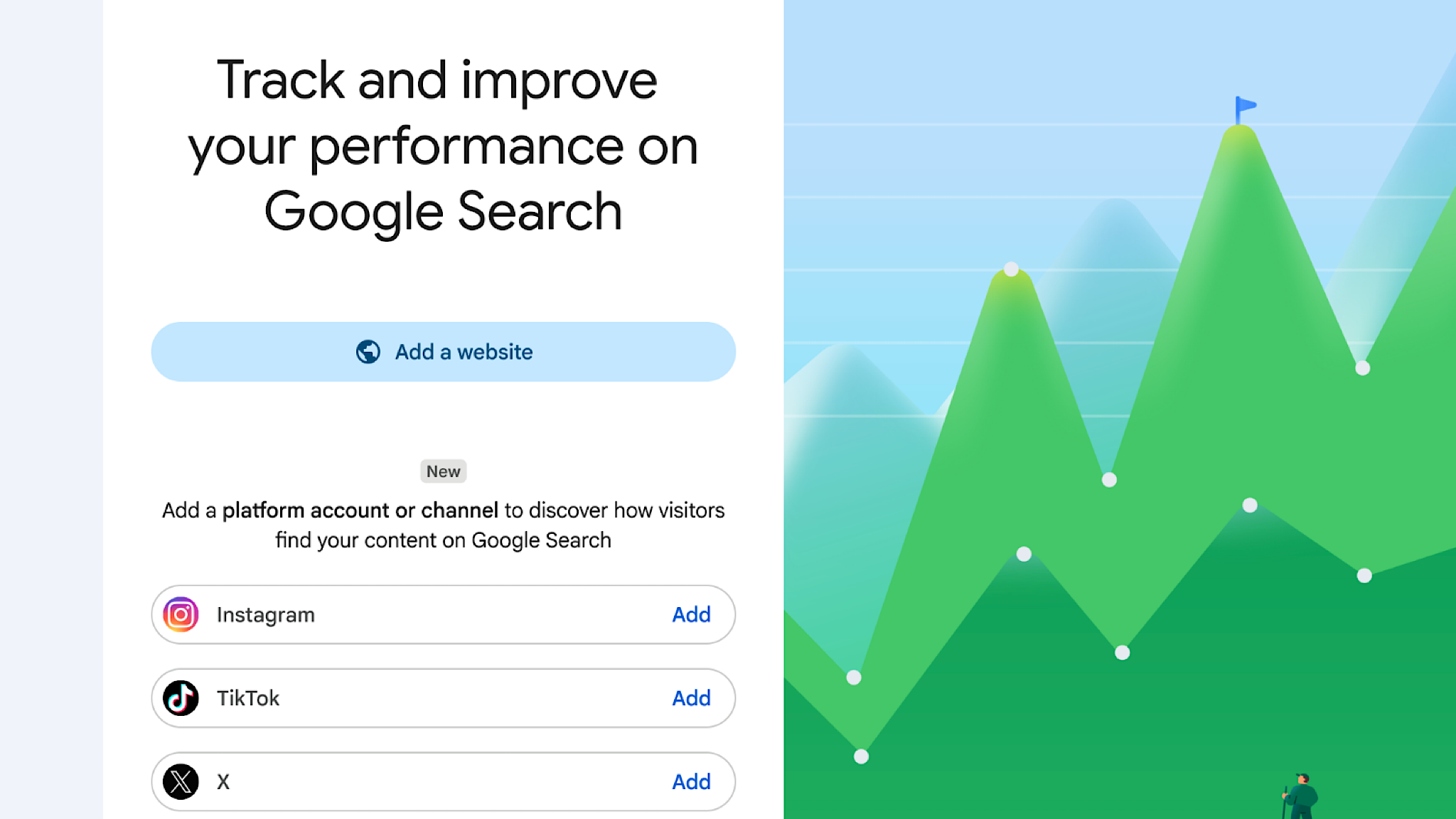
Google is introducing a new property type in Search Console called platform properties, which lets you monitor how social media and video posts perform in Google Search and Discover. This feature supports platforms such as Instagram, TikTok, X, and YouTube and is available even to creators who don’t have their own websites.

Moshe Samet, Product Manager Lead for Search Console, announced the feature in a Search Central blog post. Once an account is connected, a platform property shows which search terms lead people to your posts and how your audience interacts with that content.

The Reports You Get

Each platform property includes the reporting you would expect from a Search Console property, tailored to social and video content.

The Performance report displays total clicks, impressions, and other related metrics, allowing filtering and sorting to identify which posts and queries generate the most traffic. You can also export the data for further analysis in other tools.

The Insights report provides an overview of recent traffic patterns, your most successful posts, and the ways users find your account on Google.

Achievements monitor progress toward milestones, such as surpassing a new total click threshold from Search within a 28-day period.

How To Add a Platform Property

Setting one up involves following Search Console’s verification process: open Search Console, navigate to the verification page or property selector, select Add property, then choose Instagram, TikTok, X, or YouTube and follow the on-screen instructions to authorize the connection.

How This Differs From Search Profiles

Platform properties are distinct from Search profiles, which Google introduced in June as public profile pages for qualified creators and publishers. A Search profile is a shareable page that consolidates a creator’s content for followers. In contrast, a platform property focuses on analytics, showing how those posts perform in Search rather than directly exposing them to an audience. The current feature builds on a December 2025 experiment that initially integrated social-channel data into Search Console.

Why This Matters

You can now track performance across social media and video platforms, alongside your website’s Search performance. This feature allows creators who’ve never had a verified site to see how their posts gain visibility in Search.

Looking Ahead

Platform properties will be gradually available over the next few weeks, so the option might not be visible in your account immediately. Google is initially launching with four supported platforms and directs creators to its help documentation for setup guidance, along with providing a feedback link in Search Console and the Search Central Community.

https://www.searchenginejournal.com/google-search-console-adds-social-video-platform-properties/581634/