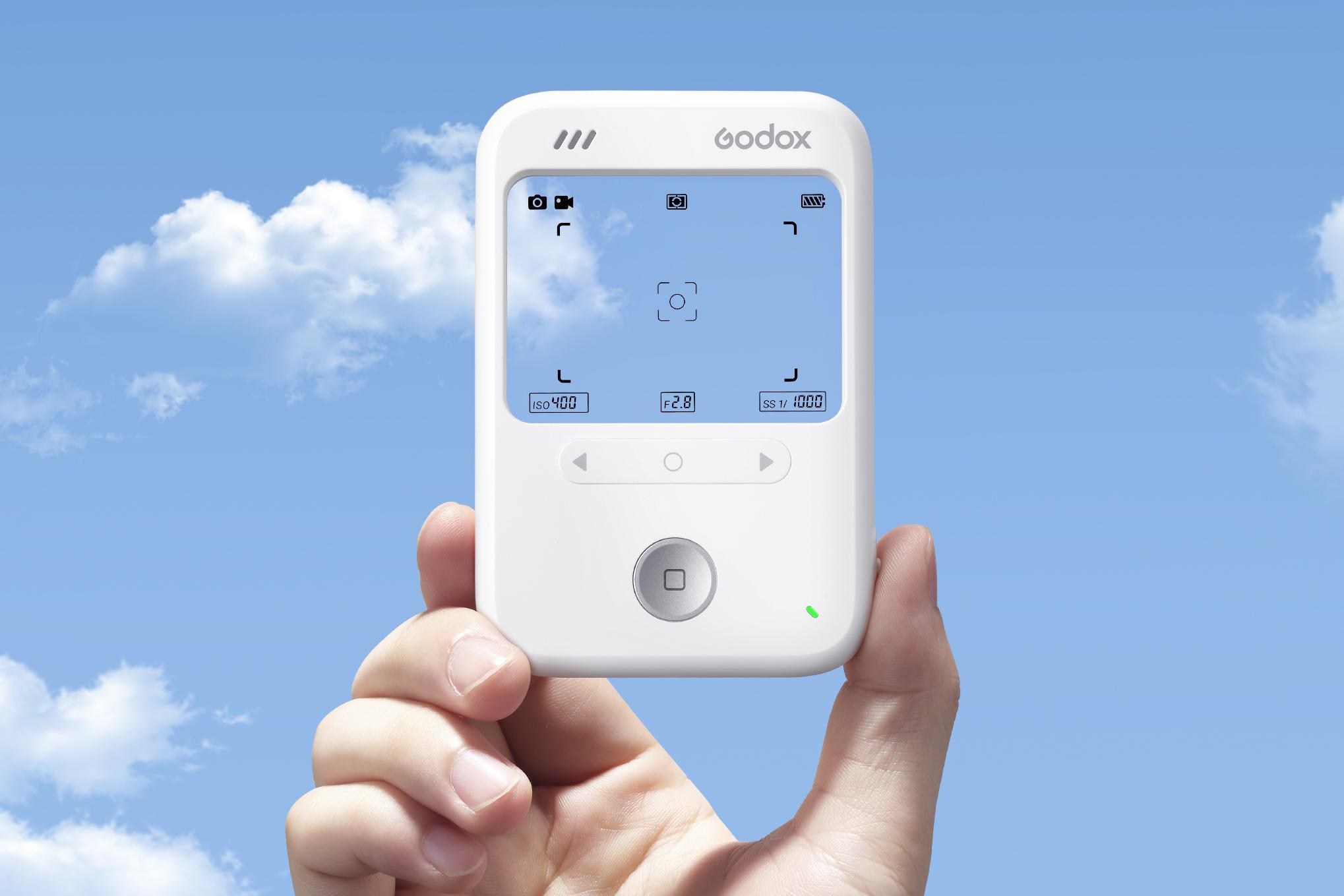
This slim camera has a transparent LCD screen for a viewfinder
Despite the fact that smartphones have become impressively capable shooters, standalone point-and-shoot cameras are enjoying a renaissance. The tiny Kodak Charmera is still wildly popular, while influencers are scrambling to find aging Canon cameras on eBay. Godox, a company best known for its photography lighting products, is the latest to join the simple camera craze, but its new C100 stands out from the crowd by skipping a color preview screen for a transparent LCD that doubles as an optical viewfinder.
Although the C100 product page on Godox’s website is thin on technical details, including its sensor resolution and video capabilities, it shows off the camera’s viewfinder, which can display information like battery life and shooting settings. The device can even function as a light meter, measuring the brightness of what you’re framing and suggesting exposure settings that can be used on another camera.
The 65-gram camera can capture images and videos in four different aspect ratios, including 16:9 and 1:1, which are all stored on a microSD card up to 128GB in size. There’s no wireless connectivity, but you can transfer images to a PC or mobile devices over USB-C. The Godox C100 has launched in China but there’s no news on if it will ever see an international release. There’s no pricing info on its product page, either, but according to Digital Camera World the C100 is just ¥199, or around $29, making it even cheaper than the Charmera.
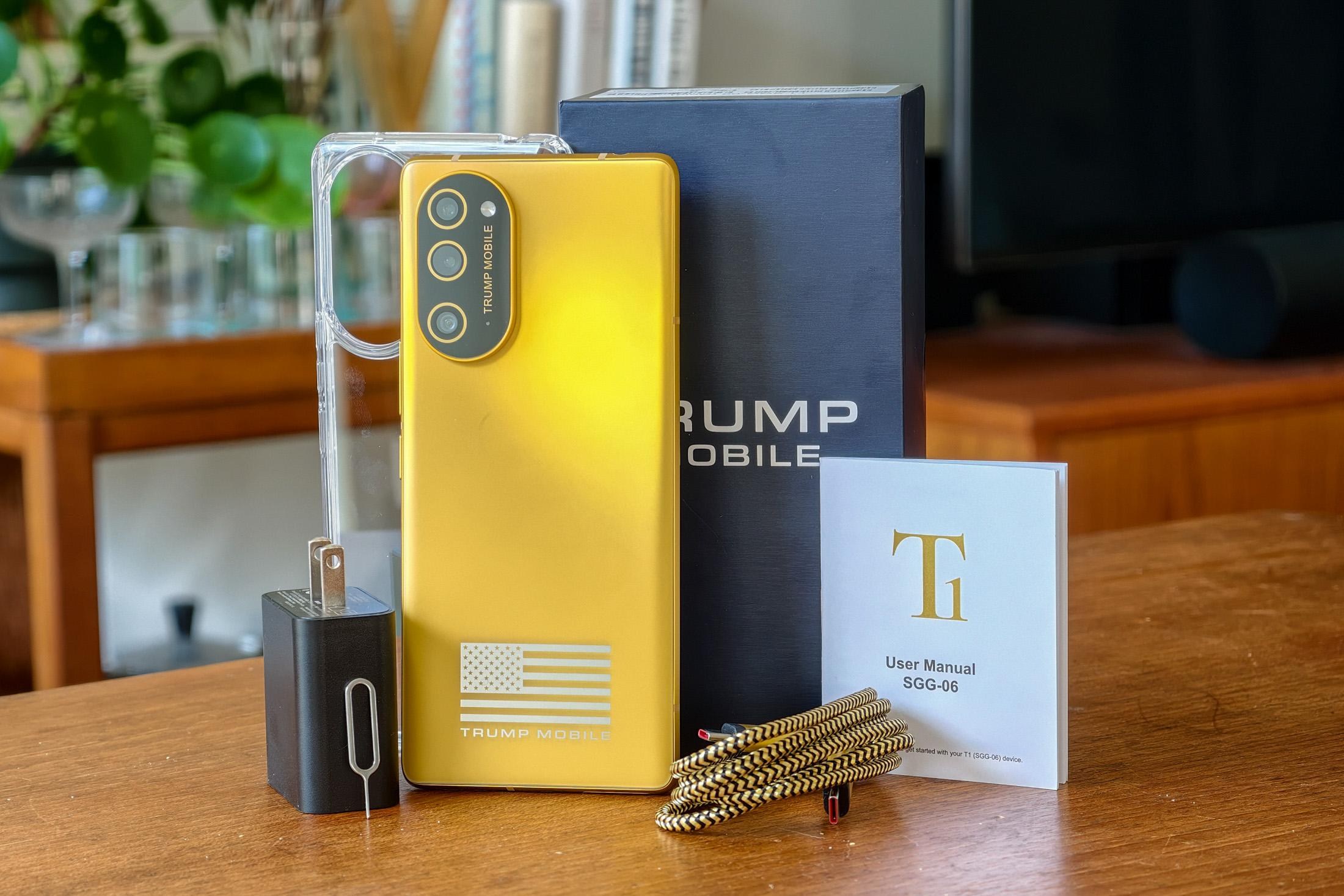
12 months, 16 days, 21 hours, and 54 minutes after I first heard about Trump Mobile’s T1 Phone 8002 (gold version), I’m finally holding one in my own hands.
That’s right, The Verge’s Trump phones have arrived. And yes, I do mean phones – we have three of them: We ordered two, paid for two, and received three, all of which were sent to the wrong address. You can’t beat service like that.
My phone came with a free Trump Mobile SIM card, even though I’ve not signed up to the company’s mobile plan, plus an A4 quick start guide that was quite clearly printed on a standard office printer. Inside the box, there’s a SIM tool, clear plastic case, 33W charger, and a gold-and-black braided USB-C cable that feels remarkably cheap. Then you get a second set of instructions, this time a tiny booklet that covers everything from initial setup to how to make a phone call or take a photo with the camera. I get the feeling this phone isn’t intended for a technically minded buyer.
As for the phone itself, my first impression was how oddly tacky it is. And I mean that quite literally — the gold, plastic back panel has a slightly sticky sheen to it, and has already picked up plenty of dust and fingerprints in just an hour or two. Even more encouragingly, my phone has a tiny scratch in one corner that was there before I even took it out of the box.
Setup went pretty smoothly at first. It installed all my usual apps from my Google backup to go alongside the preinstalled Truth Social, claims its February Android security update is the latest it needs, and unlike YouTuber Quinn Nelson my fingerprint sensor works just fine. I’m based in the UK though, and so far the Trump phone isn’t playing nicely with my British SIM card — I can make phone calls just fine, but it won’t connect to LTE or 5G. I’ll have to see if I can fix that, or if the Trump phone is strictly for Americans only.
Either way, I’ll have a full review of the T1 Phone next week. Let me know in the comments what you want me to test.
Photography by Dominic Preston / The Verge
Got inside information on Trump Mobile or the Trump phone? Reach out securely from a personal device to tips@theverge.com, or see our How to Tip Us page.
This is Optimizer, a weekly newsletter sent from Verge senior reviewerVictoria Song that dissects and discusses the latest gizmos and potions that swear they’re going to change your life. Opt in for Optimizer here.
Europe is melting, the eastern US is currently trapped in a “heat dome,” the Midwest has the corn sweats to look forward to, and if you’ve never felt the oppressive, sticky misery of monsoon season in Asia — consider yourself blessed. But as folks duke it out on social media about who has it hotter (and whether air conditioning is ethical), it’s time to address a nonnegotiable truth of surviving summer: hydration.
Surely, staying hydrated isn’t a controversial topic. Something as simple as drinking water can’t possibly be twisted by the wellness wild west. But alas, a recent TikTok search proved me wrong. “Sometimes water alone just isn’t enough,” an influencer named Grace, a “holistic nutritionist,” says in a partnership video with Liquid IV. She mixes a packet in, stirring with an aesthetic glass straw while spitting general truths about why electrolytes are important. “It’s about what your body does with the water that matters.”
Next, I was blasted with a clip of actress Mayim Bialik’s podcast emblazoned with the words “You’re hydrating wrong!” In it, Bialik’s guest, who is billed as an “exercise physiologist and nutrition scientist,” claims that drinking a lot of water won’t hydrate you properly. You’ll just pee it out, she says, because plain water doesn’t have the “ideal pressure” due to a lack of sodium and glucose. Rounding out my cursed TikTok search, another so-called nutritionist stated that ice water is actually dehydrating based on traditional Chinese medicine principles because the “body cannot hold onto the water.”
It’s true that the body needs electrolytes, minerals that hold a positive or negative electric charge when dissolved in water: things like potassium, magnesium, and sodium. (Sugar isn’t technically an electrolyte, but it too is necessary for hydration.) They’re important because they help maintain appropriate fluid levels within your cells, contract and relax muscles, and play into several other chemical reactions within your body. You lose electrolytes when you sweat and whenever you pee as waste products. These are all facts that influencers and wellness brands use to establish credibility by letting you in on the “real science” of how hydration works.
The next turn in the playbook is then convincing you that “drinking more water” — a long-established, common-sense way to hydrate that’s often recommended by doctors — is not good enough. There is a more optimal way, a secret that you’re about to be let in on. To finish it off, you’re either fed a dubious but harmless hack (e.g., room-temperature water is better for hydrating than cold water) or told the electrolyte powder they’re shilling will hydrate you so much better or faster than plain water could.
Liquid IV can be useful to have around. This presentation, however, is a bit of science-washed marketing.Screenshot: Liquid IV
Take Liquid IV’s science page. “Hydration is essential,” the site says, as a video of stylish scientists clad in chunky glasses and crisp lab coats plays in the background. “We elevate it with science.” Specifically, “breakthrough technology, clinical programs, and scientific leadership.” Scroll a bit further down the page, and you’ll see the words “Water is the least studied nutrient” and “Just add science … We love water (it’s a phenomenal hydrator), but sometimes water alone isn’t enough.”
The site then goes on to describe Liquid IV’s four-step hydration philosophy. It boils down to: (1) making drinks tasty so you drink more; (2) adding “hydration multipliers,” aka a proprietary blend of electrolytes; (3) taking credit for sodium in the mix helping you retain water; and (4) taking credit for the mix’s other electrolytes doing what electrolytes do. A separate page for its clinical study results says that Liquid IV helps people rehydrate quicker and retain fluids longer than water alone. Which, again, is how electrolytes work. It also says that the sugar-free version doesn’t spike blood glucose levels, which, to state the obvious, is an expected result from a sugar-free beverage.
This is effective at selling the message that, in a vacuum, Liquid IV — and other electrolyte mixes — are better than water at hydration. But it’s also missing a lot of key context.
The FAQ on Liquid IV’s site notes that the product is safe for daily consumption “during or after tough workouts, while traveling, after a night out, or for heat-related rehydration.” That’s not “replace all your water with Liquid IV.” It goes on to suggest one serving a day and to consult a doctor for further questions. That’s all fine, but electrolyte imbalances are a two-way street. There’s such a thing as too many electrolytes.
JUST ADD SCIENCE! These are facts about electrolytes, but it’s missingsome key context to sell you on buying in.Screenshot: Liquid IV
Take sodium. The CDC says that the average American gets about 3,300mg of sodium per day, which is above the federal recommendation of less than 2,300mg. Liquid IV has over 20 flavors, so the nutrition label varies, but generally a single serving has roughly 500 to 520mg of sodium — or more than 20 percent of your daily recommended intake. Barring a condition or medication that affects your sodium levels, like POTS, you probably get enough of this particular electrolyte from your diet. And salt isn’t the only ingredient to be mindful of. Ask any marathoner or cyclist. Chugging too much of a sugary sports drink can trigger a nasty case of the runs.
But say you are someone who does need to be extra mindful of hydration. Overdoing electrolyte mixes is easy to do and can have unintended health consequences. My spouse suffers from severe, chronic migraines. In the summer, they’re often triggered by dehydration and heat intolerance. Migraines are horrible, but my spouse is doubly unlucky in that theirs often come with intense nausea and vomiting. It’s a vicious cycle where dehydration worsens the migraine, but the nausea makes it so they can’t actually rehydrate themselves. Several times, I’ve had to rush them to the emergency room for a saline drip. So in an effort to be proactive, last summer they started drinking Pedialyte and Liquid IV daily to prevent heat-related migraines.
It was a genuine attempt to take better care of themselves. But they ended up giving themselves high blood pressure from all the salt — which can happen with too much electrolyte supplementation, along with other issues like increased cardiovascular strain.
Hear me out: plain water is good enough for Theo Hernandez of France at the 2026 World Cup. Photo by Marc Atkins/Getty Images
There is a time and place for electrolyte mixes and sports drinks. Mainly, when you need to quickly rehydrate yourself after losing a significant amount of bodily fluids in a short time and your daily diet can’t compensate for it. So, if you’re sweating buckets because you’re active outdoors for several hours in the hot sun? Yeah, an electrolyte drink is appropriate. If you, a healthy human, decided for some cockamamie reason to go for a 30-minute run in extreme heat, but will immediately go back into air conditioning to chow down on Grandpa Rick’s barbecue? You probably won’t die drinking a Powerade but could also stick with plain water. If you caught norovirus and are gastrointestinally suffering out both ends, go with God and get that Gatorade. But you don’t need to go crazy about how you hydrate. You don’t even have to spend a ton of money on electrolyte packets. Half a lemon and a pinch of salt in your water is an effective, budget-conscious alternative. (Or pickle juice, if that’s more your vibe.)
I deeply understand the desire to “hydrate better.” I’ve passed out in hot weather, sometimes while long-distance running. It’s not fun! The few times it happened were so terrible, it motivated me to be better about hydrating in hot weather. It’s why I’ve tested multiple wearablesweat patches that claimed to help optimize my electrolyte intake when I was training for half-marathons in sweltering heat. It’s why I’ve reviewed smart water bottles of many flavors and variations. (Adding flavoring is also a valid “hack” to drinking more water.) Earlier this year, I installed an at-home urinalysis lab in my toilet because of course I did. I’ve invested in a ton of sports hydration packets and energy goos. Ironically, what’s helped most is a regular Owala bottle. Apparently, I like drinking water better out of a straw.
Which is a fancy way of saying I’ve firsthand tested several “optimized” ways to hydrate. My verdict is common sense, scrolling past influencers, and in most cases, drinking some nice cold water are good enough.
Follow topics and authors from this story to see more like this in your personalized homepage feed and to receive email updates.
At the event “The Briefing: AI for Science” earlier this week, Anthropic announced Claude Science, a new “AI workbench for scientists” that pulls fragmented tools and datasets into one environment, and generates figures and visuals. Anthropic, already dominating the industry with its popular coding tools and powerful AI models, framed the launch around what it says is AI’s potential to “dramatically accelerate the pace of scientific discovery and the development of healthcare interventions,” and touted a long list of biotech and pharma customers already using Claude.
Anthropic also went a step further, saying it would develop drugs of its own. Head of life sciences Eric Kauderer-Abrams said the company will focus on discovering treatments for “neglected” diseases.
AI companies have been eager to court science and pharma customers — OpenAI, Amazon, Google, and others have their own life sciences tools and platforms. But Anthropic’s planned move is one of the most direct public attempts by a major frontier AI company to actually develop drugs itself. It puts it in the unusual position of selling software to other, potentially competing drugmakers. Anthropic joins a broader race that includes AI-first drug companies like Insilico, Google DeepMind spinout Isomorphic Labs, biotech startups, and Big Pharma companies building or buying AI tools of their own.
Anthropic has provided very few specific details about what it hopes to accomplish in the drug development space. At the event, Kauderer-Abrams didn’t say what the company would do if it finds any promising drug candidates. Anthropic did not respond to The Verge’s requests for comment seeking more details, including what diseases it plans to target first and whether it would partner up with other companies for lab work, animal testing, clinical trials, or manufacturing.
AI is applied at “every single stage of drug discovery.”
Experts told The Verge that the uncertainty surrounding Anthropic’s plans reflects a broader uncertainty around the AI drug boom itself. “AI drug discovery” can mean many things. It “is a really broad term,” explained Namshik Han, a professor at the University of Cambridge and cofounder of AI biotech startup CardiaTec. AI is applied at “every single stage of drug discovery,” he said, from finding new compounds and improving them to supporting research, data analysis, clinical trials, and even manufacturing. Every major drug company will be using AI in some way, he said. Matthew Todd, a professor of drug discovery at University College London, echoed the sentiment that AI already pervades drug discovery and research, calling it a “catchall phrase” given its broad array of uses.
AI is undoubtedly changing drug development. Han pointed to the numerous initiatives by pharma giants like AstraZeneca, Novo Nordisk, and GSK, and said AI can already help generate possible drug ideas, such as by suggesting new molecules that could interact with parts of the body like cell receptors that are already known to be involved with a particular disease or are targets of existing drugs. Todd said it’s immensely useful for speeding up research and helping “road test” new drug ideas. Given Anthropic’s work on frontier models, the company would presumably use generative AI to search across vast chemical and biological possibilities and help researchers make connections that would be difficult or slow to find otherwise, potentially suggesting new drug ideas, identifying new disease targets, or finding new uses for existing drugs.
But that is still a long way from an AI-designed drug reaching patients. Todd said the field is “a long way off” from an AI-designed drug being approved by regulators for human use. He added that the drug discovery process would not run autonomously, with human input and supervision required throughout. Todd and Han both noted the lack of publicly available, high-quality experimental data, such as how various chemicals behave in the body, could slow drug development efforts as well, stressing that even for well-studied areas of biology there are still large gaps in our understanding of how things work.
AI models “haven’t yet come close to making experiments unnecessary.”
AI is not positioned to fix many of the slowest parts of drug discovery. Frank von Delft, a professor of structural chemical biology at the University of Oxford and head of protein crystallography at the Oxford Centre for Medicines Discovery, said people are right to get excited about advancing AI models, but they “haven’t yet come close to making experiments unnecessary.” Drug candidates still have to be tested in the real world for efficacy, toxicity, and whether they have practical properties allowing them to be prepared, stored, and delivered safely as medicines. All of that requires skilled workers, a lot of money, and time, especially clinical work in humans — a point when many promising drug candidates fail. If Anthropic wants to develop a drug, von Delft said, it is “going to have to spend a lot on experiments.”
It’s possible Anthropic is willing to try. In the last year, the company has been actively hiring biologists and building its own wet labs, and as of writing it has several live applications hiring for life sciences roles. Han said Anthropic has been “actively recruiting” in the area too, adding that several of his academic colleagues had been approached by the company. Without naming names, Han said he thinks Anthropic has successfully hired a few candidates away from Big Pharma and prestigious academic institutions.
With all of this complexity, whatever disease Anthropic picks, any payoff is likely a long way away — at the very least, the better part of a decade, given how long it typically takes a new drug to go through clinical trials. There’s “always a big lag time” with testing medicine, Todd said. “It takes time to show experimentally that something’s safe.” No AI-designed drug has yet made it through clinical trials and FDA approval to reach market. Some AI-developed candidates have enteredclinical trials, but it’s hard to know how much AI contributed, where in the process it was used, or whether those candidates outperform conventional drugs. AI can speed up part of the search, but drugs still need to prove themselves the old-fashioned way: in slow, methodical experiments that take place in the real world.
Follow topics and authors from this story to see more like this in your personalized homepage feed and to receive email updates.
Jon Prosser responds to Apple lawsuit by blaming the other guy
YouTuber Jon Prosser has finally filed a formal response to Apple’s lawsuit made against him and another defendant over allegedly stealing iOS secrets. In his response, Prosser denied that he “planned or participated in any conspiracy or coordinated scheme” for the “purpose of injuring Apple.” However, Prosser admitted to recording a FaceTime call showing unreleased iOS software and sharing revenue from his YouTube videos about the leaks with the person who showed him the information. Prosser also argued that the other defendant “is completely responsible” for the alleged disclosure of trade secrets.
Last July, Apple claimed in its lawsuit that Prosser and Michael Ramacciotti had a “coordinated scheme to break into an Apple development iPhone, steal Apple’s trade secrets, and profit from the theft.” Ramacciotti, Apple alleged, showed Prosser information about iOS from a development iPhone belonging to an Apple employee, Ethan Lipnik, in a FaceTime call. Over the course of a few months in 2025, Prosser hosted three videos on his Front Page Tech YouTube channel detailing an unannounced iOS 19 with elements resembling the Liquid Glass interface that Apple would go on to demonstrate at WWDC as part of its renamed iOS 26 operating system.
Apple didn’t immediately reply to a request for comment. When asked about the case earlier this year, Apple spokesperson Jacqueline Roy told The Verge that “We don’t comment on active litigation.”
Months after Apple filed the lawsuit, a clerk entered a default against Prosser after he hadn’t formally responded to the complaint, meaning that the case could go on without him. But Prosser said in an April filing that he would finally be retaining counsel. In June, Prosser agreed to sit for a deposition, and soon after, Prosser and Apple asked the judge in the case to set aside the entry of default. He did, and gave Prosser 10 days to respond to Apple’s complaint.
Below is Prosser’s full response, if you’d like to read it for yourself.
In the AI slop-loaded, algorithm-powered modern reality, trends come and go — and the tech industry is no different. For the last few years, The Verge staff has compiled a selection of things that are IN for summer and OUT for summer — and each time there are some strong feelings. (Here are the lasttwo years’ predictions.) Let’s do it again!
Since its inception, Apple TV, née Apple TV Plus, has built a reputation on quality over quantity. It has far fewer shows and movies than the likes of Netflix or Disney Plus, but generally speaking, the projects it does put out are quite good. It’s a strategy that has brought comparisons to the HBO of old, and 2026 has featured a particularly strong mix of new hits and returning favorites. It took a few years, but Apple TV seems to be finally hitting its stride.
That’s a pretty solid lineup on its own. But what has really helped flesh out Apple TV’s offerings is that those shows are coming out alongside the continuation of existing properties, many of which have been chugging along for several years. The last few weeks have included new seasons of the sci-fi detective series Sugar, the postapocalyptic thriller Silo, and Star City, a spinoff of the long-running alternate history series For All Mankind.
The next few months look like a similar mix. Dark Matter, Slow Horses, and Ted Lasso will all be back with new seasons. Meanwhile, there are brand-new thrillers like Last Seen and the Anya Taylor-Joy-led Lucky, along with a pair of buddy comedies: Ryan Reynolds and Kenneth Branagh in Mayday, and Matthew McConaughey and Woody Harrelson in Brothers. Maybe this year Apple will even finally put out its long-delayed series The Savant, which explores domestic terrorism.
It took a few years to get to this point. That required landing on not only a handful of hits that could go on for multiple seasons, like Slow Horses and For All Mankind, but also exploring different genres. Apple has been particularly successful in the realm of science fiction, but many of its most talked-about series — like Ted Lasso and Widow’s Bay — are comedies. At this point, the service offers a strong mix of both lighthearted fare and more traditional prestige television. It’s a trend that looks to continue, at least for the foreseeable future. The likes of Silo and For All Mankind are coming to an end, but new seasons of heavy hitters Pluribus, Severance, and awards darling The Studio are waiting in the wings, while a much-anticipated adaptation of William Gibson’s cyberpunk classic Neuromancer is also incoming.
What’s particularly notable about Apple’s focus on premium-style television is how it differs from the growth mindset of its competitors. Netflix is the prime example. With the end of series like Stranger Things and Squid Game, the streamer has become less reliant on tentpole TV shows. Instead, reality television, live programming, podcasts, and even interactive games have become a big focus as Netflix attempts to reach a large, broad audience. Disney, similarly, has been experimenting with turning Disney Plus into “the immersive, interactive digital centerpiece of the company,” which will involve focusing on things other than traditional programming to lure subscribers.
Apple TV obviously isn’t perfect; its film offerings leave a lot to be desired, and upcoming features like the toy car adaptation Matchbox don’t instill a lot of confidence. It has also begun expanding into areas like live sports, including Formula 1. But on the television side, the streamer’s approach is refreshing. While nearly every subscription service seems steadfastly focused on appealing to as many potential customers as possible, Apple TV is simply a place for good TV. Signs point to that potentially changing in the future, but for now the service is the closest thing streaming has to a prestige home.
A behind-the-scenes look at Midjourney’s medical scanner leaves many questions unanswered
The AI startup, best known for generating images, released a behind-the-scenes video of its dunk-tank ultrasound scanner, which it plans to deploy in spas and hopes will transform medicine with cheap, detailed, radiation-free imaging. The nearly 20-minute tour comes from tech YouTuber Marcin Plaza, who also happens to be an engineer at the company.
Plaza frankly describes the scanner as scores of ultrasound probes “hacked apart and slapped on a glorified hot tub with an elevator in it,” connected to off-the-shelf computers and Raspberry Pis. The video shows more of the hardware and the team building it, but largely glosses over the physics and imaging questions experts raised when Midjourney first announced the project.
Those experts told The Verge that Midjourney had shown little evidence it could overcome the well-known limits of ultrasound, a technology that has been around for decades, or generate the kind of detailed images it has suggested at the scale and speed it is promising. The company has emphasized that the scanner will launch as a wellness product focused on body composition, rather than as a diagnostic medical device, which would require FDA clearance and clinical trials. Midjourney doubled down on that approach in the video: head of medical Tom Calloway said the focus on body composition would let the company “speedrun” and open right away once testing is complete. But the video still leans heavily on medical language, asking what physicians could do with access to frequent scans taken over time.
Calloway did not seem especially concerned about clearing up any confusion in the video. “I don’t think there’s anything to really clarify,” he said, promising frequent blogs with progress updates. CEO David Holz, meanwhile, said Midjourney’s lack of investors gives the company freedom to pursue the scanner. “No one can tell me not to do it,” he said.
Agentic AI Used to Conduct Ransomware Attack via Langflow
A threat actor exploited a vulnerability in Langflow to access an organization’s instance and abuse it in an agentic ransomware attack, cloud security firm Sysdig reports.
Langflow is a Python-based, LLM-agnostic open source framework used for building LLM-driven applications and agent workflows.
As part of the attack, a threat actor tracked as JadePuffer gained access to an internet-exposed Langflow instance through the exploitation of CVE-2025-3248 (CVSS score of 9.8), a critical missing authentication vulnerability disclosed in April.
Successful exploitation of the bug allows attackers to execute arbitrary Python code on the host on which Langflow is running. CISA flagged the flaw as exploited in early May.
After gaining code execution, JadePuffer used the LLM for reconnaissance and swept the system for secrets, including API keys, cloud credentials, cryptocurrency wallets, configuration files, and database credentials.
Next, the threat actor dumped Langflow’s Postgres database to harvest the secrets in it, scanned the reachable internal address space and named services, probed for MinIO addresses for further credential extraction, and deployed a cron job for persistent access to the Langflow server.
Advertisement. Scroll to continue reading.
Throughout this initial phase, the LLM was observed adapting its actions in real time to complete tasks, extract credentials from different file types, and log into discovered endpoints.
During the second phase of the attack, JadePuffer used the LLM to pivot to a production server hosting a MySQL database and an Alibaba Naming and Configuration Service (Nacos) configuration platform.
Widely used in Alibaba microservice architectures, Nacos has been plagued by various security bypasses and uses a well-known default JWT signing key that allows for easy token forgery.
Lateral movement and encryption
JadePuffer connected to this server using a payload that contained root credentials for the MySQL port and abused the LLM to target the Nacos service through multiple vectors.
“That includes exploiting the auth-bypass family (CVE-2021-29441), forging a valid JWT using Nacos’s well-known default signing key, and, with root database access, injecting a backdoor administrator directly into the Nacos backing database,” Sysdig explains.
During the attack, the LLM adjusted the payload to pass login verification, checked for User Defined Functions (UDF), which can lead to OS command execution, and issued a completion marker before ransomware deployment.
Next, it encrypted 1,342 Nacos service configuration items and created an extortion table containing the ransom demand, a payment address, and a contact email address. The encryption key was randomly generated but never persisted or transmitted, essentially preventing data recovery.
“Captured payloads show the LLM escalating from row-level deletion to dropping entire database schemas, narrating its own targeting rationale,” Sysdig notes.
The payloads analyzed by the cybersecurity firm contained natural-language commentary on each action, indicative of LLM-generated code. Furthermore, they showed how the LLM corrected its actions to address failures and provide accurate diagnoses.
“During the operation, the LLM parsed free-text context presented by the target and took an action that only makes sense if that text was read and understood, rather than pattern-matched by a scanner. This behavior recurred across sessions weeks apart,” Sysdig notes.
According to the company, this attack shows that LLM agents significantly lower the barrier for malicious operations, which now require a capable model rather than a capable human. The AI combined known techniques in a successful attack against neglected infrastructure, with close to zero cost to the attacker.
“Defenders should expect the volume and breadth of such campaigns to rise as agentic tooling matures, and they should treat exposed application servers, unhardened configuration stores, and internet-facing database admin accounts as the first surfaces that will be attacked,” Sysdig notes.
Fondo Nazionale Connettività, FiberCop vince la gara per coprire 477mila civici e 712 milioni di contributi
FiberCop si è aggiudicata la gara del Fondo Nazionale per la Connettività (FNC) promosso dal Dipartimento per la Trasformazione Digitale a seguito di una procedura competitiva nella quale l’azienda è risultata l’unica a presentare un’offerta. Invitalia, in qualità di implementing partner, ha assegnato a FiberCop contributi per 712,5 milioni di euro, pari al 70% del costo complessivo.
Il perimetro e l’impegno di FiberCop (non supera 300 milioni)
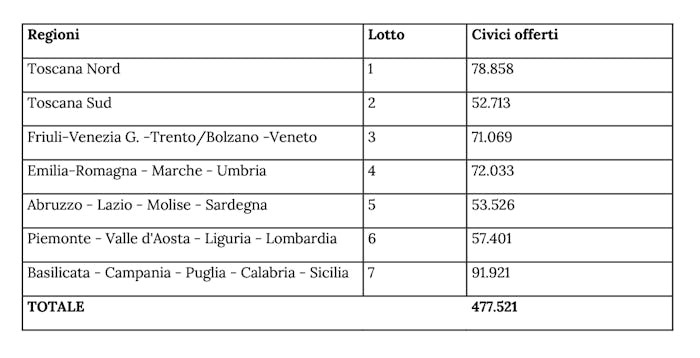
Il perimetro dell’aggiudicazione di FiberCop riguarda oltre 477mila civici (equivalenti a circa 700 mila unità immobiliari, considerato che in un civico possono trovarsi diverse unità immobiliari vale a dire appartamenti), che FiberCop potrà selezionare su tutto il territorio nazionale, suddiviso in 7 lotti geografici, per un investimento complessivo in capo a FiberCop previsto non superiore a 300 milioni di euro al netto dei contributi attesi. Si tratta in parte dei civici del Piano Italia 1 Giga ai quali aveva rinunciato Open Fiber e in parte di civici frutto dell’ultima mappatura Infratel.
Il roll-out partirà nella seconda metà del 2026, con particolare attenzione sul periodo 2027-2029 e completamento previsto entro la scadenza fissata a giugno 2030. L’incasso dei contributi è previsto durante l’avanzamento del roll-out, con un anticipo di cassa a favore di FiberCop già nel 2026.
Questa attività non impatta sugli altri impegni di copertura di FiberCop
I 477mila civici della gara, che trovano tutti nelle aree grigie, sono distribuiti su tutto il territorio nazionale e si aggiungono ai 1,2 milioni già coperti da FiberCop nell’ambito dei precedenti interventi del PNRR. Questa ulteriore attività di copertura, di dimensioni contenute, è in linea con la strategia precedentemente annunciata da FiberCop di completare il piano di roll-out FTTH nelle aree del Piano Italia a 1 Giga e nelle aree Autonome rispettivamente entro la metà del 2026 ed entro la fine del 2027, strategia che resta confermata e procede secondo le previsioni.
Per FiberCop la gara dovrebbe far crescere il fatturato sul lungo periodo
Dal punto di vista economico, considerando il conseguente aumento della copertura non contendibile di FiberCop e i contributi attesi, l’aggiudicazione della gara del Fondo Nazionale per la Connettività dovrebbe avere un effetto accrescitivo sugli indicatori finanziari strutturali di lungo termine della società, senza tuttavia comportare un impatto materiale sulla guidance di Capex netto, nel breve periodo, sulla leva finanziaria attesa e sulla politica finanziaria.
Cosa prevedeva il bando
Il bando prevedeva la concessione di contributi pubblici destinati al finanziamento di progetti di investimento finalizzati alla realizzazione di reti fisse ad alte prestazioni con capacità Gigabit. Il contributo pubblico potrà coprire fino al 70% delle spese ammissibili. Gli interventi dovranno garantire, per i civici interessati, servizi di connettività con velocità attese, anche nelle ore di picco del traffico, pari ad almeno 1 Gbit/s in download e 200 Mbit/s in upload.
L’offerta risultata aggiudicataria, presentata da FiberCop prevede la realizzazione entro il 2030 di infrastrutture di rete in grado di assicurare la copertura di oltre 477 mila numeri civici sull’intero territorio nazionale, distribuiti in 7 lotti geografici: