Google Lets Restaurants Directly Opt Out Of Ordering Providers via @sejournal, @MattGSouthern

Restaurants can now opt out of specific third-party ordering providers right from their Google Business Profile dashboard, according to a LinkedIn post by Google’s Lisa Landsman. This setting lets restaurants choose which ordering options appear on their profiles in Search and Maps.

Asked in the post’s comments which countries have it, Michael G., a product manager at Google, replied “all.”

Before this, a restaurant could ask to remove a provider from inside Business Profile, but the provider had to process the request. Google’s help page for ordering options gives providers five business days to take the link down.

How The Setting Works

A screenshot in the LinkedIn post announcing the setting shows a “Manage provider” panel for a placeholder provider, www.provider.com. Under the heading “Show provider to customers,” the panel has separate switches for pickup and delivery, both on in the image.

Landsman, Google’s Head of Industry Engagement & SMB Success, wrote that restaurants can skip sending a request to each delivery platform. If a provider no longer suits a restaurant’s operations or margins, she wrote, “you can turn it off yourself.”

She also made the case for keeping some providers listed, writing that diners tend to order through apps where they already pay for a subscription or have a card saved, so listing those apps can keep those orders from going somewhere else.

From Removal Requests To Direct Controls

According to an archive of Google’s compliance policy for ordering providers made in May, the burden was placed with each ordering provider to provide restaurants a method (such as a removal form or a help/support ticket) to take themselves out of the ordering provider’s feed to Google.

Under that policy, providers had five business days to review and complete an opt-out request.

The current version of this page, which was most recently updated Oct. 19, does not contain that requirement. The current version states that merchants may enable or disable individual provider integrations through product controls; it also states “All partner integrations are enabled by default.” It also still says providers have to drop any restaurant that asks to be removed from their feed.

Why This Matters

A provider that you do not want to show in a business profile can now be turned off for pickup, delivery, or both from the Business Profile dashboard.

On Google’s policy page for ordering providers, integrations are enabled when first set up. Therefore, for each restaurant profile you manage, the provider list under “Food ordering” belongs on your checklist.

Looking Ahead

As of Oct. 28, a Google help page on ordering options describing how to use the “Remove link” option does not include information on the “Show provider to customers” option. Also, the LinkedIn post did not state if the new setting will work in bulk or through the Business Profile API, which commenters asked about.

Featured Image: Gorodenkoff/Shutterstock

Source: Google.

https://www.searchenginejournal.com/google-restaurants-opt-out-ordering-providers/594794/


A hacker stole more than 40,000 DHS employee records


A hacker stole a trove of personal information from the Department of Homeland Security (DHS). The breach exposes the names, job titles, phone numbers, email addresses, and office locations of more than 41,000 employees, including those in US Immigration and Customs Enforcement (ICE) and Customs and Border Protection (CBP), according to TechCrunch and Wired. The data also linked the agencies to specific surveillance tools.

As reported by TechCrunch, a hacker known as “Department of Peace” gained access to the data through Okta, an identity and access management service used by the DHS. Around 21,000 records pertain to CBP employees, and ne …

Read the full story at The Verge.

https://www.theverge.com/tech/1021528/ice-cbp-data-leak


Akai is embracing vibe-coded mods with an open-source MPC


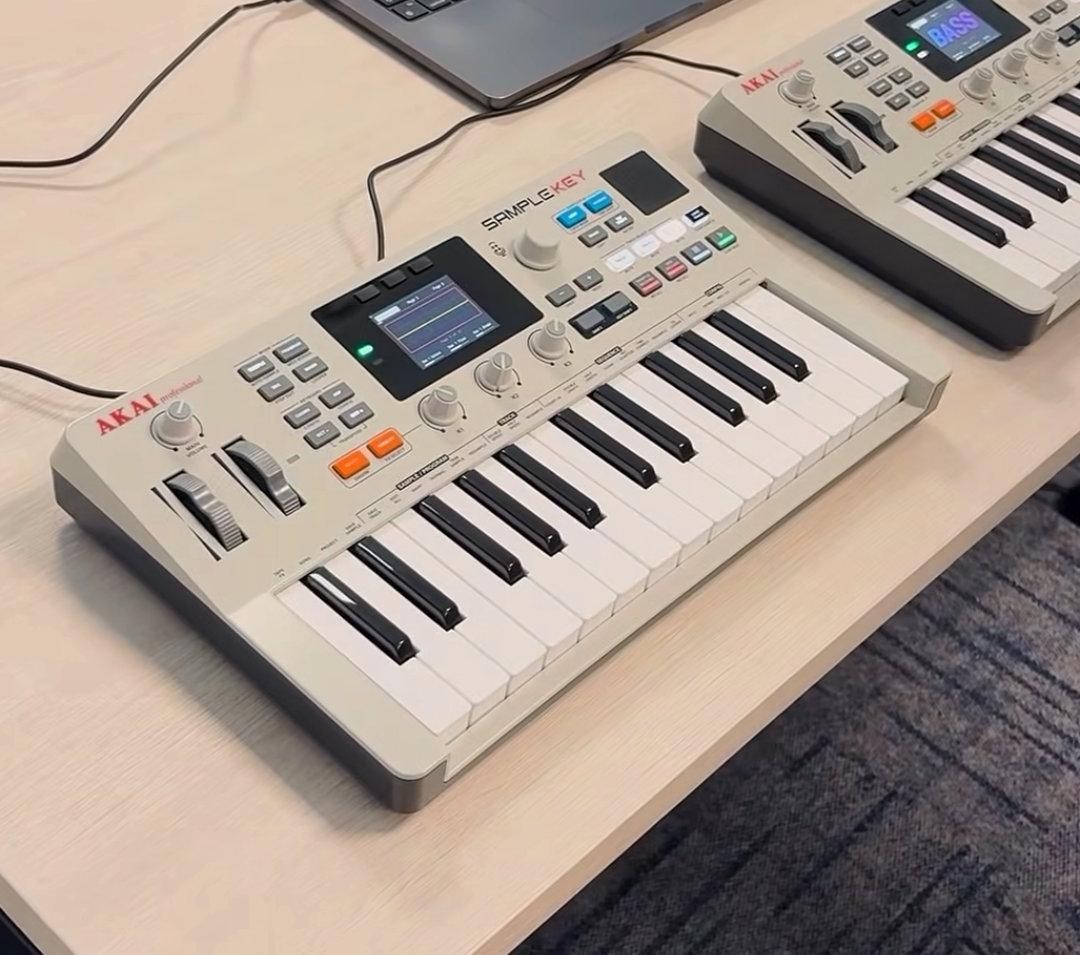
A screenshot of the MPC Sample Key on a table top in a conference room.
The MPC Sample Key looks like the MPC Sample just with keys instead of pads. | Image: Akai

The MPC Sample Key isn’t even formally announced yet, but Akai is already showing off what the modding community is cooking up through vibe coding. Akai has decided to embrace the explosion of hackers and custom firmware developers by giving them early access to the device, which will have open-source firmware.

It will likely run some version of the same software found on the MPC Sample, but with tweaks to accommodate the traditional keyboard, pitch, and mod wheels. Unlike the higher-end MPC Key 37, however, the Sample Key doesn’t have pads. Instead, you play back samples with the keys.

I …

Read the full story at The Verge.

https://www.theverge.com/gadgets/1021405/akai-open-source-mpc-sample-key


Readwise is taking on Kindle and Kobo for ebook supremacy


For the last several years, Readwise has been building tools for power readers. There’s the eponymous product, Readwise, which stores and categorizes your Kindle highlights to help you remember what you’ve read. There’s Readwise Reader, an app for reading newsletters, PDFs, and web articles you’ve saved for later. And now there’s Readwise Books, a full-fledged platform for buying, reading, and talking about books.

Readwise Books is currently in beta, available through invite or to existing Readwise subscribers. I’ve been testing the app for a few days, and it’s a much bigger take on reading than most. Tristan Homsi and Daniel Doyon, Readwis …

Read the full story at The Verge.

https://www.theverge.com/tech/1020264/readwise-books-launch-ebook-store


AI-Cited Pages More Often Got Straight To The Answer via @sejournal, @MattGSouthern

TJ Robertson’s analysis of 193,507 AI answers from ChatGPT, Google AI Mode, and AI Overviews includes two rounds of blind page ratings. In both rounds, cited pages opened with a direct answer to the question more often than the pages they were compared with.

When the same AI answers pulled up pages, there was a difference in how often these pages began with a direct answer when they were cited (23%) versus those that were not cited (14%). There also was a difference when comparing cited pages with Google Top-10 pages the AI never pulled up (20% vs. 5%).

The results are based on data collected by Robertson’s company TJ Digital, which sells both Search Engine Optimization (SEO) services and Generative Engine Optimization services. The data is gathered through purchasing questions tracked by Robertson’s company for its clients. Robertson states he views his findings as showing associations rather than any specific page traits causing a citation.

How The Analysis Was Built

The total number of responses (answers) within the study’s analysis was 193,507. Those responses addressed 4,167 questions that did not reference a specific company or product name. The questions covered 78 different client companies representing nine different business models. Responses were captured over the course of eight “snapshots” on an individual week basis during the time frame of August 27 through October 21, 2026, plus repeat runs using the same questions. The agency captures the questions used in those “snapshots” with Peec AI which is an application program that presents a pre-determined set of prompts to AI tools and then collects both the AI tools’ answers and the source(s) of their answers.

In order to collect comparative data regarding the characteristics of pages, the agency extracted and compared the content of 21,874 pages that were cited in AI answers with 4,507 comparative pages provided for 434 questions.

The agency referred to the comparative pages as “passed-over pages”. All such comparative pages were identified as having been among the top ten search results in Google for a specific question; however, they “never came up in the AI’s searches.” The agency relied upon keyword data from Ahrefs for those rankings as opposed to the actual questions being asked. According to the analysis, the agency categorized 174 of those 371 keywords as being similar to the question posed while categorizing the remaining 197 of the keywords as being more general or broader.

Cited Pages Answered Up Front More Often

Robertson had AI raters blind-score 195 pairs of pages so the raters did not know whether the first or second page in each pair was cited. The 20% to 5% split of opening answers based upon direct-answers was derived from this round, which paired cited pages with passed over pages.

Also in this round, half of the passed over pages were missing an answer to the question anywhere within the portion of the page that the raters read; while 23% of the cited pages missed an answer. Also in this round, cited pages received a higher rating for completeness than passed over pages. The rating for completeness was 2.3 (on a 1-to-5 scale) for cited pages, while it was 1.7 for passed over pages.

There was little difference in terms of “promotional” tone between cited and passed over pages. Approximately three fourths of all the pages in both categories were business pages trying to promote their own product(s)/service(s), and both categories rated very similarly (i.e., 3.8 and 3.7) in terms of “tone.”

The 23% to 14% split on opening answers was determined by another round prior to this one where cited pages were being compared to pages that the exact same answer brought up via search, however, did not cite those pages. At present (as of Oct. 28), Robertson’s page has yet to identify how many pages he analyzed in this round, nor has it identified which specific AI model he used to evaluate the pages.

Other Page Traits Linked To Citations

The analysis compares traits on cited and passed-over pages, accounting for each site’s Ahrefs Domain Rating and page type, and reports the results as odds of being cited. A year in the title came with more than twice the odds. A publish or update date in the past 12 months came with 88% higher odds, tables with 69%, first-hand experience with 45%, and prices with 28%.

Pages with an author byline had 28% lower odds, and pages with a call to action had 12% lower odds. Robertson says he can’t explain those two results and wouldn’t remove either element based on them alone.

He says there was an association of 13% higher odds when using schema markup. I covered a report from Ahrefs back in May showing that pages cited by AI were approximately three times as likely to contain JSON-LD. The addition of JSON-LD to pages that were previously cited by the AI Overview did result in no statistically significant citation increase based upon Ahrefs’ testing.

He also states the content traits identified in this analysis were duplicated in a second test (limited to Google Top-10 Pages). The page has references to a per-engine table and a graph regarding those trait odds; however, as of Oct. 28, both the table and the graph are not visible.

Why This Matters

On your own product/service pages, you can find out whether the page provides an answer to the buyer’s question early in the page. In this study the difference in direct-answers to a question provided up front by cited vs. uncited pages was smaller when the uncited pages were also being retrieved by the AI.

Blind rater data shows that citations do not prove that a page has answered the question. A little under a quarter of the cited pages did not provide an answer to the buyer’s question within the portion of the page that raters reviewed.

Page trait odds are based on questions asked by one agency for their clients and describe how cited and passed over pages differed; therefore they are patterns that you may want to test on your own monitored questions.

Looking Ahead

The agency did an analysis comparing pages as they were and cannot show if putting in a direct answer for a question will change the number of times a web-page is cited. To be able to see if the addition of a direct answer changes citations, a comparison study such as was conducted by Ahrefs on schema will need to be done where a test group adds it and a control group does not, measured before and after the addition. Until then, the opening-answer pattern is a hypothesis to compare against what questions you currently track.

Featured Image: Accogliente Design/Shutterstock

https://www.searchenginejournal.com/ai-cited-pages-more-often-got-straight-to-the-answer/594781/


Google says its investments in AI are driving more searches


An image of Sundar Pichai in front of a Google logo

Google parent company Alphabet says that its AI investments are leading to a big growth in searches year-over-year, as noted in its Q3 2026 earnings today.

“Our AI investments are driving overall Search query growth, including commercial queries,” CEO Sundar Pichai says in a statement. “In fact, our year-over-year query growth rate is the highest it’s been in the last five years.”

Alphabet’s consolidated revenues for the quarter were $127.6 billion, up 25 percent year-over-year, with its “Google Search & other” revenues up 12 percent year-over-year. Google Cloud revenue was also up 103 percent year-over-year to $30.7 billion. Alphabet also …

Read the full story at The Verge.

https://www.theverge.com/tech/1020811/alphabet-google-earnings-q3-2026


Microsoft reveals strong cloud growth amid financial reporting overhaul


Vector illustration of the Microsoft logo.

Microsoft just posted the first quarter of its 2027 fiscal financial results. The software maker made $92.3 billion in revenue and a net income of $33.6 billion during Q1. Revenue is up 19 percent, and net income has increased by 32 percent.

It’s a new financial year for Microsoft, so the company is changing up how it reports its finances by splitting its businesses into two segments for the first time. Gone are the previous segments: Productivity and Business Processes, Intelligent Cloud, and More Personal Computing. It’s now just Agents and Infra, and Devices and Consumer.

Agents and Infra, which includes businesses like Azure, Microsoft …

Read the full story at The Verge.

https://www.theverge.com/tech/1020785/microsoft-earnings-revenue-q1-2027


Apple charges $14,549 for a fully specced touchscreen MacBook Pro


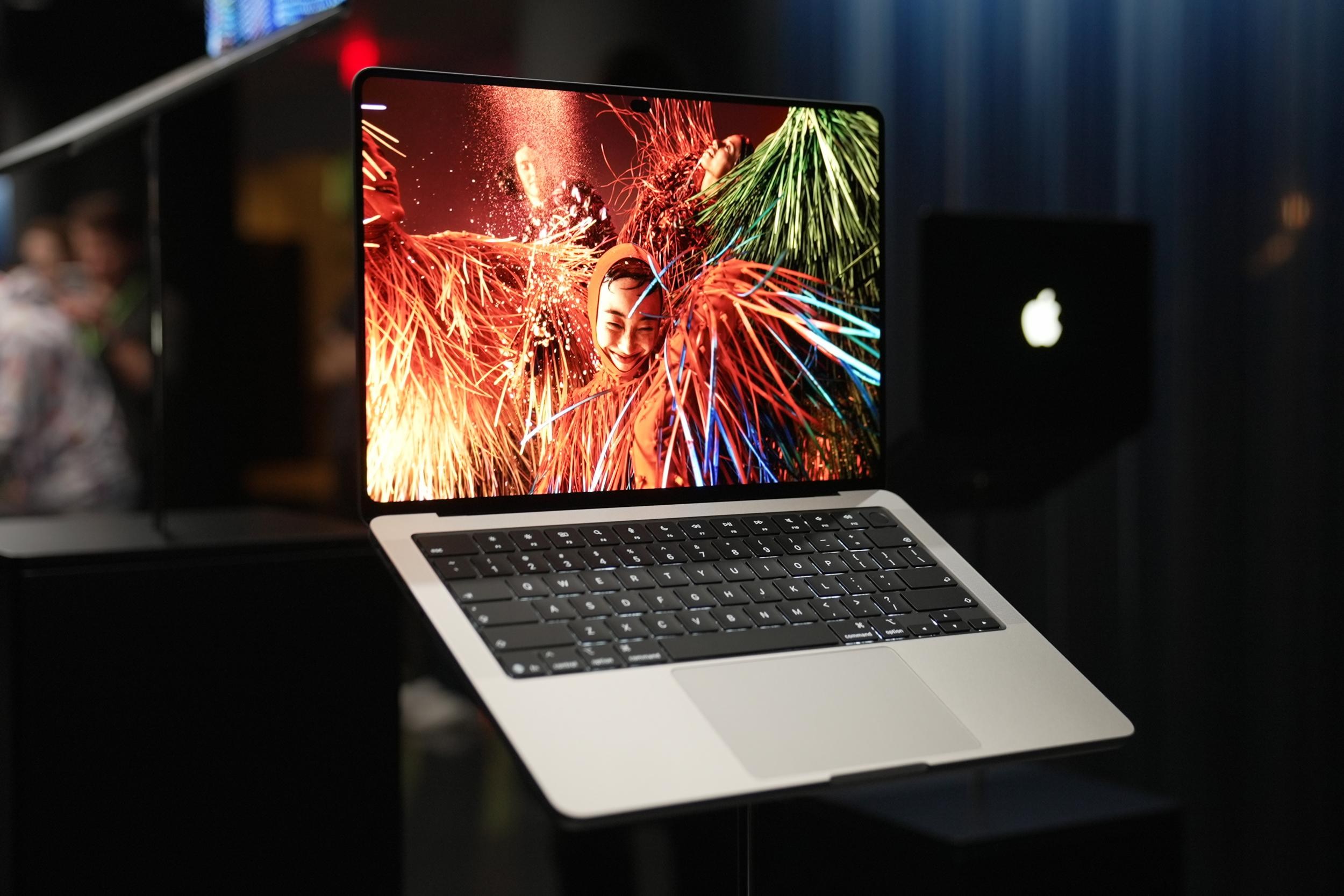
The new Apple touchscreen MacBook pro laptop on a display stand surrounded by other laptops.

With an OLED display and touchscreen capabilities, it’s no surprise that the new MacBook Pro Apple announced today is more expensive than the MBP announced earlier this year. But upgrading the base models that start at $2,899 for the 14-inch, and $3,399 for the 16-inch, with every premium hardware option that Apple offers pushes those prices to an eye-watering $14,249 and $14,549, respectively.

Both of those premium configurations include the M5 Max chip with an 18-core CPU and 40-core GPU, $150 worth of nano-texture glass, 128GB of memory that adds an extra $2,000, and 16TB of storage which is the real budget breaker here thanks to the ong …

Read the full story at The Verge.

https://www.theverge.com/tech/1021308/apple-touchscreen-macbook-pro-proled-xdr-fully-specced


Google launches Gemini 4 Carbon with a ‘significant leap’ in cybersecurity


An image showing the Gemini logo on a dark blue background

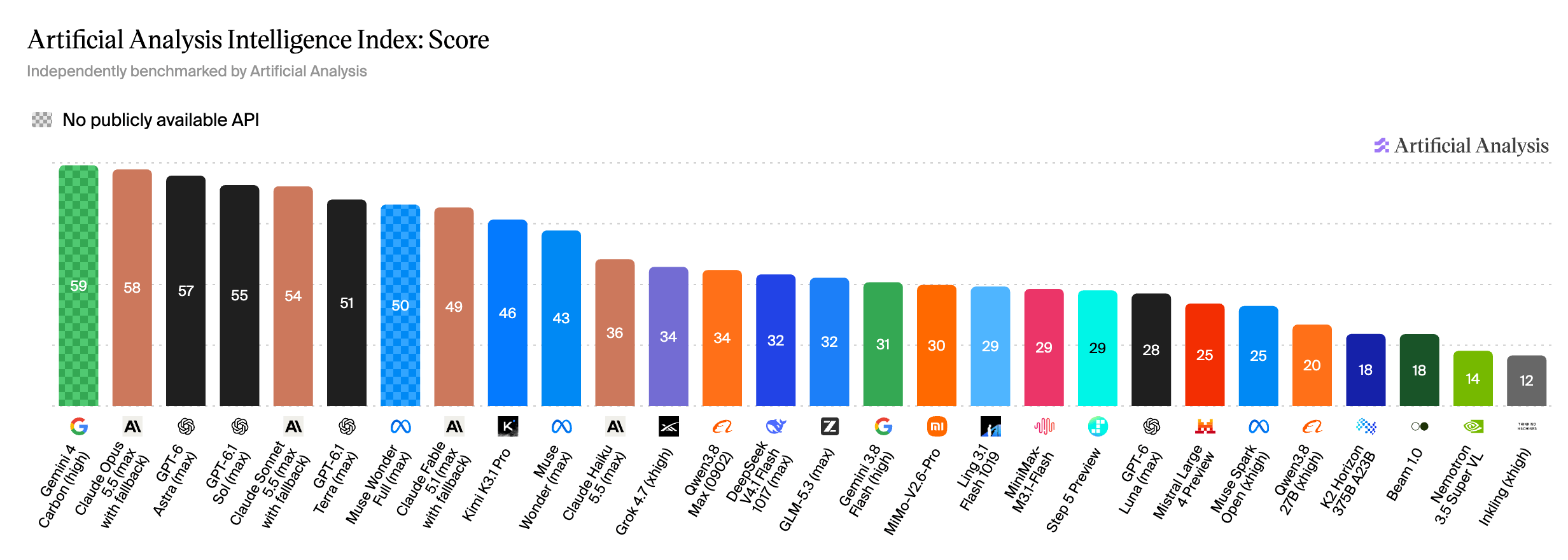
Google has released its latest frontier model, Gemini 4 Carbon, offering “significant gains” in coding, agentic tasks, and cybersecurity. In an announcement on Wednesday, Google highlights Carbon’s top spot on the Artificial Analysis Intelligence Index (v5.0) benchmark, with Claude Opus 5.5 and GPT-6 Astra trailing behind.

The new Gemini 4 Carbon model offers improvements over Argon, which Google released earlier this month. It’s currently only available to a select group of cybersecurity defense companies, but it will eventually expand to other partners in its Fairwind Program.

The company says Carbon reflects the “pace at which we’re pus …

Read the full story at The Verge.

https://www.theverge.com/tech/1021339/google-gemini-4-carbon-cybersecurity-frontier


Foreign gadget bans: all the news about the FCC’s clampdown on Chinese tech


A gavel prior to an open commission meeting at the FCC. | Photo: Al Drago/Bloomberg via Getty Images

What do drones, routers, and Roombas have in common? The US government wants to keep Chinese ones from entering the country. They’re the first consumer gadgets that are facing de facto import bans because of the US government’s xenophobic stance — and they might not be the last.

Originally, the US government was just worried about US networks. It’s been distrustful of Chinese telecom equipment providers Huawei and ZTE for well over a decade, eventually requiring telecom providers to “rip and replace” their gear. (Many telecoms have still failed to do so.) It established an “Entity List” for companies whose gear should be banned from import, marketing, and sale.

But under the second Trump administration, that list has been weaponized against entire home consumer gadget categories too — starting in December 2025 when Trump and Brendan Carr’s FCC banned all future foreign drones unless their companies obtained a waiver.

Next was a ban on all future foreign routers, all future foreign robots and power inverters, and within the robot ban, all future foreign robovacs. In each case, the government claims it’s because those gadgets fundamentally pose an unacceptable threat to US national security. But in each case, the US has provided zero public evidence of a threat, has done nothing about existing drones and routers and robots that might pose such a threat, and hasn’t given us any reason to trust that its waivers have anything to do with security.

Besides, there are rarely any US companies to fill the gaps left by foreign ones. Consumer gadgets are largely made overseas, including practically all routers and practically all drones — just like how your Apple, Dell, and HP laptops are not made in the US.

In this StoryStream, we’re following the latest on the foreign gadget bans.

https://www.theverge.com/policy/1019851/fcc-foreign-gadget-ban-drone-robot-roomba-storystream