The front view of the Mac Mini. | Image: The Verge
Best Buy has a great deal for the rest of the day on the M4 Mac Mini base model that has 16GB RAM and a 256GB SSD. Normally, it doesn’t make a ton of sense to buy the M4 model for its usual $799 price given that the newer, faster M6 version has been available from Amazon for $779.99 (originally $899) for the past couple of weeks. However, at $649 it’s a much more tempting price.
The M4 Mac Mini launched at $599 in 2024, and was an incredible value. Given that this sale price makes it just $50 more than the original price instead of $200, it’s a good time to buy if you want to spend as little as possible on a modern Mac desktop.
Aside from some impressive generational leaps in processing power, you aren’t missing out on a ton by skipping the M6 model and opting for the M4. Their design and ports are nearly identical, and with either model you’ll need to supply your own keyboard, mouse, display, webcam, etc. If you’re on the fence and can’t decide between the M4 and M6 models, I suggest checking out my colleague Antonio’s review of the M6 Mac Mini. The newer model might be well worth the extra $130 cost.
Today brought a big discount to LG’s C6 OLEDs lineup, particularly its bigger models. The 55-inch model is $999.99 at Amazon, Best Buy, and Costco (previously $1,399.99), costing a little less than the 42- and 48-inch configurations. The price hasn’t gone below $1,299.99 before, so it’s a good time to consider an upgrade. The 65-inch model is cheaper than before, too. Previously $1,699.99, but normally selling for $1,500 or so, you can grab the larger version for $1,399.99 at Amazon, Best Buy, and Costco. If you have a big room and budget, the 77-inch LG C6H that, like the 48-inch version, has a tandem OLED panel that offers more brightness and better colors, is $1,999.99, down from $2,499.99.
For $499.99, you can grab a 14-inch HP OmniBook 3 during Best Buy’s deal of the day that has a 2K OLED screen, a capable Snapdragon X ARM processor, 16GB of RAM, and a 256GB SSD. This seems like a fantastic option for anyone on a budget. Its Snapdragon processor can run most x86 Windows 11 apps without much issue, and it’s just a rarity to get these kinds of specs — from the OLED screen to the RAM amount — at $500. My colleague Antonio reviewed the 16-inch version that cuts some corners in the screen department compared to this 14-inch model.
It’s time to get spooky if you haven’t already planned your run of games for Halloween. The spectacular Silent Hill 2 remake is down to $21.34 on Steam for PC via Fanatical, a third-party site I’ve shopped from numerous times. If you’re alright with spending more, Resident Evil Requiem is one of Capcom’s several great 2026 games, and it’s $20 off at Amazon on all platforms, costing $49.99.
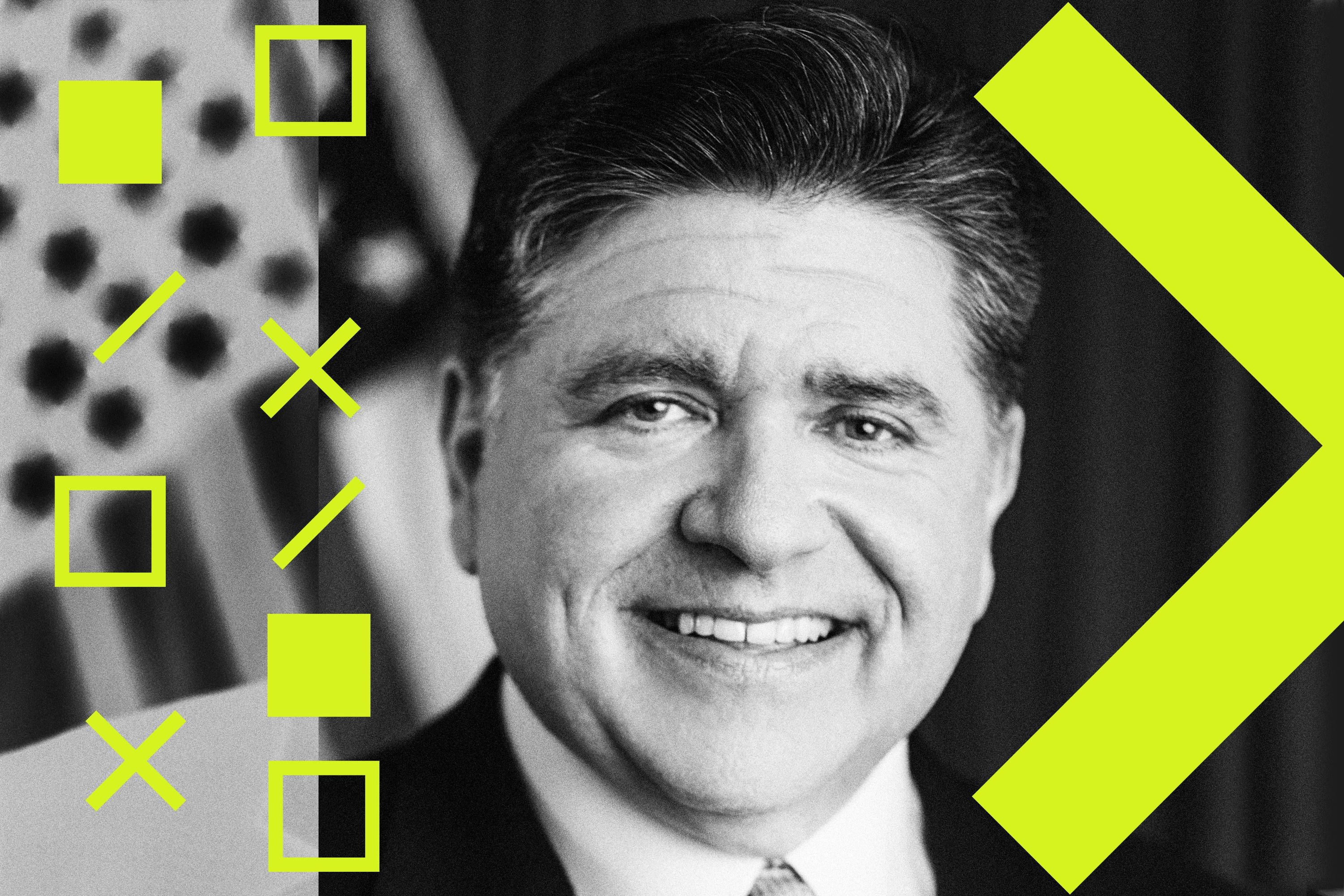
JB Pritzker thinks AI could help us live to 100 — or threaten us like nukes
Today, I’m talking with Illinois Gov. JB Pritzker, who has a lot of thoughts about AI, tech, and privacy.
If you’ve been listening to the show, you know that one of my running theories is that those issues are driving a big and maybe kind of unexpected political realignment — and with the midterms coming up next month, and early voting already underway in a lot of places, the stakes are pretty high right now.
So I asked Gov. Pritzker about all that, and he was surprisingly willing to dive right into the absolute existential weeds of what government is even for. You’ll hear him say — and it’s hard to disagree — that some problems are just collective action problems that require the government to do a lot of work. We can’t solve all these problems one at a time, or even one state at a time. It’s a pretty deep conversation, and we really got into it on a lot of issues.
And of course, I had to ask him: Are the Bears gonna stay in Illinois?
Before we get going, do me a favor and subscribe to Decoder on YouTube, where we put out new episodes every Monday and Thursday.
Okay: Illinois Gov. JB Pritzker. Here we go.
Gov. JB Pritzker, you’re the governor of Illinois. Welcome toDecoder.
Thanks, Nilay. Great to be with you.
I am very excited to talk to you. We’re in the heart of midterm season. You are running for reelection. I have to tell you. I have to be very honest with you. I personally feel a lot of pressure in this interview, not only because I’m speaking to a governor, but because I went to school in Chicago. My sister still lives in Chicago. My wife grew up in Illinois. Her entire family is farmers in North Central Illinois. Boy, do I have a list of questions for you. I have to do a good job here.
Well, we’re claiming you. Now that I know all that, we’re claiming you. You’re an Illinoisan.
Verge subscribers, don’t forget you get exclusive access to ad-free Decoder wherever you get your podcasts. Head here. Not a subscriber? You can sign up here.
I don’t know about that. I grew up in Wisconsin. Here’s my first question for you. I’m a die-hard Packers fan. Are you going to let the Bears move to Indiana?
That is not our intention. We are, in fact, in discussions with the Bears and the NFL about keeping the Bears either in Chicago or in Arlington Heights, but in Illinois.
I’m saying, as a Packers fan, nothing is funnier than the outcome of the Bears moving to Indiana. I just want to put that out there. Openly biased in this case — I own two shares of that stock — but I’m going to make the comparison here. And the reason I started there is not only because I think that’s a funny outcome, although I do, but it feels like we are in the middle of a generational political realignment.
I’m sure you feel that, in this election campaign, the idea of big business and how that should interact with the government, and how the government should be able to push back on big business and not give in to big business. All of that feels up for grabs.
And the comparison I will make in this specific case is your fellow governor, Gavin Newsom, in California. They sued the Ellison family, Paramount, over the Warner Brothers merger. Paramount threatened to leave. They made a lot of noise about Nashville, Texas, Miami, or wherever you make noise about these days, and it feels like Newsom caved. It feels like he pressured his Attorney General, Rob Bonta, to settle that lawsuit and keep them there.
They settled the lawsuit. The next day, the Ellison family is like, “We never… We’re from California. We would never leave.” I see a parallel here with the Bears that is connected to that larger realignment, how government and business should interact. Do you see that parallel? Do you feel that realignment?
Well, what I can tell you is we’re pretty tough negotiators in Chicago and Illinois, and that’s really what we’re in the midst of now with the Bears. But I understand your point about realignment. I mean, there is a generational change, and I think it’s also an attitudinal change about protecting taxpayers, protecting people who frankly are among the most vulnerable to all the technology that’s overtaking people’s lives and invading people’s homes.
And so I do believe that the government has to be more active now and become a fighter for our people and not just a collaborator with business on everything. I’m a businessman, as you know, before I became governor. But I also know that, for the people of Illinois anyway, my job is to protect the working people of this state who often don’t have anybody protecting them except a government that will stand up for them. So that’s kind of the realignment that I see.
And that generational shift, I agree with you. It’s partly a Democratic Party generational shift. Generationally, we’re a little more aggressive. And I’m probably older than the next generation that’s already possibly taking office this November. I’m 61 years old, but I think of myself as having come out of the tech world and as somebody who has been a fighter for progressive values that, yeah, we’ve got to become more aggressive and make sure we’re standing up for our people.
There are two places where I see the realignment in particular. One is data centers, one is privacy, and you just see that as a bipartisan backlash to those things. I would actually add a third, which is antitrust broadly. It’s weird if you go into Silicon Valley. David Sacks is retweeting Lina Khan from the Biden administration talking about whether the AI industry needs an antitrust exemption to manage safety.
They both agree that these companies don’t need antitrust exemptions. They actually should be more competitive. Again, putting that in the context of regulating these companies, thinking about the dynamic between the government and the biggest companies in the world. I’ll just ask the question, I guess, more directly. Do you think Newsom was right to give in to Paramount, or do you think he should have forced them to make good on that threat to leave?
I can’t speak to the Paramount situation well enough to give you an answer, so it would be unfair for me to do so. I can say once again that our orientation today — and I think about the big AI companies and the big social media companies as well — has to be like, wait a minute, too much power in too few hands.
Particularly when we talk about AI, where it’s potentially existential, but certainly transformative, which is probably a kind way to say it about the economy, that we’re going to have to get very engaged. Guardrails, of course, on both parts, but also addressing what I think on the AI front is potentially a significant change in employment in the United States. I’m not somebody who is necessarily convinced that we have to see a whole bunch of job loss, but that does feel like that’s the direction this is going.
What I’m suggesting is we better be prepared, and we better be protecting people who are going to lose their jobs, or at least it appears they’re going to lose their jobs. And I’ll just give you this thought. If these days 4 percent unemployment is kind of the acceptable near full employment number, I think the problem we’re going to see is — if that’s sort of the level that we’re going to hopefully aim for and stay at — that in very short order, we could end up at 7 percent and have that be the baseline, or maybe 10 percent.
And if you think about what’s happened, the upheavals of economies and of governments when you get to 10 percent unemployment in any country. We better be focused on how we’re going to give people the dignity of work and enough income so that they can make a life for themselves when you’re going to put people out of work by virtue of this technology. By the way, much of the benefit of that is going to go to a very, very few people. So we’ve got to wrestle with that and come to a conclusion.
I wanted to start with some of the brinksmanship we have seen in the negotiations between, particularly, states and the big companies, because that brinksmanship is real. The threat is we will leave. We just covered, I don’t know, Kevin O’Leary in Utah talking about data centers, andthe people of Utah really pushed backagainst Kevin O’Leary building that data center. But his argument was, “Well, I’m just going to shop around.”
This is what states do. They compete with tax incentives and benefits, maybe for data centers, which will put everyone out of a job. They compete for land use rights. You’ve got a rural state with a lot of farms in it. How are you thinking about that dynamic? Do you feel like you’re in competition with the other states, or is this bipartisan realignment creating more of a level playing field where these companies are going to have to actually give something?
We are in competition. We just are because it isn’t bipartisan, at least if you ask me. Unless there is a change in the government. I’ll pick on Texas for a second, and there is a chance that you’ll see a new governor in Texas as of November 3rd. In fact, a good chance. But if you look at Texas as it’s run today by a three-term, hoping to be a four-term, Republican governor and a Republican legislature, they have no intention of changing their alignment about incentives.
In the state of Illinois, we don’t want to have to do that. I mean, we obviously want to protect the revenue that we’ve got for the state to pay for the things we think are valuable to our people, but we also want to make sure that we’re attracting jobs and not losing jobs. And in a world where South Carolina, Michigan, Texas, Florida — pick your poison. Michigan may be slightly different just because it’s got democratic control, but these are our competitors. When I’m competing to have a company move to Illinois, I’ve got to make sure, first of all, that I’m somewhere in the ballpark when it comes to the incentives, because otherwise we don’t even get considered.
And then when I say somewhere in the ballpark, I mean, I want to give away less than more, and then I want to provide whatever other advantages I can that aren’t financial so that I can protect the resources that we have. An example of that is, we like to talk about a kind of white-glove service that we offer to companies. If you’re going to bring a factory here, let’s say, just to give an example, we want to make sure that we’ve got somebody who’s kind of a concierge for your company that’s walking you through each of our departments where you need a permit. It doesn’t mean we’re lowering the standards. It just means, a lot of times, the bureaucracy eats up so much time that it makes it impossible for a company to actually do what they want to do in your state.
We try to make sure that if we’re going to attract a large company, with 1,000, 2,000, 3,000 jobs, that we’re at least making it a little easier for them to go through without having to give them massive tax incentives. So that’s the way I think about it. We are in competition. There’s just no doubt about it. Should we be? There’s a lot of discussion about whether we shouldn’t, and maybe at the federal level we should do something about leveling the playing field, but this is the world we’re living in right now.
I wanted to ask those questions just to set the baseline. I really do think something is happening. A lot of young people are dissatisfied with the status quo. A lot of people in general are dissatisfied with what big tech companies are trying to do with AI, with the potential for job loss.
And the relationship between the people, the government, and those companies seems more fraught than ever, especially as they’re trying to expand their physical infrastructure with data centers, as they all become defense contractors, literally taking our tax dollars to sell weapon systems and collect data for the government. That’s a big swirl.
I wanted to start there, but I just want to take one second here and ask you theDecoderquestions because I personally think the operation of government is so opaque. It’s very easy to figure out how big companies are run. The CEOs won’t shut up. They’re on podcasts all day long. I think most people have no idea how your job works.
So you were elected governor. How is your office set up, and how have you structured the state government of Illinois?
Just starting from where I sit, and then, of course, we look at it from a customer service perspective. But starting just at the top, I actually did something that no governor of Illinois has ever done — which is that I created not just one deputy governor. We obviously have a lieutenant governor who’s elected also, but a deputy governor is somebody getting appointed by me to serve under me, to help manage the government with me. What I did was put four deputy governors in place, a general counsel, and my chief of staff.
Why is that important? Because what I’ve tried to do is to break down the silos of government. I took all of the health and human services-related departments — that’s the Department of Public Health, the Department of Human Services, the Department of Healthcare and Family Services, everything from health insurance, Medicaid, and public health during the pandemic — and put it all under one deputy governor working directly for me. The idea is that instead of my having, let’s say, 26 direct reports, I’ve got four or five direct reports plus my chief of staff, who each have, let’s say, six or seven departments underneath them.
From my perspective, what I wanted to do was make sure that I’m breaking down the silos of government, making these departments that are often building walls, and they don’t want to talk to one another because they’re afraid they might lose jobs in one department to another department, or lose control of a program if they’re talking to one another. That’s the way it used to be. Now we’re like the deputy governor is there to either beat the heads together or at least bring them together so that they will be operating the government more efficiently. Okay, so that’s from the top.
From the bottom, which is: how do people who live in Illinois interact with the state government? And obviously, technology is one of the upgrades that’s occurred and made it easier. Illinois, frankly, had not significantly invested in those processes before I became governor, or in the technology that was necessary. And I’ll just give you one example of this: We created something called BEACON, which is designed to address the problem that parents and families have with mental health for children. It turns out that there were seven different ways in which people approached the government to get help, and we weren’t coordinating those, and we weren’t helping to provide all of the resources.
I’m talking about outside resources. How do you find a therapist? How do you find a psychiatrist? And how do you pay for those things? Medicaid, if you can’t afford it on your own. But the point is, there’s one door to enter through BEACON that allows you to get access to all of those resources, even if they’re in multiple departments. So that’s just one example. We’re trying to think of this as a customer service operation. It’s one thing to say this is how the org chart looks and another thing to say, this is how you access all the resources of the government that you need.
We provide programs that really matter to people. We have a birth equity initiative to reduce maternal mortality, particularly in Black and Brown communities. And free diapers for some people. The problem is, people don’t even know that the programs exist, and how would you ever figure out that the programs exist, especially if you’re a working person who’s working two minimum-wage jobs? You don’t have any time, and you don’t have any money, and you don’t even know how to talk to the government. And so we’re trying to fix all of those problems of the government with the way that we interact with people.
It’s funny. It feels like that is one of the bigger opportunities when it comes to AI, just letting the AI navigate a bureaucracy for you and communicate what resources are available. The flip side of that is that people hate AI. They truly dislike it, and it doesn’t feel like that connection has been made — that a lot of these tools can actually just navigate a bureaucracy for you. Are you thinking that should be an investment that you make, that it might be what turns the tide in terms of how people feel about these tools?
Yes, but I’m not plunging headlong into it. And I realize that there are probably states that are plunging headlong into it.
I mean, the United States government rolled outits AI chatbotto look at webpages across the government.
Well, there you go.
I guess what I’m trying to do is make sure that… I created something called the AI Cabinet in my government, and that is to essentially bring the experts on AI together with the leaders of my mainstay agencies of state government, so that we’re thinking about privacy, safety, and efficiency. And those things have to be talked about together. You can’t just say we’re going after efficiency and we don’t really care about the other two.
So that’s the idea, the AI cabinet. It’s also that, honestly, there are things, as you know, about AI that are dangerous. And so we’ve got our emergency management agency on that AI cabinet. We’ve got our state police on that AI cabinet. And remember, a lot of the people that work in those agencies aren’t particularly proficient at AI or really understand the potential and the potential dangers.
That’s why we brought in experts, for example, from the University of Chicago, the University of Illinois, just as two examples of places where we’re drawing expertise. So yeah, there’s a lot to be done. I would say we’re trying to approach it carefully before it gets out of control to a point where we have no way to pull it back in.
The otherDecoderquestion I ask everybody is about decisions. You have a big job. You have some constraints in your decision-making process, right? There’s a state legislature, there’s a federal government, you have other agencies in your state. How do you make decisions? What’s your framework?
Well, I don’t do it the way Donald Trump does.
It’s funny you say it that way. I guess I start with the idea that we have a problem to solve and that decisions have to get made. Are those decisions ones that need to come to the governor? Because you’re right, I only have so much bandwidth. So the question is: which are the most serious ones that can’t be solved by other people, or are unlikely to get the outcomes that I would want by handing them over to other people? And then those automatically come to me.
So what I’m making decisions about is kind of the first answer to your question, and then it’s how do I actually make the decisions? For me, I am not one of those people who thinks that I’m right 100 percent of the time. Maybe a good way to describe it, and I’m joking a little bit when I say it, is that I’m 90 percent sure I’m right, but there’s also a 10 percent chance that I’m dead wrong. I want to make sure that I’m getting input and a debate before I actually make the final decision.
Someone once told me that the best CEOs are ones that, in their organization, are a little bit below average in terms of their capability and intellect. I’m not saying we want below-average leaders. I’m just saying you’re so good at hiring that you’ve got people in your organization who are really far better than you are at various things that you’re not particularly good at. Maybe knowing what you don’t know and being willing to ask for help is a philosophy that I have. Be willing to ask for help if it’s something you really don’t know.
And I’ll be honest, when you become governor of a state, there are a whole lot of topics within the purview of a governor. Making decisions about all those topics, maybe a human being who has super intelligence might be able to do it, but most people don’t start out knowing everything there is to know about public health, public safety, and education. And so you start out with what you know and then try to add expertise to it and then make decisions based upon the best experts debating one another in front of you. At least that’s how I like to do it.
Give me an example. Governor Kathy Hochul from New Yorkwas on the show. She said in her first week she needed to declare a state of emergency because of a hurricane, and she just didn’t know how, which was very humanizing in its way. Give me an example of when you became governor, and there was something where you just didn’t know.
COVID.
Sure.
I mean, honestly, no one runs for governor thinking there’s going to be a global pandemic. You think you’re going to solve education problems for people or put more money in people’s pockets by raising the minimum wage or whatever, but COVID comes along. And I have to admit, the level of expertise, I don’t think any governor… Well, maybe Josh Green, the doctor who’s the governor of Hawaii, maybe he had a lot to [of expertise] start with — but for the rest of us humans, that was one where we were learning on the job.
We were working 18 hours per day. My entire team was all in, and we had to do things like emergency procurement of ventilators and masks, and we had to go outside the box. It’s not like we could just put it through our central management services, look for a contract, or whatever. This was like, I need masks in three days.
I’ll tell you a quick story, if you’re interested, about my interaction with Donald Trump at the time because I think it’s interesting, anyway. But I’m not a big fan of Donald Trump, in case you didn’t know. I was one year into office when the COVID pandemic hit, and I had not… I mean, I talked to his administration, but I didn’t talk to him directly. So I picked up the phone and called him, and I said, “Mr. President.” By the way, I wrote a script for myself because I know he likes to be flattered, and I’m not somebody who normally likes to flatter him, but I wrote a script for myself. I saved it; I even have it today.
And I said, “Mr. President, you’re a great businessman, but you can understand that paying $8 for an N95 mask that should cost us 75 cents means we’re in a national emergency. We need to be able to get these things and afford them, and I’m competing against all the other states. We need to invoke the Defense Production Act in order to make sure that we’re making enough masks in the United States.” That’s what I told him. And then I said, “But I need masks right now. What can you do for me?” I said, “I need 2 million N95 masks, and I need 4,000 ventilators.” And he never delivered, just so you know, even though he promised that he would deliver.
The challenges in COVID were mighty, and the organization that we had to create around it… I had meetings every morning just on this topic, figuring out, okay, how many hospital beds [are available]? We didn’t have a system that would tell us statewide how many hospital beds are available in each region. What happens if you have an outbreak and it really is overtaking some region? What do we do?
And so these were all the things we had to learn on the fly. And all I can tell you is, once again, back to hiring great people to have around you, I really felt like I proved that I had done a good job of hiring because the people around me were tremendous. One of whom, by the way, is now running as my lieutenant governor partner in this election.
It’s interesting you brought up COVID in the context of our conversation about generational political realignment. I would actually point to COVID as the beginning of a particular realignment around what the government should measure, how much control the government should have over people, and all of that has led, I think, directly into the bipartisan pushback against Flock cameras.
The very notion of privacy is not, in my mind, left or right anymore. The CEO of Flock got himself in all kinds of trouble because he kept saying all the people who wanted to ban Flock cameras are criminals, and he would go on MAGA media and say this. I think that position was just rejected. We can see in states around the country that there’s pushback against Flock cameras. I would point to COVID as the beginning of that.
The idea that the government could be too intrusive, and in particular, the government should not be able to measure things. “If you don’t test, there won’t be COVID” just became an idea. And the idea that we shouldn’t measure things, or we should tear down our systems of measurement, is a big part of the second Trump administration. But I see that privacy connection very clearly to COVID. In one world, the government coming together to protect its citizens and build a bunch of systems could have gone a very different way. In the one we live in, there’s ferocious pushback to that, on the left and the right in some ways. How do you feel about privacy right now?
I know Illinois leads the nation. You’ve got the Biometric Identification Protection Act. Every time I fly to Chicago, I’ve got to push the button at the airport to say that it’s okay to look at my face. That’s one way of going about it. But then you do have, I think, hundreds of Flock cameras in Cook County alone. People have Meta glasses with cameras in them. There’s something happening with privacy that is running right into the aftershocks of COVID and how people feel about government intrusion. How are you finding a way through that balance?
Well, and don’t forget AI.
Yep.
As you’re suggesting. I mean, talk about a collision. This focus on privacy is warranted and long overdue, to be honest with you. I understand what you’re describing about COVID, but I think something that came out of COVID got accelerated, and that was conspiracy theories.
Yes.
And I’m not suggesting that everything you hear now about the pushback around privacy is a conspiracy theory, but it is easy for these things to spread, and people have misinformation that’s informing them about how these things are used. Having said that, I guess what I think is that we are having to solve multiple problems at the same time, and that AI is coming.
Let’s just go to AI for a second. It’s here. I mean, I say it’s coming, but it’s here. It’s not going to stop. We’re not going to become Luddites without any AI. So the question is, in the context of privacy, what guardrails are we putting on AI, and how are we managing it? This idea that the president and David Sacks had, where they got all the companies together and said, “Hey, how about you guys self-police?” That’s not going to work, at least not for protecting people’s privacy. And frankly, it’s not going to provide any safety either because everybody’s going to operate in their own self-interest. It’s one of the reasons why you need a government, in my view.
I’m not suggesting the government is any smarter than these companies. But one of the reasons you have any kind of collective action of the government is because, separately, as you know, people operate in their own self-interest. I mean, you could have a Hobbesian world where people are killing each other, and there are no rules about it. So I think we’ve got to use the government as a tool and also be smart within the government. And that’s where the generational change, I think, is hugely important. Use the government as a smarter, less bureaucratic collection of people devoted to protecting the privacy of everyone and making sure that we’re addressing all the other challenges that come from AI.
So I guess I’ll just say, I don’t think we’re anywhere near where we need to be, but I will say, if we don’t have a federal government, now I’ve got a lot of… I’m very proud of the things that we’ve done here in Illinois around the AI Safety Measures Act, which is the toughest in the country, the Children’s Social Media Safety Act, and so on. I’m proud of the work we’ve done, but state by state, this is not the way to do this. We’re doing the best we can in the absence of a federal government that is addressing these issues.
And when I say federal government, I’m not just pointing at Trump. I’m pointing at Congress. No action on their part means that we’re going at it alone. And right now, I don’t know how many AI safety measure acts have been passed, but it looks like three to me. I mean, it’s New York, California, and Illinois. Maybe you could name a couple of others, but we three were the first. And yet, we’ve got 47 other states.
This worries me a great deal. You’re raising issues, and I’d love to tell you I have all the answers. I can tell you what we’re trying to think about is that we are the… People sometimes say that the states are laboratories of democracy. They’re actually laboratories of policy, and we are trying to, at least in Illinois, use ourselves as a laboratory for policy while not creating disadvantage for ourselves. And so that’s a very challenging thing to do, and why we need to change what’s happening at the federal government.
Focus on privacy for one second. I understand what you’re saying about AI. I think part of the privacy debate around Flock cameras, for example, is, well, sure, you can have one license plate reader in one intersection. And if the cops had to go there and pull the SD card out of it, drive it back to headquarters, upload it to their Apple IIe, and look at it manually, maybe people would feel one way about it.
But those cameras are all networked. They don’t have any access controls really. There are infinite reports of local police chiefs tracking their girlfriends across state lines with these cameras. You add in a system like Palantir, which can synthesize multiple databases and do all kinds of tracking across all kinds of systems. People see that.
The turn that is being made is that you can connect a lot of databases of information together, search them without a warrant, and track people across the entire country. You could ban that state by state. You could regulate it city by city, which we’re seeing happen with Flock, and you could maybe have some federal controls around privacy there. None of it’s really happening, but on the ground, people are ferociously pushing back. And that’s the connection I’m making to COVID, conspiracy theories, and how much power the government should have to surveil you and look at you.
Something happened in there where people’s attitudes about that really shifted. And I would say one of my core beliefs is that Americans do not like being told what to do. Party politics aside, Americans don’t like being told what to do. Something about that flipped and connected to: we have a network of license plate-reading cameras, and we’re going to tear them down when we see them because there’s something about that that offends us as Americans.
Illinois does have privacy laws. I think the last update to the biometric law you did was in 2024, and it has changed again. It’s gotten more vociferously opposed to tracking and surveillance in this country. Do you think you need another update to that privacy law?
I think we should be looking at that question every year. I’ll give you an example of it. We passed it, and again, I’m back to AI because I think how you’re describing it was a perfect way to say it. If it was an SD card that they had to go grab and then analyze back at the station, it’d be a different thing. But it’s AI that’s operating these things, and that’s allowing this stuff to move instantaneously and track people.
Look, should we be addressing it? Yeah, every year. It’s like the issue of ethics in government. What I mean is, the minute you put an ethics law in place, there’s somebody who’s trying to get around it. I mean, every year, it’s like every law… this is probably true across all of capitalism, maybe. There are always people trying to find a way around the law. Put a tax law in place, and someone’s trying to figure out how to get around it. And I think the point you’re making is that that’s why you need to have a proactive government, less bureaucratically and more aggressively trying to address these things. Are we going to be able to keep up with it? I’ll be honest, I don’t think so. And I also don’t think you can say, “Well, we’re just going to shut it all down” because there are things you’re missing out on.
It’s sort of like, and again, I keep going back to AI, but I think a lot about it. My children are 21 and 24. They’re going to live to 100 or 110 years old because AI is going to solve a whole bunch of medical challenges, and already is. There’s a cure now for sickle cell anemia, and people who would otherwise die at 25 or 30 years old are going to live full lives. This is going to happen across the board in cancer and everything else. And so there’s all good in there, and then there’s the bad. So I know what you’re saying. I guess all I can tell you is I’m a believer that we can progressively — I don’t mean that in a political fashion — address these challenges.
In Illinois, we passed a law that disallows the use of AI in therapy for people because we think too much information gets collected, not enough humanity in the process, and we think that it should have humanity in it. Again, we’re not trying to shut it down across the board, but we’re going to have to see how it gets used and where it’s improper.
And I know that sounds imperfect because the technology is moving so fast that the idea that we’re going to be able to keep up with all the ways in which someone’s privacy could be breached seems very difficult, but I don’t know any other way to do it. That’s why you have a government, and maybe in the end we’re going to have this competing use of things like AI, where AI is monitoring AI, and AI that’s kind of privacy-friendly or focused on privacy is going to be monitoring the AI that’s not. But again, I know you don’t want to just talk about AI.
I am concerned. This issue of privacy has been around for a long time. You’ve been talking about it, I’m sure; I’ve been talking about it since before AI. This is like everybody giving over their personal information in exchange for access to something. And that was happening for a while, and then we’re all getting ads that are personalized to us based on stuff that we’ve essentially given up privacy for.
No, it’s funny. People believe, and we can write as many stories as we want about how your iPhone is not actually listening to you, but the ad tracking is so good that everyone believes that their iPhones are listening to them. The next turn is that it is now technologically feasible for these systems to listen to you all the time. And I can’t fall back on the idea that it’s cheaper for them to do the ad tracking when you hit I accept than to listen to you all the time, which was, for a decade, the right answer.
The economically correct answer was that ad tracking was cheaper than listening to you all the time. That might be very different in the future. There are already devices that we cover here at The Verge that purport to listen to you all the time and turn that into some actionable data. And it feels to me like the tech industry is trying to drive a truck through our privacy law, through our lack of AI regulations, through an entire system of governance that is designed for the pre-AI era.
The notion that you don’t have privacy in public worked really well when everyone didn’t have a cell phone that could connect to the cloud and instantly search every photo all at once, all the time, and do facial recognition. We live in that world now. I would say the public sentiment towards the idea that you don’t have privacy in public places has turned.
They don’t like the Meta glasses. They call them pervert glasses for a reason. And somewhere in there is, well, the federal government should pass privacy law. It is a failure of imagination in the United States. We don’t have federal privacy law. And then somewhere in there is the notion that the states are laboratories of democracy and policy.
It is amazing, by the way, how often on this tech and business show, Thomas Hobbes comes up and the very notion that the government is there to serve as an extension of us solving collective action problems. It comes up over and over again because I think the tech industry does not want to respect that dynamic.
This is why I started with that relationship between government and business, and the pushback and the negotiation, because here it feels like the tech industry is in a bubble of its own making. Truly, in a media bubble of its own making. And then all of the polling is, well, we hate AI. In particular, young people hate AI. And then all of the action is around data centers where NIMBYism, the most American of policy levers, is being pulled to keep these data centers out of communities. And that’s one way to stop AI.
You just pulled back on data center tax incentives in July. You’re pushing the state legislature to adopt a suite of guarantees on reforms for new construction. Do you think data centers and the pushback on data centers is an effective route towards AI regulation?
No, I don’t. I think it’s an effective route toward data center regulation. I know that people have conflated and put together their opposition to data centers with their opposition to AI. And a lot of people can’t describe why they’re opposed to one or the other because they’re conflated with one another. But I can say that — I mean, at least our aim is focused on the idea, and people really feel this, right, and there’s real data to back this up — the data centers themselves put aside what they’re doing inside a data center.
The data centers and what’s happening are eating up the available electricity, and that’s causing your electric bill to go up. At least that’s how everybody feels. There are a lot of things that we should have been doing in many years gone by to get to a point where electricity bills shouldn’t have to go up now. And that has to do with building out the grid. It’s a world where regulation and cross-border challenges have made it nearly impossible for a lot of the grid to get built the way that it should have. We produce a lot more electricity in the United States than we use, but we just don’t transport it well enough, and we would have a lot more available if we transported it better.
Okay, but even if you think that can’t happen efficiently, we need to build more capacity on the grid. My only point is the opposition to data centers is, in part, a result of the economic situation that’s happening right now in the country, where electric bills, gas, rent, everything has gone up. Your electric bill shows up every month, and it continues to go up, and people kind of scratch their heads and say, “Who am I paying for?” This is happening, and this is particular to Illinois.
We’re not going to have a whole discussion about energy policy, but I could just say this: We produce more nuclear power in the state of Illinois than any other state. Roughly 53 or 54 percent of our electricity comes from nuclear power, and we’re a net electricity exporter. So we have an excess in Illinois, but our bills are going up, and that’s because of the methodology of the regional transmission organizations. Again, not to get into all the details of it, but essentially, if Ohio decides to build a hyperscale data center, our bills in Illinois are affected, and that’s shocking to people who live in Illinois. But what they know is they don’t want their bill to go up, so they don’t want another data center nearby — even though the one in Ohio is actually causing the problem, even if you choose to oppose data centers.
So this is a challenge. I think there’s a lot of information that needs to be spread. But most of all, we just need a whole lot more capacity and a whole lot more grid that will, I think, subside some of the concern about data centers. To your point, privacy is, I think, more related to AI than data centers. And it’s not just AI, but the way AI is used. So we’re going to have a lot of opposition. You make an excellent point. I think this feeling of being out of control — you are not in control of your environment anymore — that’s the thing that is causing anxiety.
I want to go back to something really important that I was saying earlier. We need better people running for public office. We need smarter policy development in government. And part of that is a generational shift that’s needed and a better understanding. We have people who are serving in the United States Senate who have no idea. Was it the Secretary of Education, Trump’s Secretary of Education, who called it A1? I mean, because we’ve got older people who don’t have any exposure who are making policy theoretically on these things, and it should disturb us all. It’s one of the reasons we’ve got to advance the cause of better people and better systems in government.
We are on the cusp of an election. There might be a new Congress. There might be new leadership in Congress. There are a bunch of old Democrats too. In fact, I could probably point directly to Joe Biden’s age in the last election as the reason that he lost. Do you think that you need a wholesale change of leadership of the older Democrats as well?
You said, “Do we need a wholesale change?” I mean, I can tell you that I don’t think we should be telling —
Well, now I live in New York. I’ll just ask you, do you think Chuck Schumer should be the Senate majority leader if the Democrats take the Senate?
That’s a decision people in the Senate are going to make. I have no influence over it. I can tell you this: I am opposed to term limits because I think that you should have all the choices. You’re a voter. If you want to vote for the 75-year-old, I mean, go ahead.
I’m just suggesting that a great case could be made for the 45-year-old who’s just as smart as the 75-year-old was when he was 45, or maybe is now, but has a modern look at the issues around AI privacy, everything else we’re discussing, and a more aggressive view of how we ought to be reining in big corporations in their invasion of our lives. But I think people ought to make their own choices. I mean, for us to say, “Well, we should have an age limit. You’re 70, that’s it, you’re out.” I think that belies who we are as a democracy.
Well, you convinced me. I’m 46. I’m announcing my run for president here with you, Governor. That was a rousing speech.
Listen, I would vote for you in a second if the choice was you and Donald Trump.
A low bar, but I’m glad I crossed it.
Let me tie two ideas together at the end. We’ve talked a lot about AI regulation. You mentioned social media regulation a little bit earlier in this conversation. I know that Illinois has a social media law. You have a bell-to-bell ban on phones in schools for kids.
I’m just going to pick on Mark Zuckerberg. It’s easy to pick on Mark Zuckerberg. If you look at how he talks about social media regulation, he basically describes the tragedy of the commons. You signed the landmark settlement with him. I think Illinois is due to get $750 or $760 million out of that settlement. And a big part of it is that TikTok and YouTube have to agree to the same terms, and then Meta will pay the rest of the money. And Zuckerberg very clearly has said that’s because if Instagram falls back on engagement bait and TikTok doesn’t, the kids will just use TikTok. And so the government has to get everyone to agree.
I will tell you that Neal Mohan, the CEO of YouTube, does not agree. He’snot going to sign onto this. That’s one whole fight. Look at how Mark Zuckerberg talks about AI regulation. There’s none of that dynamic at all. He’s like, “It should be a free-for-all. We’ll all compete. If it’s not safe, the market will tell us. We’ll be fine.” And in my mind, these ideas are at total odds with each other.
In the market where he makes all the money, the government has to step in and stop him from hurting kids because apparently there’s no market demand for safe social media. And in the market where the AI CEOs are telling us they might kill us all if we don’t stop them, it’s a free-for-all, and the market will tell us if they accidentally kill everybody. How do you reconcile those things? Are you just happy that you got the social media case done after a decade of failing to regulate social media, or do you think you can solve AI with regulation this time instead of letting it just cook?
Look, I’m an optimist at heart, so I’m not going to suggest to you that I absolutely know that we can solve all the problems that we’re now facing, but I don’t know what else we can do. Other than, again, progressively making sure that we’re trying to address each of these things, trying to anticipate them to the extent we can. Can we be faster than AI is developing? I don’t know. But we can’t stop trying. I know that. And I would suggest to you that my optimism is founded because I think the vast majority of people want what you’re describing, which is reining it in.
And again, without destroying companies. I don’t think we’re all trying to do that. What we’re trying to do is stop the invasion into our home, stop the invasion into our children’s lives. I do think we can do that, but that’s because we’ve solved a whole lot of huge problems. That’s kind of like my answer to: is AI potentially existential? The answer, of course, is yes. And can we solve it? I don’t know. Nuclear weapons… I mean, just to give something of an analogy to something else. I mean, nuclear weapons are still hanging over us as a danger to humanity. And so far anyway, we’ve managed not to blow up the world. I don’t know whether that gives you any optimism, but it does to me.
We, as a country, can figure out how we want to rein it in here. That we, as a country, can work with our allies to figure out how we want to collectively try to rein it in. And then we have enemies in the world and competitors in the world, and we’ve got to figure out how we’re going to… Maybe it’s mutually assured destruction, like it was with nuclear weapons, but these are all things we’re going to have to work on, and work on fast.
And it’s scary because someone analogized this to… I mean, think about the early 1950s when every kid had to learn that if there was a nuclear blast, an atomic bomb that went off, get under your desk. That wouldn’t have been very effective. But the point is, people lived with the idea that a terrible nuclear holocaust could occur with a nuclear explosion. And so I think we’re heading into that world again with AI. I hope I didn’t stray too much from your question, but —
Let me ask you this, and it’s a little bit of a wild card here at the end.
We cover this industry so closely here, and the big difference with nuclear weapons is that there weren’t five companies building bleeding-edge nuclear weapons in private capacity, led by five guys who all hated each other. But that’s the dynamic of the AI industry. They all truly hate each other, and they’re all trying to make as much money as they can as fast as they can.
And then some of them think the AI is alive. If you ask Anthropic, and we’ve done this, “Is Claude alive?” They don’t say no. They will argue with you about the definition of alive and suggest that, to them, alive means having a biological component and Claude doesn’t have that, but it might be conscious.
There’s a race to build AGI in the industry. Some people truly believe they’re building alien minds that have a different kind of consciousness. I’m not sure any government at any level has ever had to regulate that, or has ever come up against an industry that is religious about the fact that it might be building the next kind of intelligence.
Where do you stand? Do you think that they’re building a next kind of consciousness that stands alongside humans, or do you think that this is normal technology as some others do?
Boy, that is really another podcast for us, but I’ll just say this one thing: I just want to disagree with you for a second. Nobody could ever imagine a nuclear weapon either. And…
But the government built nuclear weapons. It wasn’t —
I understand. I’m not suggesting it’s the same. I’m suggesting it’s so new at the time that figuring out how you’re going to rein it in… Because remember, it’s not just one government, and the same thing with AI. It’s not just those five guys either. I mean, it’s like there’s somebody in China. Maybe five of those. I don’t know, and somebody in Europe or whatever. You could say we’re ahead, or they’re ahead. I don’t know.
But all I’m saying is, yeah, this is a proliferated situation and it’s not government-controlled. One hundred percent, you’re right; it’s not like nuclear weapons in that sense. But it is like nuclear weapons in the sense that nobody’s ever seen it before. It’s a complete mystery to start with. How are we going to rein it in? I mean, nobody thought Russia was going to get the bomb, and they got it. We’ve figured out somehow how to deal with it.
Again, you’ve got to be an optimist to believe we can end up with the right solution here. I don’t know that we have the answer to “how do we rein it in?” I will say, though, that if we had the power to create it, we have the power, in my view, to rein it in. Is it conscious? You’re asking a deep question.
Have you felt the AGI?
I mean, do you think it’s conscious? Because I understand why people think it might have consciousness or it’s going to be conscious. But I think that’s why the ethicists and technologists need to be involved. And especially, in my view, the government’s got to be involved because how else are you going to rein in the five guys and the companies that have developed this? There is no other way.
I will tell you, I don’t think it’s conscious. And every now and again, you have an experience where it’s blindingly clear why other people believe that. When you watch a reasoning model take 90 steps over an hour and arrive at a conclusion, it’s impressive, and you can see why people believe that. I do not, and I have a lot of reasons for that.
It just occurs to me that if you set out to regulate a technology like this, if you believe one thing, you would maybe go down one path. And if you believe that you were building a consciousness, you might go down another.
Again, the whole industry itself does not agree on this. Jensen Huang and Dario Amodei do not agree on whether it’s alive. Jensen just wants to sell a bunch of chips, and he will happily tell you it’s just technology and you can control it. I think Dario thinks he’s building AGI, and that’s a different… There’s a whole reason he proposes different kinds of regulatory structures there. I’m just asking you, have you felt the AGI? Do you think it’s one path or the other?
I’m not going to give you a satisfactory yes or no.
I mean, I haven’t felt it. I guess that’s what I’m… My basic answer is I haven’t felt it.
Governor Pritzker, this was very fun. Thank you for indulging this last existential loop of a question. You’re going to have to come back toDecodersoon.
I would like to do that. Thanks, Nilay.
Questions or comments? Hit us up at decoder@theverge.com. We really do read every email!
Major European mobile carriers are teaming up for a ‘direct’ satellite program without Starlink
Deutsche Telekom, Orange, Telefónica, and Vodafone signed a letter of intent saying they’re considering a joint bid for spectrum that would support European direct-to-device satellite competition for SpaceX’s Starlink. The four telecom companies say they would handle the ground infrastructure while a separate, unannounced satellite partner provides the satellite constellation:
The joint initiative by Deutsche Telekom, Orange, Telefónica and Vodafone has a clear ambition: to meet customer demand for universal coverage in underserved areas, strengthen the resilience of public networks, protect critical communications, and support the develop …
Come creare Campioni tech europei, i consigli di Cdp venture capital
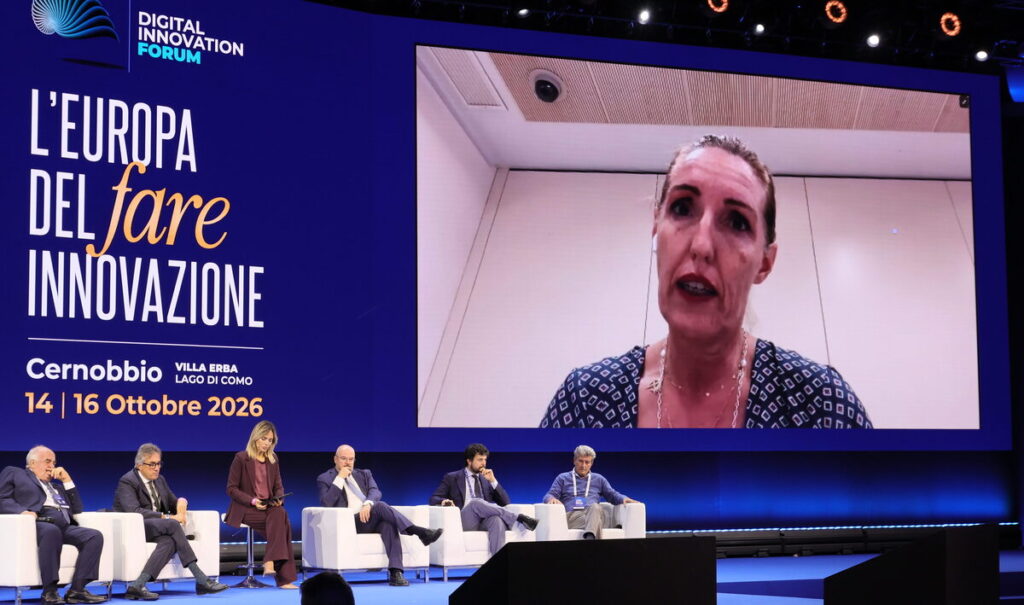
L’Europa sa fare ricerca, sviluppare tecnologie e formare competenze, ma fatica ancora a trasformare queste risorse in imprese capaci di competere sui mercati globali. È questa la contraddizione al centro del panel “Come creare campioni europei o hub tecnologici, partendo anche dall’Italia?” moderato da Laura Chimenti, giornalista e conduttrice del Tg1, che si è svolto durante la 4^ edizione di Digital Innovation Forum – la Cernobbio del Digitale – in corso a Villa Erba, sul lago di Como, dal 14 al 16 ottobre su iniziativa della Fondazione Innovazione Digitale ETS edorganizzata da NOW Italia e da Triumph Group.
Ad aprire il dibattito è stato Brando Benifei, deputato del Parlamento europeo, che ha individuato tre ostacoli principali per le startup innovative: l’accesso al capitale, la disponibilità di capacità computazionale e la complessità del quadro normativo. Sono difficoltà che, secondo l’europarlamentare, spingono alcune imprese a trasferirsi all’estero dopo i primi round di finanziamento.
Il problema, tuttavia, non riguarda soltanto le risorse economiche. Negli ultimi anni l’Unione europea ha costruito un’importante architettura normativa sulle nuove tecnologie, dall’AI Act al Digital Services Act e al Digital Markets Act, che però, data la frammentazione nell’applicazione e nell’enforcement, rischia di indebolire la competitività delle imprese nostrane.
“Avere un’Unione Europea ancora a metà, dove si fanno normative di rango federale e poi abbiamo invece un’implementazione ancora estremamente frammentata, anche per le scelte degli Stati membri, è un handicap”.
Per superare questo limite, occorre procedere verso una maggiore integrazione del mercato continentale e favorire l’ingresso di capitali di rischio. La questione, quindi, oltre che tecnica, è politica: senza un’effettiva capacità di attuare le decisioni comuni, anche le norme pensate per semplificare l’attività delle imprese rischiano di trasformarsi in un ulteriore ostacolo.
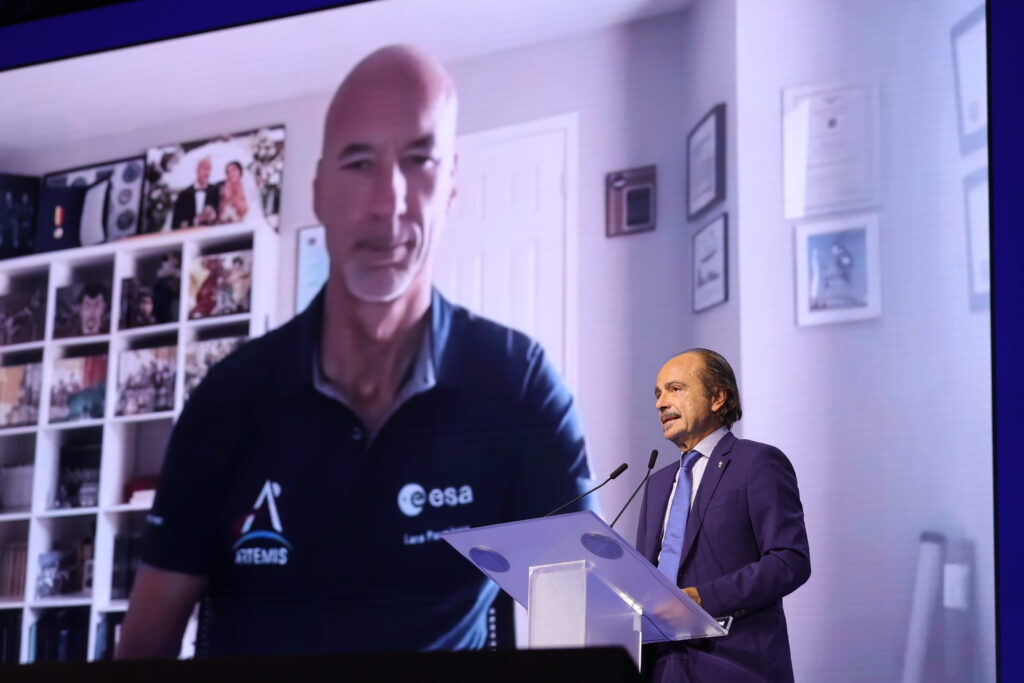
Sullo schermo grande l’Eurodeputata Elena Donazzan
Semplificare le regole e dare certezze alle imprese
Sul tema regolatorio è intervenuta da remoto anche Elena Donazzan, europarlamentare e vicepresidente della Commissione per l’industria e l’energia, che ha messo al centro la necessità di coniugare semplificazione e certezza normativa. Il problema, nella sua analisi, è che l’Europa dispone di una significativa capacità di ricerca, ma non sempre riesce a trasformare i risultati scientifici in prodotti e processi industriali.
“L’Europa, come l’Italia, innovano attraverso una ricerca molto evoluta, un’accademia raffinata, una capacità di costruire centri di ricerca di eccellenza che producono prototipi che poi, però, non riescono a entrare sul mercato”. Perché?
Secondo Donazzan, a frenare questo passaggio contribuisce un quadro normativo diventato troppo rigido e dettagliato, che rischia di non adattarsi alla velocità dei cambiamenti tecnologici.
La risposta del settore pubblico dovrebbe quindi consistere nel semplificare, garantire stabilità delle regole e certezza dei finanziamenti, evitando di introdurre ulteriori vincoli.
Donazzan richiama inoltre un altro elemento: la necessità di rafforzare la filiera tecnologica a monte, a partire dall’approvvigionamento delle materie prime. Senza una maggiore autonomia e una reale neutralità tecnologica, sostiene, le imprese europee rischiano di partire svantaggiate già nelle prime fasi dello sviluppo industriale.
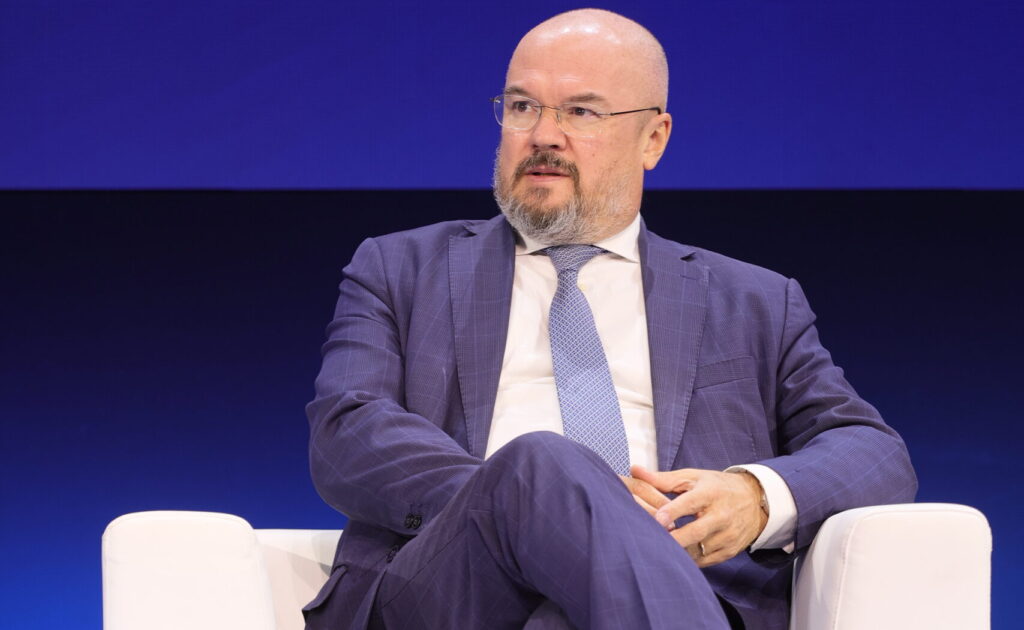
Enrico Borghi, componente del Copasir e della Commissione Affari costituzionali del Senato
A riprendere il tema della competitività anche Enrico Borghi, componente del Copasir e della Commissione Affari costituzionali del Senato, che ha invitato l’Europa a riconoscere il cambiamento degli equilibri globali.
Per Borghi, l’Unione deve infatti superare un sistema di regole e di governance concepito in un contesto storico profondamente diverso da quello attuale. Questo non vuol dire rinunciare ai propri valori, ma “trasformarli in un elemento di forza nella competizione internazionale”. L’Europa, ricorda, dispone del più grande mercato integrato e di uno dei sistemi di welfare più sviluppati al mondo, oltre a una tradizione di tutela dei diritti che può rappresentare un vantaggio distintivo.
Il confronto globale si sta giocando sempre più sulla sovranità digitale, sul calcolo quantistico e sull’intelligenza artificiale, settori in cui si stiamo assistendo a una competizione tra due modelli: quello cinese, in cui lo Stato assume un ruolo centrale nel controllo dei dati, e quello statunitense, caratterizzato dal peso crescente delle grandi aziende tecnologiche.
Il rischio è che l’Europa, in questa partita, rimanga spettatrice: “Dobbiamo svegliarci, coniugare i nostri valori fondamentali e renderci conto che, se vogliamo, possiamo essere una potenza”.
Emanuele Levi, amministratore delegato e direttore generale di CDP Venture
Venture capital, la condizione per far crescere le startup
Dalla strategia europea il dibattito è passato al funzionamento concreto dell’ecosistema dell’innovazione. Emanuele Levi, amministratore delegato e direttore generale di CDP Venture Capital, ha elencato quattro priorità per far emergere imprese tecnologiche in grado di competere a livello internazionale: un quadro societario comune, maggiori capitali lungo tutte le fasi di sviluppo delle aziende, il coinvolgimento degli investitori istituzionali e una più forte internazionalizzazione.
Tra gli strumenti da sviluppare c’è il cosiddetto 28° regime, pensato per consentire alle imprese di operare secondo regole comuni a livello europeo. Ma il problema, secondo Levi, riguarda soprattutto i finanziamenti alla crescita. Il rischio infatti è che l’Europa sostenga la nascita delle imprese, ma non riesca a finanziarne adeguatamente lo sviluppo, lasciando che i capitali stranieri intervengano quando le aziende iniziano a dimostrare il proprio potenziale.
“Gli europei finanziano il pezzo più difficile, che sono i primi quattro-cinque anni di attività, e quando c’è qualche vero campione che emerge, a quel punto, molto spesso i capitali arrivano dagli Stati Uniti”.
Per Levi, una parte importante delle risorse potrebbe arrivare dal risparmio privato e dagli investitori istituzionali. L’esperienza francese, con un programma avviato nel 2019 per mobilitare capitali assicurativi e mutualistici, ha dimostrato per esempio che esistono strumenti per incentivare questi investimenti.
Gianluca Dettori, Chairman & General Partner, Primo Capital
Dalla ricerca all’industria: i settori su cui puntare
Quali opportunità, quindi, per l’Italia? Secondo Gianluca Dettori, Chairman & General Partner, Primo Capital, il nostro Paese ha “tutte le carte in regola per competere in tantissimi settori”, tra i quali sicurezza quantistica, spazio e biotecnologie.
Nella sicurezza quantistica, Dettori ha raccontato per esempio che Primo Capital ha finanziato recentemente una start-up di settore nata in Canada da un ricercatore italiano, poi riportata in Italia per svilupparne qui la tecnologia. Un esempio di come le competenze nazionali possano essere valorizzate, a condizione di creare le condizioni economiche per farlo.
Anche lo spazio rappresenta un comparto strategico. L’Italia può contare su una filiera manifatturiera completa, che comprende motori, lanciatori, elettronica di bordo, sistemi di navigazione e software. E opportunità importanti esistono anche nelle biotecnologie, dove la qualità della ricerca deve però essere accompagnata da capitali sufficienti a sostenere percorsi di sviluppo che possono richiedere dieci o quindici anni prima di arrivare alla commercializzazione di un farmaco.
È proprio qui che entra in gioco il venture capital. “Tutte queste aziende esistono per una semplice ragione: perché esisteva il venture capital”, ha ricordato Dettori, richiamando le storie di Apple, Microsoft, SpaceX, Tesla e OpenAI. Dietro la nascita di grandi imprese tecnologiche ci sono stati investitori disposti a finanziare progetti ancora agli inizi, assumendosi il rischio di scommettere sul loro potenziale.
Per Dettori bisogna quindi cambiare il modo in cui vengono percepite le start-up: realtà che possono sembrare piccole e marginali, ma che nel tempo hanno il potenziale per diventare grandi gruppi internazionali. “Quello che serve secondo me è un cambio culturale di attenzione”.
Guido Torrielli, presidente di Rete ITS Italia
Formare i talenti per le tecnologie del futuro
L’ultimo tema affrontato riguarda le competenze necessarie per sostenere la trasformazione. Guido Torrielli, presidente di Rete ITS Italia, ha parlato del ruolo degli Istituti tecnologici superiori nel collegare formazione, imprese e territori.
“Il DNA dell’ITS sono l’impresa, i ragazzi, le competenze e i risultati”, ha dichiarato, descrivendo un modello formativo che punta a rispondere direttamente alle esigenze del sistema produttivo. Gli ITS, secondo Torrielli, possono contribuire tanto alla preparazione dei giovani quanto alla crescita dei territori.
Il presidente di Rete ITS Italia ha sottolineato poi la notevole espansione degli ITS: gli istituti sono 149 e, dopo il Piano nazionale di ripresa e resilienza, gli iscritti sono passati da circa 10mila a 40mila. Un aumento che riflette senza dubbio l’interesse crescente verso percorsi formativi orientati alle competenze tecniche e professionali, con lo sviluppo di settori anche molto specialistici.
“Di questi 40.000 iscritti”, ha raccontato Torrielli, “8.000 si trovano negli ITS che si occupano di biotecnologia, le nuove tecnologie della vita. Altri stanno sviluppando competenze in settori fondamentali, dalla mobilità sostenibile alla meccatronica fino alla cybersicurezza”.
Torrielli chiede quindi alle istituzioni di continuare a investire in questo modello, anche attraverso risorse europee dedicate, per evitare che i finanziamenti destinati agli ITS si disperdano in altri settori e per far crescere gli innovatori e le innovatrici del futuro.
Elon Musk promises to give one SpaceX share to every child in the US
Elon Musk says he plans to give one of his SpaceX shares to every child in the US starting next year. With around 72 million children in the US as of July 2025, Musk would be giving away about $10.5 billion worth of shares, according to a report from CNBC.
The Final Porta are available for preorder now through the company’s online store for 12,800 yen (around $80) with black or orange ear pads and shipping expected …
La proposta di Barachini che piace a TikTok: “Un patto tra i politici a non usare deep fake”
Come garantire l’integrità dell’informazione sui social nell’era dell’intelligenza artificiale, soprattutto in vista delle elezioni? È la domanda al centro del panel moderato da Luigi Garofalo, direttore responsabile di Key4Biz e Cybersecurity Italia, che si è svolto durante la 4^ edizione di Digital Innovation Forum – la Cernobbio del Digitale – in corso a Villa Erba, sul lago di Como, dal 14 al 16 ottobre su iniziativa della Fondazione Innovazione Digitale ETS edorganizzata da NOW Italia e da Triumph Group.
Il confronto ha visto la partecipazione di Alberto Barachini, sottosegretario alla Presidenza del Consiglio con delega all’informazione e all’editoria, Luana Lavecchia, Head of Government Relations Italy, Greece, Malta and Cyprus di TikTok, e Fabrizio Silvestri, professore ordinario di Computer Science alla Sapienza Università di Roma.
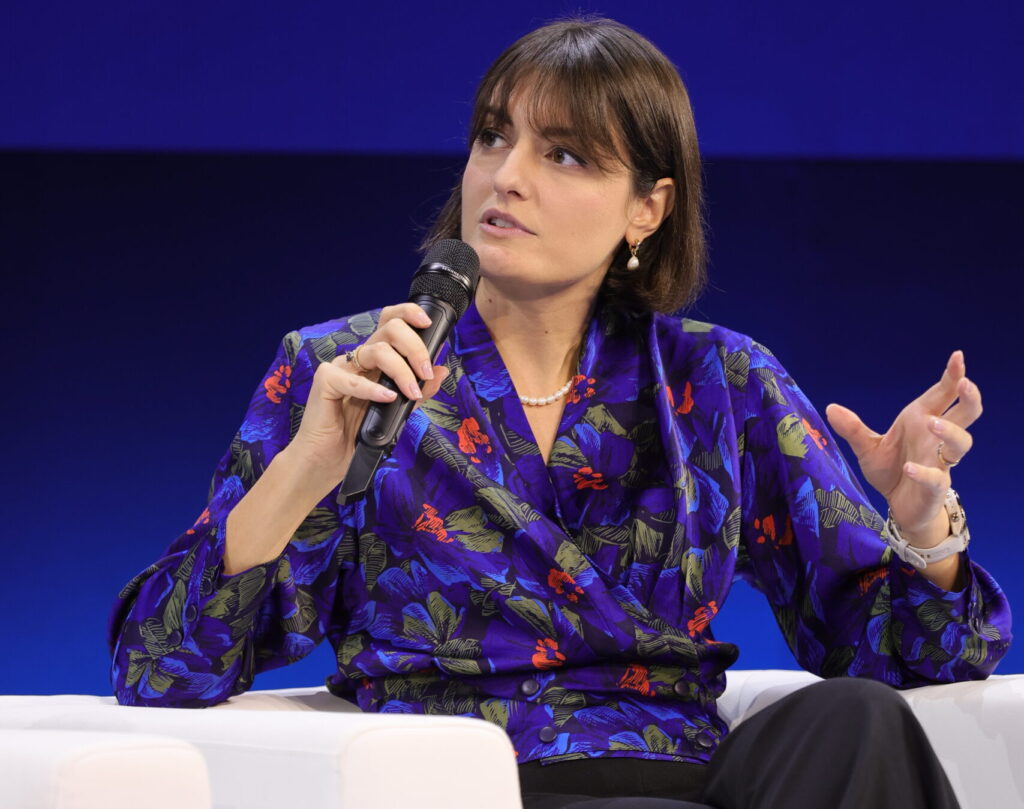
Luana Lavecchia, Head of Government Relations Italy, Greece, Malta and Cyprus di TikTok
TikTok: moderazione dei contenuti e preparazione alle elezioni
A prendere la parola per prima è stata Luana Lavecchia, che ha invitato a non considerare l’intelligenza artificiale soltanto come una minaccia. Se da una parte può essere utilizzata per produrre contenuti ingannevoli, infatti, dall’altra rappresenta uno strumento importante per individuare e rimuovere le violazioni.
Lavecchia ha citato quindi un dato relativo all’attività di moderazione di TikTok: “Il 98% dei contenuti che sono in violazione delle nostre policy vengono rimossi prima di qualunque segnalazione”, ha dichiarato. Un risultato che, ha aggiunto, può ancora migliorare grazie all’evoluzione dei sistemi di rilevamento tramite l’AI.
Sul fronte della trasparenza, Lavecchia ha ricordato che TikTok ha introdotto nel 2023 la possibilità per gli utenti di etichettare i contenuti generati dall’intelligenza artificiale e che nel 2024 ha implementato la tecnologia Content Credentials per riconoscere contenuti generati su altre piattaforme. Più recentemente, ha consentito agli utenti di regolare la quantità di contenuti generati dall’AI che desiderano visualizzare nel proprio feed.
In vista delle prossime elezioni, la piattaforma punta molto sulla prevenzione. Lavecchia ha annunciato la pubblicazione di un white paper sull’integrità elettorale, pensato per illustrare l’esperienza maturata nella gestione di decine di consultazioni politiche a livello globale. Il lavoro parte da una valutazione dei rischi specifici di ciascun Paese, per individuare in anticipo possibili scenari critici.
Durante i periodi elettorali sarà inoltre attivato un hub all’interno della piattaforma, con collegamenti alle fonti ufficiali, tra cui il sito del Ministero dell’Interno per le informazioni sulle modalità di voto. A queste iniziative si affiancheranno attività di alfabetizzazione mediatica e digitale.
“Su TikTok lavoriamo da anni per tutelare l’integrità delle elezioni in Europa”, ha ricordato Lavecchia. “Collaboriamo con i fact-checker, mettiamo a disposizione degli utenti hub informativi e interattivi e lavoriamo con le istituzioni, anche attraverso canali dedicati, per rimuovere i contenuti che violano le nostre regole. Ci impegniamo inoltre a rendere riconoscibili i contenuti generati dall’IA e a promuovere la trasparenza sul loro utilizzo”.
Per Lavecchia, però, “l’alfabetizzazione va fatta anche con la politica”. La responsabile ha annunciato che, prima della prossima tornata elettorale, TikTok organizzerà briefing con i partiti per illustrare le regole della piattaforma e promuoverne il miglior utilizzo.
Fabrizio Silvestri, professore ordinario di Computer Science alla Sapienza Università di Roma, e Luigi Garofalo, Direttore Key4Biz
Alfabetizzazione digitale: la prima difesa contro la manipolazione
Il ruolo della preparazione degli utenti è al centro dell’intervento di Fabrizio Silvestri. Il docente di Computer Science della Sapienza, che in passato ha lavorato in Meta occupandosi della creazione di modelli per individuare disinformazione e contenuti fuorvianti durante le elezioni, considera l’alfabetizzazione una componente essenziale della strategia di contrasto.
Il rischio, spiega, riguarda i contenuti falsi pubblicati sui social ma, adesso più che mai, anche la diffusione di agenti di intelligenza artificiale sempre più personalizzati, che potrebbero essere utilizzati per influenzare le abitudini, le decisioni e le opinioni delle persone.
Per Silvestri, la tecnologia offre già diverse possibilità di difesa contro la disinformazione, sebbene con livelli di maturità differenti. La preoccupazione principale riguarda invece la capacità dei cittadini di riconoscere i tentativi di manipolazione. “Dal punto di vista tecnologico sono molto meno preoccupato che dal punto di vista dell’alfabetizzazione e della preparazione delle persone ad affrontare questo tipo di rischi”, ha sottolineato.
L’obiettivo, dunque, è fornire agli utenti gli strumenti critici necessari per valutare ciò che leggono e distinguere le informazioni attendibili da quelle costruite per orientare il loro comportamento. “La preparazione e l’alfabetizzazione sono la difesa più efficace”.
Alberto Barachini, sottosegretario alla Presidenza del Consiglio con delega all’informazione e all’editoria
Le leggi italiane e l’impegno dei partiti politici
Sul rapporto tra piattaforme e istituzioni è intervenuto Alberto Barachini, che ha invitato a non affidare il contrasto alla disinformazione esclusivamente alle iniziative autonome delle aziende tecnologiche.
Pur riconoscendo il lavoro svolto dalle piattaforme, Barachini ritiene necessaria una responsabilità condivisa tra imprese, politica e istituzioni. “Io non sono un fanatico dei divieti, ma sono un fanatico della responsabilità reciproca”, ha dichiarato.
Tra gli strumenti già introdotti sul piano normativo, il sottosegretario ha ricordato la legge italiana sull’intelligenza artificiale e l’introduzione della fattispecie di reato relativa ai deepfake. Perseguire legalmente questi comportamenti è importante, ha aggiunto Barachini, ma è altrettanto importante garantire che i cittadini possano riconoscere ciò che è autentico e ciò che è stato manipolato.
Da qui la proposta di un impegno diretto dei partiti politici: durante la campagna elettorale, evitare di modificare con l’intelligenza artificiale le voci e i volti dei candidati. Barachini precisa di aver lanciato un appello a tutte le forze politiche, oltre ad aver assunto questo impegno per il proprio partito.
“Dobbiamo alzare il livello di fiducia, dobbiamo essere trasparenti e mandare un messaggio corretto in campagna elettorale”, ha dichiarato. La responsabilità nell’utilizzo dell’AI diventa così una questione di credibilità delle istituzioni e di rapporto con i cittadini. “Facciamo la campagna elettorale con le voci e i volti umani, con la responsabilità umana”.
Il sottosegretario ha aggiunto che le campagne istituzionali del governo non utilizzeranno volti e voci generati dall’intelligenza artificiale. Una scelta che, oltre a promuovere la trasparenza, intende sostenere l’occupazione nel settore creativo, informativo ed editoriale.
La sovranità tecnologica europea e il rapporto con le Big Tech
Il confronto si è poi allargato alla dimensione europea, e alla dipendenza dell’Unione dalle tecnologie sviluppate fuori dal continente. Silvestri ha sottolineato che l’assenza di grandi piattaforme social europee limita la capacità di incidere sul settore attraverso le proprie leggi e i propri regolamenti.
A suo avviso, l’Europa dovrebbe dotarsi anche di un sistema europeo di verifica delle risposte generate dall’intelligenza artificiale, basato su dati ufficiali e fonti autorevoli. “Un verificatore pubblico europeo: ogni risposta di un’AI controllabile, affermazione per affermazione, contro i dati ufficiali dell’UE”.
Il tema della sovranità digitale europea è stato ripreso anche da Barachini, che sostiene la necessità di fare dell’Europa la prima utilizzatrice delle proprie tecnologie di intelligenza artificiale. “L’Europa deve essere il primo adopter di sé stessa”, ha commentato, “deve adottare nella PA dei Paesi europei e nell’apparato amministrativo e istituzionale dell’UE i sistemi di intelligenza artificiale che rispettano le sue stesse regole e su cui lei stessa ha investito”.
Il risultato sarà una minore dipendenza dalle Big Tech d’oltreoceano. E una maggiore protezione e tutela delle cittadine e dei cittadini europei.
A hacker broke into John Deere and SharkNinja with an army of AI agents
A hacker broke into more than 100 websites using an army of AI agents that mostly operated on their own, according to findings from the AI security firm Norforge. Though Norforge doesn’t name the targets, Reuters reports that the victims included companies like John Deere, SharkNinja, and Cummins.
Manovra, PMI chiedono sostegno per investimenti in digitale. Peritore (AIIP): “Incentivi finora troppo complessi”
Assosoftware, AIIP, Confartigianato, Confcommercio, Confimi Industria e Confprofessioni presentano al Governo “Investo Digitale”, la proposta di incentivo auspicato per la prossima legge di bilancio. L’obiettivo è accelerare la digitalizzazione delle micro e piccole imprese, degli studi professionali e degli enti del Terzo settore.
La proposta è avallata da un’indagine dell’Istituto Piepoli su 1.232 aziende tra i 2 e i 99 addetti: 500 micro, piccole e medie imprese italiane e 732 imprese associate a sigle di categoria.
Giuliano Peritore, Presidente dell’AIIP, ha così commentato l’iniziativa: “Abbiamo contribuito all’iniziativa “Investo Digitale” con Assosoftware, Confartigianato, Confcommercio, Confimi Industria e Confprofessioni perché molti incentivi si sono dimostrati finora eccessivamente complessi per le imprese più piccole e riteniamo che in un’ottica di autonomia digitale il software sia fra una delle prime attività da incentivare e far ripartire, per poi concentrarsi sui servizi cloud. Si tratta di un percorso in cui le Associazioni svolgono un ruolo propositivo guardando con lungimiranza al miglioramento delle performance digitali del Paese. In questo scenario qualsiasi normativa semplice che promuova prodotti Made in Europe o iniziative di sovranità ed autonomia, in altre parole cultura digitale sul territorio, potrà contribuire ad far scalare al Paese le classifiche europee della digitalizzazione, e questo è, nelle nostre valutazioni, fondamentale”.
Il sondaggio: interesse molto alto, il costo è il primo freno
Il 76% delle aziende intervistate dichiara che utilizzerebbe un voucher pubblico, se erogato con procedure semplici e con sconto o addebito diretto dal fornitore. Tra le imprese associate la quota sale al 94%. Il 70% è convinto che lo strumento farebbe concretamente la differenza per la propria competitività nell’arco di tre anni. Il costo elevato e la mancanza di incentivi sono il primo ostacolo agli investimenti digitali per il 56% delle aziende. Un contributo del valore medio stimato di circa 6.200 euro risponderebbe a un bisogno finanziario reale. Con il voucher le priorità di investimento sarebbero Intelligenza Artificiale e automazione dei processi (30%), software gestionale ERP (20%) e software amministrativo/contabile (11%). I principali benefici attesi sono il risparmio di tempo (22%), la riduzione dei costi operativi (21%) e l’aumento della produttività (19%).
Investo Digitale: le linee della proposta in Manovra
Investo Digitale è un contributo diretto, semplice e pluriennale. Riguarda software, cloud, intelligenza artificiale e cybersicurezza e finanzia non solo l’acquisto, ma anche implementazione, formazione e consulenza. Gli incentivi esistenti, osservano i promotori, si sono concentrati soprattutto sui beni materiali e risultano spesso troppo complessi per le realtà meno strutturate.
Il modello di attuazione è una procedura interamente online, voucher facilmente accessibili e una rete di fornitori qualificati. Inoltre, allarga il perimetro a formazione, consulenza, intelligenza artificiale, cybersicurezza, certificazioni e servizi continuativi, nonché premialità per le soluzioni sviluppate in Italia e in Europa. Il contributo andrebbe erogato in relazione all’effettiva messa in funzione degli strumenti, non al loro semplice acquisto. Investo Digitale non vuole essere un incentivo settoriale, ma una politica orizzontale per incrementare la produttività del sistema economico, in cui le associazioni possono inoltre svolgere un ruolo concreto nell’analisi delle necessità, nell’informazione, nell’accompagnamento delle imprese e nella diffusione territoriale della misura.
Costi e impatto
La proposta si basa su un impegno di risorse pubbliche nell’arco di un triennio. Secondo le stime dei promotori potrebbe raggiungere 578.496 beneficiari e attivare 6,48 miliardi di euro di investimenti, con un effetto leva di 1,79 euro per ogni euro pubblico. Nello scenario centrale la produttività delle imprese beneficiarie aumenterebbe tra il 2,8% e il 3,7%, con un impatto cumulato sul PIL tra lo 0,45% e lo 0,65%. Nello scenario di attuazione accelerata l’effetto potrebbe raggiungere lo 0,75-0,95% del PIL.
Parmitano (Esa): “Indispensabile creare un accesso autonomo europeo allo Spazio”
Nello spazio si gioca il futuro, e l’Europa è chiamata a decidere quale ruolo vuole assumere. È stato questo il tema al centro dell’incontro moderato da Emilio Cozzi, space journalist e divulgatore scientifico, con Luca Parmitano, astronauta dell’Agenzia spaziale europea (ESA) e membro dell’equipaggio di Artemis III (la missione della NASA che servirà da trampolino di lancio per l’allunaggio di Artemis IV nel 2028) e con Marco Ferrazzani, Director of Resources and Services dell’ESA, durante la 4^ edizione di Digital Innovation Forum – la Cernobbio del Digitale – in corso a Villa Erba, sul lago di Como, dal 14 al 16 ottobre su iniziativa della Fondazione Innovazione Digitale ETS edorganizzata da NOW Italia e da Triumph Group.
Al centro del panel le prospettive dell’esplorazione lunare, il ruolo dell’industria europea, le competenze necessarie per innovare e le scelte politiche che determineranno il futuro dello spazio.
Artemis, la Luna e il contributo europeo
Per Luca Parmitano, in collegamento da Houston, la preparazione alla missione Artemis III è già entrata nel vivo. L’astronauta ha raccontato di aver iniziato a familiarizzare con i sistemi di avvicinamento e attracco ai lander lunari insieme al comandante della missione, Randy Bresnik. La missione presenta sfide inedite: i sistemi con cui gli astronauti dovranno lavorare sono ancora in fase di sviluppo e l’equipaggio dovrà operare in uno spazio estremamente ridotto. Per questo serviranno, oltre alle competenze tecniche, capacità relazionali e di condivisione di responsabilità.
L’Europa, ha specificato Parmitano, “non è un semplice partner di supporto del programma Artemis”. L’UE ha infatti elaborato per Orion (la navicella della missione Artemis III) il modulo di servizio che fornisce sistemi indispensabili per la propulsione, la produzione di energia e il funzionamento della capsula durante il viaggio. Senza questo contributo, l’architettura della missione non sarebbe completa.
Anche l’Italia punta a rafforzare la propria presenza nelle future infrastrutture lunari, ha spiegato Parmitano, attraverso lo sviluppo di habitat e tecnologie destinate alla permanenza umana sulla superficie del satellite.
Luca Parmitano, astronauta dell’Agenzia spaziale europea (ESA), e Alessio Butti, Sottosegretario alla Presidenza del Consiglio per l’Innovazione
“Non basta essere clienti”: l’Europa e l’accesso autonomo allo spazio
Parmitano ha poi richiamato l’attenzione sui rischi di una dipendenza eccessiva, nelle missioni spaziali, dagli operatori privati. Se l’accesso allo spazio è affidato a soggetti le cui priorità commerciali non coincidono necessariamente con quelle pubbliche, anche la capacità di perseguire obiettivi scientifici, strategici e di sicurezza è messa a rischio.
“Se l’Europa vuole essere presente come potenza mondiale”, ha sostenuto, “deve poter partecipare all’esplorazione spaziale da protagonista”.
La questione riguarda anche le risorse da investire. Parmitano ha sottolineato come i programmi spaziali richiedano una visione di lungo periodo, mentre la società e la politica tendono spesso a privilegiare risultati immediati.
L’astronauta ha infine richiamato l’attenzione del pubblico in sala sulla necessità, nel suo lavoro come anche in quello imprenditoriale, di sviluppare la capacità di immaginazione per prevedere sviluppi e rischi futuri. “Siamo molto bravi a risolvere problemi e a fare in modo che ciò che è già successo si ripresenti più. Ma non siamo molto bravi a prevedere quello che non è mai successo, a immaginare quello che non si è mai presentato”. Questa abilità, ha dichiarato l’astronauta, è essenziale perché “ci permette di restare sempre allerta e di non adagiarci sugli allori”.
Alessio Butti: lo spazio come motore di innovazione
Nel corso dell’incontro è intervenuto anche Alessio Butti, Sottosegretario alla Presidenza del Consiglio per l’Innovazione, che ha rivolto un saluto istituzionale a Luca Parmitano, sottolineando l’orgoglio per il contributo italiano al programma che prepara il ritorno dell’essere umano sulla Luna.
“L’innovazione non è solo una questione di tecnologie, ma di visione, di competenze, della capacità di immaginare, come diceva Luca Parmitano, ciò che ancora non esiste”, ha affermato Butti, richiamando il valore dell’esplorazione spaziale come dimostrazione concreta delle capacità tecnologiche e industriali di un Paese.
Il Sottosegretario ha quindi chiesto a Parmitano quale innovazione, tra quelle incontrate nel corso della sua carriera, lo avesse maggiormente sorpreso e quali ambiti meritassero ulteriori investimenti. L’astronauta ha indicato il recupero dei lanciatori spaziali, una tecnologia che fino a pochi anni fa sembrava fantascienza e che oggi è diventata realtà, sottolineando la necessità per l’Europa di sviluppare capacità autonome in questo campo.
Il giornalista Emilio Cozzi e Marco Ferrazzani, Director of Resources and Services dell’ESA
Da partner a pari: il ruolo dell’Europa nei programmi lunari
Il cambiamento è già in corso, ha spiegato Marco Ferrazzani, Director of Resources and Services dell’ESA. Per esempio, con la European Launcher Challenge – un’iniziativa dell’Agenzia Spaziale Europea creata per rafforzare l’autonomia e la competitività del trasporto spaziale del continente – l’ESA sta sperimentando un modello che punta a favorire lo sviluppo di nuovi lanciatori europei e a costruire un diverso rapporto più cooperativo con le imprese continentali.
Per il Director of Resources and Services dell’ESA, infatti, la capacità di innovare nello spazio dipende anche dalla possibilità di “costruire un ecosistema industriale in grado di sostenere nel tempo le proprie ambizioni”.
Il programma Artemis rappresenta, secondo Ferrazzani, un passaggio significativo nella crescita delle capacità europee. Il contributo dell’ESA al modulo di servizio di Orion mostra che l’Europa può fornire elementi indispensabili anche a un programma guidato dagli Stati Uniti. “Ora siamo già in grado di lavorare da partner quasi alla pari con la NASA”, ha dichiarato Ferrazzani. “Lo dimostra la missione Artemis: il modulo di servizio è essenziale per il programma NASA di tornare sulla Luna. E questo modulo, come ricordava Luca Parmitano, è stato prodotto dall’ESA”.
Il passo successivo sarà sviluppare una capacità europea di esplorazione più completa: disporre di lanciatori, veicoli, capsule e tecnologie necessarie per raggiungere la Luna, operare sulla sua superficie e tornare indietro. È questa, ha spiegato Ferrazzani, la condizione per essere “non solo passeggeri”, ma protagonisti.
Nelle battute finali, Ferrazzani ha indicato una priorità per rafforzare la capacità innovativa europea: utilizzare gli investimenti pubblici per sviluppare competenze e tecnologie sul territorio. Infine, ha lanciato un appello ai giovani interessati a lavorare nel settore: “Siate curiosi e critici, non accontentatevi mai dello status quo, anche nei progetti più esigenti”, ha detto. “Mettete in dubbio quello che il vostro capo vi sta dicendo, perché attraverso la vostra curiosità, la vostra intelligenza e il vostro spirito critico miglioreremo anche noi”.