The OnePlus 16 is the company’s most interesting phone in years
Today the OnePlus 16 launched in China, the company’s first flagship phone since quitting both the US and European markets this summer. As luck would have it, it also looks like the company’s best phone in some time.
Like most OnePlus phones, the 16 is positioned around performance, with a Snapdragon 8 Elite Extreme Gen 6 chipset, and up to 1TB of storage and 16GB of RAM. That’s backed up by an enormous 9,000mAh silicon-carbon battery, one of the biggest seen in any Android flagship yet. 100W wired and 50W wireless charging complete the power setup.
On the display front, the phone jumps to a 185Hz OLED panel for the first time. That’ll no …
CMF’s first wireless speakers look like musical milk cartons
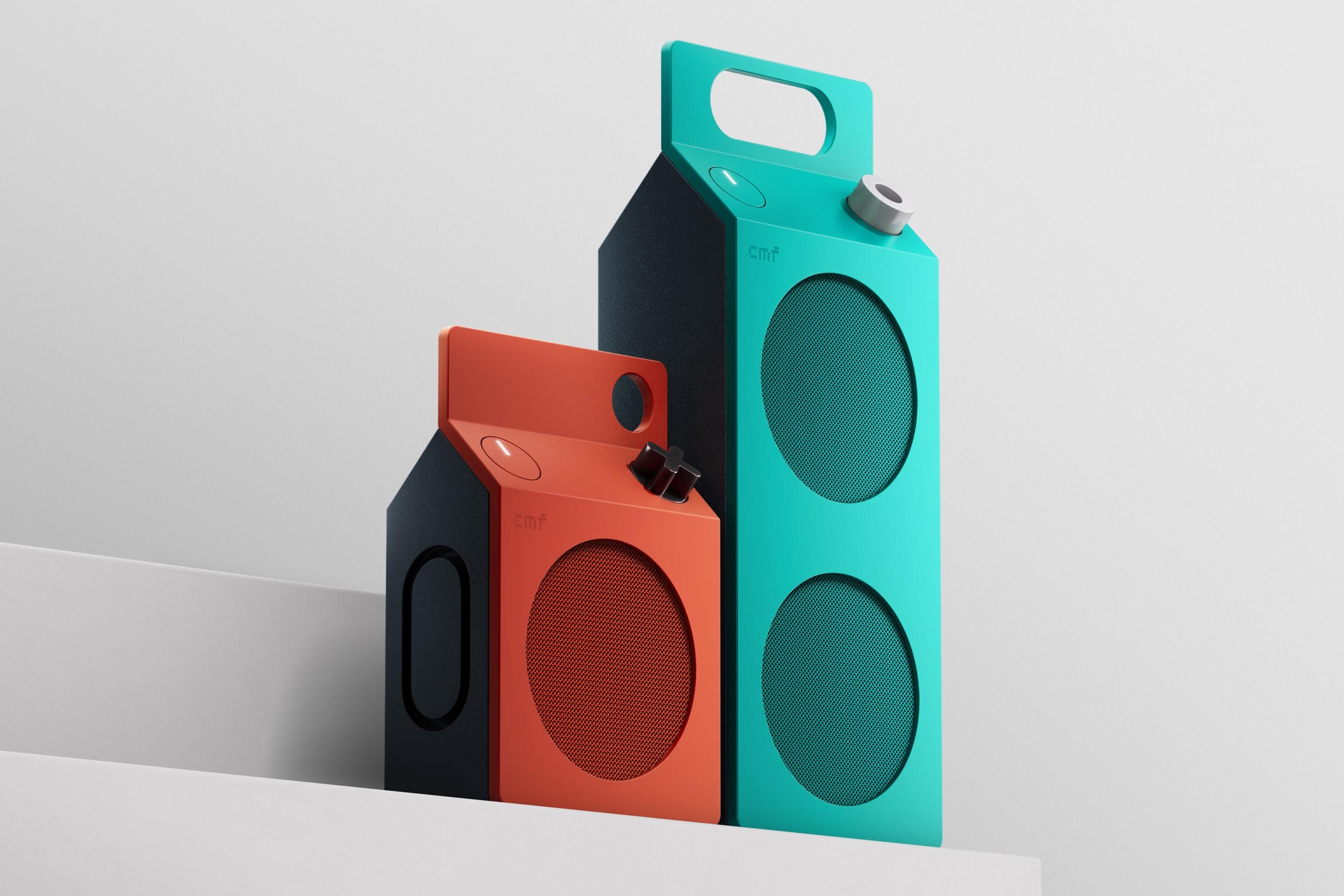
The CMF Speaker Series are the first portable Bluetooth speakers from the budget-focused brand that Nothing created but is in the process of spinning off into an India-based standalone subsidiary. As with many of CMF’s products, like the Headphone Pro that launched a year ago, the new speakers deliver affordability alongside unique designs and bright color options that help them stand out from the competition. While the company doesn’t directly cite a grocery store’s dairy aisle as the inspiration for its latest hardware, it’s hard not to look at these and immediately see electronic milk cartons.
The Fitbit Edge is for folks who don’t want to go totally screenless
The leaked specs turned out to be spot-on, but there are some neat software updates too. | Image: Google
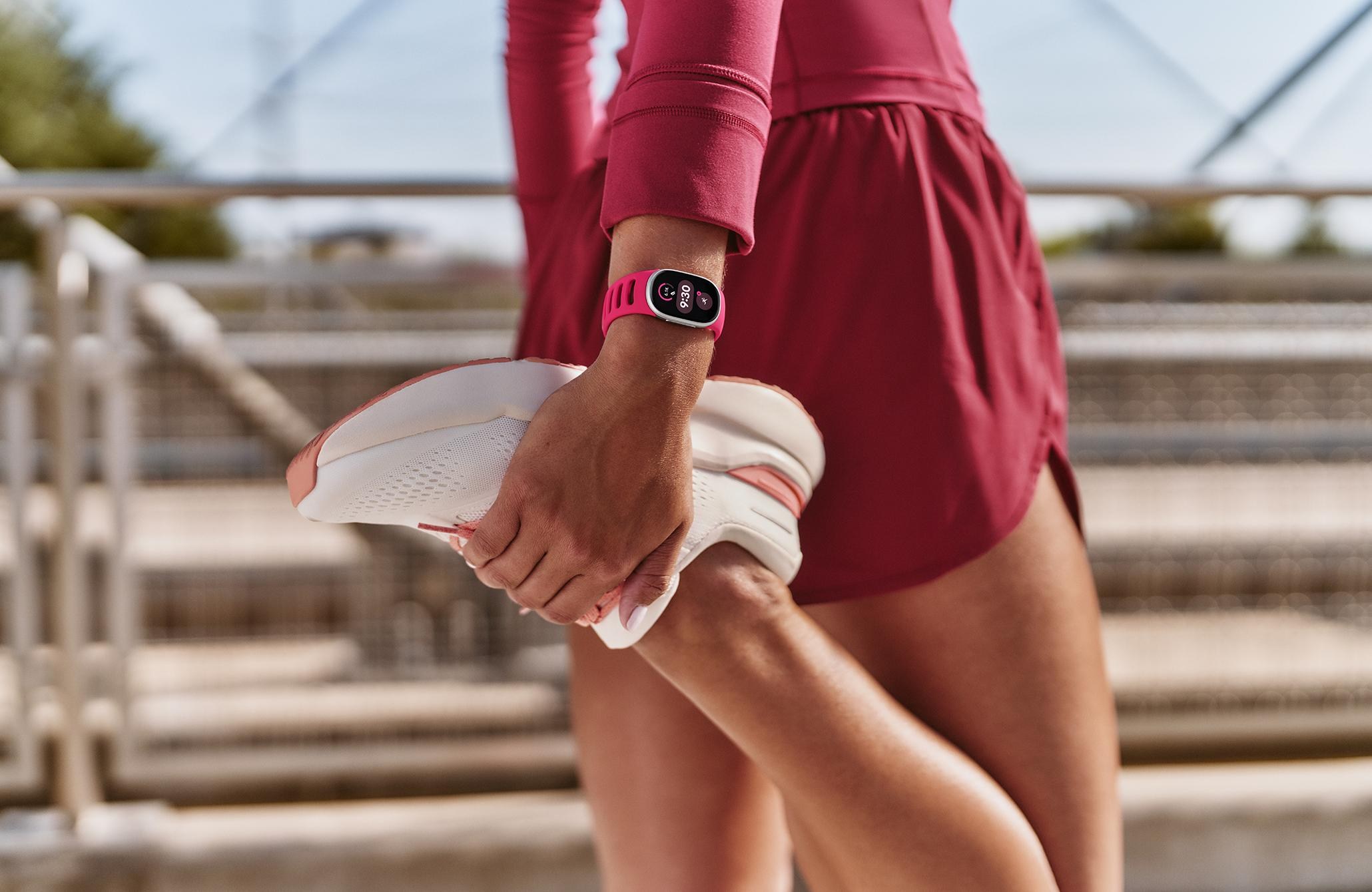
The Fitbit Edge may not be Google’s best-kept fitness-tracking secret, but as of today, its existence is official.
The tracker sits smack-dab between the recently launched Fitbit Air and the more powerful Google Pixel Watch 5 in the company’s current wearable lineup. Basically, if you have smartwatch fatigue but don’t want to give up notifications, this is Google’s answer to the aging Fitbit Charge 6.
Much of the Edge’s specs were previously leaked, but the tracker has a 46 percent larger OLED display compared to the Charge 6, a physical side button, and is a smidge thicker at 11.5mm. It also sports a replaceable battery that gets about a …
Microsoft’s new AI chip makes it less reliant on Nvidia’s GPUs
Microsoft’s Maia 300 chip. | Image: Microsoft
Microsoft is announcing its third-generation Maia in-house AI chip today, designed to be the “primary AI inference system” for Microsoft’s products and services. Maia 300 not only improves the cost and efficiency of running AI workloads in the cloud, it’s also more capable of handling the latest reasoning models and agentic tasks.
Maia 300 will start being rolled out to production in 2027, and it has been designed with efficiency in mind. “We expect Maia 300 to deliver 40 percent more tokens per megawatt compared to leading GPU-based systems,” says Scott Guthrie, executive vice president of Microsoft’s cloud group. “And in a full 96-acceler …
Cloud. Meloni: “In legge di Bilancio norme per favorire gli investimenti in software”
Meloni all’assemblea di Assolombarda: “Urgente una governance sull’AI”
“La crescita italiana è ancora debole, dobbiamo intervenire sugli investimenti“, ha dichiarato la presidente del Consiglio dei ministri, Giorgia Meloni, nel suo discorso all’Assemblea Generale di Assolombarda, l’associazione degli industriali della città metropolitana di Milano e delle province di Lodi, Monza e Brianza e Pavia.
A frenare la crescita, ha sottolineato Meloni è “la bassa produttività“, specificando che il valore per il 2026 può arrivare all’1% e aggiungendo però una cosa importante: “È urgente una governance sull’intelligenza artificiale”.
L’affermazione è una risposta diretta a quanto sostenuto dal Presidente di Assolombarda, Alvise Biffi, che, parlando di produttività come “unica strada per generare benessere diffuso“, ha ovviamente tirato in ballo l’intelligenza artificiale, “una grande opportunità per rilanciare la crescita e invertire la rotta”. Una rotta rallentata da diversi fattori, per Biffi, tra cui: “la dimensione delle imprese, la carenza delle competenze digitali, i pochi investimenti in ricerca e sviluppo, il circolo vizioso salariale e, sempre più, i costi dell’energia”.
“In Legge di bilancio una misura di carattere fiscale per agevolare gli investimenti in software”
Su questo Meloni ha parlato della necessità e dell’urgenza di una “governance dell’AI”, un tema “che va affrontato a livello globale”, ricordando che l’Italia ha posto l’AI al centro della sua presidenza del G7. A livello nazionale, comunque, è stato già avviato un percorso virtuoso, come nel caso di Milano, che “a buon diritto può essere considerato un hub digitale di livello europeo”. Milano è stata inoltre proposta da Assolombarda, Confcommercio e AmCham Italy a sede di una nuova strutturadelle Nazioni Unite, dedicata proprio alla governance dell’intelligenza artificiale. La candidatura sarà presentata alle istituzioni il prossimo 9 novembre.
“Questo Governo – ha detto Meloni – ha introdotto una procedura autorizzativa unica, che consente di semplificare le procedure, tagliare i tempi per costruire sul nostro territorio i data center e le relative connessioni, perché sappiamo quanto la capacità di calcolo rappresenti un nuovo asset strategico per competere in questo ambito. Allo stesso modo, lavoriamo a livello europeo perché l’Italia possa ricoprire un ruolo da protagonista in questo segmento“.
“La legge nazionale sull’IA ha messo a disposizione 1 miliardo di euro di investimenti per le imprese che sviluppano intelligenza artificiale, cybersicurezza e tecnologie abilitanti. Un primo segnale per dire che l’Italia non rimanga indietro e al quale ora ne vogliamo aggiungere un altro – ha aggiunto la Premier – considero di buon senso trovare il modo di promuovere anche gli investimenti in software utilizzati tramite i contratti di cloud. Quindi voglio annunciare che con il ministro Giorgetti stiamo lavorando per introdurre nella Legge di bilancio una misura di carattere fiscale per agevolare gli investimenti per questa tipologia di beni“.
“Vogliamo ricoprire ruolo da protagonista”, ha proseguito Meloni, illustrando la sinergia avviata con gli Emirati Arabi Uniti per far nascere a Pavia un campus data center da 500 MW, primo passo per infrastruttura su larga scala per tutto il territorio nazionale fino a 1 GW, perché ha ricordato che “finanziamo con 25 miliardi di euro diversi programmi strategici per realizzare queste infrastrutture anche al Sud”.
Physical AI applicata alla manifattura industriale, l’Italia può giocare ruolo da protagonista
La Lombardia svolge e svolgerà sempre più un ruolo di traino, “ma tutto il territorio italiano deve contribuire a questo successo in maniera sostenibile e inclusiva”, per questo, ha aggiunto la Presidente del Consiglio, è stato stanziato 1 miliardo per le imprese che sviluppano AI e tecnologie abilitanti per non far rimanere indietro il nostro Paese.
Poi è stato ripreso il tema della physical AI e secondo Meloni l’Italia può giocare un ruolo da protagonista in questo campo, anche rispetto a USA e Cina, che certamente partono in grande vantaggio per quel che riguarda gli LLM. Quello della physical AI “è terreno diverso, perché agli algoritmi vanno aggiunti sensori, meccatronica e conoscenza profonda dei processi produttivi industriali, che all’Italia non manca. Abbiamo filiere che presidiano ogni fase della produzione, con grandi competenze. Qui possiamo dire la nostra portando l’AI nell’industria manifatturiera”.
Un punto di vista sulla physical AI che è stato condiviso dal Presidente di Assolombarda: “questa è la nostra grande opportunià. Questa volta non dobbiamo limitarci a adottare la tecnologia: possiamo finalmente contribuire a costruirla”.
“La via italiana all’AI”
Un settore in cui è possibile parlare di “via italiana all’AI”, secondo Meloni, e dove lavorare “per rendere competitive tutte le imprese e creare posti di lavoro”: “Dobbiamo passare da utilizzatori a produttori”.
Dalla nostra abbiamo una grande mole di dati e di dati di qualità soprattutto. Come ha ricordato lo stesso Biggi, l’AI “deve incidere sulle caratteristiche che distinguono il nostro modello industriale, rafforzando ciò che ci rende competitivi: qualità, specializzazione, capacità di adattamento, conoscenza dei processi, ruolo nelle filiere e presenza sui mercati”.
Meloni ha poi ricordato anche l’iniziativa ForgIA, che ha l’obiettivo di “creare un ecosistema nel quale le imprese potessero estrarre e raffinare dati industriali e metterli al sicuro rendendoli interoperabili lungo la filiera senza perderne il controllo”.
“Entro dieci anni inizieremmo a produrre energia dal nuovo nucleare”
“Abbiamo lavorato per aumentare la potenza installata con le rinnovabili, che infatti è cresciuta di quasi il 40%, abbiamo rilanciato la produzione nazionale di petrolio e gas, perché non è sensatissimo comprarli a migliaia di chilometri da qui quando una parte la possiamo estrarre in Italia, e – ha dichiarato la Premier – abbiamo varato la legge che consente di riprendere dopo 40 anni il cammino del nucleare. Il provvedimento appena approvato in Parlamento mette a disposizione una cornice completa: la piattaforma nazionale per il nucleare sostenibile, la delega al Governo, il rafforzamento dell’ispettorato per la sicurezza nucleare, la governance dell’intero ciclo di vita degli impianti“.
Il tema dell’energia, d’altronde, è una “precondizione per crescita e competitività”, ha sottolineato Meloni, aggiungendo che grazie al lavoro del Governo: “Sono state create le condizioni per avviare un percorso che ha un obiettivo ambizioso quanto necessario: arrivare a produrre energia da nuovo nucleare entro il prossimo decennio”.
La premier ha poi attaccato l’Ets (Emission trading system), il sistema europeo di scambio di quote di emissione, definendolo meccanismo che “gonfia artificialmente i prezzi, crea squilibri tra gli Stati membri, danneggia le nostre imprese manifatturiere particolarmente nella loro capacità di competere in un mercato globale nel quale i nostri principali concorrenti non sono neanche lontanamente sottoposti allo stesso livello di costo del carbonio e agli stessi vincoli”.
The Ideal Facebook Cover Photo Size in 2026 (+ 11 Ideas To Make Yours Stand Out)
Your cover photo is the biggest image on your Facebook Page, and it's usually the first thing people see when they land there. It's also super easy to get wrong. A design can look great on your laptop, and then you open the Facebook app on your phone, and the edges of your headline are gone (or your profile picture is sitting right on top of an important detail).
That happens because Facebook shows the same cover photo in a different frame on desktop and mobile. So it's worth spending a few minutes on the dimensions before you upload, rather than a lot of time repositioning after.
If you want to jump right to changing your picture: The recommended Facebook cover photo size is 851 × 315 pixels, according to Meta's Help Center. Upload it as an sRGB JPG under 100 KB, and keep text and logos near the middle so nothing important gets cropped on mobile or desktop.
Below, I'll walk through how cropping works on each screen, how to design a cover that fits the rest of your Facebook marketing, and 11 brand examples to borrow ideas from.
Key takeaways
Upload your Facebook cover photo as an sRGB JPG under 100 KB, or as a PNG if it includes a logo or text. Meta says PNG files can give you a better result.
Facebook won't accept a cover photo smaller than 400 × 150 pixels.
Facebook fits your cover photo to a 16:9 frame on computers and a 2.4:1 frame on mobile, aligned to the left, so the same image shows differently on each screen.
Keep text and logos in the middle of your Facebook cover photo. Your profile picture covers part of the left side, and Facebook may crop the edges to fit different screens.
Facebook group covers use 1640 × 856 pixels, and event covers use 1920 × 1005 pixels.
The strongest Facebook cover photos do one clear job, like explaining what you do, promoting an event, or announcing a launch. The 11 brand examples below show how.
The recommended Facebook cover photo size is 851 × 315 pixels, according to Meta's Help Center. Upload it as an sRGB JPG under 100 KB, and it'll load fastest. (sRGB is the standard color profile for screens, so it's worth checking your export settings aren't set to Adobe RGB.) Anything smaller than 400 × 150 pixels won't meet Meta's minimum requirement.
Once it's uploaded, Facebook fits your cover to each screen. On computers, it shows in a 16:9 frame, and on phones it's 2.4:1. Both are aligned to the left, and your profile picture covers part of the left-hand side (it overlaps the cover by about 40 pixels on mobile). So the middle of your cover is the safest spot for text and logos.
Pro tip: Facebook's reposition tool opens automatically when you upload a new cover, so you can drag the image into place before you save. It's the quickest way to nudge anything important away from the left edge.
💡 Posting to Facebook regularly? With Buffer, you can schedule posts to Facebook Pages and Groups, see how they perform, and keep on top of comments from one dashboard. Learn more →
How Facebook crops your cover photo on mobile and desktop
Facebook doesn't show your cover photo the same way on every screen. According to Meta's Help Center, covers display at a 16:9 aspect ratio on computers and 2.4:1 on mobile. In both cases, the image is aligned to the left and fills the frame edge to edge, so parts of it may be cropped or resized to fit.
Your profile picture sits on top of the cover too. It covers part of the left-hand side, and on mobile it overlaps the cover by about 40 pixels.
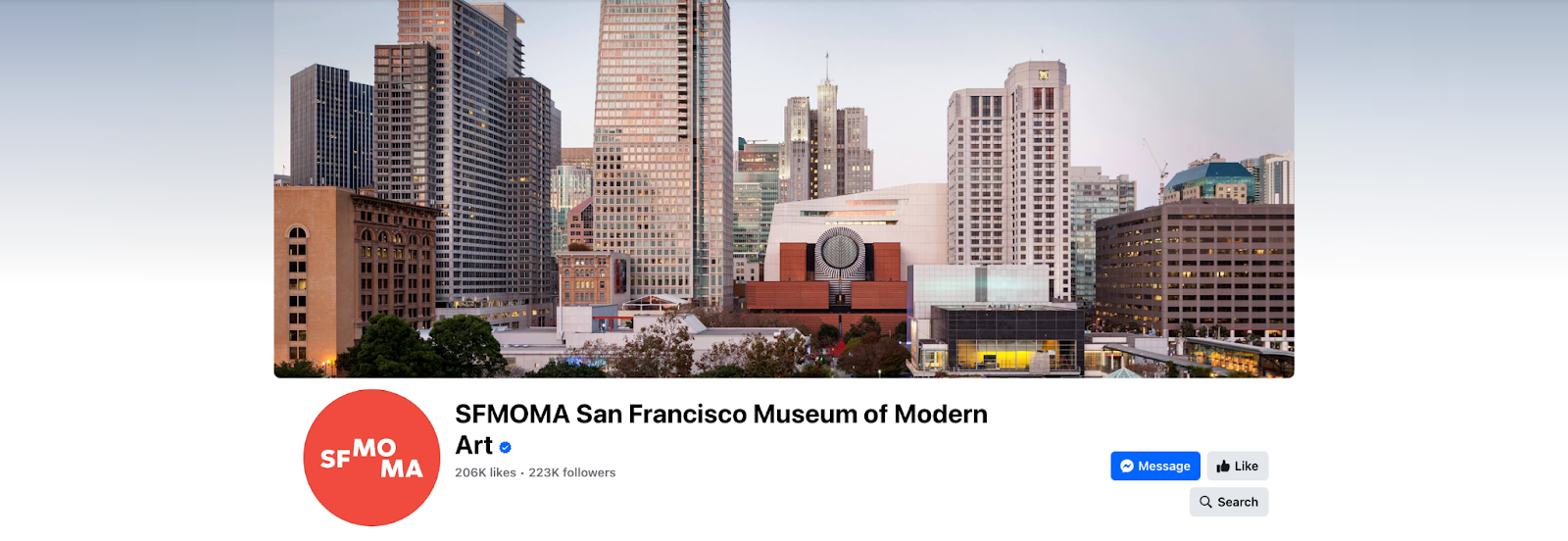
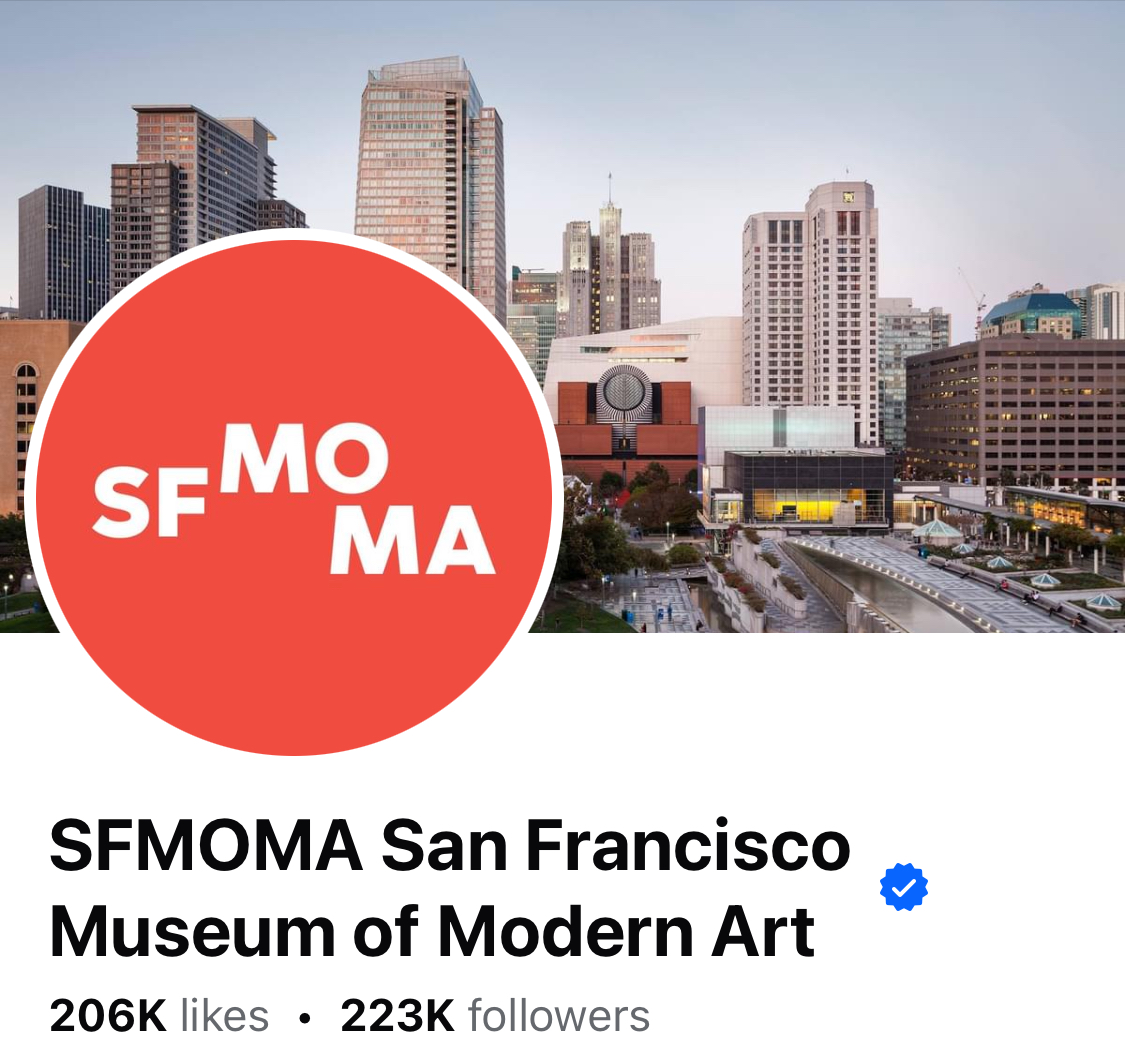
Here's how one cover looks on desktop:
Facebook cover photo on desktop for the San Francisco Museum of Modern Art (SFMOMA). Source: SFMOMA
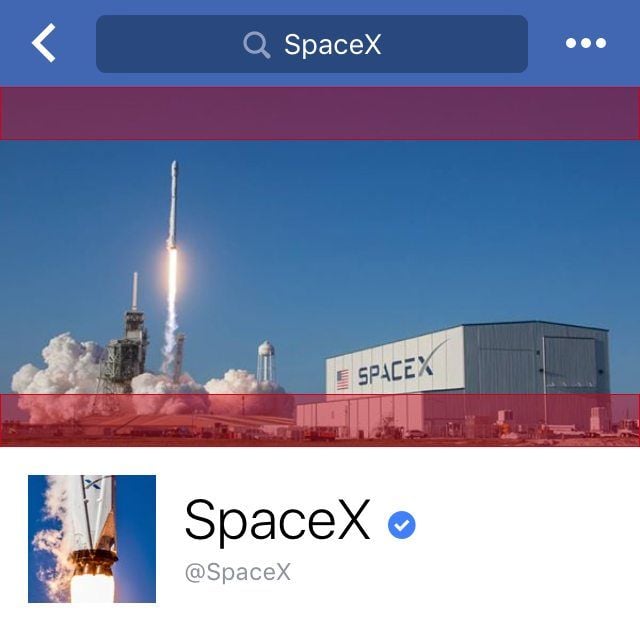
And here's the same Page in the Facebook app:
Facebook cover photo on mobile for the San Francisco Museum of Modern Art (SFMOMA). Source: SFMOMAFacebook cover photo for SpaceX indicating what gets cropped out between mobile and desktop. Source: SpaceX
How to make your Facebook cover photo fit
Design at 851 × 315 pixels, and keep text, logos, and faces in the middle, away from the left edge where your profile picture sits.
Upload your cover and drag it into place with the reposition tool before you save.
Check your Page on a computer and in the Facebook app on your phone.
If anything important is cropped or hidden behind your profile picture, move it in your design file and upload it again.
People see your profile picture and cover photo together, so it's worth designing them as a pair. Our guide to choosing a profile picture covers what makes one work.
How to design a Facebook cover photo that stands out
A Facebook cover photo works best when it has one clear focal point, feels like your brand, and keeps any text short enough to read on a phone. Since Facebook crops the cover and puts your profile picture over it differently on each screen, simple designs tend to hold up better than busy ones.
Start with one clear focal point
The images that get shared most on social media tend to make people feel something, and they feel relevant to whoever's scrolling. Both apply to your cover photo.
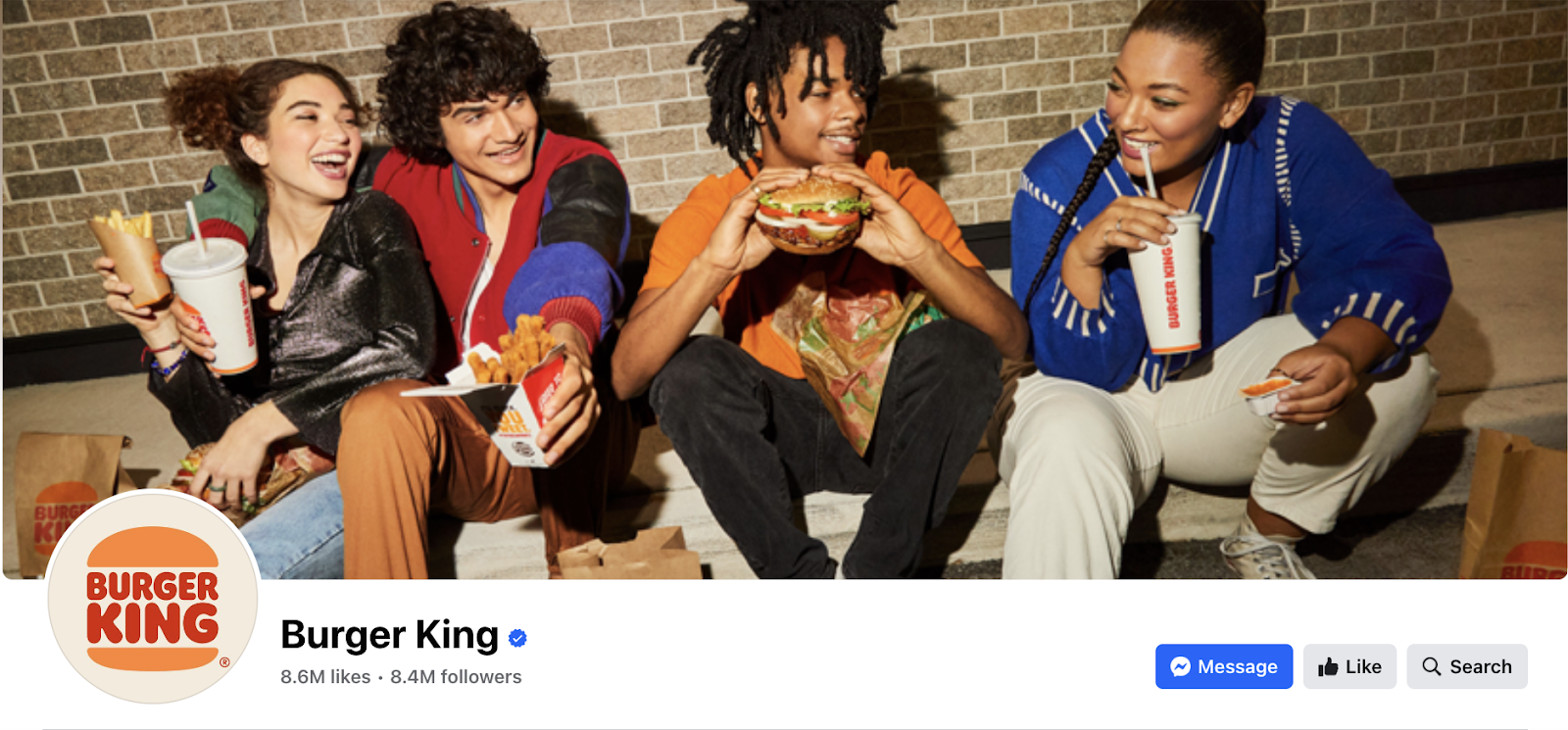
So pick one thing for people to look at: your product, your team, or a scene your audience will recognize. Burger King's cover, for example, shows a group of friends sharing a meal, which says more about the brand than a burger on a plain background would.
Burger King's Facebook cover photo showing a group of young adults eating together. Source: Burger King
Color does a lot of the work too. For more on how colors shape what people feel about a brand, our piece on the science of colors in marketing is a good place to start.
If you add text, keep it to a few words in a clear, readable font. It has to work at phone size, where a short headline will do more than a full sentence.
Use visual cues to point people where you want them
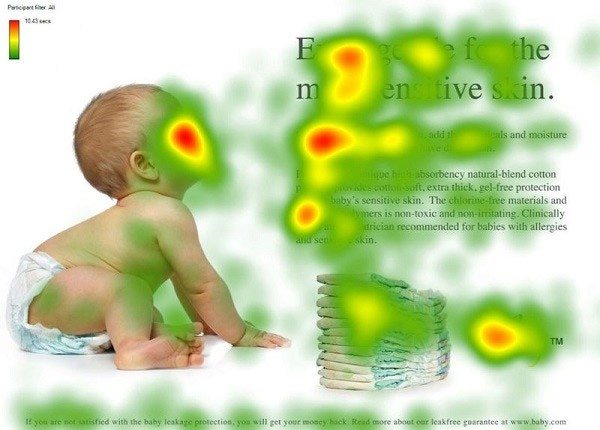
People tend to look where other people in an image are looking, and arrows pull the eye in a similar way. Researchers call this the gaze-cueing effect.
So if you want people to notice a particular spot on your cover, like a call to action, you could add an arrow, a circle, or a person looking toward it.
Eye-tracking heatmap showing where people are most drawn to on a page. Source: Pubmed
Pick a tool to make it
Canva is the quickest route if you don't design. It recommends 851 × 315 pixels for Facebook covers (the same as Meta), and its Facebook cover templates give you a starting point to swap your own photo, colors, and text into.
Photoshop, or any design tool you already use, gives you pixel-level control. Set your canvas to 851 × 315 pixels and export as an sRGB JPG, or a PNG if your cover has text.
Your own photos often work best, especially of your team or space. If you don't have any, try a free stock photo site and check that the license allows editing.
So what should yours actually look like? Here are 11 ideas, each with a real brand's cover photo, so you can see how they work in practice.
11 examples and ideas for your Facebook cover photo
So what should your cover photo actually look like? Here are 11 ideas, each with a real brand's cover photo, so you can see how they work in practice.
1. Sum up what you do
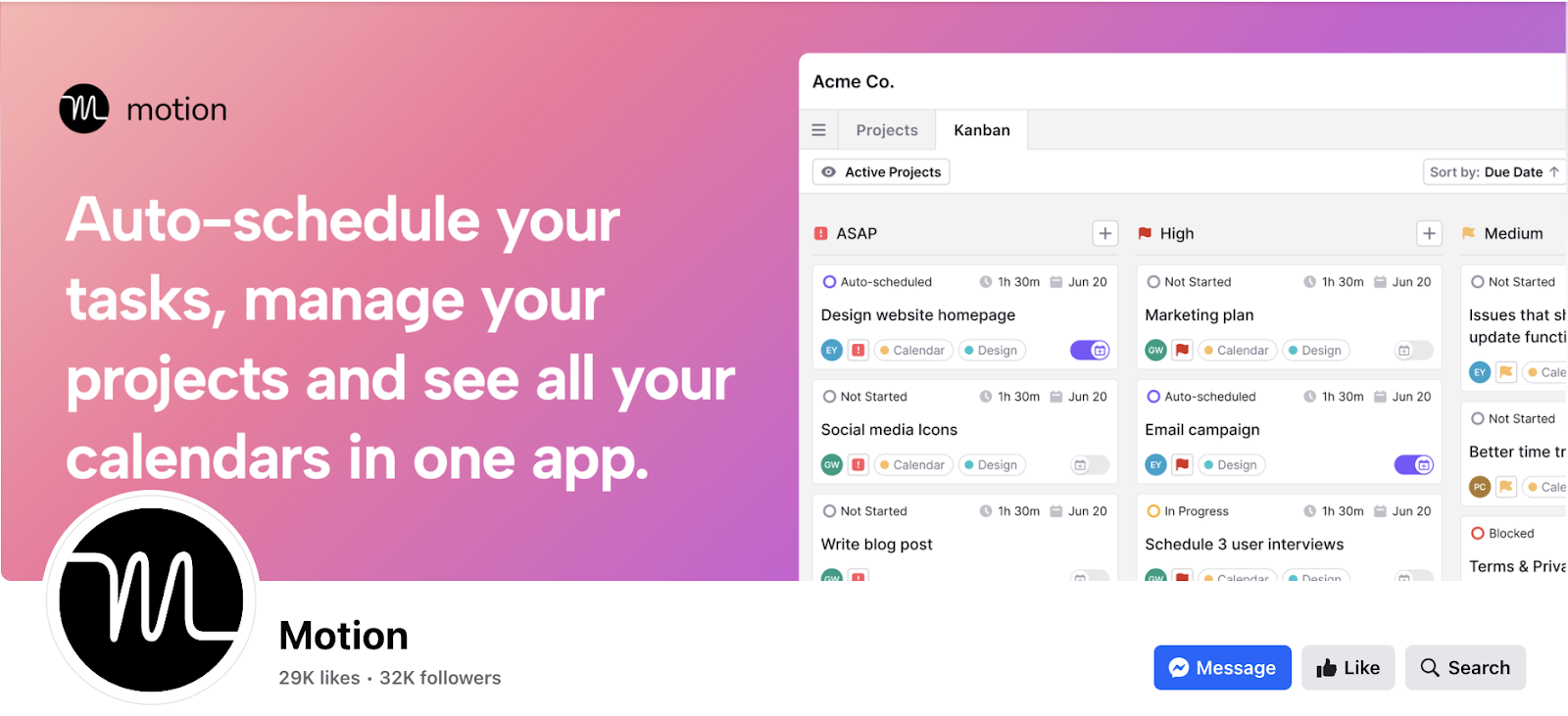
If someone lands on your Page without knowing who you are, your cover can tell them in one line. Motion, a task management app, puts a product screenshot and a short description right in its cover photo. is a task management app that automatically schedules your tasks. They describe this right in their cover photo, so there's no question about what they do.
Motion's Facebook cover photo showing a product screenshot and the text "Auto-schedule your tasks, manage your projects and see all your calendars in one app. Source: Motion
It's a simple move, but it means nobody has to scroll to figure out what Motion does.
2. Share your mission or values
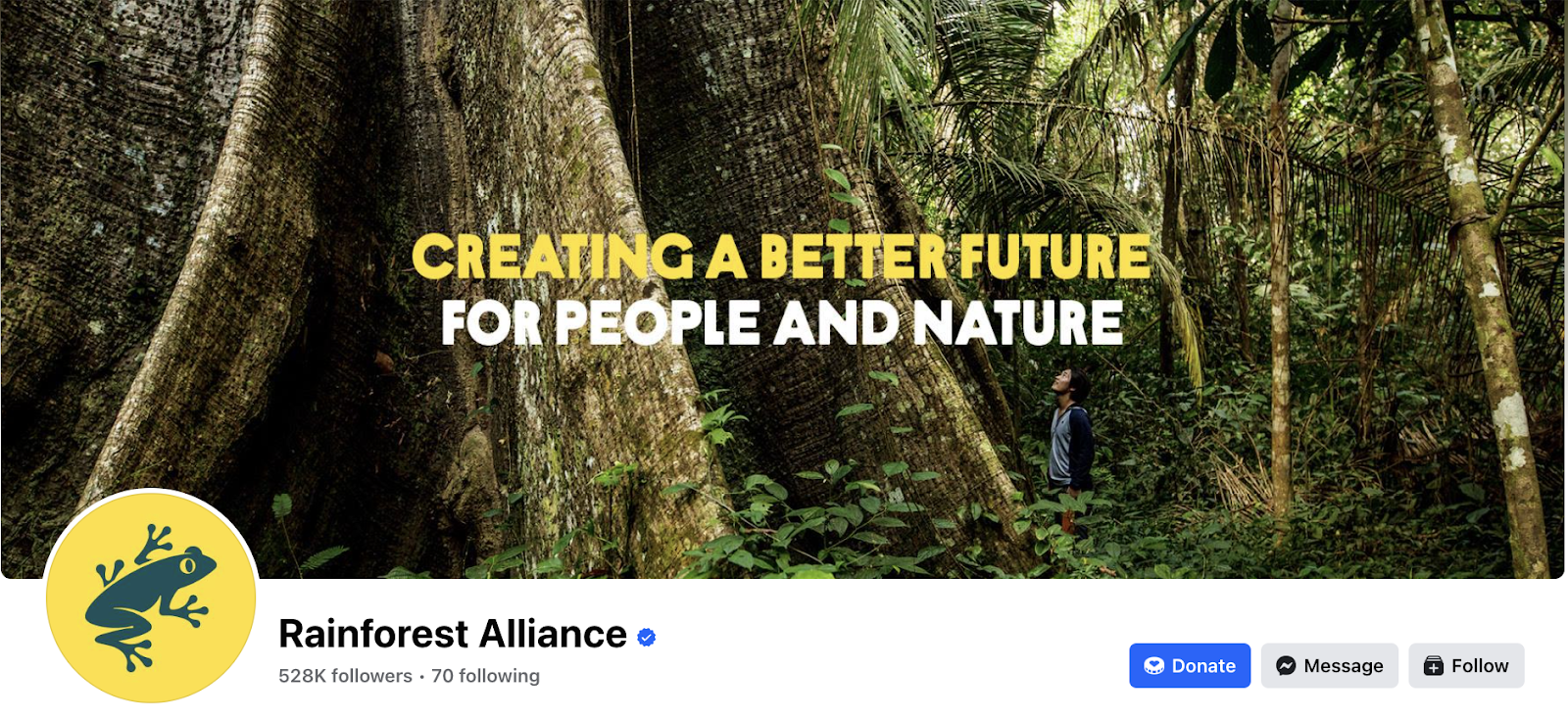
Your Facebook cover photo is an excellent opportunity to showcase your brand values and encourage people to join and support your cause. The Rainforest Alliance works to protect forests and the people who depend on them, and its cover says that plainly.
The Rainforest Alliance's Facebook cover photo with the text "Creating a better future for people and nature". Source: The Rainforest Alliance
3. Show off your product
Sometimes the product is enough. Ferrari's cover is just two of its cars, without a single word of text.
Ferrari's Facebook cover photo showing two red sports cars. Source: Ferrari
This luxurious image speaks for itself!
4. Introduce your team
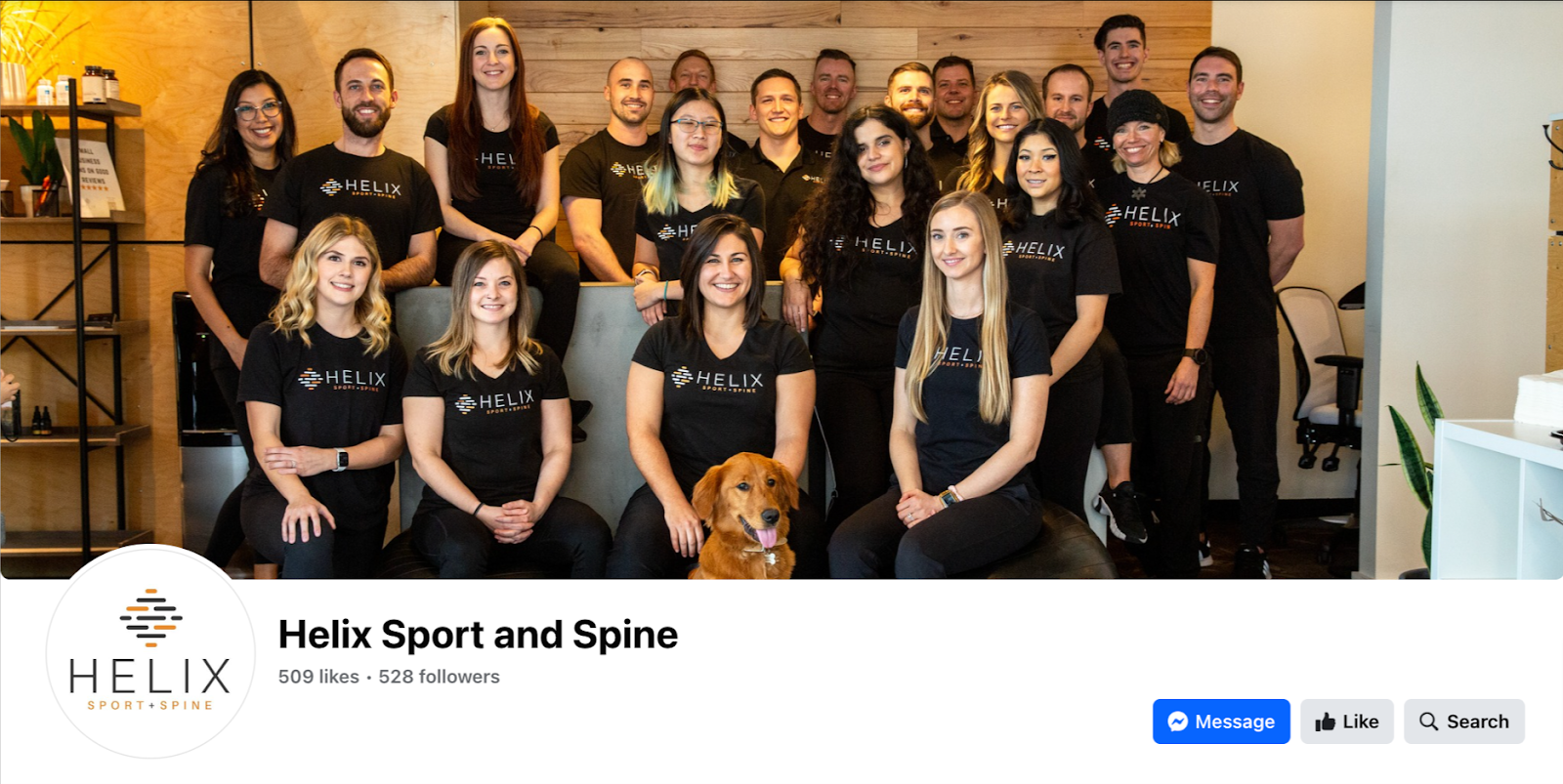
Putting your team in your cover photo is one of the quickest ways to make a Page feel human. It works especially well for service businesses, where customers meet your team in person. Physical therapy clinic Helix Sport and Spine uses its cover to show patients who they'll be working with.
Helix Sport and Spine's Facebook cover photo showing the clinic's staff. Source: Helix Sport and Spine
5. Reinforce your brand identity
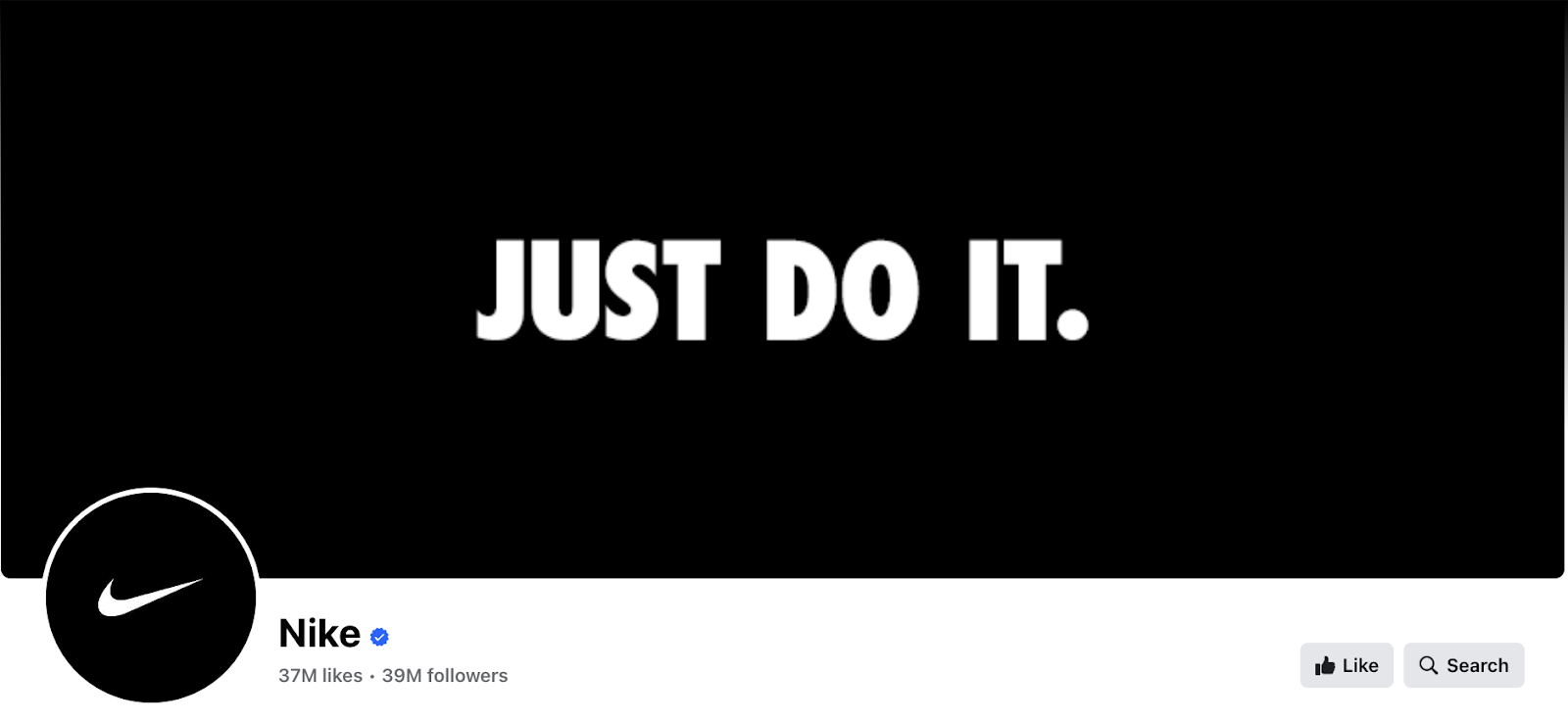
If your brand has a look, a tagline, or a phrase people already know, your cover is the place for it. Nike uses "Just do it," which anyone visiting its Page will recognize straight away.
Nike's Facebook cover photo with the slogan "Just do it." Source: Nike
6. Announce something new
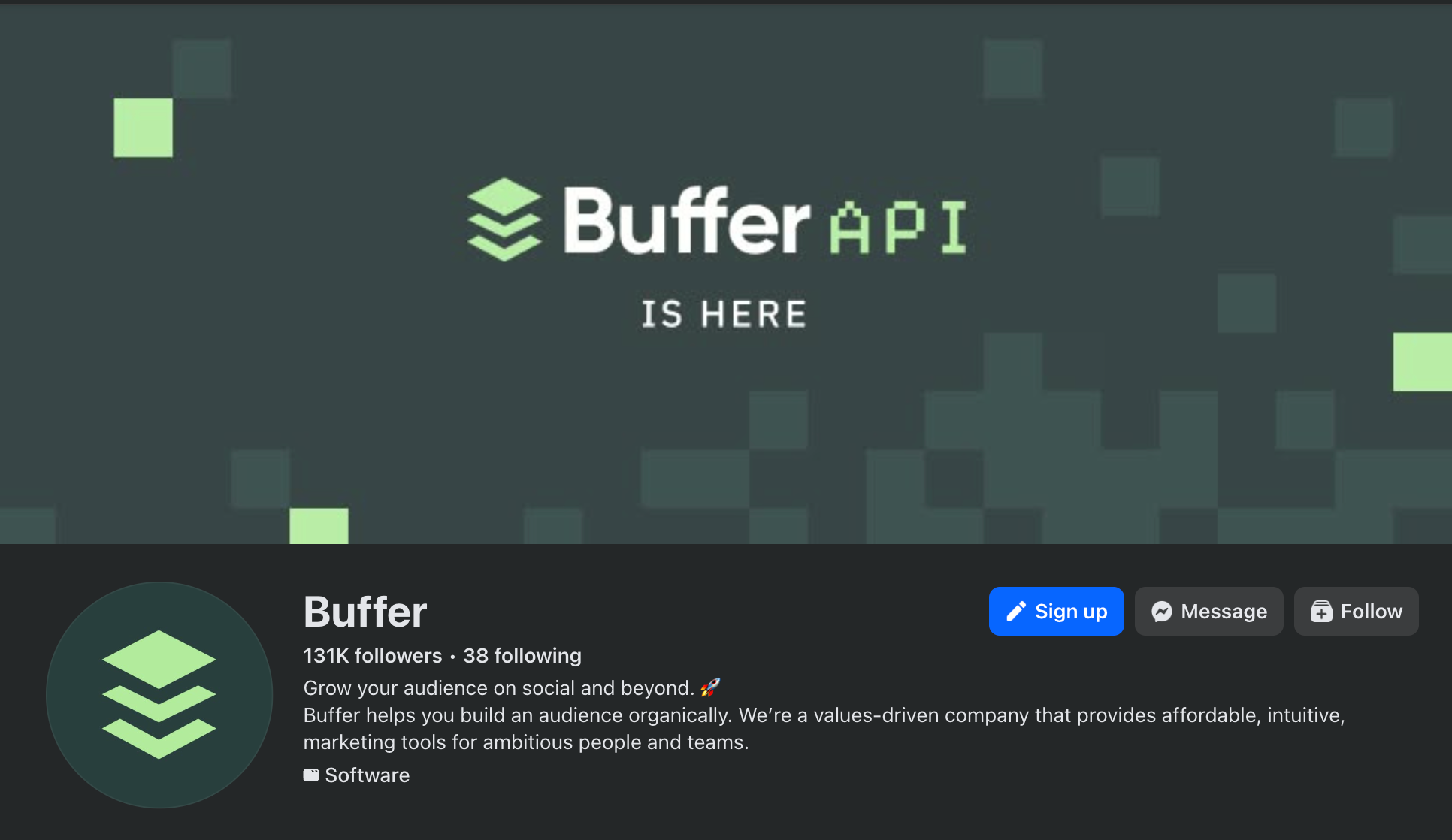
Launching a product or feature? Your cover photo is prime space to tease or announce it. When we launched Buffer's API, we updated our own Facebook cover accordingly.
7. Promote an event
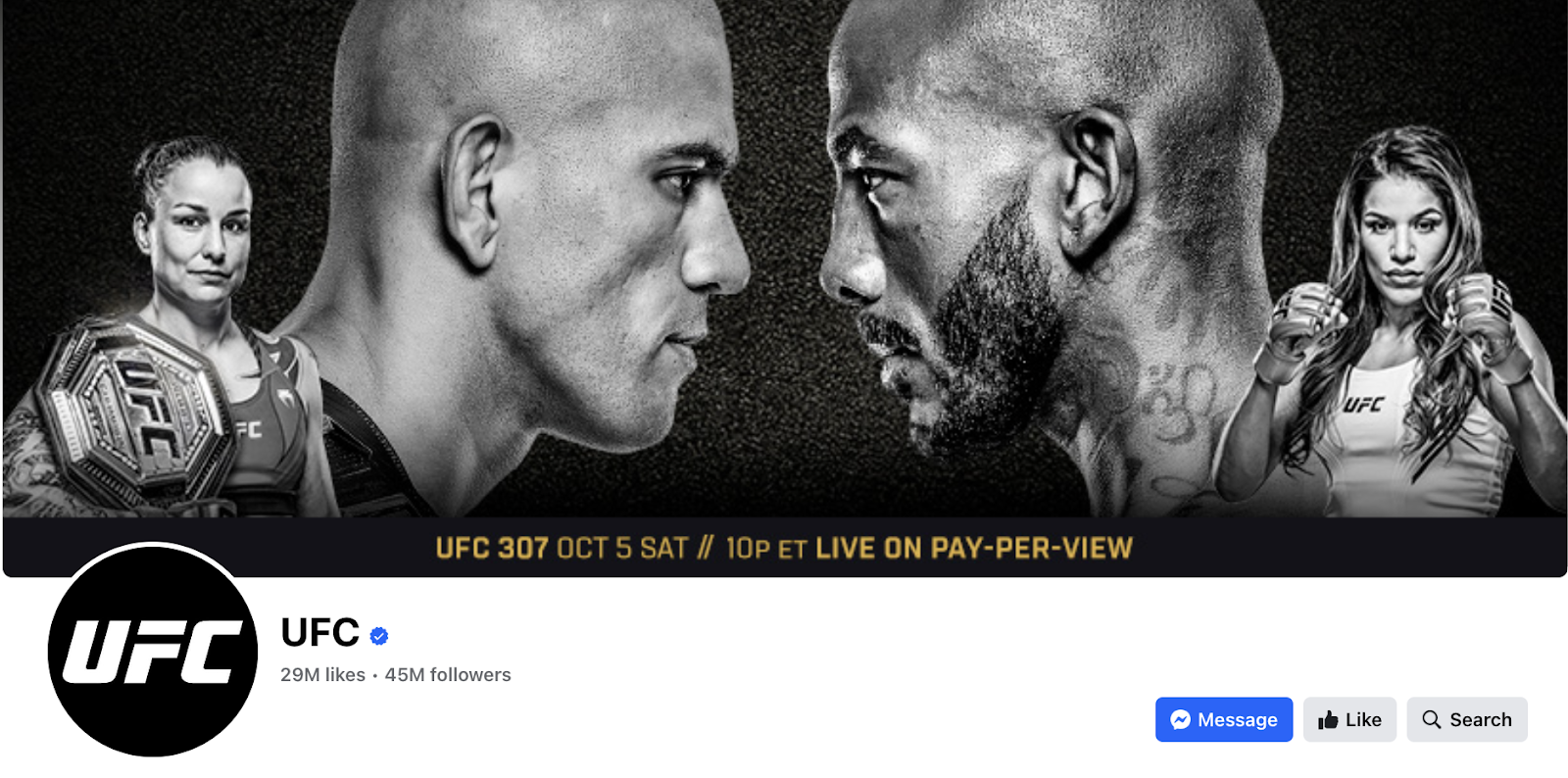
Your cover can work like a billboard for something coming up. UFC uses its cover to show who's fighting and when to tune in.
UFC's Facebook cover photo showing two fighters face to face with the date and time of the match. Source: UFC
8. Change it with the seasons
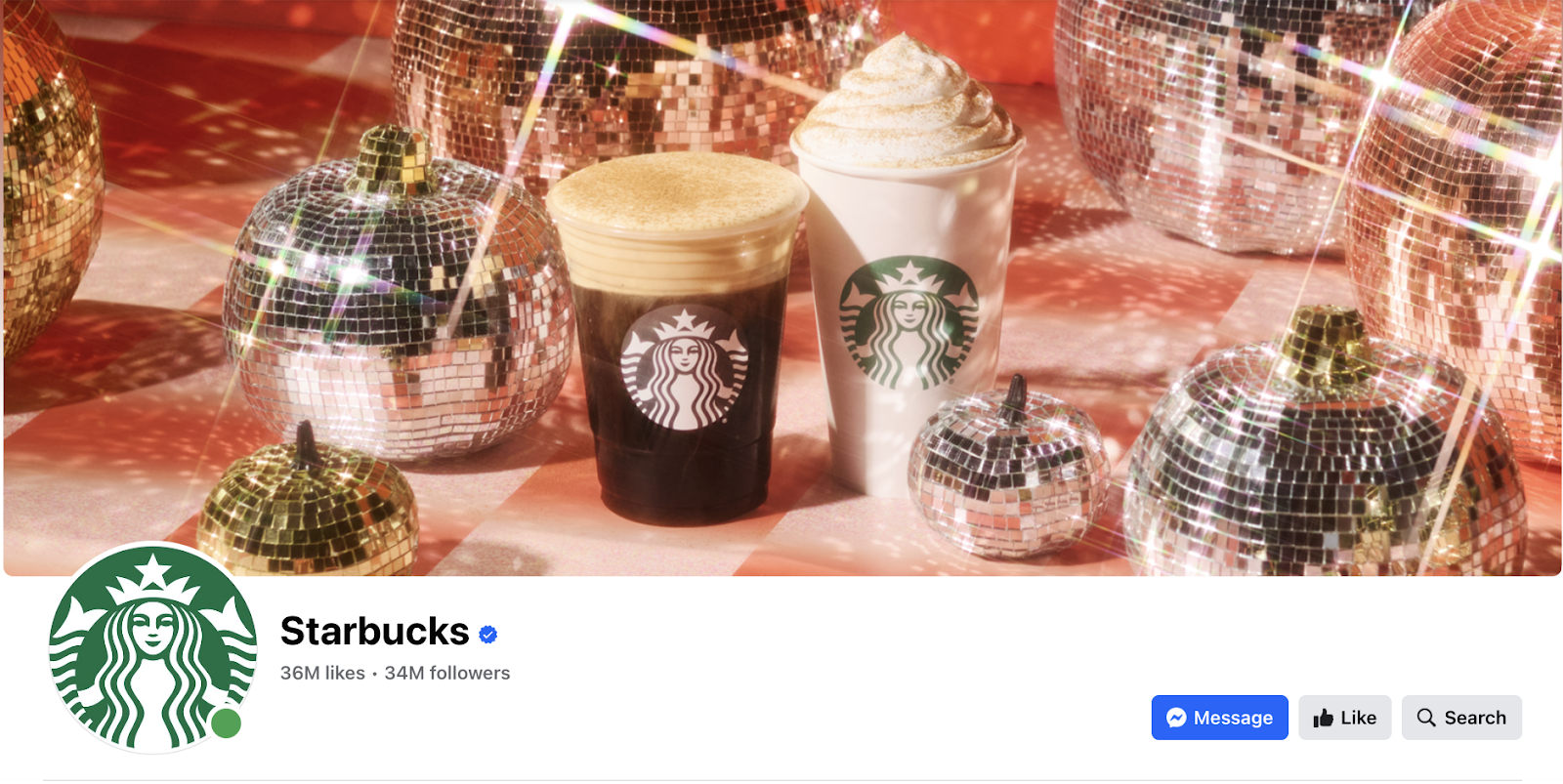
A lot of brands swap their cover photo for holidays and seasons, which also gives returning visitors something new to see. For fall, Starbucks went with pumpkin-shaped disco balls.
Starbucks' Facebook cover photo showing pumpkin-shaped disco balls and two drinks. Source: Starbucks
9. Promote a social media campaign or hashtag
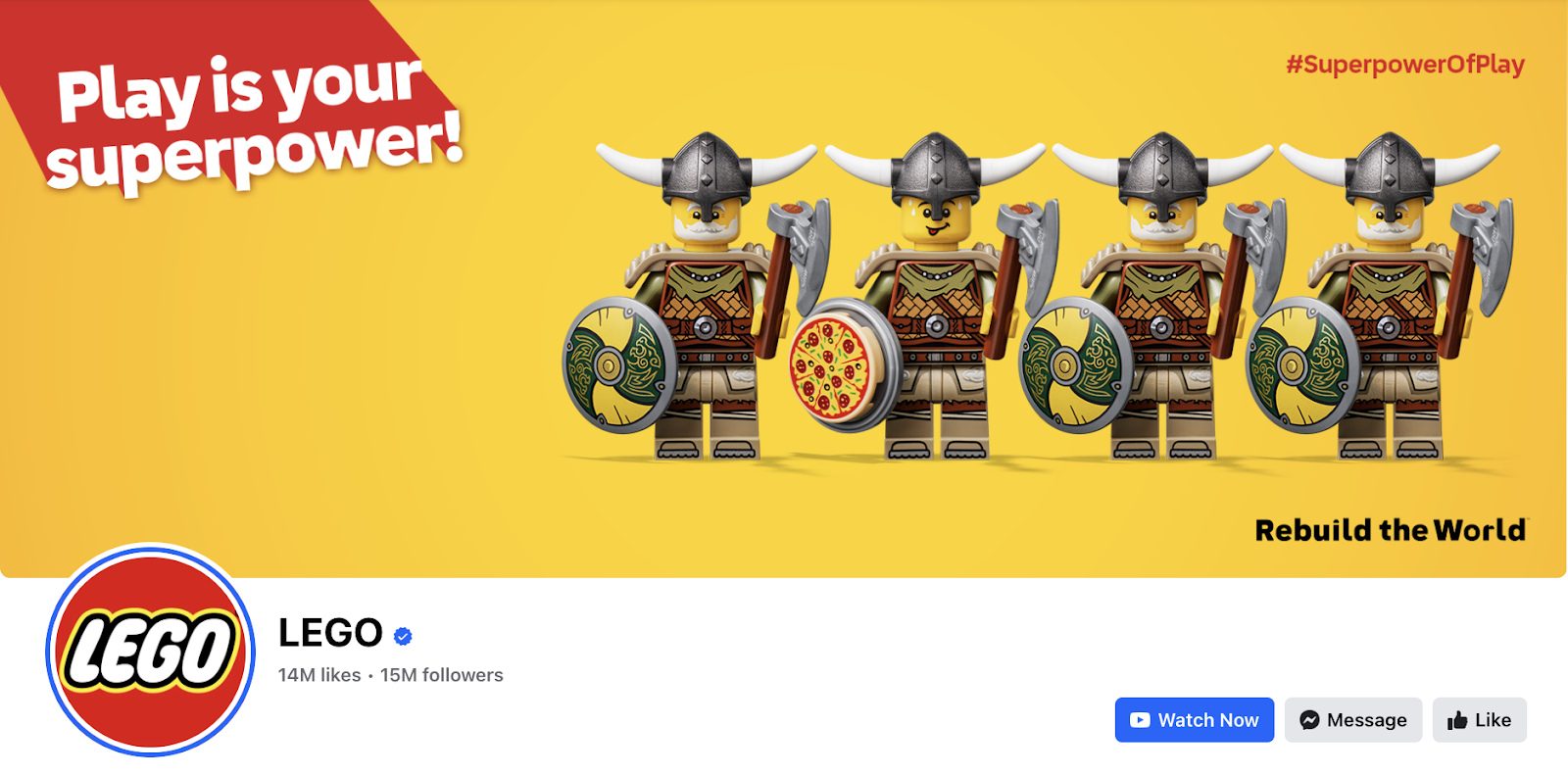
If you're running a campaign, putting the hashtag in your cover photo helps people find it. Lego did this with #SuperpowerOfPlay.
Lego's Facebook cover photo showing Viking Lego figures and the hashtag #SuperpowerOfPlay. Source: Lego
10. Make a statement
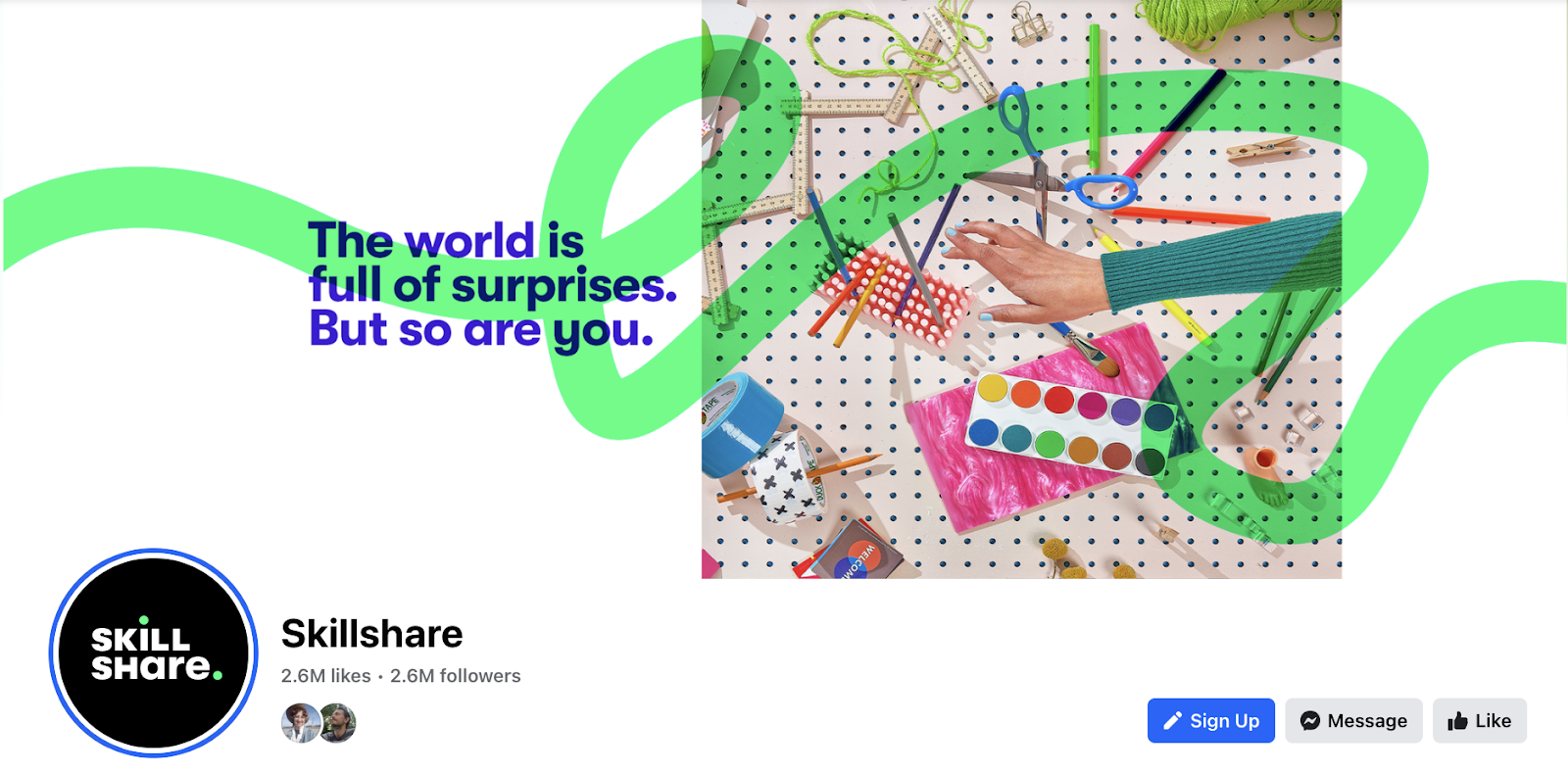
Your cover can carry a message as well as a picture. Skillshare's cover reads "The world is full of surprises. But so are you," which is a nice nudge for anyone who follows the Page to go and make something.
Skillshare's Facebook cover photo showing a hand with art supplies and the text "The world is full of surprises. But so are you." Source: Skillshare
11. Have some fun
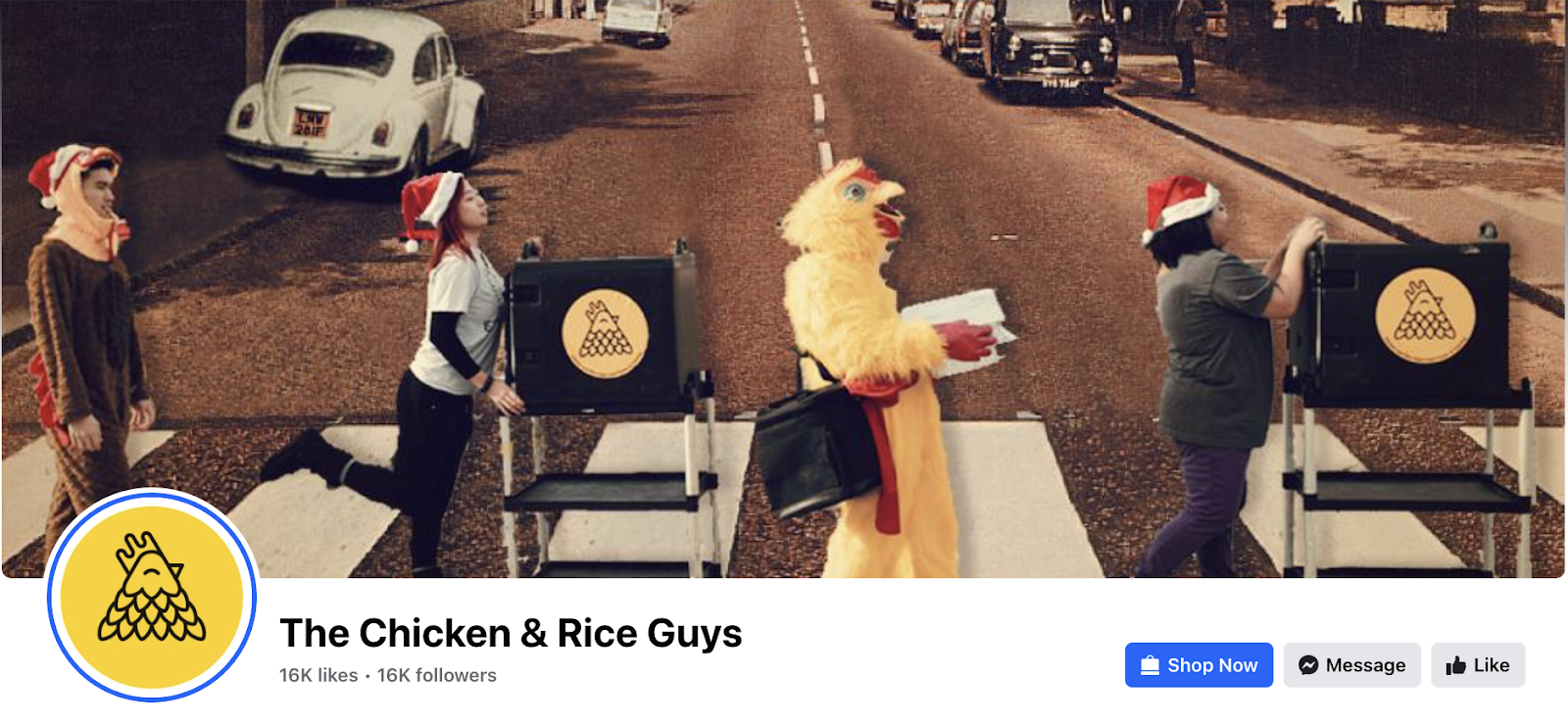
It doesn't always have to be serious. The Chicken & Rice Guys recreated The Beatles' Abbey Road album cover with their staff in costume, which tells you a lot about the brand before you've read a word.
The Chicken & Rice Guys' Facebook cover photo showing staff in costume walking across a crosswalk, recreating The Beatles' Abbey Road album cover. Source: The Chicken & Rice Guys
Start creating
Once your cover photo is sorted, it's worth giving your posts the same attention. Our social media image sizes guide has the right sizes for Facebook posts and the other major networks, and our guide to the Facebook algorithm explains what helps those posts get seen.
And if you're posting to Facebook regularly, Buffer can help you schedule your posts, see how they perform, and keep up with comments in one place.
Frequently asked questions about Facebook cover photo sizes
Is a Facebook cover photo 16:9?
On computers, yes. According to Meta's Help Center, Facebook Page cover photos display at a 16:9 aspect ratio on computers and a 2.4:1 aspect ratio on mobile. The recommended upload size is still 851 × 315 pixels.
What size is a Facebook cover photo without cropping?
There isn't one size that avoids cropping completely, because Facebook shows covers in a 16:9 frame on computers and a 2.4:1 frame on mobile. Upload at 851 × 315 pixels, keep important content in the middle, and check your Page on both screens after you upload.
What's the minimum size for a Facebook cover photo?
A Facebook cover photo must be at least 400 pixels wide and 150 pixels tall, according to Meta.
What file type should I use for a Facebook cover photo?
Meta says Facebook cover photos load fastest as an sRGB JPG under 100 KB. If your cover includes a logo or text, a PNG file may give you a better result.
What size is a Facebook event cover photo?
Facebook event cover photos use 1920 × 1005 pixels, a 1.91:1 aspect ratio.
What size is a Facebook group cover photo?
Facebook group cover photos use 1640 × 856 pixels.
How do I make my Facebook cover photo fit?
Upload your cover at 851 × 315 pixels, then use the reposition tool that opens on upload to drag the image into place. Keep text and logos away from the left edge, where your profile picture overlaps the cover, and check the result on both a computer and your phone.
More Facebook resources
Looking to grow your audience on Facebook? Here's our latest guidance:
Amazon LEO, più di mille satelliti costruiti e 100 pronti per il lancio
Amazon LEO (conosciuta in precedenza come Project Kuiper) fa sapere di aver costruito più di mille satelliti nei suoi impianti di produzione e si sta occupando di assicurarsi più slot di lancio – ne ha già oltre 100 pronti, così da poterli mettere in orbita il prima possibile a supporto del lancio dei servizi di banda larga satellitare previsto per la fine dell’anno.
In questo ampio aggiornamento, Amazon ha inoltre segnalato che il suo team ha “già avviato i lavori sulle future generazioni del sistema satellitare, tra cui un sistema di seconda generazione che incrementerà copertura, capacità e prestazioni per i clienti, e una rete ‘direct-to-device’ (D2D) in grado di trasmettere internet direttamente su iPhone e altri dispositivi mobili. Tali sistemi sfrutteranno la stessa capacità produttiva già impiegata per il sistema di prima generazione”, ha aggiunto Amazon.
Amazon ha detto che avvierà i primi servizi di banda larga satellitare entro la fine dell’anno. I satelliti completati vengono spediti in Florida ogni due o tre giorni. Presso la struttura di Amazon dedicata alla preparazione del carico utile al Kennedy Space Center, i satelliti pronti per il lancio sono in grado di partire con un preavviso minimo di tre settimane.
Sono previsti due lanci importanti: uno a bordo del razzo Vulcan della United Launch Alliance, in programma verso la fine di ottobre, e un altro lancio di rilievo con il razzo Ariane 6 dalla Guyana francese. Il razzo Vulcan trasporterà 40 satelliti. Il lancio dell’Ariane 6, che prevede la messa in orbita di 36 satelliti, è attualmente in sospeso a causa di un malfunzionamento di una turbopompa.
Anthropic vieta la crudeltà verso Claude, ma il vero nodo è la dipendenza tecnologica
Insultare l’AI Claude sarà presto una violazione delle regole d’uso di Anthropic. Dal prossimo 12 novembre, la policy della società proibirà comportamenti “inutilmente abusivi o crudeli” verso i suoi modelli. La precisazione è importante: Anthropic parla di casi estremi e “ripetuti”, senza uno scopo riconoscibile. Restano fuori la normale frustrazione, le critiche, i temi narrativi oscuri (che può essere anche un romanzo dal linguaggio volutamente estremo) e i test di ricerca.
Per ora, la misura principale non è il blocco dell’account: Claude può interrompere una conversazione con un utente persistentemente aggressivo. La testata online The Verge riferisce che Anthropic non ha chiarito se siano previste altre sanzioni, come la sospensione degli utenti. Già nel 2025 la società aveva spiegato che, dopo la chiusura di una chat, si può avviarne subito un’altra, assicurando che le altre conversazioni dell’account non vengono coinvolte da questo tipo di dinamiche. Parlare di un utente che rischia di perdere “tutto Claude” sarebbe quindi, allo stato delle informazioni disponibili, eccessivo.
La vera domanda non è se un’AI sia cosciente o meno, ma chi lo stabilisce
Anthropic presenta la scelta come parte della propria ricerca sul possibile “benessere dei modelli”. La società ammette di essere “altamente incerta” sullo “status morale” dei sistemi come Claude: non sostiene che l’AI sia cosciente, ma considera prudente introdurre misure a basso costo nel caso in cui un giorno emergessero elementi per prendere sul serio questa possibilità.
È un tema che divide anche il settore: il CEO Dario Amodei non ha escluso la possibilità che i modelli possano essere coscienti; altri leader tecnologici hanno contestato l’idea di attribuire loro una forma di welfare o diritti. Oggi, non abbiamo prove che un chatbot provi dolore quando viene insultato e sinceramente non dovremmo neanche porci di queste domande. A questo punto, prima di preoccuparci dei sentimenti di Claude, forse ci converrebbe trattare meglio la nostra automobile, visto che garantisce che torniamo a casa sani e salvi (ancora di più quando sarà a guida autonoma), o magari il frigorifero, viso che custodisce il nostro cibo, o magari il Pc o lo smartphone, visto che in essi abbiamo trasferito tutta la nostra esistenza trasposta in dati.
Questo non significa che urlare contro un software sia un’abitudine innocua o particolarmente salutare per il nostro sistema nervoso. Il punto è un altro: chi stabilisce quando una critica o qualcosa di più ‘forte’ diventa crudeltà? La policy restringe il campo ai casi estremi, ma la distinzione resta affidata al fornitore e ai sistemi che applicano le sue regole. La macchina può chiudere la chat; l’azienda può definire i criteri e cambiarli nel tempo. È una posizione di vantaggio che merita attenzione, anche senza immaginare Claude in tribunale come parte lesa.
Il rischio concreto: dipendere da un solo fornitore
La questione più urgente, per chi usa Claude ogni giorno, non è la coscienza artificiale: è la dipendenza dai servizi AI. Se un assistente entra nei flussi di lavoro, aiuta a scrivere, programmare, cercare informazioni o gestire attività aziendali, anche un’interruzione può avere un costo e di varia natura e dimensione. In questa vicenda Anthropic parla soprattutto della chiusura di singole conversazioni, non della disattivazione generale del servizio. Ma il potere di stabilire le condizioni d’accesso resta in mano a un’impresa privata.
Per utenti e imprese, la risposta non è rinunciare all’AI né trattare ogni chatbot come un collega in carne e ossa. È evitare che un solo strumento diventi insostituibile: conservare copie del lavoro, prevedere alternative, poter cambiare modello o fornitore. Per l’Europa, e non è una forzatura, il caso riporta al centro la sovranità digitale: affidarsi a piattaforme extraeuropee significa anche dipendere da regole, infrastrutture e decisioni prese altrove. La gentilezza verso le macchine può essere una buona abitudine, magari una forma di autocontrollo utile in ogni situazione. Il pieno controllo sul proprio lavoro è però un’altra faccenda che non c’entra niente sull’ipotetica coscienza delle macchine.
Silicon Valley is falling in line with Trump’s attempt to rename AI
When President Donald Trump announced his plans to rebrand artificial intelligence as “super intelligence,” you’d be forgiven for being skeptical that it would catch on. While most of the broader population is sticking with AI, some of Silicon Valley’s most powerful are falling in line and trying to give Trump the great AI rebrand he so desires.
That Elon Musk was quick to jump on board, promising to rename SpaceXAI to SpaceXSI, isn’t surprising. When, hours after Donald Trump declared that “The White House considers anyone that uses the term, ‘Artificial Intelligence,’ as opposed to the highly accepted new and more accurate term, ‘Super Intelligence,’ THE ENEMY!” Marc Benioff announced that Salesforce would rename AIForce to SIForce; it seemed like a quick capitulation, but not entirely out of character.
Nvidia CEO Jensen Huang attended the summit where the executive order requiring government agencies to use the term “super intelligence” was announced. He’s also aligned himself with Trump, saying he believes the danger posed by AI is overblown. So it was somewhat predictable that when Nvidia declared that it would “commit” $1 billion to scientific advancement, that included “super intelligence research.” Of course, Huang has a lot to lose if he gets on Trump’s bad side.
The latest to cave is Microsoft’s Satya Nadella, who attended the same AI summit as Huang along with Mark Zuckerberg, Sundar Pichai, Jeff Bezos, Dario Amodei, and Musk. In a post calling for building an “emergency brake” for AI yesterday, Nadella repeatedly referred to the technology as “super intelligence.”
The new Apple TV could have a built-in mic and a remote with a speaker
The latest rumors are that the new Apple TV will have a built-in microphone, while the upgraded remote will get a speaker. The mic would let users control the set-top box using Siri without having to speak into the remote or a connected HomePod device. That could also let the Apple TV serve as a simple smart home hub — controlling thermostats and locking doors — without the need to hunt for the remote.
If you happen to misplace the remote, the new integrated speaker should make it easier to track down. It could play an audio alert to guide you to its location, whether it got carelessly kicked under the couch or a child mischievously hid it in a drawer.
This is on top of the upgrade to an A19 chip that will power Siri AI. The Apple TV is expected to start shipping on October 30th, alongside the refreshed HomePod Mini.