Let’s Encrypt cuts certificate lifetimes to 64 days starting February 2027

Let’s Encrypt is continuing a push toward tighter security by reducing free SSL/TLS certificate lifetimes from 90 days to 64 days, starting February 10, 2027. For administrators already implementing modern ACME clients that support ARI (ACME Renewal Information), the change should be seamless. For those still relying on hardcoded renewal schedules or manual processes, February will be the deadline to update before certificates start expiring unexpectedly.

Starting on October 14, Let’s Encrypt will begin testing the 64-day certificates, and interested users can opt in to test their setups before production goes live.

Prior to Let’s Encrypt’s launch in early 2016, certificates were often issued for as long as one to three years. The service started with 90-day certificates to force renewal automation that didn’t previously exist. Shorter certificate validity periods limited vulnerabilities from private key thefts and encouraged accelerated HTTPS adoption across the web.

Read full article

Comments

https://arstechnica.com/gadgets/2026/10/lets-encrypt-cuts-certificate-lifetimes-to-64-days-starting-february-2027/


McCann’s Tyler Turnbull Named WPP Creative Global CEO

WPP has tapped McCann global CEO Tyler Turnbull to be the next global CEO of WPP Creative, according to sources close to the matter.

Turnbull is leaving McCann after taking the top position in December of 2025. In that time, he navigated McCann’s integration into Omnicom after its acquisition of Interpublic Group (IPG), which created three global creative networks at the holdco: BBDO, TBWA, and McCann.

Previously, Turnbull worked at the now-shuttered FCB Global, where he is credited with revitalizing the agency’s Canadian outpost, landing clients like Home Depot, Air Canada, and BMW Canada. He became FCB’s global CEO in 2022.

UNLOCK FULL ACCESS

Subscribe and get full access to the news, insights, and expertise that keep industry professionals ahead of the curve.

VIEW ALL SUBSCRIPTION OPTIONS

https://www.adweek.com/agencies/mccanns-tyler-turnbull-named-wpp-creative-global-ceo/


Anthony “Tony” Pope Named Douglas J. Leonard Indiana Caregiver of the Year

A retired Chief of Police and Director of Emergency Management at Columbus Regional Health (CRH) was awarded the Douglas J. Leonard Indiana Caregiver of the Year Award by the Indiana Hospital Association (IHA). This award recognizes individuals in healthcare who provide exemplary care, as acknowledged by patients and peers. 

The award winner, Anthony “Tony” Pope, is the first non-clinical recipient of this award. Columbus Regional Health says he “redefined what it means to be a caregiver in healthcare by demonstrating that safety, compassion and patient-centered service are inseparable.”

Pope used a collaborative approach to connect security and clinical care, leading innovative initiatives such as workplace violence prevention, emergency preparedness, and staff education to improve the healthcare experience.

Jennifer Dunscomb, MSN, RN, CNS, CPHQ Vice President of System Quality, Safety, and Experience, said, “Under Tony Pope’s visionary leadership, our hospital has set a new benchmark for workplace violence prevention, transitioning from a reactive posture to a proactive, high-reliability model. Tony’s data-driven, strategic approach empowered the organization to identify, mitigate, and neutralize threats with unprecedented efficacy. Notably, he bridged the gap between executive governance and front-line safety, elevating Board awareness to full, active support for critical resources. Tony has fundamentally transformed our culture into one of heightened vigilance and foresight. The results are compelling: a 54% reduction in workplace violence events with consistent year-over-year improvement, over $69,000 saved in workforce injuries, and 150+ team members trained annually in specialized care, resulting in a profoundly safer environment for both staff and patients.”

IHA President Scott B. Tittle stated, “Tony has earned the respect of colleagues throughout Indiana and across the healthcare field through a career defined by service, leadership and an unwavering commitment to others. His work has demonstrated that every member of the healthcare team plays an important role in caring for patients and supporting those who provide care. Tony’s example has inspired fellow professionals and improved the healthcare experience for countless individuals, making him a highly deserving recipient of the Douglas J. Leonard Indiana Caregiver of the Year Award.”

https://www.securitymagazine.com/articles/102633-anthony-tony-pope-named-douglas-j-leonard-indiana-caregiver-of-the-year


Jay Askinasi to Lead Skydance Ad Sales, WBD Ad Leaders Exit After Merger

/* ========================= Base container ========================= */ .article-body-promo-ad { border: 1px dotted #f53c60; background-color: rgba(245, 60, 96, 0.05); border-radius: 8px; margin-top: 2em; position: relative; padding: 30px 16px 16px 60px; } @media (min-width: 768px){ .article-body-promo-ad{ margin: 1em max(13%, 26px); } } .ad-bookmark-icon::before { content: ""; background-image: url("https://static-www.adweek.com/wp-content/uploads/2026/02/Calendar.svg"); background-size: contain; background-repeat: no-repeat; position: absolute; left: 15px; top: 50%; transform: translateY(-50%); width: 40px; height: 40px; } /* Floating label */ .article-body-promo-ad::after { content: "Are you paying for impressions—or actual attention?"; position: absolute; top: -14px; background: #fdebed; color: #f53c60; font-size: 13px; font-weight: 600; padding: 4px 12px; border-radius: 999px; letter-spacing: 0.04em; white-space: nowrap; } [data-bs-theme="dark"] .article-body-promo-ad::before { filter: invert(1) brightness(1); } /* Typography */ .article-body-promo-ad p { font-size: 18px; line-height: 28px; letter-spacing: 0.03em; margin: 0; } /* Links */ .article-body-promo-ad a { font-weight: 700; text-decoration: none; color: inherit; } .article-body-promo-ad a:hover { color: #F6486A; } /* Dark mode */ [data-bs-theme="dark"] .article-body-promo-ad { background-color: rgba(245, 60, 96, 0.12); } [data-bs-theme="dark"] .article-body-promo-ad::after { background: #2a0f14; } @media (max-width: 576px) { .article-body-promo-ad::after { transform: translateX(-50%); top: -10%; left: 50%; font-size: 12px; } } @media (max-width: 576px) { .article-body-promo-ad { display: flex; align-items: center; gap: 10px; padding: 14px; margin: 2em 0; } } @media (max-width: 576px) { .article-body-promo-ad::before { display: none; } } .article-body-promo-ad::before { width: 28px; height: 28px; background-size: 28px 28px; } }

Join ADWEEK CEO Will Lee, senior brand marketers, and industry leaders at our ADWEEK Exchange Series, to discover how measuring real audience attention—not just impressions—drives smarter, higher-ROI CTV strategies. Two more stops in NYC and Boston next week with brand speakers from Havas, Hartz, Wayfair, WHOOP, SharkNinja, and more. Seats are limited.

Following the $110 billion merger between Paramount Skydance and Warner Bros. Discovery, there’s a shakeup at the top of the ad sales mountain.

Paramount’s chief revenue officer, Jay Askinasi, has been tapped to lead ad sales for Skydance, the newly combined company. Meanwhile, WBD’s ad sales leaders, Ryan Gould and Bobby Voltaggio, are exiting.

JB Perrette, co-chair and chief business officer, Skydance TV and Skydance DTC, announced Askinasi’s appointment, also saying that David Decker has been named president of content sales and Ray Hopkins has been named president of distribution.

“Jay, David, and Ray are hugely talented and respected leaders with deep experience, strong industry relationships, and a shared commitment to our partners and our people,” Perrette said in a statement.

UNLOCK FULL ACCESS

Subscribe and get full access to the news, insights, and expertise that keep industry professionals ahead of the curve.

VIEW ALL SUBSCRIPTION OPTIONS

https://www.adweek.com/convergent-tv/jay-askinasi-to-lead-skydance-ad-sales-wbd-ad-leaders-exit-after-merger/


5 Data Security Stories to Know About (September 2026)

@import url(‘https://fonts.googleapis.com/css2?family=Nunito+Sans:ital,opsz,wght@0,6..12,400;0,6..12,500;0,6..12,600;0,6..12,700;1,6..12,400;1,6..12,500;1,6..12,600;1,6..12,700&family=Nunito:ital,wght@0,400;0,500;0,600;0,700;1,400;1,500;1,600;1,700&display=swap’); h3 { font-weight: bold; font-size: 18px; color: #C72026; } figure { padding: 4px; margin: auto; } figcaption { color: #404144; Nunito Sans’, Arial, sans-serif; font-size: 14px; padding: 10px; text-align: left; }

Lock it Down Podcast logo

5 Data Security Stories to Know About (September 2026)

Five data security stories to know about.

Or check it out on our Apple Podcasts. Don’t forget to like, follow, and rate and review our podcasts!

1. Dropbox

Around 5,000 Dropbox accounts were compromised after an unauthorized user gained access to certain accounts via a third party infrastructure. 

Learn more about the Dropbox breach. 

2. IDScan License Breach

More than 150 million driver’s licenses were compromised, as reported by independent journalist Brian Krebs, who discovered his own license exposed by the breach. 

Learn more about the IDScan breach. 

3. Veradigm 

Healthcare technology organization Veradigm was exposed due to a third-party breach. While clinical and medical information were unaffected, patient Social Security Numbers were compromised. 

Learn more about the Veradigm breach. 

4. AdaptHealth 

More than 4 million individuals had their personal data compromised in this data breach. 

Learn more about the AdaptHealth breach. 

5. FBI Employee Data

The FBI was reportedly hacked by ShinyHunters, who claimed to comprises the names, addresses, phone numbers, and even spousal information of employees and applicants. 

Learn more about the FBI breach. 

https://www.securitymagazine.com/articles/102552-5-data-security-stories-to-know-about-september-2026


3 Fundamentals Mid-Market IT Leaders Should Focus On

Cybersecurity is becoming increasingly important across enterprises of all sizes. Last year, cybersecurity was ranked among the highest business concerns for small- and medium-sized businesses (SMBs).

SMBs historically struggle to keep pace with adopting new technologies, with many instances being attributed to a lack of funding or staffing. Oftentimes, IT leaders are the security leaders in their organization.

Without the resources of larger enterprises, it can be challenging to properly secure SMBs. Kevin Charest, CISO & VP of Cyber Governance Services, offers three key steps IT leaders can take to bolster their organization’s security. 

Charest
explains, “Mid-market organizations face the same security threats as large global enterprises, but they do so with a fraction of the resources. What I see repeatedly is understaffed IT teams trying to stitch together fragmented tools, leading to a reactive posture instead of a resilient one. Mid-market IT leaders need to focus on three fundamentals: clear visibility across their environment, outcome-driven security aligned to regulatory requirements, and a realistic plan to address ‘unpatchable’ technical debt through compensating controls. Cybersecurity can’t be treated as a luxury line item anymore; it determines how quickly you can withstand and recover from attacks in order to protect your day-to-day operations. It must be a top priority for businesses of any size.”

By establishing these fundamentals, IT leaders can treat cybersecurity as a business imperative even if they lack the resources of a large enterprise. 

https://www.securitymagazine.com/articles/102632-3-fundamentals-mid-market-it-leaders-should-focus-on


Reinventing Retail Icons: Ken Ohashi and Marisa Thalberg on Making Legacy Brands Relevant

Legacy retail brands have something that newer brands can only dream of: decades of recognition, emotional connection, and cultural history. 

But turning that heritage into modern relevance requires more than nostalgia. It takes clear positioning, product reinvention, bold creative decisions, and a strong partnership between marketing and leadership.

In this episode of Adspeak by ADWEEK, Marisa Thalberg, EVP and chief customer and marketing officer at Catalyst Brands, sits down with Ken Ohashi, brand CEO of Brooks Brothers and Eddie Bauer, to explore the strategies behind transforming iconic retail brands. 

They discuss how to reposition struggling businesses, uncover new opportunities by listening to real customer behavior, and balance heritage with the need to evolve. 

Ken and Marisa also explore Eddie Bauer’s shift from technical outdoor gear to a lifestyle brand, the role of cultural influencers, and why small, trusted teams can make better creative decisions. 

Throughout, they share lessons on building authentic brands that turn skeptical customers into loyal ones.

What you will learn:

  • How to turn around a bankrupt heritage brand 
  • Why creative decisions should avoid “committee thinking”
  • The “off the mountain” repositioning framework Eddie Bauer used 
  • How to find hidden brand momentum by mining real customer behavior 
  • Why talking “up to” middle-America consumers builds trust and authenticity 
  • How strategic star power can be used as a cultural amplifier 
  • The importance of building CEO-CMO trust early

[embedded content]

About the guests:

Marisa Thalberg is a globally recognized business strategist and brand-building innovator, known for inspiring teams to take brands to new heights of consumer resonance, cultural relevance, and business performance. A pioneer of digital, social, and eCommerce marketing, she has orchestrated blockbuster product launches, unexpected cultural moments, and moved with uncommon ease between industries like beauty and QSR, retail and CPG, brand and performance marketing, mass and prestige.

Ken Ohashi is Brand CEO of Brooks Brothers and Eddie Bauer, with more than 25 years of experience across fashion, consumer products, retail, and business development. He led Brooks Brothers through its acquisition and transformed the iconic brand to profitability in less than two years. Previously, Ohashi served as President of International and Global Retail at Authentic Brands Group, overseeing brand management, business development, and marketing across its international portfolio. He also held senior leadership roles at Aéropostale.

https://www.adweek.com/brand-marketing/reinventing-retail-icons-ken-ohashi-and-marisa-thalberg-on-making-legacy-brands-relevant/


Starbucks Is Reportedly Eyeing Chipotle, But The Burrito Chain May Be More Than It Can Chew


On the heels of declaring CEO Brian Niccol’s “Back to Starbucks” turnaround strategy a success, Starbucks has reportedly considered purchasing fast-casual Mexican chain Chipotle.

The deal seems to be just a kicking of the tires at this point, with the Financial Times reporting that the coffee giant has “explored a takeover” and also “worked with advisors in recent months on a takeover proposal.”

While Chipotle shares leapt at the news, the coffee’s chain’s stock price stumbled. Investors are purportedly worried that taking over a fast-casual food chain with a $39 billion market cap and north of 4,200 locations would be too big an operational burden, especially with Starbucks’ turnaround not yet complete.

Two years into Niccol’s plan—which aims to improve customer service and return many of its 41,000 locations back into the welcoming respites they were in the 1990s—he declared to employees that “Starbucks is back.”

But in an exclusive interview with ADWEEK earlier this month, he conceded that the turnaround isn’t quite complete.

“I probably underestimated the scale of the business that Starbucks is,” Niccol said. “I wish we were going a little bit faster with digital. I wish we were going a little bit faster with the menu. But culturally, we are so much better because we’re now focused on owning outcomes, not celebrating activity.”

If an acquisition of Chipotle goes through, there’d be much more to focus on than that.

Chipotle finished Q2 strong, with total revenues up 9.3% to $3.3 billion and comp sales up by 2.2%. But the chain continues to battle the perception that its prices are too high, especially as many consumers are thinking about how to pay for gas that’s crept north of $4 a gallon.

If Starbucks is serious about buying Chipotle, the merger will require regulatory approval (though President Trump’s administration has shown itself to be M&A friendly.)

Barring that, the combined brands would create a $50 billion behemoth with two concepts that lack a lot of operational overlap. Chipotle serves no coffee, and Starbucks, at least to date, does not serve burritos. (Though there’s an avocado spread on the fall menu.)

Even so, operational efficiencies are possible, said David Mayer, senior partner and director of marketing and customer strategy at Lippincott, as are “cross-selling opportunities, and, longer term, the potential to add more brands to the portfolio.”

On the flip side, Chipotle can offer growth opportunities that Starbucks itself cannot.

“If that’s the case,” Mayer said, “the diversion of management attention, combined with weakening brands, may risk creating a combined entity that continues to decline and is even harder to turn around.”

If nothing else, a merger would theoretically return Niccol to the executive suite of Chipotle, where he served as CEO from March of 2018 until August of 2024. Chipotle’s size doubled during Niccol’s time in the corner office—no small part of why Starbucks poached him.

https://www.adweek.com/brand-marketing/starbucks-is-reportedly-eyeing-chipotle-but-the-burrito-chain-may-be-more-than-it-can-chew/


Brandweek 2026: The Hard Leadership Calls Behind Chicago Fire FC’s Growth ft. Dan Moriarty

Audience targeting may have gotten easier, but getting people to truly care has not. 

Live from the Marketing Vanguard stage at Brandweek 2026, Jenny Rooney sits down with Dan Moriarty, CMO of Chicago Fire FC, to unpack why the marketing pendulum is swinging back toward creative.

They also discuss what makes live sports such a powerful attention engine and why brands should think harder about the emotion behind what they sell.

Plus, the inside scoop on why he left the Chicago Bulls for a growth-stage MLS club, and the difficult people decisions that have helped reshape his marketing organization.

What you’ll learn:

  • Why sports still commands attention in a world built around on-demand content
  • Why Chicago Fire FC focuses on selling joy and passion rather than soccer itself
  • How the club turned World Cup energy into an owned Chicago fan experience
  • Why easier targeting makes stronger creative even more important
  • Why buying reach is no longer a meaningful competitive advantage
  • How Chicago Fire FC is restructuring its in-house creative operation
  • Why avoiding underperformance can cost you your strongest people

This episode is part of a special vidcast series that was recorded live during Brandweek 2026 and presented in partnership with Tatari. 

[embedded content]

About our guest:

Dan Moriarty is chief marketing officer of Chicago Fire FC, where he leads marketing for Chicago’s Major League Soccer club. Originally from England, Dan began his career agency-side before moving into brand roles at Hyatt. He later spent around eight years with the Chicago Bulls before joining Chicago Fire FC.

At the Fire, he has been part of a period of significant investment and change across the club, from its on-field ambitions and downtown presence to new facilities, fan experiences and plans for a new stadium. His marketing perspective combines a digital-first background with an increasing conviction that, as targeting becomes easier, creative quality matters more than ever.

Episode Highlights: 

[07:53] Use the Cultural Moment Even If You Don’t Own It — Chicago was not a World Cup host city, but that did not stop the Fire from finding a role in the moment. The club built its own large-scale viewing experience and attracted nearly 100,000 people over the tournament period. Dan’s bigger point is that brands do not always need official status to participate in culture. They need to understand where their audience already cares and create something worth showing up for.

[13:53] The Pendulum is Swinging Back to Art — Dan came up in digital with a science-over-art mindset. Now he thinks that balance needs to flip. Platforms have automated much of the audience-building work that once required serious expertise. Reaching the right person is easier. Making that person stop, notice and feel something is harder. His argument for marketers at Brandweek 2026: spend less energy celebrating targeting sophistication and more energy making work people actually care about.

[15:35] Doing Brand Badly Has Never Been Easier — The bar for great brand work is still high. What has changed is how easy it has become to put bad work in front of a lot of people. Dan points to automated media buying as the reason: almost anyone can buy reach now. That means distribution can amplify mediocre creative faster than ever. Easier access to audiences has not made marketing easier. It has raised the cost of being forgettable.

[18:22] Tolerating Underperformance Punishes Your Best People — One of Dan’s biggest lessons at Chicago Fire FC had nothing to do with media or campaigns. It was about people. He inherited a team where some employees were not right for their roles and initially gave the situation time. What he learned was that leaving underperformance untouched sends a message to everyone else. High performers notice. Some leave. His conclusion: when you know something is not working, avoiding the hard call usually makes the problem worse.

https://www.adweek.com/brand-marketing/brandweek-2026-the-hard-leadership-calls-behind-chicago-fire-fcs-growth-ft-dan-moriarty/


Oura Wants Wellness to Mean More Than a Personal Best


Oura, the fast-growing smart ring brand, is pitching wellness as more than performance. 

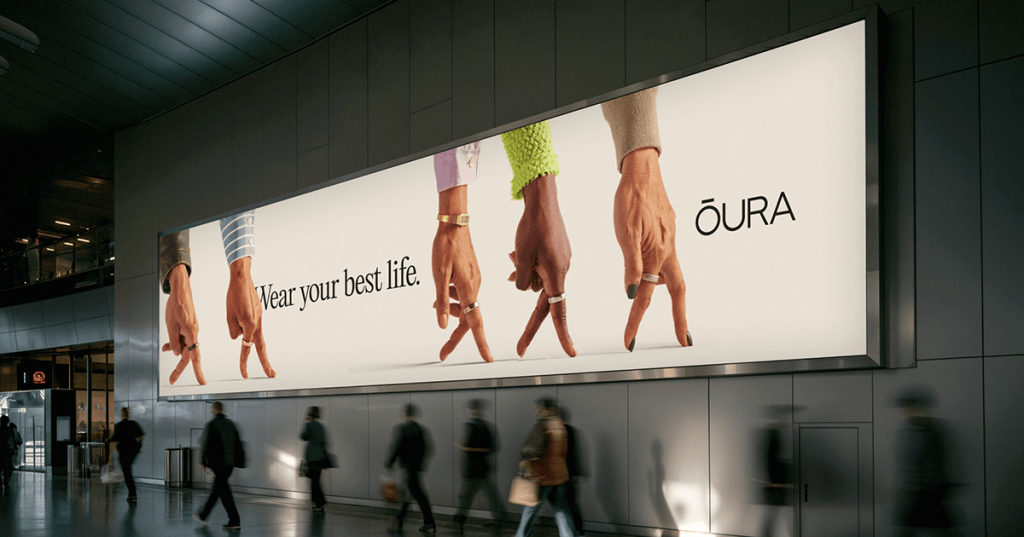
Its new ad, “Wear Your Best Life,” follows hands through a miniature city to show the ring’s role in everyday life. The campaign features hands “running” through a park, waiting for the subway, and lounging by the pool. 

The 11-year-old Finnish brand—which can track over 50 health and wellness metrics, from sleep to women’s health—wanted to diverge from traditional health-tech marketing, focusing less on performance and more on attuning to the body’s holistic needs.

“Most health tech talks to people as if there’s one finish line. Our members don’t live that way,” said Doug Sweeny, Oura’s chief marketing officer. “Some are chasing a personal best, some are just trying to sleep through the night, and some are managing chronic health conditions.”

To make the film, Oura worked with creative agency Nice&Frank and a team of modelmakers to build a one-tenth-scale city by hand, sized to fit the hands. Oura also brought in a choreographer to stage the hands’ movements. The brand aimed to stand apart with a handmade approach at a time when more ads are being created with AI. 

“We chose to tell that story through hands because they’re so personal. Hands are how people work, create, care for others, and move through their day. Taking faces out of the picture meant the film could belong to a lot of different people, and it pushed us to rely on gesture, humor, and small moments to build the emotion,” Sweeny said.

Oura released 30- and 60-second versions of the ad, along with out-of-home executions, on Oct. 8. The film will run across the brand’s social platforms.

“Wear Your Best Life” builds on last year’s “Give Us the Finger” campaign, which centered on the index finger and emphasized finding joy in activities while aging. That campaign also showed the ring being used for pursuits beyond exercise tracking, such as playing the piano or a game of chess.

Oura has grown quickly in the wellness space. Just three years ago, 95% of Americans had not heard of it, per the brand, but it’s since been worn by everyone from Gwyneth Paltrow to Prince Harry.

In May, it released the Oura 5, which it says is the smartest ring on the market. Updates added features including an AI-powered glucose monitor and live exercise tracking, expanding the ring beyond its original purpose of sleep tracking.

Last week, the company said it was pausing its plan for an initial public offering (IPO) due to market uncertainty.

https://www.adweek.com/creativity/oura-wants-wellness-to-mean-more-than-a-personal-best/