ADWEEK Brand Advantage: Celebrity Endorsement Enters Its Equity Era, With Strings Attached
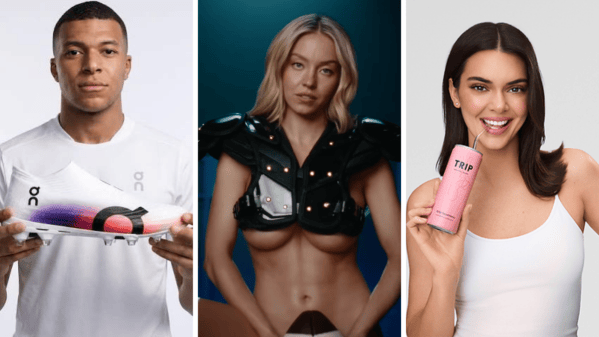
ADWEEK Advantage is part of a series where every month, our top editors interpret what happened in each vertical and what it means for the future. Sydney Sweeney’s nude ad for sports betting site Novig got people talking in September, clocking over 65 million views on Instagram and sparking backlash from female athletes across the globe.
Whatever you thought of the ad, the more interesting detail was behind the camera, where Novig’s CEO Jacob Fortinsky described the Euphoria star as “driving a lot of the visuals and the messaging.”
That influence was backed by Sweeney’s status as an equity partner in Novig, a deal Fortinsky told Front Office Sports had been initiated by the actor herself before the campaign launched.
UNLOCK FULL ACCESS
Subscribe and get full access to the news, insights, and expertise that keep industry professionals ahead of the curve.
ADWEEK’s Agents of Change: Leading With Purpose to Reshape Our Industry
Being the change you want to see in the world requires vision, courage, and the willingness to walk your own path.
ADWEEK’s 2026 Agents of Change, presented by Empower, celebrates the leaders reshaping marketing, media, advertising, and tech through meaningful action.
In partnership with Empower, the industry platform created by Propeller Group and WACL, this award recognizes individuals who combine commercial excellence with a commitment to creating a more responsible and forward-thinking industry.
/* Force light theme inside this box */ --bs-border-color: #dee2e6; } /* Dark mode shadow box */ [data-bs-theme="dark"] .shadow-box { background-color: #000000; /* true black */ color: #f5f5f5; /* readable light text */ border-radius: 30px; padding: 16px;
/* subtle shadow that works on dark backgrounds */ box-shadow: 0 4px 12px rgba(0, 0, 0, 0.8), 0 1px 2px rgba(255, 255, 255, 0.05); border: 1px solid rgba(232,232,230) !important;
}
Rachel Apirian
Chief Content Officer, The Female Quotient
The Female Quotient began as a small experiential company, and along the way transformed into one of the largest communities of women in business. That shift happened largely through content, which has been led by Rachel Apirian since 2018. In that time, she’s grown The FQ community from 18,000 members to 8 million by carefully choosing the voices to elevate, tackling topics that seem far from business such as caregiving and making them relevant to corporate leaders, and always bringing listeners into the conversation. This uniquely empathetic, human-centric view of work has grown The FQ into a media company that generates 3 billion organic social impressions and creates branded content for over 200 companies annually, with engagement rates up to seven times higher than platform averages.
Talia Arnold
Co-founder & Managing Partner, Exverus by Brainlabs
Talia Arnold and her co-founders built Exverus around a radical idea: People shouldn’t have to sacrifice family, health, or ambition to succeed in advertising. Twelve years later, that philosophy has become a competitive advantage for the full-funnel media agency. The leadership team is over 70% women and people of color, while flexible schedules, three months of paid family leave, unlimited PTO, and just one weekly office day for Los Angeles staff help working parents meet all of their obligations—and advance. Twice-yearly retreats bring remote employees together, while bonuses reward ideas that make it into client media plans. Under Arnold’s leadership, Exverus grew into a multimillion-dollar independent agency before joining Brainlabs, where its people-first culture will remain in place.
Ellie Bamford
Chief Strategy Officer for North America, VML
Keeping a personal touch can be difficult when you’re the chief strategy officer of a 600-strong team overseeing $1.2 billion in business. But VML’s Ellie Bamford is beloved for ensuring visibility and advancement for underserved colleagues, while championing new technology such as the proprietary Foresight Engine to let strategists do what they do best. Her work has raised strategy group billability from 68% to 98% through operational transformation, and has driven nearly $200 million in new business revenue in the past two years. Bamford is also a trusted authority in shaping industry standards, serving on festival juries, hosting workshops, and mentoring junior talent.
Victoria Beaty
Founder, House of Kin
Victoria Beaty has spent more than 15 years showing the value of marketing while expanding who gets to be seen and given opportunities. At the urban farming advocacy Growing Places Indy, she used integrated storytelling to help secure more than $1 million in grants and donations, while expanding food-access programs and donating thousands of pounds of produce. She later founded Indianapolis’ first Black-owned plant shop, using it to make greenery—and, in turn, wellness—more accessible through free workshops and forging high-profile partnerships with the WNBA and Indiana Pacers. Her most recent venture, House & Kin Creative, is a principal-led agency where culture and community are essential to outcomes.
Jared Belsky
Co-founder & CEO, Acadia Agency
To Jared Belsky, leadership means a willingness to take risks—comfort, dollars, and even reputation—to make change real. The Acadia CEO instituted direct media buying across accounts and, in February, returned high-six-figure rebates to 53 clients from 2025 media buys. By rejecting principal-based media buying, he gave up nearly $3 million in potential profit, arguing agencies should earn from agreed-upon fees, not by hiding incentives. Belsky has taken the fight industrywide, launching SayNoToPrincipalMediaBuying.com, partnering with the ANA on education for procurement teams, and creating ItsYourRebate.com to help brands ask tougher questions of their agencies. Meanwhile, Acadia has kept on growing, adding 30 clients in 2026 with an 80% pitch-win rate.
Alan Brown
Co-founder, DNA&Stone
Alan Brown has been building the infrastructure for a more equitable advertising industry, particularly for LGBTQ+ talent. At indie agency DNA&Stone, he co-created Project Violet, connecting emerging queer creatives and strategists with industry mentors, and launched Come Out to Work, helping agencies create cultures where LGBTQ+ employees can be themselves. Internally, 92% of DNA&Stone’s new hires in 2025 identified as women, BIPOC, or LGBTQ+; the agency also holds annual salary audits to address the gender pay gap, along with standardized leveling and equity tracking. Brown also championed Black Black Friday, generating $1.5 million in media support and $250,000 in sales for Black-owned businesses, and led “Poison the Fantasy” during the FIFA World Cup to confront sex trafficking around major sporting events.
Bernice Chao
Chief Creative Officer for the Americas, Dept
The path to career advancement is not always clear for underrepresented talent. As founder of Asians in Advertising, Bernice Chao has grown the organization to more than 9,000 members, creating a leadership program with 75 graduates, 690 mentorship pairings, four industry summits and the AIA Awards. She even reaches talent before they graduate into the industry as a professor at Loyola Marymount University for the past five years. She has taught 250 students, some of whom have gone on to win the Effies Cannes Collegiate Competition for four consecutive years. Chao also co-authored The Visibility Mindset, a No. 1 Amazon bestseller giving Asian American professionals tools to advance in the workplace. Her impact has been recognized by the AAF Hall of Achievement, The Advertising Club of New York’s Icon Award, Adcolor’s Catalyst Award, and She Runs It Mother of the Year.
Kim Chappell
Chief Brand Officer, Bobbie
Bobbie’s brand was built on a simple insight: Being a new parent comes with too much advice and not enough support. Kim Chappell has turned formula maker Bobbie’s marketing into a platform for destigmatizing how babies are fed through the unconventional move of amplifying the underrepresented voices of actual parents. But feeding babies is not the only hurdle Bobbie is committed to supporting caregivers through—Chappell has also been instrumental in pushing policymakers on paid leave and expanding resources for maternal health. Her “B is for Bobbie” campaign with Cardi B drove major gains in awareness, trust, and consideration while generating 4,000 hotline calls and over 1,000 messages to Congress. By making advocacy part of Bobbie’s business strategy, Chappell has driven brand love in a category that’s otherwise barely discussed in mainstream forums.
Christopher Crawford
Founder & CEO, Elite Media
To measure success, Christopher Crawford prefers to look at the opportunities an agency creates, not just the creative work it puts out. At Elite Media, he has invested more than $2 million directly into Harlem, including Keep It 100, an entrepreneur pitch competition designed to back emerging creators and future agency owners. His Schoolys initiative at Teachers College Community School provided 50-plus staffers with $150,000 in self-care and professional-development grants, contributing to a 100% increase in staff retention and stronger reported well-being. Crawford also invests in startups addressing financial and health inequities and partners with Harlem nonprofits, and hires people with lived experience rather than through traditional pipelines to make it all happen.
Celeste Durve
Founder, Viper
The irony of experiential marketing is that it demands extensive experience to get your foot in the door. As the founder of bicoastal hospitality agency Viper, Celeste Durve is changing who gets to build a career in the experiential space, growing the business to seven figures by creating paid, accessible pathways into an industry often gated by degrees and connections. Her 340-person W-2 workforce gets hands-on experience with brands including Google, Amazon, e.l.f. Cosmetics, and HBO, paving the way to frontline roles in management and corporate leadership. Through the Viper Next Gen initiative for college students and her 290,000-reader Smart Is Sexy media platform, Durve extends that mission beyond her company, equipping women and underrepresented talent with skills, mentorship, and access to influential networks.
Miguel Espada
Co-founder & CEO, SpecialGuestX
Creating technology that serves people and engages audiences is at the heart of everything Miguel Espada does. At SpecialGuestX, the mathematician-turned-creative pairs cutting-edge AI with human-centered storytelling, turning complex research into work with the power to change how people act. From turning Google’s WeatherNext2 into a user-friendly tool for industries from farming to logistics, to pioneering real-time generative AI in live sports at the 2026 NBA Draft, Espada ensures technical innovation serves its intended audience, helping drive 5x revenue growth. He’s equally committed to changing who gets to shape that future, hiring across disciplines and co-founding AI Forum, which has opened conversations on women, queer communities, and AI in Latin America, widening who gets to shape AI’s future.
Darain Faraz & Sheeraz Gulsher
Co-founders, People Like Us
The joyful disruption of brothers Darain Faraz and Sheeraz Gulsher has improved the lot of creatives all over the U.K. Their joint mission of achieving greater equity for ethnic minorities in the creative industry crystallized in 2019 into People Like Us, the award-winning nonprofit combining creative campaigns, advocacy, and community infrastructure to drive measurable change. The organization has supported more than 3,000 professionals through mentorship, career support, and community events, while pushing the broader U.K. industry to confront salary disparities through a five-year pay gap study. In March 2026, their evidence-based lobbying helped push mandatory ethnicity pay gap reporting onto the government agenda, culminating in the U.K.’s formal commitment to the Equality (Race and Disability) Bill. That’s advocacy with staying power.
Jean Freeman & Christy Hiler
CEO & Principal, Zambezi Owner & President, Cornett Co-founders, Own It
Opening their own agency is a dream for many creatives, but the path can be difficult to walk for underrepresented talent. Jean Freeman and Christy Hiler have been paving the way since 2022, when the Zambezi and Cornett leaders co-founded Own It to give women and nonbinary entrepreneurs the data, mentorship, and networks needed to build businesses of their own. Since they came on the scene, women-owned agencies have grown from less than 1% of the industry in 2022 to 4% in 2026, with Own It’s database now spanning more than 1,000 agencies. In 2026, they brought Own It to Cannes Lions and With expanding summits and its first global event at Cannes Lions. Hiler is also one of the founding members and leaders of BLAC, which connects Black and underserved talent with agency internships.
Pancho González
Co-founder & CCO, Inbrax
Independent Chilean agency Inbrax does so much more than creative work under the guidance of co-founder and CCO Pancho González. He’s built platforms that give Latin American talent, ideas, and perspectives a bigger stage such as Retail Media Summit Latam, which was founded by González and has grown into a 500-plus-person regional gathering that’s expanding into Peru, Colombia, and Mexico. He’s also pushing independent agencies into AI through IXAI, and broadening DEI representation with Inbrax’s Belong Lab. Inbrax has been recognized as Chile’s Agency of the Year by global creative performance index TopFice for four consecutive years (2022–2025), while González himself has accumulated more than 250 international recognitions for his leadership and creative output.
Nicki Harkrider-Probey
Chief Revenue Officer, Madhive
For three decades, Nicki Harkrider-Probey has been changing local media from the inside out. From pioneering local CTV at Premion—bringing streaming ads to local markets years before that was considered a viable category—to now helping Madhive bring data-driven advertising to local businesses, she has consistently moved ahead of the market. But her most lasting impact has been the people she’s mentored: 31 station sales leaders she developed advanced into director or general manager roles between 2016 and 2024, with a deliberate focus on sponsoring and promoting women into leadership. Her approach to managing is equally direct: Listen, understand what people need, and work to make it happen.
Jen Harrington
Founder & CEO, Hatch
For the past 15 years, Jen Harrington has led Hatch as one of 1% of woman-owned independent agencies and has thrived on her own terms. Alongside the creative work, Harrington has worked tirelessly to help other women achieve their goals too. Through her Eat In or Dine Out video series, she’s brought executive concerns out of the boardroom to be aired around a kitchen table, demystifying leadership, while directing a portion of agency proceeds (and staff time) to art education and food insecurity. Hatch’s Cultural Advisory Council, launched in 2023, brought together marketing professionals spanning different ages, ethnicities, sexual orientations, and career backgrounds to counter the stereotypes being surfaced by AI. In the past three years, she’s also expanded Hatch’s business beyond creative by bringing on industry veteran Dorothy Urlich to build (and own) Hatch Talent, a new revenue engine serving brands’ hiring needs. She also built a Cultural Advisory Council spanning identities and generations to challenge AI-driven stereotyping before it reaches the work.
Emma Harris
CEO, Glow London
Emma Harris turned a life-threatening cardiac arrest into a challenge to an industry addicted to burnout. Through SlowTheF*ckDown, the Glow London founder has reached more than 200,000 people on four continents through keynotes, workshops, and leadership programs, giving teams permission to slow down and gain the space and clarity to reduce wasted effort and instead work together. Harris pairs that advocacy with commercial rigor, helping brands including BT, Bupa, easyJet and Virgin improve focus, alignment, and performance. As global chair of The Marketing Academy Alumni, she also champions women and underrepresented talent, promoting wellbeing as essential to creating good work. So next time you’re deciding whether to take on yet another project, remind yourself of one of Harris’ mantras: Busy is not a strategy.
Sally Henderson
Founder, High-Stakes Leadership Mentor
To change the advertising world, Sally Henderson works to make its leaders feel supported. For 15 years, her High-Stakes Leadership Mentoring program has combined coaching, counsel, and practical guidance for executives navigating pressure and pivotal decisions. Her REAL Method (Role, Emotion, Acceleration, Leadership) makes the often-overlooked “how” of leadership tangible, while her pro bono work opens doors for people facing redundancy or transitioning to a new phase of their career. For the past three years, Henderson has mentored Marketing Academy scholars and fellows; she also gives free talks to hundreds annually and supports gender-equity organizations including WACL. In 2026, her research-based book, The HOW of High Performance, became an Amazon No. 1 bestseller in three categories.
Shakirah Hill Taylor
Head of Innovation, Fenton Communications
For nearly two decades, Shakirah Hill Taylor has challenged the notion that purpose and performance are competing priorities. At “social good” agency Fenton Communications, she’s personally recruited and developed every member of five digital teams, grown revenue, and turned public interest campaigns into measurable change. Taylor grew the Carton Council account into a $2 million portfolio while expanding digital practice revenue by 20%, and rebuilt an underperforming team into an award-winning operation. Her biggest impact, however, is the people she’s developed, with former mentees now leading digital teams themselves. Through ColorVision, Taylor mentors women of color entering the industry, while her advocacy for health equity and Medicaid doula coverage as a 2024 Black Futures Lab Public Policy Fellow confronted racial disparities in health care.
Paris Hilton
Co-founder & CEO, 11:11 Media
Having spent most of her life in the spotlight, Paris Hilton understands media, marketing, and commerce as well as anyone at an agency. As the head of her own media company, 11:11 Media, she’s used her platform to mobilize her audience in backing issues including child welfare, neurodiversity, and women-owned businesses. Her advocacy helped drive the federal Stop Institutional Child Abuse Act and 16 state laws protecting more than 15 million children. She has also partnered with Understood.org and Google on the digital series Inclusive by Design about creating intentional spaces that support mental health, while her investigative TikTok series “Searching for Mr. Deepfakes” topped 26 million views in its first week. She’s fueled it all through 11:11 Media’s flywheel of content and commerce spanning entertainment ventures, brand partnerships, and consumer products.
Ellen Hyslop
Co-founder, the gist
The era of women’s sports has arrived, and its fans are looking to specialized media companies to keep up with the action. Ellen Hyslop co-founded The Gist in 2018 as an editorial platform by women and for women, in an industry where women once represented less than 18% of sports journalists and female and non-binary athletes received less than 5% of coverage. Today, 90% of The Gist’s employees and its entire editorial team are women who focus on storytelling and building fandom instead of getting mired in stats. The platform spans newsletters, social media, a podcast (co-hosted by Hyslop), and events, becoming one of the fastest-growing in sports media with more than 40 million fans engaged each month and revenue growing by 100% year-over-year in 2025.
Ebinehita Iyere
Founder & Managing Director, Milk Honey Bees
There’s a deep contradiction in the creative industry: Black culture wields enormous influence on music, fashion, and pretty much every other part of pop culture, and yet Black women are often excluded from contributing their expertise at agencies. Ebinehita Iyere’s Milk Honey Bees has built pathways for more than 600 Black young women to enter advertising as creatives, researchers, and aspiring leaders. Her work has brought more than 20 rising female creatives to Cannes Lions over three years, while partnerships with Amplify, TikTok, and Sony Music have helped six secure internships and two progress into full-time roles. By creating international exchanges, industry access, and real career opportunities, Iyere is pushing brands and agencies beyond representation toward meaningful participation.
Nadya Jakupova
Paid Search Operations Lead, WPP Media
A Russian immigrant who started her career over again in the U.K., Nadya Jakupova knows the steep odds that outsiders can face—and sees it as the industry’s job to remove the barriers. Having worked her way up from account manager to global search leader over 20 years, she has used her influence along the way to widen access to opportunity by upskilling over 300 practitioners, elevating overlooked talent, and publishing an extensive AI Search guide to make knowledge accessible. As chair of WPP Media’s AI-Enabled Formats Council and U.K. lead for ChatGPT Ads, she has championed AI ambitions while ensuring that governance and safeguards are not overlooked. Her leadership has driven stronger client performance while making AI expertise—and the opportunities it creates—more inclusive and accessible across the industry.
Since acquiring nationwide agency Paradise in 2018, Barbara Karasek has delivered consecutive years of double-digit growth, 90% annual client and employee retention, and now represents nearly $20 million in billings with a 48-person team. And she does it all with a formal “A Partner for Good” commitment in place that enshrines positive community impact within the agency’s business model. She also sees where business is headed, building her AIOpti platform on the bet that first-party data would be the real competitive advantage, well before the industry would come to the same conclusion. Out of the office, she performs mentorship work with HBCU Scholars and Pathways to Success while providing corporate advocacy for Rethreaded, a Florida-based consumer goods company that employs human trafficking survivors.
Josh Loebner
Accessibility Consultant
Josh Loebner is helping advertising see accessibility not as a compliance requirement, but as a creative and business opportunity. Most recently the global head of inclusive design and accessibility at VML, he has championed “accessibility as a gateway to creativity,” most notably through Tennessee Sound Sites, which reimagined alt text with blind travelers and Tennessee songwriters for the state’s tourism council, earning silver and bronze Lions. The first person to earn a PhD focused in advertising, disability, and accessibility, Loebner mentors emerging talent and became Cannes Lions’ inaugural Impact Advisor for Accessibility and Inclusion—just one of the many organizations he works with worldwide to ensure disabled people participate in advertising as creators, strategists, and onscreen talent.
Joe Maglio
CEO, Cheil Agency Network
When Joe Maglio became McKinney’s fifth CEO in 2018, he took over a stagnant agency. Six years later, revenue is up 3.7x, with 82% of growth coming from new business. He built McKinney Health from zero to eight figures, grew its media practice sixfold, and launched Cheil Agency Network, a five-agency consortium that posted 30% first-year growth and 19 new accounts. The model shows how independent agencies can pool their resources and share infrastructure to achieve scale while preserving their autonomy. Maglio also revived The Creative Circus at Virginia Commonwealth University, restoring a vital pathway for affordable portfolio education, and lobbies Congress as co-vice chair of the 4A’s executive committee.
Rebecca McKinlay
Managing Director, Oystercatchers
A series of management changes had left Oystercatchers a bit wobbly when Rebecca McKinlay came onboard. She quickly stabilized the business, then led a management buyout that returned the consultancy to private ownership. That independence has fueled a 50% increase in its client pipeline and expanded its offer beyond agency search into marketing ecosystem and commercial reviews. McKinlay is also contributing to new industry guidance, challenging longstanding intermediary practices and pressing ISBA for greater transparency around conflicts and compensation. She has lifted engagement for Oystercatchers’ X-Series by 60%, giving new talent a place to network beyond their organizations, and broadened its awards to recognize leadership and client-agency partnerships.
David Mesfin
VP & Creative Director, Innocean USA
David Mesfin had a problem: While working on his documentary, Wade in the Water: A Journey into Black Surfing and Aquatic Culture, he noticed that generative AI had repeatedly misrepresented Black surfers. That discovery inspired Refacing the Future, which launched in 2025 to advocate for accurate representation of communities historically overlooked by AI. The effort has grown to over 22 agency partners, more than 16 BIPOC photographers, and over 100,000 original media assets reaching seven major AI platforms. Mesfin also co-founded INNclusion, an employee-led DEI council that creates programs that strengthen agency culture and talent development. He leads Innocean USA’s continued partnership with Heal the Bay, including “Inell Would,” a campaign honoring environmental justice advocate Inell Woods that launched this year on Juneteenth and documented the creation of a South Los Angeles park in her honor.
JP Napleton
Account Director, Mother New York
JP Napleton got his foot in the door through the 4A’s Multicultural Advertising Internship Program. Now, he is an account director at Mother New York who lifts others up behind him. He helped launch and formalize employee resource groups, including Queen Mother (celebrating queer culture) and Las Razas (honoring Latine culture), and has led five agency-wide Pride programs. Napleton has also mentored MAIP talent, served on its alumni council and supported Adcolor Futures. His advocacy is also evident in his client work, helping to lead Brooklyn Org’s rebrand into a platform for civic engagement that drove 4x audience growth and $19.5 million distributed to nonprofits in 2024.
Nafissa Norris
Head of Membership & Engagement, Conscious Advertising Network President, Bloom UK
Being part of the Conscious Advertising Network, the international nonprofit advocating for ethical creative and media strategies, already means making responsible and inclusive work are on the agenda. What Nafissa Norris has done is increase engagement by the group’s over 200 members by 90% through stronger relationship management, communications and community-building. She launched CAN’s annual industry reports and helped turn its guiding principles into practical tools that members can implement, even offering peer-learning sessions and roundtables. At Bloom, Norris built a network of 45 volunteer leads, herself among them, to expand representation and create new pathways into the industry.
Emily Palmer
Digital Media & Adtech Consultant, Emily Ad Woman Global Chairwoman, The Women in Programmatic Network
The programmatic industry is more equitable, connected, and accountable because of the work of Emily Palmer. She has helped grow The Women in Programmatic Network from one U.K. chapter to 13 across the world, with membership up 55% to 3,075 in the last 18 months. Her strategy and governance have enabled 89 volunteer leaders—many of them getting their first public speaking opportunities through the nonprofit—to build mentorship, speaking, and career opportunities for women in markets where they’ve been traditionally underrepresented. She is also tackling systemic industry issues: As the Coalition for Innovative Media Measurement’s Programmatic Working Group chair, she brings together publishers, agencies, platforms, and measurement companies to improve programmatic TV transparency.
Jen Passaniti
Head of production, highdive
In the middle of the pandemic, Jen Passaniti helped launch 1986 Studios as a fully remote, freelance-based production house for Highdive. Today, that division spans editorial, live-action, and VFX/AI under one roof, united by her cardinal rule of “uphold the craft.” When generative AI arrived, she trained every producer, creative, and post-production team, and developed governance standards for data sourcing, model training, and approvals. She led development of Digit, a tool that trains custom models only on a brand’s approved footage and cuts production timelines by up to 50%. Under Passaniti’s care, Highdive grew 14% year-over-year, and even with all of the AI advancements she never lost sight of the people using it, helping broker a SAG-Aftra AI partnership protecting voice talent.
Patricia Pieretti
Global Chief Marketing Officer, Culligan International
To tell the heritage story of a 90-year-old water services brand across more than 100 countries, you can’t just go with the flow. Patricia Pieretti stepped into the role of global CMO at Culligan three years ago and quickly established the brand’s first Center of Excellence to drive a unified marketing message and commercial accountability. She sharpened the value proposition, modernized Culligan’s identity, and drove consolidation of its portfolio from 87 brands to 18 to strengthen the connection between brand and service. By 2025 that strategy saw Culligan spending 30% of its North American media investment to support upper-funnel activity, compared to 8.3% in 2023. U.S. marketing also saw a 4.5% lift in brand awareness and a 9.4% lift in purchase intent. And by 2026, Culligan’s total awareness had increased from 66% to 71%. H2Oh yeah.
Zach Rosen
SVP of Business Development & Partnerships, Multilocal Media
Throughout his career, Zach Rosen has built businesses, partnerships, and communities with three goals in mind: connecting people, spotting opportunities, and creating value on both sides. Over the course of 15 years and several companies, Rosen has consistently backed the side of the market with less leverage: At Index it was header bidding; at LiveRamp it was accessibility; at Multilocal it was curation and bid intelligence. He founded his own adtech advisory and investment firm, Supernova, in 2024 to back projects where others weren’t looking. And in 2025, he defied the political pressure silencing LGBTQ+ advocacy with Supernova Pride at Cannes Lions, the festival’s first-ever LGBTQ+ summit. He’s carried that spirit over Multilocal Media, where he’s driving growth by centering consumer needs to guide development projects.
Ben Skinazi
Chief Commercial Officer, Equativ
Ben Skinazi is the commercial and brand architect behind Equativ’s transformation into a leading independent alternative to walled gardens, guiding the ad platform’s growth to tripling its size in three years. And with a great platform comes great responsibility: With the Green Media Summit, now in its third edition and expanded to the U.K., he has convened over 350 brands, partners, and industry leaders to advance climate-conscious advertising. He helped scale GreenPMPs, now adopted by over 14,000 brands, cutting campaign emissions by 25% while improving viewability by 10% and CTR by 175%. On the AI side, Skinazi has advocated for responsible adoption of the technology that serves the interests of users, publishers, and the broader programmatic ecosystem, making sustainability as vital as profitability.
Amy White
Global Head of Corporate Social Responsibility, Adobe
Talent is everywhere but opportunity isn’t, and Amy White has spent her career fixing that dichotomy. As AI skills became more crucial in the workforce, she led the evolution of Adobe’s Digital Academy to meet the moment, adding generative AI and digital marketing courses through Coursera and committing more than $100 million through donations, scholarships, and product access. The expanded educational ecosystem now reaches 1.7 million learners across 163 countries, opening doors on a global scale. White has also grown the Film & TV Fund, which has supported over 1,000 creators since 2024, with four filmmakers premiering projects at Sundance 2026. She also led Adobe’s partnership with the Effie Lions Foundation to back an eight-month fellowship for rising creators.
Dinah Williams
Founder, Avenir Network
Dinah Williams built the U.K.’s first industry-wide sponsorship program for Black marketing talent, specifically to help professionals left behind by the industry after a layoff. As project director of Black Representation in Marketing (BRiM), she has connected more than 200 senior sponsors and sponsees across WPP Media, Publicis, Omnicom Media Group, and independents since October 2024. Participants have won promotions and spots on the Future 100 and 30 Under 30 lists, retaining top talent who otherwise may have left the agency world. She also founded the social enterprise practice Avenir Pathways CIC, and through it built Future Reset, a three-day career transition program for professionals who had been made redundancy. Participants reported that their career confidence rose 84% in three days, with 100% rating it 9 or 10, and one describing the job search help as “game-changing.”
Kim Williams
Group Account Director, Walton Isaacson
Over a 26-year advertising career, Kim Williams has matched business performance with progress in representation and access. As CMO of Usher’s New Look, she helped secure more than $8 million in brand partnerships and sponsorships, while driving a 45% rise in media coverage, 40% growth in event attendance, and 30% improvement in event profitability. Now at Walton Isaacson, Williams helped architect The Home Depot’s first African American general market, year-round campaign, demonstrating how multicultural marketing and community engagement can strengthen business relationships too. She also mentored emerging diverse talent through the BLAC Internship Program for four years through 2025, and stays engaged in issues near and dear to her heart such as civil rights, civic engagement, and wellness.
Kate Wolff
Founder & CEO, Lupine Creative
Kate Wolff is building the infrastructure for a more inclusive advertising industry. As founder of NGLCC-certified Lupine Creative and No Sheep Studios, she has championed LGBTQ+ storytelling for brands including HBO, Spotify, Teva, and Lionsgate, earning recognition from the Clios, Shorty, and over 20 more accolades. She also co-founded Do the WeRQ, creating mentorships, education, and community for LGBTQ+ ad professionals, and now leads SenseUs, the first census of LGBTQ+ talent in U.S. advertising. A longtime educator and industry judge, Wolff is ensuring queer talent is represented behind the scenes, where they can make the biggest difference.
Fiona Wylie
Founder & CEO, Brand Champions
Refusing to choose between her career progression and family life, Fiona Wylie founded her agency Brand Champions as a remote-first workplace with careers designed around parents, caregivers, and professionals returning after a career break. Internally, this commitment shows up as training budgets for every employee, regular recognition, and a fully funded annual offsite. The external results: Brand Champions hit its £3 million ($4 million) stretch revenue target for 2026 four months ahead of year-end, with client retention at 87%, and the team growing from 16 to over 40 people this year alone. The agency makes it all work with its Service on Standby (SoS) model—swapping conventional retainers for flexible strategic and creative support—which has been adopted by clients including Costa Coffee and PizzaExpress.
Accessibility is not a burden—it’s a creative tool, and Michelle Yeadon took that thesis all the way to Cannes Lions 2026 with P&G’s Taide Guajardo. At Responsible Marketing Advisory, she has been the driving force behind the ISBA Ad Accessibility Network since its operationalization—when only 17% of global advertising had any accessibility features—and attracted the likes of Google, Meta, Unilever, and Diageo to the steering group. She co-created freely available best practice guides and production checklists to help advertisers the world over. And while the program was only launched in 2025, ISBA member brand ads with subtitles have risen from 51% to 70%.
The 9 Best AI Image Generators for Social Media in 2026 (+ Examples)
I don't use AI image generators in my creative process. Or at least, I didn't before writing this article. Every time I tried to think of a reason to generate an image, my brain went straight to photos.
And then I'd think: why wouldn't I just pick up my phone and take a picture of the thing? But it turns out, I was only considering one slice of what these tools can do.
I'm not particularly artistic. Here's the evidence:
Can you see what I mean?
I can write. I can build a (pretty good, if I do say so myself) carousel in Canva or even Figma. But I can't draw, and I can't create the kind of illustrations I see other creators using across their content. That turned out to be exactly the gap where AI image generators are most useful — not replacing photography, but creating visuals I couldn't make on my own.
So I tested nine of them on three things I'd actually use for social media: an illustrated sticker sheet, a styled product shot, and a text-based graphic. If you just want the short answer, Nano Banana 2 was the most consistent across all three, and Seedream and Ideogram 3.0 were the most reliable with text. The rest of this article covers how I wrote the prompts, how each tool did, and which one fits the kind of graphics you make.
Key takeaways
Nano Banana 2 (Google) was the most consistent performer overall. It handled illustration accuracy, came closest on the product shot, and handled typography well. If you only try one model, start there.
Every tool struggled with the product shot in some way. None produced an image I'd confidently use as a real product photo without editing, especially when the prompt included brand names or device screens.
Typography was the biggest divider. Seedream and Ideogram 3.0 were the most reliable at spelling and placing text. Others, like Midjourney and GPT Image, garbled words or skipped them entirely.
For everything else, Recraft V4 Pro gave me the most control over style and color palettes, Midjourney had the most artistic, mood-driven results (as long as you don't need text), and Firefly 5 is worth trying if you already work in Photoshop or Illustrator.
Prompt structure matters across every tool. Leading with the subject, using photography terms for product shots, and describing colors in plain words instead of hex codes improved results across much of my testing.
Multi-model platforms where you can access several AI image generators in one place are increasingly common. I ran most of my tests inside Leonardo.ai because it integrates directly with Canva, which is where I do all my visual design work.
Commercial-use rights vary by tool and plan. In the U.S., purely AI-generated material generally isn’t eligible for copyright protection without sufficient human authorship, though human-created elements of AI-assisted work may be protected.
When I first sat down to test every tool in this article, I blanked completely. The generators have gotten remarkably good, especially in the past year. But I couldn't think of a single image I needed.
I think that's where most people get stuck. The tools aren't the bottleneck anymore. Knowing what to ask for is.
So I spent time researching before I started testing. I read through creator communities like r/midjourney on Reddit, studied prompt breakdowns on Instagram, and went through Envato's illustration prompt guide. Then I ran dozens of prompt variations across every tool on this list. A clear pattern emerged in what works and what doesn't.
Start with the subject, not the style
The first few words of your prompt carry the most weight. Every tool I tested responded better when I led with what's in the image before describing how it should look. "A ceramic mug on a wooden desk next to an open laptop" before "editorial lifestyle photography, warm natural light."
When I flipped the order and led with style, the results lost focus. The model seemed to treat the style as the priority and get vague about the actual content.
Use camera language for more realistic images
"Shallow depth of field." "Shot from a slight angle." "Soft golden hour lighting." "35mm film photography."
Photography terms can be especially effective because image-generation models often respond well to language commonly used to describe photographs, such as lighting, lenses, composition, and depth of field. I leaned on this most for the product shot prompt.
Vague descriptors like "beautiful" or "high quality" rarely move the needle; specificity is what actually shapes the output.
Describe colors in words, not codes
I tested the same prompt with hex codes and with plain descriptions ("light blue," "butter yellow"). The descriptive version was more accurate in the majority of tools I tested.
This one has some nuance, though. The Envato guide recommends hex codes for brand accuracy, and some tools (particularly ones built for designers, like Recraft) handle them better than others. If you're not sure, start with descriptive color names. If you're working with a specific brand palette and a design-focused tool, try the hex codes and see what you get.
Anchor your illustration style, or the tool will choose for you
This was the biggest lesson from the illustration tests. When I prompted for a product shot, the tools mostly knew what I meant. When I switched to illustration, the results fell apart until I got specific about what kind.
"Hand-drawn doodle, light blue ink, single color, simple line art with slightly wobbly quality, outlines only" gave me something usable. Without those anchors, most tools defaulted to either a photo-style image or a generic, flat illustration style that didn't reflect what I had in mind.
The Envato guide breaks illustration styles into specific technique language: "ink hatching, gouache blocks, flat vector shapes, stipple shading, gestural linework." The more precise you are about the medium and technique, the closer the output gets to what you actually pictured.
Tell the tool what you don't want
Negative prompts are underrated. Adding "no watermark" and "no text" to my illustration prompts cleaned up the outputs noticeably. But they only work when the core prompt is already solid. You can't subtract your way to a good image from a vague starting point.
Put your most important exclusions early in the negative prompt. Leading with "no watermarks, no text" performed better than burying those instructions at the end.
A prompt template worth bookmarking
Here's the structure that worked consistently across the tools I tested:
[Subject and what they're doing] + [setting or context] + [2 or more specific details] + [style]
And here are the prompts I came up with, one for each kind of graphic I make for social media.
For illustration:
A sticker sheet of hand-drawn doodle illustrations on a butter yellow background, with generous spacing between every object so each can be cropped as an individual sticker. Exactly these objects and nothing else: 1) a structured clutch bag with clasp hardware, 2) a tall oval perfume bottle with a label reading "Orpheon", 3) chunky lace-up trail running sneakers, 4) wireless square transparent over-ear headphones with absolutely no wire and no earbud attached completely standalone, 5) angular rectangular sunglasses, 6) a leather zip-up moto biker jacket with zippered pockets, 7) an anthurium plant with large waxy leaves and a spadix, 8) an open laptop computer, 9) a smartphone with a screen, 10) a single hot steaming cup of tea in a teacup on a saucer no iced drinks, no straws, no second cup, 11) an open journal with handwritten lines on the pages, 12) a flat neat stack of magazines with spines reading Kinfolk, Dazed, i-D, 13) a plain simple canvas tote bag with handles not mesh, not net. Light blue line art on butter yellow background, single color, simple wobbly hand-drawn line art, outlines only, zero shading, zero fill, zero color blocks. Flat lay arrangement.
The results from each model tested for the Illustration prompt
For product shots:
A realistic image of an iPhone resting on a light marble surface, screen facing up, showing a colorful Instagram feed. A small iced coffee in a clear cup and a sprig of eucalyptus beside it. Three-quarter overhead angle, soft natural window light from the right, gentle shadows. Clean, styled, editorial product photography. No people, no hands, no text overlays, no watermarks.
The results from each model tested for the product shot prompt
For typography as design:
Square graphic. The phrase 'Brand Partnerships 101' rendered as colorful embroidery stitching on light blue linen fabric background. Letters in butter yellow thread with visible stitch texture, cross-stitch style. Small decorative floral embroidery accents in coral and white thread flanking the text. Fabric has subtle woven texture. Warm, tactile, handcrafted feel. No photographs of real objects, no watermarks.
The results from each model tested for the Typography prompt
You'll see how each model handled these prompts (and where they fell apart) in the reviews below.
The nine best AI image generators
I tested nine AI image generation models across three prompts: a hand-drawn doodle sticker sheet, a styled product flat lay, and an embroidered typography graphic.
AI generator
Best for
Key strength
Nano Banana 2
Overall accuracy
Most consistent rendering of real-world objects and styles.
Seedream
Typography & CapCut
Flawless text spelling and placement within images.
Recraft V4 Pro
Designers
Superior control over visual style and reference images.
Midjourney
Artistic visuals
High visual richness and mood-driven outputs.
Adobe Firefly 5
Adobe users
Seamless integration with Photoshop and Illustrator.
FLUX.2 Pro
Creative liberty
Unique point of view and excellent shadow handling.
Ideogram 3.0
Text precision
Reliable spelling for text-heavy graphics.
GPT Image 1.5
ChatGPT users
Convenience for those already in the OpenAI ecosystem.
Lucid Origin
Dimensionality
Distinctive 3D quality and quick generation.
Some of these are models (the AI that generates the image), and some are platforms (where you access the model). Think of it like this: Nano Banana 2 is a model made by Google, but you can use it inside platforms like Leonardo.ai without going to Google directly.
Rather than trying multiple tools across different websites, I used Leonardo.ai as my testing hub for the models available there, testing the most recent version of each. Then I tested Midjourney, Recraft, and Adobe Firefly as standalone tools.
Once you've made your graphics, you can schedule them with Buffer for free to Instagram, TikTok, LinkedIn, Threads, and more from one place.
Now, the results.
Nano Banana 2 (Google)
Best for: Creators who want the most accurate rendering of specific real-world objects and styles, particularly for illustration work.
Nano Banana 2 is a Google model, and part of a family that's actively evolving. When I asked for a "Diptyque Orphéon" perfume bottle or "chunky trail running sneakers from Salomon," Nano Banana seemed to actually know what those things look like. This one got the closest to reality.
How it handled illustration: This was my top pick for the illustration prompt. The hand-drawn style landed, the proportions were correct, and nothing felt off. It got the style of the perfume bottle right and even rendered the magazine spines with fonts that felt close to the real publications.
How it handled the product shot: Nano Banana came closest to generating a realistic Instagram feed, and the phone itself felt more believable. It added elements I hadn't asked for that made the scene feel lived-in.
How it handled typography: The embroidery text came out whimsical and stylized, with visible texture on both the fabric and the stitching. The flowers and surrounding design elements had a cohesive quality.
Seedream (ByteDance)
Best for: Creators who need reliable text generation in their images and access within CapCut.
Seedream is ByteDance's image generation model. You can use it if you have CapCut Pro.
How it handled illustration: Seedream produced the most sticker-like effect. Text generation was spot-on. Every label, every spelling, every piece of text in the image was correct. It also correctly rendered an anthurium instead of defaulting to a monstera.
How it handled the product shot: The phone was the weak point: it was clearly not a real device. But the surrounding elements held up. The shadows were well-placed, and the coffee cup was good.
How it handled typography: Seedream did well here. The fabric texture behind the text looked realistic, and it got most of the prompt elements right. The font weight felt slightly cartoonish compared to the fabric realism.
Recraft V4 Pro
Best for: Creators and designers who want serious control over visual style and want access to Recraft's reference and refinement features.
Recraft has a massive library of existing designs from real designers that you can use as reference images. You can assign a color palette, select from a wide range of visual styles, and work with its agentic chat to refine your images through conversation.
It's also one of the tools that handles hex codes better than others, which helps if you're working from a brand palette.
How it handled illustration (using the Vector Pro model): The images had that hand-drawn quality I was going for. Objects like the plant and the coffee cup looked right. But inconsistencies crept in: the sneakers felt generic, and the laptop suddenly introduced a color that nothing else in the image had.
How it handled the product shot (using the V4 Pro model): At a glance, the image looked like a real product photo. The objects cast very realistic shadows and the condensation detail on the iced coffee caught my attention. But zooming in told a different story: the phone dimensions looked off, and the table was sinking into the wall.
How it handled typography: Recraft went its own direction here. It didn't deliver the embroidery realism I asked for, but what it did produce had a clear aesthetic vision and a handcrafted feel that I could actually see myself using.
Midjourney
Best for: Creators who want artistic, mood-driven visuals and don't need precise text or highly specific object rendering.
Midjourney has a reputation as the "artistic" AI image generator, and the visual richness of its outputs backs that up. The editing experience is button-based: you can vary elements to be subtle or strong, lean more creative, and even animate your results without leaving the tool.
How it handled illustration: Of the four images Midjourney generated from my sticker sheet prompt, only one was close to usable. Midjourney struggles with this level of detail and specificity. When you're listing 13 distinct objects with particular characteristics (a clutch with clasp hardware, transparent over-ear headphones, magazines with specific spine text), it can't keep up. The objects it did render looked good individually, but it missed the brief.
How it handled the product shot: The composition, lighting, and overall mood landed well. But the details fell apart: the "iced coffee" had no ice (just an ambiguous glass of something), and the Instagram feed on the phone screen was warped beyond recognition.
How it handled typography: This is where Midjourney hit a wall. It spelled "brand" correctly and got "101" right, but "partnerships" was garbled. The embroidery stitching itself looked genuinely handcrafted, maybe even the best texture of the bunch.
Adobe Firefly 5
Best for: Creators already in the Adobe ecosystem who want clean commercial licensing and don't mind working around brand-name restrictions.
Adobe Firefly 5 is the latest image-generation model from Adobe, and its biggest selling point is its workflow integration. If you're already in Photoshop or Illustrator, you can generate an image and move it straight into your editing workspace.
I don't use Photoshop or Illustrator in my day-to-day workflow, but if they're part of your workflow, the direct handoff alone might make Firefly worth trying.
How it handled illustration: The hand-drawn illustrations had a whimsical quality to them and felt truly hand-drawn. There were some attempts at making things feel "human-generated," like scribbles on the page, which was a nice touch. But the accuracy wasn't there: the leather jacket had zipper placements at the collar and bottom that were visibly wrong.
How it handled the product shot: This is where Firefly's copyright-conscious training showed up in a way I wasn't expecting. It declined the words "iPhone" and "Instagram" in the prompt, which aligns with how Adobe avoids potential trademark issues.
How it handled typography: The embroidery prompt was one of Firefly's better results. The fabric behind the text looked realistically aged and worn, the text itself was legible and well-generated, and there was genuine depth to the stitching.
FLUX.2 Pro
Best for: Creators who want a model that takes creative liberties with prompts and produces outputs with a distinct point of view.
FLUX.2 Pro is another model available inside Leonardo.ai. It's been gaining attention in the AI image generation space for its balance of quality and speed.
How it handled illustration: FLUX created what looked like printed-out stickers that had been physically laid on a surface. The model found its own middle ground between illustration and photography. The hand-drawn feel was there, but I wished the stickers sat flatter against the background.
How it handled the product shot: FLUX handled shadows well and even added branding to the coffee cup. The phone was much closer to reality than the images from other models.
How it handled typography: The stitching texture is genuinely impressive. It looks like real thread. But the text itself looked slightly glued on rather than stitched into the fabric.
Ideogram 3.0
Best for: Creators who want accurate text in their generated images and are willing to trade visual personality for spelling precision.
Ideogram 3.0 is positioned as being great at generating images with text, but I found that it only got 75% of the way there in some of my requests.
How it handled illustration: The colors were off: the yellow was deeper than requested and there was no blue. The illustrations themselves were generic. It gave me something closer to a monstera when I asked for an anthurium.
How it handled the product shot: The image had that slightly-off quality that's hard to name but easy to spot — close to real, but not quite there. The coffee looked slightly fake in a way that's easy to pinpoint as AI. The shadows and lighting were actually good.
How it handled typography: Ideogram went for a cartoonish take on the embroidery. The effect didn't land for me. It felt tool-generated rather than handcrafted.
GPT Image 1.5 (OpenAI)
Best for: People already using ChatGPT who want quick image generation without switching tools.
I tested GPT Image 1.5 inside Leonardo.ai. You can dig deeper into style selection, adjust quality settings, and control image dimensions.
How it handled illustration: This was not GPT Image's strongest showing. The sticker images looked almost compressed, probably because the spacing I requested resulted in a lot of empty space that the model didn't know how to handle. The whole image also had that yellowish tinge.
How it handled the product shot: It came closer than the illustration prompt, but the Instagram feed on the phone screen was missing the visible branding and layout cues.
How it handled typography: GPT Image leaned hard into the cross-stitch texture, which was technically what I asked for. It followed the prompt more faithfully than several other tools.
Lucid Origin
Best for: Creators who want quick generation with a distinctive dimensional quality and don't need pixel-perfect prompt adherence.
Lucid Origin offers both fast and ultra generation modes, plus a more limited set of style options compared to some other models on the platform. The ultra mode adds more detail but takes longer.
How it handled illustration: On closer inspection, the text generation was poor, and several requested objects didn't quite match the prompt. On the positive side, the stickers had an almost 3D quality that was visually interesting.
How it handled the product shot: This was one of the few tools that actually interpreted "flat lay" literally, going full top-down. But the ice in the cup and phone content looked deeply unrealistic.
How it handled typography: I liked what Lucid Origin generated here. The colors were nice and the embroidery had a slightly raised quality. It didn't get every element right, but the overall aesthetic was appealing.
Nano Banana 2 (Google's model) was the most consistent performer across all three of my test prompts. It handled illustration, the product shot, and typography well.
I tested it inside Leonardo.ai, which I'd recommend as a starting point since it gives you access to multiple models in one platform. If you're already in the Adobe ecosystem, Firefly 5 is worth trying for the workflow integration and cleaner copyright positioning. And if you want the most artistic, visually rich outputs, Midjourney still has a distinct quality that other tools can't match, as long as you don't need accurate text.
What's the best AI image generator for social media graphics?
It depends on what kind of graphics you're making:
For illustrated elements: Nano Banana 2 and Recraft were the strongest.
For product shots: Nano Banana 2 and FLUX.2 Pro produced the most convincing results.
For text-heavy graphics: Seedream and Ideogram 3.0 had the most reliable text generation.
Once you've generated your visuals, tools like Buffer can help you schedule and publish them across all your social channels so you can go from creation to posting without switching tabs.
Can AI image generators put text on images?
Some can, some can't. Seedream and Ideogram 3.0 were the most reliable at spelling and placing text in my tests. Adobe Firefly 5 handled it well. Midjourney struggled badly with anything beyond short, simple words.
How much do AI image generators cost?
Most have a free tier, but it comes with limits. You'll usually get a daily or weekly credit allowance rather than unlimited access, and on most free plans, everything you generate is public.
From the tools in this article: Leonardo.ai, Recraft, and Ideogram all have free plans, with credits that refresh daily (Leonardo.ai and Recraft) or weekly (Ideogram). Midjourney is the exception. It doesn't have a free plan, and its cheapest plan is $10 a month.
If you're making graphics for a business, I'd check the plan details before you start. Free plans often make your images public, and some (like Recraft's) don't allow commercial use at all, so a paid plan is usually the safer bet for brand work.
Can I use AI-generated images for my brand or business?
Yes, many AI image generators allow commercial use under certain plans or terms, but the rules vary by platform. Check the tool’s current terms before using generated images commercially.
But there's an important distinction: commercial use rights aren't the same as copyright ownership. The U.S. Copyright Office has ruled that typing a prompt doesn't make you the legal author of the output, which means someone else could theoretically use the same (or very similar) image without infringing on your work.
If your brand relies on original, distinctive visuals, that's worth factoring in. AI-generated images work great as supporting graphics, social media content, and inspiration, but for your core brand assets, you may still want human-created originals you can fully protect.
Can ChatGPT generate images?
Yes. ChatGPT can generate images using OpenAI's image generation model. You can type a description directly into ChatGPT, and it will produce an image for you.
In this article, that same model is tested as GPT Image 1.5 inside Leonardo.ai, which gives you more control over style settings and image dimensions. It's a solid option if you're already using ChatGPT and don't want to switch tools. Just know that complex, detail-heavy prompts (like a sticker sheet with 13 specific objects) can trip it up.
Do AI-generated images look obviously AI?
It depends on the type of image. For illustration and stylized graphics, most AI outputs are convincing enough to use as-is. For product shots, the cracks usually show on closer inspection — phone screens, text within the image, and small product details are the biggest giveaways.
Resolution matters, too. Some tools now generate at native 2K or even 4K, which helps images hold up in larger formats. If you're generating at lower resolutions and then scaling up, the AI-ness becomes much more visible.
How do AI image generators work?
Every AI image generator on this list works by turning text into pixels, but they don't all do it the same way. They use different model architectures to turn prompts into images. Some use diffusion-based techniques, while newer multimodal models integrate language understanding and image generation more closely. The technical approaches vary by model, and companies don’t always publish every architectural detail.
Diffusion models start with visual noise and gradually remove it until an image forms.
Autoregressive models work more like writing a sentence, generating the image piece by piece.
Some newer image models use more advanced reasoning capabilities to interpret complex prompts before generating an image, which can improve instruction-following, text rendering, and object accuracy.
One more thing worth knowing: these models learn from images and their descriptions. That's why photography terms work so well in prompts (the training data is full of photo captions) and why specific illustration vocabulary like "ink hatching" or "gouache blocks" gets better results than "make it look drawn." You're speaking the language the model was trained on.
How do I make social media graphics with an AI image generator?
Choose a tool from this list, then type a description (called a prompt) of the image you want. Most tools are free to start and don't require design experience.
The key is being specific. Lead with your subject ("a ceramic mug on a café table"), then add style and lighting details ("hand-drawn illustration, single color, line art only"). Vague prompts produce generic results. The prompting section above has a template you can follow for illustrations, product shots, and text-based graphics.
Once you have an image you like, I'd bring it into Canva (or whatever design tool you use) to add your branding, then schedule it in Buffer with the rest of your posts.
Security Leaders Share Additional Thoughts on Oracle Health Breach
Recently, additional information was released regarding the data breach Oracle Health faced in Spring 2025. The Texas attorney general revealed that the stolen information included Social Security numbers, addresses and medical information. Healthcare providers affected by the incident have said compromised records could also include patient names, diagnoses, medications, doctors and test results. Oracle initially notified customers of the breach in March 2025 but did not disclose how many patients were affected.
Security leaders share some thoughts on this recently revealed information.
Jacob Krell, Senior Director: Secure AI Solutions & Cybersecurity, Suzu Labs:
“A cloud migration can increase breach risk when the migration server still holds the records attackers want. Oracle Health told affected customers in March 2025 that attackers had used compromised customer credentials to access older Cerner servers after January 22 and copy patient data to a remote location. Those servers sat outside Oracle Cloud because the data had not yet been migrated. Oracle acquired Cerner for $28 billion in 2022, but moving the destination did not remove the older copy. That is a data-lifecycle failure.
I would treat every migration server holding patient data as a live clinical system until its access is separately controlled, its activity is logged, and its final copy is deleted. “Legacy” describes ownership and age. It does not describe the value of the data. The scale makes the lesson harder to ignore. Information belonging to nearly 20 million people was compromised, including about 3 million Texans. Hospitals also faced extortion attempts connected to the stolen records.
Healthcare providers will keep moving records between vendors, platforms, and acquisition-era systems. If temporary migration environments receive weaker controls than production systems, attackers will target the copy that organizations have already stopped watching.”
Damon Small, Board of Directors, Xcape, Inc.:
“Exfiltrating nearly 20 million patient records proves that technical debt in healthcare M&A presents immediate, catastrophic operational liability. When Oracle acquired Cerner for $28 billion, inherited legacy systems remained unmigrated, leaving Social Security numbers and medical histories exposed to credential compromise and cyber extortion. The market reality directly refutes Larry Ellison’s bold assertion that “Oracle is unhackable.” Healthcare IT data is just as critical as the patients themselves, meaning software vendors and healthcare providers must treat electronic health records (EHR) as life-safety biomedical devices rather than basic back-office IT assets. Compromised EHR data unleashes severe risks, including long-term identity theft, medical insurance fraud, and targeted extortion. Security leadership must mandate multi-factor authentication, rigid network isolation, and deep logging across all unmigrated environments while treating legacy infrastructure as high-risk untrusted enclaves.”
Critical Takeaways:
Classify EHR systems as mission-critical biomedical devices rather than standard back-office IT infrastructure.
Treat legacy systems inherited during M&A as untrusted enclaves with enforced multi-factor authentication, zero-trust network isolation, and centralized logging.
Prepare incident response strategies for high-impact post-exfiltration risks, including patient extortion, insurance fraud, and identity theft.
It turns out “unhackable” legacy servers are surprisingly easy to hack.”
AI Is Pushing Advertising Back Into the Physical World
This story was originally published in On Background with Mark Stenberg, a free, weekly newsletter that explores the key themes shaping the media industry. You can sign up for it here.
At Advertising Week, amid conversations about agents, creators, and combating fragmentation, an unusual topic kept coming up: out of home.
The relatively fusty advertising channel has, in recent years, taken on renewed relevance. Out-of-home advertising, an industry catchall for media including billboards, wheatpastes, leaflets, and other in-person formats, has benefited from a surprising confluence of tailwinds.
Its digital counterpart, somewhat unimaginatively called digital out-of-home media (DOOH), is increasingly seen as offering the best of both its digital and analog components: unskippable, yet targeted and programmable.
The numbers reflect this renewed interest. U.S. out-of-home advertising revenue grew 10.7% year over year in the second quarter, reaching a record $3.16 billion, according to the Out of Home Advertising Association of America. Digital-out-of-home grew even faster, rising 18.5% and accounting for nearly 40% of the category’s revenue.
Taken more broadly, the resurgence of out-of-home reflects a potentially more consequential shift in advertising: As the internet becomes less trustworthy, less trafficked, and increasingly mediated by artificial intelligence, physical space is becoming more valuable.
Dedicated readers of On Background will recognize part of this dynamic. For media companies, in-person events have been one of the few consistent bright spots in an otherwise challenged advertising environment. Publishers from Condé Nast to Semafor to ADWEEK itself have invested significantly in their events businesses, which in some cases now make up more than half of their revenue.
There are several explanations for that growth. The rise of remote work has created a more distributed workforce with fewer consistent opportunities for networking and convening. Events solve that problem neatly.
More broadly, in-person media offers something increasingly scarce: a tangible, memorable experience, rather than the ephemeral one of scrolling past a display ad or skipping through an ad read.
Now, a host of new factors are making that distinction even more meaningful.
The rise of artificial intelligence has unleashed an onslaught of low-quality content—often referred to as slop—whose provenance will only become harder to discern as the technology improves. Consumers are already growing more skeptical of what they encounter online. According to a 2024 Adobe report, 87% of U.S. consumers said the rise of generative AI has made it harder to distinguish fact from fiction online.
That erosion of trust was one of the reasons Mariano Jeger, the former executive creative director at Droga5, cited for his departure to Outfront Media when I spoke to him this past September. As digital and social content become easier to manufacture and harder to authenticate, brands have new reasons to reconsider the relative value of appearing in those environments.
But AI is changing more than just what consumers encounter online. It is also changing whether they need to visit the open web at all.
Answer engines such as ChatGPT, Claude, and Gemini increasingly answer questions without requiring users to visit the websites from which that information originated. For publishers, that threatens to reduce referral traffic, shrinking the audiences—and ultimately the advertising inventory—that the open web can offer.
Agents could accelerate that shift. Products like Muse and Dots promise to accomplish tasks on behalf of consumers, potentially bypassing not just websites themselves but the advertising that subsidizes them.
Last week, for instance, Amazon blocked Muse from crawling its website. Whatever the specific motivations behind the dispute, it highlights an existential problem for advertising-supported destinations: An agent can extract the utility of a website without ever seeing the ads that help pay for it.
Taken together, these forces—the declining trust in online content, the growing ability to bypass websites, and the rise of intermediaries that don’t consume advertising—could make parts of the digital ecosystem less valuable to marketers.
At the same time, out-of-home advertising has become considerably more sophisticated.
New, eye-catching creative can appear on digital screens programmatically, giving marketers some of the targeting and flexibility they have come to expect online while retaining a defining advantage of physical advertising: You cannot scroll past a DOOH display.
And as more companies have embraced the logic of becoming media businesses, the opportunity has expanded further. Ride shares, airlines, grocery stores, retailers, and other businesses with physical footprints and captive audiences can increasingly turn those environments into advertising inventory.
In a sense, the logic of retail media is escaping retail. Any company that controls a physical space where people spend time has the ingredients to become a media owner.
But the same forces making physical space more valuable to advertisers risk making that space less pleasant for everyone else.
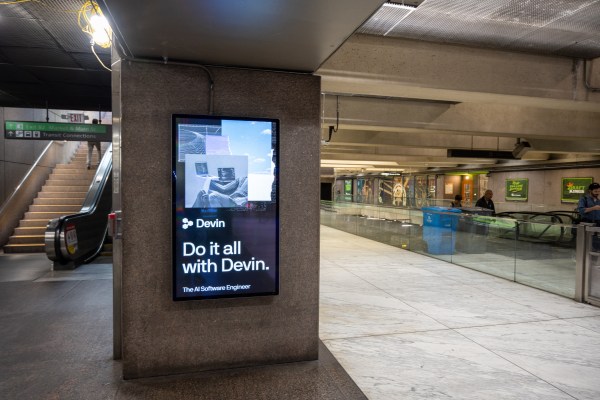
In New York, the phenomenon can already feel like a scourge, as public spaces increasingly give way to kiosks and screens featuring a constant stream of advertising. In a recent episode of his podcast, New York Times journalist Ezra Klein bemoaned the situation.
“A column I have wanted to write—and have not written, in part because I’ve been afraid of the reaction to it—is that as a newcomer to New York City (I moved here three years ago) I find the presence of the advertising on the New York City subway and on the buses really sad,” Klein said.
The natural counterargument is that those advertisements help subsidize public transit, keeping it more accessible for riders. But the M.T.A. receives only about 1% of its operating revenue from advertising, according to Klein. He raises an intriguing question: Would transit users swallow a modest price increase in exchange for an ad-free subway system?
The question points to a tension that will only grow more important if the out-of-home boom continues.
In nearly every advertising channel, marketers must balance reach against frequency. Show someone an ad too many times and its effectiveness declines; eventually, familiarity becomes annoyance. Online, advertisers can use frequency caps to limit that exposure. And consumers retain an even simpler option: They can set down their phones, turn off the television, or put away the magazine.
Out of home is different.
As more of the physical world becomes advertising inventory, consumers have fewer ways to opt out. A person can close a browser tab or delete an app. They cannot close a subway platform.
For two decades, advertising followed consumers from the physical world onto the internet. Artificial intelligence may now be helping push some of that value back in the other direction.
The question is how much of the physical world consumers are willing to give it.
Talking Heds
Scripps Substack: The local broadcast company Sinclair, whose stations reach roughly 38% of U.S. households, is launching a national news brand on Substack, called The National Press, according to a Tuesday report from Axios. The outlet will feature reporting from across the Sinclair network, which encompasses around 1,200 journalists and 60 local newsrooms, per Sinclair president and CEO Chris Ripley. The rollout is an unusually experimental gambit from the otherwise staid news organization. Through the venture, which will have both free and paid tiers, Sinclair will be able to gauge the news appetite of the Substack ecosystem. Have any other national news organizations launched a flagship Substack? If you know, shoot me an email at mark.stenberg@adweek.com.
Express Brew (EXCLUSIVE): On Monday, Morning Brew acquired the creator-led editorial brand Express Checkout in an all-cash transaction, Morning Brew CEO Robert Dippell told me. Express Checkout, a two-person operation cofounded by Nate Rosen and Jenna Movsowitz, covers the CPG industry through a mix of newsletters, podcasts, and short-form social video. Through the deal, Morning Brew will gain 100% IP ownership of Express Checkout, while Rosen and Movsowitz will join Morning Brew as employees, with incentives to grow the brand. While many publishers are talking about creators, few are working with them so actively as Morning Brew, whose “creator-focused monetization” is up more than 50% year over year, per Dippell.
Skydance Rises: Have you heard? Warner Bros. Discovery is now Skydance, part of a David Ellison media empire that, as of just three years ago, did not even exist. Now it encompasses Paramount, Discovery, Warner Bros. Discovery, CNN, HBO, CBS, TNT, Nickelodeon, and many more. Also: $80 billion in debt. The company would appear to be a behemoth, and yet from a streaming perspective, it is still firmly just in fourth place. There is more to media than direct-to-consumer subscribers, but the entertainment Voltron will still face an uphill battle in convincing advertisers that its assemblage of sub-scale platforms is a must-buy.
Uncensored Offering (EXCLUSIVE): If the success of the Express Checkout founders is one end of the creator spectrum, where relative unknowns can claw their way into relevance, Piers Morgan and his two-year-old Uncensored Media is the other. Morgan is one of a handful of highly recognizable news personalities to decamp to YouTube in recent years, where he has built a budding media empire out of various Uncensored franchises, which today cover topics including soccer, royals, and history. On Monday, the company shared with me its plan to launch individual $4.99 subscriptions for its franchises, part of a mandate from new CEO Rashida Jones to grow the bottom line by launching new sources of revenue. Jones, who joined in March from MSNBC, has also spearheaded efforts to grow its licensing and events businesses. When Morgan first left television for YouTube, I will admit, I thought that meant the twilight of his career had officially begun. Now, nearly three years later, it was perhaps the savviest move he could have made.
OpenWeb Falters (EXCLUSIVE): The adtech firm OpenWeb, which helps premium publishers monetize their websites, requested insolvency protections in an Israeli court last week, as I reported on Friday. The financial strain is the result of a cascading series of events—Microsoft, a key client, stopped working with OpenWeb; a key lender worried that withdrawal posed a material threat to its business, then demanded its money—but the root cause is the ongoing contraction of the open internet, a byproduct of AI search. Just four years ago, OpenWeb was worth $1.5 billion, counted The New York Times as an investor, and had luminaries like Scott Galloway on its board. But a 2024 boardroom coup, coupled with ongoing headwinds to the open web advertising industry, have put the company on its back heel.
Quote/Unquote
The world of video games is late to advertising, relatively speaking, but that is soon poised to change. In June, EA announced its first ad platform, while entertainment firms like Netflix and LG are investing heavily to convert streaming audiences into video game enthusiasts, which could dramatically increase the pool of potential gamers. Next month, two blockbuster franchises, Zelda and Grand Theft Auto, are set to release new highly anticipated offerings—a titanic occurrence in the gaming ecosystem.
As a result, Wes Morton, the cofounder and CEO of Creativ Company, thinks that automated advertising will soon become ubiquitous within the game experience itself. If so, in-game programmatic advertising could be one of the biggest advertising mediums on the planet in the next five years, per Morton, a byproduct of improved technology, fewer barriers to entry, and a newly motivated group of industry entrants: streamers.
This interview has been edited.
Mark Stenberg: Why are so many game companies launching ad businesses now?
Wes Morton: They’re all looking for new ways to monetize their audiences. Publishers were always open to custom partnership deals, but now they’re professionalizing. To put the audience in context, The Game Awards gets more viewership than the other major award shows combined. I think video games will become the biggest advertising medium in the next five years.
Mark: It’s nearly 2027. Why has this taken so long?
Wes: Measurement is more complicated. A website is a flat page that people look at. In a video game, the view is constantly rotating, which makes viewability much harder to measure. The IAB just came out with in-game advertising standards, which is a step forward.
Mark: What still needs to happen before programmatic ads fully infiltrate video games?
Wes: The pipes still need to be built. Right now, programmatic partners will let you buy across titles, but not studio by studio or publisher by publisher. No big names have emerged in programmatic gaming ads yet. Unity has a great shot at it, and Roblox is interesting. There are a lot of people trying to tap this audience.
Mark: Entertainment companies outside gaming are moving in, too. What’s driving that?
Wes: Netflix and Amazon are spending a lot of money on gaming because they realize it is the next entertainment frontier. It’s already beating TV and movies in revenue and time spent.
Mark: What happens when the barrier to entry is just owning a TV?
Wes: Ease of entry is hugely important. The mobile phone is already the biggest gaming device by revenue, bigger than consoles. A prediction I love to make is that we’ll get high-fidelity games streamed directly to the TV, with your phone as the controller. The experience isn’t there yet, but that’s a technology constraint, not a desire constraint. Once it is, you can distribute entertainment in new and interesting ways, and that will be huge for the industry.
Pulled Quotes
“It would be more accurate to say that, through a series of by-now-unconscious reflexes engineered by large technology companies, this content just sort of happens to people, like a food-borne illness.” Writer Daniel Kolitz, on microdramas READ MORE
“When Sherman was told that some war correspondents had been killed in battle, he said the correspondents would file from hell before breakfast.” The Ringer’s Bryan Curtis, on launching a media newsletter READ MORE
“It’s like doing maintenance on a moving vehicle.” Media executive Jeff Bewkes, on Paramount servicing its $80 billion in debt READ MORE
“I think you can have a very, very attractive, very profitable business that does not have to be an algorithm, sort of a mechanized panderer.” Lupa Systems CEO James Murdoch, on New York Magazine READ MORE
Perché una porta acustica perde decibel tra coprifilo, soglia e battiscopa?
La scena è nota: porta acustica appena montata, scheda tecnica rassicurante, stanza che sulla carta dovrebbe diventare più quieta. Si chiude l’anta, si resta in ascolto e il rumore arriva lo stesso. Non passa dal centro della porta, che spesso fa il suo mestiere. Passa dai centimetri attorno: lato cerniere, coprifilo, soglia, battiscopa tagliato male, giunto tra muro e pavimento lasciato a decidere da solo. Il cantiere, quando vuole, sa essere molto creativo.
RDA Porte indica per molte porte acustiche domestiche valori nell’ordine di 30/36 dB. È un dato utile, purché venga letto per quello che è: una prestazione dichiarata su un elemento tecnico, non una garanzia automatica sulla stanza finita. Il contenuto tecnico dedicato a porte interne Effebiquattro affronta lo stesso nodo da un versante complementare: prima dell’anta viene la compatibilità tra sistema di chiusura, luce, telaio e finiture, non l’aggiustamento finale con silicone e buona volontà.
Supponiamo che in un piccolo studio domestico venga installata una porta fonoisolante per separare l’area lavoro dal soggiorno. L’anta è corretta, il telaio è in bolla, la chiusura sembra pulita. Però il battiscopa si interrompe a tre centimetri dal coprifilo, il profilo a pavimento non incontra bene la guarnizione di battuta e, sul lato cerniere, resta una fessura che nessuno ha misurato perché tanto si sarebbe sistemata alla fine. Il suono non ha bisogno di molto: trova l’aria, la segue, ringrazia e passa.
Il percorso del suono comincia dal lato cerniere
Nel montaggio reale la prima area da guardare è il lato cerniere, perché lì convivono ferramenta, telaio, coprifilo e tolleranze di posa. La porta acustica lavora per massa, battuta e continuità delle guarnizioni. Se una di queste condizioni si interrompe, la prestazione si abbassa. Non serve un buco vistoso. Basta una linea d’aria continua, magari nascosta dal coprifilo, per creare una via preferenziale.
Il coprifilo viene spesso trattato come finitura estetica, da scegliere quando il grosso è fatto. È una lettura comoda, ma debole. Sul bordo di una porta con ambizione acustica il coprifilo copre un raccordo tra parete e telaio, cioè una zona dove possono esserci schiume, spessori, tagli di intonaco, vuoti residui e piccole discontinuità. Se il coprifilo viene dimensionato senza sapere come lavora la battuta, può coprire il difetto alla vista e lasciarlo intatto all’orecchio.
La posa dovrebbe procedere al contrario di come spesso viene raccontata al cliente. Prima si definiscono luce, telaio, verso di apertura e tipo di soglia. Poi si verifica che i profili laterali abbiano spazio, sezione e finitura coerenti. Solo dopo ha senso parlare di taglio del battiscopa. L’ordine non è pignoleria: se il battiscopa arriva già posato e il serramentista deve adattarsi, le decisioni vengono prese con cutter, matita e pazienza del momento. A volte basta. A volte nasce un raccordo che acusticamente vale poco.
Il lato cerniere è più insidioso del lato serratura perché sembra meno sollecitato. In realtà concentra movimenti ripetuti, microassestamenti e vincoli meccanici. Una guarnizione compressa male può lavorare bene il primo giorno e perdere continuità dopo qualche settimana. Un coprifilo troppo rigido, tagliato senza margine rispetto al movimento dell’anta, può impedire una regolazione fine. E quando la regolazione diventa impossibile, la porta resta bella da chiusa e rumorosa da abitata.
Soglia, pavimento e battiscopa: i centimetri dove la posa cambia risultato
La soglia è il punto in cui molti capitolati diventano vaghi. Porta acustica con ghigliottina inferiore, profilo a pavimento, pavimento flottante, parquet, gres, dislivello tra stanze: tutti elementi che pretendono una quota, non un’intenzione. Se la quota non è decisa prima, la guarnizione inferiore può scendere su una superficie irregolare o troppo lontana. Il risultato è una chiusura discontinua, cioè la condizione preferita dal rumore.
Il battiscopa entra in gioco perché si ferma esattamente dove il sistema porta comincia a lavorare. Se viene tagliato contro il coprifilo senza un disegno, può lasciare una piccola cavità laterale. Se viene infilato sotto il coprifilo senza coordinamento, può creare spessori che disturbano l’accostamento. Se resta staccato dal muro per compensare una parete non perfetta, quella fessura può proseguire fino al vano porta. Da lontano pare una riga d’ombra. Da vicino è aria.
Supponiamo che il pavimento sia già finito e che il battiscopa venga ordinato dopo, scegliendo una sezione disponibile in magazzino. Il posatore arriva, trova il coprifilo già montato, taglia lo zoccolino a filo e sigilla a vista. Il lavoro può risultare ordinato, però nessuno ha controllato se dietro quel taglio resta comunicazione tra il giunto muro-pavimento e il fianco del telaio. La sigillatura superficiale rassicura l’occhio, non sempre chiude il passaggio acustico.
Lasciare a fine lavori la scelta dello zoccolino attorno a una porta fonoisolante è una prassi da archiviare. Non per amore dell’ordine formale, ma perché sposta una decisione tecnica nel momento in cui mancano le quote vere: spessore del coprifilo, arretramento del telaio, altezza del profilo inferiore, fuga del pavimento, planarità della parete. A quel punto il posatore risolve l’incontro tra pezzi già decisi da altri. Può fare un lavoro pulito, certo. Però gli si chiede di chiudere una catena progettuale che non ha visto nascere.
Qui torna utile ricordare il decreto ministeriale 14 giugno 1989, n. 236: per le porte interne accessibili la luce netta minima indicata è 75 cm, mentre per l’accesso all’unità immobiliare è 80 cm. Il dato non parla di acustica, parla di accessibilità. Ma incide sullo stesso disegno. Se si restringe o si sporca il passaggio con coprifili troppo invadenti, profili aggiunti in corsa o soglie non previste, si finisce per correggere una prestazione e indebolirne un’altra. Il vano porta non è un fondale su cui applicare pezzi a piacere.
La checklist prima della posa deve stare nella distinta, non nella memoria del cantiere
Una verifica seria parte dalla luce netta e arriva ai bordi, senza saltare i raccordi perché sembrano minori. La prima domanda è semplice: dove chiude l’anta e contro che cosa comprime la guarnizione? La seconda riguarda il telaio: tra muratura e controtelaio resta un riempimento continuo o ci sono cavità coperte dal coprifilo? La terza guarda il pavimento: la guarnizione inferiore lavora su una linea stabile o su un cambio quota?
Il passaggio successivo riguarda coprifili e zoccolini. Devono essere ordinati sapendo spessori, larghezze, essenze, finiture e punto di arresto. Non basta dire legno uguale alla porta o battiscopa uguale al pavimento. In cantiere uguale significa spesso vicino, e vicino non sempre basta. Una sezione più alta può interferire con il coprifilo. Una sezione più bassa può lasciare scoperta una fuga. Una finitura scelta dopo può obbligare a giunti visibili dove servirebbe continuità.
Il giunto muro-pavimento merita una riga propria nella distinta. Se il battiscopa deve coprire un movimento del pavimento, la sua posa non può essere ragionata solo sull’estetica del bordo stanza. Se invece deve chiudere contro il coprifilo, serve decidere prima se il taglio sarà a battuta, in appoggio o arretrato. Sono parole piccole, ma cambiano il lavoro. Una volta tagliato lo zoccolino, il ripensamento produce pezzi corti, giunti aggiunti e qualche frase poco adatta alla newsletter di condominio.
La checklist progettuale, scritta in prosa, dovrebbe contenere almeno queste verifiche: misura reale della luce, ingombro del telaio, larghezza del coprifilo, quota della soglia, tipo di guarnizione inferiore, sezione del battiscopa, punto di interruzione dello zoccolino e trattamento del giunto laterale. Non serve trasformarla in un trattato. Serve che arrivi a chi ordina i materiali prima che i materiali siano già arrivati.
Una porta acustica può partire da un valore dichiarato interessante, come quei 30/36 dB citati da RDA Porte per molte soluzioni domestiche. Poi incontra il cantiere, che è il luogo dove i numeri diventano continuità fisica oppure fessure. L’anta fa la sua parte; coprifilo, soglia e battiscopa decidono quanta parte di quella promessa arriva davvero nella stanza. E il rumore, purtroppo, non legge le schede tecniche: legge gli spazi lasciati aperti.
The best enterprise email marketing software in 2026
Enterprise email marketing software is built for high-volume programs that span teams, brands, and regions. With so much software available, the hard part comes before and after the send — whether governance keeps every team within the rules, CRM-native data surfaces the right consented audience, and attribution connects email engagement to pipeline and revenue.
A weak email marketing platform pushes the work of governance, data surfacing, and attribution back onto people. A strong enterprise email platform absorbs this complexity instead. With a strong platform handling these tasks, marketers can launch faster, trust their data, and prove their impact. This guide compares enterprise email platforms, such as HubSpot’s email marketing tools, that deliver on that promise.
Enterprise email marketing software must support complex, multi-team programs without weakening control. The platform should make campaigns easier to scale while keeping customer data, consent, brand standards, and reporting intact. These six capabilities separate enterprise-ready platforms from email tools with generous contact limits.
Enforce governance and security controls.
Consent records must show when, where, and how each contact subscribed. Consent records that show when, where, and how each contact subscribed protect the company when data moves across brands, regions, or integrations. Enterprise marketing teams cannot afford to underestimate security controls. For example, in the UK, two companies were fined £150,000 for sending 7.5 million unwanted messages. Third-party suppliers were unable to prove valid consent.
Enterprise email marketing teams have to ensure their software has these features:
Role-based permissions
SSO and two-factor authentication
Campaign approvals
Audit logs
Asset partitioning
Sandbox environments
Global businesses should also check regional data hosting, encryption, data retention, and support for deletion requests.
Connect email activity to CRM revenue data.
Email metrics lose value when campaign data sits apart from the CRM, making it hard to trace results to revenue. CRM-native email marketing platforms prevent this by keeping engagement, lifecycle stage, company data, deals, and revenue on connected records, enabling clear revenue attribution.
Marketing Hub, operating on HubSpot Smart CRM data, lets marketers create attribution reports and connect email marketing interactions to deal creation and won revenue, giving marketing and sales one dataset to work from.
Support ABM and multi-brand operations.
Account-based marketing (ABM) targets companies, but email reaches individual people. Enterprise email software must connect those two levels. It should group consented contacts under an account, recognize their roles, and adjust nurture emails as the deal progresses.
Enterprise email software enables this coordination. For example, it can alert sales when several stakeholders engage, switch content after an opportunity opens, or pause marketing emails during active sales conversations.
The same coordination matters across multi-brand companies. Each brand may need its own domains, consent preferences, templates, and sender reputation, while leadership still needs shared customer data and reporting. HubSpot’s multi-account management, available at the Enterprise level, solves this by keeping business accounts separate while allowing data, assets, workflows, and reports to move across them based on configured connections.
Apply AI to high-friction workflows.
Personalized email at enterprise scale requires more than a good subject line. AI in enterprise email marketing handles the infrastructure behind it: audience creation, CRM data classification, workflow design, campaign QA, and send-time optimization.
HubSpot’s AI tools can help marketers build segment filters, then map and create workflows, summarize CRM data, and update or categorize records. This automation frees teams from the workflow setup that slows enterprise campaigns down.
Protect deliverability across domains and IPs.
Enterprise deliverability starts with SPF, DKIM, DMARC, clean lists, consistent volume, and fast unsubscribe processing. For example, Yahoo now requires bulk senders to use SPF and DKIM, publish a valid DMARC policy, and support simple unsubscribes.
A dedicated IP gives a company control over sender reputation, but it also transfers full responsibility for maintaining that reputation. An enterprise email platform should support gradual warm-up, separate marketing and transactional streams, and brand-level infrastructure. HubSpot, for example, applies a 40-day automated warm-up to new dedicated marketing IPs.
Fit the enterprise data architecture.
Enterprise email software may need data from the CRM, warehouse, ecommerce platform, and customer-success stack. A long integration directory means little if those connections lose fields, create duplicates, or fail without warning. When choosing an email marketing platform, check for:
Two-way sync
Custom objects
Field mapping
APIs
Webhooks
Test environments
HubSpot Data Sync gives teams visibility into which records are syncing, flags issues before they affect your data, and lets teams configure field mappings and sync direction without coding. That turns integrations into manageable infrastructure instead of permanent cleanup work.
The 5 Best Enterprise Email Marketing Software at a Glance
The Top Enterprise Email Marketing Software
No email marketing platform wins every enterprise use case. The following five solutions each offer unique capabilities suited to different enterprise needs. HubSpot leads for CRM-connected B2B marketing. Adobe and Braze go deeper into real-time consumer journeys. Salesforce makes the most sense for teams already set up within the Salesforce ecosystem, while Klaviyo remains the best for commerce.
Marketing Hub Enterprise connects email marketing directly to Smart CRM. All the important fields — contact activity, company data, deals, lifecycle stages, and campaign engagement — live on connected records. Marketers can build precise audiences and trace email influence through contact, deal, and revenue attribution without rebuilding the customer journey in a separate reporting tool.
Marketing Hub also covers send-time optimization, campaign approvals, and multi-account management. Meanwhile, HubSpot’s AI tools can create segments and workflows from plain-language instructions.
HubSpot provides dedicated IP and transactional email options to support teams with more advanced sender requirements. Those emails can run as one-off campaigns or enter automated nurture workflows based on live CRM changes.
Automated insights for high- and low-performing marketing messaging
Marketing email single send API and email approvals
Customer journey analytics
Behavioral event triggers and reporting
Email health reporting
CRM-powered segments
A/B tests
Enterprise email deliverability tools
Pricing:Starts at $3,600 per month, billed annually. The plan includes five Core Seats and 10,000 marketing contacts. Required Enterprise onboarding costs $7,000.
Best for: B2B enterprises that want marketing, sales, and revenue data in one system.
Salesforce Marketing Cloud Engagement uses CRM and Data 360 data to build audiences, personalize marketing emails, and trigger follow-ups based on customer behavior. Marketers can use Agentforce to turn a campaign brief into email and landing-page content, then send the email as a standalone campaign or place it inside an automated journey. Opens, clicks, and other responses remain connected to Salesforce customer records, giving sales and service teams the same engagement context.
Key Features
Personalized email campaigns
Agentforce content creation
Automated email journeys
Send-time optimization
Engagement tracking
Salesforce CRM connections
Pricing:Corporate starts at $4,200 per organization per month, billed annually. Enterprise-level plans require a custom quote.
Best for: Large organizations with established Salesforce architecture and internal Salesforce expertise.
Adobe Journey Optimizer supports scheduled campaigns and event-triggered emails from Adobe Experience Platform profiles. Marketers can build emails with reusable content, dynamic personalization, and offer decisioning. Preview, proofing, content checks, frequency rules, and subscription management help global teams catch problems before a large send.
Adobe also provides the sender controls expected from enterprise email software. Teams can manage subdomains, suppression lists, IP pools, and phased IP warm-up plans.
Key Features
Email Designer
Real-time audiences
Dynamic content and offer decisioning
Email proofs or automated content checks
Frequency caps and send-time optimization
Data usage labeling and enforcement (DULE) governance
Suppression lists and IP warm-up management
Pricing: No public free plan; Adobe provides pricing only by quote.
Best for: Global B2C enterprises that already use Adobe Experience Platform and need strict control over high-volume email programs.
Braze is built for large consumer brands and turns live product and customer behavior into triggered email campaigns. Marketers can create emails through drag-and-drop tools, reusable blocks, templates, or native Figma and Canva integrations. Dynamic content can pull in products, promotions, recommendations, and other customer-specific information at send time. Braze also supports interactive AMP emails.
Key Features
Real-time segmentation
Behavioral triggers
Drag-and-drop editing and reusable content blocks
Dynamic recommendations and AMP email
BrazeAI assistance
IP warm-up and deliverability monitoring
Pricing: Custom quote; A full 14-day free trial is available.
Best for:High-volume consumer and mobile-first brands that need email to react to live product behavior.
Klaviyo turns commerce activity into ready-to-use email segments, flows, and revenue reports. It can trigger messages from browsing, cart, purchase, product, and predicted customer-value data. Marketers can then test campaigns, recommend products, compare performance through global holdouts, and connect email activity to attributed revenue.
For enterprise senders, Klaviyo supports branded sending domains and separate domains for marketing, transactional, and service email. Eligible managed accounts can use dedicated IPs with automated warm-up. Deliverability and RFM tools help teams spot reputation or engagement problems before they drag down a major campaign.
Key Features
Commerce-focused profiles
Segment AI
Automated flows
Predictive analytics
Product recommendations
Attribution
350+ integrations
Pricing
Standard Klaviyo plans renew monthly and scale with active profiles and email volume. Larger customers may move to custom contracts once their plans total $2,000 or more per month. Contract billing can run monthly, quarterly, semi-annually, or annually
Free plan for up to 250 active profiles and 500 monthly email sends.
Best for: Ecommerce and retail enterprises that want fast activation of transaction and product data.
How to Choose Enterprise Email Marketing Software
A polished demo can make any platform look easy. The right choice only becomes clear when teams test it against their data, approval process, integrations, and campaign workload.
Define requirements and governance. Map the core seven features — brands, regions, send volumes, user roles, consent rules, approval paths, and transactional email needs. Separate must-haves from nice-to-haves so flashy features aren’t distracting.
Validate integrations and data quality. Trace how customer data moves from its source into segments, campaigns, CRM records, and revenue reports. Confirm sync speed, field mapping, duplicate handling, API limits, and which platform wins when records conflict.
Run a proof of concept. Build a real segment, launch an approval workflow, automate a nurture path, test personalization, and inspect the resulting attribution. Use representative data and time each task — the point is to expose any manual work.
Score vendors and decide. Weight each platform against the requirements that affect daily email execution. Then add migration, implementation, add-ons, and internal staffing to the cost. Speak with vendors that resemble the company in size, regions, and tech stack before making the final call.
Enterprise Email Marketing Software Migration and Change Management
Teams migrating from a platform like Salesforce or Adobe to HubSpot should avoid treating the project as one large data transfer, as this creates risk. Instead, move the program in five controlled stages and keep the old platform available until the new platform can run a complete campaign correctly.
1. Audit what must move.
Decide what HubSpot needs for daily work and what can realistically be archived. Importing years of unused data creates clutter and can increase the number of billable marketing contacts. Export the following:
Contacts
Companies
Consent records
Suppressions
Custom fields
Templates
Workflows
Reports
Campaign history
2. Build the CRM structure first.
Create the required properties, lifecycle stages, objects, and contact-to-company associations before importing data. Test a small batch with email addresses or another unique identifier, since HubSpot uses these identifiers to prevent duplicates and connect related records.
3. Move consent and suppressions before active audiences.
Import the existing opt-out list, then map subscription types and retain consent sources and timestamps. Moving consent and suppressions before active audiences prevents the new platform from emailing people the previous platform had already suppressed.
4. Prepare the sending infrastructure.
Authenticate each sending domain with MX, DKIM, SPF, and DMARC records before launching campaigns. If the company uses HubSpot’s dedicated IP, allow for its 40-day automated warm-up instead of moving the full send volume on day one.
5. Rebuild, test, and cut over in waves.
Start with the templates, segments, workflows, and reports that support active campaigns. Send first to an engaged audience, confirm recipient counts and CRM updates, then gradually increase volume. Keep the previous platform in read-only mode until attribution and deliverability checks pass on the new platform. Assign an owner to every live workflow before shutting down the legacy platform.
Frequently Asked Questions About Enterprise Email Marketing Software
What is the difference between enterprise email marketing software and SMB tools?
The difference between enterprise email marketing software and SMB tools is operational complexity. Enterprise platforms add granular permissions, approval controls, and support for multiple brands or business units. They have advanced automation, dedicated sending infrastructure, and attribution tied to CRM revenue.
How do we handle data residency and consent across regions?
To handle data residency and consent across regions, choose the hosting region first, then document where integrations, subprocessors, and remote users may move or access the data. HubSpot offers hosting in the U.S., Canada, Australia, and the EU, but regional hosting does not guarantee that every processing activity stays in the chosen region. Track consent source, date, region, channel, and subscription type on each record. Then use regional suppression rules and have legal counsel validate the setup.
How long does a migration typically take and how do we reduce risk?
HubSpot says customers typically complete its Marketing Hub onboarding within three months, which is a reasonable starting point. Multi-brand programs with custom integrations, dedicated IPs, or years of legacy data may need longer.
Reduce migration risk by locking the data model early, testing one complete campaign, warming the new sending infrastructure, and keeping the old platform available through a rollback window.
Can enterprise email marketing software support both text and email channels?
Yes, but SMS coverage and consent rules differ by country, so “multichannel” needs a closer look during procurement. HubSpot can coordinate email and SMS through shared CRM segments and workflows, but its current SMS add-ons use U.S.-based numbers.
Long-code messages can reach the U.S. and Canada, while short-code sending is limited to the U.S. High-volume short-code access also requires Marketing Hub Enterprise and additional add-ons, with approval taking eight to twelve weeks.
Which enterprise email marketing software should you choose?
Enterprise email marketing looks simple from the outside — write a good email, send it to the right people, measure what happens. The hard part is everything underneath: keeping consent records clean across regions, connecting engagement data to revenue without rebuilding the customer journey in a separate tool, maintaining sender reputation across brands, and making sure every team stays within the rules.
The five platforms in this guide all handle high-volume programs. Where these platforms differ is in how much of that underlying complexity they absorb and how well they connect email to the rest of the business.
Adobe and Salesforce make the most sense when customer data already lives in those ecosystems; switching costs are real, and the attribution depth they offer is hard to replicate elsewhere. Braze is the right call for fast-moving B2C brands where email has to react to live product behavior in real time. Klaviyo remains the category leader for commerce — if your segments run on purchase history and predicted lifetime value, it’s hard to beat.
For complex B2B, I keep coming back to Marketing Hub since it operates on CRM-native data. It turns that unified customer context into deeply personalized email experiences and clear, defensible revenue attribution. If email has to prove revenue as well as generate it, Marketing Hub Enterprise belongs at the top of your shortlist.
As Fox News Celebrates 30 Years, Two Originals Share Stories of the Early Days
Fox News is celebrating an important milestone on Wednesday as it turns 30.
The network is marking the occasion with continued ratings success: During the just-concluded quarter, Fox News remained the most-watched cable network in total viewers and the advertiser-coveted Adults 25-54 demo during primetime and total day.
It has been the No. 1 network in total viewers during primetime for the past three quarters and has remained the most-watched network in total viewers during total day for 22 consecutive quarters.
Two of the network’s executives behind its long-running success, Meade Cooper, executive vice president of primetime programming, and Kim Rosenberg, executive vice president of news programming, are Fox News originals and have been there since its launch in 1996.
In honor of the network’s 30th anniversary, the duo looked back on Fox News’ early days, sharing stories of how far it’s come since then.
30 years of breaking news, covering elections, and reporting on the issues you care about most. Thank you for making us a part of your daily lives since 1996. 🇺🇸 pic.twitter.com/V9ZTCTVeiB
Cooper: I started a month before the network launched. We all gathered at a nearby Hilton for a welcome presentation and then walked down 6th Avenue to headquarters. I learned I would be working as a production assistant on Hannity & Colmes (then known as Hannity & Liberal to be determined). I met a group of smart, hardworking people who were ready to tackle this incredible, unpredictable job.
Rosenberg: It was my first job out of college—here I was, a 21-year-old theatre major, walking into a newsroom under construction, at a network getting ready for launch. It was chaotic and overwhelming in the best possible way. I was excited and a little nervous about how it would all unfold. And whether I could get through the first day without accidentally crossing in front of the studio camera.
Tell us about a pain point that existed in the early days that no longer exists.
Cooper: The news moved at the same pace as it does today, but the tools we had to work with were not quite as quick. Editing video and creating graphics were much more time-consuming. It was more challenging to get guests in the field. We had to send a satellite truck (which was expensive and had limited availability) to get guests and reporters outside of our bureaus and a few other studios. All of this made it more difficult to change things around to react to breaking news.
Rosenberg: When I first became an associate producer, the network was recording all incoming feeds on videotape. We would have to get that video, find an available screener cart, and scroll through until we found what we wanted to run. We would then write down our timecodes on a sticky note and attach them to the boxes to give to the production assistants and editors. It was a very time-consuming process, and it also meant that if another team needed the same video, you had to negotiate for it. If you weren’t a successful negotiator, your show was in trouble. Now, all our incoming video is digital, different producers can screen it simultaneously, and we can edit with the click of a button. It was a complete game-changer for producers.
How has Fox News changed operationally in the past 30 years?
Cooper: We have grown by leaps and bounds from where we were operationally 30 years ago. We could not produce all of our elements from a computer. We used physical videotapes, which we would run from the edit room to playback. To book guests, we flipped through our paper Rolodexes and made calls from our desk phones since we didn’t have cell phones.
Rosenberg: We’ve grown far beyond the original channel. Fox News Media now encompasses platforms including digital, podcasts, Fox Nation, Fox Books, Fox Weather, and Fox Business. So, operationally, we’re no longer producing for a single screen; we’re meeting our audience wherever and whenever they want to find out what’s going on in the world. That said, our fundamental job has not changed one bit: Get people to the story, get the facts of the story right, and get the news to our viewers. The tools and platform are different. But our mission is the same as it was on that first day 30 years ago.
What has been a memorable moment for you from the past 30 years?
Cooper: There are too many memorable moments to pick just one. I was in the control room for the beginning of the bombing of Baghdad in 2003 and for coverage of the Bin Laden raid in 2011. I have been in the newsroom for elections, inaugurations, and conclaves to select a new Pope. I have traveled across the country and around the world.
Rosenberg: One of my most memorable moments is also deeply personal. Earlier this year, I received a devastating medical diagnosis. Months later, I would learn that the initial indication of stage 4 ovarian cancer was incorrect. But I still required major surgery to remove multiple organs. From the first moment, this company supported my family and me in every possible way, from Suzanne Scott and Jay Wallace to the executive assistants and everyone in between. At a time when I was so scared, I felt completely supported. The day of the surgery, my husband and I had decided he would pick up our daughter after school. We wanted to keep things normal for her. So, when I woke up in the ICU, I opened my eyes to see my sister smiling at the side of my bed. On the other side was my best friend, Jon Glenn; we met at Fox and have worked together for decades. He’d insisted on skipping work that day to sit in the hospital waiting room and make sure I was okay. It’s a cliché that “we’re all family here.” But it’s also true. And it’s part of the reason I love this company. We show up for each other, no matter what.
What is the secret to your longevity at Fox News?
Cooper: I have stayed at Fox for 30 years because I have been able to do a lot of different jobs. Over the years, I have had a handful (well, maybe two handfuls) of job titles, but I have done many other jobs. One of the great things about Fox is that if you work hard and do a good job, you will be given opportunities.
Rosenberg: I know how unusual it is these days for somebody to remain at one company for thirty years. Except here, it’s not that rare. Nearly 100 of us have been working here since launch in 1996. And there are a lot of reasons I think we’ve all stayed. I think one of the biggest is because of the opportunities available: I rose from stage manager to executive vice president. Our CEO, Suzanne Scott, began as a programming assistant. [Fox News president] Jay Wallace was an overnight tape coordinator. I can think of many others with similar trajectories. This company believes fiercely in offering opportunity to those who work hard. And having risen through the corporate hierarchy, we all consider it our duty to help the next generation do the same.
Do you have an interesting story to share from your 30 years of working at Fox News?
Cooper: One year I spent my birthday in Pyongyang, North Korea. A group of North Korean minders sang “Happy Birthday” to me.
Rosenberg: When we first started rehearsing, there were still wires hanging from the ceiling, and workers were putting the finishing touches on everything. Every day was a mad dash to launch. Then, one day, I saw JFK Jr. walking through the newsroom, getting briefed on the business plan, and I thought, “Okay, this job is going to be interesting.”
How Indie Agencies Are Setting AI Guardrails to Keep Their Cultures Human
At ADWEEK house, agency leaders spoke about balancing growth with humanity https://www.adweek.com/agencies/how-indie-agencies-are-setting-ai-guardrails-to-keep-their-cultures-human/
Not This Tight End! Gronk Recalls Turning Down $4 Million Offer From Adult Website
Rob Gronkowski recalls the wildest brand pitch he’s ever heard. https://www.adweek.com/convergent-tv/gronk-recalls-turning-down-4-million-offer-from-adult-website/