84% of organizations say lack of AI transparency led to compliance issues

A recent Camunda report found that 82% of organizations fear “digital chaos” due to increasingly complex, interconnected and automated processes. The report highlights that organizations now manage an average of about 50 endpoints to execute tasks that are part of a process in their business. This is an increase of 19% over the past five years, and is contributing to growing business risk.

According to the report, a lack of control has increased compliance risks for 82% of organizations, while 77% report higher risks of core business processes failing. Alarmingly, 82% believe that, if these risks go unchecked, they could lead to what could be described as “Automation Armageddon.”

Additional findings include:

  • 85% of organizations face challenges in scaling and operationalizing AI across their business.
  • 84% say a lack of transparency in applying AI applications within business processes is causing regulatory compliance issues.
  • 93% believe AI must be fully integrated into orchestrated processes to maximize the return on investment and business value.
  • 82% of businesses recognize the need for better tools to manage how their processes intersect.
  • 79% report that, while they have implemented significant automation, they lack a way to control, manage, and sustain it effectively.
  • 86% say a company cannot have hyperautomation without having process orchestration.
  • 81% say, without process orchestration, achieving an autonomous enterprise will be a pipe dream.

Read the report

https://www.securitymagazine.com/articles/101314-84-of-organizations-say-lack-of-ai-transparency-led-to-compliance-issues


37% of privacy professionals cite lack of resources as cause of stress

According to a recent ISACA report, 63% of privacy professionals say their role is more stressful now than it was five years ago. Thirty-four percent say that it is significantly more stressful. They cite the main causes of this stress as the rapid evolution of technology (63%), compliance challenges (61%) and resource shortages (59%).

When it comes to resources, 43% indicate their privacy budget is underfunded, and 48% expect a budget decrease in the next year. Regarding staff, respondents are finding it tough to hire expert-level privacy professionals, with 73% indicating they are the most difficult privacy employees to hire. Respondents also provided insights into their most common privacy failures, listing lack of training or poor training (47%), data breaches (42%), and not practicing privacy by design (41%) in the top three.

While the median privacy staff size declined slightly from the previous year (eight this year compared to nine the prior), fewer survey respondents reported that their privacy teams are understaffed. This includes technical privacy roles — with understaffing reported at 54% in 2024 compared to 46% in 2025 — and legal/compliance roles — with understaffing reported at 44% in 2024 compared to 38% in 2025.

Additionally, 74% of respondents report privacy strategy is aligned with organizational objectives, and over half (57%) believe the board of directors has adequately prioritized their organization’s privacy. Enterprises are taking compliance seriously, with 82% of respondents indicating they use a framework or law/regulation to manage privacy, and 68% saying it is mandatory to address privacy with documented policies and procedures.

Most respondents also do not believe they are experiencing more privacy breaches this year compared to last year, and 29% believe it is unlikely they will experience a material privacy breach in the next 12 months.

More respondents also reported using artificial intelligence (AI) for privacy-related tasks this year (11%) than last year (8%). Additionally, 36% of respondents say they plan to use AI for this purpose in the next 12 months, compared to 28% who said the same last year. The use of AI for this purpose was also found to be higher in enterprises that were not purely compliance-driven, with 14% of those in enterprises with boards that viewed privacy ethically or as a competitive advantage using AI for privacy-related tasks, compared with 9% from enterprises with boards that view privacy programs as compliance-driven. This use of AI was also higher among enterprises that regularly practice privacy by design, with 18% of those who indicate they always practice privacy by design reporting that they are using AI for privacy work.

https://www.securitymagazine.com/articles/101310-37-of-privacy-professionals-cite-lack-of-resources-as-cause-of-stress


Two-factor authentication phishing kit targets Microsoft 365 accounts

Research from Sekoia has unveiled a phishing-as-a-service (PhaaS) kit sold by “Sneaky Log”, a cybercrime service operating via a bot on Telegram. These phishing pages have been in circulation since October 2024 at least, and they have targeted Microsoft 365 accounts.

Below, security experts discuss the techniques observed in this kit and provide advice for defending against similar threats. 

Security leaders weigh in 

Elad Luz, Head of Research at Oasis Security:

This phishing technique is particularly deceptive for several reasons:

  • The links in the phishing emails are crafted to pass the victim’s email address to the login page, enabling it to ‘autofill’ the email field. This mimics the behavior of legitimate websites, where autofill is typically associated with accounts users have previously logged into.
  • Threat actors blurred out screenshots of Microsoft webpages to create a convincing login background, making it appear as though users will access legitimate content after successfully logging in.
  • They also implemented common methods on the web page to distinguish between humans and bots. If the visitor is detected as a bot, the page either displays harmless content or redirects to a legitimate website like Wikipedia. This tactic helps evade automated detection by security systems.

This phishing kit was developed by one group of threat actors and sold to others, highlighting the collaborative nature of many cyberattacks. These malicious tools are often the result of layered efforts by different actors, working together and trading resources. The fact that such kits are readily available for purchase is highly concerning.

As always, users are advised to exercise extreme caution with emails and to verify the legitimacy of websites before entering their credentials. Security teams should adopt advanced threat detection solutions that monitor sign-in logs and deploy effective tools to fingerprint attackers and detect anomalies.

Stephen Kowski, Field CTO at SlashNext Email Security+:

This kit’s “sneaky” aspects include its sophisticated ability to populate victim email addresses automatically, its evasion of detection through Cloudflare Turnstile challenges, and its clever redirection of security tools to Wikipedia pages. The kit is a full-featured PhaaS platform with real-time credential and session cookie theft capabilities, making it particularly dangerous for Microsoft 365 environments. Protection requires phishing-resistant authentication methods like FIDO2/WebAuthn, real-time URL scanning at the time of click that completely bypasses Cloudflare Turnstile protection and proactive detection of newly registered phishing domains before they become active threats.

Patrick Tiquet, Vice President, Security & Architecture at Keeper Security: 

The “Sneaky 2FA” phishing kit is aptly named for its ability to outmaneuver traditional security defenses through Adversary-in-The-Middle (AitM) attacks. By intercepting both credentials and two-factor authentication (2FA) codes in real time, it allows attackers to bypass one of the most relied-upon layers of account protection. Its sophistication lies in its anti-analysis features – such as traffic filtering and checks to avoid detection – and convincing pre-populated login forms, which enhance its success rate. Additionally, hosting the phishing pages on compromised infrastructure adds another layer of deception.

Organizations can mitigate this risk by implementing Privileged Access Management (PAM) to restrict access and contain potential damage from compromised accounts. Pairing this with robust password management ensures that credentials are strong, unique and securely stored, reducing exposure to phishing campaigns. Additionally a password manager will prevent users from entering credentials into spoofed websites because the tool will only auto-fill credentials on the authentic webpage. Enforcing layered security measures, such as advanced threat detection and employee training, further minimizes organizational risk.

https://www.securitymagazine.com/articles/101308-two-factor-authentication-phishing-kit-targets-microsoft-365-accounts


Via a SECURE, il progetto per supportare conformità delle PMI al Cyber Resilience Act


La Commissione Europea ha dato il via libera a SECURE, un progetto che mira a migliorare la resilienza cibernetica e l’innovazione di cybersecurity delle PMI europee, per aiutarle a essere conformi al Cyber Resilience Act (CRA).

Il progetto è coordinato dall’Agenzia per la Cybersicurezza Nazionale (ACN) e include 14 partner di sette paesi europei. Partner tecnico di riferimento è Cyber 4.0, il Centro di competenza nazionale ad alta specializzazione sulla cybersecurity promosso dal Ministero delle Imprese e del Made in Italy (MIMIT).

SECURE può contare su un budget totale di 22 milioni di euro; di questi, 16.5 verranno destinati direttamente alle PMI europee attraverso cascade funding e il sistema delle “open call”.

SECURE

Il progetto comprende anche attività di sensibilizzazione, formazione e istruzione in ambito di cybersecurity, lo sviluppo di strumenti per facilitare l’implementazione del Cyber Resilience Act, lo svolgimento di test delle vulnerabilità per verificare la conformità al CRA ed eventi per promuovere sinergie tra le PMI europee.

ACN  ha promosso e raccolto le adesioni in un consorzio di partner provenienti da sette paesi europei, in sinergia con gli NCC degli Stati Membri interessati, finalizzando una proposta progettuale che sarà finanziata con fondi DEP dall’ECCC. Cyber 4.0si occuperà invece di sviluppare una piattaforma integrata per la gestione delle call, della distribuzione dei finanziamenti e della pubblicazione di materiali e strumenti per il supporto alla compliance al CRA.

“L’avvio del progetto Secure rappresenta un altro importante esempio della capacità di intercettare risorse europee a beneficio dello sviluppo tecnologico del Paese e della sicurezza informatica allo scopo di garantire, al massimo delle nostre potenzialità, l’ecosistema digitale nazionale” ha affermato Bruno Frattasi, Direttore Generale di ACN. “Il progetto rappresenta inoltre un virtuoso modello di coordinamento tra attori diversi, pubblici e privati, finalizzato a dare un concreto e tangibile supporto al tessuto imprenditoriale italiano nel momento in cui sarà chiamato a raggiungere i livelli di compliance richiesti dal Cyber Resilience Act. La piattaforma, che verrà erogata a beneficio delle nostre pmi e di omologhe realtà europee che vorranno avvalersene, si inscrive in quello stesso filone di supporto e sostegno al mondo imprenditoriale italiano che ha trovato in ACN un sicuro punto di riferimento. Le PMI per altro, usufruendo di strumenti e risorse per investire e crescere in sicurezza informatica, potranno divenire più competitive nell’area degli scambi globali“.

SECURE coinvolge anche Austria (Platform industrie 4.0 e 5 European Digital Innovation Hubs), Belgio (Centre Pour La Cybersécurité), Lussemburgo (Luxembourg House Of Cybersecurity), Polonia (Naukowa i Akademicka Siec Komputerowa -Panstwowy Instytut Badawczy), Romania (National Coordination Centre-RO) e Spagna (Instituto Nacional De Ciberseguridad De Espana). Oltre a queste entità, altri 12 Coordination Centers (NCC) europei hanno espresso il loro supporto ufficiale alla sua implementazione.

“Questa collaborazione tra Cyber 4.0 e ACN permette di estendere il ruolo di supporto al tessuto imprenditoriale del nostro Competence Center a livello europeo, con particolare riferimento al contesto delle PMI, particolarmente impattato dall’adeguamento al CRA” ha dichiarato Leonardo Querzoni, Presidente del Cyber 4.0 “Al tempo stesso, SECURE si configura come un modello pilota che potrà essere applicato anche ad altri settori e ad altre normative, offrendo alla Commissione Europea una piattaforma per la gestione del meccanismo FSTP. Non a caso, il budget di SECURE è uno dei più alti mai assegnati per progetti di cybersecurity e al tempo stesso porta l’Italia al primo posto nella gestione dei finanziamenti ricevuti dai paesi UE su questo tema“.

Condividi l’articolo


Articoli correlati

Altro in questa categoria


https://www.securityinfo.it/2025/01/21/via-a-secure-il-progetto-per-supportare-conformita-delle-pmi-al-cyber-resilience-act/?utm_source=rss&utm_medium=rss&utm_campaign=via-a-secure-il-progetto-per-supportare-conformita-delle-pmi-al-cyber-resilience-act


CISA report calls on US government to close the software knowledge gap

The Cybersecurity and Infrastructure Security Agency (CISA), in partnership with the National Security Agency (NSA), the Defense Advanced Research Projects Agency (DARPA), and the Office of the Under Secretary of Defense for Research and Engineering (OUSD R&E), has released a report on the state of software understanding. This report, titled Closing the Software Understanding Gap, calls for action from the United States government to develop a thorough understanding of software-controlled systems. Furthermore, the report advocates for software-controlled systems with verifiable functionality, safety, and security across all conditions. 

According to the report, technology manufacturers create software that outpaces the abilities of mission owners and operators to understand it. This lack of understanding contributes to exploited vulnerabilities, as these software-controlled systems are not built secure by design. 

The report provides potential solutions to improve the security of legacy software and emerging software. It also includes recommendations for improving knowledge on software-controlled systems and AI-based systems. 

https://www.securitymagazine.com/articles/101307-cisa-report-calls-on-us-government-to-close-the-software-knowledge-gap


Cybersecurity nel Settore Sanitario: Minacce, Vulnerabilità e Strategie di Difesa per il 2025

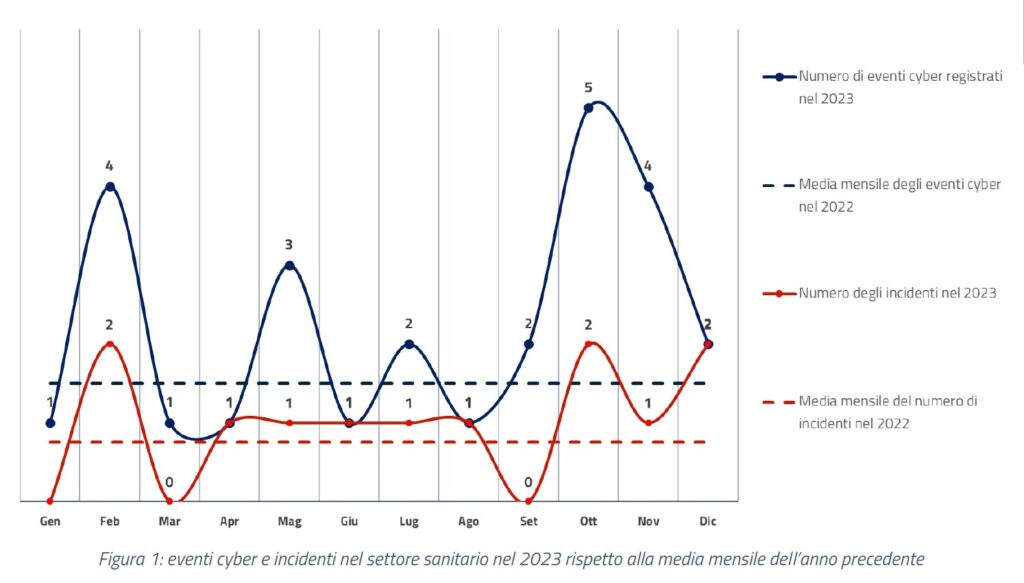
Il settore sanitario è tra i più vulnerabili agli attacchi informatici, con un impatto potenzialmente devastante sulla disponibilità e la sicurezza dei servizi essenziali. Dal gennaio 2022, in Italia si sono verificati in media due eventi cibernetici malevoli al mese contro le strutture sanitarie, e la metà di questi si sono tradotti in incidenti di sicurezza concreti. Le conseguenze di tali attacchi spaziano dalla compromissione della riservatezza dei dati alla sospensione dei servizi, influenzando negativamente l’erogazione delle cure e mettendo a rischio la privacy dei pazienti.

Il settore sanitario italiano si trova di fronte a una crescente minaccia cibernetica, come evidenziato dal rapporto dell’Agenzia per la Cybersicurezza Nazionale “La minaccia cibernetica al settore sanitario“. Questa analisi approfondita esamina le tendenze degli attacchi, le vulnerabilità più comuni e fornisce raccomandazioni cruciali per migliorare la sicurezza informatica nelle strutture sanitarie.

Tendenze degli attacchi cibernetici nel settore sanitario italiano

Gli attacchi al settore sanitario hanno subito un incremento significativo negli ultimi anni. Nel 2022, sono stati rilevati 45 eventi cyber, con un aumento del 50% nel 2023 rispetto all’anno precedente. Tra questi, il 47% ha portato a incidenti confermati, sottolineando la gravità della situazione.

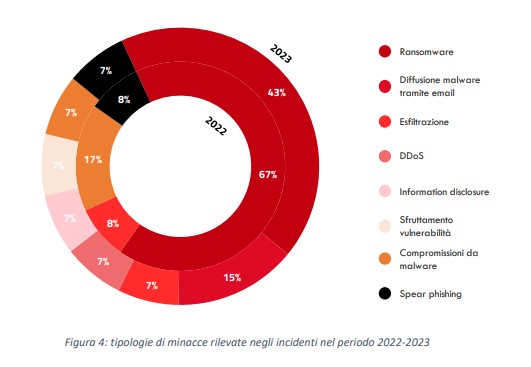
Aumento degli eventi cyber: Nel 2022-2023 si sono verificati 45 eventi cyber significativi, con un incremento del 50% nel 2023 rispetto all'anno precedente. Gli attacchi ransomware rappresentano la minaccia principale, costituendo il 35% degli eventi nel 2023 e il 60% nel 2022.

Le minacce predominanti sono rappresentate dal ransomware, responsabile del 60% degli eventi nel 2022 e del 35% nel 2023. Altri vettori di attacco comuni includono la diffusione di malware via email, lo sfruttamento di vulnerabilità e la compromissione delle credenziali di accesso.

Incidenti cyber nel settore sanitario: interruzione dei servizi, rischio per la privacy dei pazienti e sicurezza delle informazioni mediche, con impatti sulla reputazione e fiducia.

Durante il periodo gennaio-agosto 2024, si è registrato un ulteriore aumento degli eventi cyber, con un picco a luglio dovuto a un attacco alla supply chain che ha compromesso un fornitore di servizi IT, colpendo diverse strutture sanitarie. Gli attacchi ransomware sono rimasti la minaccia principale, seguiti da tentativi di intrusione tramite credenziali e compromissioni malware, in aumento rispetto agli anni precedenti.

Impatto degli attacchi cibernetici sulle strutture sanitarie

Gli incidenti di sicurezza hanno avuto conseguenze gravi e multiformi:

  1. Interruzione dei servizi IT: La maggior parte degli attacchi ha causato blocchi temporanei di uno o più servizi, compromettendo l’operatività delle strutture;
  2. Compromissione dei dati sensibili: Sono stati registrati casi di esfiltrazione di dati, con e senza cifratura, mettendo a rischio la privacy dei pazienti;
  3. Modifiche all’integrità dei dati: Alcuni attacchi hanno alterato l’integrità delle informazioni memorizzate, potenzialmente influenzando la qualità delle cure;
  4. Impatto sulla continuità operativa: L’impossibilità di accedere a sistemi e dati ha compromesso l’erogazione di servizi sanitari essenziali.

Analisi delle vulnerabilità informatiche nel settore sanitario italiano

Le vulnerabilità nelle infrastrutture digitali del settore sanitario derivano principalmente dall’obsolescenza delle tecnologie utilizzate e dalla gestione decentralizzata dei sistemi. Molte strutture sanitarie continuano a utilizzare apparati obsoleti, non più aggiornabili o supportati dai produttori. Inoltre, la gestione delle infrastrutture IT è spesso frammentata, con reparti diversi che adottano soluzioni tecnologiche diverse senza una governance centralizzata. Ciò crea una superficie di attacco ampia e facilmente sfruttabile dagli attaccanti.

Un analisi condotta da ACN su oltre 50.000 indirizzi IP associati al settore sanitario ha rivelato che circa 2.178 di essi espongono quotidianamente servizi su Internet, presentando numerose criticità. Queste vulnerabilità sono state classificate in tre categorie

  1. Servizi e dispositivi esposti incautamente (15% delle criticità);
  2. Software obsoleti o vulnerabili (25% delle criticità);
  3. Configurazioni errate (60% delle criticità).

Fattori di rischio e pratiche errate nel settore sanitario

L’analisi ha identificato tre condizioni critiche che favoriscono gli attacchi informatici:

  1. Gestione decentralizzata dei sistemi digitali: Mancanza di una governance IT centralizzata, che porta a inconsistenze nella sicurezza.
  2. Obsolescenza dei dispositivi: Lunga vita utile degli apparati medicali in contrasto con la rapida evoluzione delle tecnologie di sicurezza.
  3. Carenza di personale specializzato in cybersicurezza: Insufficienza di risorse dedicate alla gestione della sicurezza informatica.

Queste condizioni si traducono in pratiche errate (bad practices) che aumentano il rischio di attacchi:

  • Utilizzo di credenziali deboli o condivise tra più utenti;
  • Mancata implementazione dell’autenticazione a più fattori (MFA);
  • Assenza di una corretta segmentazione della rete;
  • Strategie di backup inadeguate o non regolarmente testate;
  • Patch management inefficace o assente;
  • Esposizione non necessaria di servizi su Internet;
  • Mancanza di sistemi di rilevamento e risposta agli incidenti (EDR/XDR).

10 raccomandazioni per migliorare la cybersicurezza nel settore sanitario

L’ACN ha formulato 10 raccomandazioni chiave per rafforzare la sicurezza informatica nelle strutture sanitarie:

  1. Implementare una gestione robusta delle identità e degli accessi:
    • Adottare policy di password complesse e uniche;
    • Implementare l’autenticazione a più fattori (MFA) per tutti gli accessi critici.
  2. Adottare soluzioni di Network Access Control (NAC):
    • Controllare e limitare l’accesso alla rete basandosi sull’identità e lo stato dei dispositivi.
  3. Segmentare efficacemente la rete:
    • Isolare i sistemi critici e i dispositivi medicali in segmenti di rete separati;
    • Implementare firewall interni per controllare il traffico tra segmenti.
  4. Implementare una strategia di backup 3-2-1:
    • Mantenere tre copie dei dati, su due tipi di supporti diversi, con una copia off-site;
    • Testare regolarmente il ripristino dei backup.
  5. Effettuare regolarmente vulnerability assessment e penetration testing:
    • Identificare e correggere proattivamente le vulnerabilità;
    • Simulare attacchi reali per testare le difese.
  6. Gestire efficacemente le patch di sicurezza:
    • Implementare un processo strutturato di patch management;
    • Prioritizzare gli aggiornamenti di sicurezza critici.
  7. Limitare l’esposizione dei servizi su Internet:
    • Ridurre al minimo i servizi esposti pubblicamente;
    • Utilizzare VPN per l’accesso remoto sicuro.
  8. Implementare sistemi di rilevamento e risposta agli incidenti (EDR/XDR):
    • Monitorare continuamente le attività sospette;
    • Abilitare risposte rapide agli incidenti di sicurezza.
  9. Formare e sensibilizzare il personale sulla cybersicurezza:
    • Condurre programmi di formazione regolari su sicurezza e privacy;
    • Simulare attacchi di phishing per aumentare la consapevolezza.
  10. Sviluppare e testare piani di risposta agli incidenti:
    • Creare procedure dettagliate per la gestione degli incidenti;
    • Condurre esercitazioni periodiche di simulazione di incidenti.

Il settore sanitario italiano si trova ad affrontare una sfida crescente in termini di sicurezza informatica. L’aumento degli attacchi cibernetici, in particolare di tipo ransomware, richiede un approccio proattivo e strutturato alla cybersicurezza. L’implementazione delle raccomandazioni dell’ACN è fondamentale per ridurre il rischio di incidenti e proteggere l’integrità dei servizi sanitari e la privacy dei pazienti.

L’implementazione di queste misure, insieme alla segregazione dei ruoli e all’adozione di processi di gestione del rischio, può ridurre in modo significativo il rischio di attacchi informatici. Inoltre, in caso di incidente, l’ACN consiglia di contattare immediatamente il CSIRT Italia, l’hub nazionale per la gestione delle segnalazioni di incidenti e per il supporto reattivo.

Per costruire un ecosistema sanitario digitale resiliente e sicuro, è necessario:

  • Investire in tecnologie di sicurezza avanzate
  • Formare continuamente il personale sulle best practices di cybersicurezza
  • Collaborare con esperti di sicurezza e condividere informazioni sulle minacce
  • Adottare un approccio di “security by design” nell’implementazione di nuove tecnologie sanitarie
  • Sviluppare una cultura organizzativa che ponga la sicurezza informatica al centro delle operazioni quotidiane

Solo attraverso un impegno continuo e coordinato, il settore sanitario italiano potrà far fronte efficacemente alle sfide del panorama di minacce in continua evoluzione, garantendo la continuità dei servizi essenziali e la protezione dei dati sensibili dei pazienti.

Condividi sui Social Network:

https://www.ictsecuritymagazine.com/notizie/settore-sanitario-2025/


Why data protection is non-negotiable for every business

Every morning, I start my day by reading the news, and every morning, I see headlines about major cyberattacks and breaches causing damage to companies, brands, and people around the world. The barrage of attacks and the damage that goes with them are relentless. Attackers will always be on the lookout for soft targets, but my experience has taught me that implementing some basic yet powerful protections can shield most organizations from ransomware attacks and data breaches. 

Data is the lifeblood of any organization. Every business, no matter its size or industry, relies on data to operate. Customer information, financial records and intellectual property are invaluable assets that demand robust protection. When the security of this data is breached and malicious actors can access it, the consequences extend far beyond immediate financial losses, encompassing significant reputational damage and complex legal challenges. For these reasons, a comprehensive data protection strategy is no longer optional — it’s absolutely essential.

Unfortunately, there is no “one-size-fits-all” approach to security. However, as organizations develop security strategies and efforts to safeguard their data, there are several key pillars they must prioritize.

Encryption: Lock your data in a secure vault

Encryption serves as a critical safeguard, transforming sensitive data into an unreadable format accessible only to authorized parties. The effectiveness of encryption hinges not just on its implementation but on strategic key management: the location of your encryption key is just as important as the data itself. Storing encryption keys on the same server as the protected data is analogous to leaving your house key under the doormat — a fundamental security vulnerability that can, and should be, easily avoided. 

Instead, organizations should leverage hardware-based key storage solutions. This creates a physical layer of separation that ensures your encryption keys are kept safe on a dedicated device, making it harder for cyber criminals to access both with a single attack. This approach brings the added benefit of aligning with many industry standards, including GDPR and HIPAA, which either recommend or mandate hardware-based key storage to safeguard sensitive information. 

Two-factor authentication: Loosing a password doesn’t compromise the kingdom

Utilizing a two-factor authentication (2FA) system is critical for accessing everything from your email to applications containing sensitive information, VPNS and zero trust modeling. This will become a mandate at some point but if you are not utilizing two-factor authentication for your environments, you will lose the fight to keep attackers out of your environments. Don’t let the one person that has trouble with using two-factor authentication dictate the needs for security. I have seen many companies compromised because some department fought the implementation of this technology only to have that department be the attack vector for a malicious actor to gain access to the company’s environment. 

Penetration testing: Identify vulnerabilities before attackers do

Effective cybersecurity demands a proactive approach to identifying potential vulnerabilities. Understanding where those vulnerabilities reside on your network is critical: you can’t protect what you don’t know is vulnerable. Much like a fire drill prepares teachers and students for a worst-case scenario in a school, regular penetration testing allows security teams to do the same for their security infrastructure. Ethical hackers simulate real-world attacks to uncover weaknesses in networks, applications, and systems before malicious actors can exploit them. 

The benefits of penetration testing are significant. In addition to helping identify potential entry points that hackers can exploit, penetration testing allows organizations to prioritize security efforts and focus on fixing the most critical vulnerabilities first to minimize potential damage. Ongoing testing allows companies to continuously improve and fortify defenses, helping to strengthen a company’s overall security posture and improve resilience against evolving threats. 

24/7 security operations center (SOC): Vigilance without compromise

Comprehensive security requires uninterrupted monitoring and rapid incident response. The threat landscape is constantly evolving, and security teams need eyes and ears paying attention and monitoring for suspicious activity around the endpoints, networks and systems that make up the enterprise attack surface. A dedicated Security Operations Center (SOC) provides the continuous surveillance necessary to detect and mitigate potential threats in real-time, before they escalate and cause real damage. SOCs leverage advanced threat intelligence platforms to identify patterns, trends, and new types of attacks, improving overall prevention measures.

Yet, it’s essential to understand that a successful SOC requires more than just a couple of overworked IT staff members juggling multiple responsibilities. Without dedicated resources and attention, your monitoring efforts may fall short as workers drown in a sea of alerts trying to ascertain which threats are most pressing.

Patch management: Eliminating the path of least resistance to your data

Patch management has emerged as a critical pillar of data security, ensuring that software and systems are up to date, free from known vulnerabilities, and less susceptible to exploitation by malicious actors. Unpatched vulnerabilities are the easiest path for cyber criminals to access your data, and criminal actors are getting increasingly adept at identifying and exploiting known vulnerabilities. Regular patch updates also enhance system stability and performance, reducing downtime while improving compliance with industry standards and regulatory requirements. By taking a proactive approach to patch management, companies can reduce the size of their exploitable attack surface: a key element in maintaining a resilient, secure IT infrastructure.

Data protection isn’t a one-time fix — it’s an ongoing process that must evolve as threats grow and change. By integrating encryption, 2FA, penetration testing, 24/7 incident response monitoring, and patch management, organizations can combine critical elements of a multi-layered cybersecurity defense that addresses risks from every angle. These pillars work together to prevent attacks, reduce vulnerabilities, protect sensitive data, detect threats in real time, and ensure that defenses remain strong and adaptive to new and evolving threats. 

https://www.securitymagazine.com/blogs/14-security-blog/post/101306-why-data-protection-is-non-negotiable-for-every-business


Take a security team from data-wrangling to data analysis

Most data analysts spend just 20% of their time doing actual data analysis; the other 80% is spent finding, cleaning and organizing the data. This is the 80/20 rule, also known as the Pareto principle. The problem grows worse as the amount of data increases, and the problem is especially pronounced when it comes to security.

Today, organizations use all manner of security tools, each producing its own volume of data in its own unique format. Cross-correlating these disparate data sets can help reduce false positives and provides important context to increase security, but this can feel like a Sisyphean task.

Every minute spent pivoting between tools or trying to collect, clean and normalize data manually is time that isn’t spent on analyzing data to look for threats and vulnerabilities. That puts the organization at risk. Security (data) analysts need a better way to collect, streamline, centralize and correlate data to enable them to focus on doing what they do best: stopping threats and fortifying the organization.

Looking at the challenges

Data analysts have a lot to contend with: incomplete configuration management databases (CMDBs), isolated security controls, limited next-gen security information and event management (SIEM) platforms and more. These all work from or produce disjointed and variable raw data, thus filling analysts’ days with redundant data work. They do more data wrangling than analysis.

Analyst morale and motivation wane as alert fatigue takes over. In addition to a massive amount of data, security analysts are also struggling with this reality. There are more alerts than time in a day to address them. If all the dials on the instrument panel are in the red, which one do you look at first?

These are highly paid and educated employees, and spending their time on tedious, repetitive data cleaning and normalization instead of actual analysis and extrapolation of insights from data is a waste of money and time.

Taking back control 

Organizations need to streamline and centralize their data collection to establish a better data foundation and eliminate these other challenges. The path forward starts with solving for data quality and data completeness. Organizational challenges aside, by capturing data at or near the source, normalizing and enriching it to create a common wellspring for every business unit to work from, a company can accelerate time-to-value and turn the burden of big data into benefits that can help it truly differentiate. 

How do security leaders do this? It starts with having good, clean, standardized data. Security leaders need to be able to collect their data from many different sources and then put it into a common schema or data structure. Once it’s in a common data structure, it will be much easier to cross-correlate.

Having a data quality game plan is key. Increasing data’s quality and usefulness doesn’t just happen; there are distinct formats, syntaxes, and volumes of varied data sources that must be addressed — and much of this work is manual. A holistic plan that spans the enterprise will help to automate and hasten this process. It also creates a foundation for ongoing data maturity innovations. Here are two factors to consider:

  • Make sure the data sources and fields identified align with the current use cases and possible applications in the near term.
  • Think about what the “data of interest” is for an organization. Determine the scope and develop use cases that help to visualize the ideal final goal. In other words, consider what you want the data to do, how employees will leverage it and which outcomes you want to drive.

To centralize the data and move forward, adopt a data lake approach. A security data lake provides a place to collect your downstream data. An enterprise can draw from that lake as needed. An enterprise can have multiple data lakes since data may come in various forms and from many sources. Step One of mastering data is to centralize it and grant as much access to it as possible within the confines of a company’s governance policies. This lake will be a “raw materials” source for the needs of security and operational staff.

Next, look to a data fabric to bring it all together. Combining a data lake and a data fabric creates an ideal method of expediting this process flow. These two technologies, or architectural approaches, work together to help organizations understand and unlock what their data can tell them and how to incorporate the resulting insights into their operations.

Understanding the benefits of quality data 

Better data can help you gain confidence in your ability to protect your organization. It enables improved security, business, and operational outcomes and more focused employees. Security analysts and teams can find and fix vulnerabilities faster, ultimately giving them more time to work on other projects. Instead of spending 80% of their time wrangling and only 20% on analysis, analysts can spend closer to 100% of their time on analysis. And that enables faster responses to threats. This can also improve employee morale by giving analytical people who like problem-solving complex problems to solve.

Potentially avoidable problems that can be mitigated with this approach include:

  • Adverse or delayed outcomes from stale or fragmented data
  • Inability to answer security questions due to lack of data
  • False positives that waste resources
  • Uninformed decisions that might negatively impact brand reputation, financials, security and more

From data wranglers to security data analysts

It’s time to re-examine how your data analysts are spending their time. With vast amounts of data coming from myriad sources and having to be collected from different places, many analysts find themselves becoming data wranglers. When you’re talking about security, this means your security teams can’t focus enough on mission-critical tasks. It’s time to try a new approach — the powerful combination of a security data lake and a security data fabric — that streamlines and centralizes data collection so that your security teams can do what they do best. 

https://www.securitymagazine.com/articles/101305-take-a-security-team-from-data-wrangling-to-data-analysis




SentinelOne estende Purple AI alle soluzioni di sicurezza di terze parti


SentinelOne ha annunciato che Purple AI, la soluzione di sicurezza della compagnia basata su intelligenza artificiale, supporta ora le piattaforme di security Zero Trust Exchange di Zscaler, i firewall di Palo Alto Networks, la soluzione di Okta, TAP di Proofpoint, FortiGate di Fortinet e Microsoft Office 365.

Purple AI potenzia le analisi dei professioni di sicurezza consentendogli di individuare più facilmente i rischi nascosti e le minacce. Combinando strumenti di IA, la piattaforma offre riepiloghi delle minacce con informazioni di intelligence sintetizzate e approfondimenti contestuali.

“Purple AI è diventato velocemente il prodotto di SentinelOne con la crescita più rapida e il riscontro dei clienti è stato incredibile. E’ molto più di un semplice strumento di query in linguaggio naturale e Purple AI sta automatizzando le indagini, dando priorità alle minacce e riducendo i tempi di risposta da ore a pochi minuti“ ha dichiarato Ely Kahn, Vice President, Product Management, Cloud Security, AI/ML e Core Platform di SentinelOne. “Ampliando le capacità di Purple AI ai dati nativi e di terze parti in Singularity, i clienti possono bloccare rapidamente anche gli attacchi più sofisticati, ottenendo più valore dall’intero stack di sicurezza e dai dati di sicurezza raccolti“.

SentinelOne Purple AI

La piattaforma semplifica il processo di raccolta dei dati per i team di sicurezza e abilita un’individuazione delle minacce più semplice e completa, accelerando di conseguenza le indagini e la risposta agli attacchi. Purple AI sfrutta l’Open Cybersecurity Schema Framework (OCSF) per interrogare i dati che sono stati normalizzati al momento di acquisizione. I clienti possono beneficiare quindi di interrogazioni immediate su dati nativi e delle terze parti, di correlazioni e contesto in tutto lo stack di sicurezza e scalabilità su fonti di dati in continua espansione.

SentinelOne ha anche introdotto il supporto multilingua per Purple AI, ampliando le query in linguaggio naturale e le sintesi in spagnolo, francese, tedesco, italiano, olandese, arabo, giapponese, coreano, tailandese, malese, indonesiano e altre lingue.

L’espansione di Purple AI di SentinelOne a fornitori terzi è disponibile immediatamente per tutti i clienti della piattaforma, così come il supporto multilingua.

Condividi l’articolo


Articoli correlati

Altro in questa categoria


https://www.securityinfo.it/2025/01/20/sentinelone-estende-purple-ai-alle-soluzioni-di-sicurezza-di-terze-parti/?utm_source=rss&utm_medium=rss&utm_campaign=sentinelone-estende-purple-ai-alle-soluzioni-di-sicurezza-di-terze-parti


FTC: GoDaddy Hosting Was “Blind” To Security Threats via @sejournal, @martinibuster

The United States Federal Trade Commission (FTC) charged GoDaddy with violations of the Federal Trade Commission Act for allegedly maintaining “unreasonable” security practices that led to multiple security breaches. The FTC’s proposed settlement order will require GoDaddy to take reasonable steps to tighten security and engage third-party security assessments.

FTC Charged GoDaddy With Security Failures

The FTC complaint charged GoDaddy with misrepresenting itself as a secure web host through marketing on its website, in emails and it’s “Trust Center”, alleging that GoDaddy provided customers with “lax data security” in its web hosting environment.

The FTC complaint (PDF) stated:

“Since at least 2015, GoDaddy has marketed itself as a secure choice for customers to host their websites, touting its commitment to data security and careful threat monitoring practices in multiple locations, including its main website for hosting services, its “Trust Center,” and in email and online marketing.

In fact, GoDaddy’s data security program was unreasonable for a company of its size and complexity. Despite its representations, GoDaddy was blind to vulnerabilities and threats in its hosting environment. Since 2018, GoDaddy has violated Section 5 of the FTC Act by failing to implement standard security tools and practices to protect the environment where it hosts customers’ websites and data, and to monitor it for security threats.”

Proposed Settlement

The FTC is proposing that GoDaddy implement a security program to settle charges that it failed to secure its web hosting services, endangering their customers and the people who visited their customer’s compromised websites during major security breaches between 2019 and 2022.

The settlement proposes the following to settle the charges with GoDaddy:

“Prohibit GoDaddy from making misrepresentations about its security and the extent to which it complies with any privacy or security program sponsored by a government, self-regulatory, or standard-setting organization, including the EU-U.S. and Swiss-U.S. Privacy Shield Frameworks;

Require GoDaddy to establish and implement a comprehensive information-security program that protects the security, confidentiality, and integrity of its website-hosting services; and

Mandate that GoDaddy hire an independent third-party assessor who conducts an initial and biennial review of its information-security program.”

Read the FTC statement:

FTC Takes Action Against GoDaddy for Alleged Lax Data Security for Its Website Hosting Services

Featured Image by Shutterstock/Photo For Everything

https://www.searchenginejournal.com/ftc-godaddy-hosting-was-blind-to-security-threats/537784/