Forum Cyber 4.0, la strategia cybersecurity oltre il PNRR
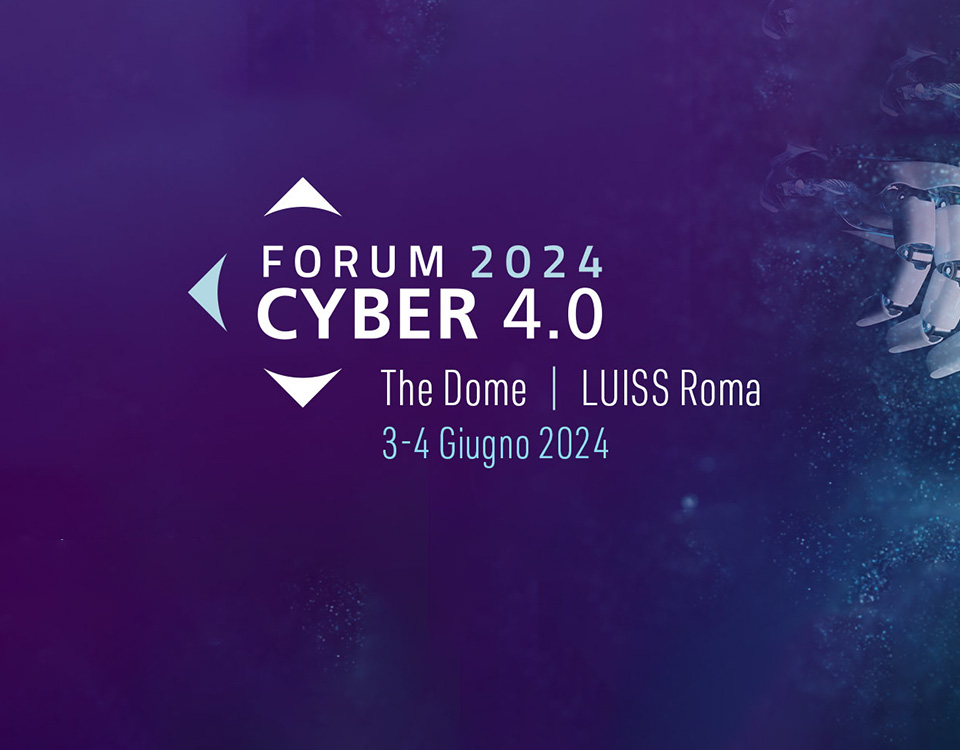
Un punto di riferimento per la comunità dell’innovazione e delle competenze cybersecurity, un luogo di incontro e confronto con i vertici della cyber sicurezza nazionale, le autorità sovranazionali, gli esperti e le aziende leader del settore: torna per il secondo anno consecutivo Cyber 4.0 Forum, l’evento organizzato da Cyber 4.0 il 3 e 4 giugno a Roma, al The Dome dell’Università LUISS, sede di viale Romania.

Interlocutore di riferimento per lo sviluppo di competenze e capacità operative in materia di sicurezza informatica, Cyber 4.0 sviluppa la sua azione in linea con la Strategia Nazionale di Cybersicurezza e del mandato istituzionale attribuito dal Ministero delle Imprese e del Made in Italy (MiMIT) di supportare imprese e pubblica amministrazione per una transizione digitale sicura.

Sarà il presidente di Cyber 4.0, Leonardo Querzoni ad aprire i lavori del Forum (lunedì 3, ore 9.30). A conferma ruolo che il Centro ha acquisito nell’architettura della cybersecurity nazionale è prevista la partecipazione, tra i relatori di spicco, del prefetto Bruno Frattasi, direttore generale dell’Agenzia per la Cybersicurezza Nazionale, di Valentino Valentini, vice ministro delle Imprese e del Made in Italy (MiMIT) e di Luca Tagliaretti, executive director dello European Cybersecurity Competence Center. Previsti, dal mondo accademico, gli interventi di Luigi Gubitosi, presidente dell’Università Luiss, e Antonella Polimeni, rettrice della Sapienza Università di Roma.

Una due-giorni intensa con un ricco programma per una platea di istituzioni, imprese, Pmi e startup, enti di ricerca, professionisti, specialisti e studenti, per fare il punto su sfide e opportunità presenti e future del settore. Conferenze, tavole rotonde, presentazioni e momenti di networking aiuteranno a raccogliere spunti e riflessioni sulle sfide della cybersecurity in Italia e nel mondo, le iniziative di rafforzamento di capacità e competenze tra le imprese, pubbliche amministrazioni e nel mondo del lavoro, il quadro regolamentare e strategico nazionale, le prospettive evolutive nel solco delle linee di sviluppo dell’Unione Europea.

Il Forum sarà l’occasione per un bilancio delle azioni messe in atto dal Centro a supporto della transizione digitale sicura per aziende e Pa, in ambito PNRR, con un focus sui servizi e incentivi erogati pari a oltre 4 milioni di euro in termini di sostegno alle imprese, attività di advisory, promozione dell’innovazione e della ricerca industriale. Ma anche numerosissime iniziative di formazione e awareness rivolte a un numero sempre crescente di controparti, dal comune cittadino ai professionisti del settore privato, dagli studenti di scuole dalle imprese alla PA, inclusi i suoi livelli apicali.

“Un anno dopo essersi qualificato come soggetto attuatore PNRR per il MiMIT, e aver sviluppato un’importante azione di sviluppo della cyber security di imprese italiane, Cyber 4.0 rilancia la propria missione anche in ottica internazionale, in particolare portando competenze di capacity building nei paesi in via di sviluppo – annuncia il direttore, Matteo Lucchetti -. Per l’Italia sarà strategico posizionarsi in Africa, con i primi contatti avviati con il Ghana, uno dei paesi più avanzati nell’area subsahariana sul tema della sicurezza informatica e in America Latina, dove Cyber 4.0 entrerà a far parte del LAC4, Latin American and Caribbean Cyber Crime Competence Center, finanziato dall’UE per il rafforzamento di competenze e capacità cyber nella regione”.

Approfondimenti verticali saranno dedicati ad alcune tecnologie abilitanti dell’Industria 4.0, come soluzioni e casi reali nell’utilizzo della blockchain nel comparto produttivo e nella PA dopo l’hype, il quantum computing – vero e proprio spartiacque per la sicurezza informatica, ma anche le sfide e le opportunità offerte dall’AI, un ambito che vede l’UE in ritardo rispetto alle superpotenze globali ma che avrà un enorme impatto su organizzazioni, procedure e tecnologie per la cybersecurity. Basti pensare che, nel periodo 2010-22 la Cina ha pubblicato il 61,13% dei brevetti AI, gli Stati Uniti il 20,9%, il resto del mondo il 15,71% e solo il 2,03% l’Unione europea e il Regno Unito insieme (2024 AI Index report).

Ulteriore attenzione sarà quindi rivolta al futuro delle imprese che producono cybersecurity in Italia. “Senza investimenti strutturali da parte delle istituzioni e senza supporti per le PMI, che rappresentano il 99% del tessuto produttivo del Paese, cosa accadrà dopo il PNRR? – rilancia Lucchetti – Bene il consolidamento di un quadro normativo estremamente corposo, in Italia come in Europa, ma basterà per sviluppare il mercato della cybersecurity e dare continuità agli investimenti in soluzioni programmabili e competitive da parte di startup, PMI e grandi imprese? Per raggiungere l’autonomia tecnologica serve un piano ragionato di investimenti e ricerca, a potenziamento e supporto di quanto fatto finora”.

Forum Cyber 4.0 affronterà anche il tema dello skill gap, dedicando ampio spazio alle iniziative di formazione per gli studenti attuate dal Competence Center.

In particolare, saranno presentate le live demo delle soluzioni realizzate dai tre team scolastici vincotori di “Let’s Cyber Game”, il concorso promosso dal MiMIT in collaborazione con Cyber 4.0 e Invitalia fra gli Its, per realizzare un videogame su tematiche di cybersecurity e cybercrime.

Altra iniziativa rilevante, la campagna di awareness per istituti di secondo grado (medie e superiori) del Lazio. “A Scuola Connessi – Navighiamo in Sicurezza”, questo il nome dell’iniziativa, che ha raggiunto oltre 30 scuole della Regione, per un totale di oltre 4.300 studenti, con i quali esperti del Centro di Competenza hanno affrontato temi sempre più rilevanti in materia di cittadinanza digitale consapevole, quali il furto d’identità, l’uso dei social media, il sexting, il cyberbullismo, l’intelligenza artificiale, la ludopatia.

Per gli studenti universitari verrà presentata la prossima edizione di CyberX Mind4Future, il percorso di formazione immersiva e simulazioni che ha già coinvolto oltre 300 studenti delle università partner del Centro di Competenza, oltre che l’iniziativa Sapienza Cyberhack4AI, un hackathon che sarà realizzato a Ottobre.

Di notevole interesse, inoltre, l’esperienza di ethical hacking dei mHACKeroni, il team italiano di CTF (capture the flag) che ha vinto l’ultima edizione di Hack-a-Sat al DEFCON di Las Vegas, la più importante gara internazionale di hacking.

Spazio, infine, alle opportunità di carriera per laureandi o studenti degli ultimi anni di corso, che potranno incontrare le aziende partecipanti al Forum Cyber 4.0 e conoscere il potenziale sviluppo del proprio percorso professionale nel settore della cyber security, presentando il proprio curriculum vitae.

La partecipazione a Forum Cyber 4.0 è gratuita previa registrazione online. Il programma dettagliato e le iscrizioni all’evento sono disponibili su www.cyber40.it/forum-cyber-4-0-2024/

Per informazioni: forumcyber40@cyber40.it

Condividi sui Social Network:

https://www.ictsecuritymagazine.com/notizie/forum-cyber-4-0-la-strategia-cybersecurity-oltre-il-pnrr/




California SB 553: How Can Technology Help Your Company Comply?

Workplace violence is a pressing concern for employers and employees across the U.S. A recent survey revealed that almost one in four employees has witnessed an incident of workplace violence against another employee in the last five years. And nearly a third of respondents haven’t received workplace violence training, revealing a large gap in safety planning and preparedness that leaves companies and their workers vulnerable.

The state of California is poised to take the lead in cultivating a safety-first mindset by requiring companies to take proactive steps to prevent workplace violence. On September 30, 2023, Governor Gavin Newsom signed Senate Bill (SB) No. 553 into law, which mandates that virtually all California employers implement a comprehensive workplace violence prevention plan by July 1, 2024. At a high level, the law requires California employers to:

  • Implement a workplace violence prevention plan.
  • Maintain a log of violent incidents.
  • Conduct annual training for employees on how to identify and avoid workplace violence.
  • Provide access to violence prevention plans, vulnerability assessments and reports of violent incidents to keep employees informed and safe.

Content Provided By OnSolveIn addition to ensuring compliance with the new CA SB 553 law, building employer/employee trust and organization-wide situational awareness requires fast, accurate and reliable communications as part of any workplace violence prevention plan. Mass notification technology streamlines the process to not only ensure compliance with the law, but also lets your employees know their safety is your priority.

Alerting Technology: Foundational to Employee Safety

According to the 2023 OnSolve Global Risk Impact Report, 93 percent of CEOs believe technology would help them protect their employees and operations. However, only 26 percent of CEOs reported having invested in technology for that purpose.

There are many ways alerting technology can keep you connected with your people to help keep them safe. From day-to-day operational communications to crisis response, organizations can use OnSolve capabilities to gain compliance with certain elements within CA SB 553 including:

  • “See something, say something” reporting tools
  • Response team activation
  • Mass group alerting to impacted individuals
  • Reporting for post-event audits

Below are some of the safety features OnSolve offers to make it easier for organizations to protect employees:

LookOut: An alerting feature for reporting incidents people encounter while on the job. Employees are empowered to “see something, say something” when they encounter suspicious activity, persons or objects. When an incident is reported, it triggers a notification to a pre-determined group/response team who can view all active/inactive LookOut incidents, and assess and escalate the situation.

SOS: Connects traveling or offsite employees with emergency services while simultaneously notifying the organization. The individual activates an SOS that connects them directly to whatever emergency services they need. Meanwhile, the organization is notified about the SOS so they can monitor the person’s status via an interactive map. Organizations can define who employees contact when triggering an SOS, whether that’s an internal emergency service (like a GSOC) or the local emergency services at their location.

Check-In: A self-reporting feature people can use to submit their location at any time. Traveling staff can check in at a given destination (conference, event, customer meeting, etc.) via a dashboard to ensure they receive alerts for the area in which they’re geographically located.

Life Check: A lone-worker safety feature that allows people to set a countdown timer for a designated set of time before an SOS is activated. This provides truck drivers, factory workers, service technicians, social workers or anyone traveling or working offsite in a remote location with technology to help keep them safe.

Organizations can also use OnSolve technology to disseminate sensitive workplace violence documents, including vulnerability assessments, training documents and reports of violent incidents. Sharing these documents in a secure environment is critical and informs people on how to take proper precautions or actions during an incident.

Your people need to trust that you care about their well-being. The first step in doing that is training and education. Your people need to be informed and knowledgeable about the safety procedures and capabilities available to them to improve safety and communications.

Want to talk to one of our specialists on CA SB 553? Contact Johnny Campbell to set up some time with one of our Solution Engineering experts!

The information provided on this blog post does not, and is not intended to, constitute legal advice; instead, all information, content, and materials available on this site are for general informational purposes only. Information on this blog post may not constitute the most up-to-date legal or other information. This blog post contains links to other third-party websites. Such links are only for the convenience of the reader, user or browser.

https://www.securitymagazine.com/articles/100726-california-sb-553-how-can-technology-help-your-company-comply


Empower Risk Response With a Unified Platform Built for Critical Event Management

Change is a constant in a digital world — even when it comes to physical threats to your organization. In fact, the risk landscape is evolving both online and off, resulting in a complex, interconnected web of threats that can have a ripple effect on an organization’s people and assets.

Humans simply can no longer compete with the speed at which intelligent software receives, collects and analyzes information. While many companies have begun to take advantage of new cloud-based technology for logistics, workflow and customer analysis, it can sometimes feel like you’re stuck using outdated solutions.

Content Provided By OnSolveOrganizations and their leadership must recognize the importance of using technology to mitigate and communicate about threats that might deliver serious physical or financial harm. It’s time to empower security, business continuity and risk teams with a centralized platform engineered specifically for critical event management.

The Benefits of Technology That Meets Your Needs

The OnSolve Platform for Critical Event Management combines data, visualization, interaction and engagement in a unified suite of products to help organizations handle critical events quickly and efficiently. Where once security managers would have to switch between multiple programs to monitor risks, send alerts and manage responses, the OnSolve Platform provides a single interface to do it all. Organizations can monitor and manage shifting threats that pose the risk of becoming a major event and quickly inform people who need to know.

Our unified Platform differentiates us from others in the market and delivers far-reaching value. We believe this is why OnSolve was recognized as a Leader in The Forrester Wave™: Critical Event Management Platforms, Q4 2023. 

There are many benefits to choosing a unified platform. They include:

  • Cost Savings from Consolidation: Managing multiple subscriptions and systems from different vendors is expensive, and it inhibits scalability. Instead, handling operations from a centralized and open platform delivers cost savings through greater levels of efficiency, deeper insight, better communication and empowered decision-making. Business leaders and management can make better decisions and avoid costly downtime.
  • Centralized Data Management: Having your data in one centralized location helps avoid the mess of dealing with multiple sets of different systems where information can get outdated quickly. With OnSolve, you access your data from the same interface that helps you understand how your people and assets will be impacted, and then communicate the information quickly to large groups of people. You’ll be able to act against threats faster and more efficiently.
  • Single Source of Truth and One Login: You can receive, collect and analyze data from a centralized interface. Consolidating your business systems into one single source of truth eliminates the need to switch between multiple programs and improves the effectiveness, safety and speed of operations and responses to potentially stressful circumstances.
  • Improved Security: We live in a time where security breaches are a constant threat. Relying on multiple vendors with different security certifications can make you subject to vulnerabilities. By partnering with OnSolve, you ensure the same level of platform security will be applied across all devices.
  • Increased Collaboration and Efficiency: From small security teams to large security operations centers, real-time alerts and insights enable organizations to identify and verify critical events faster, analyze business impacts and activate a communications response across the organization. This real-time collaboration accelerates response times and can help reduce the impact on people, assets and business continuity.
  • Scalability to Grow With Your Needs: Having a system that can grow with your team is critical. OnSolve offers basic to advanced alert send workflows and different levels of services and support to meet you where your team is today and in the future.
  • Strong Vendor Partnership: Dealing with multiple software vendors and platforms can be inefficient and complicated. Using OnSolve across your enterprise enables you to develop a deeper, lasting relationship with a vendor that fully understands your needs. Our technology helps operations get applications up and running faster, while reducing onsite implementation and management costs. OnSolve also supports internal IT teams through implementation, configuring the platform to your needs and goals.

How is OnSolve Different?

In today’s evolving and dynamic risk landscape, the ability to accelerate discovery of potential risks in order to accelerate recovery gives organizations a competitive advantage. Our AI-powered, analyst-vetted risk detection helps security leaders discover potential threats faster, make informed decisions and quickly communicate information. The OnSolve difference means our customers have the solution they need to:

  • Protect their people and operations.
  • Improve business continuity.
  • Strengthen organizational and operational resilience.

And customers also reap the benefits of the cost savings that come with a unified platform, not to mention the financial benefits of mitigating the impact of physical threats to the business.

Leverage the Confidence and Cost Savings of a Unified Platform

The OnSolve Platform gives you more time to react and more confidence in your execution. Can you afford not to keep your stakeholders safe, informed, assured and productive when it matters most?

Prepare your organization by empowering your security team with a centralized risk management platform. To learn more about building a strong internal business use case for technology to strengthen your organization’s resilience, read our ebook.

https://www.securitymagazine.com/articles/100729-empower-risk-response-with-a-unified-platform-built-for-critical-event-management


Hurricane Preparedness: Boost Emergency Mass Notification Plans Now

The National Hurricane Center will release its preliminary predictions before the start of the season on June 1, but early indications are that the 2024 season will be active. This is largely because of La Nina and record warm water temperatures in the Atlantic basin, which includes the Gulf of Mexico, the northern Atlantic and Caribbean Sea.

As we enter Spring 2024, it’s a good time to assess your organization’s emergency mass notification plans; preparedness is the best way to mitigate any storm-related losses. Create a process that extends timely, efficient mass notifications—from before a storm is detected all the way through recovery efforts.

Before a Storm

Content Provided By OnSolveEven an average hurricane season has enormous potential for damage. Evaluate your organization’s preparedness before a hurricane strikes; create a plan if you don’t have one. Your hurricane preparedness plan should include a mass notification system (MNS) that lets you quickly send alerts via automated phone messages, emails and text. Prepare templates that are ready to go for each type of alert. Pre-storm activities include training and drills so employees are familiar with your hurricane communications plan. Practice minimizes confusion. Employees will know they can trust your alerts to provide clear, useful information at every phase of a storm.

When a Hurricane is Detected

When you use a mass notification system for emergency alerts, you’ll have an edge during every phase of a hurricane. You can inform employees and stakeholders from the moment a hurricane is detected and easily keep them apprised of its progress. You can help them prepare, reminding them of your organization’s policies if a hurricane strikes.

When a Watch is Issued

If hurricane conditions escalate, your next step is responding to a hurricane watch, which indicates that hurricane conditions are possible. Waste no time activating your plan. Send alerts about the hurricane’s expected impact, including expected flood levels. Prepare your facility and remind employees about your hurricane evacuation plan and crucial next steps, such as preparing their homes.

When a Warning is Issued

A hurricane warning means that you can expect hurricane conditions. At this point, share regular alerts about the storm’s progression, including tailored messages about the time your business will close its doors. Clear, reliable communication at this point sets the tone for your entire response and shows that you care about the safety and security of your employees.

During the Storm

Effective communication during a hurricane strengthens business continuity. A mass notification system permits you to track employees who have evacuated. You can also provide critical information such as power outage updates and shelter information for your employees and their pets.

You’ll also want to share updates on your business operations – you might have remote employees who need to know what actions they should take, if any. Continuing business functions, at any level, is key during a storm, but you must also be sensitive to the hurricane’s effects on your workforce. A hurricane can wreak profound devastation on employees’ personal and professional lives. Communication helps you maintain both continuity and compassion.

After the Storm

After a hurricane, alert employees and stakeholders about when and to what degree operations will resume. Remain sympathetic to the storm’s effects by providing alternative working arrangements, for instance. You can bolster recovery efforts with alerts about re-entry to neighborhoods, debris clean-up efforts and restoration activities. When your organization is up and running again, evaluate how well your hurricane communications plan worked and note any updates or revisions that can improve your plan going forward.

Start Preparing Today

While a hurricane can be considerably challenging, you can help mitigate its effects on your organization by putting effective communication plans in place now. Download your Hurricane Preparedness Kit today.

https://www.securitymagazine.com/articles/100724-hurricane-preparedness-boost-emergency-mass-notification-plans-now


Don’t Forget Storm Surge Alerts During Hurricane Season

Consider this: According to the National Hurricane Center, storm surge directly causes approximately half of all deaths associated with massive storms.

During the 2023 hurricane season, the Atlantic basin saw 20 named storms, which ranks fourth for the most named storms in a year. Seven storms were classified as hurricanes and three intensified to major hurricanes. Deadly weather can cause billions of dollars’ worth of damage and take hundreds of lives, highlighting the importance of sending out storm surge information as part of your critical communications messaging to your citizens.

Content Provided By OnSolveFor many years, almost all attention during a storm was given to the storm itself, and not the threat of surge. Then Katrina happened in 2005. And later, Sandy in 2012 and Harvey in 2017. There has also been an increasing number of hurricanes with intense storm surge in the past few years. It became obvious that storm surge communications needed to be a critical part of overall emergency planning.

The Dynamic Risk of Hurricanes

Hurricanes are what are known as dynamic risks: Events in which the ultimate harm is different than the initially expected harm. Dynamic risks involve an element of surprise, whether from an unexpected change in the initial event or the addition of another, compounding event.

For example, a hotel chain expected Hurricane Ida to make landfall on the Gulf Coast in 2021. But when the storm suddenly shifted to the East Coast, they were caught off guard and had to scramble to respond to flooded buildings in Manhattan.

Every hurricane has the capacity to change at any given moment. Its path may shift as it heads towards land. It may intersect with another weather pattern as it reaches the coastline, causing an intensified storm surge. An area recently hit by a hurricane may find itself unprepared to deal with an ensuing storm. Having a well-planned notification system in place can help mitigate the damage caused by rapid storm surges and their cascading effects.

Predicting, Preparing, Communicating

The government keeps a close watch on potential surges and publishes the information on the National Hurricane Center (NHC) website, as well as through various agencies’ emergency notification systems. Surge notifications are released within 90 minutes of when the first hurricane watch or warning is issued.

How can you use your mass notification system to ensure the public has full and accurate information about the threat of storm surge to specific areas?

  • Prepare storm surge templates, just as you have for other aspects of hurricane alerts.
  • Use all available channels to educate residents about what a storm surge is and the threat it presents to life and property.
  • Raise awareness about the times of day you will send regular alerts and make clear to the public the identity of your official mass notification messenger.
  • And finally, deliver your alerts. For Hurricane Ida, the NHC sent out alerts every three hours starting at 2 a.m. and concluding at 11 p.m.

Targeting

Unlike the storm itself, storm surge is not a threat to broad regions. Effective storm surge alerts must be targeted to reach people only in those areas where surge is predicted. For instance, the NHC posted surge warnings for Ida specifically for places threatened by the effect, such as Vermillion Bay, Lake Borgne, Lake Pontchartrain and Lake Maurepas. These locations were updated as the storm evolved.

Having the ability to target alerts to people in only critical areas is a must-have capability for your mass notification system. Without targeting, you risk spreading confusion in the public and reducing the effectiveness of your emergency response.

Example: Cristobal Storm Surge

What does a good storm surge communication strategy look like? Below, we’ve followed the development of the 2020 Tropical Storm Cristobal from June 2 to June 8 to provide an outline you can use to guide your messaging efforts.

June 2: A tropical depression over Mexico becomes Tropical Storm Cristobal.

  • If you haven’t already been working to raise awareness and drive registrations with your mass notification system, you should start in earnest now.

June 4: The first alert that the storm should reach the U.S. is released.

  • Begin your daily communications. Remind your residents to turn alerts on for their emergency notification system, if they haven’t already, to ensure they’re aware when new alerts arrive.

June 5: The NWS issues its first storm and surge watch advisory, pinpointing where the surge is forecasted and where to find more information.

  • Send this information to the projected surge areas, let people know the steps to take and identify places to go for shelter if needed.

June 6: Some of the surge watches are upgraded to warnings.

  • Let residents know that the threat has increased and remind them to monitor their emergency mass notification system (ENS). Reinforce evacuation routes, shelter locations and other critical actions they may need to take.

June 8: The storm dissipates; the surge and storm warnings are taken down.

  • Make sure everyone receives the “all clear” communication.

The 2024 hurricane season officially begins on June 1, but severe storms can develop at any time. Now is a perfect time to assess your readiness. An emergency action plan—including comprehensive communications strategies—is imperative to keep your residents safe and their property secure. A mass notification system, such as OnSolve CodeRED, enables life-saving information to be pushed out quickly to the public.

https://www.securitymagazine.com/articles/100725-dont-forget-storm-surge-alerts-during-hurricane-season


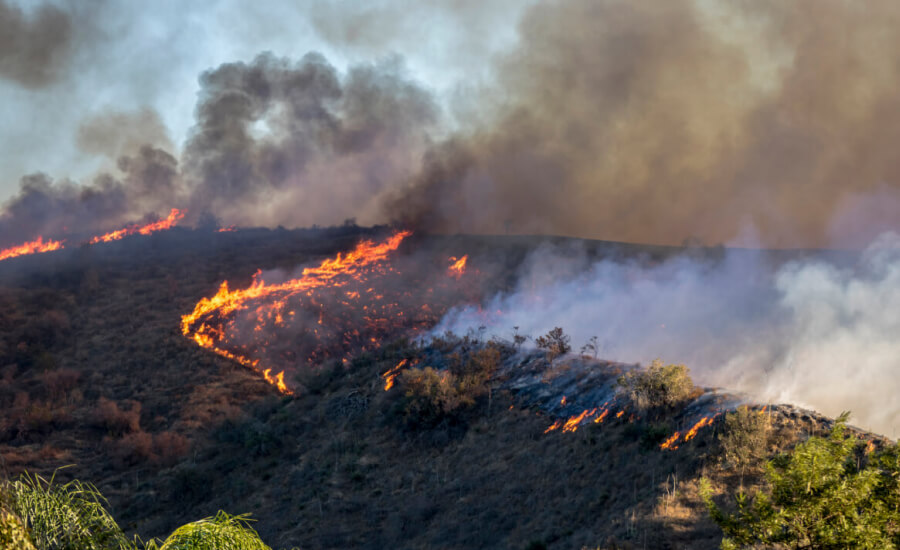
4 Questions to Ask During National Wildfire Awareness Month

Much is on our risk radar—from the rise in man-made and natural disasters to international conflicts to cyberattacks. Though these increases are alarming, organizations and government agencies can take proactive steps to improve preparedness.

May is National Wildfire Awareness Month – the perfect time to re-evaluate your wildfire preparedness plan and make needed updates. In the wake of 2023’s record-breaking number of billion-dollar disasters (28 in total) and other risk predictions for 2024, keep in mind you’ll probably need to make more adjustments than in years past.

Content Provided By OnSolveHere are four questions you should ask when developing wildfire preparedness plans:

1. How will you assess risk?

How are you tracking inclement fire weather? Are you able to get an early warning when a threat emerges? Do you have real-time visibility into events as they occur? What kind of actionable intelligence do you receive from your current critical event management platform?

Speed and relevancy are two of the biggest challenges in planning for wildfire response, and organizational and agency leaders can leverage the power of data to strengthen preparedness.  AI-powered and analyst-vetted risk intelligence helps identify current events that pose the biggest threat to people and operations in a specific location, and historical risk data can show changing patterns over a given timeframe. This helps risk and security leaders know where to focus their attention and better allocate response resources during critical events such as wildfires.

2. How will you prepare the community for potential wildfires?

Have you taken steps to educate residents about how to protect their families and property? If there’s an evacuation, do they know where to go and what to bring? Do you have a means of keeping residents informed? Residents and businesses located in fire-vulnerable areas should have a pre-packed “go bag” that contains personal items, N95 masks for smoke protection, first aid items and water.

3. How will you reach anyone affected by a fire?

Once you become aware of a threat, how will you notify anyone who’s in the path of the fire? Are you prepared with automated message templates and contact lists? Speed gives your residents the best possible chance to avoid harm during a wildfire. A mass notification system eases this burden by ensuring you’re ready to communicate calmly and efficiently. Technology like two-way communications enables response teams to communicate before, during and after an incident and people to mark themselves safe or in need of assistance.

4. How will you ensure community safety during disaster recovery efforts?

Once the fire is under control, how will you let your residents know when it’s safe to return? Damage to homes, local road closures and utility interruptions are common challenges in recovery efforts. You can bolster recovery efforts with geo-targeted alerts about re-entry to certain neighborhoods or areas, debris clean-up efforts and restoration activities and timelines. Keeping everyone informed of repair progress will ensure residents don’t rush back too soon – before the area is fully secure.

It’s vital that you prepare now. Take time to review the recommendations and resources available at the National Interagency Fire Center and check out the OnSolve Wildfire Preparedness Kit.

https://www.securitymagazine.com/articles/100723-4-questions-to-ask-during-national-wildfire-awareness-month


Risk Prevention is not Enough in 2024: Why Leaders Must Shift to Resilience Management

In 2023, there were 1,395 reports of floods in New York, according to our risk intelligence data. The major locations impacted were the New York City area and locations along the Hudson River.

But our data also revealed a potential new trend: New York is experiencing continuous days of flooding. On one occasion in September 2023, New York City experienced three consecutive days of flooding due to heavy rain. That week included the wettest day on record at JFK International Airport. The lesson here is two-fold: Flooding is a pervasive threat, and consecutive days of flooding are becoming more common – which can make response and recovery more difficult.

Content Provided By OnSolveIn 2024, physical threats like this are now impossible to ignore. Ninety-nine percent of executives and 100 percent of government leaders surveyed said their organization or agency experienced a physical threat in the last 24 months, according to the 2024 OnSolve Global Risk Impact Report.*

It’s not just that physical threats occur more often and are more severe. They’re also more complex, creating numerous unanticipated impacts. For instance, the flooding in New York City led to power outages, road accidents, structure collapses and technical disasters. We call this dynamic risk.

To mitigate physical threats and the unanticipated impacts, a critical event management strategy built around risk prevention is no longer enough. Instead, organizations and government agencies should shift to resilience management: A proactive approach to threat mitigation built on rapid discovery and rapid recovery.

Warning: A Preparedness Gap Needs to be Closed

Despite the increasing frequency and complexity of physical threats, our new analysis indicates a preparedness gap. Consider these three key findings from the report.

  1. Most leaders aren’t proactive.
    Fifty-six percent of executives and 53 percent of federal leaders surveyed say their top priority is preparing for a physical threat crisis that puts employee safety or operations at risk. Yet only 23 percent of executives and six percent of federal leaders say they’re proactive about identifying risks.
  2. Many organizations and agencies lack mitigation plans for the threats they’re experiencing.
    Only 45 percent of executives have a mitigation plan in place for natural disasters, even though it’s the top physical threat on their radar for 2024. Likewise, 72 percent of state and local leaders say the biggest risk in 2024 is crime, yet only 63 percent have a mitigation plan in place for this threat.
  3. Technology and training are needed to improve resilience.
    Forty-five percent of executives identified inadequate threat monitoring and detection as the biggest challenge or barrier to improving the resilience program at their organization. Similarly, 25 percent of federal leaders say lack of technology is the biggest challenge or obstacle to improving resilience, while 37 percent of state and local leaders say limited upskilling or training creates the biggest gap and challenge in their agency’s planning, response and recovery program.

Dynamic Risk: 4 Proof Positive Case Studies

Every threat has the potential to become a dynamic risk. In fact, 63 percent of executives and 51 percent of federal leaders say their organization or agency experienced unanticipated impacts “most of the time” or “always” as a result of the physical threats they experienced in the past 24 months.

To fully understand the impact of dynamic risk, we analyzed OnSolve Risk Intelligence data for four scenarios: Flooding, crime, geopolitical unrest and critical events surrounding elections. These case studies illustrate how a single physical threat creates numerous unanticipated impacts and how critical event management technology can help risk and resilience leaders proactively manage dynamic risk.

  • Flooding: In both New York and Chennai, India, flooding has created numerous cascading effects, some of which – such as structure collapses and public health issues like waterborne diseases – can have lasting effects on communities. When cascading impacts on infrastructure, supply chains, business continuity, and public health and safety escalate, mass notifications can instantly alert residents and staff.
  • Crime: Although reports of crime overall are falling, some types – like theft – are on the rise. There were more than one million reports of theft in the contiguous U.S. in 2023. Increases in specific types of crime necessitate corresponding training, upskilling and funding. Historical risk analysis can deliver highly location-specific data to identify the specific types of crime that pose the biggest risk, so leaders can make informed decisions.
  • Geopolitical Unrest: Israel-Hamas Conflict. Following the Hamas terrorist attack on October 7, 2023, related crime and unrest rose significantly in North America, showing that organizations and agencies need to prepare for the dynamic impact of events that are happening on the other side of the world. AI-powered risk intelligence can provide trustworthy information in real time, so leaders can identify and respond to incidents like hate crimes and protests that may occur very rapidly.
  • Lessons from the 2020 Presidential election. Election-related protests and riots spiked in November 2020 and again in January 2021. Reports of other physical threats like assaults and explosions also spiked during the same timeframe. As the 2024 presidential election approaches, historical threat data from the last election reveals a snapshot of potential threats that leaders should anticipate and prepare for, while real-time risk intelligence monitors events as they unfold, enabling a fast response.

Dynamic risk demands a proactive approach. To get a deeper look at the data, as well as five expert tips to shift to resilience management, download the full 2024 OnSolve Global Risk Impact Report.

*This research study explores risks that OnSolve detected across various timeframes and locations, that had the potential to impact its customers. The data in this report was gathered using OnSolve Risk Intelligence, an AI-powered technology that monitors more than 50 risk categories of physical threats across 159 countries in real time. OnSolve Risk Intelligence detected more than 50 million reports of global risk events from January 1, 2020, to December 31, 2023, using AI and analyst-vetted information pulled from data sources that include local fire, police and emergency medical services departments; weather reports and alerts from government and non-government verified sources; federal government agencies such as the Federal Bureau of Investigation, Department of Homeland Security and other crisis management entities; local, national and international news; and critical event reports from verified social media feeds.

OnSolve Risk Intelligence monitors global physical threats that have an impact on its base of 30,000 customers, which consists of half of the Fortune 100, nearly half of the Fortune 500 and 10,000 communities across the U.S., including state, regional, local and federal entities. OnSolve programmatically maps events to locations worldwide, determining which part of an organization might be at risk.

https://www.securitymagazine.com/articles/100727-risk-prevention-is-not-enough-in-2024-why-leaders-must-shift-to-resilience-management


For Critical Event Management, the Right AI is Responsible AI

Greater frequency. More complexity. Higher costs. These trends sum up the current state of high-impact physical threats. In the U.S., there were 28 separate billion-dollar natural disasters in 2023 alone – a record number. Globally, there were 66 separate billion-dollar natural disasters last year – another record.

Meanwhile, 99 percent of executives and 100 percent of U.S. government leaders say their organization or agency experienced a physical threat in the last 24 months, according to the 2024 OnSolve Global Risk Impact Report.

Content Provided By OnSolveFor agencies and organizations, protecting people and operations from the impact of physical threats requires around-the-clock monitoring and the ability to quickly make sense of millions of data points. Yet, the scale and enormity of this task means adding people won’t be enough to keep up with these trends. That’s why many risk professionals are turning to technology – specifically artificial intelligence (AI) – as an initial filter for the detection of threats as part of their critical event management (CEM) strategy.

What is AI? It Depends on the Context

AI is now part of our everyday vocabulary. But what does it really mean? After all, it’s a broad term. In short, AI is anything that mimics intelligence, but its definition changes somewhat based on the context in which it’s used.

One way to think about this is how we use AI in our daily routines. We interact with AI when we ask a chatbot to resolve an issue with an order. We recognize it when we hear the new warehouse nearby uses robots to sort items for delivery.

Yet, these applications are unique and designed for a specific purpose. The same AI that powers a warehouse robot can’t answer customer questions about an order. A chatbot trained on retail customer support can’t identify an incoming hurricane – or if it will impact the warehouse or the customer.

The bottom line: Not all AI is the same or appropriate for critical event management. Right now, we’re seeing rapid growth in the capabilities of AI, and the field is expanding with new subsets and types. Some of these, when used responsibly, are especially valuable for critical event management.

AI for CEM

AI can help improve the speed of threat detection, the relevance of information that’s received and the ability of risk professionals to act quickly. Although the field of AI for critical event management has evolved over time, there are three AI technologies that risk leaders may be considering to effectively detect and respond to critical events. You’ve probably heard these terms before.

  • Natural language processing (NLP) recognizes the context in which terms or phrases are used in natural language in any form. For critical event management, it can be used to identify threat terms – such as tornado or shooter – and mark it as a type of event.
  • Machine learning (ML) is a technique used for natural language processing in which machines are trained to recognize patterns without being explicitly programmed. Let’s say a report references high winds. The machine can be trained to recognize this phrase or other language associated with it and identify it as a weather event.
  • Generative AI is machine learning on steroids. It’s trained on such large data sets that it can recognize and replicate almost any pattern in human language. However, this model is pretrained on data not provided by the user, which can lead to mistakes.

What Responsible AI Looks Like  

Before implementing AI for critical event management, risk professionals need to consider whether they’re using the application and model for the task and if the models are trained on the right data. They also need to ensure they have quality assurance processes in place to evaluate performance and detect bias.

For instance, if risk managers want to know whether it’s safe to travel to Ukraine, asking Generative AI that’s been trained on data through January 2022 isn’t likely to yield the right answer. That’s because Russia invaded Ukraine in February 2022. It’s not the right application or the best model for the task.

A better option for critical event management is extractive AI, which reduces risk because it’s limited to specific questions related to the report being evaluated. It avoids broader questions – like “Is it safe?” – that lead to the AI making a judgement call.

In the case of an active shooter, for example, responsible AI for CEM can be used to process a large volume of primary and secondary sources – such as police reports, local news coverage and social media – at very high speeds. It can surface important details quickly and connect them across many different reports. This is responsible AI in action. Even with less content to sift through, you know you’re being alerted to events that may impact your business or community.

In today’s risk landscape, nearly everyone is likely to experience a physical threat. But as we can see from the example above, with responsible AI for critical event management, it’s possible to keep up with a changing world. With the right AI, you’ll be able to adapt along with it.

For a deeper dive into responsible AI including a closer look at extractive AI and a checklist for evaluating CEM solutions that leverage AI, watch our on-demand webinar: Exploring the Value of Responsible AI for Critical Event Management.

https://www.securitymagazine.com/articles/100730-for-critical-event-management-the-right-ai-is-responsible-ai


Crisis in Haiti: A Lesson in Accelerated Discovery

In late February and early March 2024, Haiti rapidly devolved into a near-failed state. As one colleague put it, “I want my people to be first in line for rebooking flights, not the back of the line.” This requires speed to action, efficient communications and accelerated discovery of an evolving crisis.

Instability has been a challenge in Haiti going back decades. The country’s infrastructure and political institutions have failed to bounce back after devastating natural disasters in 2010, 2011, 2016 and again in 2021. Since the assassination of Haiti’s president in July 2021, the country has fallen victim to rampant gang violence and 80 percent of the capital, Port-au-Prince, is controlled by gangs. Despite these challenges, businesses, NGOs and government personnel have continued to operate and travel in the country.

Content Provided By OnSolveDuring this crisis, OnSolve’s Global Risk and Intelligence Services provided complimentary overwatch support for Travel Management Company (TMC) customers and their travelers in Haiti. The AI-powered platform provided real-time tracking, verification and reporting as gang warfare broke out on February 29, 2024. OnSolve Watch Center analysts provided additional support as a human operational layer (aka human-in-the-loop) by verifying the severity of the threat and notifying TMC customers according to customized SOPs.

Early morning reports on February 29 indicated that planes were damaged by gunfire and injuries were reported in the airport’s main lounge. This was quickly followed by reports that Sunrise Airways was suspending operations. At the same time of these reports, flight radar, Google and similar flight tracking applications showed that most flights were expected to depart, essentially as “normal.”  We had to make the judgment call that other companies would suspend operations — and we were right.  This is the work of the analyst: to take multiple points of data (parsed with AI from human-validated sources) and make a judgment call.  Absent Haiti’s police or security apparatus, which was clearly diminished, this airport would close and people would be trapped. 

Risk Events

  • In the early morning of February 29, 2024, source data reported heavy gunfire and barricades in Port-au-Prince. Geolocated data indicated that the gunfire drew closer to the Toussaint Louverture International Airport (MTPP, PAP) as the early morning progressed. Despite morning reports of airport assets being hit by gunfire, flight tracking applications reported flight plans as “normal.”
  • By the afternoon of February 29, 2024, Sunrise Airways suspended flight operations nationwide due to violence in Port-au-Prince. Other airlines were still scheduled to depart that day and the airport remained open and operational.
  • On March 2, 2024, multi-source reporting confirmed coordinated gang warfare targeting police forces, government facilities and the country’s largest prison, resulting in thousands of inmates escaping.
  • On March 3, 2024, a state of emergency and curfew was declared.
  • By March 4, 2024, all flights were canceled, and the airport was closed after gangs attempted to seize control.
  • On March 10, 2024, U.S. Marines evacuated non-essential embassy personnel.
  • On March 11, 2024, Haiti’s prime minister announced his agreement to resign.

Implications for Risk Managers

What does the future hold for operations in Haiti? How do we improve risk intelligence capacity? How should we think about AI and human analysts?

What’s next in Haiti?

  1. The prime minister has tendered his resignation following pressure from other Caribbean leaders and the announcement by Kenya to postpone plans to send police forces until after a new government is formed in Haiti. Prime Minister Ariel Henry remains head of state until after a transitional council has been officially established. Gang leaders will continue applying pressure until the full removal of the prime minister.
  2. Gang violence will continue at an elevated level, impacting core infrastructure and services until the UN peacekeeping mission is fully deployed to Haiti and a new government is formed.
  3. In the following weeks, gun violence will be pervasive in urban centers as police and rival gangs battle for control and efforts are made to detain escaped inmates.
  4. Evacuation operations continue out of Toussaint Louverture International Airport (MTPP, PAP) and other secured runways and helipads. However, recent reports of commercial aircraft being shot at suggest that air evacuations will become severely limited in the coming days.
  5. The long-term outlook of the country is directly tied to assistance from the international community. After foundational security is reestablished in Haiti, international organizations and government support must find a way to return. OnSolve is proud to support travelers and organizations doing good in high-risk environments. Technology solutions and partnerships will strengthen their resilience to continue this important work.

How is it possible to monitor risk everywhere, 24/7?

  1. The rapidly developing crisis in Haiti highlights the value AI brings to risk management. Our ability to manage travel risk is directly proportional to our risk intelligence capacity. It’s time-intensive and cost-prohibitive for analysts to process the sheer volume of risk data available today. And yet, it can feel like we need all the information we can get to make faster, more informed and more effective decisions. It would take hundreds of people to process the content and alerts OnSolve’s AI produces every day.
  2. In a previous blog, I outlined the importance of determining proximity, severity and impact when assessing risk. We can use these same principles to refine risk intelligence gathering. AI solutions must have intuitive filters based on organizational data, travel itineraries and customizable alerts by security teams. Invest in customizable alerts by finding the right blend of pushed versus pulled intelligence.
  3. Risk intelligence is about speed, accuracy and relevance. Past technology solutions have felt like different levers we push based on organizational capacity, risk tolerance and needs. Some pushed intelligence felt fast while some felt more accurate. Some felt overly noisy but comprehensive, while others felt overly generic and unactionable. The beauty of AI and its future is that we can have the best in speed, accuracy and relevance. This requires a human partnership committed to optimizing an AI solution.

Is AI replacing the human analyst? What is the harmonious model?

  1. AI can’t replace the analyst, but it might replace much of the tedious work analysts (particularly junior analysts) do today. The OnSolve Watch Center is a proof-of-concept for how analysts and the engine of AI-generated intelligence work together. We dogfood the platform’s reporting, provide tight feedback with AI engineers and are continually optimizing the filters and alerts based on lessons learned as power users. This empowers us to guide customer adoption of AI risk intelligence and provide additional overwatch as needed.
  2. I don’t think we’re ready for AI to make tough judgment calls. Telling travelers that Toussaint Louverture International Airport is going to close while multiple sources demonstrated ongoing operations is not an easy call. Travelers in Haiti are more comfortable operating in high-risk environments and less inclined to proactively leave the country. Every travel risk manager can attest to how difficult it is to convince an employee to change their plans based on risk. This requires empathy, compassion, tact and flexibility — not exactly how we’d characterize AI today. Travelers and employees don’t want AI telling them to evacuate — it must come from a human in the loop.

The mission can feel daunting and the path forward unclear. If you’d like to continue this discussion, provide feedback or are looking for assistance, OnSolve is here to help.

(Information cut-off date 1000 PT, March 12, 2024)

https://www.securitymagazine.com/articles/100728-crisis-in-haiti-a-lesson-in-accelerated-discovery


Security leaders discuss LLMs that may present security concerns

A study from AI Safety Institute (AISI) suggests that the deployment of leading large language models (LLMs) may come with security concerns. The report indicates that security measures utilized by these LLMs are insufficient, potentially leaving these LLMs vulnerable to exploitation. The report further discussed topics such as whether or not the LLMs could be leveraged to facilitate cyberattacks and whether users could bypass safeguards to prompt harmful outputs (such as illegal content). 

Security leaders weigh in 

Nicole Carignan, Vice President of Strategic Cyber AI at Darktrace:

“As more and more research is being conducted on how to effectively jailbreak LLMs, it is crucial to share findings as well as mitigation strategies so AI technologies can be used effectively and securely. Building a community of knowledge sharing amongst adversarial machine learning (AML) researchers and red teams is vital in this initiative — especially as threat actors increasingly target AI systems.

“Understanding the evolving threat landscape and the techniques adversaries are using to manipulate AI is key and critical for defenders to be able to test these use cases against their own models to effectively secure their AI systems and to defend against AI attacks. As AI systems become embedded into the tools and processes organizations depend on every day, cybersecurity plays a crucial role and is foundational to AI safety. Organizations must be focused on applying cybersecurity best practices to protect models and invest in safeguards to keep AI systems protected at all stages of the AI lifecycle, to avoid unintended behaviors or potential hijacking of the algorithms. 

“NCSC and CISA have put forth great guidance on securing AI through the design, development, deployment and maintenance lifecycles. NIST’s draft AI Risk Management Framework highlights the importance of a robust testing, evaluation, verification and validation process. Most importantly, AI should be used responsibly, safely and securely. The risk AI poses is often in the way it is adopted. 

“Enabling red teams will be a great foundation to begin securing ML models, helping security teams to understand the most critical and vulnerable points of an AI system to attack. These are often the connection points between data and ML models, including access points, APIs and interfaces. It will be important for this to be continuously expanded on as threat actors develop new techniques, tactics, and procedures (TTPs) and will be crucial to test other ML model types in addition to generative AI.

“In addition to red teaming, there are several other considerations and methods that organizations should focus on to help ensure AI systems are secure and privacy preserving. These can include data storage security, data privacy enforcement controls, data and model access controls, AI interaction security policies, implementing technology to detect and respond to policy violations, and plans for ongoing testing, evaluation, verification and validation.

“We’re already seeing the early impact of AI on the threat landscape and some of the challenges that organizations face when using these systems — both from inside their organizations and from adversaries outside of the business. In fact, Darktrace recently released research that found nearly three-quarters (74%) of security professionals state AI-powered threats are now a significant issue, and 89% agreed that AI-powered threats will remain a major challenge into the foreseeable future. 

“It will take a growing arsenal of defensive AI to effectively protect organizations in the age of offensive AI. Defensive AI includes tools that can detect anomalous behavior at scale by leveraging deep insights and intelligence into an organization’s assets. Whether the attack is AI-powered, automated or a sophisticated threat actor, AI that identifies and isolates anomalous, suspicious behavior specific to an organization’s normal patterns can detect and defend in machine time. 

“As adversaries double down on the use and optimization of autonomous agents for attacks, human defenders will become increasingly reliant on and trusting of autonomous agents for defense. Specific types of AI can perform thousands of calculations in real time to detect suspicious behavior and perform the micro decision-making necessary to respond to and contain malicious behavior in seconds. Transparency and explainability in the AI outcomes are critical to foster a productive human-AI partnership.”

Stephen Kowski, Field CTO at SlashNext:

“The most concerning finding from the UK AI Safety Institute’s survey is the vulnerability of large language models (LLMs) to “jailbreaks,” which allow users to bypass safeguards and elicit harmful outputs. They said all models were vulnerable and “all models complied at least once out of five attempts for almost every question.” Whether they used a framework of questions or their own harmful questions they created, they were able to find all models highly vulnerable.

“Organizations are eagerly adopting large language models (LLMs) and generative AI (GenAI) but often disregarding significant security risks, including sensitive data exposure, copyright violations, biased or incorrect outputs that could lead to brand damage, and employees entering non-public company information into GenAI tools. Fine-tuning LLMs on private data can allow sensitive information to be extracted if anyone can query the model due to data memorization issues, and public GenAI tools lack built-in enterprise security layers. Stakeholders often overestimate the capacity of these tools and don’t fully understand the risks, costs and ongoing maintenance needs of these systems.

“IT security leaders should draw on their experiences with the classic shadow IT problem they know well. Gain attention by emphasizing the real-world implications of AI vulnerabilities, using examples like WormGPT and FraudGPT to illustrate the potential for significant harm. Stress that employees are already entering non-public company information into public LLM tools, 48% of employees admitting to doing so in one study. They should advocate for comprehensive security measures, including robust threat modeling, continuous monitoring, and the implementation of zero-trust architectures.

“Organizations can ensure AI security by implementing rigorous security protocols throughout the AI lifecycle, from data collection and model training to deployment and ongoing operations. This includes using secure APIs, conducting regular security audits, and employing advanced threat detection systems to monitor for unusual behavior. Critical safeguards include implementing strong access controls, continuous monitoring for anomalies, and using adversarial training to make models more resilient to attacks. Additionally, organizations should compartmentalize AI processes to limit the impact of potential breaches and adopt a zero-trust security model.

“Enterprises should prioritize implementing secure coding practices, performing regular code reviews and audits, and treating AI-generated code with the same scrutiny as manually written code to identify and remediate vulnerabilities. Additionally, it is crucial to restrict access to sensitive data used to train AI models. Establishing an AI security strategy that includes adversarial training, defensive distillation, gradient masking, feature squeezing, and ensemble techniques is also essential to harden AI models against adversarial attacks that exploit vulnerabilities to manipulate model behavior and outputs.

“Organizations should adopt a security-by-design approach, integrating security considerations into every stage of the AI development lifecycle, while also implementing robust access controls and data protection measures to safeguard sensitive data. Additionally, establishing comprehensive AI governance frameworks and continuously monitoring AI systems for anomalous behavior will help mitigate evolving risks and ensure responsible AI development and usage.”

https://www.securitymagazine.com/articles/100711-security-leaders-discuss-llms-that-may-present-security-concerns