80% of data experts believe AI increases data security challenges

The AI Security & Governance Report released by Immuta reveals the attitudes of data experts toward artificial intelligence (AI). The report found that a majority of data experts (80%) agree that AI is increasing data security challenges. There is a range of data security concerns that leaders associate with AI.

  • 55% say the possibility that sensitive information may be inadvertently exposed by large language models (LLMs) is their greatest concern.
  • 52% are worried that sensitive information may be exposed to LLMs through user prompts. 
  • 52% cite the possibility of AI attacks via threat actors, and 57% report an increase in AI-driven attacks in the last year. 

Although the report found concerns about AI, it also found that many data leaders (85%) are confident in their organizations’ data security strategy and believe that it will keep pace with evolving AI technologies. 

Respondents are using AI in the following ways: 

  • Advanced encryption (28%) 
  • Anomaly detection (14%) 
  • Security app development (14%) 
  • Phishing detection (13%) 
  • Security awareness training (13%)

AI is also being deployed to defend sensitive information, with 40% of data leaders stating that the most promising advancement is AI-powered threat detection systems.

https://www.securitymagazine.com/articles/100631-80-of-data-experts-believe-ai-increases-data-security-challenges


Attacchi ai Modelli di Intelligenza Artificiale

I modelli di Intelligenza Artificiale (AI) stanno assumendo molto velocemente un grande ruolo nella vita di tutti noi. Le previsioni sono che nei prossimi anni utilizzeremo quotidianamente modelli AI sia in ambito lavorativo sia personale per moltissimi scopi. Ad esempio IDC [Rif. 1] prevede che entro il 2027 il 60% dei PC venduti avrà componenti Hardware (“system-on-a-chip – SoC”, diversi dalle GPU) dedicate all’elaborazione locale di modelli AI (si veda anche [Rif. 2]). Ci si aspetta un simile sviluppo anche per i dispositivi mobili quali smartphone, tablet ecc. oltre, ovviamente, ai server.

Oltre alle possibili debolezze comuni a qualsiasi programma informatico, i modelli AI hanno delle debolezze specifiche e in alcuni casi nuove, contro le quali non siamo abituati a confrontarci quasi quotidianamente. La ricerca in questo campo è molto attiva e nuovi risultati sono annunciati ogni giorno. È comunque possibile fare già ora una rassegna dei principali tipi di debolezze dei modelli AI che possono essere sfruttate da un attaccante.

Approcci allo Studio dei Tipi di Attacchi ai Modelli AI

In generale lo studio di un attacco ad un sistema informatico può essere analizzato considerando le vulnerabilità che l’attaccante intende sfruttare, le tecniche per implementare l’attacco e l’effetto dell’attacco sul sistema attaccato. Vi sono vari approcci allo studio degli attacchi ai sistemi informatici. Fra i più noti è quello che fa riferimento alla “Kill Chain”, ovvero identificare nell’ordine le azioni che un attaccante porta a termine per realizzare l’attacco per trovare i punti ove poterlo fermare. La metodologia più utilizzata per i modelli AI è quella sviluppata da MITRE con ATLAS™ [Rif. 3]. Questo approccio, focalizzandosi sulle azioni dell’attaccante, è sicuramente quello più appropriato per la gestione degli incidenti in tempo reale perché aiuta il difensore a identificare la migliore maniera per gestire l’incidente.

Un altro approccio è più preventivo e consiste nel valutare principalmente le vulnerabilità e i possibili effetti di un eventuale loro sfruttamento da parte di un attaccante per poter implementare misure di sicurezza sulla base di una valutazione dei rischi. In questo caso si ricorre spesso alla formulazione di tassonomie quale quella di NIST [Rif. 4] o di Microsoft [Rif. 5].

In questa sede non si intende descrivere in dettaglio una “Kill Chain” o proporre una tassonomia, ma fare una rassegna ad alto livello di quanto ad oggi si è capito cercando di organizzare le informazioni in uno schema sufficientemente semplice. Per questo l’approccio adottato è più simile a quello di una tassonomia mancandone però il rigore e la completezza.

Per questo articolo sono state considerate le debolezze o vulnerabilità dei modelli AI e le possibili conseguenze o effetti del loro sfruttamento. Questi sono stati raggruppati in quelli che genericamente saranno chiamati “attacchi”. Seguendo [Rif. 4] conviene distinguere due tipi di attacchi: quelli comuni a molti tipi di modelli AI, che sono indicati come modelli AI Predittivi, e quelli specifici ai modelli Generativi e “General Purpose” quali ad esempio i “Large Language Models” (LLM) come GPT, Bard/Gemini, LLaMA ecc.

In sicurezza informatica, gli effetti dello sfruttamento di una debolezza o vulnerabilità sono usualmente classificati dalla violazione di una o più caratteristiche di sicurezza tra Riservatezza, Integrità e Disponibilità (RID, in Inglese CIA). Nella letteratura già richiamata, questa classificazione è utilizzata anche per i modelli AI con due piccole varianti: si considerano Riservatezza insieme a Privacy, Integrità, Disponibilità e per i modelli Generativi anche Abuso. Con Abuso si intende proprio l’utilizzo di un modello AI Generativo per generare dati in violazione degli scopi e/o dei modi di utilizzo del modello stesso. Si noti che l’abuso di un modello AI Generativo qui considerato è diverso dall’abuso di una tradizionale applicazione informatica. Tutte le funzionalità e possibili dati prodotti da una usuale applicazione informatica sono disegnati e implementati dai programmatori; in questa situazione un abuso si può verificare nel caso di utilizzo di funzionalità esistenti da parte di chi non ne è autorizzato (violazione dell’Integrità del sistema di autorizzazione dell’applicazione) o in violazione della licenza d’uso. Come sarà descritto in seguito, per i modelli Generativi un ulteriore caso di abuso è l’utilizzo del modello per generare dati non previsti dai programmatori o in violazione degli scopi dell’addestramento del modello, senza però violarne le caratteristiche RID.

Attacchi ai Modelli AI Predittivi

In generale gli attacchi ai modelli AI possono essere classificati in tre classi:

  • “Poisoning” (Avvelenamento)
  • “Evasion / Adversarial Attacks” (Evasione)
  • “Extraction / Reconstruction” (Estrazione / Ricostruzione).
Avvelenamento

Gli attacchi di avvelenamento sono quelli più simili ai comuni attacchi alla sicurezza dei sistemi informatici e avvengono usualmente nella fase di addestramento dei modelli AI, qui da intendersi generalmente come le attività tramite le quali un modello AI impara modificando i propri dati interni. L’addestramento può essere fatto in molte modalità: dalla modalità più semplice di una volta sola prima della messa in esercizio del modello AI, a modelli AI che imparano continuamente dai feedback che ricevono dai dati prodotti.

Oggetto dell’attacco possono essere sia i dati utilizzati per l’addestramento del modello AI sia il modello stesso, ovvero il codice che lo implementa.

Avvelenamento del codice

L’attacco forse più tradizionale è quello per la modifica del codice di un modello AI: l’attaccante accedendo in maniera illecita ai sistemi IT che gestiscono il codice del sistema AI, o a quelli di terze parti che sviluppano il codice o anche componenti di supporto come possono essere librerie crittografiche o numeriche (in molti casi open-source), o ancora impersonando uno sviluppatore di modelli AI e abusando di codice open-source, può modificare il codice aggiungendo ad esempio una backdoor o modificando in maniera opportuna ai propri scopi il codice del modello. È stato mostrato che è possibile introdurre modifiche al codice del modello estremamente difficili da identificare nel codice stesso, se non tracciando l’accesso illecito ai sistemi IT. L’effetto di queste modifiche comporta usualmente una violazione dell’Integrità del modello AI, ovvero dell’integrità sia del codice del modello sia del comportamento e dei dati prodotti dal modello. Un attaccante può quindi introdurre nel modello dei comportamenti noti soltanto a lui, ad esempio che a certi specifici dati in ingresso corrispondono certi tipi di dati in uscita. Oppure le modifiche possono alterare le capacità del modello impedendogli di gestire correttamente certi dati in ingresso o limitandone le prestazioni. In alcuni casi le modifiche al codice possono portare alla violazione della Disponibilità del modello AI, ad esempio il modello può utilizzare troppe risorse di calcolo per l’elaborazione di alcuni tipi di dati in ingresso e non è più in grado di completare le elaborazioni nei tempi attesi.

Avvelenamento dei dati di addestramento

I modelli AI di Machine Learning, tra cui la maggior parte dei modelli AI al momento più conosciuti, hanno come caratteristica la necessità di utilizzare grandi quantità di dati per l’addestramento. Ovviamente questo fornisce un nuovo e molto interessante punto di attacco: modificando i dati di addestramento, un attaccante può modificare il comportamento di un modello AI, e quindi i dati da questo prodotti, per raggiungere i propri scopi. Il primo esempio è quello di un modello AI utilizzato per individuare malware o spam: un attaccante può cercare di inserire tra i dati di addestramento il proprio malware o i propri messaggi di spam indicandoli come dati benevoli in modo che, quando operativo, il modello AI non li segnali come malware o spam. In questo caso, effetto dell’attacco è di violare l’Integrità del modello tramite la modifica dei dati di addestramento.

La necessità di ottenere grandi quantità di dati di addestramento aumenta le possibili modalità di attacco e rende più difficile adottare misure di difesa. Spesso i dati di addestramento sono pubblici, cercati e scaricati da Internet, ma questo rende molto difficile garantire che la sorgente sia qualificata, lecita e non a sua volta oggetto di attacco o direttamente creata dall’attaccante. Ma anche se i dati di addestramento inizialmente sono corretti, spesso vi sono varie terze parti che li raccolgono, li analizzano, formattano ecc. in modo da poter essere utilizzati come dati di addestramento nei modelli AI. Anche tutte queste terze parti possono diventare oggetto di attacco o essere gestite direttamente da un attaccante. Inoltre, tutti coloro coinvolti nella gestione dei dati di addestramento devono garantire la sicurezza di veramente grandi quantità di dati, il che può portare difficoltà nel controllo accessi o anche solo nella protezione dei dati sia in transito sia quando memorizzati (a riposo). Infine, non è facile per chi utilizza i dati per addestrare i propri modelli AI, verificarne l’integrità, qualità e l’assenza di dati maligni.

Per questi motivi è utile considerare la possibilità di utilizzare dati di addestramento sintetici, ovvero creati appositamente per l’addestramento. Oltre a permettere una maggiore protezione dei dati contro attacchi, l’utilizzo di dati sintetici evita anche il rischio di infrangere diritti d’autore, licenze e la riservatezza o privacy delle informazioni. D’altra parte, generare dei sintetici e realistici non è per nulla facile, e non è applicabile a tutti i possibili utilizzi dei modelli AI.

Evasione

Gli attacchi detti di Evasione, anche chiamati “Adversarial Attacks” o “Adversarial Examples”, sono forse quelli più specifici dei modelli di Machine Learning perché per lo più connessi al processo di apprendimento dei modelli stessi e al modo in cui le informazioni apprese vengono utilizzate dai modelli durante la loro esecuzione. Il nome di questi tipi di attacchi viene dal fatto che i modelli di Machine Learning possono compiere errori che dal punto di vista umano sono macroscopici, violando completamente il comportamento atteso e oggetto dell’addestramento. In pratica si tratta di dati di ingresso al modello molto simili a quelli di addestramento sui quali il modello sbaglia completamente [Rif. 6], come i famosi esempi dei cartelli stradali di stop con uno sticker giallo riconosciuti come cartelli di limite di velocità, o montature di occhiali, cappelli, trucco per il viso che portano il modello a riconoscere una persona per un’altra. Questi errori dei modelli di Machine Learning sono delle vulnerabilità che possono essere sfruttate da un attaccante. Se l’attaccante conosce alcune di queste vulnerabilità di un modello, può sfruttarle a proprio favore e quindi “evadere” dal comportamento del modello sfruttando degli “Adversarial Examples”. L’esempio più semplice è ancora quello di un sistema AI per il riconoscimento dei volti ad esempio utilizzato in un luogo pubblico. Se l’attaccante è a conoscenza che il modello AI compie un errore nel riconoscimento dei volti se sul volto sono presenti particolari montature di occhiali, le può utilizzare per non essere individuato.

Vi sono molteplici modi in cui un attaccante può individuare queste vulnerabilità: ad esempio se l’attaccante ha accesso completo o ha una copia completa del modello AI addestrato, lo può studiare per individuare gli “Adversarial Examples”; o può studiare modelli simili adattando poi i risultati al modello da attaccare; o se può accedere ai risultati dell’elaborazione dei dati del modello ma non al modello stesso, può adottare un attacco di forza bruta nel quale modifica i dati in ingresso al modello sino a individuare l’errore di elaborazione cercato.

Questi attacchi portano ad una violazione dell’Integrità dei dati prodotti dal un modello AI e sono particolarmente pericolosi perché permettono all’attaccante di sovvertire completamente il comportamento del modello AI con dati che sono molto simili ai dati di addestramento, per cui a priori del tutto leciti. È quindi molto difficile individuare questi attacchi solo analizzando i dati di ingresso al modello AI. Invece per individuare queste vulnerabilità è necessaria un’attività simile a quella ben nota dei Read Team, ovvero un gruppo di esperti di sicurezza che attacca il modello AI per individuarne le vulnerabilità come se fosse un vero attaccante.

Estrazione / Ricostruzione

Questo tipo di attacchi sfrutta delle debolezze o vulnerabilità dei modelli AI per violare la Riservatezza e/o Privacy dei dati di addestramento o della struttura del modello, tramite l’utilizzo del modello stesso. È importante ricordare che in molti modelli AI i dati di addestramento non sono archiviati in modo simbolico (l’archiviazione simbolica permette di individuare la locazione di memoria nella quale è archiviato un singolo dato), ma sub-simbolico e sparso, ovvero un singolo dato è destrutturato e poi distribuito e aggregato con altri dati nella memoria del modello AI. Quindi, almeno ad oggi, non è possibile implementare all’interno di un modello AI un sistema di controllo accessi alle informazioni utilizzate per l’addestramento e ai dati della struttura stessa del modello AI.

Gli attacchi di estrazione e ricostruzione permettono all’attaccante di sottoporre al modello AI degli input formulati in modo tale da ottenere in output informazioni sui dati di addestramento o della struttura stessa del modello AI, e in alcuni casi di ottenere i dati stessi.

Se per i modelli Generativi è abbastanza semplice immaginare come a una ben formulata richiesta il modello possa rispondere fornendo in output come risposta un dato di addestramento, per altri tipi di modelli l’estrazione o ricostruzione delle informazioni presenti nel modello è più complessa, ma spesso possibile. Ad esempio, un attaccante avendo idea del tipo di dati utilizzati per addestrare un modello di Machine Learning di classificazione ma non sapendo esattamente quali dati sono stati utilizzati, può sottoporre al modello dei dati in ingresso così preparati da poter dedurre dalle risposte del modello se un certo dato è stato utilizzato per l’addestramento del modello stesso (questi attacchi sono chiamati di “membership inference”).

Un approccio per difendersi da questi attacchi utilizza il concetto di “Differential Privacy” che misura la quantità massima di informazioni sui dati di addestramento che un attaccante può estrarre dal modello AI. Sono state proposte varie tecniche che implementano la “Differential Privacy” utilizzando specifiche procedure di preparazione dei dati di addestramento e di addestramento dei modelli AI ma che non sono efficaci rispetto a tutti i possibili tipi di attacchi di Estrazione o Ricostruzione. Altri metodi di difesa utilizzano il monitoraggio e l’applicazione di filtri ai dati in ingresso e a quelli prodotti dai modelli AI.

Attacchi ai Modelli AI Generativi

Oltre agli attacchi ai Modelli AI appena descritti, i modelli AI Generativi e “General Purpose” quali ad esempio i “Large Language Models” (LLM) come GPT, Bard/Gemini, LLaMA ecc., possono essere oggetto di un’altra classe di attacchi chiamata

  • “Abuse” (Abuso)
Abuso

Con Abuso si intende proprio l’utilizzo di un modello AI Generativo in modo difforme da quanto previsto o consentito. I modelli AI Generativi possono essere abusati per scopi diversi tra i quali:

  • La generazione di malware (generazione di codice maligno);
  • La generazione di campagne di Phishing;
  • La generazione di informazioni (testi, audio, immagini, video) false ma con grande rassomiglianza a informazioni vere (“Fake News”), inclusa la modifica di dati storici in modo credibile e la generazione di campagne per influenzare il pubblico su temi politici, di discriminazione, di costume ecc.;
  • La generazione di dati a supporto di frodi, truffe, azioni di delinquenza, attacchi informatici ecc.
  • La generazione di testi (ad esempio per un Chatbot) che convincono un utente a cliccare su un link che porta a un malware, o a divulgare informazioni riservate.

In alcuni casi i modelli AI Generativi possono essere abusati tramite l’uso delle loro interfacce macchina (API) che producono in maniera automatica i dati utilizzati in tempo reale per l’attività illegale. Un esempio di questo può essere la generazione automatica di testi utilizzati da un Chatbot o per uno scambio di messaggi email per portare a termine una truffa.

Questi tipi di attacchi sono per lo più compiuti utilizzando l’interfaccia interattiva, o tramite API, del modello AI Generativo. Queste interfacce, in particolare per i Large Language Models, accettano testi scritti o parlati (o immagini) in linguaggio corrente e non programmatico. L’utente quindi invia una richiesta (“Query”) al modello AI che la interpreta, elabora e fornisce il risultato. Come indicato precedentemente, l’elaborazione può includere anche la ricerca di informazioni presso altre fonti, incluso Internet. L’attaccante sfrutta quindi possibili debolezze del modello AI nell’accettazione e interpretazione della richiesta per ottenere dati a priori non permessi. Questi tipi di attacchi vanno usualmente sotto il nome di “Prompt Injection” o “Adversarial Prompting” in quanto l’attaccante inserisce al “Prompt” del modello AI una richiesta il cui scopo è di abusare del modello stesso. A livello teorico, questo tipo di attacchi assomiglia molto agli attacchi di SQL Injection nei quali si modifica la Query SQL in modo che il database esegua un comando non permesso.

Sono stati proposti e utilizzati molti diversi metodi per costruire richieste che portano ad un abuso di un modello AI Generativo tra cui “Prefix injection”, “Refusal suppression”, “Style injection”, “Role-play”, “Ignore previous instructions”, “Special encoding”, “Character transformation”, “Word transformation”, “Prompt-level obfuscation” ecc. [Rif. 7], e la ricerca in questo ambito è in continuo sviluppo.

Vi sono diverse tecniche per difendersi da attacchi di questo tipo. Una tecnica adottata nel processo di addestramento di questi modelli è chiamata “Reinforcement Learning from Human Feedback (RLHF)” e consiste in una fase ulteriore di addestramento svolto tramite l’intervento diretto di persone specialmente addestrate a insegnare al modello a non generare risposte offensive, dannose o non lecite. Un altra tecnica consiste nell’affiancare al modello AI Generativo un modello AI Predittivo per la classificazione di testi (o di immagini ecc.) che è addestrato a identificare dati malevoli, offensivi o non leciti eventualmente inviati al, o generati dal modello AI Generativo. Il modello AI Predittivo esamina quindi i dati in ingresso e i dati prodotti dal modello AI Generativo e calcola la probabilità che un dato prodotto si configuri come risultato di un abuso del modello AI Generativo. Infine si utilizzano anche filtri programmati specificatamente per individuare abusi nei dati in ingresso e prodotti dal modello.

Infine va citata anche la vulnerabilità dei modelli AI Generativi indicata genericamente come “Allucinazione” ovvero la generazione di dati che non hanno senso, sono irrealistici o falsi ma che sono presentati come reali e appaiono molto convincenti. Questa vulnerabilità può essere sfruttata da un attaccante per creare campagne di disinformazione, di phishing o truffe e in pratica può risultare molto efficace a questi scopi.

AI Generativa come attaccante autonomo

Sinora i modelli AI sono stati considerati come l’oggetto di un attacco, in realtà modelli AI possono anche essere utilizzati come strumento d’attacco. Questo non è strano in quanto le informazioni di sicurezza informatica in generale e sui modelli AI stessi, possono essere utilizzate sia dai difensori sia dagli attaccanti. Ad esempio, un modello AI può essere utilizzato per studiare i punti deboli di un sistema informatico o di un altro modello AI, e queste informazioni possono essere sfruttate sia da un difensore sia da un attaccante. Un attaccante può quindi adottare modelli AI tra i propri strumenti per eseguire attacchi a sistemi informatici, e un difensore può fare lo stesso. Si ha quindi una situazione in cui i modelli AI svolgono allo stesso tempo il ruolo di attaccante e difensore: in altre parole si ha uno scenario di “guerra” tra i modelli AI utilizzati da attaccanti e difensori.

E, almeno a livello di laboratorio, è già possibile considerare la creazione di “worm” che autonomamente diffondono malware tra modelli AI Generativi [Rif. 8].

Di maggiore interesse è considerare la possibilità che un modello AI Generativo esegua autonomamente attacchi ad altri sistemi informatici. Questo scenario richiama immediatamente alla mente molti romanzi e film di fantascienza, spesso con conseguenze tragiche (si pensi ad esempio a Skynet della serie Terminator). La possibilità teorica esiste, come ad esempio descritto in [Rif. 9]. Una modalità teorica in cui già oggi potrebbe essere possibile un attacco eseguito autonomamente da un modello AI Generativo è la seguente. Un modello AI Generativo quale un Large Language Model (LLM) è addestrato con una enorme quantità di informazioni che tipicamente includono anche informazioni di sicurezza informatica quali le modalità di eseguire attacchi a un sito Web come SQL Injection o Cross Site Scripting (XSS). Inoltre già oggi i modelli più avanzati hanno la capacità di eseguire ricerche in Internet per ottenere informazioni in tempo reale, e il risultato della ricerca può essere utilizzato dal modello AI come nuovo dato di ingresso in un ciclo complesso di elaborazione. In altre parole è tecnologicamente possibile che un modello AI Generativo possa ad esempio utilizzare un attacco SQL Injection per ottenere delle informazioni da un sito Web, ritenendo che questa tecnica sia la più efficace per accedere alle informazioni, senza che l’utente sia a conoscenza né del fatto che il modello sta cercando di estrarre informazioni da uno specifico sito Web né che la tecnica utilizzata per ottenere le informazioni sia un attacco informatico.

Riferimenti

[1] IDC, “IDC Forecasts Artificial Intelligence PCs to Account for Nearly 60% of All PC Shipments by 2027”, 7/2/2024, https://www.idc.com/getdoc.jsp?containerId=prUS51851424

[2] La Repubblica “Quel microchip fa Nvidia a tutti. L’Eldorado produttivo promesso dall’AI trascina le Borse mondiali”, 23 febbraio 2024; MarketWatch “Nvidia makes Wall Street history as stock surge adds $277 billion in market cap”, https://www.marketwatch.com/story/nvidias-stock-surge-could-add-200-billion-in-market-cap-with-mammoth-growth-on-tap-8d9472d2

[3] MITRE ATLAS™ “Adversarial Threat Landscape for Artificial-Intelligence Systems”, https://atlas.mitre.org/

[4] NIST AI 100-2 “Adversarial Machine Learning: A Taxonomy and Terminology of Attacks and Mitigations”, https://csrc.nist.gov/pubs/ai/100/2/e2023/final

[5] Microsoft “Failure Modes in Machine Learning”, https://learn.microsoft.com/en-us/security/engineering/failure-modes-in-machine-learning

[6] A. Pasquinucci, “Adversarial Attacks a Modelli di Machine Learning”, White Paper, ICT Security Magazine, https://www.ictsecuritymagazine.com/pubblicazioni/adversarial-attacks/

[7] Per una breve introduzione si veda “Prompt Injection Attacks in Large Language Models”, SecureFlag, https://blog.secureflag.com/2023/11/10/prompt-injection-attacks-in-large-language-models/

[8] S. Cohen, R. Bitton, B. Nassi, “Here Comes the AI Worm: Unleashing Zero-click Worms that Target GenAI-Powered Applications”, https://sites.google.com/view/compromptmized

[9] R. Fang, R. Bindu, A. Gupta, Q. Zhan, D. Kang, “LLM Agents can Autonomously Hack Websites”, https://arxiv.org/abs/2402.06664 ; R. Fang, R. Bindu, A. Gupta, D. Kang, “LLM Agents can Autonomously Exploit One-day Vulnerabilities”, https://arxiv.org/abs/2404.08144

Articolo a cura di Andrea Pasquinucci

Profilo Autore

PhD CISA CISSP
Consulente freelance in sicurezza informatica: si occupa prevalentemente di consulenza al top management in Cyber Security e di progetti, governance, risk management, compliance, audit e formazione in sicurezza IT.

Condividi sui Social Network:

https://www.ictsecuritymagazine.com/articoli/attacchi-ai-modelli-di-intelligenza-artificiale/


Building security bridges

@import url(‘https://fonts.googleapis.com/css2?family=Nunito+Sans:ital,opsz,wght@0,6..12,400;0,6..12,500;0,6..12,600;0,6..12,700;1,6..12,400;1,6..12,500;1,6..12,600;1,6..12,700&family=Nunito:ital,wght@0,400;0,500;0,600;0,700;1,400;1,500;1,600;1,700&display=swap’); h3 { font-weight: bold; font-size: 18px; color: #C72026; } .w3-panel:after,.w3-panel:before { content: “”; display: table; clear: both } .w3-panel { padding: 16px; margin-top: 16px; margin-bottom: 16px } .w3-leftbar { border-left: 6px solid #660066!important } .w3-color,.w3-hover-color:hover { color: #660066!important; background-color: #f9ecf2!important } .w3-large { font-size: 20px!important } .w3-sans-serif { Nunito Sans’,Arial,sans-serif } .w3-opacity,.w3-hover-opacity:hover { opacity: 0.60 }

Farhan Sahito is no stranger to security. Beginning as a police officer in 2002, Sahito worked his way through both government and private organizations, transitioning from physical to cybersecurity over the course of his decades-long career.

In this Profile in Excellence, Sahito walks through the course of his career, providing insight and advice to future security leaders.

Security: Describe your career from beginning to present-day

Sahito: My cybersecurity career commenced in Pakistan, where I completed my Masters in IT and Economics, laying the groundwork for my multifaceted expertise. I initiated my professional journey with the Pakistan police and subsequently transitioned to the National Response Center for Cybercrime in the Federal Investigation Agency (FIA). This phase was pivotal in establishing my foundational skills in law enforcement and cybercrime investigation.

In 2007, I broadened my academic horizon with a master’s degree in criminology from the University of Melbourne, Australia, achieved through an AusAID scholarship. This academic pursuit was crucial in deepening my understanding of cybersecurity and cybercrime, providing me with a comprehensive view of these complex fields.

Furthering my academic pursuit, I obtained a Ph.D. in cybersecurity from Graz University of Technology, Austria, with an OeAD Austria scholarship. My research focused on unraveling the intricate nature of cyber threats and exploring the interplay between technology and crime. This added a significant academic depth to my practical law enforcement experience.

My career then expanded onto the global stage with INTERPOL in France, where I collaborated with 196 member countries. I was deeply involved in shaping cybercrime policies, best practices and advancing International cybercrime investigation techniques, including state-of- the-art biometrics and speaker identification technologies. Following my tenure at INTERPOL, I served as an Advisor to the UN Secretary-General on the Security Council Sanctions Committee in New York.

Transitioning into the corporate sector, I joined Capgemini as Director of Cyber Innovation.

Here, I played a crucial role in establishing cybersecurity departments and led the acquisition of three major EU Commission cybersecurity projects. In 2020, I embarked on an entrepreneurial journey, co-founding Privanova with my close friend and business partner, Djoirdje Djokic. We have successfully expanded our team with top-notch cybersecurity experts, legal professionals, and project managers.

Overall, my career is an intricate tapestry of academic rigor, practical law enforcement experience, global policy influence, corporate strategic leadership, and entrepreneurial drive. Each phase has been integral in shaping my comprehensive proficiency in cybersecurity, solidifying my standing as a high-level expert committed to advancing global cybersecurity initiatives.

Security: What does a typical workday look like for you?

Sahito: Morning Routine and Strategic Planning
My day usually starts with an in-depth review of our ongoing EU Commission projects. In collaboration with Djoirdje Djokic and our expert team, we meticulously align our project initiatives with the strategic goals of our organization. This process is crucial in ensuring that each project not only aligns with our overarching vision but also meets the specific requirements and objectives set forth by the EU Commission.

Mentorship and Academic Collaboration
I am deeply committed to mentorship and the professional development of upcoming cybersecurity talent. A substantial portion of my day is devoted to mentoring and co-supervising Ph.D. students who specialize in various aspects of cybersecurity. This mentorship is more than just imparting knowledge; it’s about fostering a new generation of cybersecurity experts who are equipped to tackle the challenges of an ever-evolving digital landscape.

Thought Leadership and Global Representation
My role at Privanova extends beyond internal management and delves into the realm of global thought leadership. I frequently engage in delivering keynote speeches at prestigious international platforms, including the INTERPOL Cyber Exchange Knowledge Platform and UN forums. These speaking engagements are opportunities to share our innovative approaches at Privanova and to contribute to shaping global cybersecurity policies and strategies.

Security: What’s your leadership style?

Sahito: My leadership style in the realm of cybersecurity is shaped by a vision that champions forward thinking, innovation, and global collaboration. Having led pivotal projects and diverse teams from my early days at INTERPOL and the UN to influential roles in the corporate sphere at Capgemini and Privanova, my approach is grounded in inclusivity, strategic foresight and adaptability.

I believe in leading by example, fostering a culture that values intellectual curiosity, proactive problem-solving, and uncompromising ethical standards. My extensive journey through various aspects of cybersecurity has taught me that innovative solutions are often born from diverse, collaborative environments where different perspectives converge.

Focusing on mentorship and knowledge transfer, I recognize the crucial role of nurturing emerging talent in cybersecurity. Co-supervising Ph.D. students, I commit to equipping the next generation of cybersecurity professionals with essential skills, knowledge, and a strong ethical foundation.

Security: What advice do you have for those considering the same path?

Sahito: Embrace Interdisciplinary Learning
Cybersecurity isn’t isolated; it intersects with various disciplines like law enforcement, technology, economics, and ethics. Understanding these intersections enriches your perspective and enhances your ability to address complex cyber challenges.

Engage in Continuous Learning
The cybersecurity landscape is ever-evolving. Keep yourself updated with the latest technologies, threats, and mitigation strategies. This could mean taking additional courses, attending workshops, or simply staying informed through reputable sources.

❝

Overall, my career is an intricate tapestry of academic rigor, practical law enforcement experience, global policy influence, corporate strategic leadership, and entrepreneurial drive.”
— Farhan Sahito, Partner at Privanova

Participate in Practical Projects and Internship
Theoretical knowledge is vital, but so is practical experience. Engage in internships, participate in hackathons, or work on real-world projects. These experiences will not only solidify your understanding but also enhance your problem-solving skills.

Develop a Global Perspective
Cybersecurity is a global issue. My experience working with Privanova and international organizations like INTERPOL and the UN has highlighted the importance of understanding cybersecurity from a global standpoint. Seek opportunities for international exposure, whether through study programs, global conferences, or collaborations.

Network and Find Mentors
Building a strong network and finding mentors who can guide you through your career can make a significant difference. Engage with professionals in the field, attend industry events, and don’t hesitate to reach out to experts for advice.

Focus on Innovation
The field of cybersecurity needs innovative minds that can think ahead of cybercriminals. Always look for new ways to approach problems and don’t be afraid to propose and test novel solutions.

Remember, a career in cybersecurity is not just about protecting data; it’s about safeguarding people’s way of life in the digital world. It demands not only technical proficiency but also ethical responsibility, strategic thinking and a continual readiness to adapt and learn.

Security: Any advice for other security leaders?

Drawing from my extensive journey through various facets of cybersecurity — from public law enforcement with the Pakistan police and Federal Investigation Agency, international policy shaping at INTERPOL and the UN, to pioneering private sector innovations at Capgemini and Privanova — here are key pieces of advice I would offer to fellow security leaders:

Embrace a Multidisciplinary Approach
Cybersecurity is not a siloed field; it intersects with numerous disciplines. As leaders, we should cultivate an understanding that goes beyond technical aspects and delves into legal, ethical, and managerial territories. This broad perspective is crucial for developing comprehensive security strategies.

Foster Global and Collaborative Mindsets
In today’s interconnected world, cybersecurity challenges are global in nature. Collaborate with international bodies, participate in global forums, and learn from diverse cybersecurity practices. Building strong networks across borders can provide unique insights and create opportunities for collective action against cyber threats.

Invest in People
The core strength of any cybersecurity initiative lies in its people. Invest in nurturing talent, encouraging continuous learning, and fostering an environment where innovative ideas are welcomed. Mentorship, especially in guiding the next generation, is vital in ensuring the sustainability and evolution of the cybersecurity landscape.

Adaptability and Continuous Learning
The cybersecurity landscape is ever-evolving, with new threats and technologies emerging constantly. Stay abreast of the latest trends and innovations in the field. Adaptability not only in technological aspects but also in policy, strategy, and management is key to staying ahead in this dynamic environment.

Prioritize Ethical Responsibility
As cybersecurity leaders, we hold significant power over data protection and privacy. It’s imperative to uphold high ethical standards and ensure that our actions and policies protect and respect the privacy and rights of individuals and organizations.

Balance Strategic Vision with Practical Execution
While having a long-term strategic vision is important, equally crucial is the ability to execute plans effectively. This involves understanding the day-to-day challenges, managing resources efficiently, and ensuring that your team is aligned with the organizational goals.

Be a Champion of Security Culture
Cultivate a culture within your organization where security is everyone’s responsibility. This involves raising awareness, providing training, and ensuring that security practices are integrated into all aspects of the business process.

Lead by Example
Finally, embody the principles and practices you advocate. Authentic leadership builds credibility and trust, both within your team and in the wider cybersecurity community.

In conclusion, the role of a cybersecurity leader is multifaceted and continually evolving. It requires a blend of technical expertise, strategic thinking, ethical responsibility, and a deep understanding of the global landscape. As leaders, our goal should be not only to protect against threats but also to drive the cybersecurity field forward, creating a safer digital world for future generations.

https://www.securitymagazine.com/articles/100634-building-security-bridges


RSA Conference

@import url(‘https://fonts.googleapis.com/css2?family=Nunito+Sans:ital,opsz,wght@0,6..12,400;0,6..12,500;0,6..12,600;0,6..12,700;1,6..12,400;1,6..12,500;1,6..12,600;1,6..12,700&family=Nunito:ital,wght@0,400;0,500;0,600;0,700;1,400;1,500;1,600;1,700&display=swap’); h3 { font-weight: bold; font-size: 18px; color: #C72026; } figure { border-bottom: 3px #EAF1F7 solid; background-color: #F1F1F1; padding: 4px; } figcaption { color: #404144; Nunito Sans’, Arial, sans-serif; font-size: 16px; padding: 2px; text-align: left; }

RSAC is a time for cybersecurity leaders to come together and share best practices within the community.

Security magazine highlights products being showcased at this year’s RSA Conference.

Arctic Wolf OEM Solutions

ARCTIC WOLF

Manage Company Vulnerabilities

Arctic Wolf OEM Solutions is a suite of security scanning and threat intelligence capabilities designed to meet the needs of original equipment manufacturers (OEMs), independent software vendors (ISVs) and large enterprises looking to add critical security operations capabilities to their solutions. By leveraging Arctic Wolf OEM Solutions, OEMs, ISVs and other similarly situated organizations can add vulnerability management, threat intelligence and additional security operations capabilities. Image courtesy of Arctic Wolf

FIND OUT MORE AT ARCTICWOLF.COM

Claroty’s Advanced Anomaly Threat Detection (ATD) Module

CLAROTY

Detect and Manage Threats

Claroty’s Advanced Anomaly Threat Detection (ATD) Module allows healthcare to strengthen their cybersecurity postures and achieve regulatory compliance. Signature-based detection enhances threat detection, analysis and response based on known signatures and Indicators of Compromise (IoCs). Signature content can be viewed for investigation purposes and enabled or disabled as needed to tune the system. Custom communication alerts understand and alert on device communication patterns across the network to identify abnormal behavior and traffic across connected devices, such as a BMS communicating with a guest network or an IoMT device using an unsecured protocol. Image courtesy of Claroty

FIND OUT MORE AT CLAROTY.COM

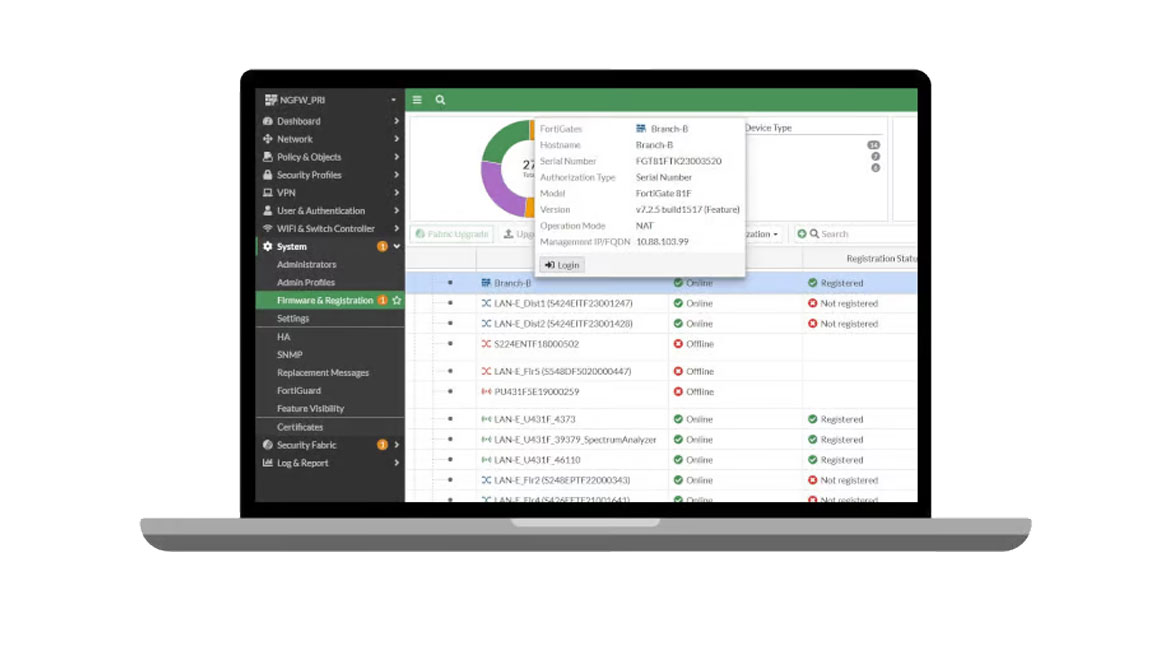
FORTISWITCH T1024

FORTINET

Integrate Security and Wi-Fi

Fortinet announced a comprehensive secure networking solution integrated with Wi-Fi 7. FortiAP 441K delivers increased speed and capacity, and the new FORTISWITCH T1024 is purpose-built with 10 Gigabit Ethernet (GE) access and 90W Power over Ethernet (PoE) technology to support Wi-Fi 7 bandwidth requirements. Image courtesy of Fortinet

FIND OUT MORE AT FORTINET.COM

Hive Pro Uni5 Xposure

HIVE PRO

Manage Workflow and Conduct Assessments

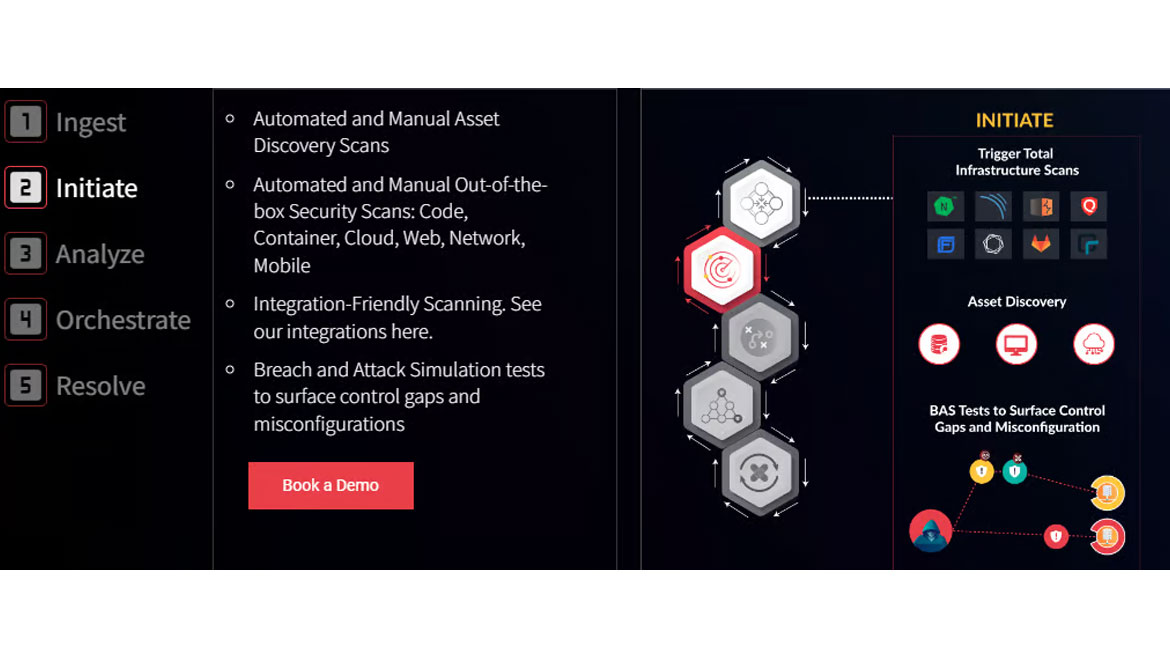
Hive Pro announced their new platform Uni5 Xposure. Uni5 Xposure includes asset discovery, infrastructure scanning, security assessments, workflow management and collaboration. The platform integrates previous system benefits while adding new systems. Image courtesy of Hive Pro

FIND OUT MORE AT HIVEPRO.COM

he iShield Key Pro by Swissbit

SWISSBIT

Protecting Digital Identities

The iShield Key Pro by Swissbit transcends the capabilities of a standard FIDO stick by incorporating an array of enhanced features and various security protocols to ensure the versatile protection of digital identities. It integrates Personal Identity Verification (PIV) functionality, facilitating tasks like digital document signing and encryption. The iShield Key Pro is also compatible with legacy systems, including HOTP and TOTP. Its capability to double as a physical access control tool sets it apart in the market. The impending adoption of FIPS 140-3 standards provides a maximum level of cryptographic security. Available with USB-A and USB-C interface. Image courtesy of Swissbit

FIND OUT MORE AT SWISSBIT.COM

ZeroFox’s anti-phishing software

ZEROFOX

Detects and Prevents Phishing Attacks

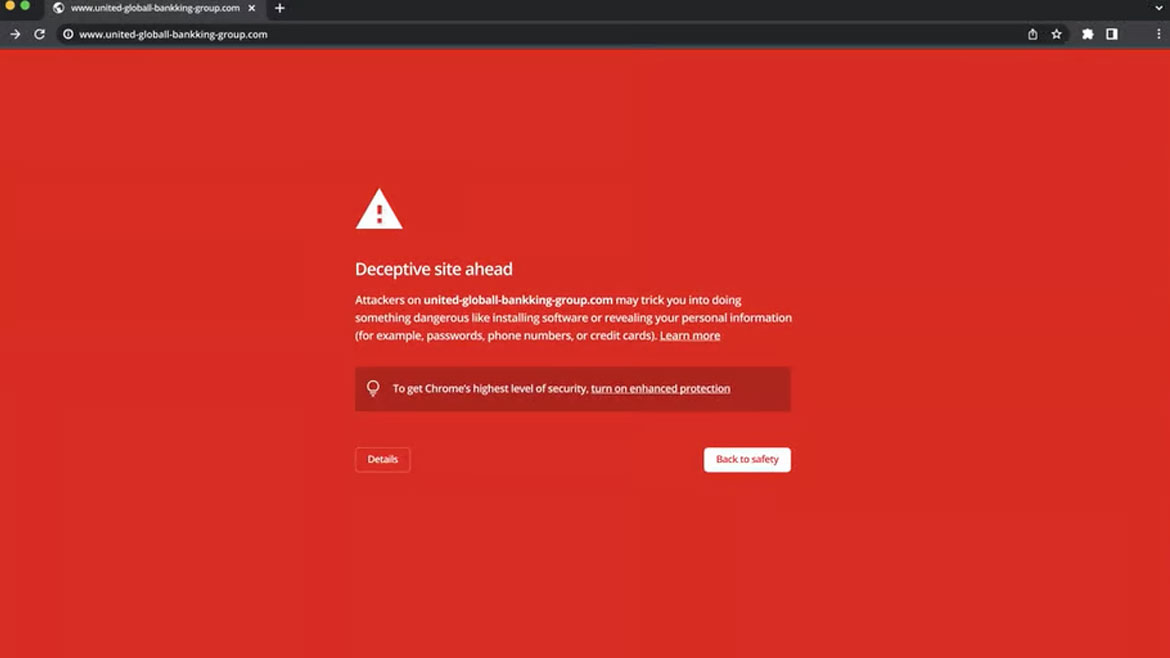
ZeroFox’s anti-phishing software will focus on identifying, disrupting and taking down the domain(s) required to stand up a phishing campaign. The program thwarts typosquats, homoglyphs, subdomain spoofs and other malicious domain and URL threats. SSL monitoring ensures only secured and verified certificates are in use. The system also scans and alerts to fraudulent use of a company’s imagery. Image courtesy of ZeroFox

FIND OUT MORE AT ZEROFOX.COM

https://www.securitymagazine.com/articles/100636-rsa-conference


Novel attack against virtually all VPN apps neuters their entire purpose

Novel attack against virtually all VPN apps neuters their entire purpose
Getty Images

Researchers have devised an attack against nearly all virtual private network applications that forces them to send and receive some or all traffic outside of the encrypted tunnel designed to protect it from snooping or tampering.

TunnelVision, as the researchers have named their attack, largely negates the entire purpose and selling point of VPNs, which is to encapsulate incoming and outgoing Internet traffic in an encrypted tunnel and to cloak the user’s IP address. The researchers believe it affects all VPN applications when they’re connected to a hostile network and that there are no ways to prevent such attacks except when the user’s VPN runs on Linux or Android. They also said their attack technique may have been possible since 2002 and may already have been discovered and used in the wild since then.

Reading, dropping, or modifying VPN traffic

The effect of TunnelVision is “the victim’s traffic is now decloaked and being routed through the attacker directly,” a video demonstration explained. “The attacker can read, drop or modify the leaked traffic and the victim maintains their connection to both the VPN and the Internet.”

[embedded content]
TunnelVision – CVE-2024-3661 – Decloaking Full and Split Tunnel VPNs – Leviathan Security Group.

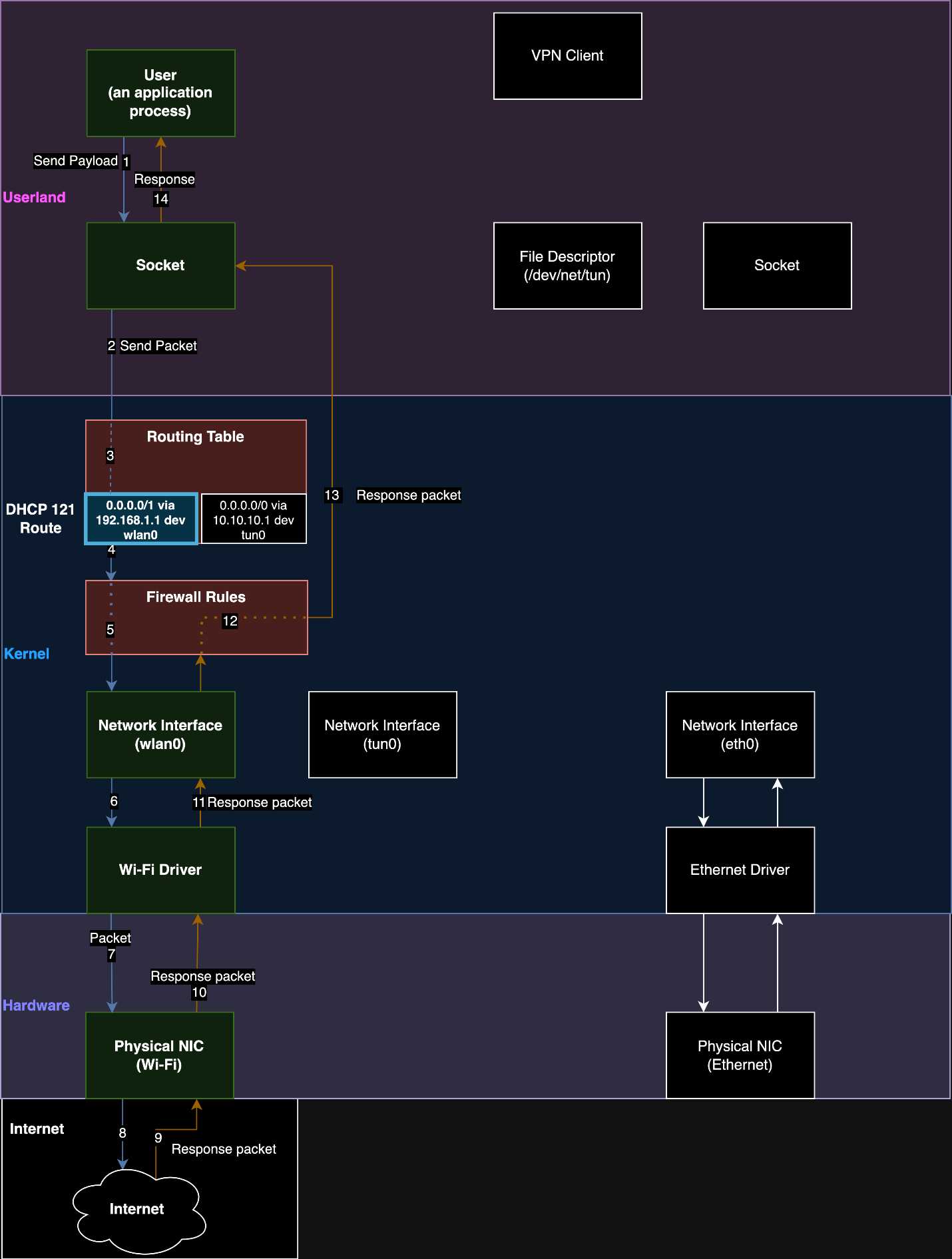
The attack works by manipulating the DHCP server that allocates IP addresses to devices trying to connect to the local network. A setting known as option 121 allows the DHCP server to override default routing rules that send VPN traffic through a local IP address that initiates the encrypted tunnel. By using option 121 to route VPN traffic through the DHCP server, the attack diverts the data to the DHCP server itself. Researchers from Leviathan Security explained:

Our technique is to run a DHCP server on the same network as a targeted VPN user and to also set our DHCP configuration to use itself as a gateway. When the traffic hits our gateway, we use traffic forwarding rules on the DHCP server to pass traffic through to a legitimate gateway while we snoop on it.

We use DHCP option 121 to set a route on the VPN user’s routing table. The route we set is arbitrary and we can also set multiple routes if needed. By pushing routes that are more specific than a /0 CIDR range that most VPNs use, we can make routing rules that have a higher priority than the routes for the virtual interface the VPN creates. We can set multiple /1 routes to recreate the 0.0.0.0/0 all traffic rule set by most VPNs.

Pushing a route also means that the network traffic will be sent over the same interface as the DHCP server instead of the virtual network interface. This is intended functionality that isn’t clearly stated in the RFC. Therefore, for the routes we push, it is never encrypted by the VPN’s virtual interface but instead transmitted by the network interface that is talking to the DHCP server. As an attacker, we can select which IP addresses go over the tunnel and which addresses go over the network interface talking to our DHCP server.

A malicious DHCP option 121 route that causes traffic to never be encrypted by the VPN process.
Enlarge / A malicious DHCP option 121 route that causes traffic to never be encrypted by the VPN process.
Leviathan Security

We now have traffic being transmitted outside the VPN’s encrypted tunnel. This technique can also be used against an already established VPN connection once the VPN user’s host needs to renew a lease from our DHCP server. We can artificially create that scenario by setting a short lease time in the DHCP lease, so the user updates their routing table more frequently. In addition, the VPN control channel is still intact because it already uses the physical interface for its communication. In our testing, the VPN always continued to report as connected, and the kill switch was never engaged to drop our VPN connection.

The attack can most effectively be carried out by a person who has administrative control over the network the target is connecting to. In that scenario, the attacker configures the DHCP server to use option 121. It’s also possible for people who can connect to the network as an unprivileged user to perform the attack by setting up their own rogue DHCP server.

The attack allows some or all traffic to be routed through the unencrypted tunnel. In either case, the VPN application will report that all data is being sent through the protected connection. Any traffic that’s diverted away from this tunnel will not be encrypted by the VPN and the Internet IP address viewable by the remote user will belong to the network the VPN user is connected to, rather than one designated by the VPN app.

Interestingly, Android is the only operating system that fully immunizes VPN apps from the attack because it doesn’t implement option 121. For all other OSes, there are no complete fixes. When apps run on Linux there’s a setting that minimizes the effects, but even then TunnelVision can be used to exploit a side channel that can be used to de-anonymize destination traffic and perform targeted denial-of-service attacks. Network firewalls can also be configured to deny inbound and outbound traffic to and from the physical interface. This remedy is problematic for two reasons: (1) a VPN user connecting to an untrusted network has no ability to control the firewall and (2) it opens the same side channel present with the Linux mitigation.

The most effective fixes are to run the VPN inside of a virtual machine whose network adapter isn’t in bridged mode or to connect the VPN to the Internet through the Wi-Fi network of a cellular device. The research, from Leviathan Security researchers Lizzie Moratti and Dani Cronce, is available here.

https://arstechnica.com/?p=2022250


Misconfigurations drive 80% of security exposures

A report from XM Cyber analyzes more than 40 million exposures in order to provide a thorough understanding of the current exposure landscape. The report found that 80% of exposures are caused by identity and credential misconfigurations. Out of these exposures, one-third of them put critical assets at risk of a breach.

According to the report, a majority of the exposure is within an organization’s active directory, a critical component for connecting users to network resources. However, it is also a target for malicious actors seeking access and elevated privileges. Misconfigurations and credential attacks are the top exposures, creating blind spots that conventional security tools can often miss. This includes issues with resetting login information or managing members. Furthermore, inadequate endpoint hygiene is an issue in many environments with cached credentials or lacking EDR coverage on more than 25% of devices. This provides malicious actors with initial entry points. 

Cloud environments are also at risk of exposure. The report found that 56% of exposures that impact critical assets are within cloud platforms. Malicious actors can travel between on-premises systems and cloud environments with relative ease, thus compromising critical cloud assets. 

https://www.securitymagazine.com/articles/100630-misconfigurations-drive-80-of-security-exposures


CERT-AGID 27 aprile – 3 maggio 2024: 29 campagne malevole, 218 IoC e il keylogger di PuntoFisco


Questa settimana, il CERT-AGID ha identificato e analizzato 29 campagne malevole nell’ambito del panorama italiano di riferimento. Tra queste, 21 erano specificamente dirette verso obiettivi italiani, mentre le restanti 8, pur essendo generiche, hanno influenzato l’Italia. Inoltre, l’agenzia ha fornito ai suoi enti accreditati 218 indicatori di compromissione (IOC) rilevati.

I temi più rilevanti della settimana

Questa settimana, sono stati individuati nove temi principali utilizzati per condurre campagne malevole in Italia. Tra questi spicca, come al solito, il tema Banking, ricorrente nelle operazioni di phishing e smishing, principalmente dirette ai clienti di banche italiane e impiegate anche per diffondere il malware Irata, volto a compromettere i dispositivi Android degli utenti italiani.

Il tema Ordine è stato utilizzato per le campagne che coinvolgono i malware AgentTesla, Formbook e ZgRat, mentre Rinnovo è stato adottato per attacchi di phishing rivolti ai clienti di Aruba. Gli altri temi hanno facilitato la propagazione di diverse campagne di malware e phishing.

Tra gli eventi di particolare interesse si segnalano la diffusione di malware keylogger attraverso PuntoFisco, una falsa pagina dell’Agenzia delle Entrate. Si annota poi una campagna italiana del malware Remcos, veicolata tramite Guloader, e campagne di smishing a nome dell’INPS volte a sottrarre documenti di identità. È stata infine riscontrata ancora una campagna ransomware Lockbit.

Fonte: CERT-AGID

Malware della settimana

Questa settimana sono state monitorate otto famiglie di malware con diverse campagne attive. AgentTesla si è distinto con sei campagne, quattro delle quali italiane e due generiche, incentrate sui temi Ordine, Contratti e Delivery, veicolate attraverso email contenenti allegati nei formati RAR, CAB, IMG, RAR e ACE. RemcosRAT è stato al centro di tre campagne, due italiane e una generica, focalizzate sui temi Pagamenti e Documenti, con allegati in ZIP, 7Z e CAB, tra cui una campagna italiana che utilizza Guloader e i loghi della società Leonardo.

Formbook è stato coinvolto in due campagne generiche sui temi Ordine e Delivery, diffuse in Italia tramite allegati LZH e ZIP che contenevano documenti DOC sfruttando una vecchia vulnerabilità di Equation Editor. Irata è stato contrastato in due campagne italiane sul tema Banking, diffuse tramite SMS con link per il download di un APK malevolo. DarkGate è stato implicato in una campagna generica sul tema Documenti, veicolata tramite email con allegati HTML che scaricano uno script HTA.

VBLogger è stato utilizzato in una campagna italiana incentrata sull’Agenzia delle Entrate, mirata a compromettere i sistemi con un keylogger scritto in VB6. LockBit si è proposto nuovamente in una campagna sui Documenti, veicolando ransomware tramite email con allegati ZIP contenenti un eseguibile SCR, come già osservato la settimana scorsa. Infine, ZGrat è stato rilevato in una campagna sul tema Ordine, diffusa attraverso email con allegati XLAM.

Fonte: CERT-AGID

Phishing della settimana

Questa settimana, cinque marchi sono stati coinvolti in attività di phishing e smishing. Tra questi, spiccano la succitata campagna di phishing mirata all’Agenzia delle Entrate (Punto Fisco) e diverse campagne di smishing che hanno preso di mira l’INPS.

Fonte: CERT-AGID

Formati e canali di diffusione

L’ultima settimana ha visto l’utilizzo di 13 diverse tipologie di file per veicolare gli attacchi. I file ZIP sono stati ancora una volta i più utilizzati (4 volte), seguiti da CAB, RAR, IMG e APK (2 volte). A quota 1 seguono i file LZH, HTML, HTA, DOC, XLAM, ACE, BAT e 7Z.

Quanto ai canali di diffusione, le email sono state utilizzate 22 volte, gli SMS 5 volte.

Fonte: CERT-AGID

Condividi l’articolo


Articoli correlati

Altro in questa categoria


https://www.securityinfo.it/2024/05/06/cert-agid-27-aprile-3-maggio-2024-29-campagne-malevole-218-ioc-keylogger-puntofisco/?utm_source=rss&utm_medium=rss&utm_campaign=cert-agid-27-aprile-3-maggio-2024-29-campagne-malevole-218-ioc-keylogger-puntofisco


Forum Cyber 4.0, a Roma il 3 e 4 Giugno 2024

Si avvicina la data del Forum Cyber 4.0, che il 3 e 4 Giugno 2024 riunirà a Roma esperti e aziende leader nel mondo della sicurezza informatica per due giornate di confronto.

Quest’anno l’evento avrà luogo al The Dome dell’Università LUISS, presso la sede di Viale Romania.

REGISTRATI ORA: https://www.cyber40.it/forum-cyber-4-0-2024/

Perché il Forum

Sviluppando la sua azione in linea con la Strategia Nazionale di Cybersicurezza e del mandato istituzionale attribuito dal MIMIT di supportare imprese e pubblica amministrazione per una transizione digitale sicura, Cyber 4.0 è oggi un interlocutore di riferimento per lo sviluppo di competenze e capacità operative in materia di cybersecurity.

L’evento vuole quindi essere un punto di riferimento per la comunità dell’innovazione e delle competenze in materia di cybersecurity e rappresentare un momento di interlocuzione del Centro con le proprie controparti istituzionali – nazionali e internazionali – e i propri partner del settore privato e del mondo della ricerca.

Il Programma

Il programma – in corso di definizione – nella prima giornata vedrà coinvolti autorevoli rappresentanti di istituzioni nazionali e sovranazionali che faranno il punto sulle sfide di cybersecurity in Italia e nel mondo, le attuali iniziative di rafforzamento di capacità e competenze, il quadro regolamentare e strategico nazionale, le sue prospettive evolutive nel solco delle linee di sviluppo dell’Unione Europea. Tra i vari relatori di spicco saranno presenti il Prefetto Bruno Frattasi, Direttore Generale dell’Agenzia per la Cybersicurezza Nazionale, il Vice Ministro delle Imprese e del Made in Italy Valentino Valentini e Luca Tagliaretti, Executive Director dello European Cybersecurity Competence Center ma avremo anche testimonianze dal mondo accademico in particolare con la partecipazione di Luigi Gubitosi, Presidente dell’Università Luiss, e Antonella Polimeni, Rettrice della Sapienza Università di Roma. Ma sarà anche l’occasione per fare un bilancio delle azioni a supporto di imprese e Pubblica Amministrazione del Centro, un anno dopo essersi qualificato come soggetto attuatore PNRR per il Ministero delle Imprese e del Made in Italy, andando a fare un focus sui servizi e sugli incentivi erogati.

Nella seconda parte della giornata parleremo delle attività di formazione e advisory portate avanti dal Centro assieme alle novità riguardanti lo spazio dimostrativo del laboratorio di Cyber 4.0, il T4 DemoLab. Il laboratorio T4 di Cyber 4.0 nasce come punto di aggregazione di soluzioni innovative relative alla cyber security, quali: analisi avanzate di vulnerabilità in ambito industriale, ambienti virtualizzati OT in cui le aziende possono simulare attacchi informatici, analisi predittiva di minacce cyber, sicurezza basata su blockchain, monitoraggio continuo. La sessione presenterà alcune delle demo disponibili presso il Centro e le iniziative avviate in questo contesto.

La seconda giornata sarà dedicata a due importanti ambiti del Centro: ricerca e innovazione e iniziative rivolte agli studenti.

La mattina saranno trattati a fondo tre argomenti di grande attualità e interesse:

Artificial Intelligence

Sfide e opportunità offerte dalle nuove tecnologie nella transizione digitale sicura di imprese e Pubblica Amministrazione. Un confronto tra mondo della ricerca e imprese sugli impatti organizzativi, procedurali e tecnologici dell’Intelligenza Artificiale nel contesto della cybersecurity.

Blockchain

Confronto tra imprese e mondo della ricerca su casi reali di utilizzo della blockchain nel comparto produttivo e nella Pubblica Amministrazione. Dopo l’hype, stiamo arrivando a un pieno sfruttamento del reale potenziale di questa tecnologia?

Quantum Computing

L’avvento delle tecnologie quantistiche rappresenterà uno spartiacque nel mondo della sicurezza, sia per i produttori che per gli utenti. A che punto è la ricerca e quali sono le prospettive di utilizzo per le imprese e la PA nel medio periodo?

Ma saranno presentati anche alcuni casi di successo e i nuovi progetti finanziati da Cyber 4.0 attraverso i bandi 1/2023 e 1/2024. Parleremo anche delle prossime tendenze in ambito cyber, sul futuro di chi produce la cybersecurity in Italia, assieme alle aziende che sono direttamente coinvolte allo sviluppo di nuove soluzioni.

Come anticipato, particolare attenzione verrà data quest’anno alle attività in corso per la formazione degli studenti e il loro inserimento nel mondo del lavoro, a cui sarà dedicato – per intero – il pomeriggio del secondo giorno, in cui si parlerà anche delle recenti iniziative di Cyber 4.0, come ad esempio i Contest Let’s Cybergame e CyberX – Mind4Future ma anche l’iniziativa A Scuola Connessi.

Con l’obiettivo di moltiplicare le opportunità di scambio e di facilitare il confronto tra imprese, istituzioni e stakeholder, oltre che per dare visibilità ad iniziative di rilievo in cui il Centro è coinvolto, sarà allestita nei giorni dell’evento una piccola area stand.

Seguici su Linkedin per aggiornamenti in tempo reale sull’evento.

L’evento si rivolge a:

  • Imprese di ogni dimensione, e in particolare ai loro responsabili sicurezza, sistemi informativi, formazione, ricerca, innovazione;
  • Istituzioni nazionali e internazionali, e in particolare quelle che operano nell’ambito della cybersecurity;
  • PMI innovative e Startup, e in particolare quelle che sviluppano soluzioni con forti componenti di cybersecurity;
  • Università, enti di ricerca e non-profit che sviluppano attività in ambito cybersecurity;
  • Professionisti dell’Information Security, esperti e appassionati, cultori della materia.
  • Studenti e laureati in ambito cyber, che vogliono scoprire le iniziative di formazione e di sviluppo delle esperienze in materia e che vogliono saperne di più sul mondo del lavoro nella cybersecurity.

La partecipazione è gratuita previa registrazione online, potrà prendere parte alla manifestazione soltanto chi ha ricevuto conferma di iscrizione. Vista la grande richiesta di partecipazione consigliamo di iscriversi il prima possibile per non perdere la possibilità di partecipare attivamente all’iniziativa.

Visita il sito e registrati all’evento annuale di Cyber 4.0

Condividi sui Social Network:

https://www.ictsecuritymagazine.com/notizie/forum-cyber-4-0-a-roma-il-3-e-4-giugno-2024/


Is political polarization affecting your security program?

@import url(‘https://fonts.googleapis.com/css2?family=Nunito+Sans:ital,opsz,wght@0,6..12,400;0,6..12,500;0,6..12,600;0,6..12,700;1,6..12,400;1,6..12,500;1,6..12,600;1,6..12,700&family=Nunito:ital,wght@0,400;0,500;0,600;0,700;1,400;1,500;1,600;1,700&display=swap’); h3 { font-weight: bold; font-size: 18px; color: #348089; } .w3-panel:after,.w3-panel:before { content: “”; display: table; clear: both } .w3-panel { padding: 16px; margin-top: 16px; margin-bottom: 16px } .w3-leftbar { border-left: 6px solid #660066!important } .w3-color,.w3-hover-color:hover { color: #660066!important; background-color: #f9ecf2!important } .w3-large { font-size: 20px!important } .w3-sans-serif { Nunito Sans’,Arial,sans-serif } .w3-opacity,.w3-hover-opacity:hover { opacity: 0.60 }


With the U.S. presidential election looming, the political divisiveness facing the nation is at an all-time high. Unfortunately, it’s difficult to prevent political discussions from spilling over into the workplace, and physical security teams are no exception.

“When your employees have differing political views, these conversations can quickly escalate into debates or even arguments,” says Eric Sean Clay, healthcare security executive for a large healthcare system in Houston, TX, and President of the International Association for Healthcare Security and Safety. This conflict can wreak havoc on your security program.

The impact of political polarization on security teams


“Political divisiveness could completely undermine the effectiveness of a physical security team by eroding cohesion, respect, esprit de corps, teamwork, and camaraderie,” says Michael Gips, Principal at Global Insights in Professional Security in Washington D.C. Gips, who, as a senior advisor with the Network Contagion Research Institute, studies how online echo chambers can foster extremism, adds that this is particularly problematic in security because it’s a discipline in which trust is vital.

Alan Saquella - Eric Sean Clay

Charles Andrews - Michael Gips

Additionally, political polarization in a security team can lead to a decline in morale, internal discord, compromised decision making, and possible security breaches, says Alan Saquella, Assistant Professor in the College of Business, Security, and Intelligence at Embry-Riddle Aeronautical University in Prescott, AZ. “Diminished team cohesion may lead to retention challenges and a negative external perception of the team’s professionalism and credibility.”

If left unmanaged, political divisiveness can cause “cost overruns and poor choices on the types of technology that are being adopted and used,” says Charles “Chuck” Andrews, CPP, MSME, a Global Security Advisor and Chairman of the Board at Friends of Chuck (FOC), a professional security network group. “We even lose continuity on that technology because of the bad decisions, and in the end, we are exposed to more risk, both to assets and personnel.”

Strategies for addressing political division


Given that collaboration and trust are essential to an effective security program, it’s critical for security leaders to manage political polarization within their teams and promote cooperation. Here’s what these four experts recommend.

Specify standards

“As security leaders, our role is to create a safe environment that is free from hostility, discrimination, and bullying, and this includes those on our security team,” Clay says. “It’s difficult, if not impossible, to prevent your team from discussing politics, but as a leader, you can lay down some ground rules to ensure these conversations don’t involve protected classes such as race, gender, religion, sexual orientation, age, religion, familial status, or others that an employee might interpret as discrimination.”

Understand your culture

It’s your responsibility as a security leader to regularly assess your team’s climate and culture to stay on top of problems. “If there is political polarization going on, you better know about it or by the time you’re dealing with symptoms, it’s too late,” Andrews says.

Know what your organization represents

In security, everything starts with a risk analysis and a risk assessment, and that should include looking at your organization’s political positions. “You need to be aware of what the company and leadership represent, where they’re active, and what your staff believes,” says Gips. “Not everyone on your team is going to agree with the politics or social issues of the company or the founder, and you need to respect their views.”

Ensure everyone feels valued

Andrews has found that getting the team together in an informal atmosphere where everyone has a chance to speak and contribute is invaluable in combating political divisiveness. “It has to be a roundtable atmosphere where everybody’s contribution counts. Each person can bring something different by virtue of their age, experience, and competency,” he says. “Everybody is heard, because we’re better together than apart.”

Model expected behaviors

Lead by example, says Clay. That means avoiding political conversations at work, even if you share the same views with a team member. It also means treating everyone respectfully, whether you agree with their opinion or not.

Build trust

“If you don’t have trust, you don’t have anything,” Gips says. “These people have to rely on each other in matters of life and death and be able to communicate with each other, so you can’t afford to weaken, ignore, cut out, or go around any link in the chain.” Give your team members a chance to articulate their concerns and beliefs privately. Ultimately, he says you’ll create trust with them by acknowledging and respecting their points of view with empathy.

Promote team-building activities

Taking team members out for food and fun can settle many political differences and create respect, according to Andrews. In his former work, he often took his employees to arcades, movies, and restaurants to encourage connection.

Hold employees accountable

“Leaders should not be afraid to call out employees that make insensitive or inappropriate comments at work,” Clay says. This lets your employees know that these comments will not be permitted. “Also, make sure you are holding all your team members to the same standard, regardless of which side of a politically or emotionally charged belief they hold,” he says.

Focus on similarities

Though you have to acknowledge that everyone is entitled to their choices, you should also find what Andrews dubs the common denominator. “All of us are human beings, all of us work in security, and all of us are duty bound by ethics and company policy to do our job to protect people, buildings, and assets. That’s the common denominator. Find that, and you will find success in everyone. You may not like each other, but we can all take what we have in common and move forward.”

❝

Political divisiveness could completely undermine the effectiveness of a physical security team by eroding cohesion, respect, esprit de corps, teamwork, and camaraderie.”
— Michael Gips, Principal at Global Insights in Professional Security

Find the gray areas

Be ready to listen to diverse perspectives and, when needed, work on distilling political beliefs down, Gips advises. Most people live in shades of gray and have similar core beliefs, such as equality and freedom, regardless of which side of the political aisle they’re on. “Find the commonalities, encourage conversation, and model the respectful, empathetic behavior that you want to see,” says Gips.

Highlight your team’s significance

Clay notes it’s important to stress to your team how essential their work is to the organization. Remind them that these heated political discussions may “cause intense, emotional reactions from people on both ends of the political spectrum,” which can wear down your team’s effectiveness.

Do regular maintenance

Andrews points out that you can accomplish great things with your team, but if you don’t recognize the necessity of routine maintenance in keeping the good going, failure is inevitable. In this case, maintenance means regularly meeting with your team members. “You have a responsibility for their growth and recognition, so let your people feel in a very real way that they get stuff done,” he says.

Be prepared

“Addressing political polarization in security teams requires proactive leadership and strategic measures,” says Saquella. His strategies to accomplish this include:

  • Develop a crisis response plan
  • Establish clear expectations
  • Foster inclusivity
  • Provide conflict resolution training
  • Encourage active listening
  • Establish a code of conduct
  • Model inclusive leadership
  • Create neutral spaces
  • Implement diversity initiatives
  • Provide professional development
  • Provide dialogue resources
  • Celebrate successes
  • Seek external guidance
  • Monitor continuously
  • Encourage mentorship
  • Address microaggressions
  • Develop a team charter
  • Establish feedback channels

“Combining these strategies contributes to a more inclusive, cooperative and effective security environment,” Saquella says.

https://www.securitymagazine.com/articles/100632-is-political-polarization-affecting-your-security-program


Holistic security design

@import url(‘https://fonts.googleapis.com/css2?family=Nunito+Sans:ital,opsz,wght@0,6..12,400;0,6..12,500;0,6..12,600;0,6..12,700;1,6..12,400;1,6..12,500;1,6..12,600;1,6..12,700&family=Nunito:ital,wght@0,400;0,500;0,600;0,700;1,400;1,500;1,600;1,700&display=swap’); h3 { font-weight: bold; font-size: 18px; color: #348089; } .w3-panel:after,.w3-panel:before{content:””;display:table;clear:both}
.w3-panel{padding:16px;margin-top:16px;margin-bottom:16px}
.w3-leftbar{border-left:6px solid #660066!important}
.w3-color,.w3-hover-color:hover{color:#660066!important;background-color:#f9ecf2!important}
.w3-large{font-size:20px!important}
.w3-sans-serif{Nunito Sans’,Arial,sans-serif}
.w3-opacity,.w3-hover-opacity:hover{opacity:0.60}

Safety and security of people and assets are among the highest priorities for many organizations today. With the prevalence of violent events throughout the United States — active shooter events, assaults, civil unrest, etc. — building owners must plan for the safety of their building and its occupants.

To create a safe environment, the security design of a new facility or campus must go beyond basic camera and access control devices to a holistic approach that blends security strategies with technology.

This approach evaluates everything from the layout of hallways and exterior sight lines to the fencing or vegetation used at the perimeter of the property, in addition to the technology typically used for security cameras, access control systems and visitor management. Each strategy plays a role in providing the optimum safety for your building, people and assets.

Implementing these strategies can help mitigate vulnerabilities and reduce the risk of violence, theft and unauthorized access to your facility and assist in managing your campus footprint to keep your people safe in an emergency situation.

Strategy #1: Include security planning early in design

The types of threats faced by building owners have remained the same over the last several decades — natural disasters, active shooters, civil unrest, etc. — but the frequency of these events is increasing and moving into more public spaces, such as hospitals and large event venues. As those who perpetrate threats adapt their strategies to evade standard security measures, tactics for preventing, responding to and recovering from these threats should also evolve.

The first step to getting the most out of your security design is to consult with a security expert from the very beginning of the design process. Security consultants work closely with architects to address all potential threats to people and assets to create a cohesive design that provides a high level of security without detracting from the architect’s aesthetic and overall goals for the building. Discussing security considerations from the beginning of design also provides savings for clients by avoiding costly change orders to add security measures later in the design or construction that also may or may not be effective.

Tailoring security measures to each facility means that the organization’s culture and the architect’s vision can be blended with the security technology to create a design that is not only effective, but also maintains the desired aesthetic.

Strategy #2: Guiding the master plan


Consulting with security experts early in the design will allow you to create a master plan that can be fulfilled on your timeline. An organization’s overall culture, whether proactive or passive in their approach to security, will affect the final design of their facility.

This plan will need to consider the following:

  • Site environment. Are there trees on the site that could obscure sight lines into or out of the building? Is the site positioned to withstand a natural disaster?
  • Building function. A government building will have different security needs than an educational facility, and all building types will have their own unique aesthetic that must be considered.
  • Surrounding community population. Crime rates, demographics and the building’s distance from law enforcement and emergency services affect a building’s likelihood of threats and violence.
❝

The holistic approach to security design is more effective because it prepares your facility and your staff for the impact of an emergency event and how to respond afterward.

Strategy #3: Concentric circles of security


Blending security and technology design involves all aspects of a site and the facility. An effective security design provides layers, or concentric circles of security. Each circle encompasses an aspect of security and technology, such as cameras, access control, building envelope, landscaping, Crime Prevention Through Environmental Design (CPTED) principles and more. All these circles work in tandem to provide an all-encompassing security plan that can include:

  • Vegetation and perimeter fencing to set territorial boundaries
  • Open sitting areas to encourage more watchful eyes in public spaces and deter crime
  • Sufficient parking lot lighting
  • Clear wayfinding throughout property
  • Natural access control at the front entry
  • Efficient use of security cameras

Strategy #4: Going beyond technology design


While technology provides a reactive response to security threats and visible security systems can be a deterrent to crime, it’s often not enough to stop those who are set on doing harm. The holistic approach to security design is more effective because it prepares your facility and your staff for the impact of an emergency event and how to respond afterward.

The three components of this strategy for disaster mitigation are to prevent the event from occurring, respond effectively in the event of an active threat and recover post-event. To accomplish this, consider adding the following elements to your design and planning:

  • CPTED strategies. Increase physical security without creating an overly institutionalized aesthetic by leveraging architectural elements to create secure environments — a group of strategies called Crime Prevention Through Environmental Design (CPTED). These strategies can include increasing natural surveillance, ensuring territorial boundaries and establishing social management programs.
  • Emergency preparedness and response. Establish a plan for your organization’s response to emergencies and disasters and train employees to respond correctly and quickly in an emergency.
  • Policy and procedures. Establish a chain of command for senior management that will respond quickly to an event and follow the company’s specific procedures for reporting the incident, providing crisis management, and handling media inquiries.
  • Market-specific operational intent. Response to and mitigation of security threats are different for each market, necessitating a unique design for each client. The overall security design will depend on your company or organization culture, desired aesthetics and safety perceptions.

Security design for your facility should be a thoughtful, holistic process. Owners need to look beyond bolt-on technology for their access control and security cameras and approach security design with a deeper understanding of CPTED and preventive security strategies. They also must fully train staff to respond to a variety of events. Using technology in tandem with these security strategies will maximize the protection of your people, assets and property, helping to ensure your organization is resilient when a potential threat becomes reality.

https://www.securitymagazine.com/articles/100633-holistic-security-design