Dopo alcuni mesi dalla sua scoperta, Tomer Peled, ricercatore di sicurezza di Akamai, ha reso noti i dettagli di una vulnerabilità ad alto rischio presente in Kubernetes.
Tracciato come CVE-20223-5528, il bug consente l’esecuzione di codice da remoto con privilegi SYSTEM su tutti gli endpoint Windows di un cluster Kubernetes, potenzialmente prendendo il controllo di tutti i nodi Windows.
Nel dettaglio, la vulnerabilità coinvolge i volumi locali di Kubernetes, pensati per consentire agli utenti di montare partizioni del disco all’interno di un pod. Durante la creazione di un pod che include un volume locale il servizio kubelet esegue la funzione “MountSensitive()”. Questa prevede una chiamata “exec.command” per creare collegamento simbolico tra la posizione del volume sul nodo e quella all’interno del pod.
Pixabay
Gli utenti possono controllare i parametri dell’esecuzione di cmd, e ciò significa che si possono eseguire attacchi di command injection. Per fare ciò, è necessario prima creare un volume persistente, ovvero risorse di storage che un amministratore del cluster può creare per fornire memoria che dura anche dopo la chiusura del pod. Qui l’attaccante può modificare il valore del parametro “local.path” nello YAML del volume persistente aggiungendo un comando che verrà eseguito durante il processo di mounting.
Contattati da Peled, i ricercatori di Kubernetes hanno verificato l’esistenza del bug e hanno provveduto a risolvere il problema. Il team ha comunque specificato che i cluster Kubernetes sono vulnerabili solo se utilizzano un plugin di storage in-tree per i nodi Windows.
La vulnerabilità colpisce tutte le versioni di kubelet, anche dopo la 1.8.0. Kubernetes ha rilasciato le patch pochi giorni dopo l’individuazione del bug per le versioni di kubelet v1.28.4, v1.27.8, v1.26.11 e v1.25.16. Peled invita caldamente coloro che non hanno ancora aggiornato i propri sistemi ad applicare le patch del vendor.
By definition, duty of care refers to the moral and legal obligations of employers to their employees, contractors, volunteers and related family members in maintaining their well-being, security and safety when in the workplace, wherever that might be, or traveling on behalf of the company. According to International SOS’ 2024 Risk Outlook Report, created to identify top concerns that organizations are expected to face in the coming year, 75% of surveyed organizations expect an increase in duty of care expectations from their employees this year. With these increased expectations and the dynamic work environments we see today, prioritizing duty of care should be at the core of your organization’s priorities and policies.
At the heart of duty of care lies a commitment to creating a safe and conducive environment where employees can thrive without fear of harm or negligence in both an in-person or remote work setting. This commitment extends beyond just physical safety and encompasses mental and emotional well-being, as well. Recognizing and prioritizing duty of care fosters an environment of trust, loyalty and productivity, thereby enhancing overall organizational performance and employee satisfaction.
To effectively prioritize duty of care in the workplace, organizations must adopt proactive measures that address all aspects of workplace safety. While each organization’s specific duty of care plan will depend on several factors, including employee’s individual risks, where employees are located, and what they are doing, the following strategies will help managers and leaders facilitate plans that prioritize overall employee well-being:
Leadership commitment
Leadership sets the tone for prioritizing duty of care. Leading by example allows managers and team leads to demonstrate a strong commitment to safety through their words and actions. Allocation of adequate resources and support to safety initiatives, along with holding individuals accountable for adherence to standards, reinforces the organization’s commitment to safety and allows duty of care to remain at the forefront of the organization’s values.
Risk assessment and mitigation
Begin by conducting thorough risk assessments to pinpoint potential hazards and vulnerabilities that may impact the operation of an organization and its employees, as well as the physical workplace. Develop protocols and procedures to effectively mitigate these risks, ensuring the safety of employees and the physical environment is a priority. Set up regular reviews to assess what new threats may impact an organization and adapt plans accordingly to account for evolving circumstances and emerging threats. In these reviews, security leaders should open the floor to employees within the organization to understand where areas may need to be improved.
Training and education
Equip employees with the necessary knowledge and skills through comprehensive training programs. Providing education on topics such as emergency response, hazard recognition and mental health awareness will empower employees to maintain a safe working environment. It’s also important to encourage ongoing learning and skill development to enable effective handling of diverse situations and ensure duty of care is a priority for all employees, not just leaders within the organization.
Open communication channels
Foster a culture of open communication where employees feel encouraged to express concerns, report incidents and provide feedback. Establish multiple channels for communication, including anonymous reporting systems and regular team and one-on-one meetings. Listening to employees’ feedback and promptly addressing issues demonstrates a commitment to their well-being and fosters a more dynamic workplace.
Employee support programs
Implement support programs aimed at promoting physical and mental health. Counseling services, wellness programs and resources for managing work-related stress contribute to overall well-being and will result in increased productivity among teams and, in turn, will help avoid burnout. Initiatives like flexible scheduling and remote work options also play a role in fostering work-life balance, helping employees feel supported and productive.
Regular audits and compliance checks
Regular audits and compliance checks assess adherence to safety regulations and organizational policies. Promptly addressing non-compliance issues and implementing corrective actions will help to prevent reoccurrence of these issues. Staying updated on regulatory changes and revising plans regularly is imperative and ensures ongoing compliance with industry best practices. Regular audits and compliance checks will also help to best protect organizations amidst the constantly evolving risk landscape.
Continuous improvement in safety practices and procedures is paramount, especially in light of evolving risks such asapandemic, global security incidents and global and national economic pressures. Encouraging open communication among employees and empowering them to suggest and implement enhancements to existing safety measures is essential for a more dynamic working environment. By soliciting feedback and carefully assessing employees’ needs, organizations can develop more effective duty of care plans tailored to their specific needs.
Additionally, prioritizing the duty of care within the workplace goes beyond simply meeting ethical and legal requirements. It involves nurturing a supportive culture that not only ensures the protection of individuals but also enhances the success and development of the organization. Embracing this ethos of safety and responsibility fortifies organizational adaptability in the face of ever-changing challenges and cultivates a positive environment for everyone involved.
Utilizing technology to fuel a workplace violence prevention program
Workplace violence in healthcare is an international issue. The numbers are staggering:
Two nurses are assaulted every hour in the United States (Press Ganey).
61% of staff have reported physical abuse (Emergency Nurses Association).
One out of four nurses have been assaulted on the job (American Nurses Association).
85% of the assaults against staff are committed by the patient receiving care (International Association for Healthcare Security and Safety).
Violence against caregivers is not a matter of if it will happen, but when. It’s become so common that it’s forcing nurses to leave the industry. Healthcare organizations are feeling the repercussions in their ability to recruit and retain talent, as well as improve patient satisfaction and the bottom line.
How security teams and executive leaders prioritize safety can make a difference. Understanding the elements of a successful workplace violence prevention program as well as some of the innovative technologies that can be used to mitigate the risk of violence is a first stepping-stone.
Consider bringing in an outside consultant to conduct a proactive, objective and comprehensive assessment of an existing program. This sends a message to staff that their leaders want to understand the issues impacting safety. An experienced consultant will ask:
Can you demonstrate management’s commitment to support your violence prevention program?
Do you have an easy-to-use incident reporting process?
Are staff informing leadership about incidents and their safety concerns?
Do you have a workplace violence committee? Are the right people and disciplines part of the committee?
Do you know your data? Where are the incidents occurring? Who is at most risk of violence?
Are you providing training and education on how to identify and manage aggressive behavior? Does your staff support the training program?
Do you provide resources to support staff who experience a workplace violence incident?
Have you conducted a comprehensive review of your overall workplace violence prevention program?
Have you implemented any evidence-based technology or improved the physical environment to mitigate incidents of violence?
A healthcare facility with a mature and professionally managed workplace violence prevention program should be able to answer “yes” to all these questions. The reality is that most organizations are just beginning to focus on supporting the infrastructure and putting the systems in place to create a comprehensive workplace violence prevention program.
However, there is not just one mitigation strategy that will reduce violence in healthcare. The best strategy for leaders is to identify their risk points and evaluate the solution(s) that would mitigate their biggest risk. Fortunately, there are numerous technologies that can improve staff safety and have been proven to reduce incidents of violence.
Weapons screening
In 2023, there were 658 mass shootings and over 42,000 Americans were killed by gun violence. As these events rise, weapon screening solutions such as handheld metal detectors, walk through metal detectors, video-based weapon screening and advanced screening using AI, have become a central focus for many healthcare organizations. However, I often caution leaders from deploying a weapon screening solution if their facility has major access control issues. You must first be able to control entry points to successfully deploy a weapon screening solution. Healthcare executives should consider their needs, culture and climate of the surrounding community as well as the financial impact of purchasing and appropriately staffing a weapon screening station.
Risk assessment
Risk management is the practice of identifying risk to determine if you can take an action to transfer, reduce, eliminate or accept the risk. Traditionally, risk assessments have been completed manually using an Excel spreadsheet or security vulnerability analysis spreadsheet. Today, there are enterprise risk assessment tools designed to collect and analyze data using analytics and statistical models to create a more accurate depiction of risks. These risk assessment tools can be used to identify access control and network vulnerabilities that could threaten both patient and organizational information.
Duress buttons
An International Association for Healthcare Safety and Security Foundation study identified that 89.3% of healthcare worker participants have access to panic buttons, however these are often hardwired to nurse’s stations. And a study by the Emergency Nurses Association identified that 82% of physical violence incidents occur inside a patient’s room, where an outside panic button would not be reachable. Even panic buttons inside the room may be out of reach in a sudden situation.
To provide a greater sense of safety for staff, many organizations are deploying wearable duress buttons, powered by real-time locating system (RTLS) technology. When staff push the duress button on their personal badge, an alert is sent to nearby colleagues and security teams. The duress buttons and real-time notifications help reduce response times, frequency of restraints and frequency of assaults against staff.
When evaluating solutions, healthcare organizations should consider maximizing any existing RTLS infrastructure used for asset tracking or nurse call systems. Nurse call systems specifically are a great starting point because many are automated by RTLS—the badge that staff already wear for automated nurse call can easily be turned into a duress button—minimizing workflow disruption.
Analytics
Security leaders know that data drives every decision people make, including where to spend time and money. To garner the most value, the data must be searchable, and the system should be able to generate detailed dashboards and reports that allow for the development of actionable tasks. For example, security leaders should be able to search by campus, department, victim type, employee occupation, aggressor type, injury type and if the victim filed a police report. Spell checking and interfacing with the active directory database as well as the admission, discharge and transfer database should be considerations too.
Healthcare security leaders have an important role to play in preventing violence against caregivers. Security leaders all must actively support the workplace violence prevention program and be able to influence senior leaders when it comes to evaluating new technologies that mitigate the potential of violence.
Navigating the security landscape: A guide to human-focused security
When it comes to security, the personal touch that distinguishes exemplary service providers is often lost amidst the web of technology and protocols. The modern client doesn’t want to be just another transaction; they seek assurance that goes beyond physical safety. They yearn for protection that transcends the mere safeguarding of assets — it’s about emotional well-being and peace of mind rooted in a partnership that recognizes them as individuals with unique needs.
As such, successful security providers are those who don’t take shortcuts for quick wins, and who cultivate enduring relationships by being finely attuned to the evolving needs of their clients. Time and time again, security leaders have seen that the most profound impact they can make is when they engage with their clients on a human level. However, in such a crowded marketplace, escalated by challenges such as staffing concerns and incident control, the question remains: how can clients find the security provider that’s right for them and meets their needs, both physically and emotionally?
Fostering trust through open dialogue
The hallmark of an ideal security provider lies in their commitment to communication. They should strive to keep clients informed, especially in terms of site management, guard team operations and the nature of the deliverables. In a field where responsiveness can mean the difference between a contained incident and a full-scale emergency, clients should seek providers that prioritize open exchange of information. Such transparency ensures that clients are not mere bystanders but active participants in their security strategies.
Bridging the knowledge gap
Along the same lines, empowerment through education is non-negotiable. A security company worth its salt will generously share its knowledge, helping clients understand the landscape of risks, threats and opportunities within their unique field. Given that security terminology can often be complex and intimidating, providers should make an effort to make the language they use accessible to all. Clients should be provided with the necessary resources to feel connected to every aspect of the security plan laid out for them and feel safe asking for further support when they need it.
Creating space for feedback
Another distinguishing factor of a superior security provider is their receptiveness to all forms of feedback and their ability to adapt their services accordingly. Clients should be given ample opportunity to voice their concerns and feel that their opinion is actively taken into consideration. Don’t be afraid to ask a security provider about their means to gather feedback, whether it’s through surveys, questionnaires, or regular check-ins.
From reactive to proactive security
Lastly, a guard team’s aptitude is not just in their ability to respond to threats but to anticipate them. Reactive measures, while necessary, should be the second line of defense, and supplement rather than define the security strategy. As such, prospective clients, in their search for robust security services, should scrutinize a team’s proficiency in ‘proceeding the need’ — the skill of predicting and addressing issues before they arise. Inquiring about a security team’s approach to risk assessments and ensuring they have the processes in place to identify and mitigate vulnerabilities proactively is the key to success.
While searching for a security partner, remember that the most profound sense of safety stems from a foundation of compassion and a deep understanding of your unique needs. Look for a provider who doesn’t just offer a service, but extends the same commitment to personal engagement as they do professional vigilance, ensuring that every step they take is in harmony with the sense of physical and emotional security deserved.
A report by Kaspersky reveals that in 2023, more than 709 million phishing attacks were blocked, representing an increase by 40% from 2022. The most frequently utilize pathways for these phishing attempts included messaging apps, social media platforms, cryptocurrency exchanges and artificial intelligence platforms. While the number of attacks rose steadily throughout the year, there was a higher number of incidents in May and June. The report suggests that this may be due to travel scams, including fraudulent hotel deals and airline tickets.
To prevent an organization’s employees from falling for a phishing scam, the report suggests that security leaders provide organization members with the following advice:
Emails and links should only be opened if the sender is a trusted source.
If an email’s content appears strange but the sender is trusted, reach out to the sender through another method of communication to verify the email.
Examine any URLs sent to you for spelling mistakes, as these mistakes may indicate a phishing link.
“Adversarial Machine Learning”, “Adversarial Attacks”, “Adversarial Examples” e “Adversarial Robustness” sono termini che appaiono sempre più spesso quando si considerano aspetti di sicurezza dei modelli di Machine Learning (ML).
Bug Hunting e Adversarial Examples
Come pratica ormai consolidata nella sicurezza informatica, una nuova applicazione, sistema o servizio va prima o poi soggetto a delle verifiche di “sicurezza”, intesa anche in senso lato, da parte di esperti che cercano di trovare errori, comportamenti anomali o vere e proprie vulnerabilità. Questo accade anche per i modelli di Intelligenza Artificiale e in particolare di Machine Learning.
Sin dalle prime applicazioni pratiche dei modelli ML, nei primi anni 2000, i ricercatori si impegnarono a verificare il loro comportamento: ad esempio trovando modalità di evadere i filtri anti-SPAM basati su modelli ML e aggirare le applicazioni di ML per il riconoscimento di immagini (inizialmente questi erano chiamati genericamente Evasion Attacks, mentre il termine maggiormente usato oggi è Adversarial Examples).
Queste attività possono essere considerate l’equivalente di eseguire un Penetration Test su un’applicazione Web, o di trovare il modo di aggirare o ingannare un sensore biometrico con funzioni di controllo degli accessi. Riportiamo qui solo due esempi provenienti dalla ormai enorme letteratura a riguardo [Rif. 1] e relativi ad applicazioni ML per il riconoscimento di immagini.
Fig. 1 Cartello stradale di Stop con sticker [Fonte Rif. 2]
La Fig. 1 presenta un ben riconoscibile cartello stradale di Stop ma, a causa dello sticker giallo apposto sotto la scritta, il modello ML sotto attacco interpreta il segnale con il 94,7% di probabilità come un limite di velocità (tipicamente 40Kmh o 25Mph). Una ipotetica vettura a guida autonoma che utilizzasse questo modello ML per riconoscere la segnaletica stradale, quindi, non si fermerebbe allo Stop ma proseguirebbe a velocità inferiore al limite, con ben immaginabili possibili conseguenze.
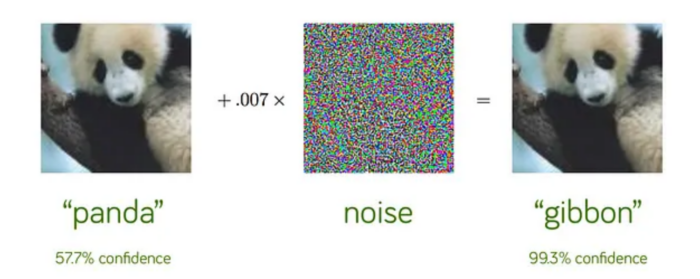
Fig. 2 Un panda o una scimmia gibbone? [Fonte Rif. 3]
La Fig. 2 presenta un’immagine di un panda (a sinistra) in cui al 7 per mille dei pixel viene aggiunto del “rumore bianco”. Il risultato è che, per l’occhio umano, l’immagine non è cambiata; mentre per il modello ML ora rappresenta una scimmia gibbone con il 99,3% di probabilità.
Lo studio di queste vulnerabilità ha portato a comprendere – si veda ad esempio [Rif. 4] – che non si tratta di errori dovuti ad una particolare implementazione errata o disattenzione dei programmatori, ma di un problema più generale e profondo dei modelli ML.
Per semplicità e chiarezza di esposizione, conviene distinguere due significati simili ma non precisamente identici del termine “Adversarial Machine Learning”:
Adversarial ML – Aspetti Scientifici: studio della “Robustezza” dei modelli tramite la possibilità di costruire Adversarial Examples con tecniche sperimentali e matematiche – si vedano i due esempi precedenti;
Adversarial ML – Aspetti Operativi: Studio dei possibili attacchi ai modelli ML utilizzati in ambiente Business.
I due ambiti hanno ovviamente ampie aree di sovrapposizione ma i principali obiettivi, pur essendo allineati, sono diversi.
In ambito scientifico lo scopo della ricerca è comprendere quali sono le ragioni dell’esistenza degli Adversarial Examples e, di conseguenza, come migliorare i modelli ML in modo da non averne. I modelli ML senza Adversarial Examples sono chiamati Robusti: questo non vuol dire che non possono fare errori o confondersi, ma che non hanno deviazioni sistematiche con grandi errori dal comportamento atteso.
Nel primo esempio sopra riportato, in un modello ML Robusto l’applicazione di sticker o altri camuffamenti e scritte che all’occhio umano non nascondono il cartello stradale di Stop, possono al più ridurre la confidenza dell’identificazione del cartello da parte del modello ML ad una percentuale del 70% o 60%, ma non identificare il cartello come un altro segnale con quasi assoluta certezza. Nel secondo esempio, due immagini che appaiono uguali all’occhio umano devono essere classificate similmente da un modello ML Robusto, al più con diverso livello di confidenza; e non possono essere identificate come raffiguranti due animali diversi, quello errato con quasi assoluta certezza.
È possibile quindi paragonare il processo di creazione di un modello ML Robusto al processo di sviluppo sicuro del software: ormai è ben noto come sviluppare software adottando pratiche che permettono di ridurre il più possibile la probabilità di Bugs e vulnerabilità di sicurezza, anche se rimane molto difficile se non impossibile (anche teoricamente) scrivere del software complesso con garanzia assoluta di assenza di vulnerabilità.
Ma i modelli ML che sono oggi disponibili sono ancora molto giovani. Benché i primi sviluppi di modelli di Intelligenza Artificiale risalgano agli anni ’50, lo sviluppo dei modelli ML odierni è iniziato decisamente negli anni ’90. Anche se l’architettura di base di molti modelli ML è a prima vista semplice, gli algoritmi matematici che li supportano possono essere molto complessi e ancora non ben compresi/risolti dai ricercatori, ad esempio quelli dei modelli di Deep Learning che recentemente hanno fatto tanto clamore giornalistico.
Siamo quindi nel periodo in cui si è identificato un problema (l’esistenza di Adversarial Examples in modelli ML) e lo si sta studiando; ma non si è ancora trovata la soluzione generale (come costruire modelli ML Robusti) né l’approccio operativo per risolverlo.
L’esistenza di Adversarial Examples è legata al processo di apprendimento di un modello ML. Una tra le principali caratteristiche dei modelli ML è avere moltissimi, anche centinaia di miliardi di parametri numerici configurabili. Inizialmente questi parametri hanno valori casuali e il processo di apprendimento consiste appunto nel configurare il miglior valore di ogni parametro in modo che ogni dato di addestramento in ingresso venga elaborato dal modello, producendo in uscita il risultato atteso. Semplificando molto il funzionamento di questi modelli, quando un nuovo dato viene elaborato dal modello ML, i valori dei parametri configurati permettono di identificare somiglianze con i dati di addestramento e fornire un risultato probabilisticamente vicino a quello corretto od ottimale. Ovviamente il set di dati di addestramento non è esaustivo di tutti i possibili dati esistenti: nei due esempi precedenti non comprende tutte le possibili immagini di cartelli stradali o di panda, anche perché sarebbe una quantità infinita di dati. I set di dati di addestramento sono però rappresentativi dei dati esistenti ma a priori (e in pratica) non è detto che siano sufficienti a configurare tutti i parametri del modello ML in maniera ottimale. C’è quindi la possibilità che una particolare combinazione di dati in ingresso corrisponda ad uno speciale set di parametri che non è stato configurato ottimamente per quei dati (o per nulla) e che quindi generi un risultato errato.
Una ovvia prima soluzione all’esistenza degli Adversarial Examples è addestrare nuovamente il modello ML includendo tra i dati di addestramento gli Adversarial Examples. Il primo problema di questo approccio è che bisogna innanzitutto essere capaci di identificare tutti gli Adversarial Examples; e questo è proprio uno dei principali problemi ancora aperti. Inoltre alcuni modelli ML hanno mostrato di essere soggetti a vulnerabilità o debolezze quali la “sotto-specifica” (Underspecification, ovvero il fatto che una minima modifica ai dati di addestramento produce grandi modifiche nel modello) e la “smemoratezza” (Forgetfulness, ovvero un aggiornamento del modello con nuovi dati porta il modello a dimenticare parte di quello che aveva già appreso). Vi è quindi il rischio che un ulteriore addestramento di un modello ML, aggiungendo anche gli Adversarial Examples tra i dati di addestramento, possa introdurre nuovi Adversarial Examples, senza quindi risolvere il problema. Queste e simili fragilità attuali del processo di apprendimento dei modelli ML rendono oggi difficile – se non impossibile – identificare ed eliminare completamente gli Adversarial Examples dai modelli ML.
Rif. 2: T. Gu, B. Dolan-Gavitt, S. Garg, “BadNets: Identifying Vulnerabilities in the Machine Learning Model Supply Chain”, 2017, arXiv:1708.06733
Rif. 3: I.J. Goodfellow, J. Shlens, C. Szegedy, “Explaining and Harnessing Adversarial Examples”, 2014, arXiv:1412.6572
Rif. 4: B. Biggio, B. Nelson, P. Laskov, “Poisoning Attacks against Support Vector Machines”, 2013-03-25, ArXiv:1206.6389; Biggio, I. Corona, D. Maiorca, B. Nelson, N. Srndic, P. Laskov, G. Giacinto, F. Roli, Fabio, “Evasion attacks against machine learning at test time” , 2013, ECML PKDD. Lecture Notes in Computer Science. Vol. 7908. Springer. pp. 387–402, arXiv:1708.0613; Biggio, F. Roli, Fabio, “Wild patterns: Ten years after the rise of adversarial machine learning” , dicembre 2018, Pattern Recognition. 84: 317–331, arXiv:1712.03141intell
PhD CISA CISSP Consulente freelance in sicurezza informatica: si occupa prevalentemente di consulenza al top management in Cyber Security e di progetti, governance, risk management, compliance, audit e formazione in sicurezza IT.
Sempre più aziende stanno scegliendo Kubernetes (K8s) per intraprendere un percorso cloud-native, ma devono fare i conti con importanti problemi di sicurezza. Micheal Cade, Global Field CTO Cloud-Native Product Strategy di Veeam, riporta che, secondo un rapporto di Aqua Security, i cluster Kubernetes di più di 350 organizzazioni, tra cui aziende Fortune 500, sono accessibili ed esposti a cyberattacchi come i ransomware.
Stando alle stime di Enterprise Strategy Group, entro il 2024 l’82% delle organizzazioni in tutto il mondo utilizzerà i container Kubernetes. Un’adozione così ampia e veloce comporta inevitabilmente una serie di insidie di cui i team di sicurezza devono occuparsi. Le imprese scelgono i container per avere velocità e agilità di sviluppo, ma la loro adozione, spiega Cade, ha lasciato alcune “porte aperte” in merito alla sicurezza dei sistemi, dovute anche alla pressione di dover aggiungere o sviluppare nuove funzionalità.
Nella maggior parte dei casi le vulnerabilità di Kubernetes sono dovute a configurazioni errate durante le fasi di progettazione e sviluppo. Il motivo dietro questi errori non è solo la tempistica, ma anche la mancanza di conoscenze specifiche di K8s.
Il report di Aqua Security evidenzia due tipi di configurazioni errate principali: la prima prevede che gli utenti anonimi richiedano un singolo livello di autenticazione che, se superato, può garantire privilegi che includono quelli di amministratore; il secondo errore più comune riguarda i cluster mal configurati che in alcuni casi rimangono esposti al pubblico, permettendo agli attaccanti di usare strumenti come “Kubectl” per connettersi al cluster.
Pixabay
Col tempo gli sviluppatori K8s diventeranno esperti delle piattaforme in uso e i problemi evidenziati diventeranno meno comuni; nel frattempo è necessario mettere in campo processi di backup e ripristino dei dati che aiutino le aziende a contenere gli impatti degli attacchi.
Anche in questo caso, però, ci sono lacune molto gravi: secondo l’ultimo report di Enterprise Strategy Group sulla protezione di Kubernetes, il 33% delle organizzazioni che lo utilizzano stanno continuando a usare gli stessi strumenti e processi di protezione dati delle normali applicazioni. Le applicazioni cloud-native richiedono soluzioni di backup cloud-native in grado di tracciare anche la parte mobile di K8s.
Con la sicurezza e il ripristino difettosi, le aziende espongono i propri cluster Kubernetes ad attacchi come il ransomware. La sicurezza deve rimanere una priorità e soprattutto deve essere al passo con le nuove pratiche di sviluppo; in caso contrario, i cybercriminali possono sfruttare le lacune per accedere alle infrastrutture.
La soluzione è implementare processi di DevSecOps favorendo la collaborazione tra team di sviluppo e di sicurezza, mantenendo gli ambienti sicuri sin dalle prime fasi.
Member of LockBit ransomware group sentenced to 4 years in prison
Getty Images | Charles O’Rear
A dual Canadian-Russian national has been sentenced to four years in prison for his role in infecting more than 1,000 victims with the LockBit ransomware and then extorting them for tens of millions of dollars.
Mikhail Vasiliev, a 33-year-old who most recently lived in Ontario, Canada, was arrested in November 2022 and charged with conspiring to infect protected computers with ransomware and sending ransom demands to victims. Last month, he pleaded guilty to eight counts of cyber extortion, mischief, and weapons charges.
During an October 2022 raid on Vasiliev’s Bradford, Ontario home, Canadian law enforcement agents found Vasiliev working on a laptop that displayed a login screen to the LockBit control panel, which members used to carry out attacks. The investigators also found a seed phrase credential for a bitcoin wallet address that was linked to a different wallet that had received a payment from a victim that had been infected and extorted by LockBit.
In an earlier raid, the investigators found a file named “TARGETLIST” stored on one of Vasiliev’s devices, FBI agents said in a court document. The file contained a list of what appeared to be either prospective or historical cybercrime victims targeted by LockBit. The investigators also uncovered:
Screenshots of message exchanges with someone with the username LockBitSupp, a moniker used by one or more of the main LockBit members. The messages discussed the status of stolen data stored on the LockBit servers and a confirmed LockBit victim located in Malaysia.
A text file with the heading “LockBit Linux/ESXi locker V: 1.1” that included what appeared to be instructions for the deployment of the LockBit ransomware.
Photographs of a computer screen showing usernames and passwords for devices belonging to employees of a confirmed LockBit victim that had been infected in January 2022.
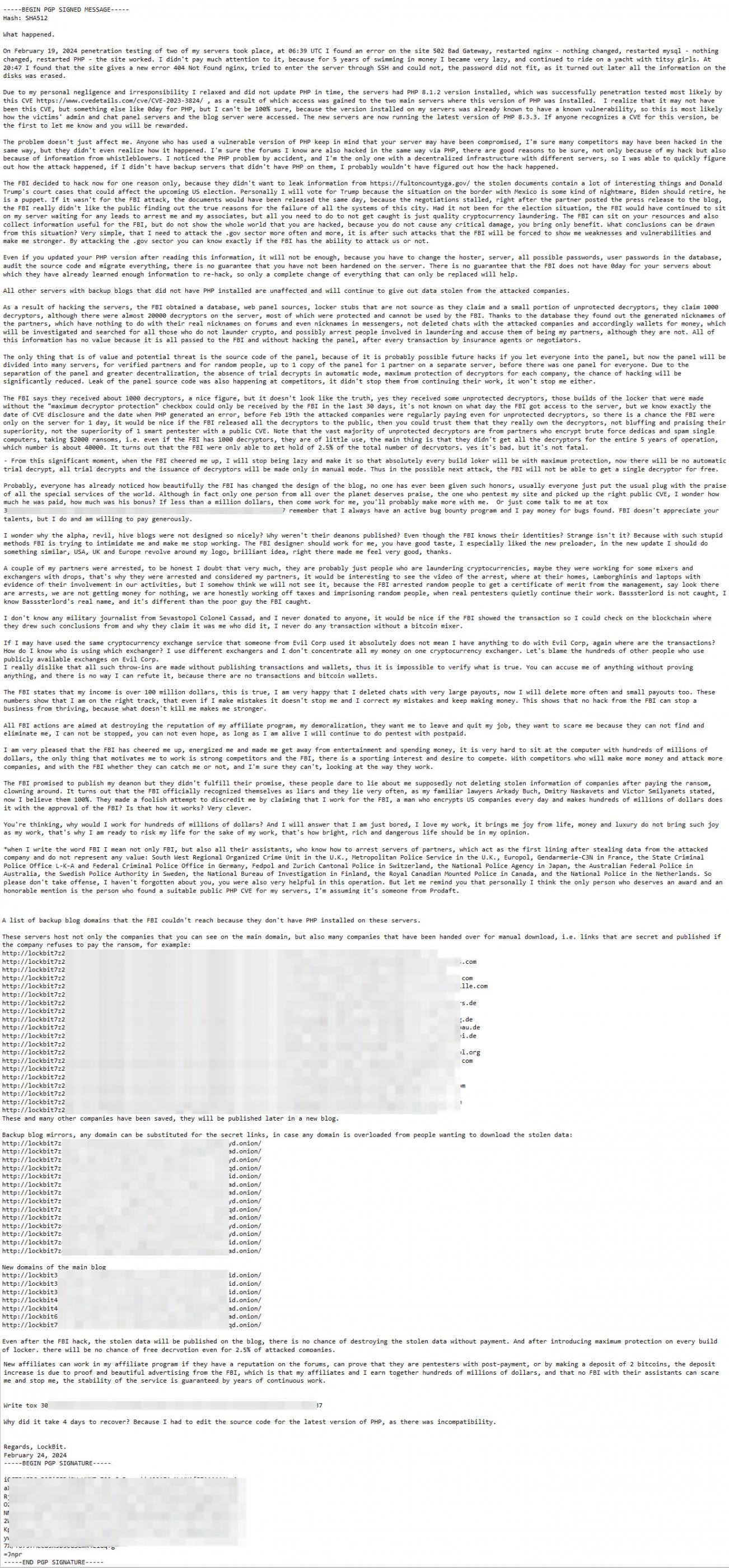
LockBit has operated since at least 2019 and has also been known under the name “ABCD” in the past. Within three years, the group’s malware was the most widely circulating ransomware. Like most of its peers, LockBit has operated under what’s known as ransomware-as-a-service, in which it provides software and infrastructure to affiliates who use it to do the actual hacking. LockBit and the affiliates then divide any resulting revenue. Hundreds of affiliates participated. The FBI said last month that LockBit to date has extorted more than $120 million from thousands of victims around the world.
Last month, the FBI said that it and partner law enforcement agencies around the world struck a major blow at LockBit by seizing most of the server infrastructure the group used to coordinate attacks and make ransom demands to victims. The takedown occurred after law enforcement agents gained the highest levels of system access to a LockBit system and the main web panel LockBit operators used to communicate
Authorities said they seized control of 14,000 accounts and 34 servers located in the Netherlands, Germany, Finland, France, Switzerland, Australia, the US, and the UK. Two LockBit suspects were arrested in Poland and Ukraine, and five indictments and three arrest warrants were issued. Authorities also froze 200 cryptocurrency accounts linked to the ransomware operation.
Two days later, researchers detected a new round of attacks that spread LockBit ransomware. A few days after that, a key LockBit member published a post that said law enforcement had taken down only some of the group’s infrastructure. LockBit members opened a new dark web site that claimed to have hacked several new victims. The new activity has raised concerns among some that LockBit remained viable.
Last week, journalist Valéry Marchive said that most of the hacks claimed on the new site were recycled from previous events in 2022, 2023, and 2024. “The data leaked by the LockBit 3.0 franchise does not appear to be the result of cyber attacks carried out by a very large number of shackles,” Marchive wrote. LockBit 3.0 was a reference to the newly revived as claimed on the new dark web site.
Michelle Fuerst, the judge presiding over Vasiliev’s case, said during Tuesday’s sentencing that Vasilev was a “cyber-terrorist” whose actions were “planned, deliberate, and coldly calculated,” according to CTVNews. The judge reportedly also said that the defendant’s actions were “far from victimless crimes” and that he was “motivated by his own greed.”
An attorney representing the defendant said: “Mikhail Vasiliev took responsibility for his actions, and that played out in today’s courtroom with the sentence that was imposed.”
https://arstechnica.com/?p=2010404
Report reveals 13,000 detected and blocked false investment domains
Netcraft’s new research reveals that it uncovered and blocked around 13,000 fraudulent investment platform domains in January alone. These false investment platform domains were found across more than 7,000 IPs. This is the highest number of IPs since the researchers started tracking these platforms and contribute to a 25% increase from December’s numbers. This highlights the continuing trend of consumer losses via fraud, which the Federal Trade Commission (FTC) revealed was more than $10 billion in 2023.
These online investment scams offer high returns with little to no associated risk. Targets of fraudulent investment operations are often presented with opportunities to trade in cryptocurrency or other high-risk assets in order to claim a once-in-a-lifetime investment for guaranteed returns. A target only needs to submit an initial payment for scammers to take advantage and for the money to be lost.
I ricercatori di FortiGuard Labs hanno scoperto una campagna di phishing che porta gli utenti a scaricare un downloader Java malevolo per distribuire VCURMS e STRRAT, due trojan ad accesso remoto (RAT).
Il primo RAT è in grado di ottenere informazioni da diverse applicazioni, come Discord e Steam, e raccogliere cookie, dati per l’autocompletamento, la cronologia del browser e le password memorizzate nel browser. VCURMS è inoltre in grado di accedere alle informazioni di rete del dispositivo, a dati sull’hardware, alla lista di processi in esecuzione e può catturare screenshot. Il secondo trojan invece non solo permette a un attaccante di ottenere credenziali da browser e applicazioni, ma agisce anche come keylogger.
Pixabay
Per ottenere accesso iniziale al dispositivo della vittima, gli attaccanti inviano una mail dove si richiede di verificare delle informazioni di pagamento, con allegato un file PDF. Il file è in realtà un eseguibile che, una volta aperto, scarica ed esegue un file JAR malevolo sul dispositivo della vittima.
Il file installa i due RAT e VCURMS si replica nella cartella Startup di Windows, così che venga sempre eseguiti durante lo startup del sistema. Il primo trojan è quello che si occupa della comunicazione con gli attaccanti: non appena la vittima è online, esso si connette al server C2 per ricevere istruzioni.
Stando all’analisi di FortiGuard Labs, gli attaccanti usano servizi come AWS e GitHub per distribuire i JAR e sfruttano protector commerciali per eludere i controlli di sicurezza.
Per proteggersi da questo tipo di attacchi è fondamentale controllare sempre la legittimità dei mittenti delle email e non scaricare allegati se non si è assolutamente certi della loro provenienza.