Siti fake di Skype, Google Meet e Zoom usati per distribuire trojan


Un gruppo di hacker russi sta distribuendo trojan agli utenti Android e Windows sfruttando siti web che si fingono meet Skype, Google Meet e Zoom; a dirlo è una nuova dei ricercatori del ThreatLabz di Zscaler, i quali hanno individuato almeno tre remote access trojan (RAT) legati alle campagne: SpyNote, un RAT per Android, e NjRAT e DCRat per Windows.

Gli attaccanti hanno creato decine di siti web falsi con URL che ricordano quelli legittimi delle tre principali piattaforme di meeting video. Nel caso di utenti Windows, collegandosi a questi siti web e scaricando le presunte applicazioni, le vittime scaricano in realtà uno script BAT malevolo che, una volta aperto, effettua il download del RAT che comunica col server C2 degli attaccanti. Analogamente, gli utenti Android vengono ingannati a scaricare un finto installer che si rivela poi un trojan.
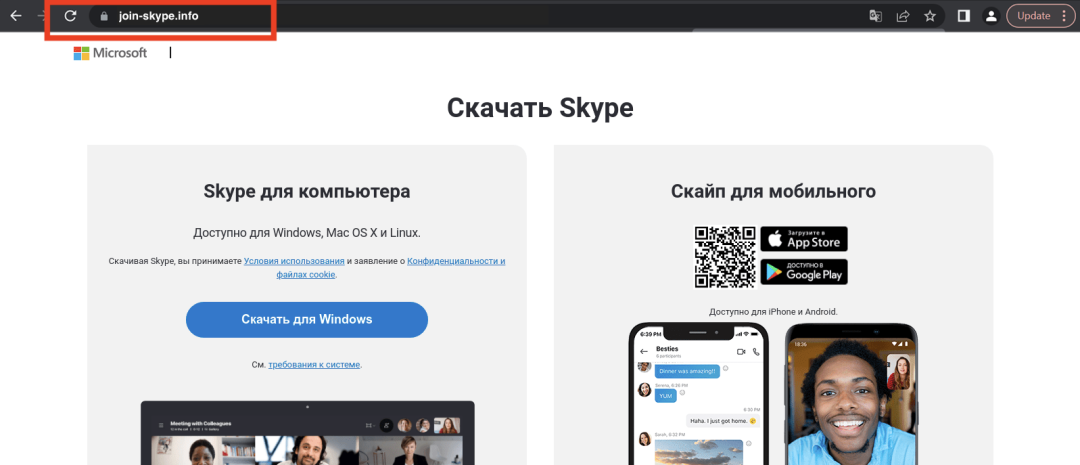
Credits: Zscaler

I ricercatori hanno individuato inizialmente un sito fake di Skype sotto il dominio join-skype.info, creato a inizio dicembre. Il sito invitava gli utenti a scaricare l’eseguibile per installare l’applicazione. In Windows il file veniva salvato come Skype8.exe, mentre il pulsante Google Play scaricava un file chiamato Skype.apk. Cliccando sul pulsante dell’Apple Store si veniva invece rimandati all’applicazione di messaggistica legittima.

A fine dicembre il team di Zscaler ha individuato un sito web dal funzionamento analogo che si fingeva un meet Google Meet, mentre i siti web di Zoom sono apparsi solo a fine gennaio. Oltre al DCRat per Windows, questi siti web contenevano anche un’open directory che conteneva altri due file eseguibili per Windows chiamati driver.exe e meet.exe, entrambi NjRAT che probabilmente gli attaccanti usano in altre campagne.

I trojan analizzati sono in grado di sottrarre informazioni confidenziali, registrare i tasti premuti e anche rubare file.

Il consiglio, come sempre in questi casi, è di fare molta attenzione alla legittimità dei siti web da cui si sta scaricando un’l’applicazione, verificando che il dominio sia quello corretto; inoltre, è fondamentale dotarsi di soluzioni di sicurezza che proteggano dalle ultime varianti di malware.

Condividi l’articolo


Articoli correlati

Altro in questa categoria


https://www.securityinfo.it/2024/03/07/siti-fake-di-skype-google-meet-e-zoom-usati-per-distribuire-trojan/?utm_source=rss&utm_medium=rss&utm_campaign=siti-fake-di-skype-google-meet-e-zoom-usati-per-distribuire-trojan




Migliaia di siti WordPress infetti sfruttano gli utenti per eseguire attacchi brute force


I ricercatori di Sucuri hanno individuato una nuova campagna malware che prende di mira i siti web WordPress e inietta uno script che esegue attacchi brute force dai browser degli utenti.

La campagna nasce da una precedente serie di attacchi che compromettevano i siti WordPress per distribuire drainer di criptovalute; gli attaccanti, in seguito, hanno sviluppato una variante del malware in grado di eseguire brute force su altri siti.

Analizzando i siti web infettati dal drainer, il team di Sucuri ha individuato anche lo script turboturbo.js in numerosi domini WordPress. Lo script contiene un URL usato per ottenere lo username e una lista password; ricevute queste informazioni, lo script forza il browser a eseguire attacchi brute force su centinaia di siti WordPress per validare le combinazioni di credenziali.

Lo script viene caricato non appena un utente visita il sito WordPress infetto. L’attacco brute force a opera del browser non richiede alcuna interazione da parte degli attaccanti: essi, finito il test delle credenziali, ricevono l’elenco delle combinazioni sito web-username-password valide da utilizzare per altri attacchi.

Wordpress

Pixabay

I ricercatori riportano che finora hanno trovato più di 500 siti WordPress infetti; considerando che ogni giorno migliaia di utenti visitano questi siti, il numero di richieste legate agli attacchi brute force è molto elevato. Queste richieste inoltre sono difficili da individuare e bloccare considerando che provengono da browser di utenti legittimi.

Secondo l’analisi di Sucuri, al momento gli attacchi brute force hanno avuto successo solo nello 0,5% dei casi, ma le richieste sono decine di migliaia.

Non è chiaro perché gli attaccanti abbiano abbandonato i crypto-drainer per dedicarsi agli attacchi brute force; secondo Denis Sinegubko, ricercatore senior di Sucuri, è probabile che i drainer non fossero abbastanza redditizi per gli attaccanti, oltre al fatto che venivano bloccati molto velocemente. “Sembra ragionevole cambiare il payload con qualcosa di più furtivo che allo stesso tempo possa contribuire ad aumentare il loro portafoglio di siti compromessi per future ondate di infezioni che saranno in grado di monetizzare in un modo o nell’altro” afferma Sinegubko.

Per proteggersi da questo tipo di attacchi è essenziale usare password robuste e, per gli admin WordPress, restringere l’accesso all’interfaccia di amministrazione solo a indirizzi IP fidati.

Condividi l’articolo


Articoli correlati

Altro in questa categoria


https://www.securityinfo.it/2024/03/07/migliaia-di-siti-wordpress-infetti-sfruttano-gli-utenti-per-eseguire-attacchi-brute-force/?utm_source=rss&utm_medium=rss&utm_campaign=migliaia-di-siti-wordpress-infetti-sfruttano-gli-utenti-per-eseguire-attacchi-brute-force


Illinois school employs ZeroEyes AI-based gun detection technology

A school district in Illinois has adopted a gun detection technology that is run by artificial intelligence (AI). This AI gun detection system is designed to maintain schoolground security by proactively identifying potential threats. The AI gun detection system was designed by ZeroEyes and possesses a U.S. Department of Homeland Security SAFETY Act Designation.

The school, Mount Pulaski Community Unified School District of Logan Count, Illinois, has deployed this technology at Mount Pulaski Grade School (MPGS) and Mount Pulaski High School (MPHS). The school district has incorporated this technology into an already-existing crisis response plan, providing the school district with a range of security measures to protect against gun violence.

The AI’s situational awareness and gun detection software is now embedded into digital cameras on the school’s campus. If the AI detects a gun, images will be taken ad shared with an operations center to determine the validity of the threat.  

https://www.securitymagazine.com/articles/100486-illinois-school-employs-zeroeyes-ai-based-gun-detection-technology


VMware sandbox escape bugs are so critical, patches are released for end-of-life products

VMware sandbox escape bugs are so critical, patches are released for end-of-life products
Getty Images

VMware is urging customers to patch critical vulnerabilities that make it possible for hackers to break out of sandbox and hypervisor protections in all versions, including out-of-support ones, of VMware ESXi, Workstation, Fusion, and Cloud Foundation products.

A constellation of four vulnerabilities—two carrying severity ratings of 9.3 out of a possible 10—are serious because they undermine the fundamental purpose of the VMware products, which is to run sensitive operations inside a virtual machine that’s segmented from the host machine. VMware officials said that the prospect of a hypervisor escape warranted an immediate response under the company’s IT Infrastructure Library, a process usually abbreviated as ITIL.

“Emergency change”

“In ITIL terms, this situation qualifies as an emergency change, necessitating prompt action from your organization,” the officials wrote in a post. “However, the appropriate security response varies depending on specific circumstances.”

Among the specific circumstances, one concerns which vulnerable product a customer is using, and another is whether and how it may be positioned behind a firewall. A VMware advisory included the following matrix showing how the vulnerabilities—tracked as CVE-2024-22252, CVE-2024-22253, CVE-2024-22254, CVE-2024-22255—affect each of the vulnerable products:

Product Version Running On CVE Identifier CVSSv3 Severity Fixed Version [1] Workarounds Additional Documentation
ESXi 8.0 Any CVE-2024-22252, CVE-2024-22253, CVE-2024-22254, CVE-2024-22255 8.4, 8.4, 7.9, 7.1 critical ESXi80U2sb-23305545 KB96682 FAQ
ESXi 8.0 [2] Any CVE-2024-22252, CVE-2024-22253, CVE-2024-22254, CVE-2024-22255 8.4, 8.4, 7.9, 7.1 critical ESXi80U1d-23299997 KB96682 FAQ
ESXi 7.0 Any CVE-2024-22252, CVE-2024-22253, CVE-2024-22254, CVE-2024-22255 8.4, 8.4, 7.9, 7.1 critical ESXi70U3p-23307199 KB96682 FAQ
Workstation 17.x Any CVE-2024-22252, CVE-2024-22253, CVE-2024-22255 9.3, 9.3, 7.1 critical 17.5.1 KB96682 None.
Fusion 13.x MacOS CVE-2024-22252, CVE-2024-22253, CVE-2024-22255 9.3, 9.3, 7.1 critical 13.5.1 KB96682 None

Three of the vulnerabilities affect the USB controller the products use to support peripheral devices such as keyboards and mice. The advisory describes the vulnerabilities as:

CVE-2024-22252: a use-after-free vulnerability in XHCI USB controller with a maximum severity range of 9.3 for Workstation/Fusion and a base score of 8.4 for ESXi. Someone with local administrative privileges on a virtual machine can execute code as the virtual machine’s VMX process running on the host. On ESXi, the exploitation is contained within the VMX sandbox, whereas, on Workstation and Fusion, this could lead to code execution on the machine where Workstation or Fusion is installed.

CVE-2024-22253: a use-after-free vulnerability in UHCI USB controller with a maximum severity rating of 9.3 for Workstation/Fusion and a base score of 8.4 for ESXi. Exploitation requirements and outcomes are the same as for CVE-2024-22252.

CVE-2024-22254: an out-of-bounds write vulnerability with a maximum severity base score of 7.9. This vulnerability makes it possible for someone with privileges within the VMX process to trigger an out-of-bounds write leading to a sandbox escape.

CVE-2024-22255: an information disclosure vulnerability in the UHCI USB controller with a maximum CVSSv3 base score of 7.1. Someone with administrative access to a virtual machine can exploit it to leak memory from the vmx process.

Broadcom, the VMware parent company, is urging customers to patch vulnerable products. As a workaround, users can remove USB controllers from vulnerable virtual machines, but Broadcom stressed that this measure could degrade virtual console functionality and should be viewed as only a temporary solution. In an article explaining how to remove a USB controller, officials wrote:

The workaround is to remove all USB controllers from the Virtual Machine. As a result, USB passthrough functionality will be unavailable.

In addition, virtual/emulated USB devices, such as VMware virtual USB stick or dongle, will not be available for use by the virtual machine. In contrast, the default keyboard/mouse as input devices are not affected as they are, by default, not connected through USB protocol but have a driver that does software device emulation in the guest OS.

IMPORTANT:
Certain guest operating systems, including Mac OS, do not support using a PS/2 mouse and keyboard. These guest operating systems will be left without a mouse and keyboard without a USB controller.

VMware said it isn’t aware of any evidence that any of the vulnerabilities are under active exploitation.

https://arstechnica.com/?p=2008406


Insider-driven data loss incidents cost an average of $15 million

A recent report by Code42 examines the emerging inside threats that organizations are facing. The study revealed that insider data leakage poses a greater threat to security with the introduction of AI technology.

Monthly insider-caused data loss, exposure, leakage and thefts have increased by 28% since 2021. Out of all respondents surveyed in this report, 85% anticipate that this increase in insider-driven information loss will continue over the next year.

A majority of companies (99%) have established information protection solutions. However, 78% of cybersecurity leaders report instances of sensitive data breaches, leaks or exposures, and 85% say that their organization’s sensitive information is vulnerable to emerging AI technologies.

In regard to the risk AI presents, many cybersecurity leaders express concern that their organization’s employees may not be adhering to generative AI policies in place. Furthermore, 87% report concern that their organization’s employees may accidentally leak sensitive data by inputting it into generative AI.

Insider data loss costs organizations money, time and resources. The report found that the average monetary cost of employee-driven data loss was $15 million. Respondents report spending an average of three hours per day to addressing insider-caused data events, and 72% of cybersecurity leaders report being concerned that they may lose their job in the event of an uninvestigated insider data breach. 

https://www.securitymagazine.com/articles/100483-insider-driven-data-loss-incidents-cost-an-average-of-15-million


69% of financial services consumers prioritize fraud protection

Consumer preferences around financial service fraud prevention were analyzed in a recent report by FICO. According to the report, 69% of consumers rank good fraud protection in their top three considerations when choosing a financial service provider.

Key findings from the research show that good fraud protection can be a competitive advantage. Thirty-two percent of respondents note that strong fraud protection is the most important consideration when opening a new account. Having that added security is also why most respondents (76%) cite why they prefer to open a financial account in a branch and a further 65% who say they can get the information or advice they need in person rather than via a website or app.

Additionally, the survey reports that 12.3% of respondents say their stolen identity has been used to open a financial account, equating to over 32 million people. As a majority noted, customers are more worried about banking-related fraud, with fraud resulting from stolen cards and identity theft leading to application fraud as the most likely to feature in their top three most concerning fraud types.

Read the full report here.

https://www.securitymagazine.com/articles/100488-69-of-financial-services-consumers-prioritize-fraud-protection


Hacker nord-coreani attaccano l’industria dei semiconduttori sud-coreana


Il National Intelligence Service (NIS) della Corea del Sud ha scoperto alcuni attacchi informatici contro produttori nazionali di semiconduttori da parte di hacker nord-coreani.

Secondo l’Agenzia dell’intelligence, gli attacchi sarebbero cominciati a metà dello scorso anno. Gli attaccanti hanno preso di mira numerose aziende sfruttando le vulnerabilità dei sistemi e usando principalmente tecniche “Living off the Land” per ridurre al minimo l’esecuzione di codice malevolo, riuscendo quindi a eludere più facilmente i controlli.

Nel comunicato l’Agenzia fa riferimento a due attacchi, uno avvenuto lo scorso dicembre e uno a febbraio, che hanno colpito il server di gestione di configurazione e il server delle policy di sicurezza di due diverse aziende. Il comunicato riporta che gli attaccanti sono riusciti a ottenere i design dei prodotti e le foto del sito dove è ospitata la struttura.

Pixabay

Secondo il NIS queste campagne indicano che la Corea del Nord si stia preparando a produrre i propri semiconduttori a causa delle difficoltà di approvvigionamento: le sanzioni inflitte al Paese e l’aumento della domanda dovuto allo sviluppo di armi, satelliti e missili avrebbero messo in difficoltà il settore.

Non è chiaro chi siano i gruppi responsabili degli attacchi; quel che è certo è che gli hacker stanno collaborando a stretto contatto con il regime nord-coreano per supportare le operazioni militari del Paese. A rischiare per le conseguenze degli attacchy ci sono grandi aziende come Samsung Electronics, il più grande produttore di chip di memoria al mondo, seguito immediatamente da SK Hynix, sesta realtà più grande al mondo nella produzione di semiconduttori.

Il NIS chiede alle aziende di prestare la massima attenzione e migliorare le proprie difese, implementando tecniche di controllo degli accessi più robuste e aggiornando i propri sistemi. L’Agenzia sta inoltre pubblicando diversi contenuti gratuiti per istruire utenti e aziende sulle buone pratiche di sicurezza.

Condividi l’articolo


Articoli correlati

Altro in questa categoria


https://www.securityinfo.it/2024/03/06/hacker-nord-coreani-attaccano-lindustria-dei-semiconduttori-sud-coreana/?utm_source=rss&utm_medium=rss&utm_campaign=hacker-nord-coreani-attaccano-lindustria-dei-semiconduttori-sud-coreana


Boston Red Sox partner with Centripetal for cyber network security

The Boston Red Sox and Fenway Park have selected Centripetal for a cyber network security partnership. The recently announced partnership will be a multi-year endeavor that will provide the Boston Red Sox and Fenway Park with new intelligence-powered security technology to aid stadium security teams. 

The sports industry can be an attractive target to malicious actors. Worldwide sports affiliations, national teams, major or minor leagues and entertainment arenas host valuable data. Business and personal information alike may be kept by these organizations, making them a worthwhile target for many cyberattackers. 

Through this partnership, the Boston Red Sox aims to be proactive in securing its network and private data to ensure uninterrupted operations. 

https://www.securitymagazine.com/articles/100482-boston-red-sox-partner-with-centripetal-for-cyber-network-security


Una nuova campagna di phishing sottrae gli hash NTLM per l’autenticazione


I ricercatori di Proofpoint hanno individuato una nuova campagna di phishing che mira a sottrarre gli hash NTLM di Windows e usarli per ottenere le password degli utenti in chiaro.

Dietro gli attacchi ci sarebbe TA577, un gruppo attivo da metà del 2020 affiliato a Qbot e legato alle attività del ransomware BlackBasta. Il gruppo prende di mira organizzazioni di diversi settori in tutto il mondo, ed è considerato un Initial Access Broker (IAB).

A fine febbraio i ricercatori hanno intercettato decine di centinaia di messaggi email diretti a utenti di organizzazioni di tutto il mondo. I messaggi erano risposte a email precedenti (attacco di thread hijacking) e contenevano allegati HTML in archivi .zip. 

Una volta estratto il file .zip e aperto l’HTML, il file tentava di connettersi a un server SMB controllato dagli attaccanti tramite un reindirizzamento verso un URI. L’obiettivo della campagna di phishing non era scaricare un malware, ma ottenere le coppie Challenge/Response di NTLM per sottrarre l’hash; questa informazione poteva poi essere usata per individuare la password in chiaro o eseguire degli attacchi “Pass-The-Hash”, consentendo al gruppo di autenticarsi sui sistemi aziendali.

Il team di Proofpoint fa notare che l’uso di un archivio .zip per distribuire l’HTML serve a superare i controlli di sicurezza di Outlook introdotti a luglio: se l’URI del file scheme fosse stato inviato direttamente nel corpo del messaggio di posta elettronica, l’attacco non avrebbe funzionato sui client Outlook; ciò evidenzia un impegno notevole da parte del gruppo nel rimanere sempre aggiornato e sviluppare tecniche per eludere i nuovi controlli

Proofpoint spiega che il gruppo non ha mai sferrato attacchi di questo genere e che sta investendo tempo e risorse per migliorare velocemente le sue tecniche. “Rispetto ad altriIAB, TA755 sembra avere il polso del panorama delle minacce e sa quando e perché specifiche catene di attacco smettono di essere efficaci e creerà rapidamente nuovi metodi per eludere i controlli e tentare di aumentare l’efficacia e la probabilità di colpire le vittime con la consegna dei payload”.

Per proteggersi da questo tipo di attacchi, i ricercatori consigliano di bloccare le connessioni SMB in uscita.

Condividi l’articolo


Articoli correlati

Altro in questa categoria


https://www.securityinfo.it/2024/03/06/una-nuova-campagna-di-phishing-sottrae-gli-hash-ntlm-per-lautenticazione/?utm_source=rss&utm_medium=rss&utm_campaign=una-nuova-campagna-di-phishing-sottrae-gli-hash-ntlm-per-lautenticazione


OSHA cites sawmill following fatal injury

The Occupational Safety and Health Administration (OSHA) cited Phenix City sawmill for failing to protect employees from workplace hazards. 

In response to an August 2023 fatal incident, OSHA cited Phenix Lumber Co., as well as its owners, with 22 willful violations, one repeat violation and five serious violations. Specifically, the agency found the employer failed to:

  • Ensure employees used energy control procedures to prevent the unexpected start-up of machines while performing maintenance and servicing activities such as clearing jams.
  • Ensure the use of lockout/tagout devices on machinery when performing maintenance.
  • Provide training to employees on the purpose and function of the energy control program, as well as ensure they have the knowledge and skills required for the safe application of energy control measures.
  • Maintain guarding on machines that posed amputation hazards to employees.
  • Require fall protection to be used in work areas above four feet.
  • Require employees operating a forklift to wear a seatbelt.
  • Maintain fire extinguishers in a fully charged and operable condition.
  • Ensure an electrical disconnect was located in direct line of sight from the equipment being locked out.

https://www.securitymagazine.com/articles/100484-osha-cites-sawmill-following-fatal-injury