Renee Forney | Top Cybersecurity Leaders 2024

h3 { font-weight: bold; font-size: 18px; color: #C72026; } .w3-button{border:none;display:inline-block;padding:8px 16px;vertical-align:middle;overflow:hidden;text-decoration:none;color:inherit;background-color:inherit;text-align:center;cursor:pointer;white-space:nowrap} .w3-button{-webkit-touch-callout:none;-webkit-user-select:none;-khtml-user-select:none;-moz-user-select:none;-ms-user-select:none;user-select:none} .w3-button:hover{color:#000!important;background-color:#ccc!important} .w3-block{display:block;width:100%} .w3-red,.w3-hover-red:hover{color:#fff!important;background-color:#C72026!important}

Renee Forney, Director of ISSO Governance, Risk and Compliance (GRC) at Meta, found her passion for security through an early-career drive to code. After graduating college, Forney held roles in network implementation and administration for the Virginia Department of Health and with the Navy Mutual Aid Association, a veteran’s benefits organization. From these exposures to the healthcare and financial sectors, Forney learned firsthand the importance of cybersecurity.

“The data we were working with was very important, so being able to secure that information was key. Doing everything I could do to protect people’s data was very important to me personally, and I enjoyed doing that,” Forney says.

Forney then went on to consult for a number of private- and public-sector organizations, including at Unisys as a Senior Information System Security Analyst, and for government agencies, which is how she began her nearly decade-long career in the federal government.

ACHIEVEMENTS IN THE PUBLIC SECTOR

Over her career, Forney has held senior cybersecurity leadership positions in the U.S. General Services Administration (GSA), Department of Homeland Security (DHS) and Department of Energy (DOE).

“Government is about service to and the protection of the people,” Forney says. “Having gone from GSA, which has a major financial management aspect; and then to DHS, from a national security and homeland security perspective; and on to the DOE, where we were again focusing on the protection of the people — all of these roles helped me shape and think about things larger than myself.”

While at GSA from 2009 to 2011, Forney secured major technology transformations of the agency’s backend operating systems. In 2011, she was brought into DHS to help unite the 22 departments that make up the agency. She was then promoted to an Executive Director role overseeing the CyberSkills Management Support Initiative (CMSI), which involved department-wide initiatives across cyber recruitment, identifying top potential talent, workforce retention and talent pipeline development.

“Being able to help impact and grow the workforce was a wonderful opportunity for me to understand the cyber-related missions of the U.S. Secret Service, Coast Guard, Transportation Security Administration (TSA), Immigration and Customs Enforcement (ICE), and more within DHS. My team had to understand what they were doing from a cyber perspective and ensure they had the workforce they needed. After we identified the necessary skills, we began to build the talent pipeline into the agency,” she says.

While at DHS, Forney earned her Senior Executive Service (SES) classification. After five years at the agency, Forney joined the Department of Energy as Deputy Chief Information Officer of Cybersecurity and Enterprise Operations. There, she was responsible for enterprise operations and cybersecurity across headquarters, all field offices and national laboratories. She says her varied experiences throughout her public- and private-sector work have helped her better serve the mission of cybersecurity.

“I have been truly blessed to have been in the cybersecurity field in many different facets — from healthcare, finance, education, national security and now technology. I’ve seen how technology can be used to remove barriers, open doors and enhance lives,” she says.

FROM GOVERNMENT TO TECH SECURITY

Forney transitioned back into the private sector in 2017 and subsequently earned the Senior Director of Cyber Assurance role at Capital One, where she led cyber governance and risk management initiatives. While at Capital One, she aligned cyber strategy with industry best practices and regulatory requirements. Her transition to Capital One from an eight-year career in federal government was a smooth one, she says, due to her background in regulatory compliance. Her move to the technology space was an opportunity for Forney to apply her risk management and mitigation planning skills in another sector.

In 2020, Forney started at Microsoft as Senior Director, Azure Hardware Systems & Infrastructure Security and Cognitive AI Services. “Microsoft was amazing,” she says. Forney was responsible for developing Microsoft’s supply chain risk management for Azure hardware.

“Being able to support that effort was a wonderful opportunity,” she says. “I was able to use my previous experience, knowing and understanding supply chain at the national security level, and then come into Microsoft and bring those lessons into tech.”

Her role also encompassed a cognitive artificial intelligence (AI) initiative regarding seeking regulatory approval for AI in medical devices. “The thing I loved about that project is that we often hear people using the phrase ‘AI for Good,’” she says. “This was truly an opportunity to do good using intuitive AI because the products we developed removed healthcare barriers from people’s daily lives, adding value through AI.”

In 2022, Forney moved from Microsoft to another tech giant — Meta. In her current role, Director of ISSO Governance, Risk and Compliance (GRC), she has responsibility for GRC initiatives across the globe.

“I am loving my time at Meta,” Forney says. “I’m grateful for the opportunity to come to Meta and support GRC at the company.”

Reflecting on her career, Forney says the opportunities she’s had to impact the lives of people through technology have been one of the most rewarding parts of her cybersecurity journey. Her passion for giving back is continually shown in her role as an Adjunct Professor at Morehouse College, where she teaches Computer Ethics and Human Values. She says preparing software engineering students to come into this space is a joy.

“I have been a part of a field that I have watched transform, and I have watched the impact of technology on the lives of people — and the world in general — grow,” she says. “When I think about my career across the board, I think about how being at Meta now is the culmination of all of my experiences.”

← VIEW MORE 2024 TOP CYBERSECURITY LEADERS →https://www.securitymagazine.com/articles/100456-renee-forney-top-cybersecurity-leaders-2024




92% of companies experienced an application-related breach last year

Application security was analyzed in a recent report by Checkmarx. The study reveals that 92% of companies surveyed had experienced a breach in the prior year due to vulnerabilities of applications developed in-house.

According to the report, 49% of respondents said that their developers were involved in key AppSec solution purchases, 41% said that AppSec managers were involved and 40% of respondents indicated CISO involvement.

With more software to secure that has been deployed in more environments with less time available to secure it, 91% of companies have knowingly released vulnerable applications.

Asked why respondents had released vulnerable applications, business pressure was a significant reason with 29% of AppSec managers saying they had released the applications “to meet a business, feature or security-related deadline,” 18% of CISOs saying that they hoped the vulnerability would not be exploitable and 29% of developers saying that the vulnerability would be fixed in a later release.

Developers’ top three security concerns are focused on the tension between time-to-delivery demands and the potential volumes of vulnerabilities requiring remediation, including impediment of the development process by security demands, difficulty knowing which vulnerabilities to fix and how to prioritize them and lack of context to help remediate vulnerabilities. A significant 61% of developers said that it’s critical that security not block or decelerate the development process or become a barrier to business success. In order to close the gaps in application security, the seamless integration of developer-friendly AppSec tools within their workflows is essential.

Read the full report here.

https://www.securitymagazine.com/articles/100470-92-of-companies-experienced-an-application-related-breach-last-year


Jennifer Franks | Top Cybersecurity Leaders 2024

.w3-button { border: none; display: inline-block; padding: 8px 16px; vertical-align: middle; overflow: hidden; text-decoration: none; color: inherit; background-color: inherit; text-align: center; cursor: pointer; white-space: nowrap } .w3-button { -webkit-touch-callout: none; -webkit-user-select: none; -khtml-user-select: none; -moz-user-select: none; -ms-user-select: none; user-select: none } .w3-button:hover { color: #000!important; background-color: #ccc!important } .w3-block { display: block; width: 100% } .w3-red,.w3-hover-red:hover { color: #fff!important; background-color: #C72026!important }

What started out as a summer internship has turned into a nearly two decades-long career with the federal government, which is not something Jennifer Franks had ever expected.

After completing her senior capstone project at Hampton University, Franks was introduced to the National Science Foundation CyberCorps Scholarship for Service Program by a mentor and was accepted at Carnegie Mellon University, where she completed a master’s degree in Information Security Policy & Management.

With the CyberCorps program, students must give back to the federal government for the time invested into their education, so Franks started with the U.S. Government Accountability Office (GAO) as an intern in the summer of 2005 and returned as a full-time hire in 2006.

“I completed my CyberCorps commitment to public service in July 2008, and could have departed the federal government,” Franks says. “But my career was just getting started. I was enjoying what I did, where I worked, who I worked with, I loved cybersecurity, and public service provided such a rewarding experience. I wanted to see it through a bit longer. So, here I am, 18 years later.”

As a Director in GAO’s Information Technology and Cybersecurity (ITC) team, Franks oversees work on emerging cybersecurity issues and federal agencies’ abilities to protect privacy, sensitive data and the computing infrastructure.

Franks also leads multidisciplinary teams on reviews of IT management and operations, financial management and reporting, data protection, and IT issues related to healthcare and public health, including COVID-19, as well as directs ITC’s Center for Enhanced Cybersecurity (CEC), which provides technical support within GAO and on cybersecurity engagements.

Ensuring diversity and inclusivity within the cybersecurity industry is an effort close to Franks’ heart, who also serves as a Diversity Champion by leading efforts to increase inclusiveness at GAO. Since 2012, she has facilitated numerous agency-wide diversity, equity, inclusion and accessibility (DEIA) courses. Franks also holds facilitator certifications in “Engaging in Bold, Inclusive Conversations” and Green Dot Bystander Intervention training.

“I think the biggest challenge I face is being a young Black woman in tech. That’s three strikes, right?,” Franks says candidly. “I know that we have more youth, more minorities, and more women in the space now, and that helps. It goes back to knowing the lay of the land in the environment you’re in. I believe my 18 years of federal IT and cyber audit experience speaks for itself, but sometimes I have to remember that I am not the most common face in the room. I often find myself amongst individuals who direct questions or comments to whom they perceive to be the senior-most authoritative official in the room, only for the same individuals to find out the younger person is the senior. I am hopeful that as time evolves, my continual presence (and others’) helps to change some of the perceptions and assumptions that exist in tech.”

MENTORING GOALS

Mentorship is a key part of developing talent within the cybersecurity industry, and without guidance from the mentors in her life; Franks may not have found the career path she is so passionate about today.

“A good mentor is one that listens. Every good mentor I have had was a great listener, and it is something that I strive to do in my mentoring relationships,” she says.

To effectively mentor, Franks says to tailor the approach to the person being mentored as well as to their current situation.

“I keep going back to understanding condition in order to assess a situation, and in order to truly be of benefit, you need to have situational awareness regarding the person or environment you’re dealing with,” she adds. “No two people are the same, and therefore, no two mentoring relationships will be the same.”

“Mentorship is extremely important in the cybersecurity field because it’s such a vast and deep space, and it can be easy to get lost in everything that is happening because we move so fast,” Franks says. “But to have those lifelines — having someone on your team to help you in the places that you may not be as strong or as knowledgeable is how you become better, and eventually become a mentor to someone else.”

One piece of advice Franks offers to those looking to break into the cybersecurity field is to be open and ready for all opportunities that could present themselves to you: whenever, and however, they may come.

“If you stay ready, you don’t have to get ready,” Franks says.

She recalls early in her career, colleagues commenting on why she would be “overdressed” for work.

“But because I was always ready, I was presented with opportunities by directors numerous times during my career to join them at important meetings with customers and clients, congressional hearings, media interviews and conferences,” she says. “In the world of cybersecurity, we are always taking training courses to advance in the field, but the on-the-job training, interpersonal relationship building and networking was where I began to learn so much more.”

Franks believes in having a team of resources to invest in the development of your career — mentors, coaches, advisors. She says no single resource is adequate to provide all the knowledge a person may need or want.

“Through my enhanced connections, I formed my development team and with their guidance, I became the youngest Black female executive for the agency,” she says. “One of my most essential mentors was the previous Black female Managing Director of my team, who encouraged me to pursue the executive track. She guided me through my years as an Assistant Director and supported my efforts to enhance connectivity.”

Franks says it is now her honor to return the favor as a coach, mentor and advisor in the industry.

“While my calendar is always filled to capacity, I enjoy spending time with my staff and mentees assisting them with charting their career paths,” she says.

← VIEW MORE 2024 TOP CYBERSECURITY LEADERS →https://www.securitymagazine.com/articles/100443-jennifer-franks-top-cybersecurity-leaders-2024


Ossie Munroe | Top Cybersecurity Leaders 2024

h3 { font-weight: bold; font-size: 18px; color: #C72026; } .w3-button { border: none; display: inline-block; padding: 8px 16px; vertical-align: middle; overflow: hidden; text-decoration: none; color: inherit; background-color: inherit; text-align: center; cursor: pointer; white-space: nowrap } .w3-button { -webkit-touch-callout: none; -webkit-user-select: none; -khtml-user-select: none; -moz-user-select: none; -ms-user-select: none; user-select: none } .w3-button:hover { color: #000!important; background-color: #ccc!important } .w3-block { display: block; width: 100% } .w3-red,.w3-hover-red:hover { color: #fff!important; background-color: #C72026!important }

While Ossie Munroe is relatively new to the security industry, his career at Bloomberg spans three decades. Munroe joined the organization in 1990, moving through a variety of positions before transitioning into the security field in 2013.

“While my career journey within Bloomberg has seen me move between five departments since my start at the company, that bares no reflection on the company’s culture for internal career changes. Instead, this decision was driven mostly by my focus on bettering my craft in each role I held. At this point, however, I can very comfortably say that security will remain at the center of any potential career opportunities that I consider. I want to be a part of this industry for the rest of my career,” Munroe says.

CREATING A SECURITY COMMUNITY

Munroe currently works as Bloomberg’s Deputy Chief Information Security Officer (CISO). He also leads a team of Business Information Security Officers. Munroe describes his BISO team as the “connective tissue” between the business, risk and security sides of the company.

“When a line of business is looking to install a new system, modify a design or introduce new code, it’s important security is factored into those decisions. There are many different lines of businesses and technology stacks to secure,” Munroe says.

A project Munroe worked on recently was one of Bloomberg’s acquisitions.

“I was designated as the security lead for the acquisition, which involved migrating systems, data and people to Bloomberg’s environment. Understanding the security technology and controls previously in place at the acquired company and making the decision to either partially integrate with or fully adopt Bloomberg systems was pivotal to the migration effort,” Munroe says. “It was high-stakes and a lot of work packed into an accelerated timeline.”

Munroe and the project team worked hard to ensure a smooth transition. It meant a lot of long hours, but their hard work paid off.

“The project was a defining moment for me. I met some interesting people across several different departments that I don’t think I would have otherwise met, and I still maintain many of those relationships today. I’m proud of what the team was able to accomplish,” Munroe says.

In between large-scale projects, Munroe’s day-to-day responsibilities include constant security awareness.

“There are some days full of planned meetings and even still, those days involve — as anybody else in a security role will understand — a level of unpredictability. You’re always preparing, but never really know when the next big vulnerability will be announced. Whether you’re impacted or not by that vulnerability, there’s typically a level of due diligence required. Those interruptions must be factored into your planned work,” Munroe says.

BUILDING BRIDGES THROUGH MENTORSHIP

In addition to his security responsibilities, Munroe also serves as a mentor both within and outside his organization. Within Bloomberg, Munroe encourages his team members to consider him a resource when problem solving.

“My style is typically to not solve problems for individuals unless I absolutely must. It’s natural for people to sometimes feel like they’ve exhausted all possible solutions until they’re pushed a little bit further. Sometimes, when people come to you for guidance, it’s your job to just listen. Other times, the most effective method is just asking them the right questions to allow them to arrive at a conclusion themselves,” Munroe says.

Munroe also works with mentees outside of his organization, especially those coming from non-traditional backgrounds. He mentors within Minorities in Cybersecurity as well as American Corporate Partnerships, a nonprofit designed to help military members transition back to civilian life.

“I served in the military, so anything to help veterans really hits home. There’s also a program based out in New York City called Scholarship Plus, where students from low income households, whose families can’t afford the cost of college tuition, get financial assistance and opportunities to be mentored,” Munroe says. His mentorship roles range from formal panel discussions to one-on-one calls with individuals looking for advice.

Munroe’s interest in giving back in this way comes from his personal journey of learning how to solve problems on his own.

“Through my life’s journey I had to learn a lot on my own. My dedication to giving back is rooted in making sure others have the opportunities I wasn’t afforded. One of my main pieces of advice to others is to not let your past define you. The timing of this interview is quite interesting. Recently, while on vacation with my wife and daughters, we talked about what we each felt was the strongest aspect of each of us and what we struggled with the most. They came to the consensus that my willingness to try new things and push myself to uncomfortable places is the thing they most admired about me. That’s essentially me finding new paths, while also actively choosing which parts of my past get to come along for the ride. I also truly believe that, without pushing yourself to the uncomfortable places, it’s very hard for anyone to grow beyond their natural boundaries.”

← VIEW MORE 2024 TOP CYBERSECURITY LEADERS →https://www.securitymagazine.com/articles/100457-ossie-munroe-top-cybersecurity-leaders-2024


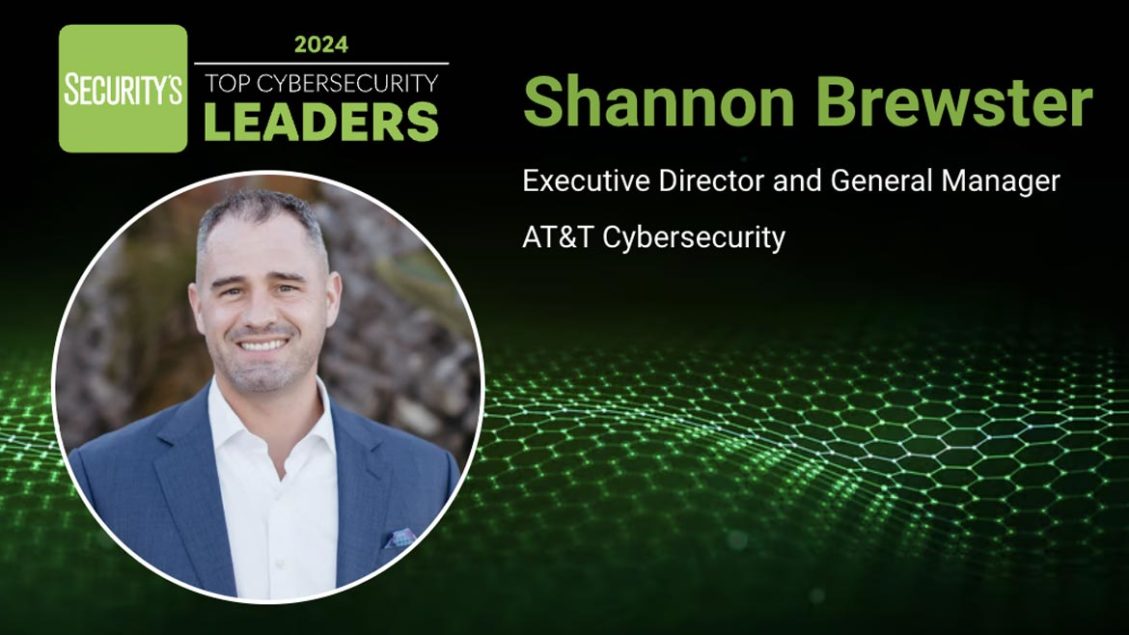
Shannon Brewster | Top Cybersecurity Leaders 2024

h3 { font-weight: bold; font-size: 18px; color: #C72026; } .w3-button { border: none; display: inline-block; padding: 8px 16px; vertical-align: middle; overflow: hidden; text-decoration: none; color: inherit; background-color: inherit; text-align: center; cursor: pointer; white-space: nowrap } .w3-button { -webkit-touch-callout: none; -webkit-user-select: none; -khtml-user-select: none; -moz-user-select: none; -ms-user-select: none; user-select: none } .w3-button:hover { color: #000!important; background-color: #ccc!important } .w3-block { display: block; width: 100% } .w3-red,.w3-hover-red:hover { color: #fff!important; background-color: #C72026!important }

When Shannon Brewster took his first job out of college at a telecommunications company, he never would have thought his career would take him down the cybersecurity path.

“In that job, as a Senior Enterprise Solutions Manager, I was exposed to cybersecurity elements in terms of the engineering of networks and designing of networks,” he recalls.

That exposure certainly piqued his interest. In 2013, while working at AT&T as Director of Sales, Industry & Mobility Application Solutions, the opportunity arose for Brewster to expand his knowledge and skills within the industry through a company-driven education program.

“So I enrolled in their partner program with Champlain College and just kind of fell in love with cyber right away,” he says. “From there, I decided I wanted to do security full-time versus just having it be something that was a part of what I did every day.”

After more than 10 years in telecommunications roles, Brewster says he was drawn to a career in cybersecurity because, while telecommunications holds an important place in society, security felt like a more mission-driven industry where he could make a difference.

“At that time you were just starting to see the ramifications of what could happen when networks weren’t designed correctly from a security perspective, and it could be pretty catastrophic,” he says. “I just saw an opportunity to be a part of something that had a high demand and a critical need.”

Now, as a Director and General Manager at AT&T Cybersecurity, Brewster oversees a global organization of cybersecurity consultants and manages a $50 million P&L. Under his leadership, the organization has executed growth strategies, achieving operational efficiency and financial performance.

One crowning achievement for Brewster and his team was the Voting Systems for All People (VSAP) initiative in collaboration with the Los Angeles County Registrar-Recorder/County Clerk agency.

Brewster and his AT&T team played a pivotal role in operationalizing the VSAP program, an endeavor given the unique challenges posed by Los Angeles County’s status as the largest and most complex local voting jurisdiction in the United States, Brewster says. With nearly six million registered voters spread across 88 municipalities and more than 4,750 square miles, Brewster says the size and diversity of the region made administering elections a daunting task. His team supported Los Angeles County to establish a risk-based security strategy to ensure compliance with federal, state and local election regulations and policies for securing critical infrastructure.

“It was just so fulfilling to watch that thing come to life and show what cyber can do to help support innovation and build trust in a system so people knew that when they came out to vote, that their vote was secure,” Brewster says. “The county had taken the necessary steps to build a program that, from a cyber perspective, had integrity behind it and it was amazing to be a part of that.”

ISC2 LA CHAPTER

Recognizing the need for cybersecurity professionals to connect, collaborate and share knowledge in the greater Los Angeles area, Brewster was surprised LA didn’t already have a chapter of cybersecurity professional association ISC2. Understanding the importance of networking in the industry, he helped establish the ISC2 LA Chapter as one of the founding board members.

“The work that we’ve done with the ISC2 Los Angeles chapter has been to create a place for people to come meet others in the industry, see what’s out there,” he says. “By showing up at our meetings, folks are able to get exposure to lots of different directions that their cybersecurity career might take. They also get to see firsthand people in those roles, and they can do a better job of envisioning what a career in cybersecurity might look like. I think getting to know other people in the in the industry can be a big help to getting along the way.”

MENTORSHIP IN KEY

In addition to his work within ISC2, Brewster also serves as an Adjunct Professor at Rosemont College. He believes a key part of success in a cybersecurity career development is mentorship.

“I think the human element of cyber, as it relates to having a career in cyber is really, really critical,” Brewster adds. “People should not overlook the value of relationships or the value of mentors. They should take advantage of opportunities to show up and be a part of the community, whether that’s through a professional association like ISC2 or the others that are out there. They’re not only giving you an opportunity to get educated, but they’re giving you an opportunity to express leadership capabilities.”

Throughout his career, Brewster has had many mentors that have been instrumental in his success and he looks to opportunities to help others in the industry, whether as a sounding board, or to offer a different perspective on a situation.

“I think having a mentor is probably one of the most instrumental things that you can have in terms of really realizing success in whatever it is that you’re trying to do,” he says. “I think a good mentor is someone who’s not just going to be an example and help inspire you to reach that next step, but someone that also helps you envision what you’re looking for from yourself, and hold you accountable in order to get there.”

← VIEW MORE 2024 TOP CYBERSECURITY LEADERS →https://www.securitymagazine.com/articles/100460-shannon-brewster-top-cybersecurity-leaders-2024


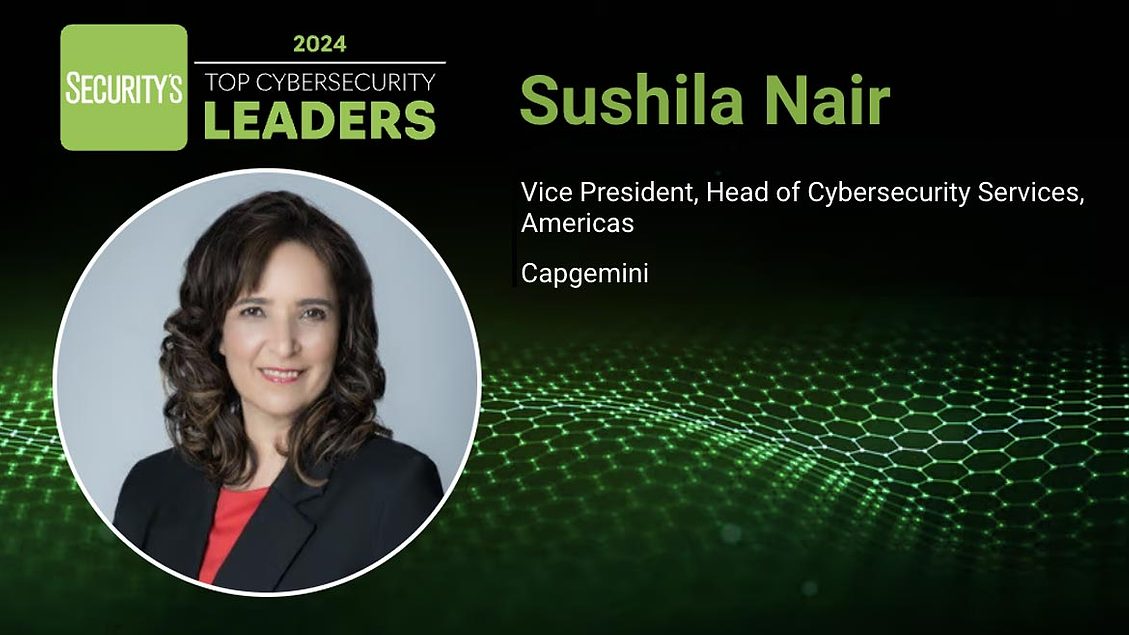
Sushila Nair | Top Cybersecurity Leaders 2024

h3 { font-weight: bold; font-size: 18px; color: #C72026; } .w3-button { border: none; display: inline-block; padding: 8px 16px; vertical-align: middle; overflow: hidden; text-decoration: none; color: inherit; background-color: inherit; text-align: center; cursor: pointer; white-space: nowrap } .w3-button { -webkit-touch-callout: none; -webkit-user-select: none; -khtml-user-select: none; -moz-user-select: none; -ms-user-select: none; user-select: none } .w3-button:hover { color: #000!important; background-color: #ccc!important } .w3-block { display: block; width: 100% } .w3-red,.w3-hover-red:hover { color: #fff!important; background-color: #C72026!important }

As much as she’d like to say she spent her youth dreaming of a cybersecurity career, “that’s not really how it rolled out,” says Sushila Nair, Vice President, Head of Cybersecurity Services at Capgemini Americas, a global leader that partners with companies to transform and manage their business by unlocking the value of technology.

“I initially started as an engineer,” Nair says. “The reason I studied engineering was I had a physics teacher who was incredibly sexist. He used to say things like, ‘Why do you want girls studying physics when they’re just going to be pushing prams?’” Nair had heard her teacher had tried to become an engineer before teaching, so when he asked her what she wanted to do for a living, she said engineering. “When I was accepted into an engineering program, I was a little stunned.”

One of five women in her class, Nair struggled to find an engineering role after graduating, crediting a combination of a downturn in the market and the lack of recognition of women in engineering at the time. She eventually landed in a networking role, which was her first exposure to cybersecurity.

LEADING FROM THE FOREFRONT

“I joined the field on that early curve of cybersecurity taking off,” she says. “I started to do presentations on cybersecurity and the simplicity of being able to break into systems, and as a result of that, I started getting work in helping organizations secure their networks. That’s how I started a company.”

In 1994, Nair co-founded and served as Chief Information Security Officer at Advanced Computer Group, a UK-based IT security consultancy. There, she created technological roadmaps for multinational enterprise organizations; presented on cybersecurity at industry events; and designed, configured and secured digital environments for clients; among other duties. This role deepened Nair’s passion for cybersecurity by allowing her to positively impact cybersecurity across sectors and nations through her consulting work.

“For me, I think cybersecurity was especially appealing because it was a way that I could make a difference. Cyber is really all about helping people, and helping everything from our nation to being able to protect ourselves,” she says.

EXPANDING CYBER CAPABILITIES

After a decade leading Advanced Computer Group, the company closed its doors and Nair moved on to a new Chief Information Security Officer role at Electrolabs, a Malaysia-based telecommunications firm. There, she project-managed an initiative to authenticate credit card transactions via telecommunication networks, a first at the time.

“Malaysia is a leader in fraud, so we were working with the USSD text messaging channel to be able to securely authorize credit card purchases,” says Nair. “It doesn’t sound all that amazing today, but at the time, we were at the forefront of the technology, and I got to work with some of the financial organizations in Malaysia and educate them on this payment authentication method.”

In 2004, Nair relocated to the U.S. to join Knowlogy as Senior Information Security Consultant, where she developed security training programs on cybersecurity, the CISSP certification and more. After three years at the company, she earned a Product Manager role at British Telecom (BT), where she rose through the ranks, holding Enterprise Security Architect and Senior Product Manager roles over her seven-year tenure at the company.

After her boss at the time left to join an encrypted mobile communications startup called Silent Circle, Nair soon followed and served as Director of Customer Experience for just over a year. She worked with a number of cybersecurity titans to develop the Blackphone — a smartphone designed with privacy and security in mind.

“I learned a phenomenal amount about mobile communication as well, which I think was useful. And I also was very much involved with setting up the education of the sales and distribution channels as well,” says Nair.

THE POWER OF COMMUNITY

In 2016, Nair returned to hands-on solutions design with a Senior Solutions Architect role at NTT Security and then moved to NTT Data to head up their cybersecurity offers. She guided NTT Data to gain Azure Cloud Security Gold Competency, Microsoft Identity Specialization, and Microsoft Azure Expert MSP status. Nair led offer the cybersecurity offer development team and proposed cybersecurity solutions for clients across the globe. She says working in a cross-cultural environment led her to appreciate the people and the mission of cybersecurity.

“Cyberattacks have no borders. When we look at past incidents, numerous countries were affected in a matter of hours. Somehow, you have to communicate the message of cybersecurity to people no matter where they are,” she says.

Nair was promoted to Vice President, Security Services at NTT Data in August 2020, where she deepened her understanding of the importance of community in cybersecurity even further, she says. During her tenure at NTT Data, Nair partnered with Dr. Diane Murphy and a team at Marymount University to create a downloadable threat model for data lakes, which has been downloaded more than 1,000 times.

“As a result of that research, we published a paper working together with Marymount University that actually went on the Cloud Security Alliance website and was featured at one of the sessions at RSA,” says Nair. “It’s very relevant to today because we were talking about how to secure data lakes, and it’s often data lakes that power things like artificial intelligence (AI).”

In February 2023, Nair joined Capgemini Americas in her current role as Vice President, Head of Cybersecurity Services. She says her work expanding community partnerships through Capgemini has been some of her most rewarding work at the company. When she joined, Capgemini had an established partnership with the faith-based organization City of Refuge through which the company supports cybersecurity job training programs.

“Getting involved with the City of Refuge has been something that I truly enjoy. I advocated for everybody in my team to join as mentors because I believe that you learn a lot of skills when you’re a mentor. Teachers learn the skills of being able to understand what somebody needs to be a success, which strengthens the mentee and the mentor,” Nair says.

In addition to her mentorship efforts through City of Refuge, Nair is one of the leaders of the Cyber Angels program at Capgemini. As part of this program, she spearheads efforts to empower and enhance the cybersecurity skills of women to take up leadership roles. Nair is also an active member of ISACA, volunteering with the One in Tech foundation on the board of the Greater Washington, D.C. (GWDC) chapter. In her chapter board position, Nair worked to grow the association’s GWDC chapter to more than 5,000 members. She has recently been awarded the 2024 ISACA Technology for Humanity Award, with the citation: “For leadership in creating and supporting programs that advance the next generation of cybersecurity professionals, women and underrepresented populations.” She is also on the board of advisors for the Transformative Leadership Program at Shenandoah University.

When asked what she’s learned about leadership over her three-decade-long cybersecurity career, Nair says it’s more important than ever to take the time to understand your team.

“I believe that you should lead from the trenches,” she reflects. “Leadership is not about me just telling people to work harder. It’s about us working together towards that goal of securing our clients and helping them protect and defend themselves from attacks.”

← VIEW MORE 2024 TOP CYBERSECURITY LEADERS →https://www.securitymagazine.com/articles/100462-sushila-nair-top-cybersecurity-leaders-2024


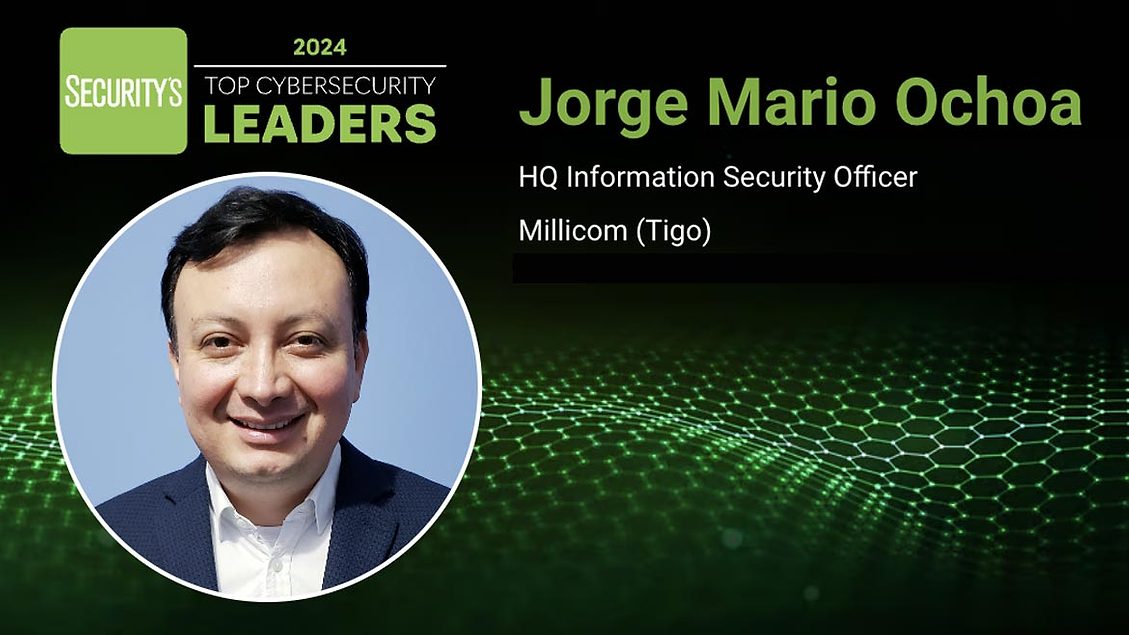
Jorge Mario Ochoa | Top Cybersecurity Leaders 2024

.w3-button{border:none;display:inline-block;padding:8px 16px;vertical-align:middle;overflow:hidden;text-decoration:none;color:inherit;background-color:inherit;text-align:center;cursor:pointer;white-space:nowrap} .w3-button{-webkit-touch-callout:none;-webkit-user-select:none;-khtml-user-select:none;-moz-user-select:none;-ms-user-select:none;user-select:none} .w3-button:hover{color:#000!important;background-color:#ccc!important} .w3-block{display:block;width:100%} .w3-red,.w3-hover-red:hover{color:#fff!important;background-color:#C72026!important}

Learning is a lifelong process and is something Jorge Mario Ochoa has certainly taken to heart. The cybersecurity leader complements his knowledge with master’s degrees in seven disciplines including leadership, business administration, project management, talent management, big data and data analysis, cybersecurity, artificial intelligence and deep learning, as well as a Ph.D. in psychology.

Jorge Mario considers a well-rounded education an important tool for cybersecurity professionals.

“I am a firm advocate for education and collaboration,” Jorge Mario says. “While my foundation lies in a technical background, many of my master’s degrees extend beyond the realm of cybersecurity. Understanding the unique needs of your company and its key performance indicators (KPIs) is crucial for fostering productive collaboration. My academic background in leadership, business administration and psychology stems from a deep-seated desire to better understand our talent, their goals and their needs. This insight forms the cornerstone of a more inclusive and collaborative cybersecurity strategy, creating a virtuous cycle. In this cycle, I contribute to achieving my colleagues’ objectives, and in turn, they support my cybersecurity strategy out of conviction. This approach not only strengthens our collective security posture but also fosters a culture of shared success. Jorge Mario also holds more than 35 international certifications including ISC2’s CISSP, which he considers a highlight of his educational career.

“I’m very proud of that because is it very challenging, you are proud because all that knowledge is a great platform for every cybersecurity professional, CISSP has become a decisive factor in hiring” Jorge Mario says.

APPROACH TO MITIGATING RISK

As the HQ Information Security Officer, at Millicom International Celluar (Tigo), Jorge Mario has implemented and maintained a comprehensive global information security program, which encompasses policies, processes and standards with a primary focus on making people its cornerstone. His strategic approach to risk management ensures alignment with compliance and regulatory requirements, fostering a secure environment.

“I think the most critical factor of success is people,” Jorge Mario says. “Some speakers may refer to people as ‘the weakest link’, but to me, people are the key element in any cybersecurity strategy. A critical challenge in cybersecurity culture is adopting the ‘Keep People Inspired’ (KPI) approach. Our leadership goal is to articulate the purpose of our cybersecurity strategy clearly, ensuring our team understands its importance in safeguarding both the company and their personal information from fraud and security breaches. Cultivating this understanding is vital in fostering a proactive and security-aware culture.”

Through leadership, Jorge Mario has facilitated cross-functional cooperation and communication, promoting the implementation of the information security framework across all business units at Millicom. In addition, Jorge Mario has helped cultivate a security-conscious culture at Millicom and has been a driving force for the company’s Information Security Training and Awareness program.

“We always need to think global, but implement local,” Jorge Mario says. I work with several countries, so, It is important to listen to the local needs, opportunities and challenges and work together to implement this strategy.”

CREATING COMMUNITY

A Guatemala native, Jorge Mario saw the need for cybersecurity professionals to connect and collaborate in the region. In 2020 he co-founded the ISC2 Guatemala chapter, where he currently also serves as president.

“I started this chapter because I believe that we can collaborate with ISC2 and the students in order to provide a safe cybersecurity career path so we, as a region, can be more competitive and we can have opportunities not only in Guatemala, but globally,” Jorge Mario says. “I truly believe that we can make a difference through education.”

In addition to his work with the Guatemala chapter, Jorge Mario also serves on the ISC2 Chapter Advisory Committee and is a Member of the ISC2 Global Achievements Awards Committee. Building a community and promoting mentorship is something that Ochoa certainly feels is an important part of growing the cybersecurity industry.

Asked what advice he can share with those looking to enter the security field or continue to grow their careers, Jorge Mario says to find your passion.

“I have many colleagues that ask me what certification they should start first, or what certification they should have and I think that the most important thing is to identify your passion because the cybersecurity field is an ocean,” he says. “Maybe we are not doing the job that we are passionate about, but nothing stops us from moving to the job or the certification that makes us happy. Sometimes we need to reinvent ourselves or make adjustments. While reaching the goal is important, enjoying the journey is even more crucial. Enjoy everything you do and contribute to developing the cybersecurity leaders of the next generation.”

← VIEW MORE 2024 TOP CYBERSECURITY LEADERS →https://www.securitymagazine.com/articles/100444-jorge-mario-ochoa-top-cybersecurity-leaders-2024


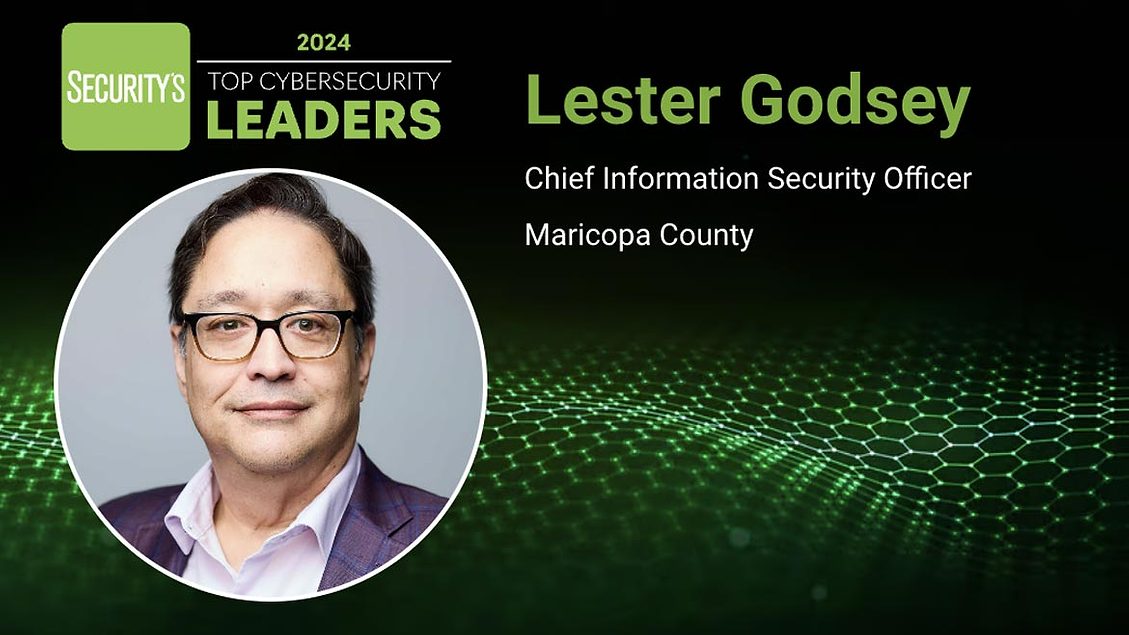
Lester Godsey | Top Cybersecurity Leaders 2024

h3 { font-weight: bold; font-size: 18px; color: #C72026; } .w3-button { border: none; display: inline-block; padding: 8px 16px; vertical-align: middle; overflow: hidden; text-decoration: none; color: inherit; background-color: inherit; text-align: center; cursor: pointer; white-space: nowrap } .w3-button { -webkit-touch-callout: none; -webkit-user-select: none; -khtml-user-select: none; -moz-user-select: none; -ms-user-select: none; user-select: none } .w3-button:hover { color: #000!important; background-color: #ccc!important } .w3-block { display: block; width: 100% } .w3-red,.w3-hover-red:hover { color: #fff!important; background-color: #C72026!important }

Over the past three decades, Lester Godsey has dedicated himself to serving his communities through his roles in public sector cybersecurity. Godsey took his first cybersecurity job as a Support Center Analyst in the College of Engineering and Applied Sciences at his alma mater, Arizona State University (ASU), while he was an undergraduate studying music. While he initially considered becoming a band teacher, he soon discovered his interest in system administration and cybersecurity, which eventually led him to pursue a security career.

“Security wasn’t a discipline unto itself at the time,” he says. “The internet was just becoming a real thing back then — my first experience with the web was HTML programming for non-graphical browsers. Many of us who entered the field around that time found their way into security without realizing it. We were doing a lot of security without it being an official function.”

After two years, Godsey was brought in to help develop and secure a new campus ASU was building in a former military base, ASU Polytechnic. There, he supported over 200 users and was part of the team of information technology (IT) staff which built their security program from scratch as a Support Systems Analyst.

From there, Godsey oversaw technology services for the ASU Department of Psychology as a Technology Support Analyst, managing a team of IT staff and a sizeable budget, in addition to acting as a primary systems administrator for the department, among other responsibilities. He says his ability to multi-task and manage multiple responsibilities has led to his success in the cybersecurity field.

“My entire IT career has been focused on being more of a ‘jack of all trades,’ as opposed to specializing in a certain discipline. At that campus at ASU, but even in my other jobs, I had responsibilities across the board,” says Godsey.

Following his work in the ASU Department of Psychology, Godsey earned the Division Manager — Information Technology role for the Town of Queen Creek, an Arizona town southeast of Phoenix. There, Godsey led the IT department, supporting a wide range of initiatives from application development to municipal fiber networking. Godsey served the Town of Queen Creek for nearly eight years and managed an annual budget of approximately $1.6 million. A large part of his role consisted of liaising between the government, elected officials and the private sector, ensuring open communication channels between all stakeholders.

“That experience of being a couple of miles wide and, in some instances, a bit more than an inch deep prepared me well for both leadership and cybersecurity. Cybersecurity touches all aspects of any organization, so whether you’re talking about networking, cloud application development, enterprise application support, infrastructure — you name it, there’s a security element associated with it. Having that diverse background has lent itself well in my career,” Godsey says.

From his role at the Town of Queen Creek, Godsey moved into an IT Manager position at the City of Mesa, the third-most populous city in Arizona. Over his nine-year tenure at the City of Mesa, Godsey rose through the ranks and left the city government as Chief Information Security and Privacy Officer, having led Internet of Things (IoT) strategy for the organization; providing enterprise cybersecurity and mobile communications services to the City; and liaising with local, state and federal governments and external stakeholders.

In November 2019, Godsey earned the Chief Information Security Officer role for Maricopa County, which contains the Phoenix metropolitan area and is home to nearly 4.5 million Arizonans.

“Maricopa County has put quite an emphasis on cybersecurity, which is very much appreciated. I know, especially in the local government field, not everybody can say the same thing,” he says. “What was lacking was a coherent program and strategy with regards to information security for Maricopa County. That was something that I had to quickly address.”

In his first 90 days on the job, Godsey structured the information security department by implementing a program strategy and three-year roadmap for the department and the county government as a whole. Today, the department is made up of four functions — Security Operations, Engineering & Architecture, Assurance and Governance.

One of the challenges Godsey identified early on was the need for bespoke incident response playbooks to address the many threats targeting local governments, including mis- and disinformation, election security threats and phishing attempts. He says the department’s response to attacks surrounding the 2020 election has helped prepare them for the 2024 election cycle.

“In 2020, we saw plenty of misinformation, but we also saw virtually every type of attempted cyberattack that you could think of — DDoS attacks, data scraping attacks, vendor supply chain attacks, and active and passive network intrusion attempts. In 2022, we saw a significant reduction in the number of attempted cyberattacks, and we saw an exponential increase in the number of mis-, dis- and malinformation-based attacks,” Godsey says.

According to Godsey, remaining resilient and flexible in the face of evolving cyber threats takes a strong, cohesive team. “I’m very lucky to have the team I have,” he says. “I think a lot of our success has to do with the underlying understanding and commitment to public service. There’s a lot of risk thrown towards Maricopa County, and I think it takes a certain type of person to commit to this work.”

At the end of 2024, Godsey plans to retire from his government role and embark on a new challenge: cybersecurity in the private sector. Reflecting on his career, he credits his successes to the diversity of his teams and his own experience.

“There is no one path to getting into cybersecurity. Even to this day, there’s a perception that if you don’t come up through the technical routes, you can’t add value in terms of a cybersecurity program. That’s simply not the case anymore,” he says. “There are many soft skills that can add a lot of value to cybersecurity programs and also provide opportunities to grow into leadership.”

← VIEW MORE 2024 TOP CYBERSECURITY LEADERS →https://www.securitymagazine.com/articles/100458-lester-godsey-top-cybersecurity-leaders-2024


Ryan Field | Top Cybersecurity Leaders 2024

h3 { font-weight: bold; font-size: 18px; color: #C72026; } .w3-button { border: none; display: inline-block; padding: 8px 16px; vertical-align: middle; overflow: hidden; text-decoration: none; color: inherit; background-color: inherit; text-align: center; cursor: pointer; white-space: nowrap } .w3-button { -webkit-touch-callout: none; -webkit-user-select: none; -khtml-user-select: none; -moz-user-select: none; -ms-user-select: none; user-select: none } .w3-button:hover { color: #000!important; background-color: #ccc!important } .w3-block { display: block; width: 100% } .w3-red,.w3-hover-red:hover { color: #fff!important; background-color: #C72026!important }

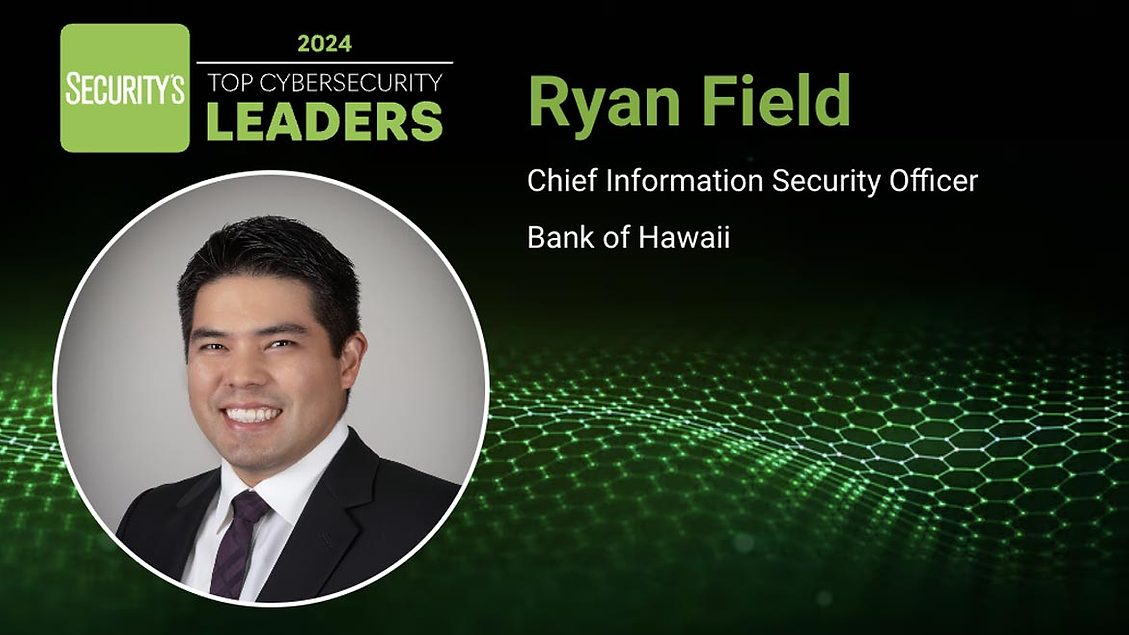
From protecting sensitive financial data to serving his country, Ryan Field has dedicated his career to cybersecurity, leading innovative programs to secure systems and develop the next generation of experts in the field.

Ryan Field was hired into the security field straight out of college, working at PricewaterhouseCoopers (PwC) in IT Security assessments, including penetration testing. This inspired Field to pursue his master’s, wanting to learn more about cybersecurity. After attending Harvard, Field continued to serve PwC as in the Advisory Services Practice of IT Strategy and Security.

After several years in Boston, Field and his wife returned home to Hawaii to start their family. Once settled, Field started working for a Department of Defense contractor where he led projects to build data centers and other large-scale system implementation before making his way back to financial services.

“I was really lucky to have strong teachers and mentors that allowed me to bring a wealth of experience home to Hawaii to be shared through incredible job opportunities,” Field says.

While working, Field continues to build additional relationships within his community.

“In Hawaii, our IT and Cyber communities are very close and work well together across sectors. We all support each other and collaborate on critical issues and threats.” Field says. Those relationships helped Field grow as a professional, rising into leadership positions.

Field is currently the Chief Information Security Officer at Bank of Hawaii, a position he started in 2021. One of his responsibilities involves developing and growing the vendor risk program.

“It continues to be a key risk area of focus for the bank. What we’re trying to do is make sure that we are continuing to mature, especially when it comes to cyber risk,” Field says. Field’s responsibilities also include IT governance, risk and compliance — essential programs when handling sensitive information.

Field thrives within these programs, having previously built security programs from the ground up for clients and companies.

“In a previous role, we had the opportunity to re-design the security operations center almost completely. I was really fortunate to find the strongest teammates and experts to join the team. That program took us about a year to build. We tested it ourselves and brought in top-tier penetration testers to validate. We also received unwavering support from the board and our executive team,” Field says.

Additionally, Field served in the Navy Reserve. Field participated in a direct commissioned officer program, which was designed to hire private sector individuals with specialized skillsets. The program included cyber professionals, nurses and doctors, along with other experts in their fields.

“I was most humbled to work for some of the most highly skilled and motivational leaders, many with impressive backgrounds from both the military and commercial sectors. For example, both of the last leaders I worked for also serve as senior executives in Fortune 100 companies in their civilian occupations. ” Field says.

Field spent a few years as an adjunct professor at Hawaii Pacific University, where he taught master’s-level courses in cybersecurity. The courses focused on teaching the basics, preparing students for the certified information systems security professional (CISSP) certification exam.

A lot of Field’s passion lies in community work, such as working with CyberHawaii, a subsidiary of Cyber USA.. The nonprofit focuses on workforce development and intelligence sharing across a variety of sectors within the community, especially small and medium-sized businesses. The organization works with local universities and government organizations and builds cross functional partnerships With the goal of building generational skills, providing resources for both students and working professionals.

“The coolest part about it is that because Hawaii is such a micro-economy of its own, our federal, state and local partners are all extremely collaborative. We have a strong community that’s very unique. Because of the military presence here, there’s also a lot of crossover with those in the Reserves or the National Guard in conjunction with their full-time jobs,” Field says.

Field is especially proud of the work done with students, particularly around workforce development and mentorship.“ A lot of the work that we’re doing is really fruitful; it seems to be appreciated by a lot of the students. I am very proud of our ability to not only mentor the next generation, but in some cases, inspire them to pursue this shared passion.” Field says.

← VIEW MORE 2024 TOP CYBERSECURITY LEADERS →https://www.securitymagazine.com/articles/100459-ryan-field-top-cybersecurity-leaders-2024


Dr. Ryma Abassi | Top Cybersecurity Leaders 2024

h3 { font-weight: bold; font-size: 18px; color: #C72026; } .w3-button { border: none; display: inline-block; padding: 8px 16px; vertical-align: middle; overflow: hidden; text-decoration: none; color: inherit; background-color: inherit; text-align: center; cursor: pointer; white-space: nowrap } .w3-button { -webkit-touch-callout: none; -webkit-user-select: none; -khtml-user-select: none; -moz-user-select: none; -ms-user-select: none; user-select: none } .w3-button:hover { color: #000!important; background-color: #ccc!important } .w3-block { display: block; width: 100% } .w3-red,.w3-hover-red:hover { color: #fff!important; background-color: #C72026!important }

Dr. Ryma Abassi’s security introduction came through a love of science when she was a girl. She was a successful student across subjects, making the decision regarding her future a challenging one. Like many Tunisians, her original university options were to go into either medicine or engineering. The National Institute of Applied Science caught Abassi’s eye, inspiring her decision to become a computer science and network engineer.

“I wanted a job that’s challenging, where each day is different, and I can let my creativity shine,” Abassi says. While attending university, Abassi fell in love with learning about network functions and code.

“Then came the day we had our first cybersecurity course, and everything clicked. Initially, I was fascinated by hacking techniques and attacks, like anyone would be. However, as I delved deeper, I realized that cybersecurity is essential in various fields like healthcare, finance, homes, cars, cities, transportation and more,” Abassi says.

BUILDING THE CYBERSECURITY CENTER OF EXCELLENCE

Currently, Abassi serves as the Director of the Higher Institute of Technological Studies in Communications of Tunis (ISET’Com), the first woman to hold the position. Abassi initially joined the company as an Associate Professor, teaching cybersecurity courses before her appointment to Associate Director and Director.

“As Director, my strategic vision is unequivocal: to enhance the institution’s influence both nationally and internationally. This ambitious goal entails elevating the quality of training programs and fostering new collaborations with highly recognized industries and universities. It was with this objective in mind that the concept of the Cybersecurity Center of Excellence took shape,” Abassi says. The Cybersecurity Center of Excellence aims to promote innovation, collaboration and information sharing. It is the only cybersecurity center of excellence in Africa.

The process of establishing the center was a collaborative one. Abassi and her team had a vision for what a dedicated center for practical cybersecurity training could do for their university and the community. They pursued funding and government support, and the center was established in October of 2022.

“I am immensely proud of the strides we have made, and I remain dedicated to steering ISET’Com towards greater heights of excellence and influence in the dynamic landscape of cybersecurity education,” Abassi says.

BALANCING EDUCATION AND ADMINISTRATION

In her daily life, Abassi balances her work as a director, a professor and a researcher. Her mornings consist of administrative duties and collaboration with department heads before transitioning into teaching her students. Abassi teaches several cybersecurity courses where she leads students through practical applications.

“Simultaneously, my role as a researcher demands dedicated time for scholarly pursuits. This involves staying abreast of the latest developments in cybersecurity, conducting research, and collaborating with fellow researchers both within and outside the university. Additionally, staying updated on the rapidly evolving field of cybersecurity poses a continuous challenge, necessitating a commitment to ongoing learning and adaptation,” Abassi says.

As the ISET’Com Director, one of Abassi’s primary goals is to foster a “positive and collaborative” university culture. She makes it a priority to address concerns and promote a policy of open communication between faculty, staff and students. Abassi also works to ensure the students feel challenged in their learning.

“Introducing cybersecurity into the academic curriculum is essential to prepare students for the evolving digital landscape and the increasing threats in the cyber domain. One of the main challenges has been staying abreast of the rapidly changing cybersecurity landscape to ensure that our educational programs remain relevant and effective,” Abassi says. A challenge Abassi faces is ensuring that the university curriculum keeps pace with the frequent changes experienced in cybersecurity.

Abassi favors a hands-on approach to education, a challenge with time or resource constraints. She also wants to build cybersecurity awareness across disciplines, embedding it within all forms of education.

“Despite these challenges, the rewards are immense, as we witness students developing critical skills to navigate and contribute to a secure digital environment, thus preparing them for impactful roles in the cybersecurity landscape,” Abassi says.

CYBERSECURITY AND COMMUNITY BUILDING

Abassi’s reach extends past her university, including a cybersecurity awareness day she’s arranged for students between the ages of 10 and 12. She works to inspire students similar to herself who have the skills but have not been exposed to cybersecurity as a career path. Abassi also delivers presentations for professionals looking to learn about cybersecurity, including bankers, engineers and doctoral students. Abassi has written several articles and three books on artificial intelligence, crisis management and cybersecurity.

Abassi’s love of mentorship comes from her experience with her own mentor, Professor Sihem Guemara El Fatmi.

“The significance of mentorship became even more apparent as I recognized the unique challenges that women often encounter in academic and professional spheres. Understanding the transformative impact of a guiding hand, I felt a profound sense of responsibility to pay it forward, particularly in empowering and supporting my female peers in a male dominated field,” Abassi says. Abassi believes mentors can inspire mentees to set ambitious goals and achieve them, which is why she works to encourage young students, especially women, to follow their dreams.

← VIEW MORE 2024 TOP CYBERSECURITY LEADERS →https://www.securitymagazine.com/articles/100461-dr-ryma-abassi-top-cybersecurity-leaders-2024