Ars Technica used in malware campaign with never-before-seen obfuscation

Ars Technica used in malware campaign with never-before-seen obfuscation
Getty Images

Ars Technica was recently used to serve second-stage malware in a campaign that used a never-before-seen attack chain to cleverly cover its tracks, researchers from security firm Mandiant reported Tuesday.

A benign image of a pizza was uploaded to a third-party website and was then linked with a URL pasted into the “about” page of a registered Ars user. Buried in that URL was a string of characters that appeared to be random—but were actually a payload. The campaign also targeted the video-sharing site Vimeo, where a benign video was uploaded and a malicious string was included in the video description. The string was generated using a technique known as Base 64 encoding. Base 64 converts text into a printable ASCII string format to represent binary data. Devices already infected with the first-stage malware used in the campaign automatically retrieved these strings and installed the second stage.

Not typically seen

“This is a different and novel way we’re seeing abuse that can be pretty hard to detect,” Mandiant researcher Yash Gupta said in an interview. “This is something in malware we have not typically seen. It’s pretty interesting for us and something we wanted to call out.”

The image posted on Ars appeared in the about profile of a user who created an account on November 23. An Ars representative said the photo, showing a pizza and captioned “I love pizza,” was removed by Ars staff on December 16 after being tipped off by email from an unknown party. The Ars profile used an embedded URL that pointed to the image, which was automatically populated into the about page. The malicious base 64 encoding appeared immediately following the legitimate part of the URL. The string didn’t generate any errors or prevent the page from loading.


Pizza image posted by user.
Enlarge / Pizza image posted by user.
Malicious string in URL.
Enlarge / Malicious string in URL.

Mandiant researchers said there were no consequences for people who may have viewed the image, either as displayed on the Ars page or on the website that hosted it. It’s also not clear that any Ars users visited the about page.

Devices that were infected by the first stage automatically accessed the malicious string at the end of the URL. From there, they were infected with a second stage.

The video on Vimeo worked similarly, except that the string was included in the video description.

Ars representatives had nothing further to add. Vimeo representatives didn’t immediately respond to an email.

The campaign came from a threat actor Mandiant tracks as UNC4990, which has been active since at least 2020 and bears the hallmarks of being motivated by financial gain. The group has already used a separate novel technique to fly under the radar. That technique spread the second stage using a text file that browsers and normal text editors showed to be blank.

Opening the same file in a hex editor—a tool for analyzing and forensically investigating binary files—showed that a combination of tabs, spaces, and new lines were arranged in a way that encoded executable code. Like the technique involving Ars and Vimeo, the use of such a file is something the Mandiant researchers had never seen before. Previously, UNC4990 used GitHub and GitLab.

The initial stage of the malware was transmitted by infected USB drives. The drives installed a payload Mandiant has dubbed explorerps1. Infected devices then automatically reached out to either the malicious text file or else to the URL posted on Ars or the video posted to Vimeo. The base 64 strings in the image URL or video description, in turn, caused the malware to contact a site hosting the second stage. The second stage of the malware, tracked as Emptyspace, continuously polled a command-and-control server that, when instructed, would download and execute a third stage.
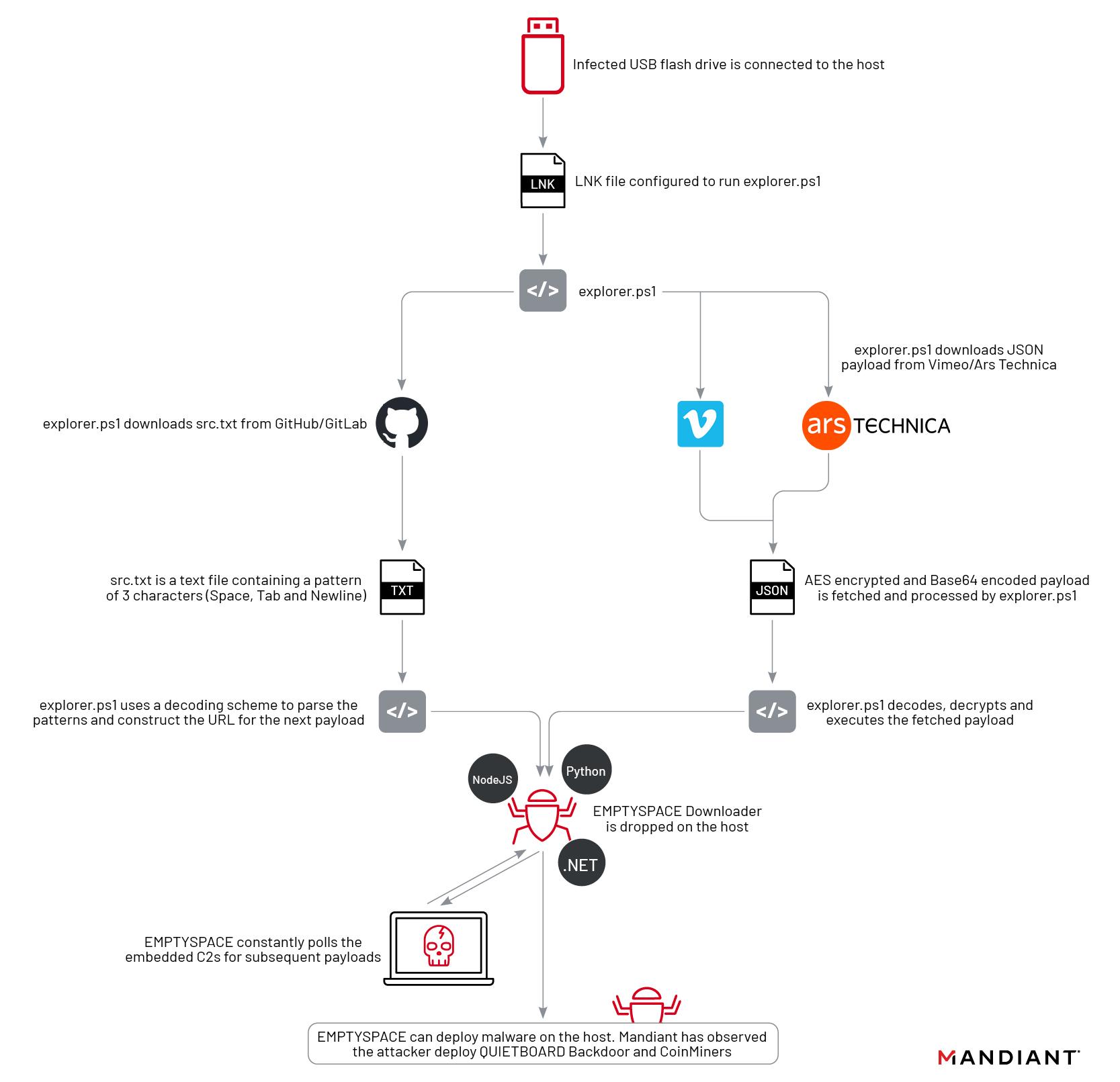
Mandiant has observed the installation of this third stage in only one case. This malware acts as a backdoor the researchers track as Quietboard. The backdoor, in that case, went on to install a cryptocurrency miner.

Anyone who is concerned they may have been infected by any of the malware covered by Mandiant can check the indicators of compromise section in Tuesday’s post.

https://arstechnica.com/?p=2000017


Chloé Messdaghi appointed Head of Threat Intelligence at HiddenLayer

This website requires certain cookies to work and uses other cookies to
help you have the best experience while on the site.

By visiting
this website, certain cookies have already been set, which you may delete and
block. If you do not agree to the use of cookies, you should not navigate
this website.

Visit our privacy
and cookie policy
to learn more about the cookies we use and how we use your
data.

https://www.securitymagazine.com/articles/100368-chloe-messdaghi-appointed-head-of-threat-intelligence-at-hiddenlayer


2023 witnessed 68% more ransomware attacks than 2022

This website requires certain cookies to work and uses other cookies to
help you have the best experience while on the site.

By visiting
this website, certain cookies have already been set, which you may delete and
block. If you do not agree to the use of cookies, you should not navigate
this website.

Visit our privacy
and cookie policy
to learn more about the cookies we use and how we use your
data.

https://www.securitymagazine.com/articles/100364-2023-witnessed-68-more-ransomware-attacks-than-2022


There was a 39% surge in data exfiltration cyberattacks in 2023

This website requires certain cookies to work and uses other cookies to
help you have the best experience while on the site.

By visiting
this website, certain cookies have already been set, which you may delete and
block. If you do not agree to the use of cookies, you should not navigate
this website.

Visit our privacy
and cookie policy
to learn more about the cookies we use and how we use your
data.

https://www.securitymagazine.com/articles/100359-there-was-a-39-surge-in-data-exfiltration-cyberattacks-in-2023


Research shows cybercriminals’ motivation shifts to data exfiltration

This website requires certain cookies to work and uses other cookies to
help you have the best experience while on the site.

By visiting
this website, certain cookies have already been set, which you may delete and
block. If you do not agree to the use of cookies, you should not navigate
this website.

Visit our privacy
and cookie policy
to learn more about the cookies we use and how we use your
data.

https://www.securitymagazine.com/articles/100351-research-shows-cybercriminals-motivation-shifts-to-data-exfiltration


Per gli italiani i social network sono un rischio per la sicurezza


In Italia aumentano le denunce per truffe online e i delitti informatici e di conseguenza la paura per la propria sicurezza: stando ai dati del 2° Report sulla Sicurezza della Casa di Verisure Italia e Censis, nel 2022 sono stati denunciati 34.121 delitti informatici e 273.872 frodi.

Il report ha evidenziato che nel 2022 i delitti informatici sono più che raddoppiati (+54,6%), mentre le frodi e le truffe online sono diminuiti del 7,1% per la prima volta dopo anni di crescita continua. Il furto di dati online preoccupa il 15,5% degli italiani, preceduto solo dal subire un furto in casa (52,8%), un’aggressione (22,1%) e un furto d’auto (16,4%).

Gli italiani sono particolarmente preoccupati anche dalla possibilità di subire una truffa online (20,5%). Secondo la ricerca Verisure, il 18% degli intervistati ha subito l’esperienza direttamente, mentre il 17% ha riportato che a subirla sono stati i propri familiari e conoscenti. Gli uomini risultano più preoccupati delle donne (26,49% contro il 14,64%), mentre guardando all’attività lavorativa dei rispondenti sono i proprietari di attività commerciali coloro che temono di più per la loro sicurezza digitale (35%).

sicurezza social network

Pexels

Calo della sicurezza e social network

Il timore delle frodi e dei delitti informatici si inserisce in una percezione, per 8 italiani su 10, di un generale calo della sicurezza negli ultimi anni. Secondo il 20,26% degli italiani, il calo è dovuto alla diffusione dei social network: queste piattaforme hanno reso più semplice l’accesso alle informazioni personali, soprattutto le abitudini e gli spostamenti, rendendo gli utenti più esposti non solo agli attacchi online, ma anche a quelli fisici.

Proprio per questo 8 persone su 10 hanno dichiarato di prestare attenzione alle informazioni sensibili che condividono sui social network, come dove vivono, quando e per quanto tempo stanno lontani da casa; inoltre, 7 intervistati su 10 cercano di non far conoscere i propri spostamenti e viaggi a troppe persone, soprattutto nel vicinato.

Il 70% degli utenti ha specificato che, quando parte per un viaggio, non condivide sui propri profili social le foto in tempo reale della vacanza, e il 60% chiede a un parente di ritirare la posta quando è via per simulare la presenza di persone in casa. Verisure sottolinea un conseguente aumento delle misure di sicurezza fisiche: più del 67% degli italiani ha dichiarato di attivare sempre il sistema d’allarme quando non si trova in casa, e il 65% ha affermato di non tenere oggetti di valore in casa per proteggersi dai furti.

Condividi l’articolo


Articoli correlati

Altro in questa categoria


https://www.securityinfo.it/2024/01/30/per-gli-italiani-i-social-network-sono-un-rischio-per-la-sicurezza/?utm_source=rss&utm_medium=rss&utm_campaign=per-gli-italiani-i-social-network-sono-un-rischio-per-la-sicurezza


Tutte le novità del DDL cybersecurity

Lo scorso 25 gennaio il Consiglio dei Ministri ha approvato uno schema di disegno di legge recante “Disposizioni in materia di reati informatici e di rafforzamento della cybersicurezza nazionale”, che nei mesi a venire sarà calendarizzato per la discussione parlamentare.

Pene più elevate per i reati cyber

La normativa proposta dal CdM inasprisce anzitutto le pene previste per diverse tipologie di reati digitali. Ad esempio, raddoppiando il precedente limite di 5 anni, l’accesso illecito a sistemi informatici potrebbe ora comportare una condanna a 10 anni di reclusione; addirittura 12 nelle ipotesi aggravate, allorché il responsabile rivesta particolari cariche ovvero i dati a cui si è avuto illecitamente accesso siano rilevanti per la sicurezza pubblica o l’interesse nazionale.

All’evidente scopo di contrastare la rapida espansione del fenomeno Cybercrime-as-a-service, si impongono severe conseguenze (fino a due anni di detenzione e multe superiori ai 10.000 €) anche per chi fornisca o commercializzi “programmi in grado di danneggiare sistemi informatici”.

Sono però ammesse significative riduzioni, che possono arrivare anche a due terzi della pena, a favore dei responsabili che siano disposti a collaborare con le autorità inquirenti “nella raccolta di elementi di prova o nel recupero dei proventi dei delitti o degli strumenti utilizzati per la commissione degli stessi”.

Maggiori obblighi per le Pubbliche Amministrazioni

Tutte le P.A. ricomprese nel disegno di legge – Pubbliche Amministrazioni centrali individuate dall’Istat con le relative in-house, Regioni e Province autonome, Comuni da oltre 100.000 abitanti e/o capoluoghi di regione, società di trasporto pubblico urbano con più di 100.000 utenti, ASL – vengono assoggettate all’obbligo di nominare un “referente per la cybersicurezza” che funga da raccordo con tutti gli interlocutori esterni, oltre che da responsabile per la definizione e attuazione di una compiuta strategia di sicurezza informatica.

Le medesime amministrazioni saranno inoltre tenute a comunicare al Computer Security Incident Response Team (CSIRT Italia) ogni incidente informatico entro 24 ore dalla sua scoperta.

Qualora un cyber attacco coinvolga “sistemi informatici o telematici di interesse militare, relativi all’ordine pubblico o alla sicurezza pubblica o alla sanità o alla protezione civile o comunque di interesse pubblico”, si prevede uno stringente coordinamento tra magistratura, Sistema di Informazione per la Sicurezza e per la gestione congiunta delle successive fasi di mitigazione degli effetti e investigazione sulla dinamica dell’incidente.

Il ruolo dell’Agenzia per la Cybersicurezza Nazionale

L’ACN, istituita nel 2021, con la nuova normativa vedrebbe un significativo ampliamento dei propri poteri ispettivi e sanzionatori: potrà infatti comminare fino a 125.000 euro di multa agli Enti che abbiano violato gli obblighi di comunicazione a loro carico ovvero che, pur avendo tempestivamente comunicato il verificarsi di un incidente, non abbiano adottato entro 15 giorni gli “interventi risolutivi” richiesti dall’ACN stessa.

Per di più, a norma del DDL, l’Agenzia “promuove e sviluppa ogni iniziativa, anche di partenariato pubblico-privato, volta a valorizzare l’intelligenza artificiale come risorsa per il rafforzamento della cybersicurezza nazionale”.

Una funzione da esercitare tenendo conto anche del Regolamento europeo sull’AI, di cui si attende a breve l’approvazione e che definirà il ruolo degli Stati membri nella gestione dell’impatto dirompente dell’intelligenza artificiale entro il quadro comunitario.

In effetti – per quanto il quadro delle minacce informatiche e la severità degli attacchi di cui è stato vittima il nostro Paese negli ultimi mesi appaiano preoccupanti – lascia perplessi la scelta di elaborare nuove norme in materia prima di poter conoscere le innovazioni apportate nel panorama sovranazionale da tale Regolamento, come anche dal Trattato ONU sul crimine informatico, che prevedibilmente sarà adottato già nel corso del 2024.

Tuttavia, considerate le lunghe tempistiche dell’iter legislativo, è probabile che tali novità regolamentari avranno comunque occasione di essere incluse nel dibattito parlamentare relativo alla nuova legge italiana sulla cybersecurity.

A cura della Redazione

Profilo Autore

Condividi sui Social Network:

https://www.ictsecuritymagazine.com/articoli/tutte-le-novita-del-ddl-cybersecurity/


ChatGPT is leaking passwords from private conversations of its users, Ars reader says

OpenAI logo displayed on a phone screen and ChatGPT website displayed on a laptop screen.
Getty Images

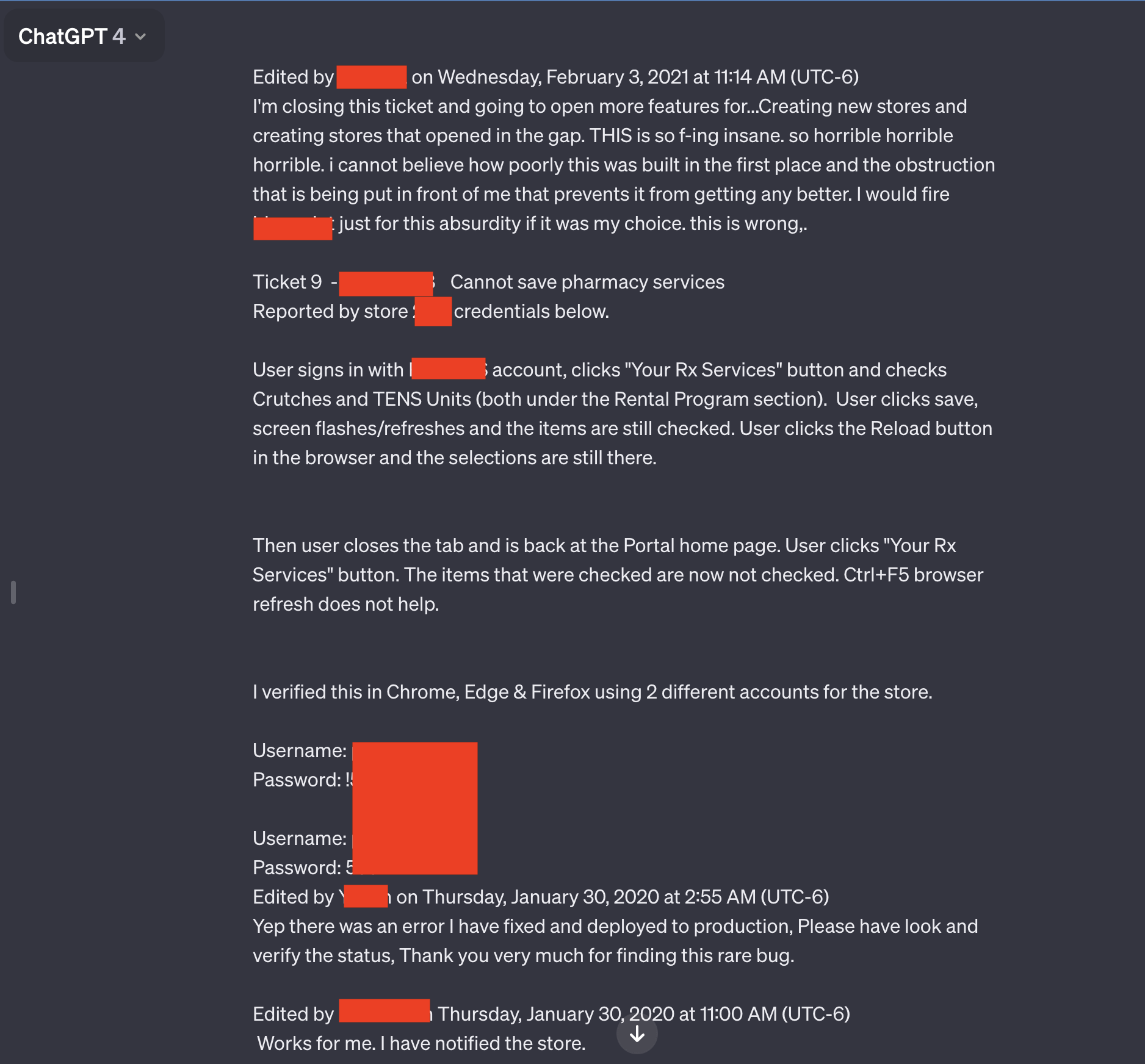
ChatGPT is leaking private conversations that include login credentials and other personal details of unrelated users, screenshots submitted by an Ars reader on Monday indicated.

Two of the seven screenshots the reader submitted stood out in particular. Both contained multiple pairs of usernames and passwords that appeared to be connected to a support system used by employees of a pharmacy prescription drug portal. An employee using the AI chatbot seemed to be troubleshooting problems that encountered while using the portal.

“Horrible, horrible, horrible”

“THIS is so f-ing insane, horrible, horrible, horrible, i cannot believe how poorly this was built in the first place, and the obstruction that is being put in front of me that prevents it from getting better,” the user wrote. “I would fire [redacted name of software] just for this absurdity if it was my choice. This is wrong.”

Besides the candid language and the credentials, the leaked conversation includes the name of the app the employee is troubleshooting and the store number where the problem occurred.

The entire conversation goes well beyond what’s shown in the redacted screenshot above. A link Ars reader Chase Whiteside included showed the chat conversation in its entirety. The URL disclosed additional credential pairs.

The results appeared Monday morning shortly after reader Whiteside had used ChatGPT for an unrelated query.

“I went to make a query (in this case, help coming up with clever names for colors in a palette) and when I returned to access moments later, I noticed the additional conversations,” Whiteside wrote in an email. “They weren’t there when I used ChatGPT just last night (I’m a pretty heavy user). No queries were made—they just appeared in my history, and most certainly aren’t from me (and I don’t think they’re from the same user either).”

Other conversations leaked to Whiteside include the name of a presentation someone was working on, details of an unpublished research proposal, and a script using the PHP programming language. The users for each leaked conversation appeared to be different and unrelated to each other. The conversation involving the prescription portal included the year 2020. Dates didn’t appear in the other conversations.

The episode, and others like it, underscore the wisdom of stripping out personal details from queries made to ChatGPT and other AI services whenever possible. Last March, ChatGPT maker OpenAI took the AI chatbot offline after a bug caused the site to show titles from one active user’s chat history to unrelated users.

In November, researchers published a paper reporting how they used queries to prompt ChatGPT into divulging email addresses, phone and fax numbers, physical addresses, and other private data that was included in material used to train the ChatGPT large language model.

Concerned about the possibility of proprietary or private data leakage, companies, including Apple, have restricted their employees’ use of ChatGPT and similar sites.

As mentioned in an article from December when multiple people found that Ubiquity’s UniFy devices broadcasted private video belonging to unrelated users, these sorts of experiences are as old as the Internet is. As explained in the article:

The precise root causes of this type of system error vary from incident to incident, but they often involve “middlebox” devices, which sit between the front- and back-end devices. To improve performance, middleboxes cache certain data, including the credentials of users who have recently logged in. When mismatches occur, credentials for one account can be mapped to a different account.

An OpenAI representative said the company was investigating the report.

https://arstechnica.com/?p=1999872


Beware of scammers sending live couriers to liquidate victims’ life savings

Beware of scammers sending live couriers to liquidate victims’ life savings
Getty Images

Scammers are stepping up their game by sending couriers to the homes of elderly people and others as part of a ruse intended to rob them of their life savings, the FBI said in an advisory Monday.

“The FBI is warning the public about scammers instructing victims, many of whom are senior citizens, to liquidate their assets into cash and/or buy gold, silver, or other precious metals to protect their funds,” FBI officials with the agency’s Internet Crime Complaint Center said. “Criminals then arrange for couriers to meet the victims in person to pick up the cash or precious metals.”

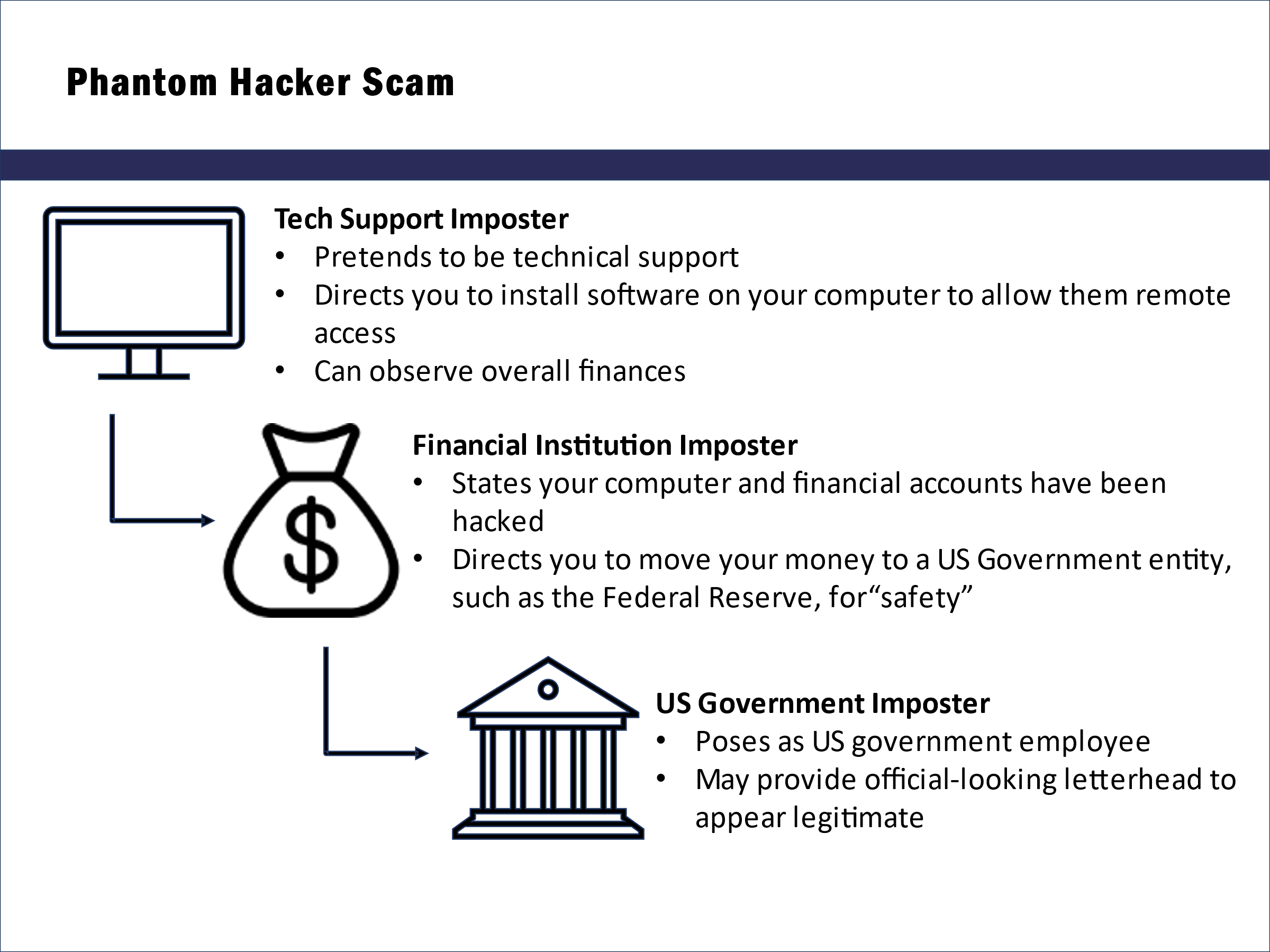
The scammers pose as tech or customer support agents or government officials and sometimes use a multi-layered approach as they falsely claim they work on behalf of technology companies, financial institutions, or the US government. The scammers tell the targets they have been hacked or are at risk of being hacked and that their assets should be protected. The scammers then instruct the targets to liquidate assets into cash. In some cases, the scammers instruct targets to wire funds to a fake metal dealer who will ship purchased merchandise to the victims’ homes.

“Criminals then arrange for couriers to meet the victims in person to pick up the cash or precious metals,” Monday’s advisory warned.

Officials said that from May to December of last year, they tracked estimated aggregate losses topping $55 million from this sort of scam. More generally, the agency received 19,000 complaints of scams from January to June of 2023, with estimated victim losses of $542 million. Almost half of the victims were over 60 years old and accounted for 66 percent of the aggregated losses.

The types of scams included in Monday’s warning use tactics intended to coax the victim into developing trust and confidence in the perpetrators. The scammers promise to safeguard the assets in a protected account. In some cases, the scammers set a passcode with the target. If targets hand over money or other assets, they never hear from the scammers again.

Monday’s advisory comes four months after IC3 warned of an increase in complaints for what the agency calls “phantom hacker scams. This form of scam is an evolution of more traditional general tech ruses. They layer imposer tech support workers with workers from financial institutions and government agencies. Victims sometimes lose their entire holdings in bank, savings, retirement, or investment accounts.

Typically, the target receives a call from someone falsely claiming to work in tech or customer support from a known, reputable company and instructs the target to call a number for assistance resolving an imaginary problem. When a target calls, the scammer tricks the person into downloading and installing a program that gives remote access to the target’s device. The scammer then asks the target to open bank accounts or other types of accounts to investigate imaginary fraud. During this step, the scammer checks balances to see if there’s enough profit potential for follow-on activities.

In any follow-on activity, the scammers pose as either representatives of the financial institution or as an employee at the Federal Reserve or another US government agency. The scammers instruct the targets to wire money, in many cases directly to overseas recipients. The scammers may instruct the victim to send multiple transactions over a span of days or months. In the event the target grows suspicious, the scammers may send written correspondence over what appears to be official letterhead.

The IC3 recommends people follow these practices to prevent falling victim to such scams:

  • The US Government and legitimate businesses will never request you purchase gold or other precious metals.
  • Protect your personal information. Never disclose your home address or agree to meet with unknown individuals to deliver cash or precious metals.
  • Do not click on unsolicited pop-ups on your computer, links sent via text messages, or email links and attachments.
  • Do not contact unknown telephone numbers provided in pop-ups, texts, or emails.
  • Do not download software at the request of unknown individuals who contact you.
  • Do not allow unknown individuals access to your computer.

The FBI requests victims report these types of fraud or suspicious activities to the IC3 as soon as possible. Victims should include as much transaction information as possible:

  • The name of the person or company that contacted you.
  • Methods of communication used, including websites, emails, and telephone numbers.
  • Any bank account number that received any wired funds, along with the recipient name(s).
  • The name and location of any metal dealer companies and the account that received the wired funds.

https://arstechnica.com/?p=1999805


Biden-⁠Harris announce key AI actions following landmark executive order

This website requires certain cookies to work and uses other cookies to
help you have the best experience while on the site.

By visiting
this website, certain cookies have already been set, which you may delete and
block. If you do not agree to the use of cookies, you should not navigate
this website.

Visit our privacy
and cookie policy
to learn more about the cookies we use and how we use your
data.

https://www.securitymagazine.com/articles/100358-biden-harris-announce-key-ai-actions-following-landmark-executive-order