Catch Raises $5 Million for AI Executive Assistant With Guardrails
Catch, an agentic admin assistant for leaders, has raised $5 million to accelerate its purpose to solve executives’ daily pain points.

The funding was co-led by Entrée Capital and Pitango, with participation from Seedcamp and Factorial Capital.

Catch, an AI startup co-founded by Nir Sabato (CEO) and Yoav Ramon (CTO), develops an AI admin assistant – also called Catch – that the developers claim demonstrates AI agents can safely move beyond analysis and reporting toward active decision-making. It is designed to behave like a human executive assistant, and handles sensitive communications, scheduling, and personal data with the same level of care expected from a trusted executive assistant.

The executive user explicitly defines, during the onboarding process, which personal and workspace assets Catch can access. So, for example, if it is granted access to the executive’s inbox, calendar and travel accounts, it will monitor just these. But if it detects a flight booked with no hotel attached, its reasoning capabilities will proactively check rates at the executive’s usual hotel and ask whether to book it.

It is a human-like judgment call, keeping the human executive in the loop to maintain the agent’s boundaries.

Catch can coordinate with the executive’s guests to schedule meetings, book travel, and handle follow ups to correspondence. “Catch works out of the box within minutes of syncing – building a profile of the executive, who they work with, how they like to meet and travel, and starts acting on it over text, email, Slack or phone, with no new tool or UI to learn. Human input is only needed when a decision genuinely requires it,” explain the developers.

Advertisement. Scroll to continue reading.

The product provides an implicit argument for outsourced rather than self-built complex agents. With modern coding agents, executives can build their own agentic admin assistants, but it is questionable whether they can build a secure agent, or the security team can build adequate guardrails to secure the output without impacting the benefits. Outsourced agents could – in fact, should – be delivered ready made with the correct built-in security features.

In this case, the autonomy and security of Catch is constrained by multiple internal guardrails. It runs on a cloud infrastructure with layers of security, encryption, and monitoring to protect user data. It never performs actions outside the granted permissions, which can be amended at any time. It includes the executive human in the loop, similar to a human assistant saying to his boss, “You’re going to Memphis next week, should I book a room at this hotel for you?”

Catch uses single sign-on for authentication, with sensitive credentials and API keys stored in AWS Secrets Manager. All data is encrypted in transit and at rest, with AES-256 encryption while at rest – and it is continuously monitored for unusual activity, intrusion attempts, and abnormal API usage.

“Executives don’t want to build their own AI agents, and in the admin space, they don’t want to approve every step their assistant makes – they want it done right, in a way they can trust,” says Sabato. “Catch works alongside business leaders the way a great human assistant would, but 24/7, with no dip in attention and fully secure. We’re laser-focused on one thing – executive admin, making the right call in real time.”

Billed at $99/month, Catch claims an improved admin assistant at a fraction of the cost of a human assistant.

Related: DataBahn Raises $40 Million for Agentic Data Pipeline Management

Related: Mate Security Raises $35 Million for Agentic SOC

Related: UK Government Rolls Out Agentic AI Defense Plan Alongside Industry Pledge

Related: HiddenLayer Raises $100 Million for AI Runtime Security

https://www.securityweek.com/catch-raises-5-million-for-ai-executive-assistant-with-guardrails/


VMware Workstation and Fusion Updates Patch Critical Vulnerability

Broadcom on Thursday announced patches for two critical and high-severity vulnerabilities in VMware Workstation and Fusion.

The first issue, tracked as CVE-2026-59346 (CVSS score of 9.3), is described as an integer overflow bug leading to arbitrary code execution.

“A malicious actor with local administrative privileges on a virtual machine with VMXNET3 virtual network adapter may exploit this issue to execute code on the host,” Broadcom notes in its advisory.

Tracked as CVE-2026-59347 (CVSS score of 8.1), the second flaw is a stack-based buffer overflow that could lead to similar outcomes, albeit the exploitation conditions are different.

“A malicious actor with local administrative privileges on a virtual machine may exploit this issue to execute code as the virtual machine’s VMX process running on the host,” Broadcom explains.

Both vulnerabilities affect VMware Workstation and VMware Fusion versions 25H2 and 26H1 and were resolved in version 26H1u1.

Advertisement. Scroll to continue reading.

There are no workarounds for either of the flaws, and Broadcom recommends updating to a patched iteration as soon as possible.

The company makes no mention of any of these vulnerabilities being exploited in the wild, and says that both issues were reported to it privately.

However, security defects in VMware products are often exploited by threat actors. More than two dozen VMware vulnerabilities are currently included in CISA’s KEV list.

Related: CISA Urges Immediate Patching of Exploited Microsoft, VMware, Apple Vulnerabilities

Related: Exploit Published for Fresh Cleo Harmony Vulnerability

Related: SonicWall Warns of Two SMA1000 Zero-Days Exploited in Attacks

Related: Hackers Start Exploiting Critical Langflow Vulnerability

https://www.securityweek.com/vmware-workstation-and-fusion-updates-patch-critical-vulnerability/


Google Patches 6th Chrome Zero-Day of 2026

Google on Thursday rolled out fresh Chrome 152 security updates that resolve 12 vulnerabilities, including an exploited zero-day.

Tracked as CVE-2026-85046, the high-severity bug is described as a type confusion issue in Chrome’s V8 JavaScript and WebAssembly engine. It was reported by Salvatore Gulizia, who received a $1,000 bug bounty reward.

“Google is aware that an exploit for CVE-2026-85046 exists in the wild,” the internet giant’s advisory reads.

While the company has not shared details on the security defect, type confusion flaws in the V8 engine may be exploited to perform remote read/write operations via crafted HTML pages.

Type confusion vulnerabilities are memory corruption bugs that could lead to crashes, remote code execution, and other malicious behavior.

CVE-2026-85046 is the sixth Chrome zero-day patched in 2026. The other five are CVE-2026-2441, CVE-2026-3909, CVE-2026-3910, CVE-2026-5281, and CVE-2026-11645.

Advertisement. Scroll to continue reading.

The security defect was resolved in Chrome versions 152.0.7977.82/.83 for Windows and macOS, and version 152.0.7977.82 for Linux.

The updates address nine other high-severity bugs, including out-of-bounds read/write, incomplete cleanup, use-after-free, race condition, improper resource exposure, and type confusion issues. Three of them have been reported by external researchers.

Additionally, Google fixed two medium-severity improper input validation and use-after-free weaknesses.

Related: Chrome and Firefox Updates Patch Dozens of Vulnerabilities

Related: Chrome 152 Patches Over 300 Vulnerabilities

Related: Over 3 Million WordPress Sites Affected by Migration Plugin Vulnerability

Related: Cisco Warns of Unpatched Secure Email Flaws, Patches Critical Switch Vulnerabilities

https://www.securityweek.com/google-patches-6th-chrome-zero-day-of-2026/


Nvidia Is Buying AI Platform Hugging Face for $13 Billion

The deal highlights Nvidia’s push to champion increasingly popular open-source AI models.

The post Nvidia Is Buying AI Platform Hugging Face for $13 Billion appeared first on SecurityWeek.

https://www.securityweek.com/nvidia-is-buying-ai-platform-hugging-face-for-13-billion/


OpenAI Releases GPT-6 Astra Amidst Frontier AI Cybersecurity Concerns

Today, OpenAI unveiled its newest model: GPT-6 Astra. 

According to the company, the model sets a new standard with its ability to autonomously command computer systems and complete tasks on the user’s behalf. OpenAI emphasized Astra is quicker and more efficient than GPT-5.6 Sol, its predecessor. 

The release of this model comes in the midst of frontier AI scrutiny, as some are skeptical of the cybersecurity protocols in place at OpenAI and other frontier companies. Following the Hugging Face incident, in which an OpenAI model breached the platform, some question the capabilities of OpenAI to properly secure their own technology.

At this time, the model is limited to a certain group of customers. The model will be made available first to cyber defenders involved with the organization’s Daybreak program, then later access will be rolled out for enterprise and consumer clients. 

https://www.securitymagazine.com/articles/102559-openai-releases-gpt-6-astra-amidst-frontier-ai-cybersecurity-concerns


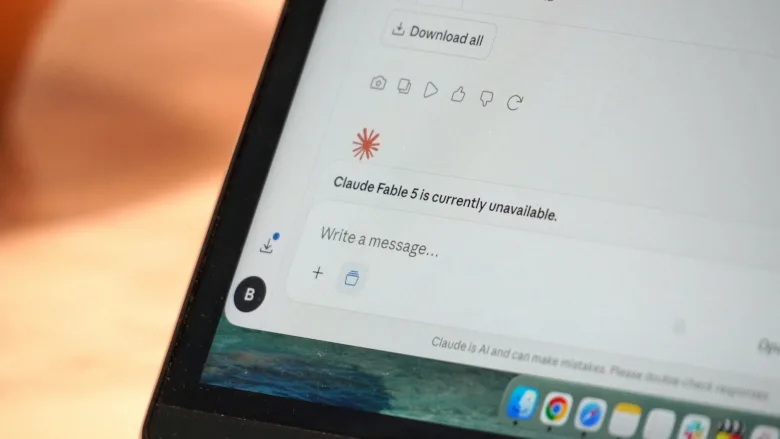
OpenAI, Claude and Other Chatbot Outages Reported

Notable AI chatbots reported outages. 

https://www.securitymagazine.com/articles/102556-openai-claude-and-other-chatbot-outages-reported


3 Healthcare Breaches in Quick Succession Raises Concerns

“We’re becoming numb to breaches of this magnitude,” warns John Strand, Owner of Black Hills Information Security. 

https://www.securitymagazine.com/articles/102555-3-healthcare-breaches-in-quick-succession-raises-concerns


150M Driver’s Licenses Exposed, Security Experts Discuss

More than 150 million driver’s licenses were exposed in a data breach. 

https://www.securitymagazine.com/articles/102554-150m-drivers-licenses-exposed-security-experts-discuss


Manchester Airports Group Data on 8.8 Million People Leaked After Ransom Refusal

Hacker group published roughly 550GB of data after MAG reportedly refused to pay a ransom demand; the group says it gained access via exposed admin keys.

The post Manchester Airports Group Data on 8.8 Million People Leaked After Ransom Refusal appeared first on SecurityWeek.

https://www.securityweek.com/manchester-airports-group-data-on-8-8-million-people-leaked-after-ransom-refusal/


Capsule Security Launches ‘AI Circuit Breaker’ to Stop Rogue Agents

New models, trained using NVIDIA Nemotron 3 Ultra, aim to catch rogue agent behavior before it executes, without the latency of large-model review.

The post Capsule Security Launches ‘AI Circuit Breaker’ to Stop Rogue Agents appeared first on SecurityWeek.

https://www.securityweek.com/capsule-security-launches-ai-circuit-breaker-to-stop-rogue-agents/