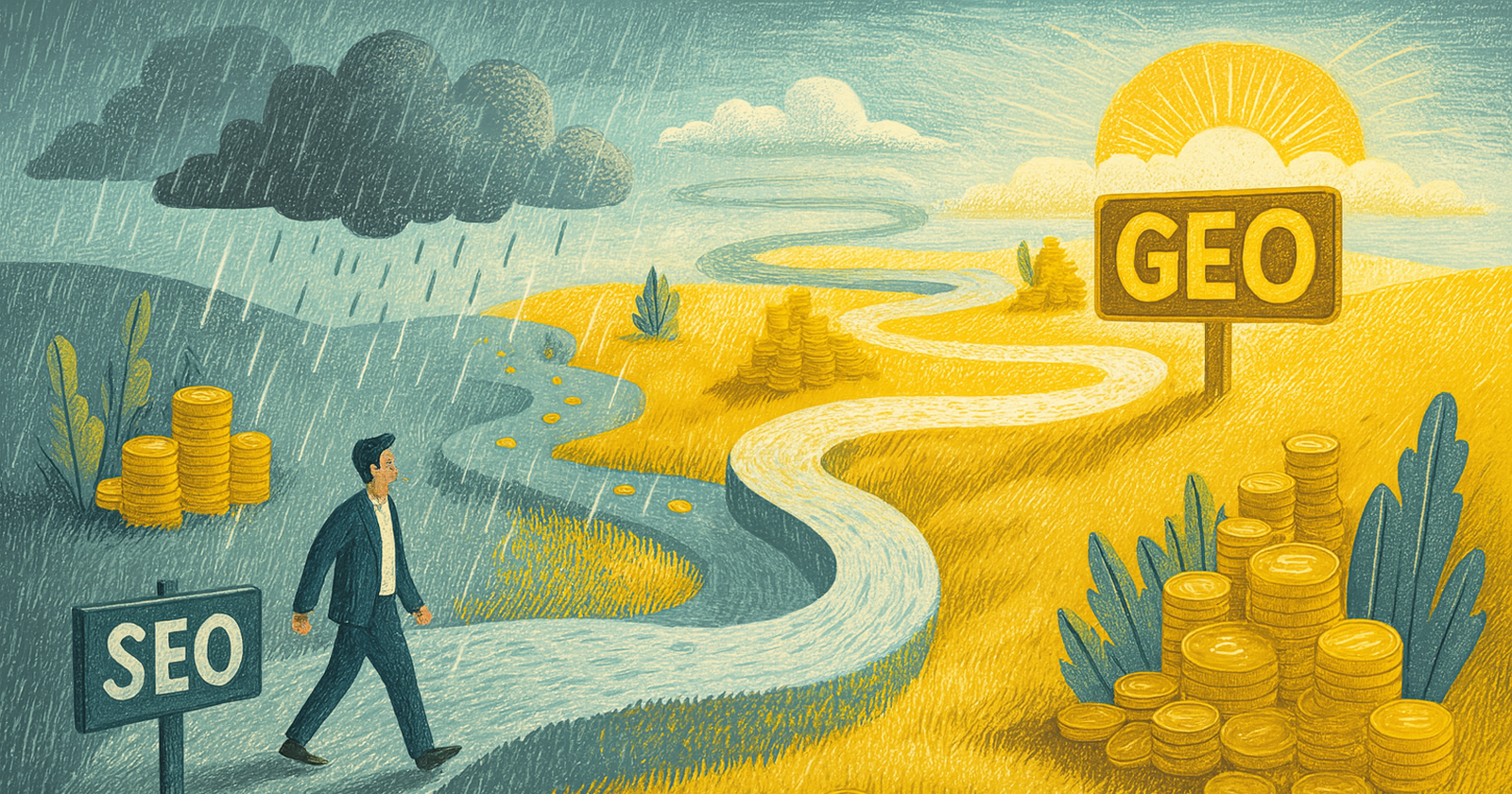
The CMO Vs. CGO Dilemma: Why The Right Leader Is Critical For Success  via @sejournal, @dannydenhard

Unless you have been living under a rock, you would have seen or experienced the evolution of marketing in recent years; often centered around the marketing leader and the chief marketing officer (CMO) role.

The CMO role has come under fire for performance, for the lack of big bang delivery, for not moving away from vanity metrics, and often being overly defensive at the leadership table.

Marketing Leadership Is Harder Than Ever

In coaching CMOs and equivalent titles, there are several recurring themes, one of which stands out in almost all coachees: Your job as a CMO is being a company executive first and then being a department leader.

You are in the C-Suite to represent the business needs, and business needs will trump your department and team needs, often going against how you are wired.

The business needs and the department needs shouldn’t be different. However, they are often at odds, especially when you, as the leader, haven’t placed the right guardrails; what often occurs is that you have followed poorly thought-through goals, key performance indicators (KPIs), and enabled disconnected objectives and key results (OKRs).

In other scenarios, the CMO role is being removed and not replaced, and the CMO title is removed. Repeatedly being replaced with VP, director, or “head of” titles, often resulting in the marketing leader not being in the C-Suite and regularly reporting one to two steps removed from the CEO.

Enter The Chief Growth Officer (CGO)

There are often reasons why there is a rebrand or title change within the C-Suite:

  • It is deliberate, changing the internal comms of the role. It demonstrates that, as a business, you are moving from marketing to growth or from old to new.
  • The removal of the previous CMO and legal requirements will dictate a change in title or a shift in job and description of the role.
  • If you work at a startup, it is often evolving the narrative with investors, which often helps frame previous struggles and drives the message that you are concentrating on growth.
  • There is also a showing of intent to the industry, often sending out press releases to show you are moving towards growth.

The Difference Between Marketing & Growth

The truth: The difference between marketing and growth setups is either negligible or a huge gulf.

Many confident marketing leaders would set up their teams in a very similar way; they would similarly set goals, but the department would work and operate in small ways.

The “Huge Gulf” Difference In Operating Includes:

  • Removing siloed teams of specialists.
  • Reducing and reframing the former way of defensive actions (Marketers have the hardest job and everyone thinks they can do marketing. Marketers have had to protect doing things that don’t scale and aren’t easily attributable).
  • Moving from not being connected to a truly cross-functional department.
  • Intentional reporting and proactively marketing more frequently and aggressively internally, which is the lost art in many marketing departments.

Like the best marketing organizations, the best growth departments are hyper-connected. They are intertwined cross-functionally, and they are pushing numbers constantly, reporting on the most important metrics and being able to tell the story of how it’s all connected. Reporting which KPI connects to which goal, how each goal connects up to the business objective, and how the brand brings performance.

Why The CGO Role Is Different

Skill Gaps

There are specific skill sets that differentiate successful CGOs from traditional CMOs – areas that often come up and stand apart marketing and growth. These include data fluency and the ability to crunch data themselves, adopting an experimentation-first mindset, being able to test, learn, and iterate as second nature, and everything CGOs do has revenue attribution baked in.

Customer Journey Ownership

Many CGOs are taking ownership of the entire customer lifecycle, and are happy to jump into product analysis and request missing product feature builds. There are many CMOs who struggle with the shift from leads and marketing qualified leads (MQLs) to customer lifetime values (CLVs).

Technology Integration

Often, CGOs have a greater understanding of tech stacks and the investment required in technical tools, and are more than comfortable working directly with product and engineering teams. Often the Achilles’ heel of CMOs.

Measurement Evolution

Growth leaders will often have sophisticated attribution models and real-time performance dashboards, focusing on performance across the board and being on top of numbers. Many CMOs can struggle with getting into the weeds of data and being able to talk confidently with the executive committee members.

External Stakeholder Management

CGOs will often have direct relationships with investors and board members, whereas “traditional CMOs” are regularly disconnected and have limited relationships with important management and investors.

Growth Department Challenges

In coaching CGOs, there are unique pressures that emerge in their sessions. The business requires its growth department to be accountable for every number and drive business performance through (almost all) marketing activities. No easy task.

The growth leader must evolve the former marketing approach into a fresh growth approach, which requires a new culture of performance, tactical refresh, a dedicated approach within teams in the department. That has to transform traditional disciplines following historical goals and tactics into the new growth approach. It’s no mean feat, especially in long-serving teams and traditional businesses.

The Long-Term Impact

Having built growth departments, holding both CMO and CGO titles, many long-term impacts are overlooked:

  • Stagnating Careers: Many team members can see their career stagnate if they are not brought onto the growth journey, and can feel because of their discipline, they are not considered a performance channel.
  • Specialist Struggles: In many marketing departments, there is a larger number of specialists and many specialists struggle with more integrated ways of working. It will be important for specialists to attempt to learn other skills and appreciate their generalist colleagues who will rely on them. Specialists are often those impacted most by the “marketing to growth” move.
  • Generalist Growth: Generalists are a crucial part of the move towards growth, often being relied upon to act as the glue and as the bridge. Generalists will need to understand the plan and connect with their specialist department colleagues, and help to shape and reshape.
  • Team Members Lost In The Transition: In any changeover, there will be team members who get lost. They will report to or through new managers, and will drift or will feel lost, and their performance will be hit. It is critical that all team members understand their plan and feel they are brought on the journey. Many middle managers are actually lost first. Ensure you keep checking in and have a plan co-created with the department lead.
  • Minding The Gap: The gap between teams can grow, and many teams can struggle to adapt to the change quickly enough. This also occurs when performance-based CGOs can overlook brand and retention teams.
  • Cultural Issues: Humans are averse to change. Now, opting out is the default, not opting in. It is on the team leads and the department head to bring everyone on the journey and make the hard decisions when members will not opt in.

The Path Forward: Lead Your Marketing Leadership Evolution

The shift from CMO to CGO isn’t just about changing titles or acting differently; it’s about fundamentally reimagining how marketing drives business growth.

For marketing leaders reading this, the question isn’t whether this evolution will happen, but how quickly you can adapt to lead the charge for departmental and business success.

Something I share in coaching is, if you’re a current CMO (or equivalent), you should step back and ask yourself the following questions:

  1. Are you already operating as a “CGO”?
  2. Are you deeply embedded in revenue conversations?
  3. Are you able to connect and drive cross-functional alignment and drive change?
  4. Do you positively obsess over business metrics that matter beyond your department?

If the answer is yes, you’re already on the right path. If not, it’s time to evolve before the decision is made above you or for you.

If this fills you with dread, then I can only be direct: You will have to learn to change your approach or get used to feeling the heat of business evolution.

For organizations considering this transition, remember that the best CGOs don’t just inherit marketing teams; they proactively transform them.

They build a culture where every team member understands their direct impact on business growth, where specialists learn to think and operate as generalists, and where the entire department becomes a revenue-generating engine rather than being considered a cost center.

Smart marketing leaders can also lead this transformation, but being able to prove they can evolve themselves and the people around them to this new way of working is critically important. A word to wise: Do not put yourself forward without knowing you are will be an essential leader in this new operating model and when it struggles you will be the leader they look to get the new system back on track.

The companies that get this transition right will see marketing finally claim its rightful seat (back) at the strategic table.

Those that don’t risk relegating their marketing function to tactical execution will see many of their competitors pull ahead with integrated growth strategies.

The choice now is yours: Evolve your marketing leadership to meet the demands of modern business, or watch as your competitors rewrite the rules of growth, while you’re struggling with metrics and influencing your business cross-functionally.

The future belongs to leaders who can bridge the gap between marketing’s art and growth’s science. The title will change and revert, but the question is: Will you be one of the modern marketing leaders, or could you be left behind?

More Resources:


Featured Image: Anton Vierietin/Shutterstock

https://www.searchenginejournal.com/cmo-vs-cgo-dilemma-why-the-right-leader-is-critical-for-success/550979/


WP Engine Vs. Automattic: Rulings Preserve WP Engine’s Lawsuit via @sejournal, @martinibuster

The judge overseeing the legal battle between WP Engine versus Automattic and Matt Mullenweg issued a ruling that fully dismissed two of WP Engine’s claims, allowed several to proceed, and gave WP Engine the chance to amend others.

Nine Claims Allowed To Proceed – One Partially Survives

Counts 1 & 2

  • Count 1: Intentional Interference with Contractual Relations
  • Count 2: Intentional Interference with Prospective Economic Advantage

Those two counts survived the motion to dismiss. That means WP Engine can try to prove that Automattic/Mullenweg interfered with its contracts and business opportunities. This shows that the judge didn’t throw out WP Engine’s entire “you’re sabotaging our business” approach. If WP Engine wins on these counts they could be eligible to receive damages.

In total, the judge’s order allowed nine claims to proceed and one to partially survive.

These are the remaining claims that survived and are allowed to proceed:

  • CFAA Unauthorized Access (Count 19):
    Tied to allegations that Automattic and Mullenweg covertly replaced WP Engine’s ACF plugin with their own SCF plugin on customer sites without authorization.
  • Unfair Competition (Count 5)
    Connected to claims that Automattic’s conduct, including unauthorized plugin replacement and trademark issues, amounted to unlawful and unfair business practices under California law.
  • Defamation (Count 9) & Trade Libel (Count 10)
    Statements on WordPress.org alleging WP Engine offered a “cheap knock-off” of WordPress and that WP Engine delivered a “bastardized simulacra of WordPress’s GPL code.”
  • Slander (Count 11):
    Based on public remarks Mullenweg made at WordCamp US and in a livestreamed interview where Mullenweg described WP Engine as “parasitic” and damaging to the open-source community.
  • Lanham Act (Count 17: Unfair Competition) & Lanham Act (Count 18: False Advertising)
    Automattic and Mullenweg filed a motion to partially dismiss these counts but the motion was not granted, so these two counts move forward.

This is the claim that partially survived:

Promissory Estoppel (Count 6)
This is based on specific promises, such as free plugin hosting on wordpress.org, which the court found definite enough to proceed, while broader statements like “everyone is welcome” were too vague to support the claim.

Two Claims Dismissed With Leave To Amend

The judge dismissed two of the claims with “leave to amend,” which means the court found an issue with how WP Engine pleaded their claims. The claims were not legally sufficient, but the judge gave WP Engine the option to update its complaint to fix the problems. If WP Engine amends successfully, those claims can return to the case.

The two claims dismissed with leave to amend are:

1. Antitrust claims of monopolization, attempted monopolization, and illegal tying (Sherman Act & Cartwright Act).

On the antitrust claims, the Court found WP Engine failed to define a relevant market, stating:

“…consumers entering the WordPress ecosystem by electing a WordPress web content management system would know they were locked-in to WordPress aftermarkets. Mullenweg’s purported deception and extortionate acts did not change that fundamental operating principle of the WordPress marketplace.”

2. CFAA extortion claim (Count 3): WP Engine alleged Automattic threatened to block wordpress.org access and demanded licensing fees.

Regarding the extortion claims, WP Engine alleged that Automattic and Mullenweg violated the Computer Fraud and Abuse Act (CFAA) by threatening to block WP Engine’s access to wordpress.org and demanding licensing fees.

The Court dismissed this claim with leave to amend, finding the allegations did not sufficiently establish “extortion” under CFAA standards. The judge noted that merely threatening to block access, even coupled with demands for licensing, did not meet the statutory requirements as pled. However, WP Engine has been given time to amend the complaint (“with leave to amend”).

Two Claims Fully Dismissed

Two of WP Engine’s claims were fully dismissed:

  • Count 4: Attempted Extortion (California Penal Code)
  • Count 16: Trademark Misuse

Count 4
Count 4 was dismissed because the California Penal Code allows government prosecutors to bring criminal charges for attempted extortion, but it does not give private parties like WP Engine the right to sue under that statute. The dismissal was not about whether Automattic’s conduct could be considered extortion but about whether WP Engine had the legal authority to use that law in a civil case.

Count 16
The court dismissed Count 16 because trademark misuse is only recognized as a defense, not as a lawsuit that can be filed on its own. WP Engine may still raise trademark misuse later if Automattic tries to enforce trademarks against it.

The exact wording is:

“With no authority from WPEngine that authorizes pleading declaratory judgment of trademark misuse as a standalone cause of action rather than an affirmative defense, the Court GRANTS Defendants’ motion to dismiss Count 16, without prejudice to WPEngine asserting it as an affirmative defense if appropriate later in this litigation.”

Post By Matt Mullenweg About The Ruling

Automattic CEO and WordPress co-founder posted an upbeat blog post about the court ruling that offered a simplified summary of the court order, which is fine, but simplification can leave out details. He’s right that the decision narrows the case and that the attempted extortion claim is out for good.

He wrote:

“…the court dismissed several of WP Engine and Silver Lake’s most serious claims — antitrust, monopolization, and extortion have been knocked out!”

The attempted extortion under California Penal Code (Count 4) was indeed “knocked out.” But the Computer Fraud and Abuse Act (CFAA) extortion claim (Count 3) was dismissed with leave to amend, meaning WP Engine has the opportunity to try again.

The antitrust and monopolization claims (Counts 12–15) were also dismissed but with leave to amend, meaning they too are not permanently gone.

His post is technically correct.

But the simplification leaves out what the judge allowed to move forward:

Automattic’s motion to dismiss Count 1 (intentional interference with contractual relations) and Count 2 (intentional interference with prospective economic relations) were denied, and both will move forward, potentially making WP Engine eligible to receive damages if they win on these counts.

Then there are the others that are moving forward:

  • CFAA (Count 19): This is significant. It alleges Automattic covertly swapped WP Engine’s widely-used ACF plugin with its own SCF plugin on customer sites without consent. The court found these allegations plausible enough to move forward
  • Unfair Competition (Count 5): Connected to claims that Automattic’s conduct, including unauthorized plugin replacement and trademark issues, amounted to unlawful and unfair business practices under California law. (The court specifically pointed to the surviving CFAA and Lanham Act claims as the legal basis for letting this proceed.)
  • Defamation (Count 9) & Trade Libel (Count 10): Based on statements on WordPress.org alleging WP Engine offered a “cheap knock-off” of WordPress and that WP Engine delivered a “bastardized simulacra of WordPress’s GPL code.”
  • Slander (Count 11): Grounded in public remarks Mullenweg made at WordCamp US and in a livestreamed interview where he described WP Engine as “parasitic” and damaging to the open-source community.
  • Lanham Act (Count 17: Unfair Competition) & Lanham Act (Count 18: False Advertising): Defendants sought partial dismissal, but the court declined. Both counts remain live and move forward.

Featured Image by Shutterstock/Kaspars Grinvalds

https://www.searchenginejournal.com/wp-engine-vs-automattic-rulings-preserve-wp-engines-lawsuit/555928/


When Advertising Shifts To Prompts, What Should Advertisers Do? via @sejournal, @siliconvallaeys

When I last wrote about Google AI Mode, my focus was on the big differentiators: conversational prompts, memory-driven personalization, and the crucial pivot from keywords to context.

As we see with the Q2 ad platform financial results below, this shift is rapidly reshaping performance advertising. While AI Mode means Google has to rethink how it makes money, it forces us advertisers to rethink something even more fundamental: our entire strategy.

In the article about AI Mode, I laid out how prompts are different from keywords, why “synthetic keywords” are really just a temporary band-aid, and how fewer clicks might just challenge the age-old cost-per-click (CPC) revenue model.

This follow-up is about what these changes truly mean for us as advertisers, and why holding onto that keyword-era mindset could cost us our competitive edge.

The Great Rewiring Of Search

The biggest shift since we first got keyword-targeted online advertising is now in full swing. People aren’t searching with those relatively concise keywords anymore, the ones we optimized for how Google used to weigh certain words in a query.

Large language models (LLMs) have pretty much removed the shackles from the search bar. Now, users can fire off prompts with hundreds of words, and add even more context.

Think about the 400,000 token context window of GPT-5, which is like tens of thousands of words. Thankfully, most people don’t need that much space to explain what they want, but they are speaking in full sentences now, stutters and all.

Google’s internal ads in AI Mode document shares that early testers of AI Mode are asking queries that are two to three times as long as traditional searches on Google.

And thanks to LLMs’ multi-modal capabilities, users are searching with images (Google reports 20 billion Lens searches per month), drawing sketches, and even sending video. They’re finding what they need in entirely new ways.

Increasingly, users aren’t just looking for a list of what might be relevant. They expect a guided answer from the AI, one that summarizes options based on their personal preferences. People are asking AI to help them decide, not just to find.

And that fundamental change in user behavior is now reshaping the very platforms where these searches happen, starting with Google.

The Impact On Google As The Main Ads Platform

All of this definitely poses a threat to Google’s primary revenue stream. But as I mentioned in a LinkedIn post, the traffic didn’t vanish; it just moved.

Users didn’t ditch Google; they simply stopped using it the way they did when keywords were king. Plus, we’re seeing new players emerge, and search itself has fragmented:

This creates a fresh challenge for us advertisers: How do we design campaigns that actually perform when intent originates in these wildly new ways?

What Q2 Earnings Reports Told Us About AI In Search

The Q2 earnings calls were packed with GenAI details. Some of the most jaw-dropping figures involved the expected infrastructure investments.

Microsoft announced plans to spend an eye-watering $30 billion on capital expenditures in the coming quarter, and Alphabet estimated an $85 billion budget for the next year. I guess we’ll all be clicking a lot of ads to help pay for that. So, where will those ads come from when keywords are slowly being replaced by prompts?

Google shared some numbers to illustrate the scale of this shift. AI Overviews already reach 2 billion users a month. AI Mode itself is up to 100 million. The real question is, how is AI actually enabling better ads, and thus improving monetization?

Google reports:

  • Over 90 Performance Max improvements in the past year drove 10%+ more conversions and value.
  • Google’s AI Max for Search campaigns show a 27% lift in conversions or value over exact or phrase matches.

Microsoft Ads tells a similar story. In Q2 2025, it reported:

  • $13 billion in AI-related ad revenue.
  • Copilot-powered ads drove 2.3 times more conversions than traditional formats.
  • Users were 53% more likely to convert within 30 minutes.

So, what’s an advertiser to do with all this?

What Advertisers Should Do

As shared recently in a conversation with Kasim Aslam, these ecosystems are becoming intent originators. That old “search bar” is now a conversation, a screenshot, or even a voice command.

If your campaigns are still relying on waiting for someone to type a query, you’re showing up to the party late. Smart advertisers don’t just respond to intent; they predict it and position for it.

But how? Well, take a look at the Google products that are driving results for advertisers: They’re the newest AI-first offerings. Performance Max, for example, is keywordless advertising driven by feeds, creative, and audiences.

Another vital step for adapting to this shift is AI Max, which I’d call the most unrestrictive form of keyword advertising.

It blends elements of Dynamic Search Ads (DSAs), automatically created assets, and super broad keywords. This allows your ads to show up no matter how people search, even if they’re using those sprawling, multi-part prompts.

Sure, advertisers can still use today’s best practices, like reviewing search term reports and automatically created assets, then adding negatives or exclusions for the irrelevant ones. But let’s be honest, that’s a short-term, old-model approach.

As AI gains memory and contextual understanding, ads will be shown based on scenarios and user intent that isn’t even explicitly expressed.

Relying solely on negatives won’t cut it. The future demands that advertisers focus on getting involved earlier in the decision-making process and making sure the AI has all the right information to advocate for their brand.

Keywords Aren’t The Lever They Once Were

In the AI Mode era, prompts aren’t just simple queries; they’re rich, multi-turn conversations packed with context.

As I outlined in my last article, these interactions can pull in past sessions, images, and deeply personal preferences. No keyword list in the world can capture that level of nuance.

Tinuiti’s Q2 benchmark report shows Performance Max accounts for 59% of Shopping ad spend and delivers 18% higher click-through rates. This is a clear illustration that the platform is taking control of targeting.

And when structured feeds plus dynamic creative drive a 27% lift in conversions according to Google data, it’s because the creative itself is doing the targeting.

Those journeys happen out of sight, which is the biggest threat to advertisers whose strategies aren’t evolving.

The Real Danger: Invisible Decisions

One of my key takeaways from the AI Mode discussion was the risk of “zero-click” journeys. If the assistant delivers what a user needs inside the conversation, your brand might never get a visit.

According to Adobe Analytics, AI-powered referrals to U.S. retail sites grew 1,200% between July 2024 and February 2025. Traffic from these sources now doubles every 60 days.

These users:

  • Visit 12% more pages per session.
  • Bounce 23% less often.
  • Spend 45% more time browsing (especially in travel and finance verticals).

Even more importantly, 53% of users say they plan to rely on AI tools for shopping going forward.

In short, users are starting their journeys before they reach a traditional search engine, and they’re more engaged when they do. And winning in this environment means rethinking our levers for influence.

Why This Is An Opportunity, Not A Death Sentence

As I argued before, platforms aren’t killing keyword advertising; they’re evolving it. The advertisers winning now are leaning into the new levers:

Signals Over Keywords

  • Use customer relationship management (CRM) data to build high-intent audience lists.
  • Layer first-party data into automated campaign types through conversion value adjustments, audiences, or budget settings.
  • Optimize your product feed with rich attributes so AI has more to work with and knows exactly which products to recommend.
  • Ensure feed hygiene so LLMs have the most current data about your offers.
  • Enhance your website with more data for the LLMs to work with, like data tables, and schema.

Creative As Targeting

  • Build modular ad assets that AI can assemble dynamically: multiple headlines, descriptions, and images tailored to different audiences.
  • Test variations that align with different stages of the buying journey so you’re likely to show in more contextual scenarios across the entire consumer journey, not only at the end.

Measurement Beyond Clicks

  • Frequently evaluate the new metrics in Google Ads for AI Max and Performance Max. Changes are rolling out frequently, enabling smarter optimizations.
  • Track feed impression share by enabling these extra columns in Google Ads.
  • Monitor how often your products are surfaced in AI-driven recommendations, as with the recently updated AI Max report for “search terms and landing pages from AI Max.”
  • Focus your measurement on how well users are able to complete tasks, not just clicks.

The future isn’t about bidding on a query. It’s about supplying the AI with the best “raw ingredients” so you win the recommendation at the exact moment of decision.

That mindset shift is the real competitive advantage in the AI-first era.

The Bottom Line

My previous AI Mode post was about the mechanics of the shift. This one is about the mindset change required to survive it.

Keywords aren’t vanishing, but their role is shrinking fast. In an AI-driven, context-first search landscape, the brands that thrive will stop obsessing over what the user types and start shaping what the AI recommends.

If you can win that moment, you won’t just get found. You’ll get chosen.

More Resources:


Featured Image: Smile Studio AP/Shutterstock

https://www.searchenginejournal.com/when-advertising-shifts-to-prompts-what-should-advertisers-do/553576/


Amazon Experiences Drop In Google Search Visibility via @sejournal, @martinibuster

New data from the Audience Key content marketing platform indicates that Amazon’s visibility has suffered a significant drop. The decline follows two changes Amazon made to its presence in Google Shopping, although it is uncertain whether those changes are direct or indirect causes.

The first change was the discontinuation of its paid Shopping ads, and the second was the consolidation of its three merchant store names (Amazon, Amazon.com, and Amazon.com – Seller) into a single store identity, “Amazon.” These changes appear to have had a measurable effect on how often Amazon product cards appear in Google’s organic Shopping results.

Audience Key is a content marketing platform that fills a gap in competitive intelligence by tracking and reporting on Google’s organic product grid rankings at scale. This is a new product that has recently rolled out.

According to Audience Key:

“Across 79,000+ keywords, Audience Key’s first-of-its-kind tracking showed the effects of Amazon’s changes to its merchant feed — the approach initially wiped out 31% of its organic product card rankings. Weeks later, Amazon has now disappeared completely — creating a seismic shift that is immediately reshaping e-commerce SERPs and freeing up prime shelf space for rivals.”Tom Rusling, founder of Audience Key notified me today that Amazon has subsequently completely dropped out of the organic search results, beginning on August 18th.

Anecdotally, I’ve seen Amazon completely dropped out of Google’s organic product grids, including for search queries I know for certain they used to rank for and are now completely gone from the search engine results pages (SERPs).

Overall Impact

The most immediate change was the overall scale of Amazon’s presence. Before July 25, Amazon’s listings appeared in 428,984 organic product cards. After the change, that presence dropped to 294,983.

  • Before July 25: 428,984 product cards
  • After July 25: 294,983 product cards

Net change: -134,001 cards (31% decline)

This shows that Amazon’s move was not just a brand consolidation but also a large reduction in visibility. It is possible that the brand consolidation triggered a temporary drop in visibility because it’s such a wide-scale change.

Category-Level Changes

The reduction was not spread evenly. Some product categories were hit harder than others. Apparel had the steepest losses, while categories like Home Goods and Laptop Computers also fell sharply.

Smaller categories such as Tires and Indoor Decor declined more moderately, but all showed the same downward trend.

Apparel Category Experiences The Largest Declines

Apparel stands out as the category where Amazon saw the steepest reductions, with its presence cut by more than half across several tracked segments.

Below is the data I currently have, I’m waiting for clarification from Audience Key about whether the following apparel categories are more specific:

  • Apparel: 4,571 → 1,804 (-60%)
  • Apparel: 4,503 → 1,859 (-59%)
  • Apparel: 31,852 → 13,632 (-57%)
  • Apparel: 6,932 → 3,029 (-56%)

Several Other Major Categories Affected

The losses were also large in high-volume categories. Home Goods, Laptop Computers, and Outdoor Furnishings all saw reductions, while Business Supplies and Technology products also suffered visibility declines.

  • Business Supplies: 12,510 → 9,786 (-22%)
  • Home Goods: 133,717 → 73,833 (-45%)
  • Laptop Computers: 30,520 → 19,615 (-36%)
  • Outdoor Furnishings: 58,416 → 41,995 (-28%)
  • Scientific and Technology: 58,880 → 50,666 (-14%)

Smaller Categories Also Affected

Even niche verticals were affected, though the percentage losses were less severe than in Apparel or Home Goods. These declines show Amazon’s reductions were spread across both major and smaller categories.

  • Structures: 6,241 → 4,229 (-32%)
  • Tires: 3,063 → 2,609 (-15%)
  • Indoor Decor: 23,634 → 19,789 (-16%)
  • Indoor Decor (variant): 6,626 → 5,926 (-11%)

Merchant Store Consolidation

Another change came from how Amazon presented itself in Shopping results. Before July 25, the company appeared under three names: Amazon, Amazon.com, and Amazon.com – Seller. Afterward, only the unified “Amazon” label remained.

  • Total before consolidation (all three names): 428,984 product cards
  • After consolidation (single “Amazon”): 294,980 product cards

This simplified Amazon’s presence by unifying it under one name, but it also coincided with a decline in overall coverage.

Where Amazon Is At Today?

Even with the July drops in visibility, Amazon remained the most visible merchant in Google Shopping, with smaller visibility than before. But that’s not longer the case, the situation for Amazon appears to have worsened.

Audience Key speculated on what is going on:

“We thought the first chapter of this story was complete, but just as we prepared this study for publication, everything changed. Again. Our latest U.S. search data reveals a stunning shift: Amazon vanished from the organic product grids.

Whether this is a short-term anomaly or a more permanent new normal, only time will tell. We will continue to monitor and report on our findings. The sudden removal leaves us — and the industry — asking one big question: WHY???

That is certainly a topic for speculation.”

Audience Key speculates that Amazon may be withholding their product feed from Google or that this is a technical or strategic change on Amazon’s part.

One thing that we know about Google organic search is that large-scale changes can have a dramatic impact on search visibility. Audience Key has a unique product that is focused on tracking Google’s product grid, something that many ecommerce companies may find useful. They are apparently well-positioned to notice this kind of change.

Read Audience Key’s blog post about these changes:

Beyond Paid: The Hidden Organic Shockwave from Amazon’s Google Shopping Exit

Featured Image by Shutterstock/Sergei Elagin

https://www.searchenginejournal.com/amazon-experiences-drop-in-google-search-visibility/555729/


Google Retiring Core Web Vitals CrUX Dashboard via @sejournal, @martinibuster

Google has announced that the CrUX Dashboard, the Looker Studio-based visualization tool for CrUX data, will be retired at the end of November 2025. The reason given for the deprecation is that it was not designed for “wide-scale” use and that Google has developed more scalable alternatives.

Why The CrUX Dashboard Is Being Retired

The CrUX Dashboard was built in Looker Studio to summarize monthly CrUX data. It gained popularity as Core Web Vitals became the de facto standard for how developers and SEOs measured performance.

Behind the scenes, however, the tool struggled to keep up with demand. According to the official Chrome announcement, it suffered “frequent outages, especially around the second Tuesday of each month when new data was published.”

The Chrome team concluded that while the dashboard showed the value of CrUX data, it was not built on the right technology.

Transition To Better Alternatives

To address these issues, Google launched the CrUX History API, which delivered weekly instead of monthly data, allowing more frequent monitoring of trends. The History API was faster and more scalable, leading to adoption by third-party tools.

In 2024, Google introduced CrUX Vis, which was more scalable and faster. Today, in 2025, CrUX Vis receives four to five times more users than the CrUX Dashboard, showing that users are increasingly moving to the newer tool.

What the Change Means for Users

Chrome will shut down the CrUX Connector to BigQuery in late November 2025. When this connector is removed, dashboards that depend on it will stop updating. Users who want to keep the old dashboard will need to connect directly to BigQuery with their own credentials. The announcement explains that the CrUX Connector infrastructure is unreliable and requires too much monitoring to maintain, which is why investment has shifted to the History API and CrUX Vis.

Some users have asked Google to postpone the shutdown until 2026, but the announcement makes it clear that this is not an option. Although the dashboard and its connector will be retired, the underlying BigQuery dataset will continue to be updated and supported. Google stated that it sees BigQuery as a valuable, longer-term public dataset.

Check out the CrUIX Vis tool here.

Read the original announcement:

CrUX Dashboard deprecation

https://www.searchenginejournal.com/google-retiring-core-web-vitals-dashboard/555714/


GEO: How To Position Your Agency As An AI Search Authority

This post was sponsored by Visto. The opinions expressed in this article are the sponsor’s own.

Clients keep asking a new question: “Are we visible in AI search?”

This is the reality: Google’s AI Overviews are reducing organic traffic by 30-70% for many businesses.

In fact, we’re seeing that SEO agencies that incorporate GEO (Generative Engine Optimization) tactics into their SEO strategy and offerings are charging $4,000/month for these additional menu services.

However, when it comes to GEO, a newly evolved and still-evolving branch of SEO, answering the AI visibility question is:

  • Less about grand strategy.
  • More about a quick field check.

But if you skip the check and jump straight to fixes, you risk solving the wrong problem.

Phase 1. Perform An AI Visibility Audit To Confirm If There Is A Visibility Gap

Start with a simple AI Visibility Audit:

  1. Select five to 10 key phrases that align with the business’s goals.
  2. Search those phrases across Google’s AI Overviews, Bing Copilot, Perplexity, and ChatGPT.
  3. Look at the AI answer first, not the classic blue links.
  4. Do you show up? Are you cited? Which competitors are visible and cited? Notate this for each phrase.
  5. Notate down which competitors are cited and where any links point; take screenshots to showcase in any presentations.

Once you identify which phrases you display and those you do not, you can begin to build a comprehensive audit, repeating the steps as you would for keyword research or, traditionally, People Also Ask research.

The Easy Way: Use this AI Visibility audit and bring the snapshot to your next client call. It gets you out of the “we think” zone and into “here’s what we saw today.”

Phase 2. Interpret Your AI Visibility From The Audit Results

Once you have your audit results in hand, it’s time to determine where you stand:

  • Highly visible: Your brand is named inside the answer. Great. Assess what’s working, and expand upon it.
  • Partially visible: Your content fuels the answer, but the brand is missing. That erodes authority over time.
  • Absent: The answer engines are leaning on other sources. That’s your gap, and your opportunity.

Notice how some of this is traditional ranking talk, and other facets are new.

So, it’s time for a new lens here.

Look at GEO as more of a traffic channel, as opposed to a new technique: Do we show up in the answer people actually read?

This is where agencies need to act fast. If you’re not helping clients with GEO now, they’ll find someone who will.

Phase 3. Showcase The Real Problem Behind Falling Organic Traffic

In this step, it’s time to connect the dots for everyone outside of your SEO team.

How will clients or bosses handle a change to your reporting?

What is the best way to convince a stakeholder that they need additional SEO services to stay ahead during the GEO boom?

How To Clarify The AI Addition To SEO For Clients & Stakeholders

This is how to turn a vague “traffic is down” conversation into “here’s where we’re missing in the answer and what we’ll fix.”

Within your audit presentation, the AI Search findings should follow this structure:

  1. Rule out serving issues that can tank crawl or clicks. Do not include these in the report during this part of the conversation.
  2. Split branded from non-branded terms, as AI answers often cluster around certain intents. Display this information broken out.

Pro Tip: Leverage a side-by-side comparison. The left side could include the AI answer with your brand’s status. The right side a quick look at on-site metrics for those same topics.

Phase 4. Consider The Perfect Mix Of Traditional SEO & GEO

Once your audit is approved, and a contract is in place to expand your SEO offerings to include GEO techniques, it’s time to apply the perfect mix of traditional SEO and GEO to improve visibility in the areas you’ve identified in the audit.

From a high level, there are two constraints that change the game, especially when adding GEO tactics to your SEO offerings:

  • Speed (“time to first token”). AI systems have to answer fast. Crawlers are impatient, so pages that surface the right answer early tend to win the tie.
  • Context window. Models skim and compress. Think skim-friendly, middle-school clarity: straightforward headings, unambiguous entities, and no padding.

That’s why old habits can backfire. You’re optimizing for clarity, entities, and extractability, not density.

How Do I Approach SEO & GEO The Right Way?

The way we think about it is this: if SEO is about ranking for keywords, GEO is about showing up for prompts.

How Does A Prompt Differ From Keywords?

When someone types a prompt, modern AI doesn’t just “look up” one thing. It:

  1. Breaks the prompt into sub-questions.
  2. Runs background searches.
  3. Shortlists a small set of pages worth crawling right now.

From our perspective, that’s the bridge between SEO and GEO: your classic search visibility still matters, but only as a feeder into which sources the AI decides to read.

What To Focus On When Incorporating GEO Into Your SEO Strategies

You will see overlaps here; that’s because there are slight changes to traditional methods that you’ll need to consider when optimizing for answer engines.

What to focus on, from a traditional SEO angle:

  • On-page SEO: answer-first structure, clean headings, scannable evidence.
  • Technical SEO (or GEO for Answer Engines): Fast paths to answers; crawlability that supports quick fetches.
  • Content gaps your competitors are filling in AI answers. We’re consistently surprised by how often the “nearly there” pages win. If the AI crawler already understands a page, one sharp paragraph and a clearer H1 can push it over the top.
  • Link analysis to strengthen credible citations.
  • Competitor analysis of who’s being named in answers (and why).
  • Sentiment analysis to catch how your brand is described when it’s mentioned.

What to focus on, from the GEO perspective:

  • The semantic space AI explores vs. the entity mapping in your content.
  • Technical GEO (or SEO for Answer Engines): Fast paths to answers; crawlability that supports quick fetches.
  • Content gaps your competitors are filling in AI answers.

The Easy Way: Visto can consolidate these checks into a single workflow, allowing you to baseline quickly and track progress without needing a dozen tools.

Phase 5. Implement GEO Tactics Into Your SEO Strategy To Regain & Grow Visibility

Step 1. Provide Answers Upfront

Within traditional SEO, this refers to improving readability.

Your goal here is to give the answer engine what it needs as quickly as a good support team would:

  • Lead your most important pages with the plain-English answer your buyer is after.
  • One or two sentences up top, then the detail and sources.

If the reader needs to scroll to find the point, the crawler will likely give up at that same point.

Step 2. Strengthen Entity Clarity

Next, make the page unambiguous with consistent:

  • Product names.
  • Categories.
  • Specs.
  • Simple schema to help the system map your entity to the right concepts.

Think of this as labeling the shelves in a small shop. If the labels are clear, the model finds what it came for without guessing.

Step 3. Implement Technical GEO

Then handle the technical side of GEO. AI crawlers care about time to the first useful token, so shorten the path to the answer.

Tighten titles and H1s, move key facts above the fold, and keep interstitials from blocking the first read. The AI crawler has a limited context window and reads fast. Help it skim the right lines.

Step 4. Assess Comparison Coverage

If your customers compare options, publish a straightforward comparison that highlights only the differences people ask about.

What we’ve seen is that honest tables and short “who it’s for” notes get cited more than glossy positioning.

Step 5. Manage Links & Sentiment

Finally, reinforce what supports the page. Link credible sources to the version you want cited. Check how your brand is described in the existing answers. If the tone is off, correct the original source you’re referencing.

Then, regularly review your metrics: presence, named mentions, and competitor share. GEO isn’t a set-and-forget channel, so a light monthly review helps prevent drift.

Visto’s platform automates much of this tracking, giving agencies the tools to prove value with measurable, prompt-level insights and easy-to-share reports.

Examples: Learn From Early GEO Adopters Who Are Rebuilding Traffic

“In the first two quarters, we have seen an 88% year-over-year increase in organic traffic and a 42% YoY increase in unique pageviews from organic traffic.“

Agencies using a platform like Visto’s see their clients’ brands referenced more in AI answers after tightening entities and updating a handful of high-value pages.

The agencies succeeding are those positioning themselves as AI search authorities now, not waiting to see how things shake out.

Get Started With Visto

Visto helps agencies measure AI visibility and manage the work.

Built specifically for marketing agencies, the platform shows where your brand appears in AI answers, summarizes citations across engines, and highlights the pages most likely to move the needle.

Visto provides:

  • Direct access to GEO experts who understand agency needs.
  • Consistent product updates aligned with the latest AI search trends.
  • The ability to influence the roadmap with your input.
  • Education and support to confidently lead your clients through the AI shift.
  • Sales enablement tools that are purpose-built for marketing agencies to prospect clients.
  • A focus on actionability and optimization, in addition to visibility and analytics.

Don’t wait for your clients to ask why they’re invisible in AI search. Position your agency as the AI search authority they need right now.

Special Offer: For SEJ readers, sign up for three months free access and start prospecting and serving clients.


Image Credits

Featured Image: Image by Visto. Used with permission.

https://www.searchenginejournal.com/position-seo-agency-geo-visto-spa/554914/


Google AI Max For Search Goes Global In Beta via @sejournal, @MattGSouthern

Google’s AI Max for Search campaigns is now available worldwide in beta across Google Ads, Google Ads Editor, Search Ads 360, and the Google Ads API.

AI Max packages Google’s AI features as a one-click suite inside Search campaigns. New built-in experiments allow you to test the impact with minimal setup.

Image Credit: Google

What’s New

One-Click Experiments

AI Max is positioned as a faster path to smarter optimization inside Search campaigns.

New one-click experiments are integrated in the campaign flow, so you can compare performance without rebuilding campaigns.

Availability spans all major surfaces, including the API for teams that automate workflows.

How The Built-In Experiments Work

AI Max experiments are run within the same Search campaign by splitting traffic between a control (with AI Max off) and a trial (with AI Max on).

Since the test doesn’t clone the campaign, you’ll avoid sync errors and can ramp up faster. Once the experiment ends, review the performance and decide whether to apply the change or discard it.

Controls You Can Tweak During A Test

By default, your experiment starts with Search term matching and Asset optimization enabled, but it’s easy to customize these settings.

You can choose to turn off Search term matching at the ad group level or disable Asset optimization at the campaign level if that better suits your goals.

For more control over your landing pages, consider using URL exclusions at the campaign level and URL inclusions at the ad group level.

Brand controls are also available for added flexibility: you can set brand inclusions or exclusions at the campaign level, and specify brand inclusions within ad groups.

The “locations of interest” feature at the ad group level offers more geographic targeting precision.

Reporting Surfaces

Results appear under Experiments with an expanded Experiment summary.

AI Max also adds transparency across reports. These include “AI Max” match-type indicators in Search terms and Keywords reports, plus combined views that show the matched term, headlines, and landing URLs.

Auto-Apply Option

If you want, you can set the experiment to auto-apply when results are favorable. Otherwise, apply manually from the Experiments table or enable AI Max from Campaign settings after the test concludes.

Setup Limits To Know

You can’t create an AI Max experiment via this flow if the campaign:

  • Has legacy features like text customization (old ACA), brand inclusions/exclusions, or ad-group location inclusion already configured
  • Targets the Display Network
  • Uses a Portfolio bid strategy
  • Uses Shared budgets

Coming Soon: Text Guidelines

Google is working on a feature that will provide text guidelines to help AI create brand-safe content that meets your business needs.

This will be available to more advertisers this fall for both AI Max and Performance Max. In the meantime, stick to your usual brand approvals and policy checks.

Getting Started

Google recommends checking out a best-practices guide and Think Week materials if you’re interested in getting started with AI Max.

If you’re already handling Search at scale, the API support simplifies standardizing experiments and comparing results to your existing setup.

Looking Ahead

Expect more controls around creative and safety as text guidelines roll out. Until then, low-lift experiments let you measure AI Max without committing your entire account.

https://www.searchenginejournal.com/google-ai-max-for-search-goes-global-in-beta/555683/


Google Ads Rolls Out New Creative & Omnichannel Tools via @sejournal, @MattGSouthern

Google is rolling out creative and omnichannel updates across Ads and YouTube.

The tools are designed to help you keep assets fresh, connect store and online demand, and plan spend across key shopping windows.

What’s New

Creative: Asset Studio, Product Studio, And Imagen 4

A new suite of generative tools is coming to Asset Studio, with asset generation in Performance Max and Demand Gen powered by Imagen 4.

In Product Studio, you’ll be able to swap product scenes at scale, replace backgrounds, turn images or text into short videos, and get proactive campaign concept suggestions.

See an example of a campaign concept suggestion below:

Image Credit: Google

Google says the new tools can speed up testing while keeping brand direction intact.

Omnichannel & YouTube

Demand Gen can now optimize for total sales across online, in-app, and in-store conversions. You can also use local offers to show nearby shoppers in-store promotions.

On YouTube, a Creator partnerships hub is meant to simplify brand-creator collaborations, and the YouTube Masthead is now shoppable so you can feature specific products tied to your goals.

Insights And Budgets: Plan 3–90 Day Bursts

New AI-powered insights in Google Merchant Center aim to surface actionable tips. Google is also expanding campaign total budgets from Demand Gen and YouTube to include Search, Performance Max, and Shopping.

You can set a start date, end date, and a total budget for periods between 3 and 90 days, and Google’s systems will pace spend to match peaks in demand.

Loyalty: Member-Only Offers

Google is introducing loyalty features that let you display member-only pricing and shipping benefits, with retention goals available in loyalty mode for Performance Max or Standard Shopping.

Looking Ahead

If your holiday plan spans multiple bursts, these tools can help you keep creative fresh, capture store demand, and avoid end-of-month pacing surprises.

Start by aligning product feeds and assets, then test omnichannel optimization and short budget windows around your key dates.

https://www.searchenginejournal.com/google-ads-rolls-out-new-creative-omnichannel-tools/555659/


Trust Still Lives In Blue Links via @sejournal, @Kevin_Indig

I’ve been extremely antsy to publish this study. Consider it the AIO Usability study 1.5, with new insights. You also want to stay tuned for our first AI Mode usability study! It’s coming in a few weeks (make sure to subscribe not to miss it).

Boost your skills with Growth Memo’s weekly expert insights. Subscribe for free!

Since March, everyone’s been asking the same question: “Are AI Overviews killing our conversions?”

Our 2025 usability study gives a clearer answer than the hot takes you’ll see on LinkedIn and X (Twitter).

In May 2025, I published significant findings from the first comprehensive UX study of AI Overviews (AIOs). Today, I’m presenting you with new insights from that study based on a cutting-edge RAG system that analyzed over 100,000 words of transcription.

The most significant, stand-out finding from that study: People use AI Overviews to get oriented and save time.

Then, for any search that involves a transaction or high-stakes decision-making, searchers validate outside Google, usually with trusted brands or authority domains.

Net-net: AIO is a preview layer. Blue links still close. Before we dive in, you need to hear these insights from Garrett French, CEO of Xofu, who financed this study:

“What lit me up most from this latest work from Kevin: We have direct insight now into an “anchor pattern” of AIO behavior.

In this usability study, we discovered that users rarely voice distrust of AI Overviews directly – instead they hesitate, refine, or click out.

Therefore, hesitation itself is the loudest signal to us.

We see the same in complex, transition-enabling purchase-committee buying (B2B and B2C): Procurement stalls without lifecycle clarity, engineer stall without specs, IT stalls without validation.

These aren’t complaints. They’re unresolved, unanswered, and even unknown questions that have NEVER shown themselves in KW demand.

As content marketers, we have never held ourselves systematically accountable to answering them.

Customer service logs – as an example of one surface for discovering friction – expose the same hesitations in traceable form through repeated chats, escalations, deployment blocks, etc.

Customer service logs are one surface; AIOs are another.

But the real source of truth is always contextual audience friction.

Answering these “friction-inducing, unasked latent questions give us a way to read those signals and design content that truly moves decisions forward.

What The Study Actually Found:

  • Organic results are the most trusted and most consistently successful destination across tasks.
  • Sponsored results are noticed but actively skipped due to low trust.
  • In-SERP answers quickly resolved roughly 85% of straightforward factual questions.
  • Users often use AIO as a preview or shortcut, then click out to finish or validate (on brand sites, YouTube, coupon portals, and the like).
  • Shopping carousels aid discovery more than closure. Expect reassessment clicks.
  • Trust splits by stakes: Low-stakes search journeys often end in the AIO, while finance or health pushes people to known authorities like PayPal, NIH, or Mayo Clinic.
  • Age and device matter. Younger users, especially on smartphones, accept AIOs faster; older cohorts favor blue links and authority domains.
  • When the AIO is wrong or feels generic, people bail. We logged 12 unique “AIO is misleading/wrong” flags in higher-stakes contexts.

(Interested in diving deeper into the first findings from this study or need a refresher? Read the first full iteration of the UX study of AIOs.)

Why This Matters For The Bottom Line

In my earlier analysis, I argued that top-of-funnel visibility had more downstream impact than our marketing analytics ever credited. I also argued that demand doesn’t just disappear because clicks shrink.

This study’s behavior patterns support that: AIO satisfies quick lookup intent, but purchase intent still routes through external validation and brand trust – aka clicks. Participants in this study shared thoughts aloud, like:

  • “There’s the AI results, but I’d rather go straight to PayPal’s own site.”
  • “Mayo Clinic at the top of results, that’s where I’d go. I trust Mayo Clinic more than an AI summary.”

And that preserves downstream conversions (when you show up in the right places and have earned authority).

Image Credit: Kevin Indig

Deeper Insights: Secondary Findings You Need To See

Recently, I worked with Eric Van Buskirk (the research director of the study) and his team over at Clickstream Solutions to do a deeper analysis of the May 2025 findings.

Using an advanced RAG-driven AI system, we analyzed all 91,559 (!) words of the transcripts from recorded user sessions across 275 task instances.

This is important to understand: We were able to find new insights from this study because Eric has built cutting-edge technology.

Our new RAG system analyzes structured fields like SERP Features, AIO satisfaction, or user reactions from transcriptions and annotations. It creates a retrieval layer and uses ChatGPT-5 for semantic search.

The result is faster, more rigorous, and more transparent research. Every claim can be traced to data rows and transcript quotes, patterns are checked across the full dataset, and visual evidence is a query away.

(To sum that all up in plain language: Eric’s custom-built advanced RAG-driven AI system is wildly cool and extremely effective.)

Practical benefits:

  • Auditable insights: Conclusions map back to exact data slices.
  • Speed: Test a hypothesis in minutes instead of re-reading sessions.
  • Scale: Triangulate transcripts, coded fields, and outcomes across all participants.
  • Fit for the AI era: Clean structure and trustworthy signals mirror how retrieval systems pick sources, which aligns with our broader stance on visibility and trust.

Here’s what we found:

  1. The data verified four distinct AIO Intent Patterns.
  2. Key SERP features drove more engagement than others.
  3. Core brands shape trust in AIOs.

About The New RAG System

We rebuilt the analysis on a retrieval-augmented system so answers come from the study data, not model guesswork. The backbone lives on structured fields with full transcripts and annotations, indexed in a lightweight database and paired with bucketed data for cohort filtering and cross-checks.

Core components:

  • Dataset ingestion and cleaning.
  • Retrieval layer based on hybrid keyword + semantic search.
  • Auto-coded sentiment to turn speech into consistent, queryable signals.
  • Validation loop to minimize hallucination.

The result is faster, more rigorous, and more transparent research. Every claim can be traced to rows and quotes, patterns are checked across the full dataset, and visual evidence is a query away.

Practical benefits:

  • Map conclusions back to exact data slices.
  • Test a hypothesis in minutes.
  • Triangulate transcripts, coded fields, and outcomes across all participants.
  • Clean structure and trustworthy signals.

Which AIO Intent Patterns Were Verified Through The Data

One of the biggest secondary findings from the AIO usability study is that the AIO Intent Patterns aren’t just “gut feelings” anymore – they’re statistically validated, built from measurable behavior.

Before some of you roll your eyes and annoyingly declare “here’s yet another newly created SEO/marketing buzzword,” the patterns we discovered in the data weren’t exactly search personas, and they weren’t exactly search intents, either.

Therefore, we’re using the phrase “AIO Intent Pattern” to distinguish these concepts from one another.

Here’s how I define AIO Intent Patterns: AIO Intent Patterns represent statistically validated clusters of user behavior – like dwell, scroll, refinements, and sentiment – that define how people respond to AIOs. They’re recurring, measurable behaviors that describe how people interact with AI Overviews, whether they accept, validate, compare, or reject them.

And, again, these patterns aren’t exactly search intents or queries, but they’re not exactly user profiles either.

Instead, these patterns represent a set of behaviors (that appeared throughout our data) carried out by users to validate AIOs in different and distinct ways. So that’s why we’ve called the individual behavioral patterns “validations” below.

By running a RAG-driven coding pass across 250+ task instances, we were able to quantify four different behavioral patterns of engagement with AIOs:

  1. Efficiency-first validations that reward clean, extractable facts (accepting of AIOs).
  2. Trust-driven validations that convert only with credibility (validate AIOs).
  3. Comparative validations that use AIOs but compare with multiple sources.
  4. Skeptical rejections that automatically distrust AIOs for high-stakes queries.

What matters most here is that these aren’t arbitrary labels.

Statistical tests showed the differences in dwell time, scrolling, and refinements between the four groups were far too large to be random.

To put it plainly: These are real AIO use behavioral segments or AIO use intents you can plan for.

Let’s look at each one.

1. Efficiency-First Validations

These are validations where users intend to seek a shortcut. Users dip into AIOs for fast fact lookups, skim for one answer, and move on.

Efficiency-driven validations thrive on content that’s concise, scannable, and fact-rich. Typical queries that are resolved directly in the AIO include:

  • “1 cup in ml”
  • “how to take a screenshot on Mac”
  • “UTC to CET converter”
  • “what is robots.txt”
  • “email regex example”

Below, you can check out two examples of “efficiency-first validation” task actions from the study.

“Okay, so I like the summary at the top. And I would go ahead and follow these instructions and only come back to a search if they didn’t work.”

“I just had to go straight to the AI overview… and I liked that answer. It gave me the information I needed, organized and clear. Found it.”

Our data shows an average dwell time of just 14 seconds for this group overall, with almost no scrolling or refinements.

Users that have an efficiency-first intent for their queries have a neutral to positive sentiment toward AIOs – with no hesitation flags – because AIOs scratch the efficiency-intent itch quickly.

For this behavioral pattern, the AIO often is the final answer – especially on mobile – and if they do click, it’s usually the first clear, extractable source.

👉 Optimization tips for this validation group:

  • Compress key facts into crisp TLDRs, FAQs, and schema so AIO can surface them.
  • Place definitions, checklists, and example blocks near the top of your page.
  • Use simple tables and step lists that can be lifted cleanly.
  • Ensure brand mentions and key facts appear high on the page for visibility.

2. Trust-Driven Validations

These validations are full of caution. Users with trust-driven intents engage with AIOs but rarely stop there.

They’ll skim the overview, hesitate, and then click out to an authority domain to validate what they saw, like in this example below:

The user shares that “…at the top, it gave me a really good description on how to transfer money. But I still clicked the PayPal link because it was directly from the official site. That’s what I went with – I trust that information to be more accurate.”

Typical queries that trigger this validation pattern include:

  • “PayPal buyer protection rules”
  • “Mayo Clinic strep symptoms”
  • “Is creatine safe long term”
  • “Stripe refund timeline”
  • “GDPR consent requirements example”

And our data from the study verifies users scroll more (2.7x on average), dwell longer (~57s), and often flag uncertainty in trust-driven mode. What they want is authority.

These users have a high rate of hesitation flags in their search experiments. Their sentiment is mixed – often neutral, sometimes anxious or frustrated – and their confidence is only medium to low.

For these searches, the AIO is a starting point, not the destination. They’ll click out to Mayo Clinic, PayPal, Stripe, or other trusted domains to validate.

👉 Optimization tips for this validation group:

  • Reinforce trust scaffolding on your landing pages: expert reviewers, citations, and last-reviewed dates.
  • Mirror official terminology and link to primary sources.
  • Add “What to do next” boxes that align with authority guidance.
  • Build strong E-E-A-T signals since credibility is the conversion lever here.

3. Comparative Validations

This search intent actively leans into the AIO for classic comparative queries (think “Ahrefs vs Semrush for content teams”) to fulfill their search intent OR to compare informational resources to get clarity on the “best” of something; they expand, scroll, refine, and use interactive features – but they don’t stop there.

Instead, they explore across multiple sources, hopping to YouTube reviews, Reddit threads, and vendor sites before making a decision.

Example queries that reveal AIO comparative validation behavior:

  • “Notion vs Obsidian for teams”
  • “Best mirrorless camera under 1000”
  • “How to change a bike tire”
  • “Standing desk benefits vs risks”
  • “Programmatic SEO examples B2B”
  • “How to install a nest thermostat”

Here’s an example using a “how to” search, where the user is comparing sources for the best way to receive the most accurate information:

“The AI Overview gave me clear step-by-step instructions that matched what I expected. But since it was a physical DIY task, I still preferred to branch out to watch a video for confirmation.”

On average, searchers looking for comparative validations in the AIO dwell for 45+ seconds, scroll 4-5 times, and often open multiple tabs.

Their AIO sentiment is positive, and their confidence is high, but they still want to compare.

If this feels familiar – like classic transactional or commercial search intents – it’s because it is related.

If you’ve been doing SEO for any time, it’s likely you’ve created some of these “versus” or “comparison” pages. You also have likely created “how to” content with step-by-step how-to guidance, like how to install a flatscreen TV on your wall.

Before AIOs, your target users would find themselves there if you ranked well in search.

But now, the AIO frames the landscape first, and the decision comes after weighing pros and cons across information sources to find the best solution.

👉 Optimization tips for this validation group:

  • Publish structured comparison pages with decision tables and use-case breakdowns.
  • Pair each page with short demo videos, social proof, and credible community posts to echo your takeaways.
  • Include “Who it is for” and “Who it isn’t for” sections to reduce ambiguity.
  • Seed content in YouTube and forums that AIOs (and users) can pick up.

4. Skeptical Rejections

Searchers with a make-or-break intent? They’re the outright AIO skeptical rejectors.

When stakes are high – health, finance, or legal … the typical YMYL (Your Money, Your Life) stuff – they don’t trust AIO to get it right.

Users may scan the summary briefly, but they quickly move to authoritative sources like government sites, hospitals, or financial institutions.

Common queries where this rejection pattern shows up:

  • “Metformin dosage for PCOS”
  • “How to file taxes as a freelancer in Germany”
  • “Credit card chargeback rights EU”
  • “Infant fever when to go to ER”
  • “LLC vs GmbH legal liability”

For this search intent, the dwell time in an AIO is short or nonexistent, and their sentiment often skews negative.

They show determination to bypass the AI layer in favor of direct authority validation.

👉 Optimization tips for this validation group:

  • Prioritize citations and mentions from highly trusted domains so AIOs lean on you indirectly.
  • Align your pages with the language and categories used by official sources.
  • Add explicit disclaimers and clear subheadings to strengthen authority signals.
  • For YMYL topics, focus on being cited rather than surfaced as the final answer.

SERP Features That Drove Engagement

Our RAG AI-driven system of the usability data verified that not all SERP features are created equal.

When we cut the data down to only features with meaningful engagement – which our study defined as ≥5 seconds of dwell time across at least 10 instances – only four SERP features findings stood out.

(I’ll give you a moment to take a few wild guesses regarding the outcomes … and then you’ll see if you’re right.)

Drumroll please. 🥁🥁🥁

(Okay, moment over. Here we go.)

1. Organic Results Are Still The Backbone

Whenever our study participants gave the classic blue links more than a passing glance, they almost always found success.

Transcripts from the study make it explicit: Users trusted official sites, government domains, and familiar authority brands, as one participant’s quote demonstrates:

“Mayo Clinic at the top of results, that’s where I’d go. I trust Mayo Clinic more than an AI summary.”

What about social or community sites that showed up in the organic blue-link results?

Reddit and YouTube were the social or community platforms found in the SERP that were mentioned most by study participants.

Reddit had 45 unique mentions across the entire study. Overall, seeing a Reddit result in organic results produces a user sentiment that is mostly positive, with some users feeling neutral toward the inclusion of Reddit in search, and very few negative comments about Reddit results.

YouTube had 20 unique mentions across the entire study. The sentiment toward YouTube inclusion in SERP results was overwhelmingly positive (19 out of 20 of those instances had a positive user sentiment). The emotions flagged from the study participants around YouTube results included happy/satisfied or curious/exploring.

There was a very clear theme across the study that appeared when social or community sites popped up in organic results:

  • Reddit was invoked when participants wanted community perspective, usually in comparison tasks. Confidence was high because Reddit validated nuance, but AIO trust was weak (users bypassed AIOs to Reddit instead).
  • YouTube was used as a visual validator, especially in product or technical comparison tasks. Users expressed positive sentiment and high satisfaction, even when explicit trust wasn’t verbalized. They treated YouTube as a natural step after the AIOs/organic SERP results.

2. Sponsored Results Barely Register

People saw them, but rarely acted on them. “I don’t like going to sponsored sites” was a common refrain.

High visibility, but low trust.

3. Shopping Carousels Aid Discovery But Not Closure.

Participants clicked into Shopping carousels for product ideas, but often bounced back out to reassess with external sites.

The carousel works as a catalog – not a closer.

4. Featured Snippets Continue To Punch Above Their Weight

For straightforward factual lookups, Snippets had an ~85% success rate of engagement.

They were efficient and final for fact-based queries like [example] and [example].

⚠️ Important note: Even though Google is replacing Featured Snippets with AIOs, it’s clear that this method of receiving information within the SERP has a high engagement. While the SERP feature may be in the process of being discontinued, the data shows users like engaging with snippets. The takeaway here is that if you were often appearing for featured snippets and you’re now often appearing for AIO citations, keep up the good work to continue earning visibility there, because it still matters.

SERP Features x AIO Intent Patterns

When you keep the intent pattern layers in mind with different persona groups, it makes the search behaviors sharper:

  • Younger users on mobile leaned heavily on AIO and snippets, often stopping there if the stakes were low. → That’s the hallmark of efficiency-first validations (quick fact lookups) and comparative validations (scrolling, refining, and treating AIO as the main lens).
  • Older users consistently bypassed AI elements in favor of organic authority results. → This is classic behavior for trust-driven validations, when users click out to brands like PayPal or the Mayo Clinic, and skeptical rejections, when users distrust AIO altogether for high-stakes tasks.
  • Transactional queries – money, health, booking – nearly always pushed people toward trusted brands, regardless of what AIO or ads surfaced. → This connects directly to trust-driven validations (users who need authority reinforcement to fulfill their search intent) and skeptical rejections (users who reject AIO in YMYL contexts because AIOs don’t meet the intent behind the behavior).

What this shows is that, for SEOs, the priority isn’t about chasing every feature and “winning them all.”

Take this as an example:

“The AI overview didn’t pop up, so I used the search results. These were mostly weird websites, but CNBC looked trustworthy. They had a comparison of different platforms like CardCash and GCX, so I went with CNBC because they’re a trusted source.”

Your job is to match intent (as always):

  • Earn extractable presence in AIOs for quick facts,
  • Reinforce trust scaffolding on authority-driven organic pages, and
  • Treat Shopping and Sponsored slots as visibility and awareness plays rather than conversion levers.

Which Brands Shaped Trust In AIOs

AIOs don’t stand on their own; they borrow credibility from the brands they surface – whether you like it or not.

(Google truly seems to be cannibalizing itself while devouring all of us, too.)

When participants validated or rejected an AI answer, it often hinged on whether a familiar or authoritative brand was mentioned.

Our RAG-coded study data surfaced clear winners:

  • Institutional authorities like PayPal, NIH, and government sites consistently shaped trust, even without clicks.
  • Ecommerce and retail giants (Amazon, Walmart, Groupon) carried positive associations from brand familiarity.
  • Financial and tax prep services (H&R Block, Jackson Hewitt, CPA mentions) were trusted anchors in transactional searches.
  • Car rental brands (Budget, Avis, Dollar, Kayak, Zipcar, Turo) dominated travel-related tasks.
  • Emerging platforms (Raise, CardCash, GameFlip, Kade Pay) gained traction primarily because an AIO surfaced them, not because of prior awareness.

👉 Why it matters: Brand trust is the glue between AIO exposure and user action.

Here’s a quick paraphrase of this user’s exploration: We’re looking for places to sell gift cards for instant payment. Platforms like Raise, Gift Card Granny, or CardCash come up. On CardCash, I tried a $10 7-Eleven card, and the offer was $8.30. So they ‘tax’ you for selling. That’s good to know – but it shows you can sell gift cards for cash, and CardCash is one option.

In this instance, the AIO surfaced CardCash. The user didn’t know about it before this search. They explored it in detail, but trust friction (“they tax you”) shaped whether they’d actually use it.

For SEOs, this means three plays running in tandem:

  1. Win mentions in AIOs by ensuring your content is structured, scannable, and extractable.
  2. Strengthen authority off-site so when users validate (or reject the AIO), they land on your pages with confidence.
  3. Build topical authority in your niche through comprehensive persona-based topic coverage and valuable information gain across your topics. (This can be a powerful entry point or opportunity for teams competing against larger brands.)

What does this all mean for your own tactical optimizations?

But here’s the most crucial thing to take away from this analysis today:

With this information in mind, you can now go to your stakeholders and guide them to look at all your prompts, queries, and topics with fresh eyes.

You need to determine:

  • Which of the target queries/topics are quick answers?
  • Which of the target queries/topics are instances where people need more trust and assurance?
  • When do your ideal users expect to explore more, based on the target queries/topics?

This will help you set expectations accordingly and measure success over time.


Featured Image: Paulo Bobita/Search Engine Journal

https://www.searchenginejournal.com/trust-still-lives-in-blue-links/555592/



Who Owns Web Performance? Building A Framework For Digital Accountability via @sejournal, @billhunt

In my previous article, “Closing the Digital Performance Gap,” I made the case that web effectiveness is a business issue, not a marketing metric. The website is no longer just a reflection of your brand – it is your brand. If it’s not delivering measurable business results, that’s a leadership problem, not a team problem.

But there’s a deeper issue underneath that: Who actually owns web performance?

The truth is, many companies don’t have a good answer. Or they think they do until something breaks. The SEO team doesn’t own the infrastructure. The dev team isn’t briefed on platform changes. The content team isn’t looped in until after a redesign. Visibility drops, conversions dip, and someone asks, “Why isn’t our SEO team performing?”

Because they don’t own the full system, no one does.

If we want to close the digital performance gap, we must address this root problem: lack of accountability.

The Fallacy Of Distributed Ownership

The idea that “everyone owns the website” likely stems from early digital transformation initiatives, where cross-functional collaboration was encouraged to break down departmental silos. The intent was to foster shared responsibility across departments – but the unintended consequence was diffused accountability.

It sounds collaborative, but in practice, it often means no one is fully accountable for performance.

Here’s how it typically breaks down:

  • IT owns infrastructure and hosting.
  • Marketing owns content and campaigns.
  • SEO owns visibility – but not implementation.
  • UX owns experience – but not findability.
  • Legal owns compliance – but limits usability.
  • Product owns the content management system (CMS) – but doesn’t track SEO.

Each group is doing its job, often with excellence. But the result? Disconnected execution. Strategy gets lost in translation, and performance stalls.

Case in point: For a global alcohol brand, a site refresh had legal requirements mandating an age verification gate before users could access the site. That was the extent of their specification. IT built the gate exactly to spec: a page with the statement to enter your birthdate and three pull-down options for Month, Day, and Year, and a check of that date to the U.S. legal drinking age. UX and creative delayed launch for weeks while debating the optimal wording, positioning, and color scheme.

Once launched, the website traffic, both direct and organic search, dropped to zero. This was due to several key reasons:

  1. Analytics were not set up to track visits before and after the age gate.
  2. Search engines can’t input a birthdate, so they were blocked.
  3. The age requirement was set to the U.S. standard, rejecting younger, yet legal visitors from other countries.

Because everything was done in silos, no one had considered these critical details.

When we finally got all stakeholders in a room, agreed on the issues, and sorted through them, we redesigned the system:

  • Search engines were recognized and bypassed the age requirement.
  • The age requirement and date format are adapted to the user’s location.
  • UX developed multiple variations and tested abandonment.
  • Analytics captured pre- and post-gate performance.
  • UX used the data to validate new landing page formats.

The result? A compliant, user-friendly, and search-accessible module that could be reused globally. Visibility, conversions, and compliance all increased exponentially. But we lost months and millions in potential traffic simply because no one owned the whole picture.

Without centralized accountability, the site was optimized in parts but underperforming as a whole.

The AI Era Raises The Stakes

This kind of siloed ownership might have been manageable in the old “10 blue links” era. But in an AI-first world – where Google and other platforms synthesize content into answers, summarize brands, and bypass traditional click paths – every decision across your digital operation impacts your visibility, trust, and conversion.

Search visibility today depends on structured data, crawlable infrastructure, content relevance, and citation-worthiness. If even one of these is out of alignment, you lose shelf space in the AI-driven SERP. And chances are, the team responsible for the weak link doesn’t even know they’re part of the problem.

Why Most SEO Advice Falls Short

I’ve seen well-meaning advice to “improve your SEO strategy” fall flat – because it assumes the SEO team has control over all the necessary elements. They don’t.

  • You can’t fix crawl issues if you can’t talk to the dev team.
  • You can’t win AI citations if your content team doesn’t structure or enrich their pages.
  • You can’t build authority if your legal or PR teams strip bios and outbound references.

What’s needed isn’t better tactics. It’s organizational clarity.

The Case For Centralized Digital Ownership

To create sustained performance, companies need to designate real ownership over web effectiveness. That doesn’t mean centralizing every task – but it does mean centralizing accountability.

Here are three practical approaches:

1. Establish A Digital Center Of Excellence (CoE)

A CoE provides governance, guidance, and support across business units and regions. It ensures that:

  • Standards are defined and enforced.
  • Platforms are chosen and maintained with shared goals.
  • Learnings are captured and distributed.
  • Key performance indicators (KPIs) are consistent and comparable.

2. Appoint A Digital Effectiveness Officer (DEO)

Think of this like a Commissioning Authority in construction – a role that ensures every component works together to meet the original performance spec. A DEO:

  • Connects the dots between dev, SEO, UX, and content.
  • Tracks impact beyond traffic (revenue, leads, brand trust).
  • Advocates for platform investment and cross-team prioritization.

3. Build Shared KPIs Across Departments

Most teams optimize for what they’re measured on. If the SEO team is judged on rankings but not revenue, and the content team is judged on output but not visibility, you get misaligned efforts. Create chained KPIs that reflect end-to-end performance.

Characteristics Of A Performance-Driven Model

Companies that close the accountability gap tend to share these traits:

  • Unified Taxonomy and Tagging – so content is findable and trackable.
  • Structured Governance – clear roles and escalation paths across teams.
  • Shared Dashboards – everyone sees the same numbers, not vanity metrics.
  • Tech Stack Discipline – fewer, better tools with cross-functional usage.
  • Scenario Planning – AI, zero-click SERPs, and platform volatility are modeled, not ignored.

Final Thought: Performance Requires Ownership

If you’re serious about web effectiveness, you need more than skilled people and good tools. You need a system where someone is truly accountable for how the site performs – across traffic, visibility, UX, conversion, and AI resilience.

This doesn’t mean a top-down mandate. It means orchestrated ownership with clear roles, measurable outcomes, and a strategic anchor.

It’s time to stop asking the SEO team to fix what they don’t control.

It’s time to build a framework where the web is everyone’s responsibility – and someone’s job.

Let’s make web performance a leadership priority, not a guessing game.

More Resources:


Featured Image: SFIO CRACHO/Shutterstock

https://www.searchenginejournal.com/who-owns-web-performance-building-a-framework-for-digital-accountability/552885/