Internet Marketing Ninjas Acquired By Previsible via @sejournal, @martinibuster

Internet Marketing Ninjas has been acquired by SEO consultancy Previsible, an industry leader co-founded by a former head of SEO at eBay. The acquisition brings link building and digital PR expertise to Previsible. While both companies are now under shared ownership, they will continue to operate as separate brands.

Internet Marketing Ninjas

Founded in 1999 by Jim Boykin as We Build Pages, the Internet Marketing Ninjas consultancy story is one of steady innovation and pivoting in response to changes brought by Google. In my opinion, Jim’s talent was his ability to scale the latest tactics in order to offer the services to a large number of clients, and his ability to nimbly ramp up new strategies at scale in response to changes at Google. The names of the people he employed are a who’s who of legendary marketers.

In the early days of SEO, when reciprocal linking was the rage, it was Jim Boykin who became known as a bulk provider of that service, and when directories became a hot service, he was able to scale that tactic and make it easy for business owners to pick up links fast. Over time, the ability to provide links became increasingly harder, and yet Jim Boykin kept on innovating with strategies that made it easy for customers to attain links. I’ve long been an admirer of Boykin because he is the rare individual who can be both a brilliant SEO strategizer and a savvy business person.

Jordan Koene, CEO and co-founder at Previsible, commented:

“Previsible believes that the future of discovery and search lies at the intersection of trust and visibility. Our acquisition of Internet Marketing Ninjas brings one of the most experienced trusted-link and digital PR teams into our ecosystem. As search continues to evolve beyond keywords into authority, reputation, and real-world relevance, link strategies are essential for brands to stand out.”

Previsible and Internet Marketing Ninjas will continue to operate as separate brands, leveraging Boykin’s existing team for their expertise.

Jim Boykin explained:

“Combining forces with Previsible kicks off an incredibly exciting new chapter for Internet Marketing Ninjas. We’re not just an SEO company anymore, we’re at the forefront of the future of digital visibility. Together with Previsible, we’re leading the charge in both search and AI-driven discovery.

By merging decades of deep SEO expertise with bold, forward-thinking innovation, we’re meeting the future of online marketing head-on. From Google’s AI Overviews to ChatGPT and whatever comes next, our newly united team is perfectly positioned to help brands get found, build trust, and be talked about across the entire digital landscape. I’m absolutely stoked about what we’re building together and how we’re going to shape the next era of internet marketing.”

Previsible’s acquisition of Internet Marketing Ninjas merges long-standing experience in link building while retaining the distinct brands and teams that make each consultancy a search marketing leader. The partnership will enable clients to increase visibility by bringing the expertise of both companies together.

Read more at Internet Marketing Ninjas:
Internet Marketing Ninjas Has Been Acquired by and Is Merging With Previsible

https://www.searchenginejournal.com/internet-marketing-ninjas-acquired-by-previsible/550742/


YouTube Clarifies Monetization Update: Targeting Spam, Not Reaction Channels via @sejournal, @MattGSouthern

YouTube has responded to concerns surrounding its upcoming monetization policy update, clarifying that the July 15 changes are aimed at improving the detection of inauthentic content.

The update isn’t a crackdown on popular formats like reaction videos or clip compilations.

The clarification comes from Renee Richie, a creator liaison at YouTube, after a wave of confusion and concern followed the initial announcement.

Richie said in a video update:

“If you’re seeing posts about a July 2025 update to the YouTube Partner Program monetization policies and you’re concerned it’ll affect your reaction or clips or other type of channel. This is a minor update to YouTube’s long-standing YPP policies to help better identify when content is mass-produced or repetitive.”

[embedded content]

Clarifying What’s Changing

Richie explained that the types of content targeted by the update, mass-produced and repetitious material, have already been ineligible for monetization under the YouTube Partner Program (YPP).

The update doesn’t change the rules but is intended to enhance how YouTube enforces them.

That distinction is important: while the policy itself isn’t new, enforcement may reach creators who were previously flying under the radar.

Why Creators Were Concerned

YouTube’s original announcement said the platform would “better identify mass-produced and repetitious content,” but didn’t clearly define those terms or how the update would be applied.

This vagueness led to speculation that reaction videos, clip compilations, or commentary content might be targeted, especially if those formats reuse footage or follow repetitive structures.

Richie’s clarification helps narrow the scope of the update, but it doesn’t explicitly exempt all reaction or clips channels. Channels relying on recycled content without significant added value may run into issues.

Understanding The Policy Context

YouTube’s Partner Program has always required creators to produce “original” and “authentic” content to qualify for monetization.

The July 15 update reiterates that standard, while providing more clarity around what the platform considers inauthentic today.

According to the July 2 announcement:

“On July 15, 2025, YouTube is updating our guidelines to better identify mass-produced and repetitious content. This update better reflects what ‘inauthentic’ content looks like today.”

YouTube emphasized two patterns in particular:

  • Mass-produced content
  • Repetitious content

While some reaction or commentary videos could fall under these categories, Richie’s statement suggests that the update is not meant to penalize formats that include meaningful creative input.

What This Means

Transformative content, such as reactions, commentary, and curated clips with original insights or editing, is still eligible for monetization.

But creators using these formats should ensure they’re offering something new or valuable in each upload.

The update appears aimed at:

  • Auto-generated or templated videos with minimal variation
  • Reposted or duplicated content with little editing or context
  • Channels that publish near-identical videos in large quantities

For creators who invest in original scripting, commentary, editing, or creative structure, this update likely won’t require changes. But those leaning on low-effort or highly repetitive content strategies may be at increased risk of losing monetization.

Looking Ahead

The updated policy will take effect on July 15. Channels that continue to publish content flagged as mass-produced or repetitive after this date may face removal from the Partner Program.

While Richie’s clarification aims to calm fears, it doesn’t override the enforcement language in the original announcement. Creators still have time to review their libraries and adjust strategies to ensure compliance.


Update – July 11

YouTube has released further clarification about its upcoming monetization policy update, offering detailed answers to common creator questions through a video message from creator liaison Renee Richie and a community forum post from the YouTube team.

[embedded content]

Key points from the clarification include:

  • Policy Renaming: What was previously known as “repetitious content” is now being renamed “inauthentic content.” The definition remains the same, referring to content that is mass-produced or repetitive and often perceived as spam by viewers.
  • No Change To Reused Content Rules: YouTube confirmed that this update does not affect its existing reused content policy. Formats such as reaction videos, clip compilations, and commentary remain eligible for monetization if they include “significant original commentary, modifications, or educational or entertainment value”.
  • Examples of Inauthentic Content: YouTube cited examples like channels that upload nearly identical narrated stories or slideshows with repeated narration. These are considered inauthentic due to minimal variation and added value.
  • AI Content Is Allowed: Creators are welcome to use AI tools for storytelling and production, as long as their content adheres to monetization guidelines. Disclosure is required when content has been realistically altered or is synthetic in nature.

Richie states:

“There are no changes to YouTube’s reused content policies on clips, compilations, reaction content. All of this can continue to be monetized if you’ve added significant original commentary, modifications, or educational or entertainment value to the original video.”

Creators concerned about compliance should review their recent uploads and ensure they align with YouTube’s broader monetization policies, which reward originality, transformation, and viewer value.


Featured Image: Roman Samborskyi/Shutterstock

https://www.searchenginejournal.com/youtube-clarifies-monetization-update-targeting-spam-not-reaction-channels/550755/


How To Get The Perfect Budget Mix For SEO And PPC via @sejournal, @brookeosmundson

There’s no one-size-fits-all answer when it comes to deciding how much of your marketing budget should go toward SEO versus PPC.

But that doesn’t mean the decision should be based on gut instinct or what your competitors are doing.

Marketing leaders are under more pressure than ever to show a return on every dollar spent.

So, it’s not about choosing one over the other. It’s about finding the right balance based on your goals, your timelines, and what kind of results the business expects to see.

This article walks through how to think about budget allocation between SEO and PPC with a focus on what kind of output you can reasonably expect for your spend.

What You’re Actually Paying For

When you spend money on PPC, you’re buying immediate visibility.

Whether it’s Google Ads, Microsoft Ads, or paid social, you’re paying for clicks, impressions, and leads right now.

That cost is largely predictable and better to forecast. For example, if your cost-per-click (CPC) is $3 and your budget is $10,000, you can expect about 3,300 clicks.

PPC spend can be directly tied to pipeline, which is why it’s often favored by performance-driven teams.

With SEO, you’re investing in long-term growth. You’re paying for content, technical fixes, site structure improvements, and link acquisition.

But you don’t pay for clicks or impressions. Once rankings improve, those clicks come organically.

The upside is compounding growth and reduced cost per lead over time.

The downside? It can take months to see meaningful impact, and the cost-to-output ratio is harder to predict.

It’s also worth noting that PPC costs often increase with competition, while SEO costs tend to remain relatively stable over time. That can make SEO more scalable in the long term, especially for brands in high-CPC industries.

How Urgency And Goals Influence Budget Splits

If you need leads or traffic now, PPC should probably get the bulk of your short-term budget.

Launching a new product? Trying to meet quarterly goals? Paid search and social can give you the volume you need pretty quickly.

But if you’re trying to reduce customer acquisition cost (CAC) in the long run or improve visibility in organic search to support brand awareness, SEO deserves more attention. It builds value over time and often pays dividends past the life of your campaign.

Many brands start with a 70/30 or 60/40 split favoring PPC, then shift the mix as organic efforts gain traction.

Just make sure you set clear expectations: SEO is not a quick fix, and over-promising short-term gains can backfire when the board wants results next quarter.

If you’re rebranding, expanding into new markets, or supporting a product launch, a heavier upfront PPC investment makes sense. But brands that already rank well organically or have strong content foundations can afford to rebalance the mix in favor of SEO.

Why Organic Traffic Is Getting Harder To Defend

One emerging challenge for organic marketing is the rise of AI Overviews in Google Search. More brands are seeing a dip in organic traffic even when they maintain strong rankings.

Why?

Because the search experience is shifting. AI-generated summaries are now answering questions directly on the results page, often pushing traditional organic listings further down.

That means your SEO strategy can’t just be about rankings anymore. You need to invest in content that earns visibility in AI Overviews, featured snippets, and other enhanced search features.

This may involve rethinking how content is structured, focusing more on schema markup, FAQs, and direct-answer formats that AI models tend to surface.

In practical terms, your SEO budget should now include:

  • Structured content planning built around entity-based search.
  • Technical SEO improvements like schema and page speed.
  • Multimedia content like images and videos, which AI often pulls into results.
  • Continual refresh of older content to maintain relevance in evolving search formats.

This shift doesn’t mean SEO is no longer worth it. It means you need to be more strategic in how you spend.

Ask your SEO partner or in-house team how they’re adapting to AI search changes, and make sure your budget reflects that evolution.

Budget Planning Based On Realistic Outputs

Let’s put this into numbers. Say you have a $100,000 annual digital marketing budget.

Putting $80,000 toward PPC might get you 25,000 paid clicks and 500 conversions (based on a fictional $3.20 CPC and 2% conversion rate).

The remaining $20,000 on SEO might buy you four high-quality articles a month, technical clean-up work, and backlink outreach.

If done well, this might start showing traction in three to six months and bring in sustained traffic over time.

The key is to model your budget around what’s actually possible for each channel, not just what you hope will happen. SEO efforts often have a longer lag time, but PPC campaigns can run out of gas as soon as you turn off the spend.

You should also budget for maintenance and reinvestment. Even strong SEO performance requires fresh content and updates to keep rankings.

Similarly, PPC campaigns need regular optimization, creative testing, and bid adjustments to stay efficient.

You should also plan for budget allocation across different campaign types: brand vs. non-brand, search vs. display, and prospecting vs. retargeting.

Each serves a different purpose, and over-investing on one without supporting the others can limit growth.

For example, allocating part of your PPC budget to retargeting warm audiences can drastically improve efficiency compared to cold prospecting alone.

While branded search often delivers low-cost conversions, it shouldn’t be your only area of investment if you’re trying to scale.

What To Communicate To Leadership

Leadership wants to know two things: how much are we spending, and what are we getting in return?

A mixed SEO and PPC strategy gives you the ability to answer both.

PPC provides short-term wins you can report on monthly.

SEO builds long-term momentum that pays off in quarters and years.

Explain that PPC is more like a faucet you control. SEO is more like building your own well. Both are valuable.

But if you only have one or the other, you’re either stuck renting traffic or waiting too long to see the impact.

Board members and non-marketing executives often prefer hard numbers. So, when proposing a budget mix, include projected costs per acquisition, estimated traffic volumes, and timelines for ramp-up.

Make it clear where each dollar is going and what kind of return is expected.

If possible, create a model that shows various scenarios. For example, what a 50/50 vs. 70/30 SEO/PPC split might look like in terms of conversions, traffic, and cost per lead over time.

Visuals help ground the conversation in data rather than preference.

Choosing The Right Metrics For Each Channel

One challenge with mixed-channel budget planning is deciding which key performance indicator (KPI) to prioritize.

PPC is easier to measure in terms of direct return on investment (ROI), but SEO plays a broader role in business success.

For PPC metrics, you may want to focus on KPIs like:

  • Impression share.
  • Conversion rate.
  • Cost per acquisition (CPA).
  • Return on ad spend (ROAS).

For SEO metrics, you may want to focus on:

  • Organic traffic growth over time.
  • Ranking improvements.
  • Page engagement.
  • Assisted conversions.

When reporting to leadership, show how the two channels complement each other.

For example, paid search might drive immediate clicks, but your top-converting landing page could rank organically and reduce spend over time.

When To Adjust Your Budget Mix

Your initial budget allocation isn’t set in stone. It should evolve based on performance data, market shifts, and internal needs.

If PPC costs rise but conversion rates drop, that could be a cue to pull back and invest more in organic.

If you’re seeing strong rankings but low engagement, it may be time to shift some SEO funds into conversion rate optimization (CRO) or paid retargeting.

Seasonality and campaign cycles also matter. Retailers may lean heavily on PPC during Q4, while B2B companies might invest more in SEO during longer sales cycles.

Set quarterly review points where you re-evaluate performance and make adjustments. That level of agility shows leadership you’re making informed decisions, not just sticking to arbitrary ratios.

Avoiding Common Budget Mistakes

Some companies go all-in on SEO, expecting miracles. Others burn through paid budgets with nothing left to sustain organic efforts. Both approaches are risky.

A healthy mix means budgeting for:

  • Immediate lead gen (PPC).
  • Long-term traffic growth (SEO).
  • Regular testing and performance analysis.

Don’t forget to budget for what happens after the click: landing page development, CRO, and reporting tools that tie it all together.

Another mistake is treating SEO as a one-time project instead of an ongoing investment. If you only fund it during a site migration or a content sprint, you’ll lose momentum.

Same goes for PPC: Without a proper landing page experience or conversion tracking, even high-performing ads won’t deliver meaningful results.

Balancing Short-Term Wins With Long-Term Growth

There is no universal perfect split between SEO and PPC. But there is a perfect mix for your goals, stage of growth, and available resources.

Take the time to assess what you actually need from each channel and what you can realistically afford. Make sure your projections align with internal timelines and expectations.

And most importantly, keep reviewing your mix as performance data rolls in. The right budget allocation today might look very different six months from now.

Smart marketing leaders don’t choose sides. They choose what makes sense for the business today, and build flexibility into their strategy for tomorrow.

More Resources:


Featured Image: Jirapong Manustrong/Shutterstock

https://www.searchenginejournal.com/how-to-get-the-perfect-budget-mix-for-seo-and-ppc/548300/


This Is Why AI Won’t Take Your Job (Yet) via @sejournal, @SequinsNsearch

SEO died a thousand times only this year, and the buzzword that resonates across every boardroom (and let’s be honest, everywhere else) is “AI.”

With Google releasing several AI-powered views over the past year and a half, along with the latest take on its own SearchGPT rival AI Mode, we are witnessing a traffic erosion that is very hard to counteract if we stay stuck in our traditional view of our role as search professionals.

And it is only natural that the debate we keep hearing is the same: Is AI eventually going to take our jobs? In a stricter sense, it probably will.

SEO, as we know it, has transformed drastically. It will keep evolving, forcing people to take on new skills and have a broader, multichannel strategy, along with clear and prompt communication to stakeholders who might still be confused about why clicks keep dropping while impressions stay the same.

The next year is expected to bring changes and probably some answers to this debate.

But in the meantime, I was able to draw some predictions, based on my own study investigating humans’ ability to discern AI, to see if the “human touch” really has an advantage over it.

Why This Matters For Us Now

Knowing if people can recognize AI matters for us because people’s behavior changes when they know they’re interacting with it, as compared to when they don’t.

A 2023 study by Yunhao Zhang and Renée Richardson Gosline compared content created by humans, AI, and hybrid approaches for marketing copy and persuasive campaigns.

What they noticed is that when the source was undisclosed, participants preferred AI-generated content, a result that was reversed when they knew how the content was created.

It’s like the transparency on using AI added a layer of diffidence to the interaction, rooted in the common mistrust that is reserved for any new and relatively unknown experience.

At the end of the day, we have consumed human-written content for centuries, but generative AI has been scaled only in the past few years, so this wasn’t even a challenge we were exposed to before.

Similarly, Gabriele Pizzi from the University of Bologna showed that when people interact with an AI chatbot in a simulated shopping environment, they are more likely to consider the agent as competent (and, in turn, trust it with their personal information) when the latter looks more human as compared to “robotic.”

And as marketers, we know that trust is the ultimate seal not only to get a visit and a transaction, but also to form a lasting relationship with the user behind the screen.

So, if recognizing AI content changes the way we interact with it and make decisions, do we still retain the human advantage when AI material gets so close to reality that it is virtually undistinguishable?

Your Brain Can Discriminate AI, But It Doesn’t Mean We Are Infallible Detectors

Previous studies have shown that humans display a feeling of discomfort, known as the uncanny valley, when they see or interact with an artificial entity with semi-realistic features.

How this negative feeling is manifested physiologically with higher activity of our sympathetic nervous system (the division responsible for our “fight or flight” response) before participants can verbally report on or even be aware of it.

It’s a measure of their “gut feeling” towards a stimulus that mimics human features, but does not succeed in doing so entirely.

The uncanny valley phenomenon arises from the fact that our brain, being used to predicting patterns and filling in the blanks based on our own experience, sees these stimuli as “glitches” and spots them as outliers in our known library of faces, bodies, and expressions.

The deviation from the norm and the uncertainty in labeling these “uncanny” stimuli can be triggering from a cognitive perspective, which manifests in higher electrodermal activity (shortened as EDA), a measure of psychological arousal that can be measured with electrodes on the skin.

Based on this evidence, it is realistic to hypothesize that our brain can spot AI before making any active discrimination, and that we can see higher EDA in relation to faces generated with AI, especially when there is something “off” about them.

It is unclear, though, at what level of realism we stop displaying a distinctive response, so I wanted to find that out with my own research.

Here are the questions I set up to answer with my study:

  1. Do we have an in-built pre-conscious “detector” system for AI, and at what point of realistic imitation does it stop responding?
  2. If we do, does it guide our active discrimination between AI and human content?
  3. Is our ability to discriminate influenced by our overall exposure to AI stimuli in real life?

And most of all, can any of the answers to these questions predict what are the next challenges we’ll face in search and marketing?

To answer these questions, I measured the electrodermal activity of 24 participants between 25 and 65 years old as they were presented with neutral, AI-generated, and human-generated images, and checked for any significant differences in responses to each category.

My study ran in three phases, one for each question I had:

  1. A first task where participants visualized neutral, AI, and human static stimuli on a screen without any actions required, while their electrodermal activity was recorded. This was intended to measure the automatic, pre-conscious response to the stimuli presented.
  2. A second behavioral task, where participants had to press a button to categorize the faces that they had seen into AI- vs. human-generated, as fast and accurately as they could, to measure their conscious discrimination skills.
  3. A final phase where participants declared their demographic range and their familiarity with AI on a self-reported scale across five questions. This gave me a self-reported “AI-literacy” score for each participant that I could correlate with any of the other measures obtained from the physiological and behavioral tasks.

And here is what I found:

  • Participants showed a significant difference in pre-conscious activation between conditions, and in particular, the EDA was significantly higher for human faces rather than AI faces (both hyper-realistic and CGI faces). This would support the hypothesis that our brain can tell the difference between AI and human faces before we even initiate a discrimination task.
  • The higher activation for human faces contrasts with the older literature showing higher activation for uncanny valley stimuli, and this could be related to either our own habituation to CGI visuals (meaning they are not triggering outliers anymore), or the automatic cognitive effort involved in trying to extrapolate the emotion of human neutral faces. As a matter of fact, the limitation of EDA is that it tells us something is happening in our nervous system, but it doesn’t tell us what: higher activity could be related to familiarity and preference, negative emotional states, or even cognitive effort, so more research on this is needed.
  • Exposure and familiarity with AI material correlated with higher accuracy when participants had to actively categorize faces into AI-generated and human, supporting the hypothesis that the more we are exposed to AI, the better we become at spotting subtle differences.
  • People were much faster and accurate in categorizing stimuli of the “uncanny valley” nature into the AI-generated bucket, but struggled with hyper-realistic faces, miscategorizing them as human faces in 22% of cases.
  • Active discrimination was not guided by pre-conscious activation. Although a difference in autonomous activity can be seen for AI and human faces, this did not correlate with how fast or accurate participants were. In fact, it can be argued that participants “second-guessed” their own instincts when they knew they had to make a choice.

And yet, the biggest result of all was something I noticed on the pilot I ran before the real study: When the participant is familiar with the brand or the product presented, it’s how they feel about it that guides what we see at the neural level, rather than the automatic response to the image presented.

So, while our brain can technically “tell the difference,” our emotions, familiarity with the brand, the message, and expectations are all factors that can heavily skew our own attitude and behavior, essentially making our discrimination (automatic or not) almost irrelevant in the cascade of evaluations we make.

This has massive implications not only in the way we retain our existing audience, but also in how we approach new ones.

We are now at a stage where understanding what our user wants beyond the immediate query is even more vital, and we have a competitive advantage if we can identify all of this before they explicitly express their needs.

The Road To Survival Isn’t Getting Out Of The Game. It’s Learning The New Rules To Play By

So, does marketing still need real people?

It definitely does, although it’s hard to see that now that every business is ignited by the fear of missing out on the big AI opportunity and distracted by new shiny objects populating the web every day.

Humans thrive on change – that’s how we learn and grow new connections and associations that help us adapt to new environments and processes.

Ever heard of the word neuroplasticity? While it might just sound like a fancy term for learning, it is quite literally the ability of your brain to reshape as a result of experience.

That’s why I think AI won’t take our jobs. We are focusing on AI’s fast progress in the ability to ingest content and recreate outputs that are virtually indistinguishable from our own, but we are not paying attention to our own power of evolving to this new level field.

AI will keep on moving, but so will the needle of our discernment and our behavior towards it, based on the experiences that we build with new processes and material.

My results already indicate how familiarity with AI plays a role in how good we are at recognizing it, and in a year’s time, even the EDA results might change as a function of progressive exposure.

Our skepticism and diffidence towards AI is rooted in the unknown sides of it, paired with a lot of the misuse that we’ve seen as a by-product of a fast, virtually unregulated growth.

The nature of our next interactions with AI will shape our behavior.

I think this is our opportunity as an industry to create valuable AI-powered experiences without sacrificing the quality of our work, our ethical responsibilities toward the user, and our relationship with them. It’s a slower process, but one worth undertaking.

So, even if, at the beginning, I approached this study as a man vs. the machine showdown, I believe we are heading toward the man and the machine era.

Far from the “use AI for everything” approach we tend to see around, below is a breakdown of where I see a (supervised) integration of AI to our job unproblematic, and where I think it still has no space in its current state.

Use: Anything That Provides Information, Facilitates Navigation, And Streamlines User Journeys

  • For example, testing product descriptions based on the features that already reside in the catalog, or providing summaries of real users’ reviews that highlight pros and cons straight away.
  • Virtual try-ons and enabling recommended products based on similarity.
  • Automating processes like identifying internal link opportunities, categorizing intent, and combining multiple data sources for better insights.

Avoid: Anything That’s Based On Establishing A Connection Or Persuading The User

  • This includes any content that fakes expertise and authority in the field. The current technology (and the lack of regulation) even allows for AI influencers, but bear in mind that your brand authenticity is still your biggest asset to preserve when the user is looking to convert. The pitfalls of deceiving them when they expect organic content are greater than just losing a click. This is the work you can’t automate.
  • Similarly, generating reviews or user-generated content at scale to convey legitimacy or value. If you know this is what your users want to get more information on, then you cannot meet their doubts with fake arguments. Gaming tactics are short-lived in marketing because people learn to discern and actively avoid them once they realize they are being deceived. Humans crave authenticity and real peer validation of their decisions because it makes them feel safe. If we ever reach a point where, as a collective, we feel we can trust AI, then it might be different, but that’s not going to happen when most of its current use is dedicated to tricking users into a transaction at all cost, rather than providing the necessary information they need to make an informed decision.
  • Replacing experts and quality control. If it backfired for customer-favorite Duolingo, it will likely backfire for you, too.

The New Goals We Should Be Setting

Here’s where a new journey starts for us.

The collective search behavior has already changed not only as a consequence of any AI-powered view on the SERP that makes our consumption of information and decision-making faster and easier, but also as a function of the introduction of new channels and forms of content (the “Search Everywhere” revolution we hear all about now).

This brings us to new goals as search professionals:

  • Be omnipresent: It’s now the time to work with other channels to improve organic brand awareness and be in the mind of the user at every stage of the journey.
  • Remove friction: Now that we can get answers right off the search engine results page without even clicking to explore more, speed is the new normal, and anything that makes the journey slower is an abandonment risk. Getting your customers what they want straight off the bat (being transparent with your offer, removing unnecessary steps to find information, and improving user experience to complete an action) prevents them from going to seek better results from competitors.
  • Preserve your authenticity: Users want to trust you and feel safe in their choices, so don’t fall into the hype of scalability that could harm your brand.
  • Get to know your customers deeper: Keyword data is no longer enough. We need to know their emotional states when they search, what their frustrations are, and what problems they are trying to solve. And most of all, how they feel about our brand, our product, and what they expect from us, so that we can really meet them where they are before a thousand other options come into play.

We’ve been there before. We’ll adapt again. And I think we’ll come out okay (maybe even more skilled) on the other side of the AI hype.

More Resources:


Featured Image: Stock-Asso/Shutterstock

https://www.searchenginejournal.com/this-is-why-ai-wont-take-your-job-yet/548765/


Google AI Overviews Target Of Legal Complaints In The UK And EU via @sejournal, @martinibuster

The Movement For An Open Web and other organizations filed a legal challenge against Google, alleging harm to UK news publishers. The crux of the legal filing is the allegation that Google’s AI Overviews product is using news content as part of its summaries and for grounding AI answers, but not allowing publishers to opt out of that use without also opting out of appearing in search results.

The Movement For An Open Web (MOW) in the UK published details of a complaint to the UK’s Competition and Markets Authority (CMA):

“Last week, the CMA announced plans to consult on how to make Google search fairer, including providing “more control and transparency for publishers over how their content collected for search is used, including in AI-generated responses.” However, the complaint from Foxglove, the Alliance and MOW warns that news organisations are already being harmed in the UK and action is needed immediately.

In particular, publishers urgently need the ability to opt out of Google’s AI summaries without being removed from search altogether. This is a measure that has already been proposed by other leading regulators, including the US Department of Justice and the South African Competition Commission. Foxglove is warning that without immediate action, the UK – and its news industry – risks being left behind, while other states take steps to protect independent news from Google.

Foxglove is therefore seeking interim measures to prevent Google misusing publisher content pending the outcome of the CMA’s more detailed review.”

Reuters is reporting on an EU antitrust complaint filed in Brussels seeking relief for the same thing:

“Google’s core search engine service is misusing web content for Google’s AI Overviews in Google Search, which have caused, and continue to cause, significant harm to publishers, including news publishers in the form of traffic, readership and revenue loss.”

Publishers And SEOs Critical Of AI Overviews

Google is under increasing criticism from the publisher and the SEO community for sending fewer clicks to users, although Google itself insists it is sending more traffic than ever. This may be one of those occasions where the phrase “let the judge decide” describes where this is all going, because there are no signs that Google is backing down from its decade-long trend of showing fewer links and more answers.

Featured Image by Shutterstock/nitpicker

https://www.searchenginejournal.com/google-ai-overviews-target-of-legal-complaints-in-the-uk-and-eu/550540/


What Is Paid Media: The Different Types & Examples via @sejournal, @brookeosmundson

Paid media is often treated like a checklist item in a marketing plan: launch a few search ads, run a Meta campaign, maybe test YouTube if there’s budget left.

But not all paid media is created equal, and treating every channel the same is a fast way to burn through budget with little to show for it.

Whether you’re working in-house or managing campaigns for clients, understanding the different types of paid media (and what each one is actually good for) can help you prioritize the right tactics, set realistic expectations, and answer the dreaded question: “What are we getting out of this?”

This article breaks down the main types of paid media with real-world examples so you can make smarter decisions about where to spend your money.

What Is Paid Media?

Paid media is any type of marketing where you pay to get in front of your audience. That includes things like search ads, social ads, display banners, video pre-roll, and even influencer sponsorships.

While paid media is often used interchangeably with the term cost-per-click (CPC), it’s important to note the differentiation.

It’s the part of your marketing strategy that gives you scale and control. You’re not waiting for someone to discover your blog post or share your Instagram reel organically.

You’re putting money behind your message to drive attention right now.

Paid media works best when it’s tied to a clear goal, like driving leads, sales, or downloads. Without a strategy, it’s just noise with a price tag.

The Difference Between Earned, Owned, And Paid Media

Think of paid, owned, and earned media as different ways to get your message out. You need a mix of all three, but each serves a different purpose.

  • Paid media is when you pay for attention. Think of tactics like search ads, social ads, sponsored posts, affiliate placements, etc.
  • Owned media is what you control. Think of assets like your website, blog, email list, and social channels.
  • Earned media is what others say about you. This often comes in the form of reviews, PR coverage, social shares, and more.

Some examples of earned media include:

  • Social sharing from customers.
  • Customer reviews.
  • External media coverage (public relations).

Owned media examples include:

The overlap matters, too. A paid campaign might drive traffic to a landing page (owned media), which then gets shared by a happy customer (earned media). When these channels work together, your efforts go further.

Types Of Paid Media Channels

Now that we’ve identified the definition of paid media, let’s take a look at the different types of paid media channels and the purposes they serve.

Before we dive into the different paid media channels, it’s also important to note the difference between ad formats and ad channels.

Ad formats are the type of ads shown in a particular channel. An ad format example could be:

So, while ad formats are important and will depend on the channel, below we will focus on the channels themselves.

There are other types of paid media channels available that are not listed here, such as more traditional methods like direct mail or billboards. These paid media channels have a more physical presence.

Here, we will focus on digital channels.

Paid Search

Paid search puts your ads at the top of search results for specific keywords. It’s often the first paid channel marketers try because it targets people already looking for what you offer.

Platforms like Google Ads and Microsoft Ads let you bid on search terms so your ad shows when someone types in something relevant.

Google is the leading search engine in market share, with its sites generating 60.4% of user searches in the United States.

It’s high-intent, measurable, and scalable. But, it’s also competitive, especially in industries like legal, finance, or ecommerce.

Success here depends on more than just bidding. Your landing page, ad copy, keyword match types, and conversion tracking all matter. You’re not just paying for clicks – you’re paying for the opportunity to convert interest into action.

Paid Social

Paid social platforms let you reach people based on who they are, not just what they search.

Many of the platforms offer detailed targeting based on demographics, interests, behaviors, and even job titles.

Some of the most common paid social platforms include:

  • Meta (Facebook).
  • Instagram.
  • LinkedIn.
  • TikTok.
  • Pinterest.
  • Snapchat.
  • X (Twitter).

The most common ad format in social channels is placed within a user’s newsfeed as they scroll. These ads will either consist of one (or more) static images or a video as the main visual.

It’s not just about brand awareness. Many brands use social to drive signups, sales, or downloads. You can run video ads, carousels, static images, or Stories, depending on what fits your brand and goal.

Some paid social platforms are more beneficial for B2B companies than for B2C brands.

For example, LinkedIn advertising consists mainly of B2B brands marketing their product or service to other professionals.

Other platforms like TikTok and Snapchat may be better suited for B2C or ecommerce brands.

The tricky part? Creative fatigue is real.

If you’re not refreshing your assets often or testing different hooks, performance will drop fast. Social ads require constant iteration, but the upside is speed: you can test ideas and get feedback quickly.

Programmatic & Display

Display advertising is what most people think of as “banner ads.” These are the visual ads you see on news sites, blogs, or apps, usually managed through platforms like the Google Display Network or programmatic buying platforms.

The upside is scale. You can reach millions of people across the web without relying on social platforms. The downside? Banner blindness is real. If your creative isn’t compelling, people will scroll right past.

That’s why display works best for remarketing or supporting a broader campaign. Use it to stay top of mind, promote limited-time offers, or drive awareness ahead of a product launch. Just don’t expect cold traffic to convert on the first click.

Affiliate Marketing

Affiliate marketing is a way to scale your reach by letting others promote your product for you. You only pay when they drive a sale or lead, which makes it one of the lowest-risk paid media options available.

This model works especially well in industries like fashion, tech, travel, and finance, where bloggers, influencers, or content sites already have built-in audiences.

The key to making affiliate work? Vet your partners. A bunch of low-quality traffic from coupon sites won’t move the needle.

Look for affiliates who create content, have authority, or drive meaningful referral traffic.

And keep an eye on attribution. Affiliate-driven sales often overlap with other paid efforts, so tracking needs to be tight.

Examples Of Paid Media

This is where the ad formats are married to the paid media channels.

Below are examples of paid media ads from the popular channels listed above. These examples can help provide context when deciding what types of paid media to run.

Search Examples

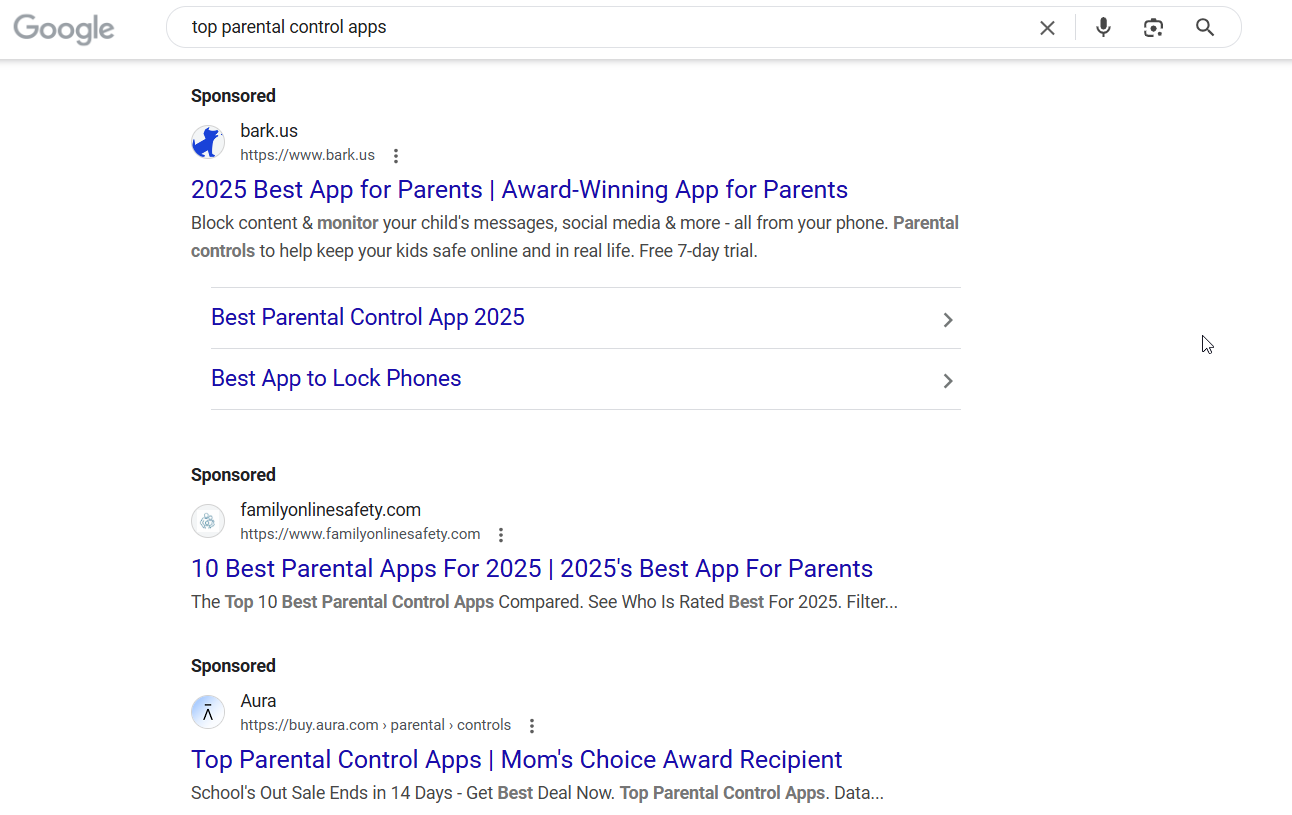
When searching for [top parental control apps] in Google, the first three positions are examples of search ads.

Screenshot from Google search for [top parental control apps], Google, May 2025

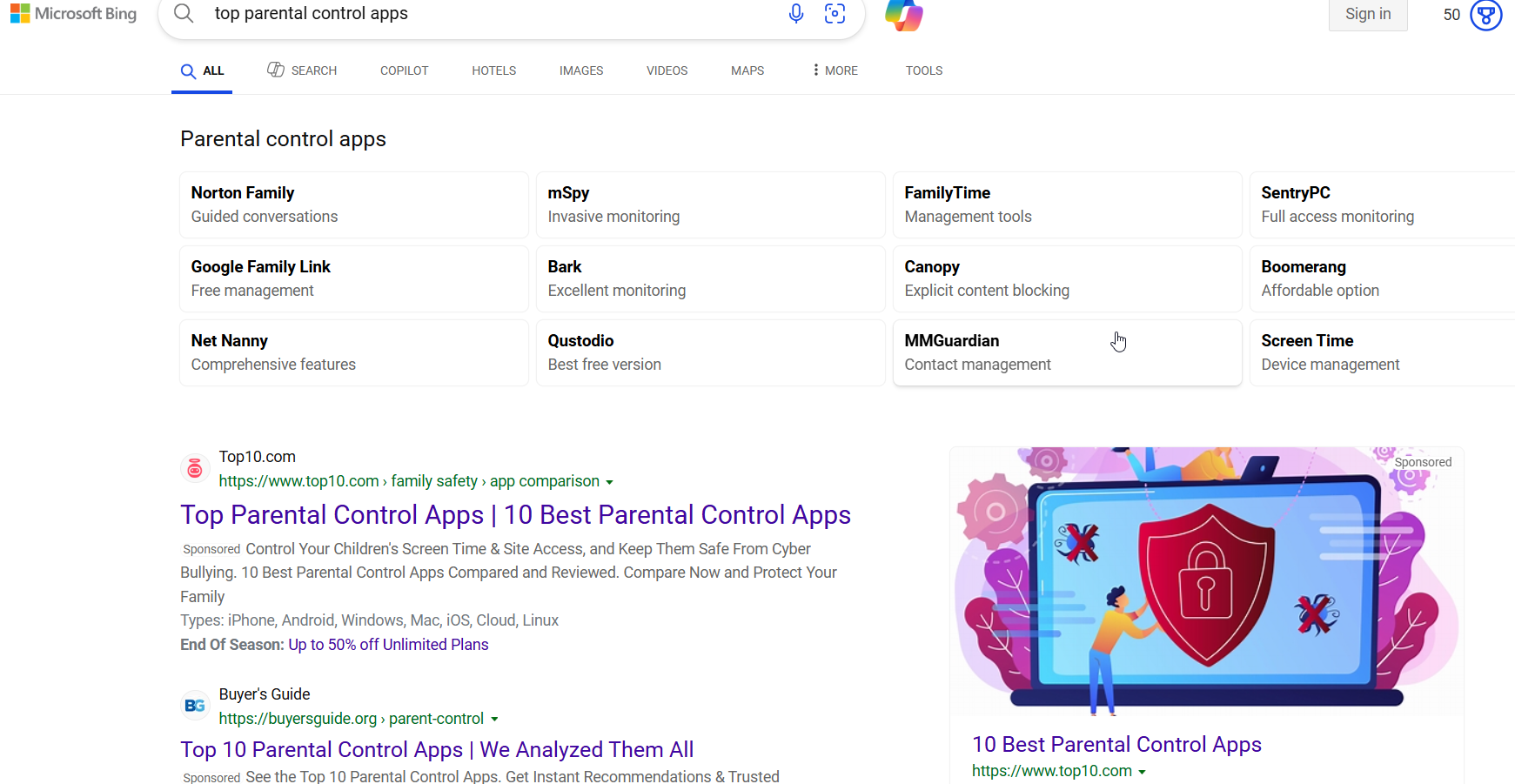
While conducting the same search on Microsoft Bing, the ads look slightly different.

There’s even a section above the sponsored ads showcasing different brands and a brief description about what they do.

Screenshot from Bing search for [top parental control apps], Microsoft Bing, May 2025

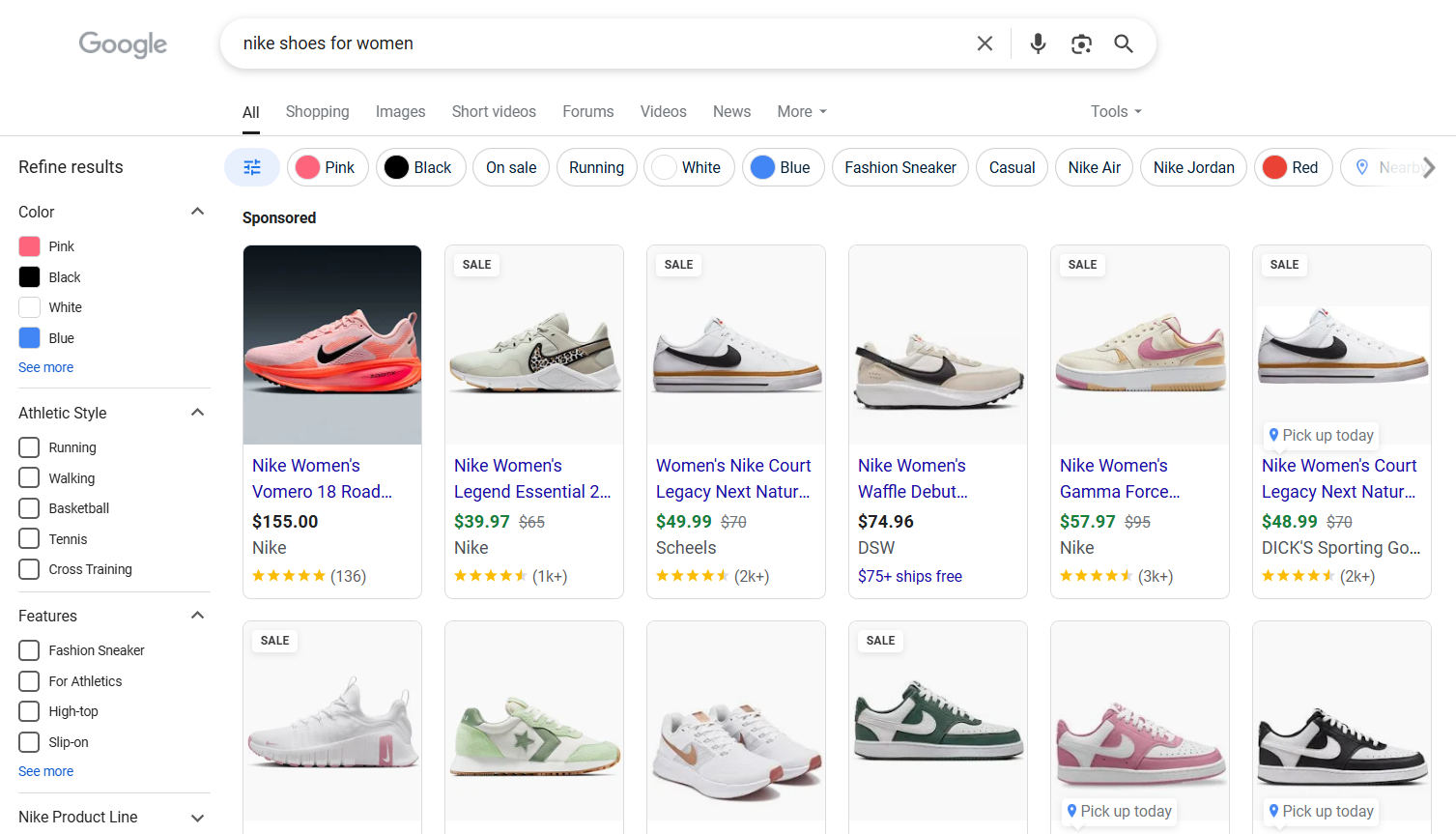
When searching for a product like [nike shoes for women], the ads below are a shopping ad format.

Screenshot from Google search for [nike shoes for women], Google, May 2025

Paid Social Examples

Each social platform’s ad formats look different within their respective newsfeeds.

Here is a LinkedIn newsfeed example:

Screenshot from author’s LinkedIn newsfeed, desktop ad, May 2025

A Facebook ad newsfeed example:

Screenshot from author’s Facebook newsfeed, desktop ad, May 2025

Instagram also offers ads in its “Stories” placement. An example from Fountainhead is below:

Screenshot from author’s Instagram Stories feed, Stories ad, May 2025

Display Examples

Display ads can be in all shapes and sizes, depending on the website or app.

Below is an example of two different display ads shown on one webpage.

Screenshot from author, May 2025

Affiliate Examples

Sometimes, affiliate ads can be difficult to spot.

For example, “Listicle” articles, where a publisher is paid by other brands to be included in a “Top” product article.

Screenshot from FamilyOnlineSafety.com, May 2025

However, if you take a closer look at this example’s “Advertising Disclosure,” you’ll notice that this publisher is paid by the brands for exclusive placement:

affiliate marketing disclaimerScreenshot from FamilyOnlineSafety.com, May 2025

Summary

Paid media doesn’t have to be a guessing game. When you understand the role each channel plays, you’re in a much better spot to build campaigns that actually drive results, not just impressions.

From keyword-targeted search ads to affiliate partnerships and social retargeting, each paid media type has its own strengths. Use them deliberately.

Think about where your audience is, how they like to interact, and what action you want them to take.

Remember: success isn’t just about being present on every channel. It’s about showing up with the right message, in the right place, at the right time.

More resources: 


Featured Image: Lana Sham/Shutterstock

https://www.searchenginejournal.com/what-is-paid-media/546998/


SEO Rockstar “Proves” You Don’t Need Meta Descriptions via @sejournal, @martinibuster

An SEO shared on social media that his SEO tests proved that not using a meta description resulted in a lift in traffic. Coincidentally, another well-known SEO published an article that claims that SEO tests misunderstand how Google and the internet actually work and lead to the deprioritization of meaningful changes. Who is right?

SEO Says Pages Without Meta Descriptions Received Ranking Improvement

Mark Williams-Cook posted the results of his SEO test on LinkedIn about using and omitting meta descriptions, concluding that pages lacking a meta description received an average traffic lift of approximately 3%.

Here’s some of what he wrote:

“This will get some people’s backs up, but we don’t recommend writing meta descriptions anymore, and that’s based on data and testing.

We have consistently found a small, usually around 3%, but statistically significant uplift to organic traffic on groups of pages with no meta descriptions vs test groups of pages with meta descriptions via SEOTesting.

I’ve come to the conclusion if you’re writing meta descriptions manually, you’re wasting time. If you’re using AI to do it, you’re probably wasting a small amount of time.”

Williams-Cook asserted that Google rewrites around 80% of meta descriptions and insisted that the best meta descriptions are query dependent, meaning that the ideal meta description would be one that’s custom written for the specific queries the page is ranking for, which is what Google does when the meta description is missing.

He expressed the opinion that omitting the meta description increases the likelihood that Google will step in and inject a query-relevant meta description into the search results which will “outperform” the normal meta description that’s optimized for whatever the page is about.

Although I have reservations about SEO tests in general, his suggestion is intriguing and has the ring of plausibility.

Are SEO Tests Performative Theater?

Coincidentally, Jono Alderson, a technical SEO consultant, published an article last week titled, “Stop testing. Start shipping.” where he discusses his view on SEO tests, calling it “performative theater.”

Alderson writes:

“The idea of SEO testing appeals because it feels scientific. Controlled. Safe…

You tweak one thing, you measure the outcome, you learn, you scale. It works for paid media, so why not here?

Because SEO isn’t a closed system. …It’s architecture, semantics, signals, and systems. And trying to test it like you would test a paid campaign misunderstands how the web – and Google – actually work.

Your site doesn’t exist in a vacuum. Search results are volatile. …Even the weather can influence click-through rates.

Trying to isolate the impact of a single change in that chaos isn’t scientific. It’s theatre.

…A/B testing, as it’s traditionally understood, doesn’t even cleanly work in SEO.

…most SEO A/B testing isn’t remotely scientific. It’s just a best-effort simulation, riddled with assumptions and susceptible to confounding variables. Even the cleanest tests can only hint at causality – and only in narrowly defined environments.”

Jono makes a valid point about the unreliability of tests where the inputs and the outputs are not fully controlled.

Statistical tests are generally done within a closed system where all the data being compared follow the same rules and patterns. But if you compare multiple sets of pages, where some pages target long-tail phrases and others target high-volume queries, then the pages will differ in their potential outcomes. External changes (daily traffic fluctuation, users clicking on the search results) aren’t controllable. As Jono suggested, even the weather can influence click rates.

Although Williams-Cook asserted that he had a control group for testing purposes, it’s extremely difficult to isolate a single variable on live websites due to the uncontrollable external factors as Jono points out.

So, even though Williams-Cook asserts that the 3% change he noted is consistent and statistically relevant, the unobservable factors within Google’s black box algorithm that determines the outcome makes it difficult to treat that result as a reliable causal finding in the way one could with a truly controlled and observable statistical testing method.

If it’s not possible to isolate one change then it’s very difficult to make reliable claims about the resulting SEO test results.

Focus On Meaningful SEO Improvements

Jono’s article calls out the shortcomings of SEO tests but the point of his essay is to call attention to how focusing on what can be tested and measured can become prioritized over the “meaningful” changes that should be made but aren’t because they cannot be measured. He argues that it’s important to focus on the things that matter in today’s search environment that are related to content and a better user experience.

And that’s where we circle back to Williams-Cook because although statistically valid A/B SEO tests may be “theatre” as Jono suggests, it doesn’t mean that Williams-Cook’s suggestion is wrong. He may actually may be correct that it’s better to omit the meta description and let Google rewrite them.

SEO is subjective which means what’s good for one might not be a priority for someone else. So the question remains, is removing all meta descriptions a meaningful change?

Featured Image by Shutterstock/baranq

https://www.searchenginejournal.com/seo-rockstar-proves-you-dont-need-meta-descriptions/550490/


Are You Still Optimizing for Rankings? AI Search May Not Care. [Webinar] via @sejournal, @hethr_campbell

No ranking data. No impression data. 

So, how do you measure success when AI-generated answers appear and disappear, prompt by prompt?

With these significant changes to how we optimize for search, many brands are seeking to understand how to achieve SEO success.

Some Brands Are Winning in Search. Others? Invisible.

If your content isn’t appearing in AI-generated responses, like AI Overviews, ChatGPT, or Perplexity, you’re already losing ground to competitors.

👉 RSVP: Learn from the brands still dominating SERPs through AI search

In This Free Webinar, You’ll Learn:

  • Data-backed insights on what drives visibility and performance in AI search
  • A proven framework to drive results in AI search, and why this approach works
  • Purpose-built content strategies for driving success in Answer Engine Optimization (AEO) and Generative Engine Optimization (GEO).

This webinar helps enterprise SEOs and executives move from “I don’t know what’s happening in AI search” to “I have a data-driven strategy to compete and win.”

This session is designed for:

  • Marketing managers and SEO strategists looking to stay ahead.
  • Brand leaders managing performance visibility across platforms.
  • Content teams building for modern search behaviors.

You’ll walk away with a usable playbook and a better understanding of how to optimize for the answer, not the query.

Learn from what today’s winning brands are doing right.

Secure your spot, plus get the recording sent straight to your inbox if you can’t make it live.

https://www.searchenginejournal.com/are-you-still-optimizing-for-rankings/550093/


Explaining The Great Decoupling To C-Level via @sejournal, @TaylorDanRW

Something important is happening in Google Search.

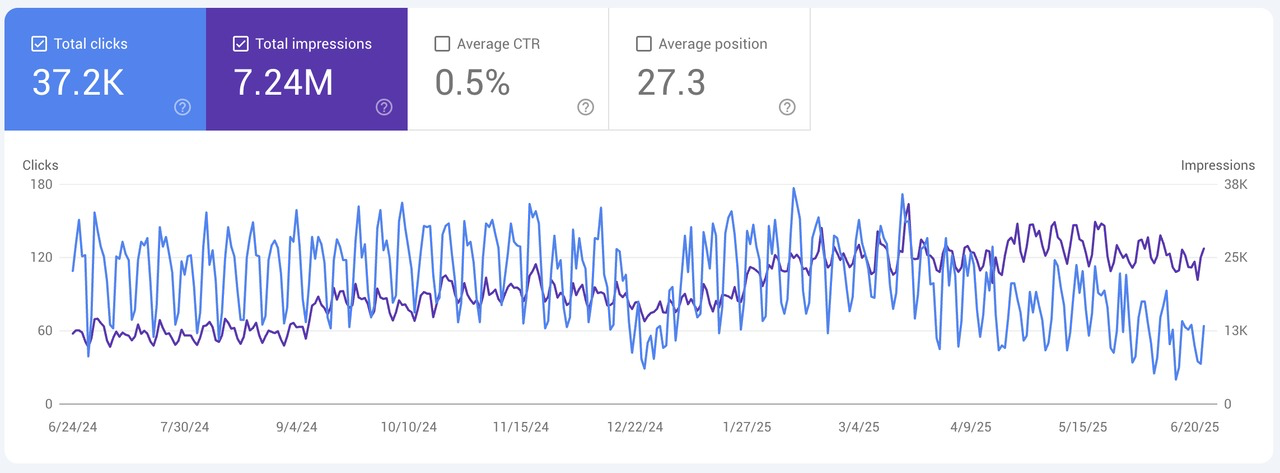
If you’ve looked at your website data in Google Search Console, you may have noticed something odd. Your pages are showing up more often, but fewer people are clicking through.

These two signals – impressions and clicks – are used to rise and fall together. Now, they’re drifting apart.

We call this “The Great Decoupling.”

Screenshot from Jim Thornton (with permission to use), The SEO Community Slack Group, June 2025

And it’s not just your business. This is happening across industries and most website types.

It became more noticeable as Google rolled out something called AI Overviews – automated summaries that answer questions directly in search results.

If your site traffic from search is falling, but your rankings look fine, this article will help explain why.

We’ll examine the changes, their causes, how they manifest in analytics tools, and the responses of leading companies.

What’s Happening And Why It Matters

The Great Decoupling describes a new disconnect. Your website can appear more often in search results but get fewer clicks.

That was only “the expected behavior” when the SERP had things like featured snippets, or other special content result blocks from Google.

We’ve seen this clearly in client data during the first half of 2025.

Screenshot from Itamar Bauer (with permission to use), Studio Hawk, June 2025

Near the end of 2024, impressions and clicks were still closely linked. But by early 2025, impressions kept going up while clicks went down.

The click-through rate, the percentage of people who click, dropped sharply.

This trend is widespread. Whether your site is an ecommerce store, a B2B company, or a blog, the same thing is happening – more visibility but less engagement.

Martin Splitt has said that when your pages are shown in AI Overviews, you may get more impressions but fewer clicks.

He also said that people might still convert later, perhaps after seeing your brand in search results, even if they never click the first time.

So, we’re in a new “normal”; impressions alone no longer signal opportunity. It’s what happens after the impression that counts.

Why This Is Happening

Google’s move toward AI-powered results is driving this change. The most significant shift is the introduction of AI Overviews.

AI Overviews are summaries shown at the top of search results.

Instead of a list of websites, Google provides an instant answer. That answer is generated from various sources across the web, including yours, without requiring the user to click.

Your Content May Appear Twice, But It Only Gets One Chance To Earn A Click

Your site may show up as both a traditional link and as part of the AI Overview. That boosts impressions but often reduces clicks. People get what they need from the overview.

Less Friction Means Fewer Visits

The AI Overview gives users what they want quickly. However, if their need is met before they reach your site, your traffic will drop.

Some Search Terms Are Hit Harder Than Others

Generic questions, how-tos, and mid-funnel queries are more likely to trigger AI Overviews. These are often top-of-funnel keywords marketers use to drive discovery.

On the other hand, brand searches and high-intent queries are more resilient.

The point is that it’s not just about where you rank. It’s about whether Google decides to answer the question for the user without needing you.

Zero-Click Search Isn’t New

This isn’t entirely new. For years, Google has provided users with quick answers. Featured snippets, “People Also Ask” boxes, and knowledge panels all reduced the need to click.

AI Overviews are just the next step. They are more advanced, appear more often, and answer a broader range of questions. But, the principle is the same: to reduce the effort for the user.

We’ve adapted before. We can adapt again. However, this shift is more significant and impacts multiple stages of the customer journey, necessitating a more strategic approach.

What This Looks Like In Your Analytics

In Google Search Console, the gap between impressions and clicks is clear. In Google Analytics 4, you see the impact on your traffic and behavior metrics.

Organic Traffic Is Falling

Your GA4 report shows fewer sessions from Google, even though your rankings haven’t changed. That’s the result of fewer clicks.

Engagement May Look Better

Because fewer but more qualified visitors are reaching your site, session length and conversion rates may look stronger. But, overall, reach is down.

Attribution Becomes Less Clear

GA4 does not show traffic that came through AI Overviews separately.

Some visitors might return later and be counted as “direct” traffic. Others won’t be tracked at all. This makes it more challenging to attribute SEO’s role in brand discovery.

To understand what’s happening, you need to look at GSC and GA4 together. One shows the visibility. The other shows the outcomes.

How I Think You Should Adjust & Act

The most forward-thinking businesses are making strategic shifts to protect and grow their visibility. Here are four things they’re doing:

1. Strengthen Brand

When users search for you by name, Google is less likely to intervene. These clicks are holding steady and, in some cases, growing.

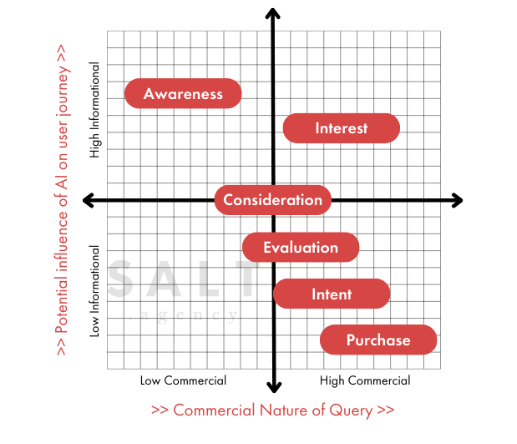
Investing in brand and trust is generic advice being thrown around a lot at the moment, but I think you should be looking at your brand in consideration of a user journey and what scope AI platforms have to alter that user journey before your brand is discovered.

Image from author, June 2025

This also means working to understand how well-known your brand is before a user starts at the “top of the funnel,” and whether or not they’re more likely to steer towards your brand due to previous positive brand touchpoints, or the sentiment and user stories of others online.

2. Publish Content That AI Can’t Copy

If your content is generic, Google’s AI can summarize it. If it’s unique, based on experience, data, or opinion, it’s much harder to replace.

Focus on:

  • Original research.
  • Customer stories.
  • Side-by-side product comparisons.
  • Tools and calculators.
  • Real customer feedback.

3. Build Around Topics, Not Keywords

Create clusters of related content around a theme. This signals authority to search engines and gives users more reasons to explore your site.

4. Turn Product Pages Into Useful Resources

Don’t just list specs. Add real information that helps the buyer:

  • FAQs.
  • Reviews.
  • Comparison tables.
  • Guides and videos.

You want to help the buyer better forecast their experience with the product or service, as well as their understanding of your brand.

Be upfront about as much information as possible, as a negative brand or product experience can be damaging in the long run.

Why SEO Still Matters

Yes, SEO remains highly relevant despite the rise of AI.

While AI tools are changing how search works and how users find answers, they haven’t replaced the need for a smart, well-executed SEO strategy.

SEO is evolving and becoming more important in new ways.

AI Needs High-Quality Content To Learn From

AI Overviews don’t invent answers. They draw from trusted online sources. That means Google still relies on high-quality, well-optimized content to build its responses.

SEO helps ensure your content meets the standards of E-E-A-T: experience, expertise, authoritativeness, and trustworthiness.

Search Engines Still Rank Pages

Even with AI features in search results, users still scroll through traditional listings and click on websites.

SEO ensures your content performs well in these results, whether it’s in the top 10 links, a featured snippet, or a “People Also Ask” box.

AI Enhances, Not Replaces, SEO

AI tools can automate certain aspects of SEO, such as keyword research and content suggestions. But, they don’t replace strategic thinking.

SEO experts continue to guide site architecture, content structure, technical fixes, and intent-based optimization – tasks that AI can’t fully handle alone.

SEO isn’t going away; it’s becoming more sophisticated.

The businesses that succeed will be the ones that blend innovative tools with strategic thinking and treat SEO as a long-term investment in visibility and value.

The new wave of SEO isn’t just about driving traffic. It’s about showing up where your customers are asking questions, building credibility, and creating a footprint that supports all your other channels.

  • Visibility builds trust. Even if someone doesn’t click, seeing your name in search results reinforces brand awareness.
  • SEO feeds other channels. The insights you gain from search, what people ask, how they ask it, and what ranking help shape your messaging everywhere else.
  • Strong content earns attention. Helpful, original content can drive engagement on-site, across social media, and in sales conversations.
  • It remains one of the most cost-effective ways to acquire leads, especially for branded and high-intent queries.

Search may not deliver the same volume of clicks, but it still shapes perception, influence, and decision-making.

SEO remains one of the most effective ways to stay visible and valuable in an increasingly AI-driven world.

Change What You Measure

The Great Decoupling is not just an SEO story. It’s a business visibility story. More people may see your brand, but fewer will visit your site.

That means you can’t just measure success by traffic. You need to consider engagement, recall, and brand strength.

Search is becoming a reputation game. If people trust you, they’ll find you, even if they don’t click the first time.

The companies that win won’t be the ones who chase rankings; they’ll be the ones who earn attention. Attention is potentially the “new click.”

(Author’s note: The term “The Great Decoupling” was first used to describe this phenomenon by Darwin Santos on X.)

More Resources:


Featured Image: Master1305/Shutterstock

https://www.searchenginejournal.com/explaining-the-great-decoupling-to-c-level/549902/


YouTube Targets Mass-Produced Content in Monetization Update via @sejournal, @MattGSouthern

YouTube is updating its monetization policies to target mass-produced and repetitious content. Here’s you need to know.

  • YouTube is updating monetization policies to target inauthentic content.
  • This change will impact channels publishing mass-produced and repetitious videos.
  • Violations could result in removal from the YouTube Partner Program.

https://www.searchenginejournal.com/youtube-targets-mass-produced-content-in-monetization-update/550337/