Google Tests ‘Preferred Sources’ To Personalize Top Stories In Search via @sejournal, @MattGSouthern

Google is testing a new feature that allows you to customize the Top Stories section in search results by selecting preferred news sources.

Currently available through Search Labs in the U.S. and India, the experiment gives people more influence over which publishers appear in their news-related queries.

How It Works

Those who opt into the experiment will see a new starred icon in the Top Stories carousel. Tapping it opens a menu where you can choose preferred publications.

Articles from selected sources will be more likely to appear in Top Stories when relevant. These entries will be marked with a star icon next to the site name, but they won’t replace Google’s algorithmic selections entirely.

Google may also display a secondary “From your sources” carousel beneath the main Top Stories section.

A Broader Shift Toward Personalization

The Preferred Sources feature builds on Google’s existing personalization tools, including the ability to highlight content users have frequently visited or show updates since their last search.

A “Try without personalization” option remains available at the bottom of search results, maintaining transparency and user control.

What This Means

For publishers, this change could offer increased visibility, especially for those with loyal audiences who choose them as preferred sources.

However, smaller or newer outlets may struggle to compete with established brands if user selections skew toward familiar names.

The experiment highlights the growing importance of brand recognition, direct audience relationships, and consistent content freshness.

Looking Ahead

This initiative is part of Google’s effort to balance algorithmic discovery with user-driven customization.

While it’s still an experiment, the move suggests Google is exploring ways to give users more say in how information surfaces, without fully abandoning its ranking systems.

If rolled out more broadly, the Preferred Sources feature could reshape strategies for publishers and marketers seeking consistent visibility in Google Search.


Featured Image: Roman Samborskyi/Shutterstock

https://www.searchenginejournal.com/google-tests-preferred-sources-to-personalize-top-stories-in-search/550037/


Google Launches Offerwall To Expand Monetization Options via @sejournal, @MattGSouthern

Google has launched Offerwall, a new feature in Google Ad Manager designed to help publishers diversify their revenue beyond traditional ads.

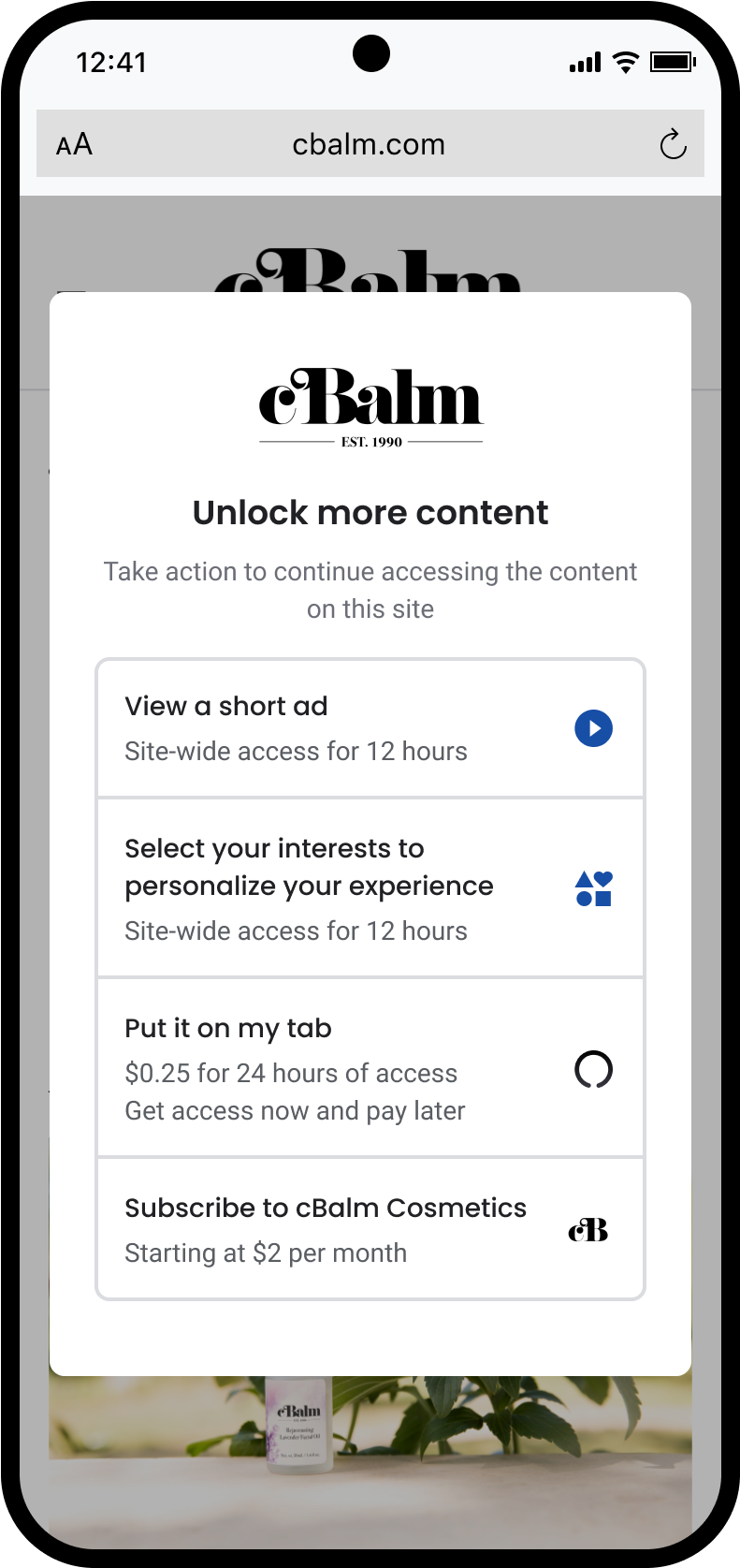
The tool, now generally available after testing with over 1,000 publishers, allows audiences to choose how they access content, including watching short ads, completing surveys, or making micro payments.

According to Google, early adopters of Offerwall have seen an average revenue increase of 9%

A Response to Changing Publisher Needs

Peentoo Patel, Product Director at Google Ad Manager, says in an announcement:

“For years, our publishing partners have asked for more and different ways to monetize their content beyond traditional ads.”

Offerwall gives audiences more control over how they engage with content, while providing publishers with additional monetization paths.

Key Capabilities of Offerwall

Offerwall includes several features aimed at helping publishers implement flexible monetization strategies:

  • Multiple Access Options: Audiences can access content by choosing from short ads, micro payments, interest-based surveys, or other publisher-defined methods.
  • Custom Integrations: Publishers can add their own access models, such as newsletter sign-ups or subscription trials.
  • Rewarded Ads: A familiar model for users who prefer to watch an ad in exchange for content access.
  • Survey Access: Completing a survey grants access while providing publishers with valuable audience insights.
  • Supertab Payment Integration (Beta): Enables single-use payments or subscriptions.
  • Optimize (AI-Driven Timing): Uses AI to determine the ideal moment to present the Offerwall, aiming to maximize engagement and revenue.

Here’s an example of what you might see on a publisher’s site when they use Offerwall:

Screenshot from: blog.google/products/ads-commerce/offerwall-gives-publishers-more-options-audiences-more-control/, June 2025.

Focus On Small Publishers

Google highlighted Offerwall’s potential benefits for smaller publishers, who may lack the development resources to build custom paywalls or alternative monetization systems.

Offerwall provides these tools with minimal setup, integrated directly into Google Ad Manager.

This could help close the resource gap between large and small media businesses by making diversified monetization models more accessible.

Implementation & Strategy

For publishers already using Google Ad Manager, Offerwall can be integrated with existing workflows.

The tool’s flexibility allows for gradual experimentation. You can start with basic rewarded ads or surveys and expand into micro payments or subscriptions as user behavior data accumulates.

The Optimize feature may also reduce friction in testing by automating decision-making about when to present monetization options.

Looking Ahead

The introduction of Offerwall underscores a broader shift in digital publishing. As privacy regulations evolve and traditional ad models face pressure, publishers are exploring new ways to monetize their content without compromising the user experience.

Marketers working with publisher partners may need to adapt to new engagement patterns and evaluate how Offerwall could affect campaign performance and analytics.

Offerwall is now available to all publishers through Google Ad Manager.


Featured Image: Roman Samborskyi/Shutterstock

https://www.searchenginejournal.com/google-launches-offerwall-to-expand-monetization-options/550018/


Google’s AI Search Journeys Are Reshaping SEO With Cindy Krum via @sejournal, @theshelleywalsh

Google’s transformation into an AI-driven search platform represents more than just a technological advancement. It’s a fundamental shift in how the search giant views itself as a company and the value it provides to users.

Cindy Krum has spoken at several events this year about her theory that Google might merge AI Overviews, Discover, and international results to build the next-gen search engine.

The overview of Cindy’s thoughts is that Google is not only internationalizing its platform, but is also converging AI Overview, Google Discover, and AI Mode into a unified, hyper-personalized search experience.

This evolution aligns with Google’s broader push toward understanding search as “journeys” rather than static queries, underlined by MUM.

My theory is that the move into heavily personalized search journeys builds on the past 20 years that Google has been striving to be a personal assistant. AI has made that possible.

Cindy is the founder of MobileMoxie and is described as being “years ahead of the pack.” I spoke to her about the implications for SEO and what part of this shift to AI-organized search and journeys SEO professionals are underestimating right now.

You can watch the full interview with Cindy on IMHO below, or continue reading the article summary.

[embedded content]

Predictive, Conversational, And Personalized

Cindy believes that, currently, there is a bigger shift than what some SEO professionals have been talking about: A fundamental shift in the way Google sees itself as a company and the way that it sees the value that it provides.

The real shift was in 2018, just after Google launched mobile-first indexing, when Google began organizing search results around entities. It said it wanted to be more predictive, more conversational, and more personalized.

According to Cindy, Google’s current AI initiatives aren’t new developments but rather the culmination of a strategy.

“Everything they’ve been doing since 2018 has been feeding this goal of getting us into this AI search reality,” she explains.

The AI Overviews, Google Discover expansion, and AI Mode we see today are direct results of this seven-year journey.

The Hidden Strategy Behind Google’s International Push

One of the most overlooked aspects of Google’s current transformation is its renewed attempt to consolidate international domains.

Google previously tried to eliminate country-specific versions (CCTLDs) before mobile-first indexing but had to roll back the initiative. Now, it is trying again, and the timing is significant.

“If you separate everything by country and language, you’re limiting your learning pipeline. You have smaller, fragmented datasets.” Cindy explains.

When you consolidate and abstract at the entity level, you can disambiguate meaning and link keywords to entity ideas across all languages. That speeds up the learning process.

Google can then apply what it learns in one language to another; we’re already seeing this with AI Overviews.

When it can’t find the right answer in a local language, it translates English content because it knows the English answer is probably also correct in other languages. This saves time and money on crawling, indexing, and ranking.

AI Mode Isn’t The Product. You Are

I asked Cindy if she thought Google might try to monetize AI Mode, but she believes Google’s strategy is more sophisticated.

“We can’t forget how Google makes money, it’s ads,” Cindy emphasizes. The real value lies in building comprehensive user profiles that enable precision ad targeting.

Google’s goal is to present ads only to users likely to convert, making its advertising platform more attractive to businesses while creating a seamless experience for users.

“They’re not monetizing AI Mode directly. They’re using it to collect data that allows them to monetize ads more effectively.”

This strategy extends to Performance Max campaigns on the paid search side, where Google controls optimization based on metrics it doesn’t trust advertisers to manage effectively.

Discovery Is Moving To TikTok, Reddit & Social

Despite Google’s technological advances, some users are losing trust in the quality of search results.

However, the solution isn’t abandoning Google but rather understanding how different platforms serve different purposes in the modern search ecosystem.

Cindy’s opinion is that Google is no longer the place where discovery happens.

Users increasingly conduct research across multiple platforms. TikTok for discovery, Reddit for authentic opinions, and eventually Google for final purchase decisions.

This multi-platform journey reflects a more sophisticated approach to information gathering and decision-making.

Cindy stresses the need to understand real branding, not just SEO branding or digital PR.

“To be able to influence the narrative in any kind of AI search result, you have to be actively influencing all those things,” she notes. “SEOs for years have been so focused on their website to the detriment of every other branding opportunity out there.”

Understanding Search Journeys

For SEO professionals looking to optimize for journeys rather than just keywords, Cindy recommends studying Google’s own navigation suggestions.

When performing searches, Google often displays additional navigation layers that reveal its understanding of user intent and likely next steps.

“This is where Google is kind of showing their cards and saying these are the queries that we expect you’re going to narrow down this query,” she explains.

By mapping these suggested pathways, SEO professionals can identify where their content fits into the user journey and where Google needs education about additional aspects of that journey.

If She Were Starting Today? TikTok

I asked Cindy if she were starting from the beginning now, what she would do and where she would invest, her immediate answer was TikTok.

She explains, “It’s where young audiences are, the algorithm promotes discovery, and content is repurposed across all other platforms. Importantly, it’s not just a fad; businesses are being built and scaled directly on TikTok.”

And while influencer saturation is real, Cindy sees TikTok as a smart, scrappy way to build awareness with a small budget and scale fast.

Preparing For The Future

The shift toward AI-organized search results and journey-based optimization requires a fundamental rethinking of digital marketing approaches.

Success in this new era of AI search demands understanding the complete customer journey, from initial discovery through final purchase, and ensuring brand presence at every touchpoint.

This includes active participation in the broader digital conversation about your industry, products, and services.

The future of search isn’t just about ranking higher; it’s about being present wherever your audience might encounter your brand throughout their decision-making journey.

“The future of search is understanding the entire journey, not just the keyword or the query.”

Thank you to Cindy Krum for offering her insights and being my guest on IMHO.

More Resources:


Featured Image: Shelley Walsh/Search Engine Journal

https://www.searchenginejournal.com/googles-ai-search-journeys-are-reshaping-seo-with-cindy-krum/549614/


Ask An SEO: Balancing Content That Converts With Content That Builds Brand Authority via @sejournal, @MordyOberstein

This week’s Ask an SEO question comes from Rachel P., who wants to find the middle ground between conversion-focused pages and authority-building content:

“How do I balance content that converts with content that builds brand authority? It feels like my CRO pages don’t rank well, and my blog posts don’t convert.”

It’s hard not to think of your marketing in parts. There’s the part of the strategy that focuses on brand awareness, while another aspect focuses on conversions or whatever key performance indicator.

That might be how you’ve been taught to do marketing, but that’s not how marketing actually works, in my opinion. I know that’s a contentious statement. I’ll do my best to back it up.

Marketing Is One Song

All of your marketing should work together to present a unified process that supports itself at each step of the way. Everything should work together harmoniously.

The question here almost assumes they don’t. We have efforts, or in this case, content meant to build authority and content that’s meant to convert, etc. What if we just had content?

Instead of siloing all of our efforts, what if we looked at it all as being about “generating momentum”? Producing a certain level of brand inertia and energy that could be captured or bottled up.

What if we looked at it as a process across multiple touchpoints, pages, and platforms (many of which are offline) of deepening the connection between our brands and our audience or consumer?

In that framework, it’s more about ensuring you give your audience the opportunity to move further down the rabbit hole than it is about “ranking your conversion” pages.

To me, the notion of “getting our conversion pages to rank” is more aligned with how you work and far less aligned with how your audience works.

You want to give your audience “access” to convert or reinforcement to convert as they feel connected and engaged with you.

The connection and sense of engagement are what drive conversion. To paraphrase baseball legend Yogi Berra, conversions are 90% about connection; the other half is product or service awareness.

In simple terms, I would focus more on how to build yourself up and engage an audience than on worrying about how to balance conversion rate-optimized content and informational content.

If your audience is engaged with your informational content and no one cares about your landing pages, who cares if the latter ranks well?

Use the blog to reinforce your offering. If that’s where people want to engage you, then engage them there.

Throw a banner up on the side of the blog. Include a call to action here or there. Add screenshots and tie the content into your product (naturally), etc.

Meet your audience where they are engaged and connected to you, and guide them to details on your offering from there.

This means I wouldn’t worry about balancing content and ranking. I’d worry about, “How do I engage my audience and remind them at the right time of my offering? How do I ensure that if they are engaged and want to move things forward, they have the access they need to be able to do that?”

What Does This Mean Practically?

Instead of building out two separate sets of pages in this case, think of them as one thing.

Authority and trust create a connection. Connection is the straw that mixes the drink. It’s what takes what might be a sterile statement about your brand’s offering and makes it intriguing.

Often, I find marketers think of this in reverse order: “My landing pages will rank or whatever, and then the consumer will see my informational content and be reassured. This reassurance will enable them to convert.”

It’s the opposite. In whatever way, whether it be via social, informational content, or company advocates, people form a connection with you.

This connection emotionally enables them to even consider opening their wallets or recommending your offering, etc. (i.e., conversions).

In my opinion, what you want to do is simply remind and reinforce. In those moments of connection, you want to remind the consumer of your offering, reinforce its value, and ensure they have easy access to it.

YouTubers sometimes do a great job of this. They offer informational value that creates a connection with their audience. Then, they ask you to subscribe (which in and of itself is a conversion).

They will reinforce that connection with additional content, and then, at some point, will mention their product, service, or whatever it is they offer.

They’ll tell you to check out the link in the description (because as I mentioned, you need to offer easy entry points), and take it from there.

I feel it’s more important to engage your audience and ensure that the access to the material you want them to convert with is accessible than worrying about various sets of content with various intents and how they perform.

If your audience is really engaged with your social media content, make sure links are included in your profile and post about your offering. (I like the 80/20 rule here: 80% value-driven content, 20% promotional. I often go 90/10.)

My point is, it’s not about page types. It’s about engaging and connecting with your audience and properly utilizing that connection to make your audience aware of your offering and to make it as frictionless as possible thereafter.

New Ways For A New Web

This sort of dichotomy between areas of marketing and aspects of your marketing strategy works for what I call the “old web.” To be honest, it didn’t work as well as we all bragged about on the “old web” either.

Regardless, I see the “new web” as being about success by refinement. In this era of the web, having a consistent message and presence that creates a strong and demarcated identity matters most.

We’re in a web environment where there has to be a strong connection to the audience if you expect them to notice you and purchase from you.

That means taking better advantage of opportunities to create pathways to products within those moments of audience engagement – not separate and siloed conversion paths.

It also means pushing product pathways in a far less aggressive and inorganic way as well, but that’s a conversation for another day.

More Resources:


Featured Image: Paulo Bobita/Search Engine Journal

https://www.searchenginejournal.com/ask-an-seo-balancing-content-that-converts-and-builds-brand-authority/549234/


Google’s ‘srsltid’ Parameter Appears In Organic URLs, Creating Confusion via @sejournal, @MattGSouthern

Google’s srsltid parameter, originally meant for product tracking, is now showing on blog pages and homepages, creating confusion among SEO pros.

Per a recent Reddit thread, people are seeing the parameter attached not just to product pages, but also to blog posts, category listings, and homepages.

Google Search Advocate John Mueller responded saying, “it doesn’t cause any problems for search.”  However, it may still raise more questions than it answers.

Here’s what you need to know.

What Is the srsltid Parameter Supposed to Do?

The srsltid parameter is part of Merchant Center auto-tagging. It’s designed to help merchants track conversions from organic listings connected to their product feeds.

When enabled, the parameter is appended to URLs shown in search results, allowing for better attribution of downstream behavior.

A post on Google’s Search Central community forum clarifies that these URLs aren’t indexed.

As Product Expert Barry Hunter (not affiliated with Google) explained:

“The URLs with srsltid are NOT really indexed. The param is added dynamically at runtime. That’s why they don’t show as indexed in Search Console… but they may appear in search results.”

While it’s true the URLs aren’t indexed, they’re showing up in indexed pages reported by third-party tools.

Why SEO Pros Are Confused

Despite Google’s assurances, the real-world impact of srsltid is causing confusion for these reasons:

  • Inflated URL counts: Tools often treat URLs with unique parameters as separate pages. This inflates site page counts and can obscure crawl reports or site audits.
  • Data fragmentation: Without filtering, analytics platforms like GA4 split traffic between canonical and parameterized URLs, making it harder to measure performance accurately.
  • Loss of visibility in Search Console: As documented in a study by Oncrawl, sites saw clicks and impressions for srsltid URLs drop to zero around September, even though those pages still appeared in search results.
  • Unexpected reach: The parameter is appearing on pages beyond product listings, including static pages, blogs, and category hubs.

Oncrawl’s analysis also found that Googlebot crawled 0.14% of pages with the srsltid parameter, suggesting minimal crawling impact.

Can Anything Be Done?

Google hasn’t indicated any rollback or revision to how srsltid works in organic results. But you do have a few options depending on how you’re affected.

Option 1: Disable Auto-Tagging

You can turn off Merchant Center auto-tagging by navigating to Tools and settings > Conversion settings > Automatic tagging. Switching to UTM parameters can provide greater control over traffic attribution.

Option 2: Keep Auto-Tagging, Filter Accordingly

If you need to keep auto-tagging active:

  • Ensure all affected pages have correct canonical tags.
  • Configure caching systems to ignore srsltid as a cache key.
  • Update your analytics filters to exclude or consolidate srsltid traffic.

Blocking the parameter in robots.txt won’t prevent the URLs from appearing in search results, as they’re added dynamically and not crawled directly.

What This Means

The srsltid parameter may not affect rankings, but its indirect impact on analytics and reporting is being felt.

When performance reporting shifts without explanation, SEO pros need to provide answers. Understanding how srsltid functions work, and how it doesn’t, helps mitigate confusion.

Staying informed, filtering correctly, and communicating with stakeholders are the best options for navigating this issue.


Featured Image: Roman Samborskyi/Shutterstock

https://www.searchenginejournal.com/googles-srsltid-parameter-appears-in-organic-urls-creating-confusion/549967/


Demand Gen Vs. Lead Gen: What Every CMO Needs To Know via @sejournal, @brookeosmundson

In boardrooms and Slack threads alike, “demand generation” and “lead generation” are often used interchangeably, sometimes even by marketers themselves.

But for CMOs making six- and seven-figure budget decisions, lumping the two together is a costly mistake.

On the surface, both strategies aim to generate revenue. But the approach, intent, and impact of each are fundamentally different.

Understanding these differences isn’t just marketing semantics. It’s a strategic imperative.

Whether you’re scaling a SaaS company, leading an enterprise rebrand, or trying to make sense of declining pipeline velocity, the way you approach demand and lead gen can either fuel long-term growth or lock you into a hamster wheel of short-term wins.

Let’s unpack what each of these approaches actually looks like, where they work best, and how to decide which path (or combination of them) is right for your team.

What Demand Generation Really Means

Demand generation isn’t just a top-of-funnel tactic. It’s a full-funnel strategy designed to create awareness, spark interest, and ultimately build desire for your solution, oftentimes before the buyer even knows they need it.

It prioritizes visibility, trust, and education over form-fills and gated assets.

So, what isn’t demand generation?

Demand gen isn’t about chasing contact details.

It’s about shaping buying decisions before the buyer ever enters a sales process.

This strategy leans heavily on value-driven content, community building, media exposure, and delivering information that builds brand affinity over time.

Examples of some commonly used demand generation tactics include:

  • Publishing ungated thought leadership content on LinkedIn.
  • Creating category awareness through podcasts and video series.
  • Investing in brand advertising or influencer partnerships.
  • Running product demos on YouTube or TikTok with no call-to-action (CTA).

In demand generation, you’re not asking for the sale. You’re creating an environment where the sale becomes inevitable.

What Lead Generation Actually Delivers

Lead generation is all about conversions, and not in the philosophical sense.

It’s measurable, trackable, and often deeply tied to sales-qualified metrics. You offer something (a whitepaper, webinar, trial) in exchange for something (a name, email, job title).

The focus here is less on brand building and more on pipeline development. It’s tactical, efficient, and often short-term.

That doesn’t make it “bad,” but it does mean you’ll need a strong nurturing process and sales alignment to make it effective.

Common lead generation tactics include:

  • Gated content downloads (ebooks, whitepapers, checklists).
  • Paid search with conversion-focused landing pages.
  • Webinar registrations.
  • Cold outreach from purchased lists.

Opposite of demand gen tactics, lead gen tactics are a bit easier to measure. They’re also easier to misuse.

If you’re not aligning on what constitutes a “qualified lead,” you might end up with a pile of marketing qualified leads (MQLs) that sales ignores.

Key Differences Between Them That Actually Matter

While the two approaches might feel similar in campaign execution, the intent and measurement couldn’t be more different.

Element Demand Generation Lead Generation
Primary Goal Build interest & educate the market Capture contact info for nurturing & sales
Buyer Stage Early to mid-funnel Mid to late-funnel
KPIs Brand engagement, direct traffic, pipeline contribution Form fills, cost-per-lead (CPL), MQL to SQL conversion
Channel Mix Social content, podcast, YouTube, native ads Paid search, lead forms, email, retargeting
Attribution Window Long-Term (30+ days) Short-term (<30 days)

If you’re measuring demand gen with the same key performance indicators (KPIs) as lead gen, you’re setting yourself up for disappointment.

These strategies operate on different timelines and serve different roles in the buyer journey.

The Cost Of Getting It Wrong

Let’s say you’re in the B2B SaaS space, and your board wants more pipeline, fast. So, you crank up spend on paid search and run gated ebook campaigns.

You get thousands of leads … and sales team closes almost none of them.

Why?

Because those leads weren’t ready to buy. They downloaded an asset, not because they were in-market, but because they were curious. That’s not a sales-qualified lead; it’s a reader.

On the flip side, if you only focus on brand and never collect contact info or move people into a nurture stream, your pipeline may dry up altogether.

Misalignment here causes poor return on investment (ROI), frustrated sales teams, and confusion at the executive level.

And CMOs? You’re the one who gets held accountable.

Signs You Need To Shift Toward Demand Gen

If you’re stuck in the “more leads, less revenue” loop, demand gen might be the missing piece.

Watch for these tell-tale signs:

  • Sales team is constantly complaining about low-quality leads.
  • Your brand has low share of voice in your category.
  • You’re over-reliant on bottom-of-funnel paid channels.
  • Organic pipeline growth is stagnating.
  • You’re optimizing cost-per-lead (CPL) while customer acquisition cost (CAC) keeps rising.

In these cases, shifting some of your focus (and budget) toward demand gen can help you break the cycle.

It doesn’t mean you stop generating leads. It means you start warming the market, so the leads that come through are higher intent and closer to revenue.

When Lead Generation Still Makes Sense

Lead gen isn’t dead. It just needs context.

For mature markets or lower-cost products with short sales cycles, lead gen can still be incredibly efficient.

It’s also useful when:

  • You have strong sales enablement and fast lead response times.
  • Your brand is already well-known and trusted.
  • You have clear, relevant offers with direct value.
  • You’re testing new messaging or audiences with measurable KPIs.

If your team excels at lead nurturing and you’re using lead gen to support (not substitute) long-term demand creation, it can drive fast, measurable results.

Just don’t treat it as a long-term growth strategy in isolation.

Why You Shouldn’t Just Pick One

This isn’t a zero-sum game. The smartest CMOs know how to balance both.

Think of demand gen as fueling interest, and lead gen as capturing it. The two should work in tandem.

Start with demand creation: educate, build trust, and generate awareness in the market. Then, as interest builds, use lead gen strategies to convert that attention into a measurable pipeline.

If you’re only doing one, you’re either leaving money on the table or burning through it too fast.

Rethinking KPIs And Attribution

Here’s where many CMOs get tripped up: trying to measure demand generation with lead generation metrics.

Demand generation is more about contribution to the pipeline, not generating immediate conversions.

For demand gen metrics, you’ll want to take a look at:

  • Direct traffic increases.
  • Organic branded search volume.
  • Sales velocity from known accounts.
  • CRM-sourced opportunities influenced by top-of-funnel touchpoints.

Meanwhile, lead gen metrics like CPL and MQL-to-SQL rates are better used in a supplementary way, not as the only measure of success.

And let’s be honest: Attribution will never be perfect. As CMOs, don’t expect your marketing teams to attribute each effort with 100% accuracy. You’d be setting them, and yourself, up for failure in the long run.

Buyers today might see a LinkedIn post, hear a podcast, and Google your brand three weeks later. That journey doesn’t show up in a neat linear model.

So, rather than obsessing over pixel-perfect attribution, focus on momentum. Is pipeline velocity improving? Is your CAC going down over time? Are more of the right buyers coming inbound?

Those are the real signals you should be looking for to understand if your demand gen and lead gen efforts are working.

What CMOs Should Do Next

This isn’t about choosing sides on which strategy to focus on. It’s about choosing alignment on how the two will operate together.

If you’re stuck on which to prioritize, ask yourself the following questions:

  • Are we educating the market, or just capturing the existing intent?
  • Is our sales team enabled to follow up on the leads that we’re generating?
  • Do we have the patience (and buy-in) to invest in both brand and content?
  • Are we tracking the right metrics for our business, or just the easy ones?

Start there. Then, audit your current marketing mix.

You might find that 80% of your spend is on lead generation efforts, but 80% of your growth comes from demand generation channels.

Chasing short-term tactics only squeezes out who’s currently in your marketing funnel.

You need to build a system that creates both interest and intent.

Smart Growth Doesn’t Follow A Form Fill

The most effective marketing strategies don’t live behind a gate. They live in conversations, videos, buyer communities, and the minds of decision-makers before they ever hit your website.

That’s what demand gen does best: It plants the seed between prospective customers and your brand.

Lead gen has its role, but without demand gen, it’s like harvesting from a field you never watered.

For today’s CMOs, the real challenge isn’t picking one over the other. It’s learning how to weave them together into a strategy that works for your audience, your sales team, and your business goals.

Because real growth rarely starts with a form fill, but it can end with one.

More Resources:


Featured Image: ra2 studio/Shutterstock

https://www.searchenginejournal.com/demand-generation-vs-lead-generation/546992/


The State Of AI In Marketing: 6 Key Findings From Marketing Leaders via @sejournal, @theshelleywalsh

AI is being rapidly implemented, but that doesn’t mean it’s being used effectively.

The current lack of clear benchmarks and data about AI usage has meant that everyone has been operating in the dark.

This led us to create our first State Of AI In Marketing report, so that chief marketing officers and marketing decision-makers can have insights to make better informed decisions as they navigate the fast-moving developments in our industry.

We asked eight key questions about generative AI in marketing to a selection of U.S.-based decision-makers and leaders.

We got 155 responses from mostly senior marketers, directors, and C-suite to offer fresh insights into how industry leaders perceive AI, and how they are using AI right now.

While some marketers are unlocking major gains in efficiency, others are struggling with poor output quality, lack of brand voice consistency, and legal uncertainties.

Our whitepaper presents their responses, broken down across five core themes:

  • Which AI tools are most broadly adopted among marketers.
  • How marketers are using AI.
  • The results they’re seeing.
  • The challenges they face.
  • Where they plan to invest next.

Whether you’re leading a team or building a roadmap, this report is designed to help you benchmark your AI strategy to make confident decisions as our industry moves at an unprecedented pace.

6 Key Findings From The Report

1. ChatGPT Is Currently Dominating The Tools

Over 83% of marketers said ChatGPT has positively impacted their efficiency or effectiveness.

But it’s not the only player: Tools like Gemini, Perplexity, Claude, and Canva AI are also making their mark, with many marketers assembling AI “stacks” that combine different strengths across platforms.

2. Content Has Seen The Most Tangible Impact From AI

Unsurprisingly, the most impact in marketing so far among our respondents is based around content, where 64.5% experienced value with content creation, 43.9% with content optimization, and 43.9% with idea generation.

However, AI is not replacing creativity; it’s augmenting it. Marketing teams are using tools to speed up, optimize and break through creative blocks, not to replace human insight.

The report also shares other key areas where AI has delivered the most value to those surveyed.

3. Time Savings Were The Single Most Improved Outcome

The majority of respondents (76.8%) cited time savings as the biggest improvement since adopting AI.

To enhance productivity and efficiency, marketers are gaining hours back to relocate their time to more strategic work.

4. Direct ROI-Linked Results Are Lacking

While operational efficiency is clearly impacted, strategic metrics like customer lifetime value, lead quality, and attribution remain largely unchanged.

In other words, AI is streamlining how we work, but not necessarily improving what we deliver without human oversight and a sound strategy.

5. Output Quality Remains A Top Concern

More than half (54.2%) of respondents identified inaccurate, unreliable, or inconsistent output quality as the biggest limitation in using AI for marketing.

This highlights a central theme that AI still requires substantial human oversight to produce marketing-ready content.

6. Misinformation Is The No. 1 Concern

The most cited concern about AI’s rise in marketing wasn’t job loss; it was the risk of misinformation.

A full 62.6% of respondents flagged AI-generated misinformation as their top worry, revealing the importance of trust, accuracy, and reputation for AI-powered content.

The report also highlights the other areas of concern where marketers are experiencing limitations and inefficiencies.

More Key Findings In The State Of AI Report

Marketing Leaders Are Planning To Invest In These Key Areas

Marketing decision-makers surveyed are prioritizing AI investments where value has already been proven. The report breaks down how much of that investment is across analytics, customer experience, SEO, marketing attribution, or content production, amongst other areas.

How Marketing Leaders Are Restructuring Their Teams

The report findings also indicate whether and how our respondents restructured to accommodate AI within their organization.

Where Will Be The Biggest Impact Over The Next Few Months

Possibly the most insightful section is where respondents gave their thoughts into what would be AI’s biggest impact on marketing over the next 12 months.

Many expect a content explosion, where the market is flooded with AI-generated assets, raising the bar for originality and quality.

Others foresee a reshaped search industry and reduced roles, with an emphasis on those who don’t embrace AI getting left behind.

But, not all forecasts are negative. Several marketers believe AI will level the playing field for small businesses, increase access to high-quality tools, and empower individuals to do the work of many.

You can find many more comments and predictions in the full report.

The State Of AI In Marketing Report For 2025 Can Help Shed Light

Right now is one of the most challenging times our industry has faced, and marketing leaders have hard decisions to make.

Hopefully, this whitepaper will help to shed light on how and where leaders can move forward.

In the report, you can find:

  • A real-world look at what tools marketers are using now and how they’re stacking them.
  • Insights into what areas of marketing AI are transforming, and where it’s still falling short.
  • A clear view into future investments, from personalization to performance tracking.
  • Actionable recommendations for how to evaluate, deploy, and govern AI effectively.
  • Perspectives from marketers navigating AI’s challenges.

Download the full AI in marketing survey report to make confident decisions in your AI implementation strategy.


Featured Image: Paulo Bobita/Search Engine Journal

https://www.searchenginejournal.com/the-state-of-ai-in-marketing-key-findings/549748/


Human-Centered Marketing: The Right Message To The Right People

This edited excerpt is from Human-Centered Marketing by Ashley Faus ©2025 and is reproduced and adapted with permission from Kogan Page Ltd.

Mapping content to the traditional funnel adds no value, since the journey behaves more like a playground than a linear progression.

Pitfalls of the traditional funnel include assuming that every person in the audience intends to and will become a customer, underestimating the sophistication of the buyer, and offering limited options for post-purchase retention strategies.

Building a seamless, delightful journey on a foundation of trust means that we must fundamentally rethink our framework for the audience journey.

Most marketers are familiar with the traditional funnel to outline the buyer’s journey, focusing on three key phases: awareness, consideration, and decision.

The funnel assumes that the audience journey begins with awareness, when, in fact, the audience journey begins long before marketers rec­ognize that this person is on a journey.

Introducing The Playground

We need to think about the journey as a playground: people can go up, down, sideways, and around. They can go to the equip­ment (content) in any order. They can enter and exit as they please. And they can use the content in the “wrong” way.

How many times do you force your audience to go through un­necessary steps because you’re trying to make them buy when they’re not ready; or, worse, you add friction to the buying process because you need to check the boxes on providing a white paper and a demo and a case study?

Why does this happen? It stems from the idea that we need to push prospects down the funnel to become leads and keep moving them through until they become customers.

Pitfalls Of The Customer Journey Map

Ultimately, every customer journey map ends with the prospect be­coming a lead and deciding to purchase the company’s offering. This linear journey map ignores retention, cross-sell, up-sell, and expansion opportunities.

While the looping journey does, at least, acknowledge the additional post-purchase phase, it fails to capture the complexity.

For example, many software-as-a-service companies have user limits for different tiers of their product offerings.

With the rise of product-led growth (PLG) as a key go-to-market motion, many SaaS products include a free tier, with user gates, feature gates, or both, to prompt free users to become paying customers.

Traditional journey maps obscure the messy middle of the customer journey, with weird hacks to stay under the user limit, lengthy negotiations on larger contracts for seat expansion, and fighting competitors when it comes time for the cus­tomer to renew.

This highlights another pitfall of the funnel and associated journey maps to move people through the funnel. It’s a retrospective measure­ment tool, not a forward-looking strategy tool.

If you map the journeys of people who did, in fact, become custom­ers, then you are correct in starting with a prospect having a problem, searching for a solution, and ultimately, choosing your offering.

If, however, you are trying to build a net-new audience, hone your nar­ratives to resonate with that audience, and map your content and distribution strategy, you can’t simply look at what happened in the past, on owned platforms, in the condensed time period where the buying process “officially” started.

In addition, consider a post-pur­chase scenario where the marketer makes the journey more difficult for a customer precisely because they want to track the interaction in more detail.

Collecting more information gives us a false sense of security. If we know just a bit more about this person, surely we can convince them to spend more money.

Traditional funnel models also fail to recognize the differences be­tween a user and an economic buyer. Many marketers recognize that buying involves multiple different people, but they assume that each stakeholder joins the process in a linear way.

For example, in larger companies, an economic buyer might need to go through a procure­ment process that includes a security assessment, compliance check­list, and legal or contract review before bringing in a new tool.

The linear funnel assumes that these stakeholders need to be addressed in the “decision” phase of the buying process.

And yet, ask anyone who’s been through procurement in a large enterprise, and they’ll tell you that it’s difficult, and, often, a deterrent to even starting a buying process.

In order to convince me to buy, you need to convince me that I’ll be able to buy. If you make it easy for me to make it through the procurement process, I’m much more likely to choose you as a ven­dor because I know that I’ll be successful in completing the process.

Consider another scenario, where individual teams are empowered to purchase tools and services on their own. These teams are all in the “post-purchase” phase.

At some point, the invoices might be large enough to warrant consolidation, which might trigger a wider vendor review. In that case, you’ve won over many users, but the economic buyer is now in the “awareness” phase, as they’ve just discovered you as a vendor.

Or, they might need to be convinced that solving this prob­lem should continue to be a priority at all. Alternatively, the buyers might immediately move to the “consideration” phase by opening a request for proposal (RFP) or researching competitors.

Maybe they’ve bought in on the problem, but they want to explore different solutions. They might need to learn about different possible solutions, even though there’s already a vendor solving this problem.

Once you decide to consolidate a contract, the spend might be big enough to require a more thorough vetting by the procurement, secu­rity, compliance, and legal teams.

At this point, who knows which phase of the funnel you’re in? Is it “retention” with the users who no longer actually have buying power?

Is it awareness or consideration with the economic buyer? Is it awareness or decision with teams who have the ability to block the deal, but aren’t the economic buyer?

As you can see, attempting to map content to a linear funnel by also mapping linear personas becomes quite a challenge!

These scenarios also minimize or ignore the sophistication of the buyer. In a B2B (business-to-business) context, most buyers are quite sophisticated. They’re well-versed in the problem space, and might have purchased solutions in the past.

They’re equipped to do their own research, and often prefer working through the initial vetting phases before reaching out to a company to initiate a buying process.

In fact, TrustRadius found that, in 2021, 43% of buyers re­ported consulting with vendor representatives, and that number dropped to an average of one out of four buyers in all but the largest deal sizes.

Instead, buyers preferred to conduct their own research, with a bias to­wards non-vendor-provided material.

Buyers favored free trials or ac­counts (56%), user reviews (55%), and community forums (37%) over vendor-provided materials such as customer references (15%), blogs (14%), and marketing collateral (14%).1

This trend continued in a 2024 report from 6sense, a company that arms revenue teams with data to accelerate deal conversions. It found that, when B2B buyers directly engage sellers, they are already 70% through their buying process.2

We see over and over that, by the time a marketer becomes aware that someone is in the buying process, they’re significantly behind the buyer’s knowledge of the problem space, research into the solution space, and affinity for a select list of solution providers.

They’re not coming to the company website cold, or blindly reaching out to a salesperson.

Instead, they’ve consulted a curated list of trusted sources, including conversations with their personal network, crowd­sourcing information, and recommendations from peers on social media and forums, and they’ve read about the pros and cons of dif­ferent providers from people like themselves.

To read the full book, SEJ readers have an exclusive 25% discount code and free shipping to the US and UK. Use promo code SEJ25 at koganpage.com here.

More Resources:


[1] TrustRadius (2022), 2022 Buying Disconnect: The Age of the Self-Serve Buyer, go.trustradius.com/rs/827-FOI-687/images/TrustRadius_2022_ B2B_Buying_Disconnect_6.27.22.pdf (archived at https://perma.cc/ TG6X-UU8T)

[2] 6sense Research (2023), Out of Sight, Almost Out of Time: The 2023 6sense B2B Buyer Experience Report, 6sense, 6sense.com/report/ buyer-experience (archived at https://perma.cc/XJ3Z-ULJ4)


Featured Image: Natalya Kosarevich/Shutterstock

https://www.searchenginejournal.com/human-centered-marketing-the-right-message-to-the-right-people/548972/


The Smart SEO Team’s Guide To Timing & Executing A Large-Scale Site Migration via @sejournal, @inmotionhosting

This post was sponsored by InMotion Hosting. The opinions expressed in this article are the sponsor’s own.

We’ve all felt it, that sinking feeling in your stomach when your site starts crawling instead of sprinting.

Page speed reports start flashing red. Search Console is flooding your inbox with errors.

You know it’s time for better hosting, but here’s the thing: moving a large website without tanking your SEO is like trying to change tires while your car is still moving.

We’ve seen too many migrations go sideways, which is why we put together this guide.

Let’s walk through a migration plan that works. One that’ll future-proof your site without disrupting your rankings or overburdening your team.

Free Website Migration Checklist

Step 1: Set Your Performance Goals & Audit Your Environment

Establish Performance Benchmarks

Before you touch a single line of code, you need benchmarks. Think of these as your “before” pictures in a website makeover.

If you skip this step, you’ll regret it later. How will you know if your migration was successful if you don’t know where you started?

Gather your current page speed numbers, uptime percentages, and server response times. These will serve as proof that the migration was worth it.

Document Current Site Architecture

Next, let’s identify what’s working for your site and what’s holding it back. Keep a detailed record of your current setup, including your content management system (CMS), plugins, traffic patterns, and peak periods.

Large sites often have unusual, hidden connections that only reveal themselves at the worst possible moments during migrations. Trust us, documenting this now prevents those 2 AM panic attacks later.

Define Your Website Migration Goals

Let’s get specific about what success looks like. Saying “we want the site to be faster” is like saying “we want more leads.” It sounds great, but how do you measure it?

Aim for concrete targets, such as:

  • Load times under 2 seconds on key pages (we like to focus on product pages first).
  • 99.99% uptime guarantees (because every minute of downtime is money down the drain).
  • Server response times under 200ms.
  • 30% better crawl efficiency (so Google sees your content updates).

We recommend running tests with Google Lighthouse and GTmetrix at different times of day. You’d be surprised how performance can vary between your morning coffee and afternoon slump.

Your top money-making pages deserve special attention during migration, so keep tabs on those.

Step 2: Choose The Right Hosting Fit

Not all hosting options can handle the big leagues.

We’ve seen too many migrations fail because someone picked a hosting plan better suited for a personal blog than an enterprise website.

Match Your Needs To Solutions

Let’s break down what we’ve found works best.

Managed VPS is excellent for medium-sized sites. If you’re receiving 100,000 to 500,000 monthly visitors, this might be your sweet spot. You’ll have the control you need without the overkill.

Dedicated servers are what we recommend for the major players. If you’re handling millions of visitors or running complex applications, this is for you.

What we appreciate about dedicated resources is that they eliminate the “noisy neighbor” problem, where someone else’s traffic spike can tank your performance. Enterprise sites on dedicated servers load 40-60% faster and rarely experience those resource-related outages.

WordPress-optimized hosting is ideal if you’re running WordPress. These environments come pre-tuned with built-in caching and auto-updates. Why reinvent the wheel, right?

Understand The Must-Have Features Checklist

Let’s talk about what your web hosting will need for SEO success.

Free Website Migration Checklist

NVMe SSDs are non-negotiable these days. They’re about six times faster than regular storage for database work, and you’ll feel the difference immediately.

A good CDN is essential if you want visitors from different regions to have the same snappy experience. Server-level caching makes a huge difference, as it reduces processing work and speeds up repeat visits and search crawls.
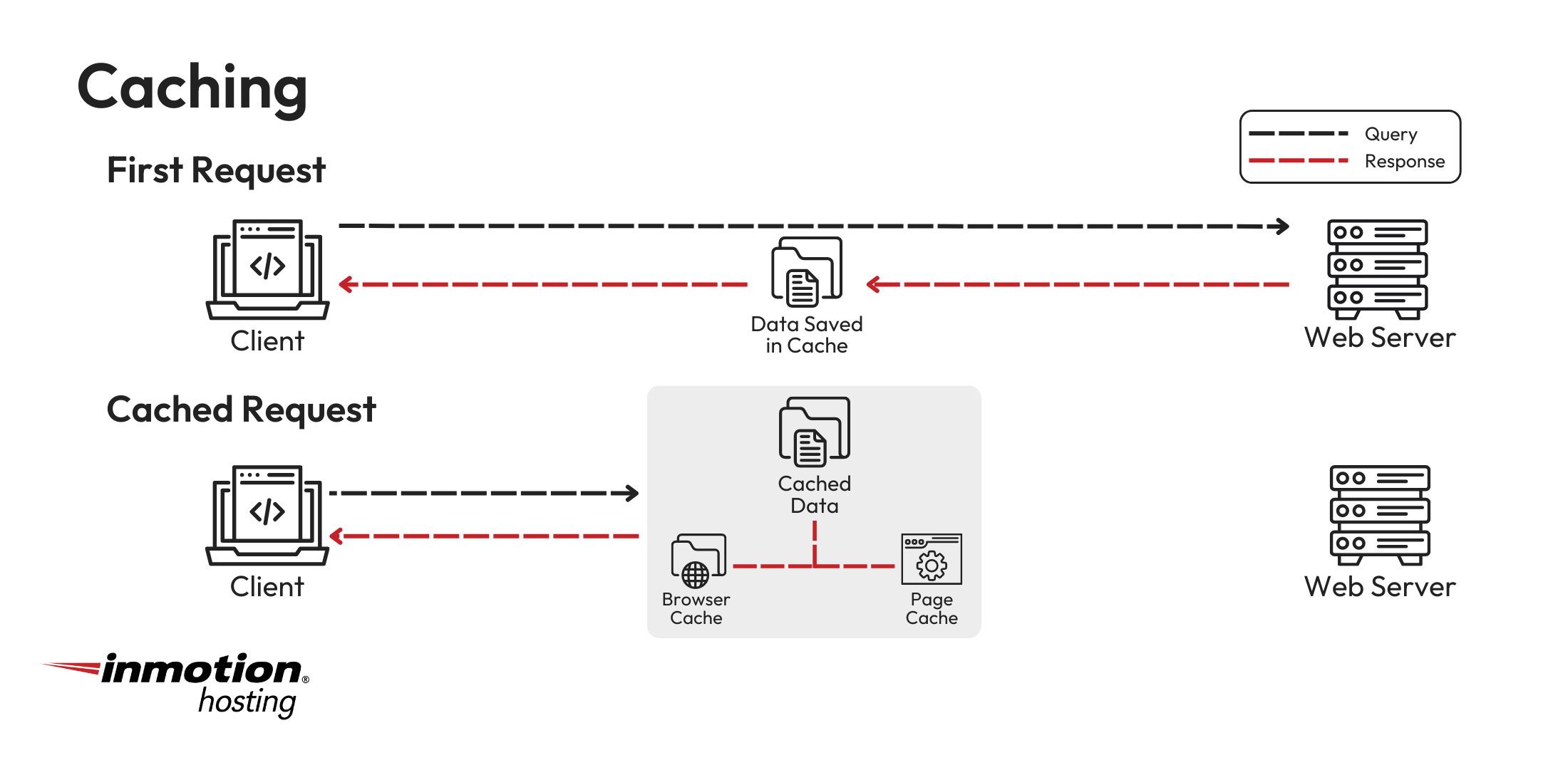
Illustration showing how caching works on a websiteImage created by InMotion Hosting, June 2025

Staging environments aren’t optional for big migrations. They’re your safety net. Keep in mind that emergency fixes can cost significantly more than setting up staging beforehand.

And please ensure you have 24/7 migration support from actual humans. Not chatbots, real engineers who answer the phone when things go sideways at midnight.

Key Considerations for Growth

Think about where your site is headed, not just where it is now.

Are you launching in new markets? Planning a big PR push? Your hosting should handle growth without making you migrate again six months later.

One thing that often gets overlooked: redirect limits. Many platforms cap at 50,000-100,000 redirects, which sounds like a lot until you’re migrating a massive product catalog.

Step 3: Prep for Migration – The Critical Steps

Preparation separates smooth migrations from disasters. This phase makes or breaks your project.

Build Your Backup Strategy

First things first: backups, backups, backups. We’re talking complete copies of both files and databases.

Don’t dump everything into one giant folder labeled “Site Stuff.” Organizing backups by date and type. Include the entire file system, database exports, configuration files, SSL certificates, and everything else.

Here’s a common mistake we often see: not testing the restore process before migration day. A backup you can’t restore is wasted server space. Always conduct a test restore on a separate server to ensure everything works as expected.

Set Up the New Environment and Test in Staging

Your new hosting environment should closely mirror your production environment. Match PHP versions, database settings, security rules, everything. This isn’t the time to upgrade seven different things at once (we’ve seen that mistake before).

Run thorough pre-launch tests on staging. Check site speed on different page types. Pull out your phone and verify that the mobile display works.

Use Google’s testing tools to confirm that your structured data remains intact. The goal is no surprises on launch day.

Map Out DNS Cutover and Minimize TTL for a Quick Switch

DNS strategy might sound boring, but it can make or break your downtime window.

Here’s what works: reduce your TTL to at least 300 seconds (5 minutes) about 48 hours before migration. This makes DNS changes propagate quickly when you flip the switch.

Have all your DNS records prepared in advance: A records, CNAMEs for subdomains, MX records for email, and TXT records for verification. Keep a checklist and highlight the mission-critical ones that would cause panic if forgotten.

Freeze Non-Essential Site Updates Before Migration

This might be controversial, but we’re advocates for freezing all content and development changes for at least 48 hours before migration.

The last thing you need is someone publishing a new blog post right as you’re moving servers.

You can use this freeze time for team education. It’s a perfect moment to run workshops on technical SEO or explain how site speed affects rankings. Turn downtime into learning time.

Step 4: Go-Live Without the Guesswork

Migration day! This is where all your planning pays off, or where you realize what you forgot.

Launch Timing Is Everything

Choose your timing carefully. You should aim for when traffic is typically lowest.

For global sites, consider the “follow-the-sun” approach. This means migrating region by region during their lowest traffic hours. While it takes longer, it dramatically reduces risk.

Coordinate Your Teams

Clear communication is everything. Everyone should know exactly what they’re doing and when.

Define clear go/no-go decision points. Who makes the call if something looks off? What’s the threshold for rolling back vs. pushing through?

Having these conversations before you’re in the middle of a migration saves a ton of stress.

Live Performance Monitoring

Once you flip the switch, monitoring becomes your best friend. Here are the key items to monitor:

  • Watch site speed across different page types and locations.
  • Set up email alerts for crawl errors in Search Console.
  • Monitor 404 error rates and redirect performance.

Sudden spikes in 404 errors or drops in speed need immediate attention. They’re usually signs that something didn’t migrate correctly.

The faster you catch these issues, the less impact they’ll have on your rankings.

Post-Migration Validation

After launch, run through a systematic checklist:

  • Test redirect chains (we recommend Screaming Frog for this).
  • Make sure internal links work.
  • Verify your analytics tracking (you’d be surprised how often this breaks).
  • Check conversion tracking.
  • Validate SSL certificates.
  • Watch server logs for crawl issues.

One step people often forget: resubmitting your sitemap in Search Console as soon as possible. This helps Google discover your new setup faster.

Even with a perfect migration, most large sites take 3-6 months for complete re-indexing, so patience is key.

Step 5: Optimize, Tune, and Report: How To Increase Wins

The migration itself is just the beginning. Post-migration tuning is where the magic happens.

Fine-Tune Your Configuration

Now that you’re observing real traffic patterns, you can optimize your setup.

Start by enhancing caching rules based on actual user behavior. Adjust compression settings, and optimize those database queries that seemed fine during testing but are sluggish in production.

Handling redirects at the server level, rather than through plugins or CMS settings, is faster and reduces server load.

Automate Performance Monitoring

Set up alerts for issues before they become problems. We recommend monitoring:

  • Page speed drops by over 10%.
  • Uptime drops.
  • Changes in crawl rates.
  • Spikes in server resource usage.
  • Organic traffic drops by over 20%.

Automation saves you from constantly checking dashboards, allowing you to focus on improvements instead of firefighting.

Analyze for SEO Efficiency

Server logs tell you a lot about how well your migration went from an SEO perspective. Look for fewer crawl errors, faster Googlebot response times, and better crawl budget usage.

Improvements in crawl efficiency mean Google can discover and index your new content much faster.

Measure and Report Success

Compare your post-migration performance to those baseline metrics you wisely collected.

When showing results to executives, connect each improvement to business outcomes. For example:

  • “Faster pages reduced our bounce rate by 15%, which means more people are staying on the site.”
  • “Better uptime means we’re not losing sales during peak hours.”
  • “Improved crawl efficiency means our new products get indexed faster.”

Pro tip: Build easy-to-read dashboards that executives can access at any time. This helps build confidence and alleviate concerns.

Ready to Execute Your High-Performance Migration?

You don’t need more proof that hosting matters. Every slow page load and server hiccup already demonstrates it. What you need is a plan that safeguards your SEO investment while achieving tangible improvements.

This guide provides you with that playbook. You now know how to benchmark, choose the right solutions, and optimize for success.

This approach can be applied to sites of all sizes, ranging from emerging e-commerce stores to large enterprise platforms. The key lies in preparation and partnering with the right support team.

If you’re ready to take action, consider collaborating with a hosting provider that understands the complexities of large-scale migrations. Look for a team that manages substantial redirect volumes and builds infrastructure specifically for high-traffic websites. Your future rankings will thank you!

Image Credits

Featured Image: Image by InMotion Hosting. Used with permission.

In-Post Image: Images by InMotion Hosting. Used with permission.

https://www.searchenginejournal.com/seo-guide-site-migration-inmotionhosting-spa/549001/


Jill Whalen’s SEO Legacy Still Shapes The Industry via @sejournal, @martinibuster

Jill Whalen, a true SEO pioneer, recently passed away. Although she has been retired for over ten years, her influence continues in the content-first SEO practices she advocated that are gradually gaining ground thirty years after she first championed that approach to ranking websites.

Contributions To SEO

As part of the first wave of SEO, her contribution to search marketing was to prove that a content-focused approach was sustainable as a long-term strategy. While that style of SEO is described as white hat, that term has lost meaning as many of the SEOs with the biggest and whitest hats tended to be algorithm chasers jumping from strategy to strategy, something Whalen was not.

Many of the second-wave SEOs from my generation focused on testing the limits of search engine algorithms and reading research papers to better understand how search engines worked. Whalen remained steadily focused on creating the kind of content search engines were trying to rank and used responsible link building to promote it, which turned out to be a winning strategy.

Screenshot Of Jill Whalen On SEO Pioneers Show

Left to right: Jill Whalen, Shelley Walsh

Her approach may have felt old-fashioned to some in the industry at the time, but she recently observed in an interview on Shelley Walsh’s SEO Pioneers show that she felt vindicated after Google’s Panda and Penguin algorithms, which rocked the search marketing industry but left her clients’ top-ranked websites untouched. Indeed, the entire SEO industry is coming around to Jill’s approach to SEO.

Whalen retired in 2013 and turned her attention to subjects that mattered to her, but her influence has always been felt through the thousands of SEOs who learned from her and who continue to pass those traditions on.

How Jill Whalen Influenced Top SEOs

Christine Churchill

Christine Churchill (LinkedIn profile), a leading search marketer, explains how she met Jill Whalen and how she influenced her life and career.

“Wow, this loss really stings! I first met Jill at a speakers’ gathering that I almost skipped because I was dreading feeling out of place. I told myself to just go for five minutes, and when I walked in, I spotted Jill right away – the only other woman there. She flashed me a warm smile, and I found my way over to the bar where she was sitting. I was so nervous, but I was completely taken aback when she mentioned she had seen me speak at an earlier conference and actually knew who I was!

We ended up chatting until the bar closed, and from that night on, we bonded instantly. Jill had this incredible gift of helping us believe in ourselves and encouraging us to shine. Because of her, I also met amazing people like Debra Mastaler, Scottie Claibourne, Karon Thackston, Kim Krause Berg and so many more kindred spirits. We all became friendly faces in the crowd, supporting each other in countless ways.

Jill truly changed my life, and I got to travel the world alongside her! Even when she retired and we didn’t see each other as much, I always knew that if I needed a friend, she’d be just a call away.

I still remember that one conference (I think it was in Pennsylvania) where we met this fascinating guy who talked to ghosts. We ended up staying at the bar yet again, discussing spirits and the signs our departed loved ones send us. It feels like Jill is with all of us now, saying goodbye and cheering us on to keep blooming.

Thank you, Jill, for your incredible friendship and support. I’ll cherish my memories of you forever!”

Debra Mastaler

My good friend Debra Mastaler (LinkedIn profile) was one of Whalen’s early collaborators, handling link building. Debra shares how Jill was instrumental in shaping her career in SEO:

“I’ve been involved with the SEO industry since 1999, I started by owning a directory of organic food and clothing. When I started to rank well for a large number of money terms, business owners advertising in my directory asked if I could I help them “optimize” their sites. I had no clue what that meant so I started looking around for information and met Jill.

Jill took the time to explain what I was doing was called link building and how important it was. One thing led to another and she hired me to do all her link work and got me on the speaking circuit. About a year later, I felt confident enough to work on my own and I launched Alliance-Link.

Over the years, we traveled together, went to conferences, ran an SEO forum, published content together, shared family vacations and spoke almost every day. We drifted after she left the SEO industry but her mark on my life has never faded.”

Image of Debra Mastaler, Christine Churchill, and Jill WhalenLeft to right: Debra Mastaler, Christine Churchill, Jill Whalen

Michael Bonfils

Multilingual International SEO Michael Bonfils (LinkedIn profile), also an SEO pioneer himself, nce before SEO described who she was and how she influenced him.

“Twenty five years ago while attending one of the first SES (Search Engine Strategies) conferences in San Francisco, I noticed this incredibly enthusiastic lady who was leading a roundtable discussion about content. There were three things that struck me that I never forget.

  • First, she was one of the few women in a sea of nerdy dudes but as nerdy as she was, she fit perfectly in with everyone else.
  • Second, she was nervous about speaking, she didn’t say it, but I can see it. I could feel it. It made me happy to know that I wasn’t alone and it was that nervousness that drew me to be one of the first few that sat around her roundtable.
  • Third, she explained the power of content in SEO better than anyone else. While everyone was focused on tricking the search engines, she was focused on feeding the search engines exactly what they wanted (I was working for a search engine at the time, so this was important for me to hear.)

From the beginning of her career, I’ve had so much respect for Jill that her and I over the decades would often talk about the good old days when everyone and everything in SEO was so uncertain. When she retired, I told her how bummed I was and then I of course accused her of faking it.

I am really going to miss Jill and just broken hearted to learn of her passing. She was truly a legend.”

Duane Forrester

Duane Forrester (LinkedIn profile, formerly of Bing) described how Jill Whalen helped him understand how to explain complex ideas in ways that were understandable to a wide audience.

“Yeah, safe to say that Jill influenced my sense of direction. I mean, I knew it was about working for/with the algorithms, but there had to be a balance. Not just in terms of the work, but how we explained it. Jill helped set me, personally, on a path of trying to explain the complex in ways that everyday business people could understand and adapt to.

Jill was adept at looking through the complex and finding ways forward that not only worked, but were approachable by a wide variety of people with various skills and skill levels. She had a sharp mind and managed to recall volumes of relevant information seemingly effortlessly.

It was always a highlight of any conference to cross paths with Jill. We lost a treasure and I, and I’m sure many, will miss her.”

Bill Hartzer

Bill Hartzer (LinkedIn profile), one of the sharpest technical SEOs I know, remembered her as a centering voice, one who brought balance back to SEO.

He shared:

“She definitely was an influence, as she was more the “voice of reason” so to speak, when I was always trying to test the limits, test that “fine line” between white hat SEO and gray hat SEO.

She consistently advocated for doing SEO “the right way,” which is with integrity, transparency, and a focus on long-term value. Her work through High Rankings became a trusted symbol of ethical search marketing, long before it became the norm.”

Brett Tabke

Brett Tabke (LinkedIn profile), one of the leading founders of modern SEO, remembered her as a positive influence.

“She was always so nice. Had a smile on her face 90% of the time you were with her. I can’t remember a time when she didn’t appear happy to be with her friends. Even when she was presenting, she always made you feel good about what we were doing.”

Watch The SEO Pioneers Interview With Jill Whalen

[embedded content]

Featured Image/Screenshot from SEO Pioneers interview

https://www.searchenginejournal.com/jill-whalens-seo-legacy-still-shapes-the-industry/549719/