See What AI Sees: AI Mode Killed the Old SEO Playbook — Here’s the New One via @sejournal, @mktbrew

This post was sponsored by MarketBrew. The opinions expressed in this article are the sponsor’s own.

Is Google using AI to censor thousands of independent websites?

Wondering why your traffic has suddenly dropped, even though you’re doing SEO properly?

Between letters to the FTC describing a systematic dismantling of the open web by Google to SEO professionals who may be unaware that their strategies no longer make an impact, these changes represent a definite re-architecting of the web’s entire incentive structure.

It’s time to adapt.

While some were warning about AI passage retrieval and vector scoring, the industry largely stuck to legacy thinking. SEOs continued to focus on E-E-A-T, backlinks, and content refresh cycles, assuming that if they simply improved quality, recovery would come.

But the rules had changed.

Google’s Silent Pivot: From Keywords to Embedding Vectors

In late 2023 and early 2024, Google began rolling out what it now refers to as AI Mode.

What Is Google’s AI Mode?

AI Mode breaks content into passages, embeds those passages into a multi-dimensional vector space, and compares them directly to queries using cosine similarity.

In this new model, relevance is determined geometrically rather than lexically. Instead of ranking entire pages, Google evaluates individual passages. The most relevant passages are then surfaced in a ChatGPT-like interface, often without any need for users to click through to the source.

Beneath this visible change is a deeper shift: content scoring has become embedding-first.

What Are Embedding Vectors?

Embedding vectors are mathematical representations of meaning. When Google processes a passage of content, it converts that passage into a vector, a list of numbers that captures the semantic context of the text. These vectors exist in a multi-dimensional space where the distance between vectors reflects how similar the meanings are.

Instead of relying on exact keywords or matching phrases, Google compares the embedding vector of a search query to the embedding vectors of individual passages. This allows it to identify relevance based on deeper context, implied meaning, and overall intent.

Traditional SEO practices like keyword targeting and topical coverage do not carry the same weight in this system. A passage does not need to use specific words to be considered relevant. What matters is whether its vector lands close to the query vector in this semantic space.

How Are Embedding Vectors Different From Keywords?

Keywords focus on exact matches. Embedding vectors focus on meaning.

Traditional SEO relied on placing target terms throughout a page. But Google’s AI Mode now compares the semantic meaning of a query and a passage using embedding vectors. A passage can rank well even if it doesn’t use the same words, as long as its meaning aligns closely with the query.

This shift has made many SEO strategies outdated. Pages may be well-written and keyword-rich, yet still underperform if their embedded meaning doesn’t match search intent.

What SEO Got Wrong & What Comes Next

The story isn’t just about Google changing the game, it’s also about how the SEO industry failed to notice the rules had already shifted.

Don’t: Misread the Signals

As rankings dropped, many teams assumed they’d been hit by a quality update or core algorithm tweak. They doubled down on familiar tactics: improving E-E-A-T signals, updating titles, and refreshing content. They pruned thin pages, boosted internal links, and ran audits.

But these efforts were based on outdated models. They treated the symptom, visibility loss, not the cause: semantic drift.

Semantic drift happens when your content’s vector no longer aligns with the evolving vector of search intent. It’s invisible to traditional SEO tools because it occurs in latent space, not your HTML.

No amount of backlinks or content tweaks can fix that.

This wasn’t just platform abuse. It was also a strategic oversight.

SEO teams:

Many believed that doing what Google said, improving helpfulness, pruning content, and writing for humans, would be enough.

That promise collapsed under AI scrutiny.

But we’re not powerless.

Don’t: Fall Into The Trap of Compliance

Google told the industry to “focus on helpful content,” and SEOs listened, through a lexical lens. They optimized for tone, readability, and FAQs.

But “helpfulness” was being determined mathematically by whether your vectors aligned with the AI’s interpretation of the query.

Thousands of reworked sites still dropped in visibility. Why? Because while polishing copy, they never asked: Does this content geometrically align with search intent?

Do: Optimize For Data, Not Keywords

The new SEO playbook begins with a simple truth: you are optimizing for math, not words.

The New SEO Playbook: How To Optimize For AI-Powered SERPs

Here’s what we now know:

  1. AI Mode is real and measurable.
    ✅You can calculate embedding similarity.
    ✅You can test passages against queries.
    ✅You can visualize how Google ranks.
  2. Content must align semantically, not just topically.
    ✅Two pages about “best hiking trails” may be lexically similar, but if one focuses on family hikes and the other on extreme terrain, their vectors diverge.
  3. Authority still matters, but only after similarity.
    ✅The AI Mode fan-out selects relevant passages first. Authority reranking comes later.
    ✅If you don’t pass the similarity threshold, your authority won’t matter.
  4. Passage-level optimization is the new frontier.
    ✅Optimizing entire pages isn’t enough. Each chunk of content must pull semantic weight.

How Do I Track Google AI Mode Data To Improve SERP Visibility?

It depends on your goals; for success in SERPs, you need to focus on tools that not only show you visibility data, but also how to get there.

Profound was one of the first tools to measure whether content appeared inside large language models, essentially offering a visibility check for LLM inclusion. It gave SEOs early signals that AI systems were beginning to treat search results differently, sometimes surfacing pages that never ranked traditionally. Profound made it clear: LLMs were not relying on the same scoring systems that SEOs had spent decades trying to influence.

But Profound stopped short of offering explanations. It told you if your content was chosen, but not why. It didn’t simulate the algorithmic behavior of AI Mode or reveal what changes would lead to better inclusion.

That’s where simulation-based platforms came in.

Market Brew approached the challenge differently. Instead of auditing what was visible inside an AI system, they reconstructed the inner logic of those systems, building search engine models that mirrored Google’s evolution toward embeddings and vector-based scoring. These platforms didn’t just observe the effects of AI Mode, they recreated its mechanisms.

As early as 2023, Market Brew had already implemented:

  • Passage segmentation that divides page content into consistent ~700-character blocks.
  • Embedding generation using Sentence-BERT to capture the semantic fingerprint of each passage.
  • Cosine similarity calculations to simulate how queries match specific blocks of content, not just the page as a whole.
  • Thematic clustering algorithms, like Top Cluster Similarity, to determine which groupings of passages best aligned with a search intent.

🔍 Market Brew Tutorial: Mastering the Top Cluster Similarity Ranking Factor | First Principles SEO

This meant users could test a set of prompts against their content and watch the algorithm think, block by block, similarity score by score.

Where Profound offered visibility, Market Brew offered agency.

Instead of asking “Did I show up in an AI overview?”, simulation tools helped SEOs ask, “Why didn’t I?” and more importantly, “What can I change to improve my chances?”

By visualizing AI Mode behavior before Google ever acknowledged it publicly, these platforms gave early adopters a critical edge. The SEOs using them didn’t wait for traffic to drop before acting, they were already optimizing for vector alignment and semantic coverage long before most of the industry knew it mattered.

And in an era where rankings hinge on how well your embeddings match a user’s intent, that head start has made all the difference.

Visualize AI Mode Coverage. For Free.

SEO didn’t die. It transformed, from art into applied geometry.

AI Mode Visualizer Tutorial

To help SEOs adapt to this AI-driven landscape, Market Brew has just announced the AI Mode Visualizer, a free tool that simulates how Google’s AI Overviews evaluate your content:

  • Enter a page URL.
  • Input up to 10 search prompts or generate them automatically from a single master query using LLM-style prompt expansion.
  • See a cosine similarity matrix showing how each content chunk (700 characters) for your page aligns with each intent.
  • Click any score to view exactly which passage matched, and why.

🔗 Try the AI Mode Visualizer

This is the only tool that lets you watch AI Mode think.

Two Truths, One Future

Nate Hake is right: Google restructured the game. The data reflects an industry still catching up to the new playbook.

Because two things can be true:

  • Google may be clearing space for its own services, ad products, and AI monopolies.
  • And many SEOs are still chasing ghosts in a world governed by geometry.

It’s time to move beyond guesses.

If AI Mode is the new architecture of search, we need tools that expose how it works, not just theories about what changed.

We were bringing you this story back in early 2024, before AI Overviews had a name, explaining how embeddings and vector scoring would reshape SEO.

Tools like the AI Mode Visualizer offer a rare chance to see behind the curtain.

Use it. Test your assumptions. Map the space between your content and modern relevance.

Search didn’t end.

But the way forward demands new eyes.

________________________________________________________________________________________________

Image Credits

Featured Image: Image by MarketBrew. Used with permission.

https://www.searchenginejournal.com/ai-mode-playbook-visibility-marketbrew-spa/548187/


The New Normal via @sejournal, @Kevin_Indig

Today’s Memo is a download straight from my brain about the current state of Search and AI. So much happened in the last few weeks, and I haven’t had a chance to sort out my thoughts.

Until now.

I’m finishing this Memo with exclusive insight into the KPIs I measure for search right now for premium subscribers .

In this issue, we’re looking at:

  • The role of clicks in the future of SEO.
  • How our work “fans out” into many channels.
  • AI Mode and agentic search.
  • The hot battle between Google and ChatGPT.

Let’s dive in!

Boost your skills with Growth Memo’s weekly expert insights. Subscribe for free!

On April 16 at 9 a.m., OpenAI dropped ChatGPT o3.

By noon, I’d already scrapped the slide deck I had finished the night before.

That whiplash has become routine: Each new model triggers the same loop – panic that it’s smarter than I am. Relief when I find the edges. Then, fresh panic as the cycle restarts.

When my coach, Heather, heard me vent, she dropped a killer quote that stuck with me since: “Kevin, constant change is the new normal.”

She’s right.

Releases land weekly, search interfaces mutate overnight, and the ground under every SEO strategy keeps sliding.

As we cross the midpoint of 2025, I want to freeze-frame what’s happening to search right now – and what it means for you.

Here’s the short version:

  • Google’s AI Overviews (AIOs) inflate impressions while suffocating clicks.
  • The clicks that survive carry more purchase intent than ever.
  • “Performance” SEO is morphing into an “influence” play that spans Google, LLMs, and every social feed your customers consult for a second opinion.

Let’s unpack each shift, starting with the calories we’ve been counting all wrong.

Empty Calories

Since Google widened AI Overviews (AIOs) in March, one pattern rules them all: impressions up, clicks down.

Image Credit: Kevin Indig

Why the gap?

Two reasons:

  1. People run more searches due to AIOs.
  2. Google now records an “impression” the moment someone expands the overview, and every cited source is logged as position 1.

The result: visibility inflation without visitors.

2024 was the year of peak traffic.

And looking at how few people clicked on links (a few percent) in the AIO usability study makes me think it’s entirely possible clicks drop to 10% or less of what we’ve been used to in 2024. And that’s ok.

Clicks have always been empty calories anyway. They were useful as a leading indicator for conversions/revenue/pipeline/sales/etc. (But that’s about it. Clicks didn’t mean dollars, and they didn’t mean real business growth.)

Of course, to us SEO folk, losing clicks sounds grim until you look closer at user behavior:

  • We thought pogo sticking was bad, but it’s just normal search behavior.
  • The only click that matters is the one that ends the journey.
  • In our study, 80% of those “final answer” clicks still land on organic results, not the AIO.
  • When people do click, it’s to validate, compare, or buy – high-intent actions that convert.

So, yes, raw clicks are vanishing, but the ones that survive are pure protein, not empty calories.

From Performance To Influence

Clicks are collapsing, but the ones that remain are loaded with intent.

That flips SEO’s value prop on its head.

For 20 years, we sold SEO as a performance channel, whether we wanted to or not.

The standard calculation was: Search volume ✕ CTR ✕ CVR = Projected dollars.

When a keyword couldn’t survive that spreadsheet, it died in committee.

Meanwhile, those same executives drop seven figures to get a logo the size of a postage stamp on an F1 car – no attribution model in sight.

Why? Influence.

The belief that persistent visibility bends preference.

SEO is crossing the same Rubicon. In an AIO-and-LLM world, you’re not just fighting for traffic; you’re fighting for mindshare wherever prospects ask questions:

  • Google’s AI Overviews.
  • ChatGPT.
  • Reddit threads, YouTube comments, Discord chats.

Your brand needs to echo across all of them.

That means new yardsticks (i.e., KPIs, which I laid out in the premium section at the end of the article).

In short, SEO is graduating from direct-response to influence.

Treat it – and budget for it – like any other brand channel that shapes preference long before the buy button.

Channel Fan-Out

AI Mode turns a single prompt into dozens of behind-the-scenes queries – a process engineers call “fan-out.”

The same thing is happening at the channel level: Search itself is fanning out, escaping the browser and popping up in every feed, app, and device.

Although SEO pros have been talking about it for years, in 2025, that finally, actually matters – and for three big reasons:

1. LLMs have injected search into every app. Want a cookie recipe breakdown in Microsoft Excel? You can have it. Meta shipped a standalone Meta AI and wove it into WhatsApp, IG, and FB. YouTube and Netflix are testing AI Overviews so you can “search” for the perfect video without ever leaving their walls.1

Translation: discovery no longer begins – or ends – on Google.com. Each walled garden is now its own mini-SERP, and Google has to fight a thousand little AI search engines, not just ChatGPT.

2. People cross-check AI with humans: Our AIO usability study showed a consistent pattern: Users read the AI answer, then hop to Reddit threads, YouTube comments, or Discord chats to see whether real people agree.

Credibility now comes from echoing across both machine answers and human conversations. If you’re invisible on social or community platforms, you’re invisible in the final decision loop.

3. The pie is somehow getting bigger. TikTok, Facebook, Instagram, Threads, Bluesky, YouTube, Google, ChatGPT, Perplexity, Claude, Snapchat – the list keeps growing, and so do their daily active users.

Where’s the extra time coming from? Mostly legacy media: linear TV, radio, even mainstream news sites. Attention is being reallocated, not reinvented.

What it means:

  • Your brand’s “search” footprint is now the sum of every place people ask questions.
  • Monitoring only Google rankings is like checking the weather on one street corner.
  • To win budget, tie each additional platform back to concrete customer insight – ideally gathered from, you guessed it, talking to customers and using tools like Sparktoro.
Sparktoro’s channel overview

AI Mode

AI Mode is the “final boss” of search.

Sundar Pichai told Lex Fridman that “the results page is just one possible UI,” and VP of Search Liz Reid called it “a construct.”

In other words, Google’s happy to toss the classic SERP the moment the math works.

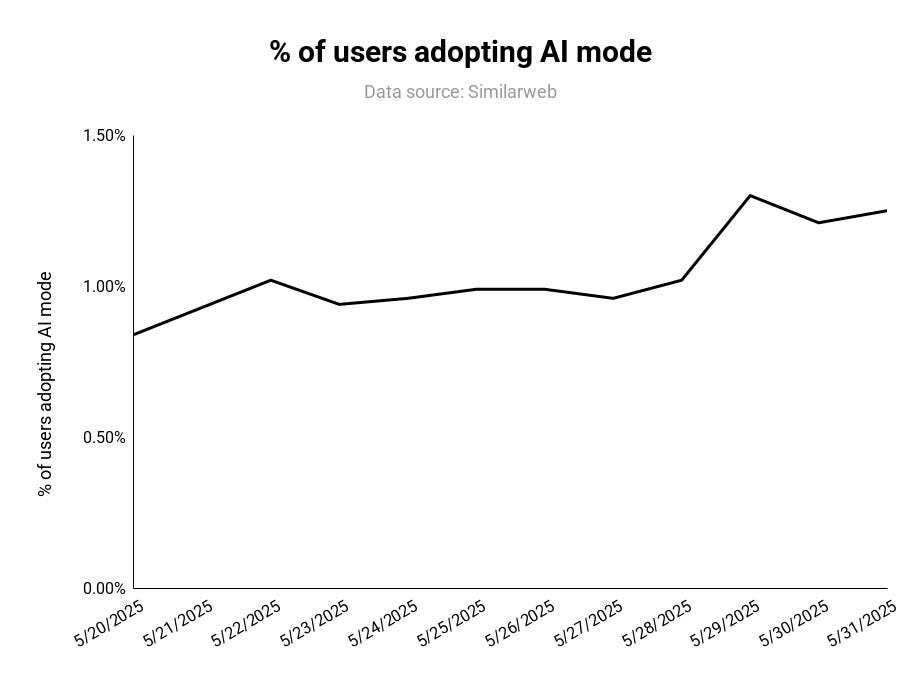
Similarweb data shows AI Mode adoption is a bit over 1% – for now (Image Credit: Kevin Indig)

But right now, the math doesn’t.

Similarweb shows AI Mode in barely 1% of queries, by design.

A single AI Mode answer can swallow 20-50 follow-up searches, erasing the ad slots those pages used to carry.

Until Google finds a new way to charge (embedded ads, pay-per-chat, who knows), rollout will stay throttled.

When that business model lands, AI Mode becomes paradise for anyone who understands user intent.

Behind each prompt, Google “fans-out” dozens of micro-queries – price, specs, comparisons, nearby, reviews – and stitches the answers together.

Those micro-queries are the very same long-tails you optimize for today; they’re just fired in parallel and reassembled into a narrative.

How to prep while the gate is still half-closed:

  • Map the likely fan-out set for every core topic (look at People-Also-Ask, Related Searches, Reddit threads, etc. – more in a future Memo).
  • Track rankings for each micro-query; gaps there equal lost citations in AI Mode.
  • Structure content so it’s easy to quote: tight answers, clear sub-heads, rich schema.

Do the homework now and you’ll be ready when AI Mode graduates from beta to default – at least until the next boss fight, fully agentic search, shows up.

ChatGPT Vs. Google

The twist of 2025 is that Google is meeting ChatGPT on its own turf.

AI Mode lifts Google’s results page into the same chat-first UI that OpenAI popularized – proof that Google is willing to “level down” from its ad-optimized SERP if that’s what users expect.

Last year, I shared this graphic for the launch of ChatGPT Search and got lots of questions:

Image Credit: Kevin Indig

Two Takeaways From The Latest Projection (Chart Below):

  1. If you extrapolate the entire data set, ChatGPT overtakes Google in October 2030.
  2. If you extrapolate only the last 12 months, the crossover happens mid-2026.
Image Credit: Kevin Indig

Important Caveats:

  • Growth is not destiny. Google still owns distribution (Android, Chrome, Safari deals) and can slow ChatGPT by matching its features inside AI Mode and Gemini.
  • The projection measures query share, not revenue share. Even if ChatGPT wins usage, Google’s ads can keep the cash register ringing longer.
  • A single platform tweak (bundling, default settings, carrier deals) can bend either curve overnight – think of how Microsoft pushed Bing Chat via Windows updates.

What To Watch Next:

  • Pay-per-chat or embedded-ad experiments: Whichever company nails monetization without wrecking UX will sprint ahead.
  • Default-search contracts (Apple, Samsung, Mozilla) renewing in 2026–27. Losing any of those would be a body blow for Google.
  • Mobile latency and offline mode: If ChatGPT can run acceptably on-device, Google’s web moat shrinks fast.

Bottom line: treat the Google-ChatGPT battle as a live A/B test for the future of search.

Your job is to be visible in both ecosystems until a clear winner emerges – and that may take years.

Conductor Mode

Image Credit: Kevin Indig

So, where does all of this leave SEO (leaders)?

Less in the weeds, more on the podium.

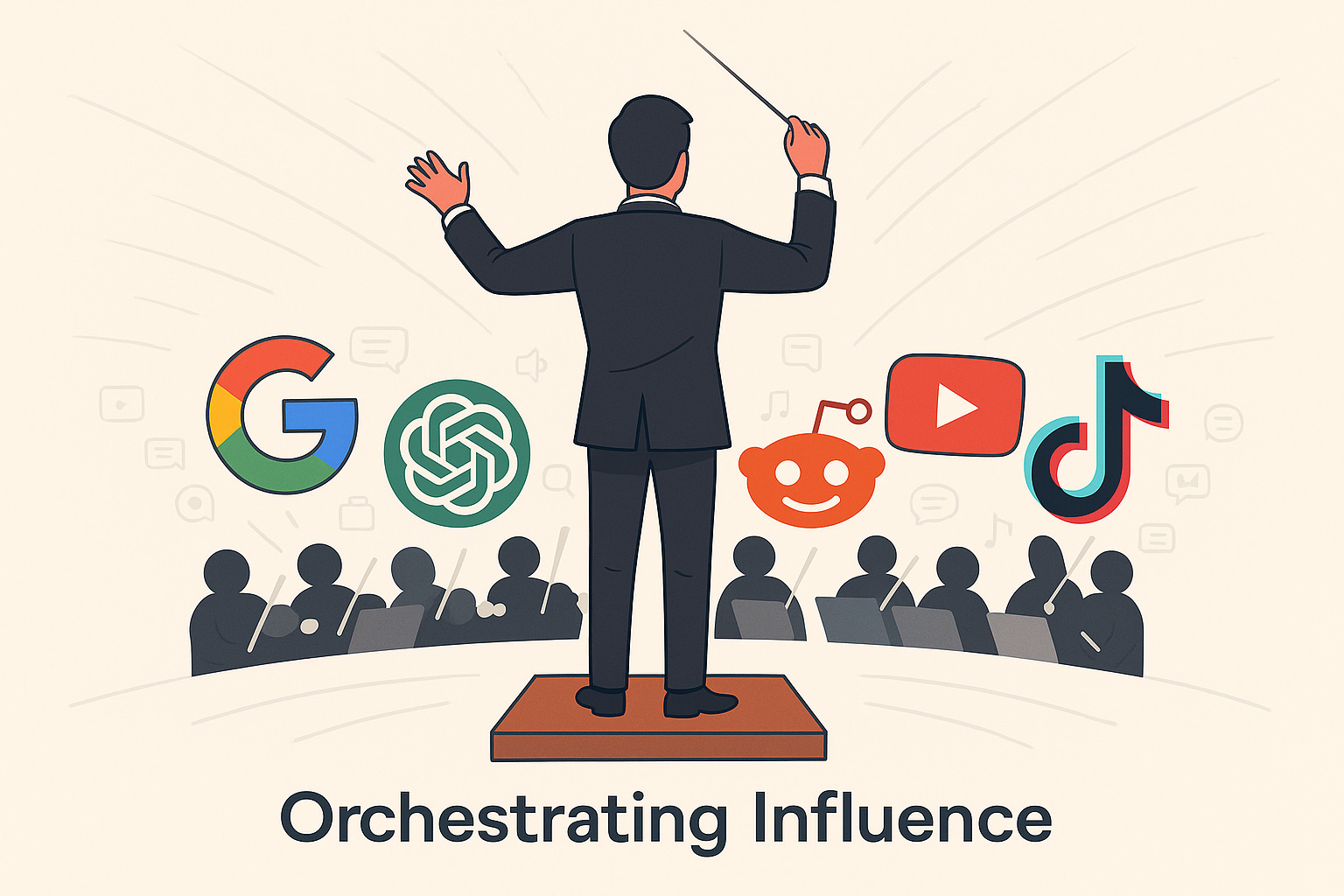
Your job is no longer to fine-tune a single channel; it’s to keep an entire orchestra in time as search fragments across AI Overviews, chatbots, and social feeds.

No other role sits at the intersection of so much (intent) data – and that gives you license (and responsibility) to conduct.

1. Paid Media

  • Pipe impression, click, and conversion data from classic SERPs, AIOs, and AI Mode back into one shared Looker Dash.
  • Swap keywords and creative weekly; AI churn demands shorter feedback loops.

2. Social & Community

  • Mine Reddit threads, TikTok comments, and Discord chats to surface the “why” behind queries.
  • Feed those insights straight to content so every article answers a real objection.

3. Product Marketing

  • Hand them the exact language users copy-paste into prompts; that’s gold for positioning.
  • Return the favor by baking the latest differentiators into every meta description, schema tag, and featured snippet answer.

4. Content/GTM

  • Package what you learn into data stories, interactive tools, and expert POVs – assets worth citing by both humans and LLMs.
  • Structure it so agents can lift answers wholesale: tight headers, clear claims, evidence links.

What’s Next?

Search will get even more agentic.

We could soon optimize not just for people but for the AI helpers who act on their behalf.

That means:

  • Higher insight density per paragraph.
  • Structured outputs (tables, JSON, how-to checklists) ready for zero-click consumption.
  • APIs or embeddings that let agents pull your data directly.

We’re not there yet, but the runway is short.

Shift from tactician to conductor now, and you’ll have the score in hand when the orchestra changes instruments again.

Baton up.


1 YouTube Tests AI Overviews In Search Results; Netflix Tests New AI Search Engine to Recommend Shows, Movies


Featured Image: Paulo Bobita/Search Engine Journal

https://www.searchenginejournal.com/the-new-normal/549157/


Ask An SEO: How AI Is Changing Affiliate Strategies via @sejournal, @rollerblader

This week’s Ask an SEO question about affiliate strategies comes from Mike R:

“How is AI changing affiliate marketing strategy in 2025? I’m concerned my current approach will become obsolete but don’t know which new techniques are actually worth adopting.”

Great question, Mike. I’m seeing a few trends and strategies that are changing, for the better and for the worse.

When AI is used properly in the affiliate marketing channel, it can help businesses and brands grow.

If any of the three types of businesses (defined below) in affiliate marketing use it in a way that AI and large language models are not ready for “yet,” it can backfire.

I’m answering this question in three parts, as I’m unsure which side of the industry you’re on.

For the record: The affiliate channel is not at risk (i.e., affiliate marketing is not dead) because affiliate marketing is more than a content website that creates a list or writes a review, and coupon sites intercept the end of sale.

Affiliate marketing is a mix of all marketing channels, including email, SMS, online and offline communities, PPC, media buying, and even print media.

It is not going to be as impacted by AI as SEO and content marketing – and in many ways, it will likely grow and scale from it.

1. Affiliates (Content Creators, Publishers, Media Houses, Etc.)

Affiliates are the party that promotes another brand in hopes of earning a commission.

Here’s some of what I’m seeing regarding the use of AI and its impact on affiliate revenue.

Programmatic SEO And Content Creation

Programmatic SEO is not new, and using LLMs to create content or lists is burning what were quality sites to the ground.

It is almost never a good idea; it doesn’t matter if AI can spin up content and get it publish-ready in minutes.

In the early 2000s, affiliates and SEO professionals would use pre-AI article spinners to create massive quantities of content from one or two professionally written and fact-checked articles, then publish them to blogs and third-party publishing platforms like Squidoo.

This is equivalent to affiliates publishing their content on Reddit or LinkedIn Pulse to rank it.

The algorithms caught up and penalized the affiliate websites. Squidoo and some of the third-party platforms managed to stay afloat as they had trust and a strong user base for a while.

Next, PHP became the go-to for programmatic SEO, and affiliates would generate shopping lists or pages with unique mixes of products and descriptions via merchant data feeds and network-provided tools. Then, these got penalized. Again, nothing new.

Media companies have been getting penalized and devalued for years for this, and plenty of content creators, too.

If an affiliate manager is telling you to use LLMs to create content, or someone is using LLMs and AI to do programmatic SEO, look for advice elsewhere.

I’ve watched multiple quality sites fall since ChatGPT, Perplexity, and others began writing and spinning their content.

Content And Creator Value

In traditional affiliate marketing, if an affiliate is not making sales, even if they send quality traffic, they get ignored. LLMs have changed this 100%.

I’ve seen affiliates, including bloggers, YouTubers, forums, and social media influencers, are being sourced and cited by AI systems.

If the brand is not on the content being used for fact-checking (grounding) and sourcing, the brands begin to disappear from outputs and results. I’m seeing this firsthand.

Not getting traffic or sales, or being number seven to 10 on a list, now has value. The citations and mentions from the resources that LLMs trust can help your brand gain visibility in AI.

Affiliates can and should begin charging extra fees for these placements until the LLMs begin penalizing or ignoring pay-to-play content.

We’re likely a couple of years away from their algorithms being anywhere near that advanced, so it is a prime opportunity while Google is reducing traffic to publishers via AI Overviews.

Coupon Sites For Top And End-Of-Sale Touchpoints

I think coupon sites are going to take a substantial hit, as AI is starting to create its own lists of coupons that work.

It also includes where and how to save, where to shop, and current deals on specific products. For example, “I want to buy a pair of Asics Kayano 32 men’s running shoes and get them on sale. Where can I find a deal?”

Right now, Google’s AI Overviews are populating lists of where to find deals, and it is showing the coupon sites as the sources to the right. These sites are likely getting clicks now.

I’ve seen ChatGPT pull the codes directly and preventing the need to click to the coupon website and set their affiliate tracking. It does show the website it came from, though – just no reason to click since you get the code in the output.

One interesting thing is that ChatGPT may pull in vanity codes.

The output from ChatGPT featuring these could give an influencer who was sourced for the code or a coupon site credit for their sales, throwing attribution off, because it was the coupon that triggered the commission, even though the user was using the LLM.

The influencer did not have anything to do with this transaction, but they’ll be getting credit.

The brand may now pay more money to the influencer, when, in reality, it should be ChatGPT – that is where the customers are, not the influencer.

By showing where to find the deals and which deals are available by product (not brand), AI eliminates one of the deal and coupon site’s top-funnel traffic strategies to brands.

The biggest hit I see coupon sites taking is ranking in search engines for “brand + coupon” for the last-second click from someone who is already in the brand’s shopping cart.

If Google AI Overviews creates its own coupon lists as the output, like ChatGPT is doing, there is no reason to click on a coupon website and click their affiliate links.

But, don’t count deal and coupon sites out. They still have email lists and social media accounts that can drive top-funnel traffic, and they can reintroduce customers who have forgotten about you by utilizing their own internal databases of shoppers.

2. Affiliate Manager And Affiliate Management Agencies

These are the people who manage programs by recruiting affiliates into the program, giving the affiliates the tools they need, and ensuring the data on the network is tracked and accurate so the brands being promoted have the sales and touchpoints they’re looking for.

Content Sites That Lost Traffic

Some managers hit the panic button because they relied on content sites and publishers who have SEO rankings, but AI Overviews is using affiliate and publisher content and not sending the same amount of traffic to the publishers.

This reduces the number of clicks and traffic. The publishers are still driving traffic, but it is coming in via Google and not the affiliate channel.

With that said, affiliate managers can shift their focus to channels not as impacted by AI Overviews, including:

  • Discord.
  • Platforms like Skool.
  • Social media groups.
  • YouTube channels.
  • Influencers.

Fraud Sign Ups

From seeing this on a daily basis, it appears that high-quality publisher accounts are being created en masse as fronts for fraud and fake affiliate accounts.

I’ve had conversations with people hired by the fake affiliate account who are being paid to talk to the affiliate manager, so it makes these sites look even more legit. We’ll have back-and-forth emails, and in some cases, a call.

Once the traffic and sales start, it turns out to be stolen credit cards or program violations. In some instances, the person or websites they applied with no longer exist.

Interestingly, when they activate a year later, thinking you forgot about them, magically, the site reappears when they know you’re not checking.

Always evaluate a site, and if the content is being generated by LLMs or AI, it may be best to reject it and reduce the risk of a fake account.

AI content may rank temporarily, but this is not a long-term strategy. If your brand is being written about by AI and spun out to a site via programmatic SEO, there is a reasonable chance that the details won’t be as factual or as on-brand as they should be.

An affiliate who cannot take the time to create good content and use AI to edit, versus using AI to create and then edit, should not be trusted in your affiliate program.

Non-Factual Information And False Claims

When your affiliates are generating content or fact-checking via LLMs and AI, they’re not doing their jobs as your partners to promote your program factually, with correct talking points, and following brand guidelines.

There’s a reasonable chance that incorrect claims about financial products, medical treatments, or even books to buy and read will be in the content you, as a brand, are paying to have made.

Even if you’re paying on a performance basis, you are approving this content to be live and represent your brand. This is why affiliates in your program using AI to create content are a high risk.

Set rules and enforce them so that your brand cannot be included in any AI-created content, or remove the affiliate from your program until they’re ready to treat your brand or your clients’ brands with the same care as you do.

Partner Matching And Approvals

One interesting use of AI for affiliate management is merchant and affiliate matching using machine learning and AI by agencies and larger brands.

Just because a partner does well in one vertical or with one affiliate program that has a similar audience, it does not mean it is a good match for others.

  • One program may allow end-of-sale touchpoints while the other does not. The top partners that use low-value clicks should not be allowed in a similar program that does not (or will not) match it. If the programs are on auto-approve or using AI to approve affiliates that do well in specific verticals, the TOS is likely no longer being enforced.
  • A partner may make a ton of T-shirt sales in one program, but their audience may not respond to the colors, social causes, or price points of another merchant. If the affiliate is part of AI matching and starts to lose money because they got matched to new T-shirt shops, they may start to move on from the affiliate or focus less because they’re making less money and getting bad recommendations from the agencies and managers.
  • If the program trusts AI to do matching, but has restrictions like requiring advertising disclosures or using factual information, the machine learning likely won’t be able to check for this, and partners that are not a fit can get in.
  • Automating approvals because they pass an AI review or scan is risky, as AI will miss things that an experienced affiliate manager will find, like advertising disclosures in the wrong space and false claims in the industry or space in content.

One exception to using AI for matching is to build a list of potential partners from a database. But automatically approving that list because the output creates a list is problematic.

Each affiliate that is recommended still needs to be vetted by hand to make sure they meet the requirements of the new program.

Recruitment And List Building

Some of the best uses of AI, especially LLMs, have been building lists of potential partners.

You can train GPTs to validate the lists, remove current partners so you don’t accidentally email or call them, do a gap analysis, and even customize the recruitment email to a very strong degree.

No, it isn’t perfect, but you can save hours each week from the manual tasks of discovery, validation, and outreach.

The recruitment emails still need to be reviewed and sent manually, but it is a massive time-saver.

We manually review every email before it goes out and have to do a decent chunk of rewriting, but we’re saving large amounts of time, too.

We also pre-schedule the emails using a database tool, but we’ve slowly begun implementing new discovery and drafting methods, and they’re turning out to be fantastic.

I was a non-believer in AI for this at first, but now I’m about ready to double down, especially as the systems advance.

3. Affiliate Networks

These are the tracking and payment platforms that power the affiliate programs.

Affiliates rely on them to accurately record sales and release payments.

Affiliate managers use them to track progress, simplify paying partners around the world, and generate reports based on the key performance indicators (KPIs) their company uses.

Better Controls

All of the networks we’re working on have an influx of AI-generated sites. I’ve talked to agencies and managers on the ones we don’t work on, and they’re seeing the same.

The networks would be wise to add filters and create an alert for affiliate managers to let them know if the affiliate is human or AI, meaning that AI would be a website and promotional method without quality control.

There are no advanced controls in place on any networks that I’ve seen specifically for AI affiliates. But most networks do have compliance teams to which you can report fake accounts.

From the networks I’ve talked to, they’re working on solutions to help detect and reject these sites, but it is a massive problem because they’re being generated at high volumes, and some are really hard to detect.

The spammers and scammers are getting smarter, and AI has given them a new advantage.

Partnership Matching

This is a double-edged sword. Networks have more data than any affiliate agency, and they may be best suited to try partner and program matching algorithms.

They can create a list of programs that an affiliate may want to test, or a list of partners a program manager can pay to recruit based on program goals and dimensions.

The downside is that programs spend countless hours recruiting partners for their programs. Networks doing matching and recruitment take that work and give it for free to that program’s competitors.

A second downside is that affiliates get bombarded with program requests, and this can cause that to skyrocket, making it harder to get them to open emails, including program updates and newsletters.

Once they start ignoring emails because of too many, you may not get compliance issues fixed or promotions that would normally have benefited both parties.

Reporting

One of the most beneficial things a network can do, but none are currently doing on a mass scale (some are starting to, and it’s looking promising), is to use AI to create custom reports for affiliate programs. These could be charts and graphs on trends over XYZ years.

Another is a gap analysis of products that get bundled together by type of affiliate, and then which similar affiliates already in the program don’t have a specific SKU in their orders.

The manager can recommend pre-selling the SKU within the content that drives the sale, or adding that specific SKU as an upsell to any customer who came from that affiliate’s link, based on the affiliate ID passed in the URL.

It can show trends where there are cross-channel (SEO, email, PPC, SMS, etc) touchpoints and how it modifies seasonally, annually, and if the goal creates more or less sales for the affiliate channel or company as a whole.

One important thing to remember is that not all affiliate networks offer true cross-channel reporting. Multiple only offer it once the user has clicked an affiliate link.

Final Thoughts

AI is going to be amazing and horrible for each of the three entities above that make up the affiliate marketing channel.

If used correctly, it can save time, increase efficiency, and create more meaningful strategies.

At the same time, it could result in violations of a program’s Terms of Service (TOS), steal traffic from publishers, and harm multiple types of businesses.

More Resources:


Featured Image: Paulo Bobita/Search Engine Journal

https://www.searchenginejournal.com/ask-an-seo-how-ai-is-changing-affiliate-strategies/547225/


Google Adds AI Mode Traffic To Search Console Reports via @sejournal, @MattGSouthern

Google has updated its Search Console documentation, confirming it includes AI Mode data in Performance reports.

This is a change to note when reviewing your metrics, as it may impact traffic reporting patterns.

Understanding AI Mode and What’s Changed

AI Mode is Google’s interactive AI-powered search experience, which builds on AI Overviews to provide more detailed responses.

The feature breaks questions into smaller topics and searches for each one at the same time. This “query fan out” technique, as Google calls it, lets people explore topics more deeply.

The key change in Google’s documents is that AI Mode data counts toward the totals in Search Console.

Per the updated changelog:

“Data from AI Mode is now counting towards the totals in the Search Console Performance report.”

How AI Mode Metrics Work

The documentation explains how AI Mode measures different actions:

  • Click: When someone clicks a link to an external page in AI Mode, it counts as a click in Search Console.
  • Impression: Standard impression rules apply. This means users must see or potentially see a link to your site.
  • Position: Position calculations in AI Mode work the same way as regular Google Search results pages. Carousel and image blocks within AI Mode use standard position rules for those elements.

When users ask follow-up questions within AI Mode, they start new queries. The documentation notes:

“All impression, position, and click data in the new response are counted as coming from this new user query.”

Google Says Best Practices Remain Unchanged

Google’s documentation says:

“The best practices for SEO remain relevant for AI features in Google Search.”

There are no extra technical requirements beyond standard Google Search rules.

Google’s documentation clarifies:

“You don’t need to create new machine-readable files, AI text files, or markup to appear in these features. There’s also no special schema.org structured data that you need to add.”

Website owners can control the appearance of their content’s AI features using existing tools, such as nosnippet, data-nosnippet, max-snippet, or noindex controls.

Looking Ahead

With AI Mode data now included in Search Console reports, you may notice changes in traffic patterns and metrics. The data appears within the “Web” search type in the Performance report, mixed with other search traffic.

The documentation notes that clicks from search results pages with AI features tend to be “higher quality.” Users are “more likely to spend more time on the site.”

However, without dedicated tabs for traffic from Google’s AI features, it’s impossible to verify those claims.


Featured Image: Roman Samborskyi/Shutterstock

https://www.searchenginejournal.com/google-adds-ai-mode-traffic-to-search-console-reports/549089/


How To Weed Out Less Qualified Audiences From Your PPC Campaigns via @sejournal, @jonkagan

To my fellow marketers, I first wrote this title in the summer of 2020, back when I thought, “Wow, surely things couldn’t get worse.” Needless to say, I was wrong.

Here’s the actual quote I started with last time:

“If you’re reading this, then it is early July, you’ve made it this far in the game of ‘Let’s See What Else Can Happen in 2020’.”

We have largely left the world of all-day Netflix and sourdough, and moved on to more pressing things like understanding the impact of tariffs on a brand’s willingness to run digital, and wondering how, five years later, my NY Jets are still so terrible.

With those changes has come a shifting dynamic in search, once called “PPC” (I have always disliked that term), more recently referred to as search engine marketing (SEM) and paid search, which is now simply “paid media.”

With this shift in ad types, ad placements, and management comes a shift in how we target audiences for our ads.

Why? Ad technologies change, ad units change, and thus, targeting changes. Not to mention, a shift in “what is demand?” affects more people than those who are actually qualified to see your ads.

Didn't See Economy Searches overtaking COVID-19I didn’t see economy-driven searches overtaking COVID-19 in my future (Screenshot from Google Trends, June 2025)

And once again, there are caveats:

Consumer sentiment is in flux as the economy rocks back and forth from concerning to good.

Google’s look-alike audiences (similar audiences) sunsetted (except for Demand Generation).

Audience targeting can easily be mixed up with various forms of AI targeting (i.e., Meta Advantage+).

Cookie deprecation started and then stopped, but first-party and modeled audience data became worth as much as gold.

The concept of the keyword match type (or even the keyword itself) is continuing to erode away.

Who Is Worthy To See Your Ads?

Not everyone who views your ad is truly qualified. Whether it is in-market, demographic, geographic, behavioral, etc., not everyone should see your ad.

To put it bluntly (and I am trying my best not to sound rude), some individuals are not worth spending ad dollars on for a specific ad.

For high price point items:

IncomeIncome often correlates with CVR based on category (Image from author, June 2025)

For more age-specific items:

AgeAge is often a deciding factor as well (Image from author, June 2025)

With times being as uncertain as they are, brands must tighten their purse strings and become more selective in their prospecting efforts to help the bottom line.

One would think that this concept, focusing ads on a particular audience, would always be the case, but the reality is, mid to larger brands will still often do the “spray and pray” approach, with just small audience adjustments.

Why?

Tighter audiences help with return on investment and efficiency, but they can wreak havoc on volume and total revenue when done too excessively.

This leaves the advertiser with a decision to make: What is the best approach?

  • Improve ROI but at a lower return volume, and then open up the floodgates later with a looser audience target.
  • Keep a looser audience and focus on return volume to build a better audience profile, and then tighten during your peak season to improve profitability.
  • A hybrid, where you lean toward return volume, cast a wider net – the ROI won’t be amazing, but you won’t go bankrupt, all by controlling somewhat focused audiences, and scaling bid strategy controls.

The most important (and first) step: Identify who your ideal customer is.

Important disclaimer: Identify who your ideal customer is/has been, not who you think it is going to be/should be.

Be sure to pore over your analytics and conversion data to decipher this. Otherwise, any future steps are pointless.

ProfileLearn exactly who your converter is (Image from author, June 2025)

Previously, to weed out the less qualified and still feed the top of the funnel and prospect, you would need to lean heavily into audience exclusion and audience targeting. That is still true, to a degree, and more specifically in the case of paid search.

However, for more modern concepts, such as Performance Max, Demand Generation, LinkedIn, or Meta, we are leaning more toward the target, as the exclusion may not be as readily or easily available for use.

Audience targeting vs. exclusion: Yes, they are similar, but different. Here’s a quick refresher:

Targeting Vs. Excluding

Targeting: The direct targeting of a specific group of consumers who fall within a certain characteristic(s), enabling everyone who meets it to see the ad.

For example: “I am selling a luxury car with a high price point, so I am only showing the ad to those whose household income is in the top 10%.”

Note: This is still valid in most scenarios. However, certain platforms and verticals do have limitations or restrictions.

Excluding: Indirectly targeting an audience by minimizing the ad units’ reach, based on consumers’ characteristics, by intentionally preventing ads from showing to those individuals.

For example: “I am excluding homeowners, so they are not served my apartment rental ads.”

Not doing one or both is as good for you as trusting a truthful outcome from Theranos.

How does one use these targets and exclusions to tighten one’s belt?

Audience Targeting

This is not rocket science, and more importantly, it doesn’t need to be applied account-wide, just high (sometimes mid) funnel initiatives.

Particularly in search, the more specific the query (often mid- to long-tail searches), the higher the qualification, the higher the likelihood of conversion.

But those are often few and far between (terrible for prospecting in terms of feeding the top of the funnel).

So, audience targeting becomes a necessity for high-volume search keywords. Otherwise, you’re spending your already limited budget on everyone (not ideal).

We break audience targeting into two types: actualized behavior and user traits.

The most common form (and easiest to use) of actualized behavior is retargeting.

Cart abandoners are the lowest-hanging fruit. It is a simple setup and deployment (I am a huge advocate of it via Google Analytics 4):

Building the AudienceAs much as I dislike GA4 UI vs. GA UA, they make audience creation fairly simple. (Image from author, June 2025)

But keep in mind: If you’re still getting those queries off a top-of-funnel query (generic, short-tail), then the qualification is already lower to start off with.

Frequently, we separate out retargeting past shoppers, retargeting site/cart abandoners, and prospecting (brand new visitors) from one another. Thus, controlling spend, creative, and user experience for each category.

At the same time, these lists can be used as exclusionary, ensuring there is no overlap, and a consumer receives an experience they were not intended for, which works well for prospecting audiences.

When thinking about user traits, these can be tied to platform-predicted behavior (i.e., affinity or in-market), or even self-identified characteristics (i.e., age, gender, income, etc.).

User traits are great at isolating targeting to your most qualified/relevant audience.

For example, anyone can eat at one of my fast-casual restaurant locations across the major cities of Connecticut.

But suppose I want to maximize the cost-per-customer efficiency for the “kids eat free” special. In that case, I will target parents of children under 12, not in the top 25% of the Herfindahl-Hirschman Index (HHI), but who have some disposable income, who enjoy eating, and are within a five-mile radius of one of our locations.

Meta AudienceMake the audience that meets your typical customer (Image from author, June 2025)

But a nice little function these days is that Google and Meta are learning from current activity to help build out in-market audiences on a rolling basis.

It is great for all of Meta, PMax, YouTube, Demand Gen, etc.

Google finally being helpful without a sales repGoogle is finally being helpful without a sales rep (Image from author, June 2025)

Using these tools, we have taken a step to prequalify the audience we’re prospecting. If they don’t convert at first (but do engage with the page), at least they’re pulled into our remarketing lists as a higher degree of qualification for later.

Net-net: These consumers are deemed worthy of seeing our ads.

Audience Exclusion

To put it bluntly, exclusion is a vastly underrated, yet wildly glorified version of a search negative keyword list.

But rather than saying we don’t want to show if someone searches for XYZ, we say, we don’t want to show for you.

When we apply exclusions in any channel, we are saying, “I am open to anyone seeing my ads, provided they aren’t [fill in the blank].”

I know it sounds harsh, but it is highly effective and important.

Remember, not everyone is right for your brand, but they may still try and find a way to see the ads.

Exclusions can be simple, such as geography or time of day, or they can be much more specific.

One of the key times I see this needed is for YouTube and Google Display Network (GDN).

You want to capture a wide audience, but you know not everyone is right.

I should note, though, that certain verticals (those falling under Housing, Employment, and Credit or HEC policies in Google and anti-discriminatory policies in Meta) limit what can be excluded.

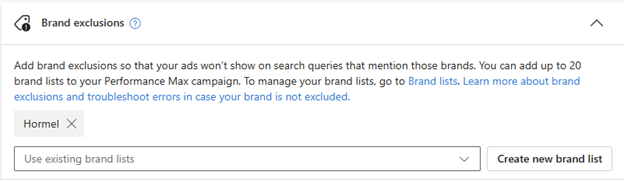
In addition, the rapidly growing share of wallet ad unit, Performance Max, in both Google and Bing (I still refuse to call it Microsoft), you cannot exclude audiences (yet), but you can exclude keywords (Google only beta) and brands.

Some day...Some day… (Image from author, June 2025)
It is a glorified negative keywordIt is a glorified negative keyword (Image from author, June 2025)

Takeaway

You’ll get fewer visitors, but a more qualified audience. You also maintain control of who you’re spending ad dollars on.

We are in the early stages of exiting the world of keywords and focusing on the audience. At the same time, platforms continue to reduce control and transparency of who/what/when/why/how your ad is served. That hurts your wallet and your bottom line.

When you can’t use first-party audiences, learn your typical customer’s profile, and build audiences for it.

By ensuring you target the right audience and exclude the wrong ones, you can make sure your operation continues to thrive another day.

More Resources:


Featured Image: ICONMAN66/Shutterstock

https://www.searchenginejournal.com/excluding-less-qualified-audiences-ppc/546298/


10 Key Hurdles That CMOs Must Overcome In 2025 And Beyond via @sejournal, @gregjarboe

Right now, CMOs are navigating a fast-moving environment, marked by economic pressures, new technologies, and shifting consumer expectations.

The pressure to demonstrate impact while adapting to new platforms, regulations, and expectations has never been greater.

For marketing leaders, this means constantly adjusting strategies to stay competitive and relevant.

To prepare for the marketing equivalent of the Olympic high hurdles, the article below outlines the 10 key hurdles that CMOs must overcome in 2025 and beyond.

1. Demonstrating Return On Marketing Investment (ROMI) Amidst Economic Uncertainty

Economic volatility and tighter marketing budgets are forcing CMOs to do more with less.

Although most are asked to show the return on investment of marketing expenditures, the right metric to use is return on marketing investment (ROMI).

While both are measures of profitability, ROI measures money that is “tied up” in plants and inventories (which are capital expenditures or CAPEX), while ROMI measures money spent on marketing in the current quarter (which are operational expenditures or OPEX).

The formula for calculating ROMI is:

(Incremental Revenue from Marketing × Contribution Margin – Marketing Spend) / Marketing Spend = ROMI

For example, Amazon reportedly paid MrBeast $100 million to produce the first season of his reality show “Beast Games.”

MrBeast says he’s lost “tens of millions” producing the show. But how does Amazon’s CMO, Julia White, calculate the ROMI for “Beast Games,” which launched in November 2024?

Let’s say the estimated lifetime value of an Amazon Prime member is around $2,000, and a scientific wild-ass guess (SWAG) for the paid membership program’s contribution margin is about 12.5%.

So, “Beast Games” needs to generate roughly $2 billion in incremental revenue for Amazon Prime to get a ROMI of 1.5.

Here’s how to calculate that:

[$2 billion × 12.5% – $100 million] / $100 million = 1.5

That means “Beast Games” needs to generate a million new Amazon Prime members for the paid membership program to get $1.50 in profit for every $1.00 it spends on MrBeast.

2. Adapting To Google’s AI Overviews And Other SERP Features

CMOs should read Kevin Indig’s article, “The First-Ever UX Study Of Google’s AI Overviews: The Data We’ve All Been Waiting For,” which paints the most significant new picture of how people use Google that I’ve seen since Gord Hotchkiss, the former CEO of Enquiro, produced his first search engine user eye tracking study back in 2007.

Indig’s groundbreaking usability study, which was conducted with Eric van Buskirk and his team, analyzed how 70 users interact with Google’s AI Overviews (AIOs), involving nearly 400 AIO encounters. The findings reveal that AIOs significantly reduce outbound clicks: desktop click-through rates (CTR) can fall by two-thirds, and mobile CTR by almost half.

Most users (70%) only read the top third of an AIO, with a median scroll depth of 30%. Trust in AIOs correlates with scroll depth. Younger mobile users (25-34) are more likely to accept AIOs as final answers (50% of queries).

Brand authority is now the primary decision filter, followed by relevance.

When users do click out after viewing an AIO, about a third of that traffic goes to community forums like Reddit and videos on YouTube.

The study concludes that search is shifting from a “click economy” to a “visibility economy,” where being cited high in an AIO is crucial, as users treat AIOs like quickly scanned fact sheets.

CMOs should also watch the IMHO interview with Indig that Search Engine Journal’s Shelley Walsh recorded about his research.

[embedded content]

3. Meeting Evolving Customer Expectations Across Their Omnichannel Journeys

CMOs also face the challenge of addressing changing customer interests throughout their multichannel journeys.

To overcome this high hurdle, a recent SparkToro article said that true audience research needs to go beyond basic demographics or keywords.

This requires delving into what genuinely interests consumers, the specific language they use, their motivations, and potential barriers to action.

Understanding where they spend their time online and which information sources they trust is also crucial.

For example, Jeff Baker and his partners created Beach Commute, a startup aimed at the “location-independent” community.

Their primary challenge was identifying the correct terminology and phrases used by professionals seeking a location-independent lifestyle, since their target audience is still developing and lacks standardized language.

This made it difficult to connect with potential users through traditional keyword research, since search terms were varied and intent was often unclear.

For example, “work and travel” often led to individuals seeking work-exchange programs rather than career-focused remote work.

Beach Commute used SparkToro to gain deeper insights into consumer behavior and search intent.

By comparing potential homepage keyword targets like “become a digital nomad” and “make money while traveling,” SparkToro revealed distinct audience motivations.

The “digital nomad” audience was more interested in aspirational travel and advice, aligning better with Beach Commute’s offerings.

In contrast, the “money and travel” group focused on entrepreneurial “hacks.” This data allowed Beach Commute to refine its keyword strategy and effectively target the right audience.

4. Balancing Artificial Intelligence (AI) And Human Creativity

CMOs are also tasked with strategically integrating AI to enhance marketing effectiveness, drive efficiency, and enable hyper-personalization. But how do their teams balance AI capabilities with human creativity?

For over a quarter-century, the PODS container has served as a mobile advertisement across American streets, acting as a constant reminder of the brand.

In a recent initiative, Tombras, the creative agency for PODS, collaborated with Google Gemini to transform one of its containers into the “World’s Smartest Billboard.”

This innovative billboard was designed to be aware of its surroundings, capable of identifying its precise location, the current time, prevailing traffic conditions, weather patterns, and even subway delays.

Leveraging this data, the smart billboard could generate and display highly specific and relevant messages for each neighborhood it was in, all in real-time.

As part of an ambitious demonstration, the team undertook the challenge of taking this intelligent billboard to every single neighborhood in New York City within a tight 29-hour timeframe.

This feat, considered humanly impossible, was achieved through the combined efforts of human creativity and AI.

The creative team worked closely with Google Gemini to ensure the AI could replicate the company’s distinct tone and content style on a massive scale.

This collaboration resulted in the creation and instant display of over 6,000 hyper-local, real-time ads on the PODS container.

The project highlights the remarkable outcomes that can be achieved when creative professionals, advanced multimodal AI, and a moving company join forces.

[embedded content]

5. Aligning Marketing Strategies With Overall Business Objectives

CMOs are increasingly expected to drive business growth, necessitating a close alignment of marketing strategies with overall company goals like revenue generation and market expansion.

It requires CMOs to demonstrate marketing’s financial contribution and, as Avinash Kaushik advises, refine their use of dashboards and scorecards.

In an Occam’s Razor article, Kaushik highlights that CMOs often track non-essential metrics, leading to data overload.

To counter this, he proposes categorizing data into key performance indicators (KPIs), diagnostic metrics, and influencing variables. This framework helps focus senior leadership on critical business impacts, particularly profits, while allowing teams to manage tactical optimizations separately.

This strategic approach to data aims to clarify what truly matters for achieving business objectives, distinguishing between strategic measures and in-flight tactical adjustments.

Despite its apparent simplicity, Kaushik notes that many marketing teams struggle with this differentiation, prompting him to outline distinct characteristics for each category across eleven factors.

For example, Hilton and Dentsu Americas collaborated on the “For The Stay” campaign, using video as a central element of their marketing efforts.

A key question they sought to answer, according to Hilton’s Rebecca Panico, was how to effectively tailor creative content to specific audiences.

By doing so, they achieved substantial growth in brand awareness, customer consideration, purchase intent, and booking conversions, demonstrating the effectiveness of their strategy in a changing travel market.

[embedded content]

6. Effective Content Creation, Scaling, And Differentiation

In an increasingly crowded digital space, producing high-quality, engaging, and differentiated content consistently is a major hurdle, especially with limited resources.

With the rise of AI-generated content, the emphasis on authentic, human-crafted storytelling and unique brand messaging becomes even more critical to stand out.

To surmount this hurdle, CMOs should start by reading AI & Creators: The future of Tech and Creativity, which provides an in-depth exploration of the current and future effects of generative AI on creator businesses.

To support this, YouTube conducted its largest global survey to date, examining how creators around the world are integrating Gen AI into their work.

[embedded content]

Then, CMOs should read  Your Brandcast 2025 recap: Culture, creators, and commerce.

At the event, YouTube celebrated its 20th anniversary, highlighting its evolution as a dominant media platform and “the new TV.”

Brandcast 2025 also emphasized the growing impact of creators on culture and commerce, noting that 81% of U.S. viewers use creator content for product discovery, and YouTube ads deliver a 4.5X higher return on ad spend than other streaming TV.

YouTube also unveiled new advertising innovations for Connected TV (CTV). These include Cultural Moments Sponsorships for major events, and “Peak Points” powered by Google AI to place ads during peak audience engagement.

Additionally, new immersive Masthead ads and Shoppable CTV features aim to drive awareness and action directly from the living room, connecting creators, fans, and brands across all viewing experiences.

7. Building And Maintaining Brand Trust And Authenticity

In today’s climate of consumer skepticism and the prevalence of cancel culture, maintaining brand trust and authenticity has become increasingly difficult.

CMOs must ensure that brand messaging remains consistent, transparent, and aligned with a company’s core values and behaviors.

For example, Kantar’s May 2025 Monthly Trends Report says transparency, particularly around data usage, can offer a competitive edge in a world marked by extreme disruption and uncertainty.

This volatile environment is not entirely new. For years, critiques of globalized commerce and culture have been gaining momentum from both ends of the political spectrum: the left condemns cultural imperialism, while right-wing populism has grown since the Great Recession.

These long-standing tensions have intensified recently, with inflation, COVID-19, climate change, and war disrupting the marketplace. Tariff threats have added further strain, placing American brands under heightened scrutiny.

Historically, brands functioned within a relatively stable ecosystem of supply chains, digital media, and retail consolidation, largely removed from political turmoil.

Today, however, they find themselves entangled in it, struggling to preserve brand equity and market share.

Kantar research highlights a rise in anti-American sentiment due to tariffs, yet paradoxically shows American brands are stronger and more valuable than ever.

Despite this resilience, future stability is uncertain. The challenge for brands is not merely survival but sustained growth, which is becoming increasingly rare.

To thrive, CMOs must resist the temptation to retreat under pressure and instead focus on consistently adding consumer value – offering more reasons to engage, not fewer.

8. Navigating Data Privacy And Governance In A Post-Cookie World

With the decline of third-party cookies and the strengthening of data privacy regulations like GDPR and CCPA, CMOs face the critical challenge of ethically managing customer data.

This involves prioritizing the collection of first-party and zero-party data, ensuring transparency in data usage, and investing in secure platforms to build and maintain customer trust.

How do CMOs overcome this high hurdle while outrunning their competitors? They should start by reading  Google Analytics Adds New Features For Privacy-Era Tracking.

Google has updated Google Analytics to improve data accuracy and help marketers identify issues faster, adapting to evolving privacy rules.

Key enhancements include “Aggregate Identifiers” to prevent misattribution of paid traffic when Google Click Identifiers (GCLID) are unavailable, and “Smart Fallback Methods” using UTM tags as a backup.

CMOs should then read, “Where Are The Missing Data Holes In GA4 That Brands Need?”

This article highlights that Google Analytics 4 (GA4) data, while useful, often misses crucial information about initial user acquisition, like how users first discover a brand.

SEO professionals should use audience research and surveys to understand these “missing bullet holes” and verify their GA4 interpretations.

9. Attracting, Retaining, And Upskilling Marketing Talent

The shift to hybrid work environments and the rapid evolution of marketing technologies necessitate innovative approaches to talent management.

CMOs face the challenge of attracting, retaining, and developing top marketing talent with the right skills, particularly in areas like AI, data analytics, and digital transformation.

Fostering a formidable team culture and providing continuous learning opportunities are the keys to avoiding tripping over this hurdle.

But CMOs should also read “I’m a LinkedIn Executive. I See the Bottom Rung of the Career Ladder Breaking.”

According to Aneesh Raman, the chief economic opportunity officer at LinkedIn, AI increasingly threatens entry-level jobs, traditionally crucial for young workers to gain experience.

This mirrors past manufacturing declines, now impacting office roles in tech, law, and customer service, where AI automates basic tasks.

Data shows rising unemployment for recent graduates, with Gen Z being particularly pessimistic about their futures.

While AI will also create new jobs, and executives still value fresh perspectives, the loss of entry-level positions can significantly hinder early career development and exacerbate inequality.

To address this, the essay proposes reimagining entry-level work. This includes training workers in AI-relevant skills and redesigning jobs to offer higher-level tasks, leveraging AI as a tool for growth and adaptability rather than mere automation.

10. Fostering Cross-Functional Collaboration

Finally, marketing can no longer operate in a silo. Effective CMOs must champion cross-functional collaboration to ensure cohesive strategies and a unified customer experience.

This may be the hardest obstacle to overcome because it requires CMOs to unlearn what they have learned about the marketing department organization.

The most common organizational structure for marketing departments is called “functional” – because it puts distinct functions into different departments. But this creates dysfunctional silos with limited flexibility to adapt quickly or effectively to changes in market demand.

What’s the alternative? CMOs can organize their marketing teams by market segments, target audiences, or groups of people with specific interests, intents, and demographics.

This customer-centric organizational structure ensures that all their marketing teams are focused on putting customer needs and interests first in every interaction with the brand.

It also improves the likelihood that each team will understand their customers’ needs, concerns, and desires, and tailor marketing efforts to deliver value and exceptional experiences.

Now, I realize that most marketers mistakenly believe “reorgs” are bad, but reorganizations are infinitely less terrible than “layoffs.”

I also realize that most agencies dread “reorgs” because these often trigger “agency reviews.” But agencies should focus on delivering value, rather than simply providing services, to stand out and achieve long-term success.

This means moving beyond traditional service models and offering solutions that directly address client business needs and lead to measurable results.

Summary

To successfully navigate these 10 key hurdles, CMOs must become master jugglers, balancing technology with creativity, short-term performance with long-term brand building, and data-driven insights with authentic customer connections.

By addressing these critical hurdles, from adapting to AI-powered search to building consumer trust in a privacy-first world, marketing leaders can future-proof their organizations and drive meaningful growth.

Marketing is more complex than ever, but there is plenty of opportunity if you can move quickly, think strategically, and lead cross-functional teams with clarity and purpose.

More Resources:


Featured Image: Elnur/Shutterstock

https://www.searchenginejournal.com/key-hurdles-that-cmos-must-overcome/547890/


OpenAI Rolls Out Update To ChatGPT Search via @sejournal, @martinibuster

OpenAI quietly updated ChatGPT search to improve search query understanding, provide more comprehensive answers, and better handle longer dialogs.

What Changed In ChatGPT Search?

OpenAI noted multiple improvements but they didn’t provide details about what actually changed. The OpenAI changelogs only noted changes in two areas:

Improved quality

Improved search capability and instruction following

The changelog explains:

“Improved quality

Smarter responses that are more intelligent, are better at understanding what you’re asking, and provide more comprehensive answers.

Handles longer conversational contexts, allowing better intelligence in longer conversations.

Improved search capability and instruction following

More robust ability to follow instructions, especially in longer conversations, significantly reducing repetitive responses.

Capability to run multiple searches automatically for complex or difficult questions.

Search the web using an image you’ve uploaded.”

The changelog also notes that ChatGPT search may take longer and that “chain of thought” reasoning text might show up unexpectedly.

Featured Image by Shutterstock/M21Perfect

https://www.searchenginejournal.com/openai-rolls-out-update-to-chatgpt-search/549040/


Recipe Intent Keywords Are Triggering Google AI Overviews via @sejournal, @martinibuster

Keywords that contain recipe intent are triggering Google AI Overviews; however, keyword phrases that expressly ask for recipes are triggering the normal recipe rich results. SEOs on social media are reporting that recipe-related queries are triggering AI Overviews, so it may very well be that these are now officially rolled out.

Tom Critchlow (LinkedIn profile) posted about it on LinkedIn. He wasn’t the only one spotting it, there are scattered posts in private Facebook SEO groups that are discussing these as well.

According to Critchlow’s post on LinkedIn:

“Starting to see AI Overviews show up for recipe queries and…. I think these are pretty good? Validates my hypothesis that each link will come with a reason to click it…. Recommendations over rankings…”

Is AI Overviews Showing Up For Recipe Queries?

At this time, for me, AI Overviews is not showing up for recipe queries that use the word “recipe” on either desktop or mobile devices. Queries that use the keyword “recipe” or “recipes” still show the regular recipe rich results regardless of device used.

However, queries that have a recipe intent but don’t contain the “recipe” keyword variants do trigger recipe queries.

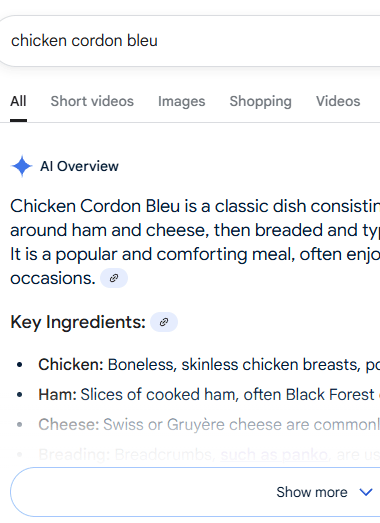
Recipe Intent Screenshot

Image shows the keyword phrase "chicken cordon bleu" triggering an AI Overview response.

Keyword phrases that contain the word “recipe” trigger the normal recipe rich results.

Recipe Keyword Phrase

Image shows keyword phrase "chicken cordon bleu recipe" triggering the normal recipe rich results.

Keyword phrases that are about recipes but aren’t specifically requesting a recipe tend to trigger AI Overviews. So it’s not really showing AI Overviews for recipe queries, just for queries that are about food and have a latent recipe intent.

Not Showing Up In Mobile Search

The keyword phrases that trigger recipe AI Overviews on desktop do not appear to trigger them on mobile devices. For example, the query Cordon Bleu triggers AIO on the desktop but won’t trigger it on a mobile device.

Keyword Phrase On Mobile Device

Image showing that the keyword phrase "chicken cordon bleu" does not trigger an AI Overview result. It triggers a rich result featuring Wikipedia.

The keyword phrase Tom Critchlow shared (healthy dinner ideas) that triggered an AI Overviews on desktop fails to do the same thing on a mobile device.

Mobile Device Results For Query: Healthy Dinner Ideas

Screenshot shows a normal "Top Recipes" rich results triggered on a mobile device.

So it could be that recipe intent queries have rolled out to desktop users but not yet to mobile devices.

Reduced Traffic To Recipe Bloggers

Recipe bloggers may begin to see reduced levels of traffic from desktop devices. This trend may accelerate as more people begin to rely on chatbots like ChatGPT and Claude for recipes.

ChatGPT Shows Recipes For Recipe Queries

Screenshot shows a query for "chicken cordon bleu recipe" in ChatGPT triggers a recipe and not a search result.

Chatbots are trained to output plausible responses so users may not be able to tell the difference between an authentic recipe and an authentic-sounding recipe. Speaking from personal experience using chatbots for recipes, I find them to be unreliable sources for authentic recipes but that’s probably something that the average home cook won’t notice because the synthetic recipes generally satisfy expectations.

Featured Image by Shutterstock/New Africa

https://www.searchenginejournal.com/recipe-intent-keywords-are-triggering-google-ai-overviews/549020/


Google Launches Audio AI Overviews In Search Labs Test via @sejournal, @MattGSouthern

Google has launched Audio Overviews, a new test feature in Search Labs. It creates audio summaries of search results using Google’s latest Gemini AI models.

How Audio Overviews Work

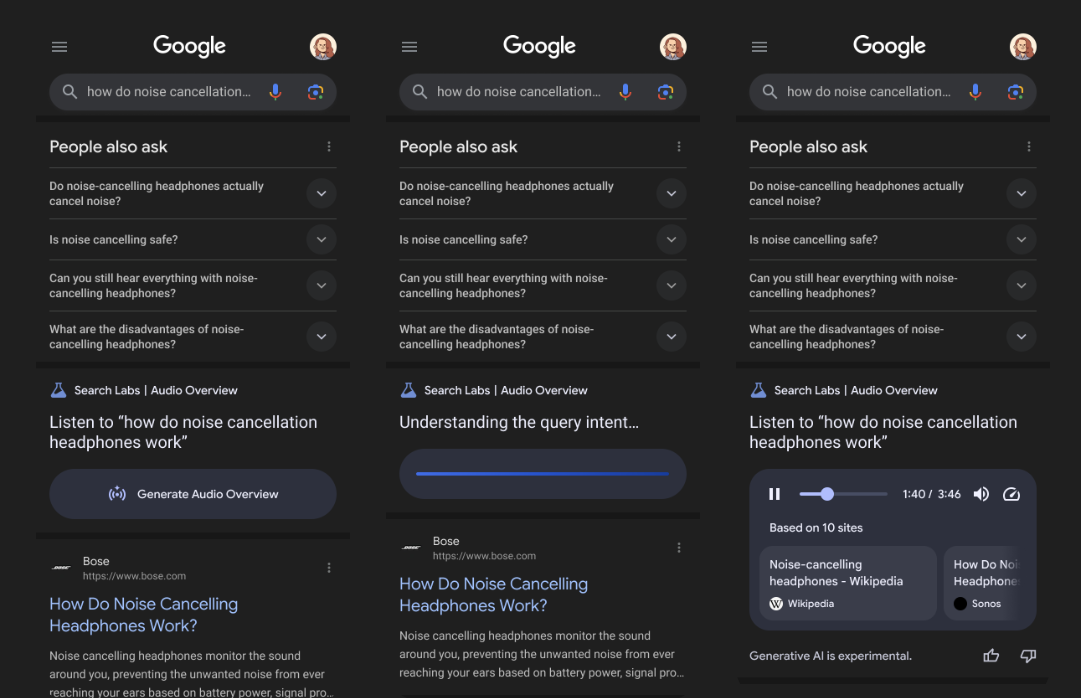
Audio Overviews turn Google Search results into audio content. When Google thinks an audio overview might help, you’ll see an option to create a short audio summary right on the results page.

You can see how the interface looks in the example below:

Screenshot from: labs.google.com/search/experiment/ June 2025.

After clicking the button to generate the summary, Google will process the information in the SERP and create an audio snippet.

Google says the feature helps users “get a lay of the land” when searching for topics they are unfamiliar with.

Audio Overviews retains the primary value of Google Search by displaying web pages directly within the audio player. This allows users to click through to explore specific sources.

Technical Requirements and Limitations

To use Audio Overviews, you must sign up for the experiment through Search Labs, Google’s testing platform for new search features. The feature only works in English and only for users in the United States right now.

After clicking the “Generate Audio Overview” button, creation can take up to 40 seconds. Once it’s done, the audio plays directly on the page.

Google has built-in ways for users to give feedback with thumbs-up or thumbs-down ratings. This feedback will likely help Google refine the feature before making it available to a wider audience.

AI Content Considerations

Google is upfront about the technology being experimental. The company notes that “content and voices in this experience are created with AI” and warn that “generative AI is experimental, so there may be inaccuracies and audio glitches.”

While Google emphasizes that Audio Overviews direct users to source content, some publishers may see this as part of a broader trend that reduces click-throughs from search. If AI-generated summaries satisfy user intent too well, they could further shift attention away from original creators.

Google’s inclusion of visible web links in the audio player suggests an effort to maintain attribution. Still, it’s unclear how effective these links are at driving traffic compared to traditional search listings.

Looking Ahead

Audio Overviews mark another step in Google’s efforts to make Search more multimodal and accessible. By offering spoken summaries powered by generative AI, the company is testing how voice-first experiences might complement traditional search behaviors.

While the feature prioritizes linking to source content, its long-term impact on publisher traffic and content attribution remains to be seen.

As with other generative AI experiments in Search, how users respond will likely shape whether and how Google expands this format.

https://www.searchenginejournal.com/google-launches-audio-ai-overviews-in-search-labs-test/548991/


Social Media Planner: How To Plan Your Content (With Template) via @sejournal, @jasonhennessey

Marketers and business owners are spoiled for choice when it comes to the many social media platforms available for growing an online audience.

From BlueSky to TikTok, LinkedIn to Patreon, social media marketing has never been more robust, or, arguably, time-consuming.

But it doesn’t have to be. Fortunately, you don’t have to be everywhere at once.

Where you choose to show up online should be based on where your target customers spend most of their time. Choose these platforms purposefully.

Also, streamlining your social media marketing is made easier with the right planning tool in your arsenal – and no, it doesn’t require fancy software solutions.

In this guide, I’m sharing a free, easy-to-use social media planning template, plus helpful steps on how to make it work for you.

It’s as simple or as customizable as you need it to be. No unnecessary bells or whistles.

Free Social Media Planner Template For Google Sheets

Planning your social media content doesn’t have to be complicated – or require the use of expensive tools.

With the free Planner Template, you’ll find an easier way to plan, organize, and schedule your social media content.

Whether you are an individual, business owner, or marketer, this template is designed to help you publish content consistently, stay organized, and make better decisions about your social media strategy.

With this Google Sheets template, you can:

  • Plan your content calendar in advance, see what you’ve published, and know what’s coming up next.
  • Schedule posts for multiple social media accounts from one calendar.
  • Track the progress of your content and use the information to inform your future strategy.
  • Collaborate with others by sharing access with your team.

Note: Click on File > Make a Copy to edit your template. You do not need to request edit access.

Make a copy: Social Media Planner Template for Google Sheets

How To Plan Your Social Media Content

The Google Sheet template makes it easy to see your schedule well in advance and save all of your social media assets in one place.

Here’s how to plan your social media content this year.

Step 1: Create A Copy Of The “Social Media Planner Template”

Once you have access to the template, click “File” and then “Make a Copy.” This will create a new copy of the template that you can edit.

How to make a copy of social media planner templateScreenshot from Social Media Planner Template, May 2025

Next, give your copy a descriptive name, such as “[Business name] – Social Media Plan Q1-Q4 2025,” and save it to Google Drive.

Step 2: Identify Your Current Quarter/Month

Depending on when you’re reading this article, you will want to identify the quarter and/or month in which you plan to start your social media planning.

The bottom of the template includes tabs spanning from “Q1: January” to “Q4: December” of 2025.

Open the tab for the month in which you want to start planning your content:

Open the tab for the monthScreenshot from Social Media Planner Template, May 2025

For simplicity, we started with “Q1: January” and began filling out the first few topics as an example:

Fill out first few columns: Social Media Planner TemplateScreenshot from Social Media Planner Template, May 2025

You will also see in the left-hand columns that there is a calendar for each month. This is simply a reference to the correct days of the week/month for 2025 so you can plan accordingly.

You can, of course, update this for 2026, 2027, and so on.

Step 3: Choose Your Social Media Platforms (“Platform”)

Column K includes a dropdown of various social media platforms to which you may be publishing your content.

You can select from this list of options (Blog, Instagram, LinkedIn, Facebook, Twitter/X, TikTok, YouTube, or Other), or you can add your own by clicking the pencil icon:

How to fill out social media planner templateScreenshot from Social Media Planner Template, May 2025

This dropdown allows you to easily identify which platform you plan on publishing to. Whether it be Facebook, Instagram, X (Twitter), or any other platform, this will help you keep your content organized.

Step 4: Plan Your Topics

Now, it’s time to fill in your topic ideas.

There are quite a few ways to think of engaging social media topics, which we covered in our guide on how to create authentic social media content.

However, the research process doesn’t have to stop there. Here are a few ways to come up with social media posts:

  • Conduct competitor research: Look at what your competitors are doing on social media and use that as inspiration for your future social media posts.
  • Look at industry trends: Stay up-to-date on industry trends and news, and use this information to create relevant and timely posts for your audience.
  • Utilize user-generated content: Encourage your followers to share their own experiences and use that content as inspiration for your posts.
  • Look at hashtags: Research and use relevant hashtags to increase the visibility of your posts and reach a wider audience. This can also be a way to find content ideas.
  • Schedule regular promotions: Share your promotions and discounts to drive engagement and increase sales.

Once you think up some ideas, you can start filling out your social media planner.

Just fill out Columns J through R with your “Title/Topic,” “Description,” and the like.

Step 5: Add Content And Publishing Notes

Start editing the template by adding relevant information, such as your descriptions, content document links, hashtags, publish dates, and tracking links (if needed).

Fill out columns: Social Media Planner TemplateScreenshot from Social Media Planner Template, May 2025

Feel free to add rows, columns, or fields to suit your needs.

In the “Images” and “Video/Media” columns, you can add links to the visual assets you plan to use in your social media post. You can do this by adding a link to a Google Drive folder with images or your chosen Digital Asset Manager (DAM).

Step 6: Add Publish Dates

Next, use the template to schedule your posts in advance by adding the date and platform for each post.

Don’t forget to update the “Status” column (I) as you work through your social media plan.

You can also use the template to track the success of your content by adding metrics such as likes, comments, and shares.

Step 7: Share With Your Team

If you are working with a team, share the template with your colleagues and give them access to edit the template.

This will allow you to collaborate and work together to maintain a consistent social media presence.

The “Notes” column is for any miscellaneous notes about your upcoming content, including details about your upcoming content, drafts, due dates, etc. and you can use this to work with your team async.

Step 8: Plan Ahead And Repeat

Planning your social media content in advance offers numerous benefits that can greatly enhance your social media presence.

By taking the time to plan your content, you can ensure that you are consistently publishing relevant posts that engage your audience and drive results.

With a clear content plan in place, you can focus on creating high-quality content that is aligned with your overall marketing strategy and avoid the pitfalls of impulsive, unplanned posting.

I recommend using the social media planner to plan at least one quarter’s worth of content, so you’re not scrambling to write the copy, collect the assets, schedule the posts, etc.

Plan And Publish Social Media Content Like A Pro

Social media marketing doesn’t have to be a headache. With the right process, you can streamline your social media content planning and publishing schedule.

In as little as a few hours per quarter, you can plan your content well in advance, taking the guesswork out of your social media posting.

Using a planning template allows you to be proactive in your topic planning, get organized, and stay on schedule. Over time, planning your content will feel like second nature rather than a chore.

With social media planning, marketers gain:

  • A no-nonsense system for tracking content topics and scheduling.
  • Time efficiency and a streamlined publishing cadence.
  • Consistency in publishing timely, relevant posts.
  • Improved visibility into performance and results.

Also, when you plan your social media posts in advance, you can better allocate budget and resources to your efforts, ensuring you’re using your time in the most effective way possible.

So, take advantage of the free social media planning template, make it yours, and save time in your social media marketing efforts.

More Resources:


Featured Image: Paulo Bobita/Search Engine Journal

https://www.searchenginejournal.com/social-media-planner-template/544985/