How Kevin Indig Turns One Newsletter Into a Week of Posts

Kevin Indig writes Growth Memo, which goes out weekly to more than 29,000 founders, in-house leads, and marketing leaders. He spent 10 years as an operator and leader at Shopify, G2, and Atlassian, and now advises Meta, Airbnb, and Reddit on growth.

The Memo runs on original research into how search and AI are changing — Kevin, in his own words, swims in data all day.

The work isn’t done when you hit ‘publish’

“Publishing is only half the job — you also need a repeatable way to distribute your work. Buffer makes that much easier, and keeps a good post from disappearing after publication day,” says Kevin.

You spend days on a piece, it goes out, it gets one good day of attention, and then it’s gone. Kevin’s fix is to stop treating a Memo as one post and start treating it as a week of them — the same logic behind repurposing long-form content, applied to a newsletter.

“A single Memo gives us several things to share. We might pull out a chart, a finding, or a question worth discussing,” he says.
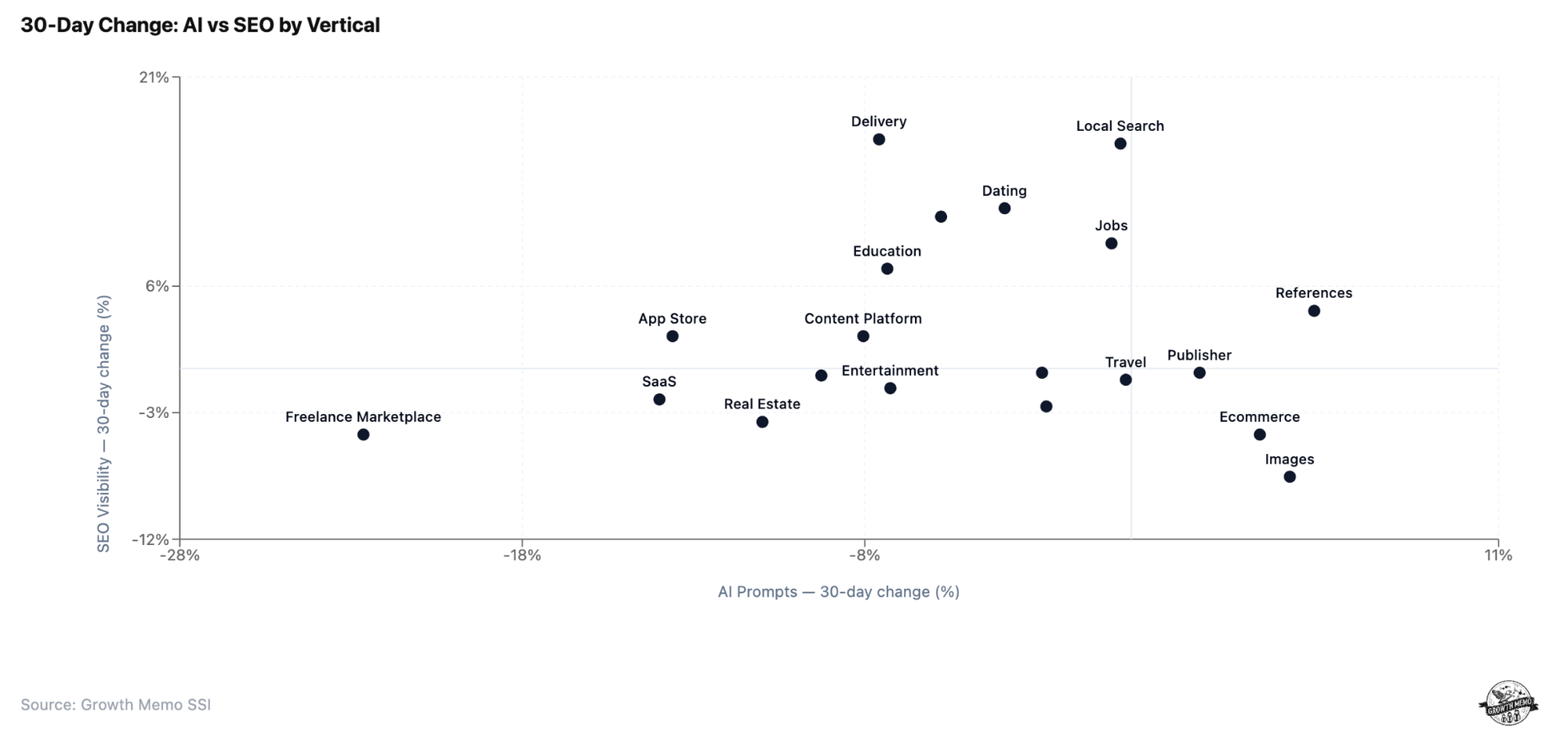
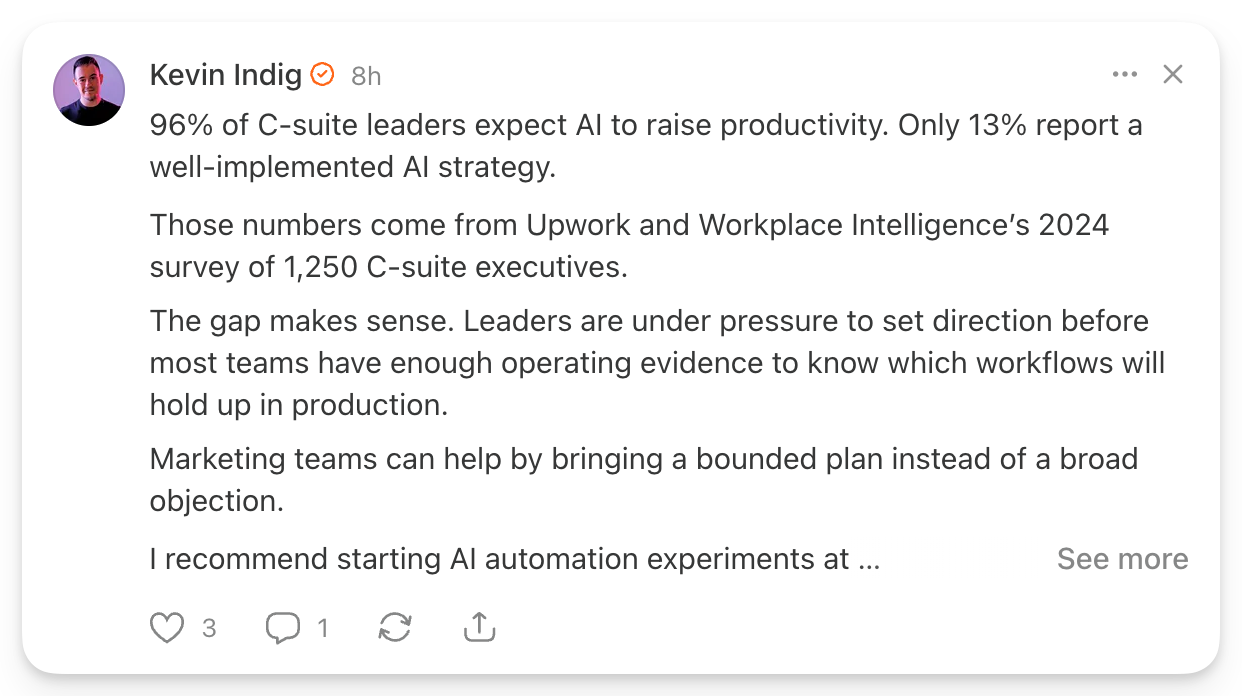
Kevin regularly shares original research with his audience.

Substack Notes is where ideas get tested

On Substack Notes, Kevin posts short takes, charts, videos, and teasers for Memos that haven’t gone out yet. He also uses Notes to test a topic before committing to a full article.

A fully researched memory takes an entire week of his time, while a Note only takes a few minutes. It’s well worth investing in the latter first, he says.

The ideas themselves come from his original research, his client conversations, and the patterns he sees in the data. The Notes that perform well often get an entire newsletter.
Buffer handles the distribution

Kevin and his team prepare the posts around the newsletter, and Buffer schedules them from there. Scheduling is essential for Kevin, who is rarely at his desk. Some weeks he’s traveling; some days are booked end-to-end with clients.

With Substack Notes now available as a channel in Buffer, Kevin can batch prep his ideas to go out too.

“Buffer makes sure every Memo gets distributed without requiring me to be online for every post. If I had to put a number on it, I’d say Buffer saves me 2–3 hours a week.”

Using Buffer with Codex

Kevin’s favorite Buffer feature is the Model Context Protocol (MCP) integration, which lets AI tools connect directly to a Buffer account. He points Codex, OpenAI’s coding assistant, at his own post history to see which posts landed and pull ideas for what to write next.

“I love the MCP. Being able to connect Codex to Buffer, understand which posts perform well, and get inspiration for what to post next is unbeatable,” he says.

His advice for Substack creators
For writers still deciding whether they need a tool at all, Kevin’s advice is to start where your readers already are, build a routine you can keep, and check what’s working so can repeat (or move on).

It’s advice that applies whether you’re just starting on Substack or 30,000 subscribers in. Kevin’s version of it happens to run on a scheduling queue and a coding assistant — but the routine is the part that does the work.

🎉

Substack Notes is now in Buffer! Schedule Substack Notes alongside your other channels, crosspost them to X, LinkedIn, Threads, and Bluesky, and see which ones bring in free and paid subscribers.

https://buffer.com/resources/case-study-kevin-indig-substack/


Danny Hieber Explains Language to the Internet

Danny Hieber Explains Language to the Internet

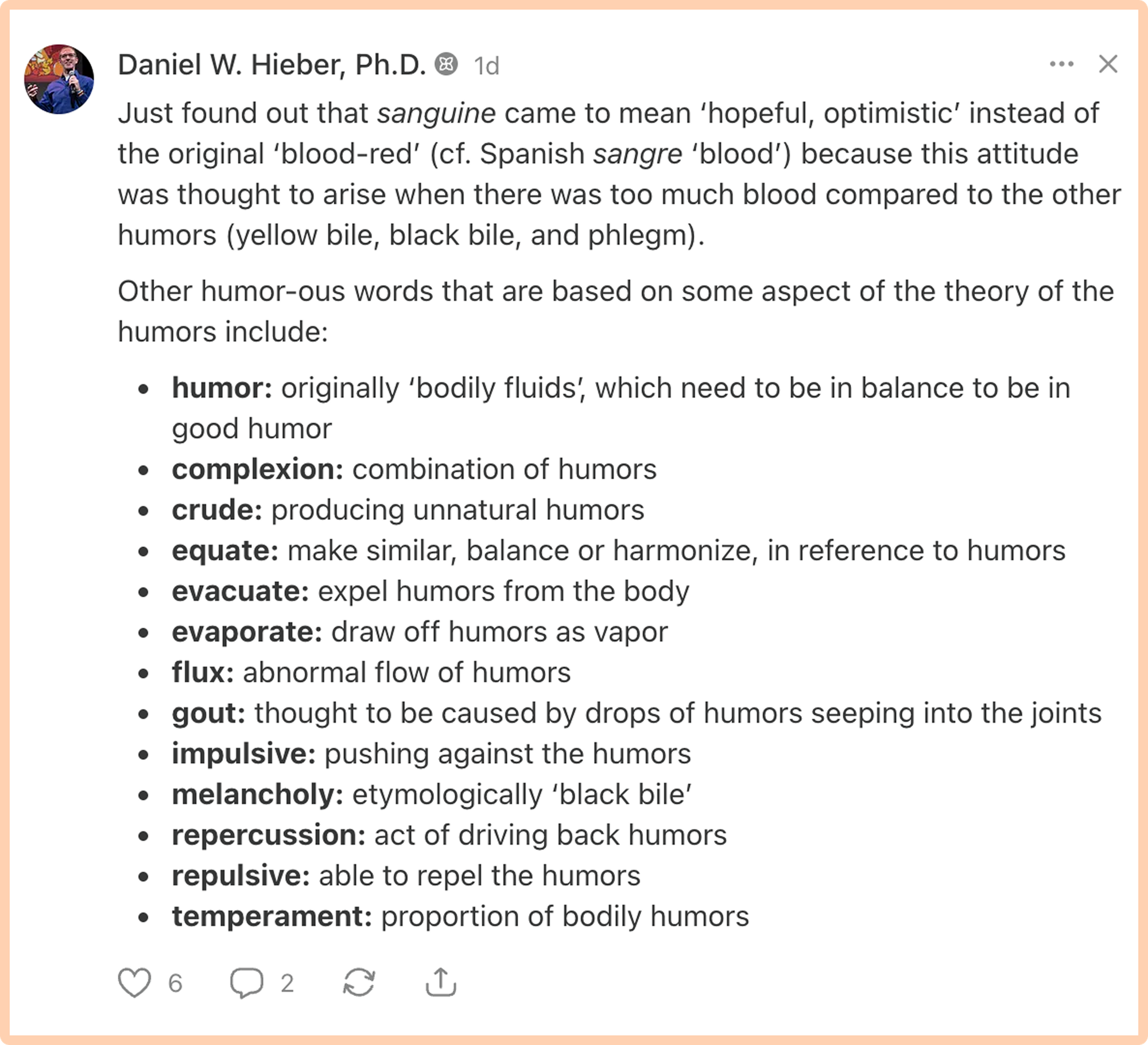
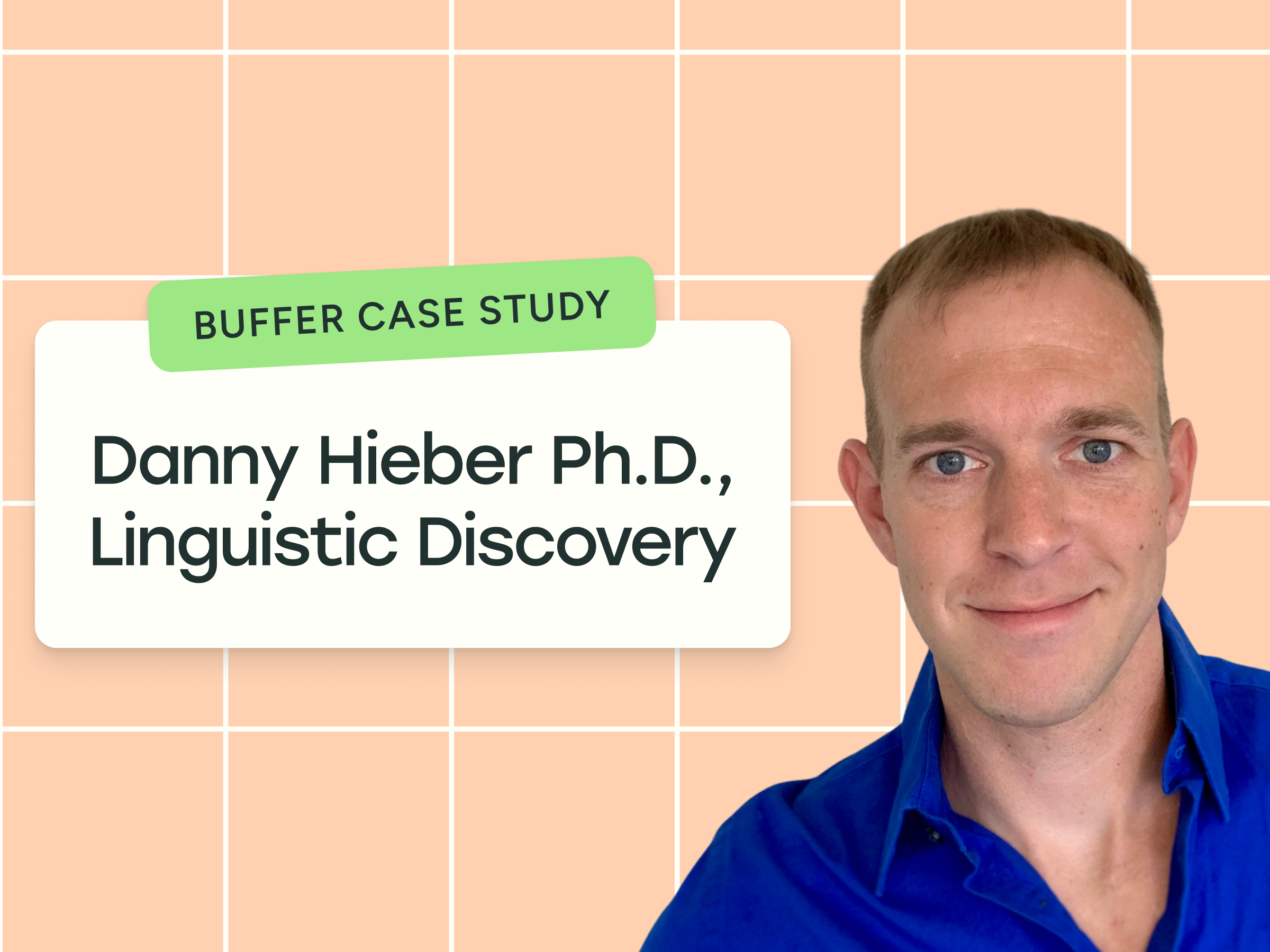
Danny Hieber, Ph.D., studies how words spread. A term can start in a tiny group and then, slowly, get repeated hundreds, thousands, even millions of times in different places by different people. Eventually, it becomes part of a language, and nobody remembers where it started.

He promotes his newsletter in the same way.

Danny is the linguist behind Linguistic Discovery, a weekly newsletter about the science and diversity of language. He explains the field to a much larger audience on Substack Notes, Threads, X, Facebook, Instagram, TikTok, and YouTube. He has more than 1 million followers across those platforms, including 320K on Instagram and 217K on TikTok.

Danny Hieber Explains Language to the Internet

"Every time I finish a newsletter issue, I pull out all the interesting tidbits, graphics, examples, quotes, and concepts/terms covered, and turn them into dozens of smaller pieces of content — microposts (Substack Notes, Threads, X, Facebook), carousels (Instagram), and short-form videos (TikTok, Instagram Reels, YouTube Shorts)," says Danny.

Each of those pieces ends with a call to action pointing back to the issue it came from: "If you want to learn more about [topic], check out this newsletter issue." Then he schedules the batch in Buffer and lets it go out over the following weeks.

Danny keeps up that many platforms alongside his full-time work as a linguist, which includes working with Indigenous communities to document and revitalize their languages. That's no mean feat, and Buffer is how he manages it.

Buffer as the distribution center

"I think of Buffer like my content distribution center: all my content gets scheduled there, and then Buffer sends it to all my platforms, or notifies me to post," he says.

Danny Hieber Explains Language to the Internet

For the posts that can't go out automatically, Buffer handles most of the work. "Even when Buffer can't post directly for you because a post requires manual features, it still makes the process as quick and painless as possible by handing you everything you need to post when it notifies you — images, text, links, and other info."

He also replies to comments from inside Buffer. "I'm also a huge fan of Buffer's recent Community feature, because now I can manage all my comments in one place."

As a result, Danny rarely needs to open the platforms themselves.

"What I love about Buffer overall is that it saves me from hardly ever having to open the social media apps themselves — hours of distraction and doomscrolling avoided!"

Consistency and peace of mind

"It might seem strange to say, but Buffer has done wonders for my mental health. It frees me from the stress of feeling chained to my content schedule, and the need to check in on my content every day," Danny says.

At any given time, he might have several weeks of content in the queue. "I no longer have to worry about missing a day or two because I trust that Buffer will send the content out for me. It's greatly reduced my feeling of burnout."

"Before using Buffer, my content schedule never felt sustainable. Finally, it's allowed me to be more consistent in my posting, which builds trust with my audience and is rewarded by the algorithms."

His advice to writers still on the fence is about creative freedom rather than efficiency. "Buffer gives you the creative freedom to capture ideas as you have them without worrying about the logistics of scheduling and posting — just throw it in your queue and forget about it."

On using Substack Notes

Danny has been deliberately changing what he posts on Substack Notes. He used to share a lot of news and new research. Now he posts far more of his own ideas.

"I realized that most of my Substack readers follow me not so much for the latest news and research, but for what I have to say about it. My strength as a writer, and the reason people value my newsletter, is my ability to explain and synthesize, not because I'm aggregating links."

Now that he can schedule Notes in Buffer, they go into the same queue as everything else he pulls from an issue.

That queue is about to get more to work with. Danny is in the early stages of a pop linguistics book, and he plans to post much more book-related content over the next year.

🎉
Substack Notes is now in Buffer! Schedule Substack Notes alongside your other channels, crosspost them to X, LinkedIn, Threads, and Bluesky, and see which ones bring in free and paid subscribers.

https://buffer.com/resources/case-study-danny-hieber-substack/


Why Josh Allan Dykstra Only Touches Social Media One Day a Month

Why Josh Allan Dykstra Only Touches Social Media One Day a Month

Josh Allan Dykstra is a keynote speaker and self-described optimistic futurist who has spent 20 years on one problem: making work not suck. He's worked on it as an author, an entrepreneur, and a tech founder, for clients including Microsoft, Amazon, CHANEL, and the State of Colorado.

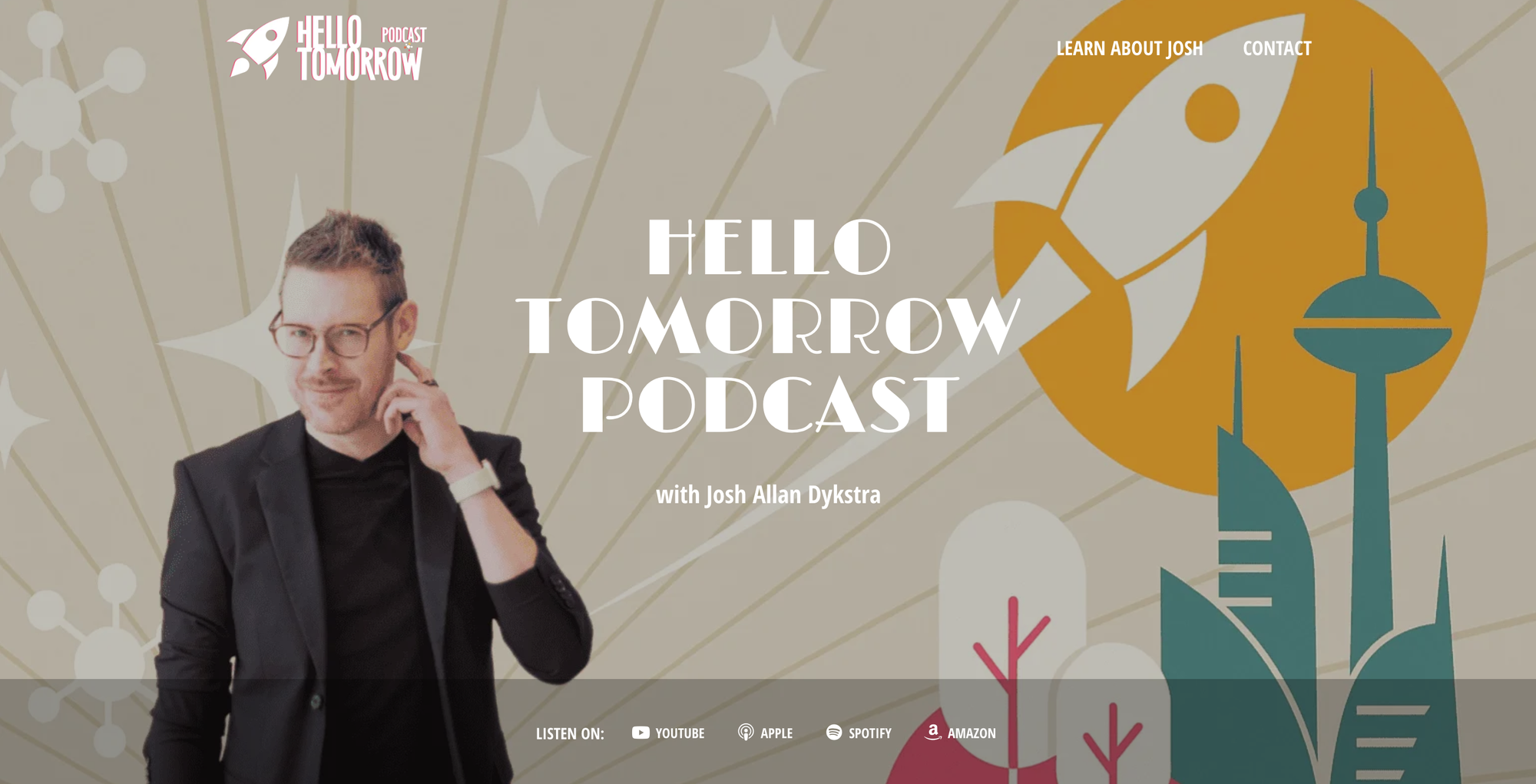
These days he hosts Hello Tomorrow, a Substack podcast about the global systems that shape ordinary life, and he's finishing his second book, Work Will Kill Us All: An Optimist's Guide To The Future.

Why Josh Allan Dykstra Only Touches Social Media One Day a Month

He has nearly 48K followers across Instagram, X, LinkedIn, and TikTok, including 20K on Instagram

All of which is a lot to fit into a week.

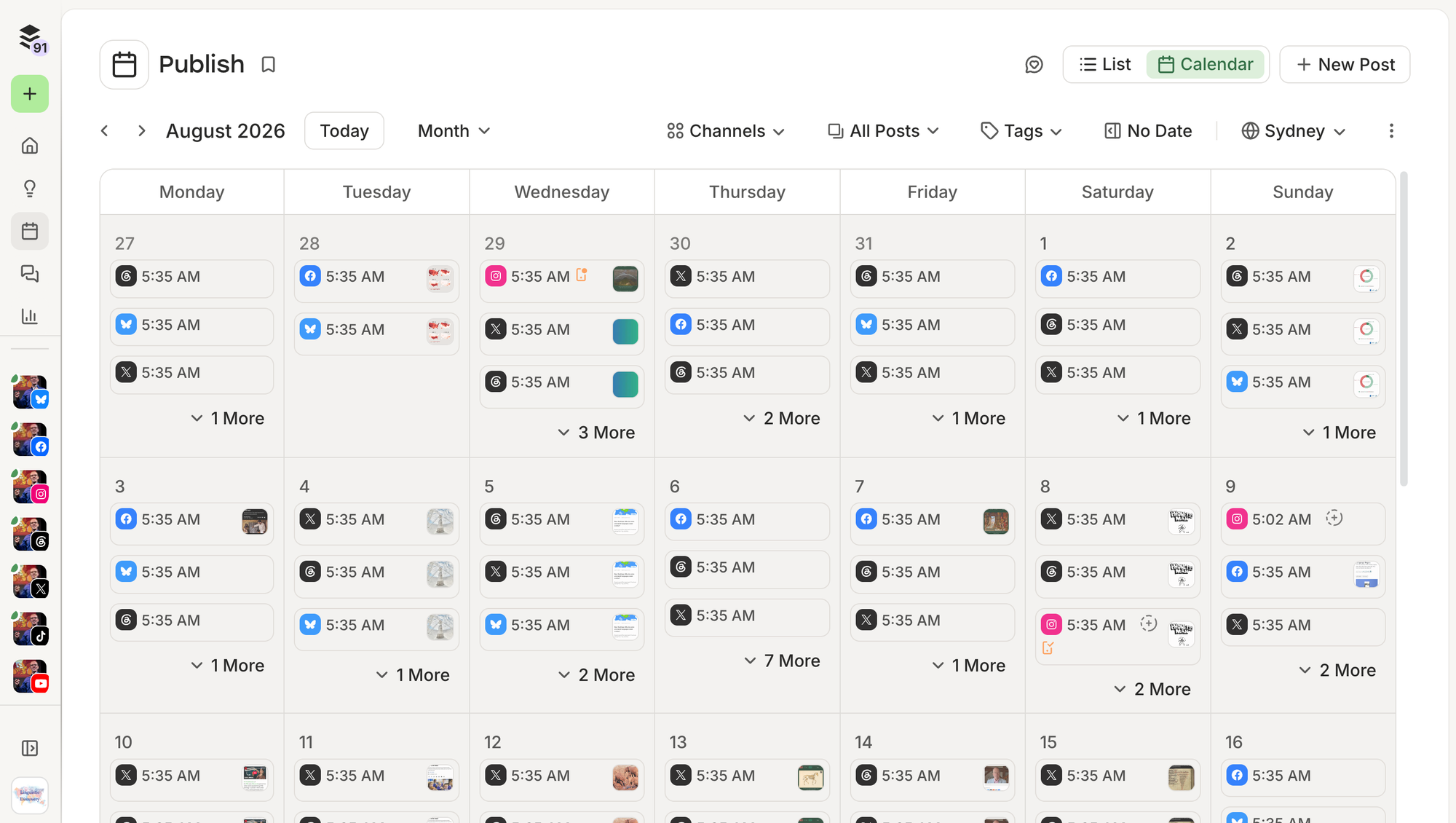
"I post something every workday, sometimes multiple things a day, and generally take one day to batch a month of content at a time into Buffer to make that happen."

One missing channel

Everything Josh publishes has run through Buffer for a while now, with one exception: the channel hosting his podcast.

"All my content gets delivered via Buffer, except Substack… until now!"

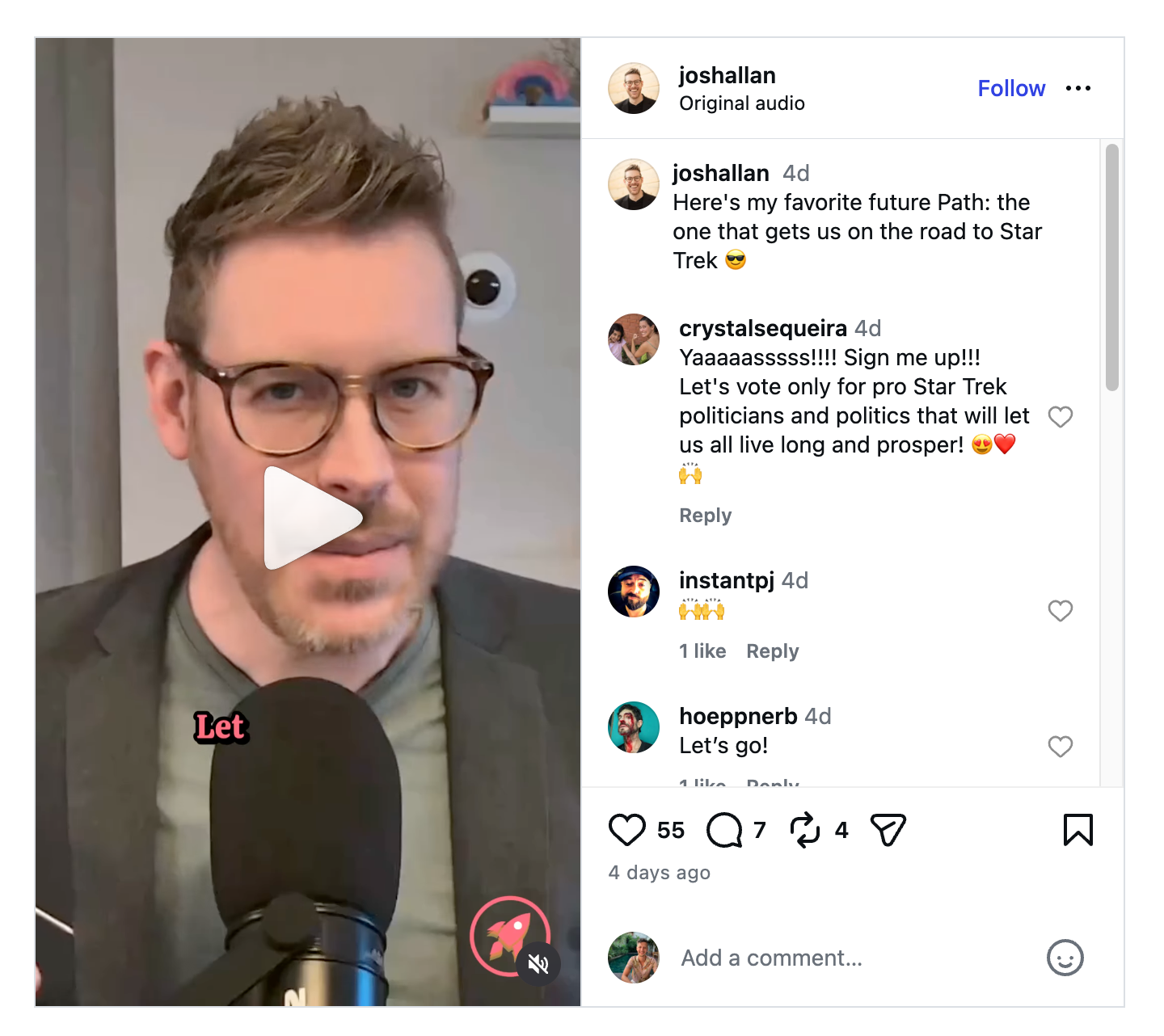
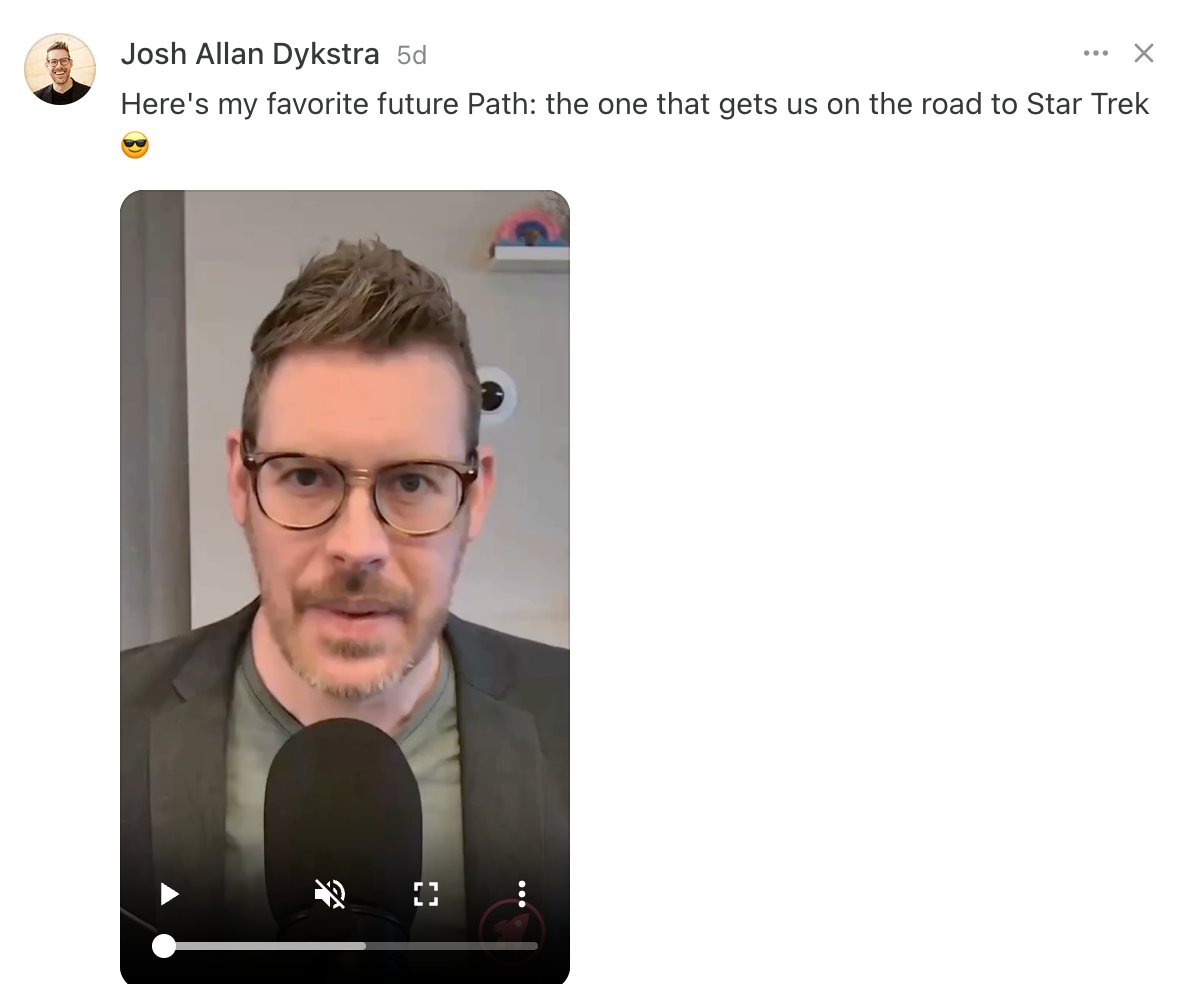
He's started crossposting his image and video content from Instagram and TikTok over to Substack Notes, mostly as a test: he wants to know whether the audience he's built on Substack wants the same things his Instagram and TikTok audiences do.

Whatever he learns will shape how he promotes the book.

Twenty years of writing, one year of video

Josh has been publishing words online since 2005. Video is a much newer habit.

"While I've been posting words online for a very long time, I've never really posted video until this year, so that's been a sharp learning curve," he says.

He picked up short-form video about the same time that he started the podcast and began writing the book, and says keeping a cadence across all three has been tricky. Even having a little friction removed with Buffer's smaller features goes a long way.

"The internal crop tool for images is very helpful; I'm always very grateful that I don't have to leave the tool to make a small dimension tweak for Instagram."

The results since using Buffer

Josh's Instagram following has gone from 500 to 20k in six months. He's clear-eyed about Buffer's part in that, though: "the time saved by using Buffer is the main benefit for me."

That time goes into a book out this fall, and into finding out whether Substack Notes wants his video. His advice to other creators is shorter than the rest of this article:

"What are you waiting for?! If you're cross-posting at all, this will save you TONS of time."

🎉
Substack Notes is now in Buffer! Schedule Substack Notes alongside your other channels, crosspost them to X, LinkedIn, Threads, and Bluesky, and see which ones bring in free and paid subscribers.

https://buffer.com/resources/case-study-hello-tomorrow-substack/


Substack Notes is Now In Buffer

Substack Notes is Now In Buffer

It's one of the most-requested integrations we've ever shipped, with over 1,100 upvotes on the request. Little wonder, given the explosive growth we've seen on the platform over the past year.

Substack is fast becoming a powerful way for creators and brands to share, grow, and earn. So we're delighted to share that Buffer is now connected to Substack Notes.

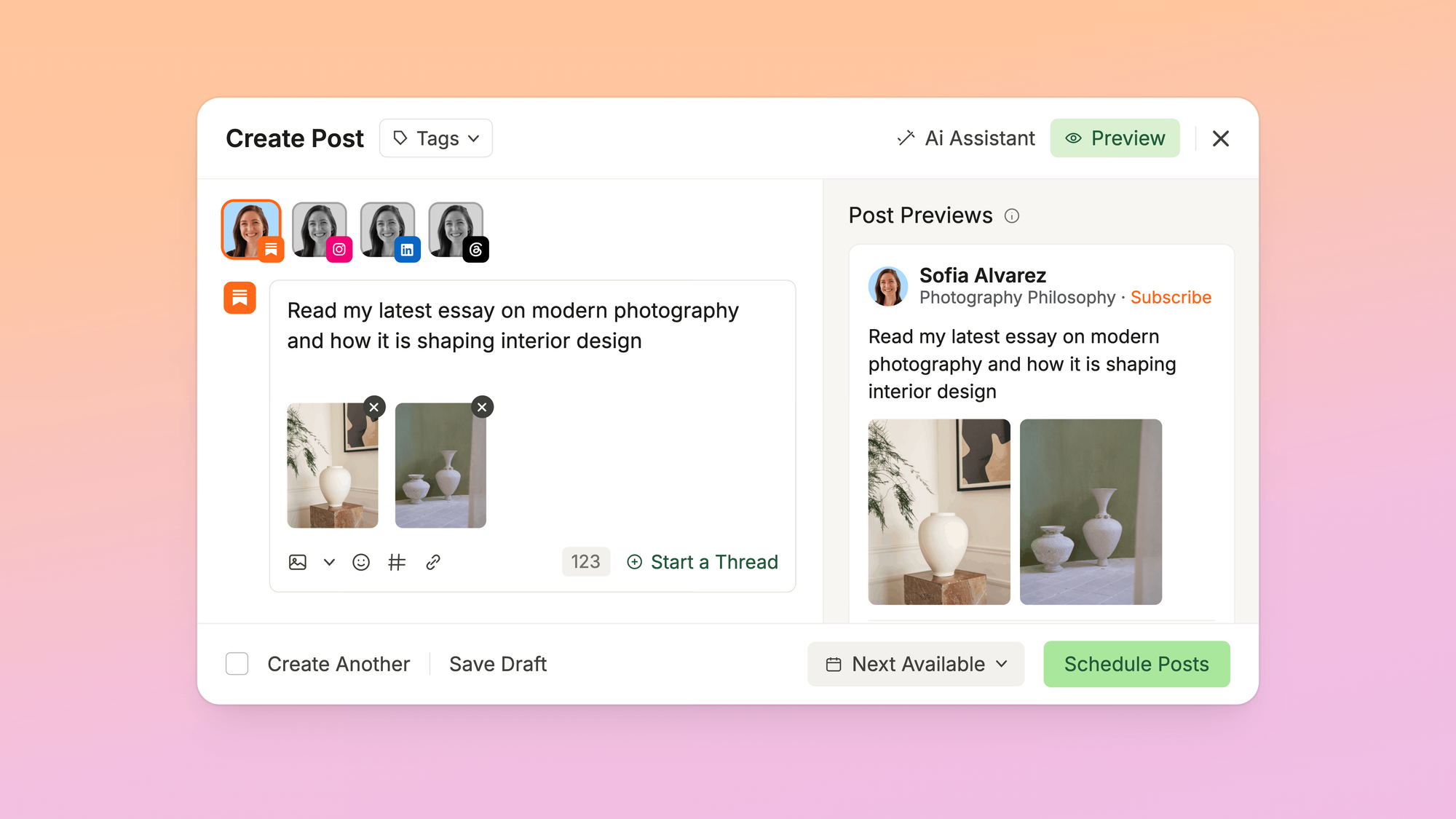
Starting today, you can schedule, crosspost, and analyze your Substack Notes alongside your other social channels in Buffer.

Buffer 🤝 Substack

Substack's growing fast. The platform now counts over 50 million total active subscriptions, with paid subscriptions more than doubling in the past two years.

And Notes — the short-form, in-network posts Substack launched back in 2023 to help writers reach new readers — has become one of the best ways to grow on the platform. But like most short-form formats, it rewards consistency. That's where Buffer comes in.

Substack Notes is Now In Buffer

Once you connect your Substack account to Buffer, you can:

  • Schedule Notes at the best times. Plan your Notes in advance and post them when your audience is actually around, right alongside your other channels.
  • Crosspost to your other platforms. Write once, share your post to X, LinkedIn, Threads, Bluesky, and more.
  • Give your old posts new life. Connect your Substack as a feed in Buffer, and your published posts are ready to reshare across social. It's perfect for driving more traffic to your evergreen posts.
  • See what's actually working. Buffer shows you which Notes bring in subscribers — free and paid — plus impressions, engagement, and more, so you know what to write more of.
  • Bring in your team. Collaborate on drafts and schedule across multiple Substack accounts, no more emailing or Slack-ing back and forth.
  • Use it with agents. Substack Notes support works with Buffer's MCP, so you can analyze, plan, and schedule Notes through your AI tools too.

How Substack creators are already using it

A handful of Buffer customers have already been posting to Substack.

Kevin Indig writes Growth Memo, a weekly newsletter on SEO, AI search, and organic growth, read by over 29,000 founders and marketing leaders. Buffer handles distribution so every issue gets shared without him needing to be online — he estimates it saves him two to three hours a week, and he uses Notes to test ideas before turning them into full articles.

Daniel Hieber writes Linguistic Discovery, exploring the science and diversity of language. He treats Buffer as his content distribution center: every newsletter issue gets broken into microposts — Substack Notes, Threads, X — scheduled out over the following weeks, each one pointing back to the full issue.

Josh Allan Dykstra hosts Hello Tomorrow, a podcast about the systems that shape our daily lives. He's just started crossposting his Instagram and TikTok content to Substack Notes to see how his audience there responds, and puts it simply: "If you're cross-posting at all, this will save you tons of time."

Read the case studies →

Follow the Buffer team

A bunch of us on the Buffer team are already posting on Substack. Follow along:

Get started

Connect your Substack account, and your next Note could be on the calendar in a couple of minutes. It's free, with team features on paid plans.

Get started for free →

https://buffer.com/resources/substack-notes-buffer-integration/


Here Are the Evening News Ratings for the 2025-2026 TV Season

Plus, the ratings for Q3 2026 and the week of Sept. 14. https://www.adweek.com/tvnewser/here-are-the-evening-news-ratings-for-the-2025-2026-tv-season/


How HBO’s Marketing Shined a Green Spotlight on Lanterns

The DC Comics-based show is among the top five series launches of all time at HBO Max. https://www.adweek.com/convergent-tv/how-hbo-marketing-shined-a-green-spotlight-on-lanterns/


The Executive Partnership Behind Stanley 1913’s Hypergrowth

Kate Ridley and Graham Nearn on the value of strong executive partnership for growing a brand. https://www.adweek.com/brand-marketing/the-executive-partnership-behind-stanley-1913s-hypergrowth/


A Social Commerce Playbook for the AI Era

This post was created in partnership with TikTok Social media still has the power to reach consumers, but how it’s used along the purchase journey is changing, and brands must […] https://www.adweek.com/commerce/a-social-commerce-playbook-for-the-ai-era/


What It Takes to Manage Creator Commerce at Scale

This post was created in partnership with TikTok What happens when viral creator content starts moving faster than a brand can review, measure, or act on it? During a Brandweek […] https://www.adweek.com/brand-marketing/what-it-takes-to-manage-creator-commerce-at-scale/


Alignment Is Your Most Important Growth Strategy

This post was created in partnership with Ammunition How team members define growth ultimately shapes their business strategy, which is why it’s so important for everyone to be on the […] https://www.adweek.com/brand-marketing/alignment-is-your-most-important-growth-strategy/