Do Marketers Still Care About Brand Safety on YouTube and CTV?
Social media is evolving. Are you adapting? Connect with a community of brand pros and content creators at Social Media Week, May 12–14 in NYC, to learn how to keep pace with new trends and technology. Register now to save 20% on your pass.
With performance and measurement top of mind, brand safety is dropping down the list of priorities for marketers advertising on YouTube and connected TV.
That’s according to a new study from Pixability, which surveyed U.S. media agency professionals who buy ads on video platforms. The survey asked the media buyers to rank the importance of more than a dozen different objectives for campaigns including brand safety, performance, measurement, audience targeting, business outcomes, and efficiency.
Brand safety, which had ranked as the top concern for marketers since 2022, dropped down to No. 6 in Pixability’s 2025 report, which was conducted in Nov. 2024. Ad performance, measurement and reporting, efficiency, audience targeting, and business outcomes all outranked brand safety last year, in that order.
While it’s a notable shift, it’s important to acknowledge how small of a margin exists between the top-ranked objective and those a few slots down, said Pixability chief marketing officer Matt Duffy.
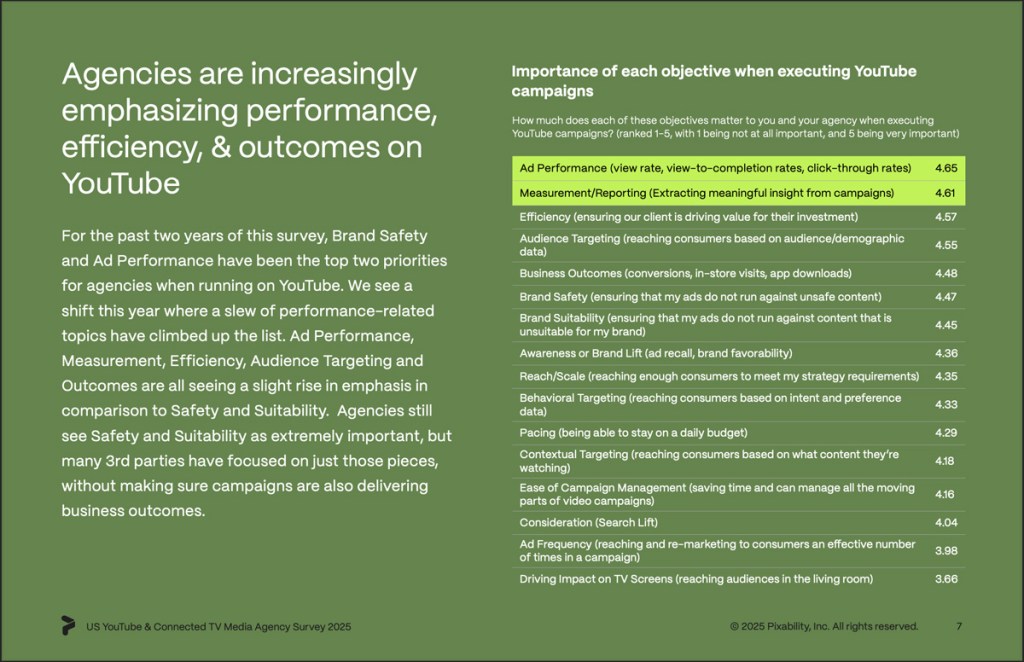
“The numbers are pretty close all the way down. It’s not like there’s drastic, drastic changes,” Duffy said. “Ad performance and measurement are the top-of-mind things for [agencies], whereas brand safety and suitability were a little bit further down the list.”
The trend could be explained as part of a broader backlash to diversity, equity, and inclusion policies that have been a target of President Donald Trump’s new administration.

But it’s also evidence of better set-it-and-forget-it tools that allow brands to worry less about brand safety and more about other things, according to Chris Ebmeyer, senior vice president and director of media services at 160over90.
“Agencies themselves, and the vendors that we work with, have really made brand safety something that we’re very much attuned to,” Ebmeyer explained. “Perhaps it’s not as top of mind for marketers because we’ve been doing a good job.”
Another contributing factor, according to Pixability’s Duffy, is that there was a hyper-focus on brand safety in recent years that’s just beginning to let up. Advertisers aren’t saying that brand safety doesn’t matter anymore, he explained, but that there was such a swing toward brand safety that the industry lost sight of other concerns, like audience engagement.
“Brand safety is important, but it should not be at the cost of of having engagement with our audiences,” Duffy said.
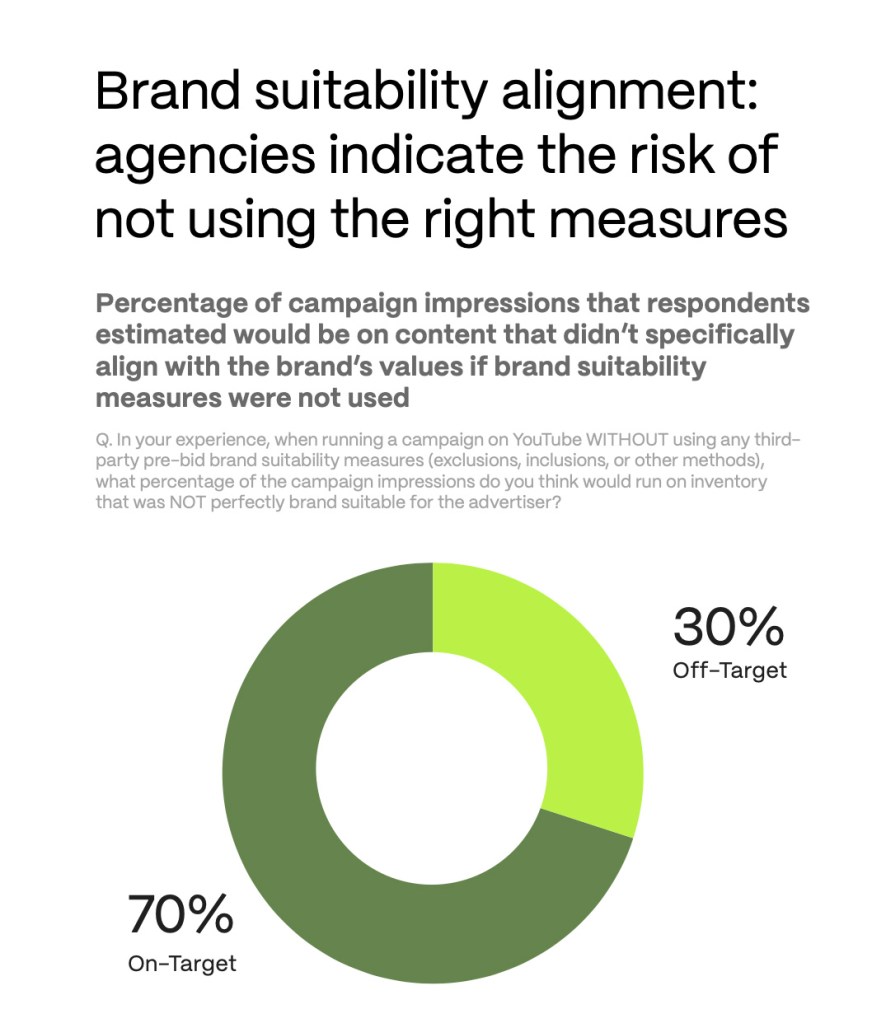
Beyond the ranking, Pixability’s survey asked media buyers to assess the risks associated with turning off third-party, pre-bid brand safety measures like inclusions and exclusions. Respondents said they’d expect most of their ads would still hit the intended audience regardless of whether they used a third-party tool.

The survey also asked buyers to choose whether suitability or performance are more important to the advertisers or if they aim to balance the two objectives. A majority (70%) of respondents said they try to strike a balance between suitability and performance.
https://www.adweek.com/media/do-marketers-still-care-about-brand-safety-on-youtube-and-ctv/