Every Brand Needs An Enemy
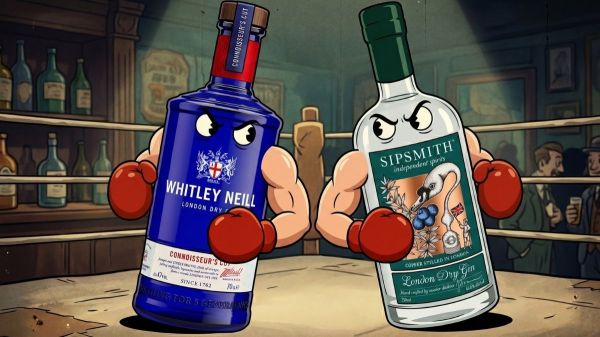
Every brand needs an enemy. A competitor you choose to benchmark against and beat.
Not every rival in the market. Not the whole category. Just one brand, one that overlaps most directly with your business, performs well enough to be worth studying, and is close enough to be attacked credibly.
The concept forces prioritization.
Once you make that choice, competing becomes more disciplined. Instead of asking what’s happening in the market, you start asking harder and more useful questions: Which rival matters most to us? Why this one? Where can we beat them? What would winning actually look like? And which actions deserve disproportionate focus?
The very real problem
Some companies study competitors to death, tracking share, benchmarking prices, dissecting launches, and filling decks with competitive analysis. Others claim, with great confidence, not to have competitors.
Both miss the same thing: a clear rival, a clear focus, and a clear plan for what to do next.
In many organizations, competitive analysis stops just before the only part that matters: “So what?” Teams struggle to convert all that intelligence into a small number of operational choices. What should sales do differently? What should marketing change? Where should revenue management push? Where should it stop admiring the spreadsheets and actually do something?
Too often, the output is a haze of noble intentions: improve visibility, strengthen premium credentials, sharpen innovation, support conversion.
None of this is specific enough to win.
Choose the right enemy
A good enemy, in general, should be larger than you, but not so much larger that the comparison flatters ambition more than it guides action.
Declaring war on the category giant may sound bold at the annual conference. It often means very little in practice. That was certainly true for Schweppes in soft drinks, where Coca-Cola was an obvious giant, but a poor enemy brand.
It was simply too large in awareness, budgets, distribution power, and market gravity to be a useful operational benchmark.
The best enemy is the brand from which you can realistically steal listings, shelf space, displays, customers, and share.
Turn observations into projects
At Suntory, Sipsmith’s decision to beat Whitley Neill in the premium gin category, instead of vaguely positioning Sipsmith against a broad and noisy set of competitors, immediately made our discussions more useful.
How did Whitley Neill structure pricing? Where was its range stronger on shelf? Which equivalent SKUs rotated faster, and why? Where were the distribution gaps? Which occasions did it serve better? And where was it stronger in visibility, execution, or retailer argument?
Those questions were not academic. They revealed the commercial system behind performance and turned that knowledge into projects. Underperforming SKUs were no longer just disappointing charts, but concrete action points. Range gaps became portfolio projects. Distribution gaps clarified where effort should go first. Stronger floor displays pointed to where execution had to improve.
The enemy-brand lens also strengthened the retailer conversation. It helped show where Sipsmith had the better argument, where an assortment looked incomplete or unbalanced, and why certain listings should be won. That is what many competitive reviews fail to do. They generate insight, but not consequences. An enemy brand narrows that gap by forcing the organization to move from commentary to action.
A better organizational focus
Headquarters might admire complexity, but field teams cannot execute 10 priorities at once.
One of the recurring flaws in strategy is that leadership passes too much clutter into the organization and too little clarity.
The enemy-brand method imposes a more brutal but more useful discipline: identify the few actions that matter most against the chosen rival and execute them forcefully, and without constantly changing your mind.
That concept travels well across functions, from sales and revenue management to marketing to supply chain to general management.
In that sense, the enemy brand is not just a brand tool. It is a coordination tool.
Many operating plans have respectable-sounding ambitions that feel arbitrary or are operationally soft. But once you know you are at 68% distribution on a core SKU and the chosen rival is at 85%, you do not just have a vague ambition to “improve distribution.” You have a concrete gap to close, and a legitimate objective to track.
The same applies to secondary displays, assortment breadth, feature frequency, or shelf share.
Study the playbook, not the personality
There is an important caveat: if you focus too much on an enemy brand, don’t you risk turning your own brand into a copy?
It is a fair objection. Choosing an enemy does not mean copying it. The point is not to imitate the rival’s brand personality, tone of voice, visual identity, or cultural style. That road usually leads to a weaker imitation.
Don’t study the personality. Study the playbook. Study the range architecture, the pricing discipline, the promotional rhythm, the route to market, the merchandising standards, the innovation cadence, the selling story, the structural drivers of performance.
A brand can learn a great deal from an enemy without becoming derivative.
The goal is not to become a copy, but to become more dangerous.
https://www.adweek.com/brand-marketing/every-brand-needs-an-enemy/