Fueled By An AI-Themed Plot, Toyota’s Anime Film Steers Straight for American Drivers
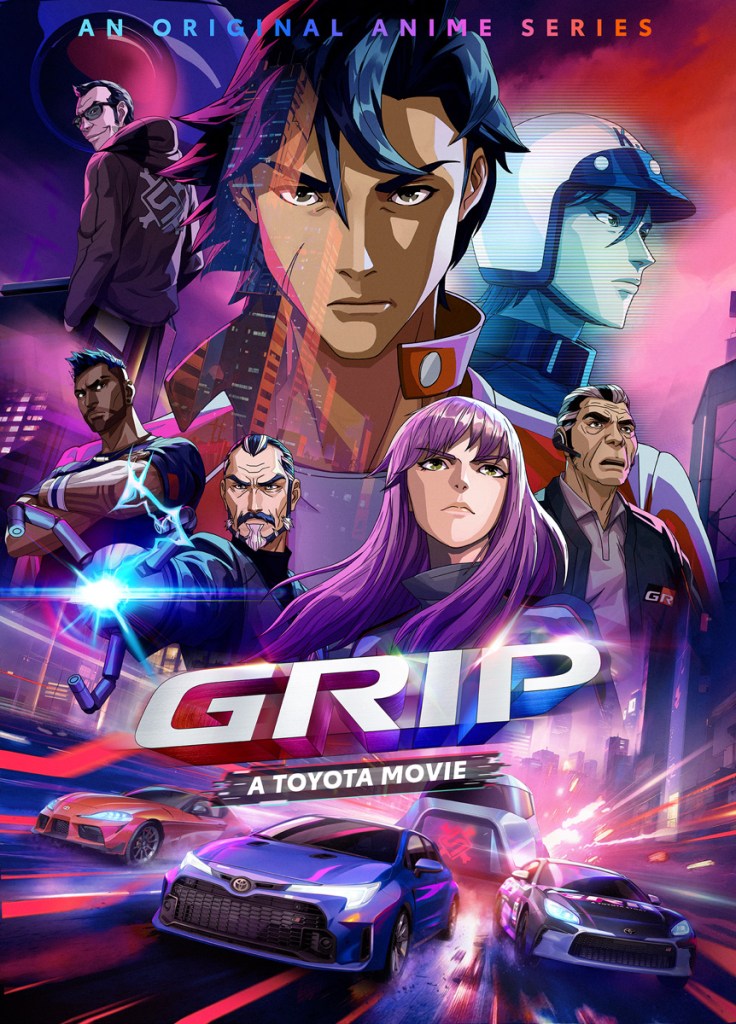
Can a hologram teach a human the meaning of a “driver’s feel?” Will Jae speed to the rescue of Linh in time to save her from the clutches of the evil Dr. Synth? And do three fearless young drivers even stand a chance of running computer-driven cars off the streets of Synth City for good?
Motoring enthusiasts will have to watch “Grip: A Toyota Movie” to get the full story.
Due out November 5, the 10-minute film is the final installment of “Grip: A Toyota Story,” a three-season series that began last year as the Japanese automaker’s first use of anime in the U.S. market. Grip wound up resonating with an audience broader than the one Toyota initially had in mind, leading to the decision to invest in the film.
“Fans wanted longer-form content,” Toyota Motor North America’s VP of marketing communications Dedra DeLilli told ADWEEK. “This was a direct reaction to the response of viewers.”
With a dramatic plot and high production value, “Grip” seizes every opportunity to show its viewers that Toyota makes some fairly kick-ass rides. The series’ principal characters, Jae Kang, Linh “Nitro” Lam, and Kumail Jo, drive roaring, fast-clutching Toyotas as they pull off plenty of braking drifts, handbrake turns, and much smoking of rubber.
But while the branding here is central to the effort (think: quick cuts to the cars’ nameplates), Toyota gave Intertrend, its multicultural agency behind the work, the freedom to hire top talent—including renowned anime studio DR Movie and Aladdin director Yoriaki Mochizuki—to produce a film that could stand on its own, not just a piece of advertising.
“You can’t alienate the audience by being too in-your-face with too many brand elements,” DeLilli said. “The Toyota product is being featured and highlighted in an authentic way that makes sense within the narrative.”
Gripping New Audiences
When it debuted in 2024, “Grip” was a dedicated effort to reposition Toyota among Asian-American consumers—”showing them that we’re more than what their parents knew,” DeLilli said.
A generation ago, Toyota was essentially synonymous with the bestselling Camry. It was reliable and fuel efficient, if not exactly thrilling. “This Toyota isn’t particularly stimulating to behold—or to drive,” pronounced automotive information site Edmunds in 2000.
But in 2007, the Japanese automaker launched Toyota Gazoo Racing, a rebranding of its high-performance, motorsports arm whose racing tradition dates back to the 1950s. Gazoo Racing’s fast and powerful cars not only compete around the world but, starting in 2022, they also became available in street-legal editions like the GR Corolla, GR Supra, and GR86. These are the same cars driven in the Grip series.
Even as Toyota aimed at Asian-American buyers, however, it began to realize that Grip was drawing an audience more diverse than first assumed.
“Millions flocked to view the content that has driven double-digit lifts in brand perception among near impossible-to-reach gen z and multicultural audiences,” said Matthew Choy, Intertrend’s executive director of strategy and creative. “These results made Toyota’s new investment in a longer-form Grip movie inevitable.”
Anime has been amassing American fans since Speed Racer first appeared on TV in 1967, with subsequent hits like Dragon Ball (1986) and the indefatigable Pokemon (1997) cementing it into mainstream culture. But Covid-19 may also help explain how Grip found its following.
According to a 2023 Dentsu Japan white paper, “anime’s popularity has further been spurred by the explosive increase in video viewing times during the COVID-19 pandemic.” Google search data shows that, after slipping a bit in 2019, Americans’ interest in anime spiked in 2020. It’s been rising ever since.
And so America is primed for a piece of anime marketing this ambitious, according to Mei Wing Chan, creative director for branding agency Siegel+Gale.
“The timing could not have been better for Toyota,” he said. “At a moment when KPop Demon Hunters has become Netflix’s most-watched movie, interest in anime is at an all-time high. The anime style is an incredible vehicle for storytelling, uniquely Japanese in origin, and coupling it with short-form content is an astute way to engage younger audiences.”
Will AI take the wheel?
Toyota also used the luxurious space of 10 minutes to take on the contentious role of AI in the automotive industry’s future. Its message, ultimately, is a nuanced one.
While our young hero drivers struggle to prevent a dystopian future in which Dr. Synth’s operating system takes over every car on the road (“Bye bye human driving!” chuckles his devious sidekick), Grip keeps itself in the center lane. The film reassures viewers that while AI can improve road performance, it can’t supplant people behind the wheel.
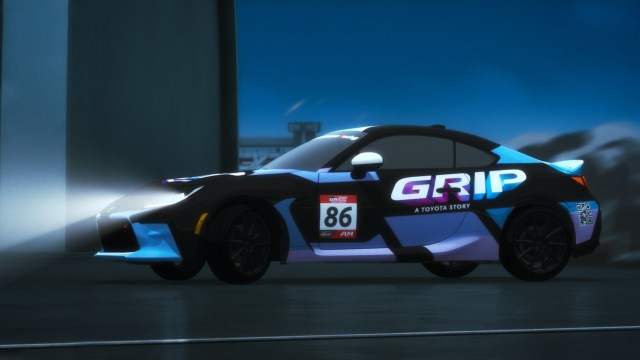
Jae and his friends, DeLilli explained, “help us all remember that the love of humans driving vehicles is alive and well.”
Or, as Master Rugu put it, “Technology can support your technique, but it can never replace it.”
And just who is Master Rugu? You’ll have to watch the movie to find out.
https://www.adweek.com/brand-marketing/fueled-by-an-ai-themed-plot-toyotas-anime-film-steers-straight-for-american-drivers/