Getting Human-driven, AI-assisted Marketing Right
This post was created in partnership with HubSpot
Marketing is undergoing one of its most dramatic shifts in decades. As AI upends traditional discovery channels and rewrites the rules of creativity, brands have to rethink how they connect with audiences—and how much control they really have over those connections. What’s emerging is a new model of marketing that blends human insight with machine intelligence to build trust, authenticity, and long-term value.
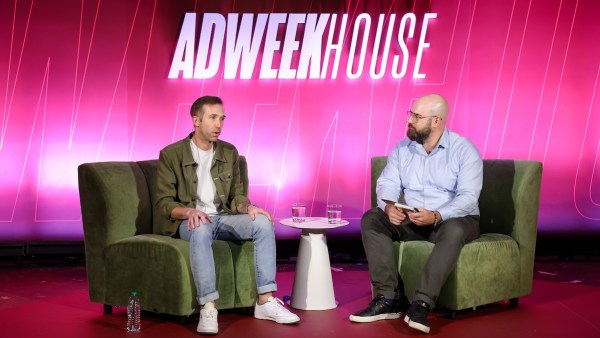
During a Brandweek 2025 fireside chat co-hosted with HubSpot, the radical evolution of marketing took center stage. Jonathan Hunt, VP of media and head of The Hustle at HubSpot, explored how the relationship between marketers and AI is reshaping creativity, distribution, and brand authenticity while in conversation with Mike Beyman, chief of staff at ADWEEK.
Managing the dark moment AI created
Hunt set the stage by acknowledging the intense pressure marketers face. Traditional discovery channels are faltering, forcing a strategic crisis as brands struggle to connect with their audiences.
“It’s becoming harder and harder to be discovered by or to reach your customer. You see it through search trends and the headwinds there. You see it through rising paid media costs,” Hunt explained.
This was accelerated by the arrival of generative AI, and specifically ChatGPT. Recalling his reaction to its debut, Hunt said, “That was a very dark moment for all of marketing, especially media.”
He framed this shift not as a temporary disruption, but as a fundamental turning point. “If you look at the trend line of big technological shifts in media and marketing, ChatGPT precipitated what I think is now the current state of marketing.”
The new model is a direct response to how marketers traditionally moved in very linear and campaign-focused ways. “You can no longer afford to be that way,” Hunt explained. “You have to be a lot more iterative.”
Part of surviving this new era, Hunt argues, is breaking free from the very channels that are faltering. “We call it loop marketing, which is humans and AI coming together to create but also personalize your messaging and your content on a one-to-one level.”
The value of owning your audience
HubSpot has rejected the playbook of rented audiences on social platforms and search engines.
“What a lot of marketers are starting to find is that there’s a lot of value in owning your distribution channels as opposed to renting them and then having to invest in Meta or LinkedIn every single month and see that money evaporate,” he said.
But when companies do acquire and own their own media, he pointed to one common mistake they make.. “The instinct is, OK, I’m acquiring this media asset now, it’s going to become a megaphone for my product.”
HubSpot’s strategy is the opposite—the company actually preserves the assets it acquires. “What we see whenever we’re building out media assets or acquiring media assets is that you’re acquiring the trust in the audience,” Hunt said. “The very worst thing you could do is erode that, because then why did you buy it in the first place?”
Each HubSpot media asset is completely editorially independent, he said. “They’re focused on a specific customer profile that maps back to a product within the HubSpot portfolio, but we let our video producers, writers, editors, podcast producers, and creators take those insights and then translate that into what they feel like is most resonant with their audience.”
Still, owning the channel is only half the battle—marketers also need a new approach to what they put on it.
Using AI to improve human creativity
This new model requires collaboration between AI and humans.
Humans remain vital to HubSpot’s content-first approach. Readers are “going to people because people inherently trust people,” Hunt said. This insight drives HubSpot’s focus on video and creators. “Video as a format, it’s the currency of every single channel.”
When it comes to AI, instead of fighting it, optimize for it, particularly in search.
“What we were finding is that while LLM traffic is still just a drop in the bucket relative to referral traffic from Google, the intent is a lot higher,” explained Hunt. “The value of a click back from an LLM like ChatGPT is 3X higher than what we were seeing on search.”
The framework is simple: “How we think about it is everything has to be human-driven, AI-assisted,” said Hunt.
https://www.adweek.com/brand-marketing/getting-human-driven-ai-assisted-marketing-right/