Google Started Rewriting News Headlines. Publishers Say It’s Setting a Dangerous Precedent
The relationship between Google and news publishers has historically been an uneasy one, as the early architecture of the web enabled both to flourish but only by aligning their mutual self-interests. Publishers produced content, Google used it to answer user queries, and outlets monetized those visits with advertising.
But the fraught dynamic has only worsened in recent years, as changes to the search engine have decreased the volume of referral traffic it sends to publishers. Similarly, the advent of artificial intelligence has recast the role Google plays on the web, transforming it from a librarian into a curator.
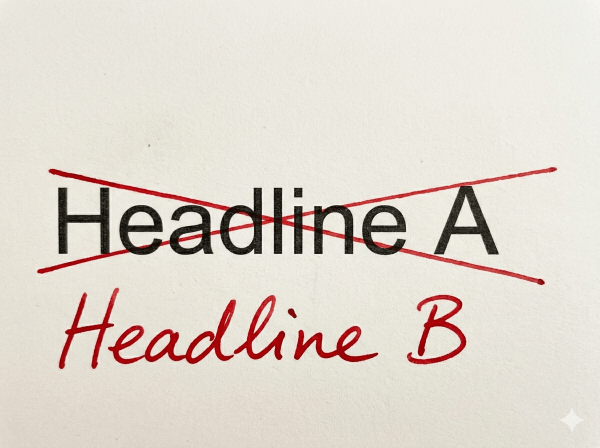
On Friday, this evolution marked another grim milestone. Building on the foundation of AI Overviews, which summarize publishers’ content into brief snippets, the search engine has now begun testing a new feature in which it changes the headlines of published articles themselves.
Although a spokesperson for Google emphasized the limited scope of the experiment, for many publishers it represents the crossing of a symbolic Rubicon. Summarizing a story is one thing; rewriting its headline, without permission or notification, feels decidedly like another.
To better understand the impasse, ADWEEK spoke with executives at five media outlets. Many were outraged by the lack of communication, several were upset with what they interpreted as Google making a unilateral editorial decision, but a few were cautiously optimistic that such a trial could ultimately benefit publishers, if carried out properly.
The consent problem
Every media executive agreed: The original sin of this particular experiment was a lack of communication, consent, or even basic notification.
Even a charitable interpretation of the trial, premised on the idea that Google is optimizing these headlines to better serve its users and publisher partners, still would not excuse a lack of cooperation, according to one of the executives. The oversight is particularly glaring given that the changes made are to the editorial content itself.
“This is another overreach by Google taking liberties with content without permission,” one media executive told ADWEEK. “It is hard to understand why Google feels they have the right to do this.”
A journalism, not business, issue
Several executives were emphatic that headlines are not interchangeable with other page elements: they represent editorial judgment and changing them without disclosure creates real downstream risk.
“We don’t think of headlines as a cosmetic detail,” one media executive said. “If Google rewrites headlines, they’re not just organizing the web; they’re intervening in our journalism.”
Similarly, if a rewritten headline turns out to be inaccurate or misleading, readers are likely to hold the publisher responsible.
“If we’re not controlling that, that seems risky.”
Devin Emery, president at Morning Brew, pointed to a stark contrast in the way Google treats the headlines of text-based content versus those of its video creators on YouTube.
On YouTube, the platform has recently offered creators new tools that allow them to more finely tune their headlines, an acknowledgement of the importance of headlines as both communication tools and brand-building devices. When it comes to text content, however, Google gives the impression that such material is a commodity—that its voice or style are irrelevant compared to its contents.
“It’s interesting to see that text and video are being treated differently,” Emery said. “You’re basically reliant on Google saying user satisfaction is up. There are no details on what that means.”
The slippery slope
Several executives said the headline experiment is concerning less for what it is than for what it might become and what could follow.
Marc McCollum, the executive vice president of product and innovation at Raptive, which works with nearly 7,000 publishers and creators, raised the question of where this line of logic leads.
“Would they also test changing the lead that shows up in Google?” he asked. “Would they consider imagery that didn’t come from the original publisher?”
One media executive noted that Google’s trajectory over the past few years tells a coherent story: AI overviews began summarizing articles, Discover started rewriting headlines, and now Search is doing the same.
“Each step increases the distance from the original work that we create,” the executive said. “It feels like it’s their work, or their interpretation of our work.”
Adding to that concern, Google previously described its AI headline rewrites in Discover as a “small experiment,” only to reclassify them as a standard feature roughly a month later.
“It’s scary that this has gone from a test to a feature so quickly,” the executive said.
The case for cautious optimism
Not every executive was ready to condemn the experiment outright.
McCollum said Raptive has not yet detected measurable changes in click-through rates or traffic patterns among its news publishers.
He acknowledged that there could be a scenario in which better-optimized headlines could benefit publishers, so long as the changes drive more clicks back to the original content.
“Philosophically, it could be a net negative, but it could also be a net positive,” he said.
Tim Huelskamp, CEO of newsletter publisher 1440, drew a parallel to his own company’s editorial process. 1440 curates outside content while preserving original headlines, but Huelskamp said he understood the impulse behind what Google may be attempting.
“If they are acting in good faith and driving more clicks and visitors to the site, that is interesting,” he said.
Both executives, however, attached a significant condition to that openness: transparency.
McCollum said that if the program expanded, Google should share data with publishers, including what headlines were changed, what variations were tested, and what performed better.
“If they’re really trying to serve the user,” he said, “provide some transparency to the publisher so that they can also improve.”
https://www.adweek.com/media/google-is-rewriting-story-headlines-publishers-are-concerned/