Hannah Behnke — Women in Security 2026
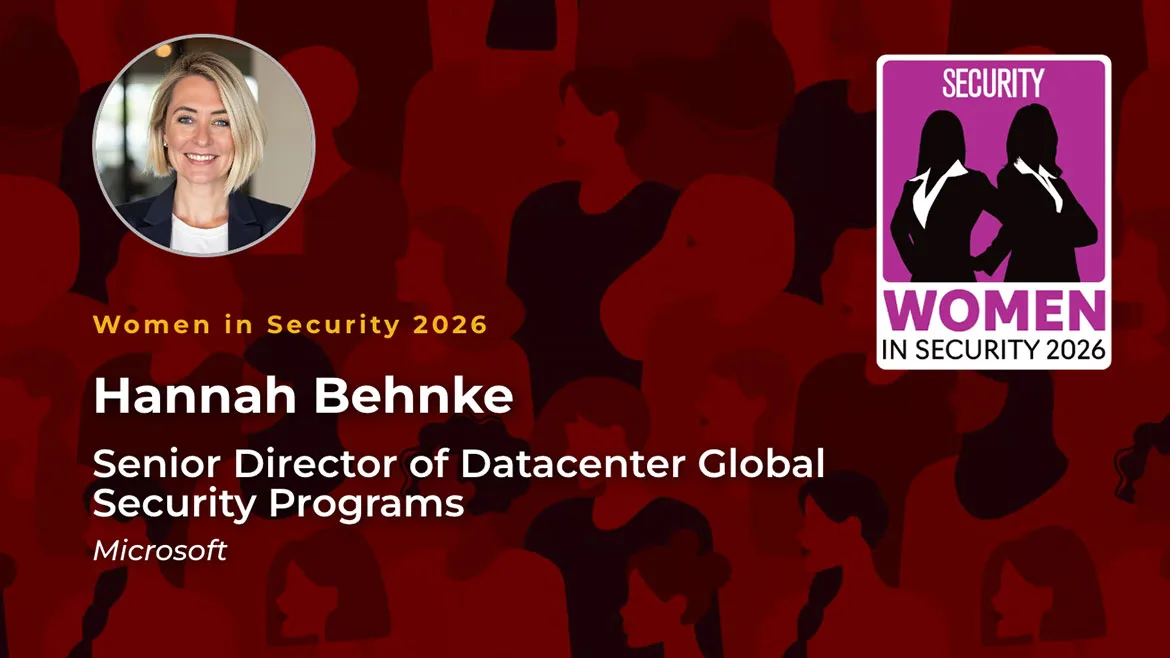
At the age of 18, Hannah Behnke took her first step into the security world in a classic way: she got a job as a “mall cop.”
While she had an interest in criminal justice at the time, with many family members involved in the field, she recalls that the primary reason she took the role was the need for a full-time job with a set schedule. Yet, once she started, she quickly realized it offered more than a paycheck and stability — it sparked a passion.
“It changed my whole career path,” she reflects. “I was a music major, but after that, I changed my major to criminal justice.”
Behnke earned her bachelor’s degree in Social Science with a focus in Criminal Justice from Washington State University while working in loss prevention at Macy’s. This chapter of her life laid the foundation for a successful career in security, eventually leading her to join the United States Coast Guard as an Operations Specialist, covering all 11 missions of the Coast Guard. After leaving the Coast Guard, she took a role as Senior Security Investigator at Comcast before moving to Holland America Group as Global Manager of the Maritime Investigations Program.
In 2020, Behnke joined Microsoft as Director of Investigation and Remediation. She later advanced to Senior Director of Threat and Incident Management before accepting her current role as Senior Director of Data Center Global Security Programs.
Protecting critical infrastructure isn’t just a job for Behnke — it’s a mission she approaches with great enthusiasm.
“My passion is critical infrastructure security,” she says. That same passion drove her to earn a master’s degree in Homeland Security and pursue a doctorate in Homeland Security at St. John’s University.
“Historically, data centers — along with other critical infrastructure sectors such as power, utilities, and energy — have focused heavily on target hardening and access control because of compliance requirements and operational needs. But those measures won’t protect you from insiders who already have authorized access as part of their role.”
In an era when data centers are generating significant attention — and sometimes controversy — security is paramount.
When it comes to the greatest threats facing datacenters, Behnke believes “insider threats are one of the most important things any critical infrastructure organization should focus on.”
She explains, “Historically, datacenters — along with other critical infrastructure sectors such as power, utilities, and energy — have focused heavily on target hardening and access control because of compliance requirements and operational needs. But those measures won’t protect you from insiders who already have authorized access as part of their role.”
When malicious insiders present such a significant threat, how should security leaders identify indicators of compromise? How can they defend against these risks?
According to Behnke, it is a “holistic insider threat program that integrates physical and cybersecurity controls. The program combines physical safeguards that limit opportunities for unauthorized access to systems with logical monitoring and detections that can identify indicators of physical compromise, creating a more comprehensive approach to managing insider risk. That requires a strong partnership between physical security and cybersecurity teams, particularly those responsible for critical infrastructure and operational technology environments such as power, water, cooling, security, and other environmental systems. These functions need to work in close coordination to effectively identify, prevent, and respond to potential threats.”
Even as Behnke manages global, centralized security programs that protect Microsoft’s cloud and data center infrastructure, she has not forgotten what it was like to be a security officer — and that experience continues to shape her leadership style today.
“It’s so important to have that experience, especially in the role that I have now, because I’m driving policy and organizational changes that impact thousands of security officers and security personnel at every level,” she says.
From entry-level security positions to senior management, Behnke draws on her own experiences to inform how she communicates important policy and organizational changes.
“When you write policy, a security officer isn’t sitting at a desk reading policy all day. They’re out on site. They’re driving a truck, conducting patrols, observing, and reporting,” she explains. “There are multiple layers of management and bureaucracy that can prevent feedback from reaching centralized programs for improvement. Having that awareness helps me adjust my approach to organizational change so I can better ensure the message reaches the right people throughout the organization. It is really important to stay connected to the field as an organizational leader.”
For women in security — whether they are security officers, senior managers, or anywhere in between — Behnke believes strong leaders must be willing to advocate for themselves and others.
“Throughout my career, some of the most important opportunities came from speaking up, taking on new challenges, and being willing to put myself forward for roles that stretched my capabilities,” she says. “I encourage women in security to do the same and to help create opportunities for those coming up behind them.”
Women in Security 2026 [Main Article]
https://www.securitymagazine.com/articles/102435-hannah-behnke-women-in-security-2026