How Brands Can Show Up to the Political Circus—If at All
Join the experts at Mediaweek, October 29-30 in New York City. Stay ahead of the shifts impacting the media landscape and gain fresh strategies to drive platform growth. Save 20% on passes.
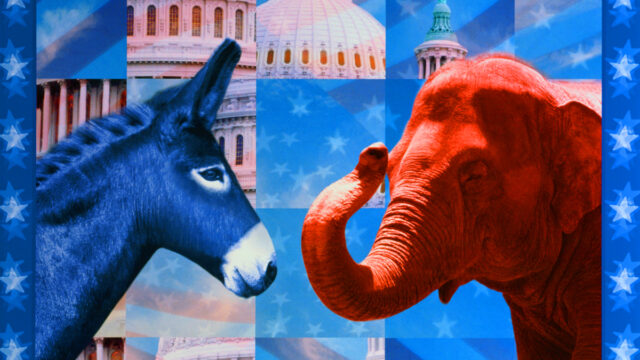
The global political landscape has never been noisier. As ideology often makes way for personality, general elections worldwide have ended in surprise, polarized the electorate like never before, and seen politicians use language that would previously have been unacceptable. The fire and brimstone of social media discourse has spilled into the real world, creating a much more fractious environment.
It is within this political circus that brands find themselves performing these days—often teetering on the edges of controversy, whether by design or not. Because the political is no longer purely about who’s in office.
This year’s Edelman Trust Barometer found that brands and politics are merging in people’s minds, with 78% of its global respondents saying that brands are “doing things that are political or politically motivated.” Most consumers—six in 10—are now buying or boycotting brands to express their politics. Globally, 84% of consumers say they need to share values with a brand to buy it.
So, the political is extending from the ballot box to the shopping basket. From the influencers that a brand hires, to the supply chain it operates; from the stories it advertises next to, to the states it locates its headquarters in—there are political consequences to every business decision.
And increasingly, silence is not an option. It is seen as complicity rather than neutrality.
So, if avoiding politics has become almost impossible, how can brands best navigate today’s political world?
Finding your authentic stance
The golden rule is that any political engagement must feel honest. It shouldn’t come out of the blue or be unexpected or disconnected from the brand’s existing position and messaging. If a brand appears to be latching onto a movement without substantiation, people will see it as a publicity stunt rather than an element of its purposeful strategy. The political space that a brand decides to speak or promote itself within needs to feel true to the brand.
This is not just a current issue. More than a decade ago, Bertolli created its “Love and pasta for all!” print campaign in support of gay couples, partly in reaction to comments made by competitor Barilla’s owner that he would only use “classic families” in its ads.
Meanwhile, Airbnb’s “#WeAccept” campaign launched at the Super Bowl in response not to a rival but to then-President Donald Trump’s 2017 travel ban. It was a simple, memorable ad that felt entirely fitting with the Airbnb brand and dealt head on with the growing national concern around xenophobia.
And recently, when e.l.f. Beauty came out in support of women’s reproductive rights in the aftermath of the overturning of Roe v. Wade, it felt entirely fitting for a business built on the purchasing power of women.
Business alliances
When the leaders or owners of a brand make a political statement or show support to a politician, it can have significant repercussions on the business. A brand is made up of its communications, and decisions made by the leadership teams can quickly reflect on the brand.
When fast food chain Chick-fil-A tried to launch in the U.K. in 2019, it had to pull back following a boycott over its founder’s support for Christian groups opposed to same-sex marriage. And Equinox executive chairman Harvey Spevak found himself having to apologize on behalf of the parent company’s chairman, Stephen Ross, when Ross hosted a fundraiser for Trump. The resulting customer backlash led Ross to apologize for “the impact it had on our community.”
If Elon Musk continues to support Trump’s campaign, it will be interesting to see how much it impacts his companies X and Tesla.
Demonstrating democracy
There are ways for businesses to respond to our modern politicized environment without feeling forced into party or ideological stances. Indeed, just talking about the importance of democracy can feel like a political statement when our democracy feels like an increasingly fragile construct.
Encouraging people to exercise their democratic right to vote is taking a societal stand rather than a political one. Other areas that feel less ideological but still within the political sphere are supporting fair pay, public health, or inclusive hiring (although these are now often viewed through a political lens). Human rights should be supported for what they are, rights rather than seen as partisan acts. Equality is not a political statement.
And then there is the thorny issue of consistency. As well as a brand’s political stance needing to sit in familiar territory, it also needs to be consistent.
A brand’s allegiances may be tested at times. By aligning with one thing, it means the brand is against something else. What we saw with the controversy around Bud Light’s collaboration with transgender influencer Dylan Mulvaney was that the minute there was a backlash to its partnership, the brand walked away. Its flip-flopping did more damage than taking a side.
The truth is that in our politicized world, brands must become comfortable with losing the support of some customers—and maybe even employees—because of allegiances.

Election fever
Around elections, consumer behavior changes—emotions are heightened, the political feels personal, and the impact on people’s lives seems greater. That creates an opportunity for brands to really connect with their customers, to tap into a sense of unity and urgency.
Brand activism may not be for everyone, but Gen Z is much more aware and desiring of a brand to take a stance. Gen Z is on everyone’s radar, politicians and brands alike—see Kamala Harris’ marketing strategy including her Brat Summer TikToks.
To keep the power brokers of the future on their side, brands need to choose a clear direction and commit to it.
https://www.adweek.com/media/brands-political-engagement-tactics/