How the 60 Minutes Editorial Process Is Supposed to Work
CBS News’ 60 Minutes has been awash recently with controversy over potential editorial interference with stories.
Among the accusations from former correspondents, Scott Pelley has alleged political bias from management, and Sharyn Alfonsi noted that interference came to one of her stories after the editorial process was finished. Meanwhile, Cecilia Vega just recently noted that her stories also received unwelcome feedback from management and were pushed to include claims that weren’t verifiable.
Regarding Pelley’s and Vega’s accusations, CBS News previously sent a statement to TVNewser, denying that management made decisions for political reasons. CBS News didn’t return a request for comment regarding Alfonsi’s departure in May.
But is there truly overstepping under the management of editor-in-chief Bari Weiss? And if so, when and how is it occurring?
To better understand the situation, TVNewser spoke with two different sources familiar with 60 Minutes’ editorial process prior to Weiss coming on in Oct. 2025, learning what goes into editorial and where management oversight fits in.
A look at 60 Minutes’ editorial workflow
According to the sources, the 60 Minutes editorial process begins months in advance as a collaborative effort between the correspondent and their producer as they each pitch potential story ideas. If they agree to a story, a formal proposal, known as a “blue sheet,” is written up to be presented to 60 Minutes’ leadership team, including the executive producer.
Once an idea is greenlit, the producer prepares a detailed budget covering travel, crew size, accommodations, production days, and other logistical costs. Management may request budget alterations, but after approval, the production team is largely left alone to report the story, with the only requirement being that the finished piece airs during the current television season.
Upon completion of filming, the senior editor at 60 Minutes assigns an editor to the project, who then begins putting the story together; this process usually takes two to three weeks. During this period, the interviews are also sent for transcription.
The correspondent and the producer will work in tandem to write the script and are actively involved in the editing process, which starts with a “radio cut” and is whittled down to the appropriate runtime of a 60 Minutes segment, which is approximately 12 to 13 minutes.
Next comes CBS News’ formal screenings
Once the piece is completed, the next phase is the most stressful moment of the entire process: the first formal screening.
Present at the screening are the correspondent, producer, executive producer, senior producers, executive editor, associate producer, editor, and a standards and practices representative.
Here, the loudest and most important voice in the room is always the executive producer.
Everyone present will have a script, while the standards and practices representative will have both the script and raw transcripts of every interview conducted for the piece.
The standards and practices representative is there to ensure quotes are presented accurately and in context, preventing misleading editing or manipulation.
One of the sources said that after watching the story, the executive producer and the leadership team will share extensive notes with the production team. They pointed out that, at this point, the team will be given the opportunity to push back on the notes they have received on the piece.
When that process is done, and the necessary changes are made, a second screening takes place. This screening includes the recommendations that were suggested from the initial screening.
If no further changes have been put forward, a final screening will occur, this time with a CBS News vice president, and depending on the sensitivity of the story, CBS News’ legal team is present to ensure that the story accurately and fairly conveys what is being reported on.
If there are no additional notes after this and the final version is approved, then the story is scheduled for broadcast, and the communications team begins their promotional campaigns.
For a breaking news story, the editorial process remains the same, but the timeline is immensely truncated, which is called a “crash,” with turnarounds happening as quickly as 24 hours.
Stay tuned
According to the sources, the editorial process at 60 Minutes is extensive. This makes the allegations from former correspondents more jarring.
After all, Alfonsi claimed that her story, which was scheduled for broadcast in December 2025, was temporarily shelved by Weiss after the screening process had been completed. She added that the story had been screened five times and cleared by the network’s attorneys and standards and practices division, but it was still paused.
CBS News did not immediately reply to TVNewser’s request for comment about the future of 60 Minutes’ editorial process, so it’s uncertain whether the show’s traditional editorial practices will stay in place or continue to change under Weiss.
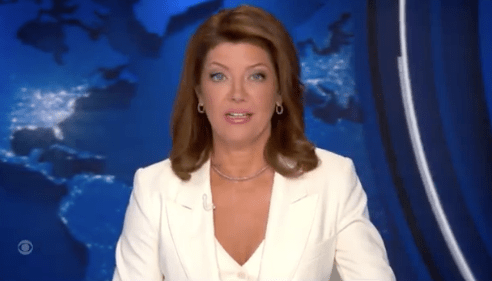
However, 60 Minutes’ new executive producer, Nick Bilton, has stated that the broadcast will continue “its tradition of fearless, independent and impartial reporting,” echoing these words as he announced new hires to the program recently, including Norah O’Donnell, who was officially named a correspondent.
Still, in his introductory note to staff in May, Bilton also said that it was time for 60 Minutes to evolve.
“Evolving or dying isn’t a threat. It’s simple math,” Bilton said.
https://www.adweek.com/tvnewser/how-the-60-minutes-editorial-process-is-supposed-to-work/