In a World … of Movie Trailers, The Golden Trailer Awards Honor the Best
In a world where movie trailers are too often left out of the awards conversation, one ceremony is still fighting the good fight.
This year marks the 25th edition of the Golden Trailer Awards, a show dedicated to the art and science of cutting a can’t-miss coming attraction that puts butts in seats—whether those seats are in a movie theater or on a couch in front of a CTV screen.
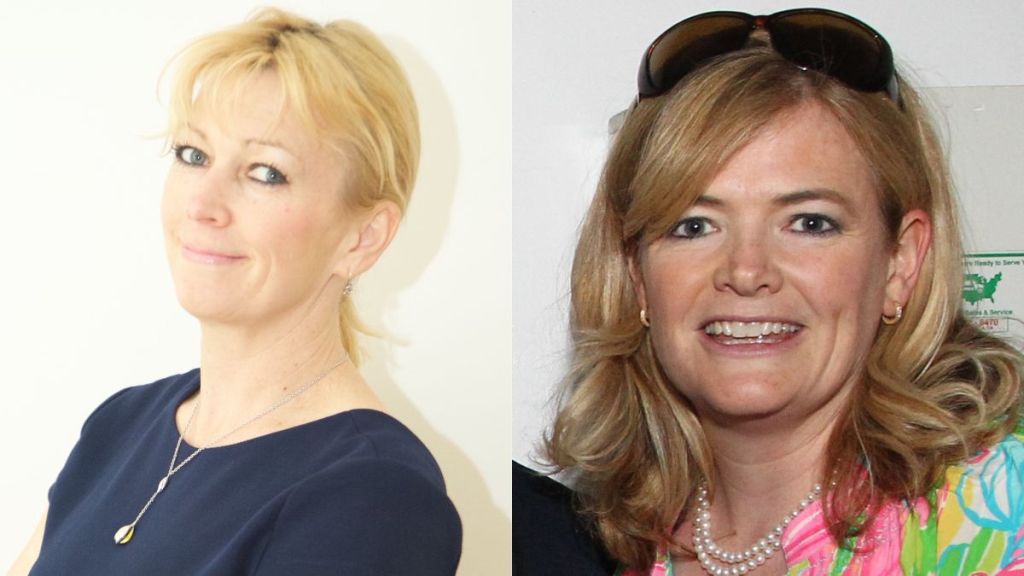
Founded in 1999 by sisters Monica and Evelyn Brady, the GTAs pride themselves on being as succinct a ceremony as the two-to-three-minute spots they honor: “We want to be the world’s shortest awards show,” Monica Brady tells ADWEEK with a grin. “It’s about leaving them wanting more.”
The 25th anniversary ceremony will certainly offer more—much more—than the inaugural edition. The 1st Golden Trailer Awards were held in New York City in September 1999 and handed out roughly 20 statues, most of which went to The Matrix and its trendsetting trailer.
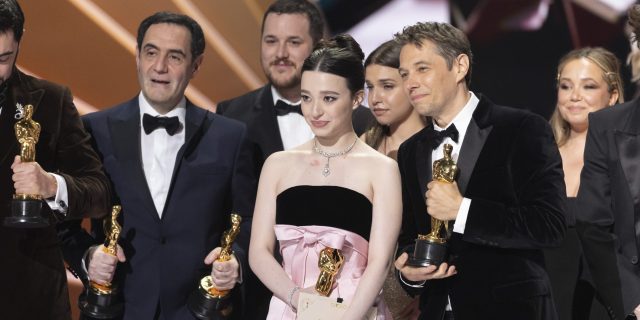
Flash forward a quarter century, and the current edition now boasts over 100 categories covering a variety of platforms and media—from multiplexes and streamers to TV shows and video games. This year’s crop of nominees spans trailers made between April 2024 and April 2025 and includes such blockbusters and blockbusters-to-be as Deadpool & Wolverine, Mission: Impossible—The Final Reckoning, Sinners, and 28 Years Later.
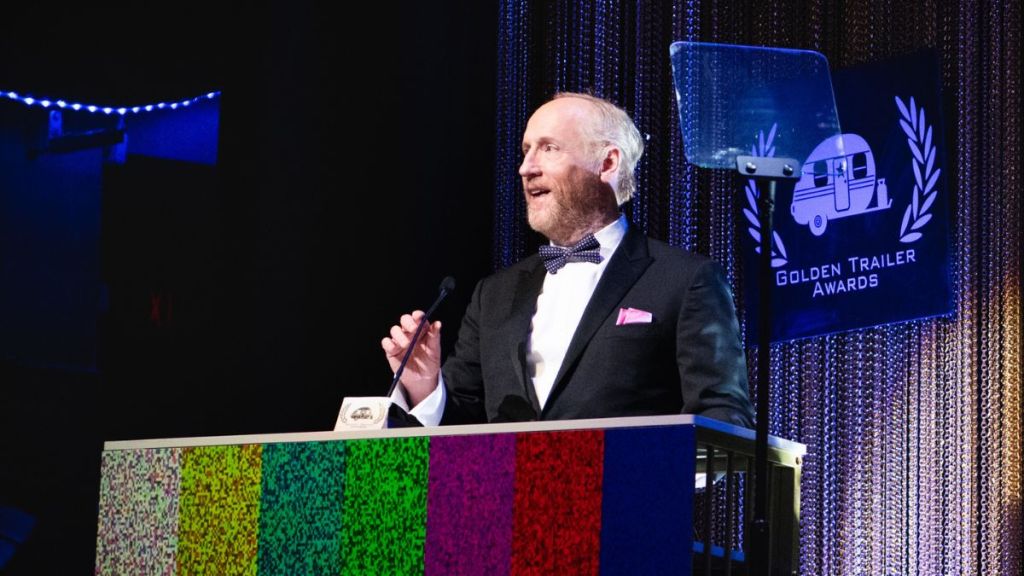
All 100+ statues will be handed out in a 90-minute ceremony livestreamed from the Los Angeles Orpheum starting at 8 p.m. PT on May 29. Impractical Jokers fan favorite James Murray is emceeing, and presenters like Chanel Ali, Nico Carney, and Becky Robinson have been enlisted to keep the mood light and the pace quick.
At a time when the entertainment industry at large is seeking new ways to market their wares to increasingly distracted audiences, the Brady sisters say that the GTAs demonstrate how trailers remain a vital part of movie and TV promotion.
“Trailers are still the number one way of marketing a film to an audience,” Monica Brady emphasizes. “Every year, we create packages of the five nominees in each category, and they cut together so smoothly. We actually see people putting down their phones to watch them!”
Fade in on…
New York City, 1997. The Brady siblings are fresh out of college with bright light, big city dreams of raising the money to make their first feature film. But financing is tight, even in the city’s indie film salad days when upstart studios like Miramax, Gramercy Pictures, and Artisan Entertainment are releasing buzzy films made by a new generation of filmmakers.
The sisters ultimately decide that the best—and cheapest—way to attract funding is to shoot a two-to-three-minute trailer for their yet-to-be-made feature. But neither Evelyn nor Monica have any connections at the companies that produce and cut trailers. So they take the only logical next step: Creating an awards show that will bring those companies to them.
“Evelyn said, ‘Let’s start sending out awards applications, and that’s how we’ll find trailer editors,’” Monica Brady remembers, shaking her head at their youthful naivete. “When you say it now, it seems weird! But when you’ve just graduated from school, it makes sense.”
Against the odds, their weird gambit worked. Major trailer houses eagerly submitted their work to 1999’s inaugural Golden Trailer Awards, with the list reading like a who’s who of that seismic year in film. Besides The Matrix, statues went to the trailers for The Blair Witch Project, Austin Powers: The Spy Who Shagged Me, and Out of Sight, while Run Lola Run, Face/Off, and Star Wars: Episode I — The Phantom Menace were among the nominees.
The inclusion of the latter film had a special resonance for the Bradys as the original Star Wars laid the cornerstone for their film careers.
“Star Wars totally blew my mind and forever changed my life,” Monica Brady says, noting that The Matrix did the same thing for audiences—and trailer makers—in 1999. “Phil Daccord cut the first Matrix trailer, and it was revolutionary.”
After that first awards show, the Brady sisters had no shortage of contacts in the trailer world. But rather than follow through on their plans of finding an editor for their own project, the Bradys decided that they appreciated the previews even more than the feature presentation. To this day, their script remains unfilmed.
“We’d still like to shoot that movie, by the way,” Evelyn Brady says, chuckling.
Beyond the big screen
From the beginning, the Brady sisters gave their awards show room to grow as the entertainment industry grew and changed around them. Categories were frequently added or dropped in response to feedback or to account for the increasing number of viewing platforms for trailers outside of movie theaters.
Evelyn recalls getting rid of the Dark and Stormy Night statue awarded to the “most contrived trailer” after the second year.
“We thought it was fun, but nobody wanted to enter it,” she laughs. (For the record, Joel Schumacher’s 8MM and Paul Verhoeven’s Hollow Man are the only two winners in that long-lost category.)
Starting in 2005, the GTAs expanded into mediums beyond movies with the addition of a Best Video Game Trailer category. Video games were later followed by awards recognizing televised and streaming series, network promos, electronic press kits, podcasts, and even billboards and posters.
Of course, crafting an award-winning TV spot or billboard is a different ask than creating traditional movie trailers made for movie theaters. Monica Brady says that TV shows have more footage to work with than an average feature film, and those editors have to be cautious about how they tease season-long character arcs while also avoiding spoilers for future episodes: “They’re a different art form,” she notes.
Meanwhile, trailers made for digital platforms can use available internal data to get remarkably granular in terms of how they target online audiences.
“One editor was just telling me about how they can market a trailer just to 18-25 year-old-men with all the data they have at their fingertips these days,” Evelyn Brady marvels.
According to the Brady siblings, over 60 industry professionals serve as judges for each GTA ceremony, selecting the winners in different categories.
“Ben Stiller was a judge,” Monica Brady remembers, name-dropping some of the other celebrities that have donated their time to the awards—a list that includes Quentin Tarantino, Benicio del Toro, Adam Driver, and Glenn Close.
While each category comes with its own quirks, Evelyn Brady emphasizes that the judges follow one central idea, whether they’re evaluating a movie trailer or a billboard: “Their goal is to determine which spots are the most effective. It’s about what moves you—as in, what’s moving you to the theater or to the remote.”
To stream or not to stream
Just like sound in the 1920s, Technicolor in the 1930s, and television in the 1950s, streaming has profoundly reshaped the film industry within the past decade. Even when such blockbusters as Barbie, A Minecraft Movie, and Lilo & Stitch strike it rich in multiplexes, executives like Netflix’s Ted Sarandos continue to insist that the theatrical model is an “outdated” way for audiences to consume feature films.
Both Brady siblings say that they’ve thought a lot about what function trailers have—and what form they might take—if more and more high-level Hollywood players subscribe to Sarandos’ worldview.
“Right now, a theatrical release is almost like the trailer for when a movie goes to streaming,” Monica Brady muses. “But streamers have also opened the playing field a bit more to emerging talent, both for filmmakers and for trailer editors.”
“I like to describe it as a one-two punch,” Evelyn Brady adds. “A movie trailer has to hook your interest on the first punch, and then the second has to hit you in a way that reminds you to see it either in theaters or at home.”
The sisters note that the style of contemporary trailers has also been reshaped by the plethora of ways they can be consumed. For example, the grandiose voiceovers once provided by the late, great Don LaFontaine—who narrated over 5,000 trailers, including the oh-so-meta spot for Jerry Seinfeld’s 2002 documentary, Comedian—have largely vanished, replaced by music-heavy spots almost certainly influenced by TikTok.
“Today’s trailers cut so well to music,” Monica Brady says. “If a song is in the zeitgeist and you can connect that to your trailer, you’ll get that audio recall among viewers. And if they have the song in their head, they’re probably going to go see or stream the movie.” (Just ask the millions of moviegoers who showed up for Anyone But You after Glen Powell and Sydney Sweeney made Natasha Bedingfield’s “Unwritten” a bop again.)
What hasn’t changed in 25 years is the creativity and talent that the Brady siblings have seen—and rewarded—in their adopted industry.
“It’s such a fun group of people to serve,” Evelyn Brady says. “They’re always creating new ways to reach an audience.”
“They’re at the Golden Trailer Awards because they’ve done their job,” echoes Monica Brady. “They’re supposed to get people to go watch a movie. Their trailer did that—and they should be rewarded for it.”
https://www.adweek.com/convergent-tv/golden-trailer-awards-monica-brady-evelyn-brady-25th-anniversary/