In Conversation: Nick Valencia on Going the Independent Journalism Route
Nick Valencia‘s work is already having an impact.
After leaving CNN nearly two months ago, the Atlanta-based national correspondent decided to go the independent route, publishing his work via his Nick Valencia Live Substack page. And he’s seeing his early stories pay off.
Among the recent highlights, Valencia published a story about corruption allegations at the immigration detention facility in Florida, commonly referred to as “Alligator Alcatraz.” Valencia’s reporting led to one of the operation’s contractors losing their contract at the facility.
Already adept at using social media to elevate his journalistic profile further, Valencia is using his platforms to raise awareness about his newest venture.
He is also working with the History Channel on the Greatest Mysteries series, which is a one-hour documentary series examining the top theories surrounding unsolved mysteries.
“Things happen for us, not to us,” Valencia told TVNewser as he joined the growing ranks of TV journalists who have embraced the route of independent journalism. He says he is filled with youthful energy as he embarks on this new journey.
TVNewser: Why did you choose to go independent rather than join a competing news network?
Valencia: I spent 19 years there (at CNN). It was the longest first job in the history of jobs. I’ve never worked anywhere else. I started as a teleprompter operator there on March 6, 2006, and my last day was June 1, 2025. Media is changing not just every year, it’s changing every day. For people to understand, you have to be in it. That’s what I’ve learned in the last seven weeks: how the landscape was changing. The audience in the market has already told us what it wants. It’s already dictated to us the demands, and we’ve got to meet the moment as journalists. That perspective of using journalism as an ultimate act of service, seeing what was happening starting in June, with the targeting of my community, the Latino community. I never wanted to be the Brown reporter covering Brown people. I don’t want that stereotype of being a Latino journalist. I’m a journalist who happens to be Latino, and so I’ve been very deliberate throughout my reporting career—even though I have an expertise in an area, I wanted to be seen as a journalist who can cover everything, and I did that.
But the fact is, these stories are personal, and I’m very drawn to this. So, talking about meeting the moment, I saw an opportunity to meet the moment in a way that I don’t think reporters can on a mainstream level. A lot of the stuff I was able to do in L.A. was done because I was independent. I saw how disarming it was to the people whom I talked to, and I ended up interviewing at length when I told them I was on my own. I’m not a media critic. So, I saw an opportunity for myself to meet the moment and to use my platform to offer people a microphone.
What does the freedom of independent reporting provide that traditional news outlets do not, and how is it sustainable?
I’m seven weeks in. I’d love to say that I have all the answers, but if we’re talking numbers, you have the same questions my mom did on Father’s Day. This was when I was a week into this. It was Father’s Day, and I was at Piedmont Park pool with my kids. I was looking at my Substack and saw I had $300. My mom’s asking me, “How are you going to do this? You got shot at by the police. You were nearly trampled by horses. You’ve got two kids at home.” At the time, I had something like 4 million views. It’s somewhere towards like 10 million views now across my social media. That night, I refreshed my Substack, and I had something like $1,500, and that’s in a matter of 12 hours. If I were using that pragmatic approach, “How was I going to pay for this?” Well then, Substack, my readers, and the viewers I have would have paid for that L.A. trip. That was technically viewer-funded. I just received the funding afterwards. So, how is it sustainable? What I’ve seen is that by putting out good content and flooding the zone with great content, we can go deep on issues where broadcast and cable news typically have only three minutes for a segment.
I have been able to launch shows where I have 45-minute discussions and conversations. My first guest on Nick Valencia Live, which I air on Tuesdays and Thursdays at 3:00 p.m. ET—so my mom can watch it at noon at lunch in L.A.—was a Latino Trump voter. The idea that I can have a 45-minute conversation with somebody whom I could bring to my audience, and a perspective where these are uncomfortable and awkward conversations … I can apply all of the great lessons that I learned as a correspondent at CNN, the framework that they gave me, the education that they gave me, and apply it now to where the audience is. So, I’m learning how this is all sustainable.
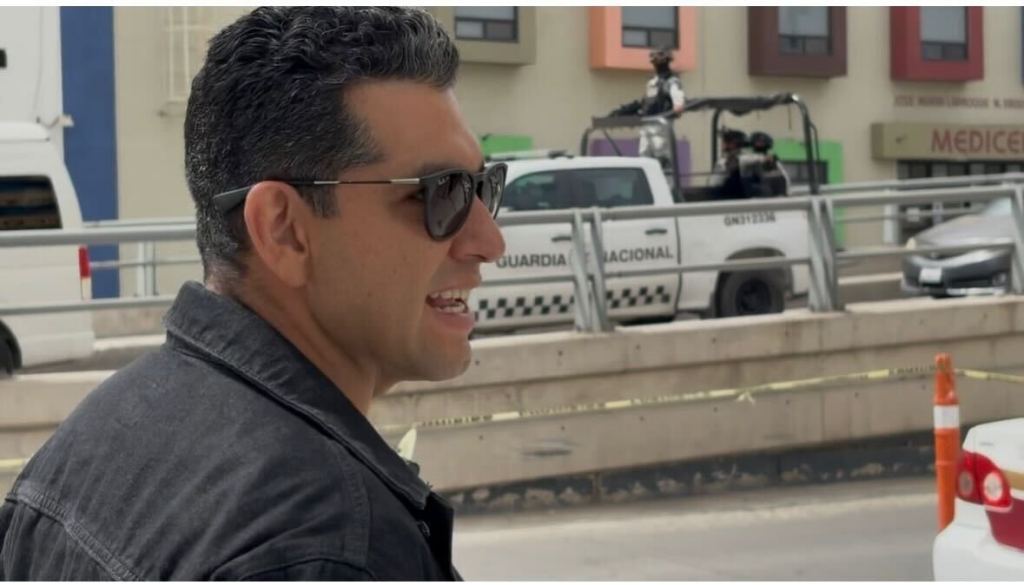
Your initial focus has been on covering the immigration raids in Southern California. Was that by choice?
It’s a happy coincidence. I believe in God. I’m a recovered alcoholic. Four and a half years ago, I stopped drinking, and I’m not blaming journalism at all, but the stuff I saw certainly didn’t help. I come from a line of recovered alcoholics. My dad was one, my grandpa, my uncle literally died with a bottle in his hands on the streets of L.A.. In the four and a half years that I stopped drinking, man, I’ve learned to not just believe in God, but rely on God. It just really was sincerely a coincidence that the History Channel job and the filming lined up that week. I was watching from my bedroom a local journalist whom I follow and mentor, named Ryan Mena. She was in Paramount (California) in the middle of the clash between police and as the locals were standing up to ICE, she was shot with a rubber bullet. I said, “Oh my God, this is crazy!” I need to go do what I can to help. I knew I was going to L.A. in a couple of days.
So, I had planned and packed this bag secretly, and I walked out the door, and my wife was like, “Hey, I know that bag!” Instead of blowing up at me and getting mad, and saying, “Hey, what are you doing, you have kids.” She understood, and she’s like, “Wow, go Nick!” Then I got home, and my mom was like, “Go, Nicholas!” Those are the “God shots” and the affirmations that I needed to say, “Okay, let me go see what I can do to help.” I have had millions of views because several of these clips have gone viral.
What other topics are you looking to cover as an independent journalist on Nick Valencia News?
I have a story where I spent the day with migrant farmers, undocumented migrant farmers in Delano, California, and they were very chatty with me, which was remarkable. I have this exclusive story coming up where I spent the day with pickers who make $16.50 an hour under triple-digit temperatures. I have this report coming up on the student athletes who pick in the mornings for 8-9 hours a day. These kids are picking in the fields, and then in practice, they play varsity football. They have practice at night to train, and they’re pretty good. They’ve won a regional championship. Mixed into all this is the granddaughter of Cesar Chavez, whom I interviewed as well. She cried on camera because she feels like she’s falling short of her grandfather’s legacy and sees how it’s being muted out and the visibility of it is being washed away.
This is also a chance for me to appeal to people to help fund it. Right now, journalism matters more than ever, and I think independent journalism matters especially. In order for that to continue, in order for me to be able to continue to do the stories that I’m doing, it’s going to take the people to help fund it. Support journalists like me. Let me go into these communities, have these conversations for you, and bring this to you.
https://www.adweek.com/tvnewser/nick-valencia-on-going-the-independent-journalism-route/