OpenAI Gears Up for a Blockbuster 2025: Big Moves, Big Risks, and Potentially Big Rewards
Your favorite social media marketing event is headed to NYC this May 12–14! Register for Social Media Week before December 16 to lock in early-bird rates and save 50% on your pass.
With a valuation of $157 billion and a string of strategic moves, OpenAI is setting the stage for what could be a transformative 2025.
The company is pushing to dominate the AI landscape by recruiting top advertising talent from Google and Meta, launching a search-integrated ChatGPT, and exploring ad-driven revenue as it refines its for-profit structure.
“OpenAI is already disrupting the technologies and services that marketers and consumers rely on for their information and shopping experiences,” said Gartner vp analyst Nicole Greene.
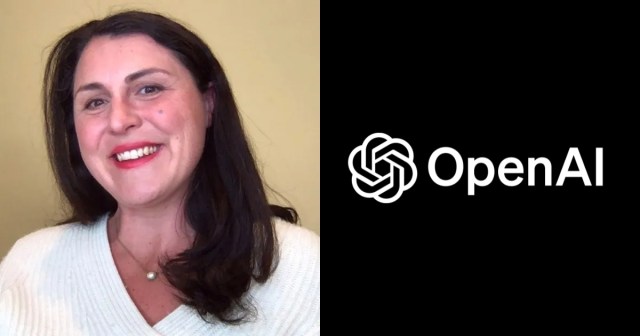
OpenAI’s recent hire of former Coinbase marketing chief and Meta exec Kate Rouch as its first chief marketing officer further underscores its ambitions to expand market share and monetize its offerings.
“A CMO signals a focus on marketing and advertising as they look to claim a larger share of the market and potentially monetize their offerings,” Greene added.
Adding to its momentum, Apple announced in June that it is incorporating ChatGPT into Siri, letting users initiate queries with “Ask ChatGPT” and seamlessly connect to OpenAI’s chatbot—an early indication of the scale its partnerships could achieve.
“As AI becomes more accessible to consumers, we should expect to see continued partnerships that leverage the large user base of individuals and business customers that OpenAI already has,” said Greene.
Challenges on the horizon
Even with its massive valuation and strong market presence, OpenAI’s path forward is far from guaranteed.
Legal battles—such as the ongoing dispute with The New York Times—could drain resources. While the company’s high burn rate and reliance on external funding add additional layers of uncertainty to its growth prospects. In fact, Open AI expects a $5 billion loss in 2024, according to The New York Times.
While the AI giant has yet to fully embrace the ad model, its smaller competitor, Perplexity, is already testing the waters, piloting ads on its AI-powered search engine. This leaves OpenAI with little room to delay its moves if it hopes to maintain its lead in the AI race.
Brands demand accountability
But advertisers are increasingly demanding more than just eyeballs—they want metrics, transparency, and the ability to ensure brand safety. If OpenAI can deliver on these fronts, it could carve out a lucrative niche. However, with its current AI models still prone to inaccuracies and biases, the road to trust may be rocky.
“If OpenAI wants to capture a significant share of those budgets from established competitors, they’ll have to invest in developing mature measurement capabilities,” said Wpromote’s vp of strategic innovation Christine Schrader.
Google and Meta have long dominated digital advertising, thanks to their robust measurement tools. While platforms like TikTok have gained traction, growth has been slower due to gaps in measurement accountability, particularly at launch, added Schrader.
To that, “managing paid and organic efforts holistically is critical, and access to this kind of data would be invaluable,” said Jason Hartley, head of media innovation and trust, PMG, which is currently testing ads on Perplexity.

Non-negotiable pillars
Given the risks of inaccuracies in current AI models, a robust governance framework is critical, according to Diana Caverly, global chief strategy officer at marketing agency MRM.
“The model must prioritize responsible AI practices, ensuring brand safety and societal benefit,” Caverly said. “Transparency, accountability, and alignment with ethical standards will be non-negotiable pillars.”
Ultimately, brands want assurance that they won’t be tied to problematic content.
“Insight into what types of queries and responses we show up against and the ability to proactively exclude our brands based on vertical or brand sensitivities [is crucial],” said Brian Binder, senior innovation & growth director, Tinuiti.
A seat at the table
OpenAI has secured partnerships primarily with major media companies like News Corp, Axel Springer, and Condé Nast.
Blavity, who recently partnered with Perplexity, said that when the publisher spoke to OpenAI about a potential partnership, the AI firm said it was not pursuing a revenue-sharing agreement with publishers at this time, according to its co-founder and COO Jeff Nelson.
Nelson emphasized the need for inclusivity in AI development. And, an AI model is only as good as its training data.
“AI systems that [will be] the winners are those getting data and content and training corpus in a way that is inclusive and invites people in to do,” said Nelson. “What I want from OpenAI is to bring us into the conversation–not just a token–but invite us to the table.”
https://www.adweek.com/media/openai-2025/