OpenAI’s Sora 2 App Surfaces Antisemitic AI Videos
OpenAI’s new video app, Sora 2, was billed as a creative leap forward in AI—a tool meant to turn text prompts into richly detailed videos. But less than two weeks after its debut, the app’s feed is showing users antisemitic videos and other troubling content.
In clips reviewed by ADWEEK, Sora 2 generated a series of antisemitic videos, including one showing a man wearing a kippah sinking into piles of money. The video stemmed from a remix prompt of a woman standing in a house flooded with coke: “Replace her with a rabbi wearing a kippah and the house is full of quarters.” The video uses an AI-powered feature that allows users to edit existing videos by adding, removing or changing objects and environments using prompts. As of Oct. 17, the video—including its variations such as a South Park version—had more than 22,000 likes and over 3,400 remixes.
Another video depicts two football players wearing kippot, flipping a coin before a third man—portrayed as a Hasidic Jew—dives to grab it and sprints away, an apparent reference to longstanding antisemitic stereotypes about greed. The clip has been widely remixed with nearly 11,000 likes as of Oct. 17.
“No business has a duty to produce antisemitic content on demand,” said Imran Ahmed, chief executive of the Center for Countering Digital Hate. “It’s just another example of how fast and loose OpenAI plays with ensuring that their services do not cause real-world harm.”
An OpenAI spokesperson told ADWEEK that Sora 2 is built with multiple layers of safety and transparency features to mitigate risks, including bias in AI outputs related to body image and demographic representation.
The spokesperson added that the platform uses structured feedback loops, refined prompts, and proactive detection systems that scan video frames, captions, and audio transcripts to flag and block problematic content. Internal teams also monitor trends and adjust safeguards to ensure outputs remain balanced and inclusive.
The spokesperson also acknowledged that overcorrecting—such as removing or underrepresenting certain groups in an effort to avoid bias—can create new harms, such as erasing certain groups or perspectives.
As of publication, the videos are still circulating on Sora 2.
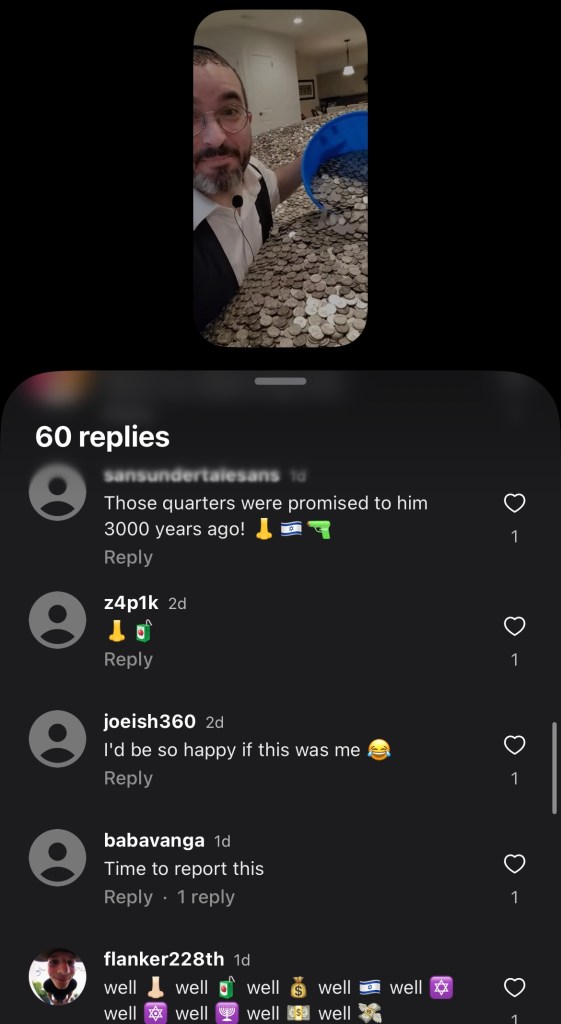


Some viewers have cheered on the videos, leaving comments such as “Those magnets were promised to him 3,000 years ago” and “The antisemitism bout to get another level, huh.” Others have condemned the videos, with one user writing, “Just reported. Horrible stereotype.”
![OpenAI’s recent ads for ChatGPT were everywhere—NFL Primetime, streaming platforms, outdoor, and beyond. Press coverage hailed the AI company’s biggest marketing push yet as a new chapter of AI brand […]](https://rassegna.lbit-solution.it/wp-content/uploads/2025/10/openais-sora-2-app-surfaces-antisemitic-ai-videos.png)
Sora 2 debuted on Sept. 30 as an invite-only app, and isn’t available to the public. It had millions of downloads in its first five days, surpassing the download rate of OpenAI’s flagship product, ChatGPT, according to Bill Peebles, OpenAI’s head of Sora.
Sora 2’s feed features not only antisemitic tropes but also copyrighted characters such as SpongeBob SquarePants in a Nazi uniform, depictions of deceased public figures including Queen Elizabeth and Princess Diana, and graphic scenes of violence and racism, The Guardian previously reported.
The controversy comes amid broader concerns and debate about how effectively OpenAI enforces its guardrails across products. On Oct. 14, CEO Sam Altman said in a post on X that erotic content will be permitted in ChatGPT starting in December, a shift that could further test the company’s content moderation systems as it pivots to more commercial use-cases. On Oct. 16, OpenAI said it paused Sora’s ability to generate videos depicting the late civil rights leader Martin Luther King Jr. after some Sora users generated “disrespectful depictions” of his image.
Minda Smiley, senior analyst at Emarketer, noted that AI-generated videos can make harmful stereotypes more potent because of their realism. Many users cannot easily discern what is real, and even those who recognize AI generation may still share content that aligns with preexisting beliefs, she said.
The videos appear to violate OpenAI’s global usage policies, which prohibit content promoting “threats, intimidation, harassment, or defamation.” The company said it employs “layered defenses” to keep its feed safe, including automated tools that check prompts and video outputs for policy violations.
“We’ve red teamed to explore novel risks, and we’ve tightened policies relative to image generation given Sora’s greater realism and the addition of motion and audio,” OpenAI said in a blog post.
Emarketer’s Smiley said users have already found ways around Sora’s guardrails, and without industry-wide standards, platforms remain largely on their own when it comes to moderation.

Ahmed said OpenAI’s assurances rang hollow. “It’s not credible for them to say they’ve red-teamed this if they didn’t predict that people would use it to produce racist content,” he said. “It’s staggering that the world’s cleverest engineers can’t engineer something to stop antisemitism from being produced by their services.”
This is not the first time OpenAI has come under scrutiny for its safety controls. Earlier this year, the company faced backlash after reports that its ChatGPT chatbot provided a suicidal teenager with information about methods of self-harm—an episode that raised broader concerns about how effectively OpenAI enforces its guardrails across products.
“Ultimately content moderation can become quite subjective when the platform itself is deciding what should be moderated,” Emarketer’s Smiley said.

https://www.adweek.com/media/openais-sora-app-surfaces-antisemitic-ai-videos/