Saks on Amazon is a Likely Win for Both Parties, But for Different Reasons
Since it opened its doors in 1924, Saks Fifth Avenue’s flagship store has defined what it means to window shop in New York. Even as the department-store era continues to fade into history, Saks’ 12 gigantic displays behind plate glass continue to draw visitors eager to peek at the medleys of Balmain handbags, Ileana Makri necklaces, and Dolce & Gabbana sneakers.
This week, visitors got their first glimpse at those same tableaux without having to trek to Fifth Avenue.
As announced on Tuesday (April 29), the department store has set up shop on the world’s largest online marketplace as a standalone destination called Saks on Amazon. The platform has Amazon’s familiar features, like next-day shipping and free returns, but the abundance of white space denotes a higher-end experience—as do the virtual store windows.
“Inspired by the iconic windows at the Saks Fifth Avenue New York flagship, these digital displays allow customers to window shop the Saks on Amazon storefront,” Amazon said in a prepared statement, “with the added convenience of instantly adding items to their cart.”
The new store signals as much change for Saks as it does for Amazon—and, according to veteran retail analyst Bruce Winder, it’s likely to benefit both parties.
“Amazon was in need of credibility for their luxury stores initiative and, by adding Saks and its partner brands, they have done just that,” Winder said.
Meanwhile, “Saks needs to target millennials and Gen Z, digital natives who will search online first,” he added.
Since opening its Luxury Stores platform in 2020, Amazon has been trying to capture more of the luxury market—no mean feat, given the platform’s associations with high volume and deep discounting. Sergio Hudson and Oscar de la Renta signed onto that initiative, but few others did. Those taking a pass included the ultimate luxury conglomerate, LVMH Moët Hennessy Louis Vuitton SE. An unidentified executive with the French company told the Wall Street Journal that year that it didn’t want its brands to be associated with the Amazon name.
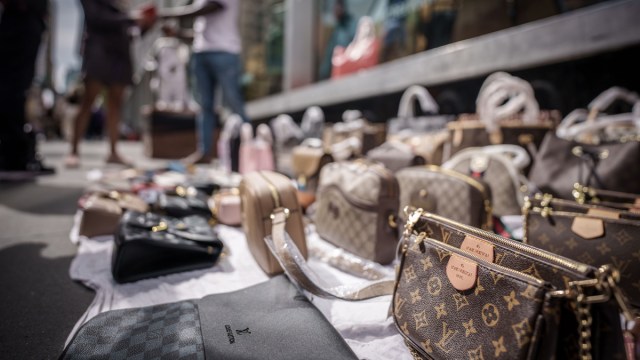
Historically, luxe brands have also had a gripe with Amazon over third-party malfeasants who list counterfeit goods. In 2023, Amazon threw $1.2 billion at the problem, money that paid for some 15,000 “machine-learning scientists, software developers, and expert investigators,” as Amazon corporate put it, to create a dragnet for dubious merchandise. The company’s Brand Protection Report for 2024 noted that “Amazon stopped more than 700,000 bad actor attempts to create new selling accounts.”
Brands also must consent to have their goods featured in Saks on Amazon, which may prove to be an added incentive.
For Saks, the Amazon storefront may help to address the debts incurred in its $2.65 billion acquisition of Neiman Marcus Group last year, Winder noted. Amazon was among the investors in that deal, so its emergence as a platform for Saks isn’t especially surprising.
But above all, Saks’ venture with Amazon opens the door for more customer traffic while also marking the evolution of luxury brands’ feelings about ecommerce.
While Saks.com has existed since 2000, many luxury brands have been slow converts to online retail. Dior, for example, didn’t dip its toe in until 2015, when it debuted an online pop-up shop with Bergdorf Goodman. Chanel refused to sell online until 2016, and Celine waited until 2017. As analysts have noted, it took the disappearance of walk-in customers during the COVID-19 pandemic to shock the high-end houses into fully investing in ecommerce.
“Historically, luxury brands wish to engage customers through brick-and-mortar channels so they can inspire shoppers…through best-in-class service,” Winder said. “However, as the need to target younger customers grows, Saks sees the opportunity to meet millennials and Gen Z where they shop.”
What’s more, “Amazon’s AI agents help with the curation aspect and Amazon’s storefront and convenience has become so advanced, it can offer a new alternative sales channel for luxury customers,” he added.
For the record, luxury customers can still window shop the old fashioned way. The 12 windows on Fifth Avenue are currently promoting… Amazon.
https://www.adweek.com/brand-marketing/saks-on-amazon-is-a-likely-win-for-both-parties-but-for-different-reasons/