Scared Sheetless of Taylor Swift
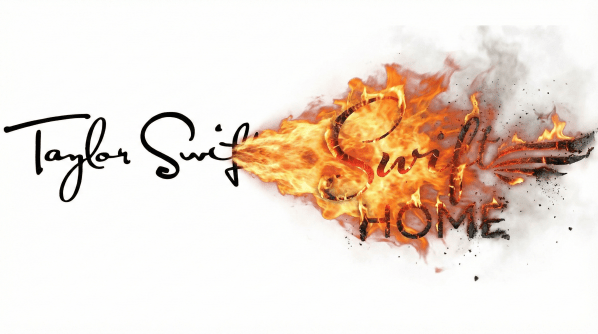
Cathay Home is hardly a household name. The New York-based textile distributor has been shifting bedding through Target, Nordstrom and Bed Bath & Beyond for years. Last May, the company filed a trademark application with the U.S. Patent and Trademark Office for a refreshed logo on its “Swift Home” line of pillows, mattresses and sheets.
The name had been in use for a decade.
The original mark was filed in 2015, registered without incident in 2016, and renewed just last month. Perfectly unremarkable branding for a perfectly unremarkable bedding company.
There was just one problem. The new logo rendered the word “Swift” in a looping cursive script. And there is only one person on the planet who gets to write that word, that way.
Last week TAS Rights Management filed its second formal opposition with the Patent Office demanding the mark be blocked. The filing argued that Cathay Home’s calligraphic “Swift” was “highly similar” to the custom font approximating the handwriting of a certain musical artist and how it appears across her registered trademarks.
It alleged a “false association” that could mislead consumers into believing the artist in question was endorsing the bedding. By way of helpful context, the filing noted the petitioner was “one of the most famous musicians in the world.” Fourteen Grammys. Six continents of stadium tours. You know the drill.
And it is a drill. Taylor Swift has filed more than 300 trademark applications in the United States alone. Globally, her WIPO (World Intellectual Property Organization) filings exceed 438 across 16 countries. She has trademarked her name, her initials, her signature, her album titles, her tour names, individual song lyrics, her fan community and the names of all her cats.
“This Sick Beat,” a throwaway line from Shake It Off, is federally protected intellectual property. Each mark spans multiple goods and services classes, from music recordings to apparel to household textiles.
The strategy operates on two fronts. Pre-emptively, in what lawyers often refer to as “quiet filings”, Swift’s tiny but effective team led by Darla Rumsey file trademarks in advance of every release, covering not just the obvious categories but any plausible area of commercial exploitation.
When Swift announced her latest album on Travis Kelce’s New Heights podcast earlier this year, her legal team had filed trademark applications for THE LIFE OF A SHOWGIRL, TLOAS, and a TS logo six hours earlier. That gap was deliberate—the announcement went out while the filings were still invisible. By the time fans, competitors, or trademark squatters could see the applications, Swift already controlled everything. The defensive perimeter is completed before the enemy even knows there is a war.
Post hoc enforcement is equally efficient. In 2021, Evermore Park, a fantasy attraction in Utah, discovered that having the same name as a certain album carries consequences when Swift countersued over the unlicensed use of her music. During the Eras Tour, TAS filed federal lawsuits against counterfeit sellers operating near her concert venues, securing permanent injunctions. Through WIPO, her team has forced transfers of cybersquatting domains mimicking her official store.
The message is always the same: cross the line and you will hear from my lawyers before you hear from me.
And the cumulative effect of that consistency is the most underrated element of the whole operation. When you enforce this visibly, this often, against targets big and small, you deter the next hundred people who were thinking about trying it.
What does all this mean for the Swift brand? Everything. Each trademark is a brick in a wall that defines what is Taylor and is not. Every enforcement reinforces the signal that this brand is controlled, coherent and utterly non-negotiable. That wall creates the scarcity and exclusivity that makes her merchandise a $200 million annual business and the Eras Tour the highest-grossing concert tour in history.
Most companies treat trademarks as a legal chore, something that only occasionally happens as a late, late afterthought to the core strategy. In an industry obsessed with collaboration and partnerships the idea of sending a cease-and-desist feels counter intuitive and ancient.
Modern marketers are so busy cobranding, co-creating and cosying up to influencers they’ve lost the appetite for the laborious, adversarial work of defending what they’ve built. The lines around their brands are blurry at best, which means everything is at stake.
If you think that sounds excessive, consider history’s recurring tale of weak brand protection and the enormous implications.
Bayer once owned “Aspirin” as a trademark. But they repeatedly failed to police its generic use and a U.S. court eventually stripped them of that protection in 1921. A multi-billion dollar fail.
Otis owned “Escalator” until 1950, when the Patent Office noted that even Otis had used the term generically in its own patents.
Once valuable, protected brands like Thermos, Cellophane, and Trampoline all became public property because nobody patrolled their borders.
Xerox almost joined them before an emergency campaign reminded consumers that you photocopy a document, you don’t “xerox” it. Brand genericide is what happens when you treat trademarks as paperwork rather than a core part of the marketing strategy.
Which brings us back to pillows. Over the weekend, five days after the opposition was filed, Cathay Home withdrew its application. Lead lawyer, Ting Geng, described the retreat as “practical and commercially sensible”. No shit, Ting.
A pillow company picked a fight with a woman who knows how to protect her brand. It was never going to end well. And it will surely keep happening. Taylor Swift, it turns out, has plenty of blank spaces, baby. And she’ll write your name.
https://www.adweek.com/brand-marketing/scared-sheetless-of-taylor-swift/