Streaming Platforms Are Looking For Their Wordle
This story was originally published in On Background with Mark Stenberg, a free, weekly newsletter that explores the key themes shaping the media industry. You can sign up for it here.
For nearly five years, Netflix has been trying to figure out what to do with video games.
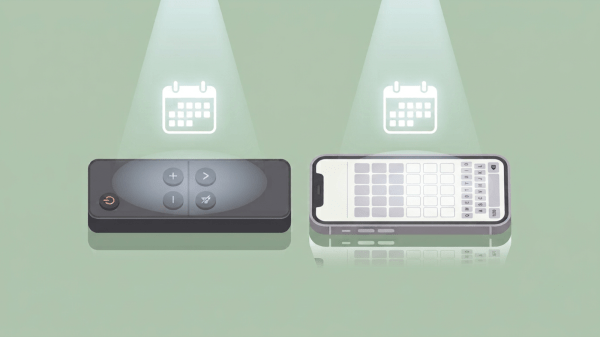
It has cycled through mobile-only apps, a standalone gaming app built with white-label developers like Little Snack, and, as of the past year, a pivot toward streaming games directly to televisions, using subscribers’ phones as controllers.
None of these tactics, by its own admission, have become a meaningful part of the business.
Still, the persistence is telling. That Netflix has worked so diligently to crack gaming suggests that the streaming service understands that the offering could do something none of its prestige dramas can: turn a passive viewer into a repeat, daily visitor.
Until now, that bet has outpaced the technology required to make it work, but that may be changing.
Last week, LG announced a partnership with the cloud gaming startup Phynd that will let owners of LG smart TVs play free, console-quality games with no hardware, no subscription, and no purchase required, just a smart phone standing in as a controller.
The tie-up is a small, single-vendor deal, but it points to the growing belief among streaming platforms and TV manufacturers that two of the barriers that have historically kept casual audiences out of gaming—the cost of the experience and the equipment—might finally be falling away at the same time.
“What we are going for with Phynd is to be the first to offer PC or console quality through the cloud,” said founder and CEO André Swanston. “This is the full, premium, large-screen version of games for free.”
The company plans to monetize the games through brief pre-roll ad breaks and sponsored in-game rewards rather than mid-session interruptions. The strategy reflects a version of a thesis that an EA executive shared with me in June, which is that gamers, using their phone as a controller rather than a distraction, represent an unusually captive audience for advertisers.
Netflix is making a version of the same bet. Its shift toward cloud-first, television-based gaming, announced by co-CEO Greg Peters in October and fleshed out with technical specifics in January, rests on two tenets: phones as controllers, and no added cost beyond a subscription members already pay for.
.newsletter-subscription-form-wrapper p:empty{ display: none !important } .newsletter-subscription-form-wrapper button br{ display: none !important }The most visible instance of this new strategy debuted in June, when Netflix partnered with FIFA to release FIFA World Cup: Launch Edition, a cloud-based version of its digital soccer game.
The goal of the tie-up was to reach a mainstream audience that might never have considered themselves gamers before, according to Christian Volk, the director of gaming and esports partnerships at FIFA.
“Our Netflix experience is intentionally built around accessibility, immediacy and convenience,” Volk said. “If someone wants maximum realism, competitive precision and hundreds of hours of progression, dedicated console experiences remain the benchmark.”
The timing is not incidental. Netflix has spent much of 2026 pushing back against a narrative that its engagement is softening, attributing any dip to industry-wide, mature-market saturation rather than a problem unique to its platform.
A recent analysis of a number of its top shows, such as One Piece, Beef, The Night Agent and Avatar: The Last Airbender, revealed audience declines of 30% to 70% in their second seasons and further declines in their third, according to The Guardian. In July, Netflix said it would scale back the viewership data it releases to once a year. Over the last twelve months, its share price has dropped 40%, from $133 in June 2025 to $70 in July 2026.
Whether or not the streamer has an engagement problem, the pressure for it to find new reasons for subscribers to open the app every day has rarely been higher. And few forms of entertainment build daily habits as reliably as games.
“The ultimate example of this is Wordle,” said Alexander Lee, a journalist at the trade magazine GamesBeat. “All these media companies are trying to take advantage of the daily game habit. They’re showing up on platforms where people are already logging in and saying, ‘Hey, here’s a game that you can play every day.’”
Samsung offers a preview of what it looks like when that behavior forms.
Its Gaming Hub, running since 2022, saw unique active users grow more than 90% year-over-year in North America and over 200% globally between June 2025 and June 2026, according to GamesBeat. The growth is proof that the premise underpinning these streamers’ efforts, that audiences will show up for free, low-friction games on their televisions, is not hypothetical.
Still, none of this guarantees that this current wave will succeed where former efforts failed.
Using a phone as a controller is not new; Jackbox popularized it years ago. The harder problem was always whether cloud infrastructure could deliver a fast, high-fidelity experience cheaply enough to give away for free. That is the piece that Phynd claims to have solved.
What has grown more defined, however, is the shape of the opportunity streamers are chasing. Dedicated gamers were never going to abandon their consoles and premium set-ups to play Tetris on Netflix. Instead, the bet looks more like the mobile gaming boom of a decade ago, a wager that removing every point of friction—cost, hardware, even the controller itself—can introduce gaming to people who never before thought of themselves as players.
Talking Heds
Vox on Substack: On Tuesday, Vox launched its first newsletter on Substack, a weekly series called The Midterms, Actually, written by politics reporter Astead Herndon. Today, Explained, a long-running daily newsletter from Vox, is also joining the newsletter platform. Together, the two series are the latest in a growing number of email products from traditional publishers, alongside similar efforts from The Economist and New York Magazine, to treat Substack not just as another social graph, but perhaps the greatest concentration of newsletter-consumers on the open web. There can be branding, monetization, and operational challenges inherent in this strategy, but the exposure to such a desirable readership is apparently proving worth the headache.
Podcasting Identity Politics: On Monday, a committee composed of leaders from across the podcasting ecosystem, called The Alliance for Measurement in Podcasting (AMP), released a 48-page report with the ambitious aim of answering one of the most vexing riddles in modern media: What, exactly, is a podcast? The infusion of video into the space has breathed new life into podcasting, but it has also complicated a once simple set of terminology. According to the so-called AMP Accords, “If it works with your eyes closed, it’s a podcast.” The tagline is intentionally concise, of course, as all good mnemonics are, but the project aimed to tackle the ambiguity because historical data suggested that the absence of a lingua franca risked keeping critical ad dollars on the sideline.
The Peacock Portmanteau: What do you call a partnership between YouTube and Peacock? In the interest of keeping On Background a family-friendly media newsletter, I will let you try combining the constituent brand names yourself. Whatever the terminology, the deal, which was announced Monday, is the first sign that YouTube is beginning to position YouTube Premium as a fledgling streaming service in its own right. Could this be the response the industry has been waiting for from YouTube? As other streamers poach its top talent, YouTube has sat idly by, insistent that it has no issue acting as a farm league for the entertainment industry. But following its Upfront efforts, which saw the streamer package and promote its top series as television-grade programming, it stands to reason that YouTube might soon begin acting like a streamer itself.
Saylor Creator (EXCLUSIVE): The social-first agency Saylor, founded in 2021 by Will Trowbridge following his time at Disney and Netflix, on Wednesday launched a new creator studio, called Fleet. The offering, which is really a formalization of a preexisting service, will be led by the newly appointed Nneka Eura Lee. The studio is yet another indication of the rising primacy of the creator, whose influence is rapidly expanding beyond the social platforms themselves. Audiences now follow creators across nearly every relevant surface—social feeds, YouTube pages, podcast platforms, streaming services—and brands want in. To hear Trowbridge talk about it, to run a social agency nowadays without a creator studio feels almost like an oxymoron—what, anymore, is the difference?
Penske Pruning (SCOOP): As anticipated, Penske Media laid off a number of Vox Media commercial employees last week, the early stages of what promises to be a complex merger between PMC and the Vox Media brands it acquired in June. The cuts affected staff in the business development, human resources, and sales teams, according to two people familiar with the matter. PMC did not respond to a request for comment. The cuts come on the heels of a recent bloodletting at BuzzFeed, which saw around 180 staff let go earlier this week as that property joins the Byron Allen cinematic universe. Just when you thought there were no more jobs left to cut, the media industry finds a way.
Quote/Unquote
Rachel Jacobson is the chief executive officer at Reach TV, which owns and operates a nationwide network of airport televisions and is part of a broader group of media properties owned by the agency Stagwell.
Jacobson is new to the role, having only joined Reach three months ago following her time as the president of the Drone Racing League, which was acquired in May 2024. I met up with Jacobson on Thursday in the Financial District to discuss the challenges and opportunities facing the company as consumer habits shift and airports evolve.
This interview has been edited.
Mark Stenberg: What was the appeal of the Reach TV job, following two decades in-house at the NBA and your time with the DRL?
Rachel Jacobson: Media was always the throughline in my previous roles—everything comes down to eyeballs and distribution. But at this point in my career, I didn’t want to go back to central casting. I wanted a business with all the ingredients I know, where I could do what I do: come in, see what other people don’t see, execute, and grow the platform.
Mark: How do the economics of Reach TV work?
Rachel: For one, these are not standard TVs—there is no changing the channel, and all of the programming is very deliberately chosen. We have Bloomberg in the morning, a lot of live sports, and even a slate of original series. It’s basically one feed to all the airports, and the only thing we geo-target is sports. For those, we acquire rights from partners like FOX Sports, FIFA, NFL, NBA, and WNBA and sell advertising against the feed.
Mark: How do you navigate the fact that travelers now have their own screens and are less of a captive audience?
Rachel: It’s all about the programming slate. Who is the traveler at 4 a.m. versus midday versus at night, and what are their passion points? We lean hard into live sports because they’re Teflon, and every marketer wants in. The data shows that even when people are multitasking, an engaged airport audience is also buying, which opens up subscription and commerce plays with partners.
Mark: You mentioned original programming. What does that look like?
Rachel: We lean into travelers’ passion points, like food and shopping. Our team was just in Los Angeles and Seattle shooting multiple segments for original series, which we own and sell sponsorship against. These not only deliver engaging content we know our audience cares about, they also provide unique opportunities for brands to be fully integrated into the programming.
Mark: Is there room to program differently depending on where you are in the airport, like exclusive lounges versus baggage claim?
Rachel: Concessions is a feed, lounges is a feed, gates is a feed, baggage claim is a feed—we can target all of them differently. We ran an experiment putting screens up in baggage claim, and early data shows that customer satisfaction improved. Lounges are the one I’m most interested in, because they’re about exclusivity—the airport traveler already skews affluent, but some areas are even more desirable, and that’s where I’m talking to airlines and credit card companies.
Pulled Quotes
“I have never, until now, confessed to anyone that I felt I was ugly.”
Journalist and author Stephanie Fairyington, making the case to treat “lookism” as discrimination
READ MORE
“What is happening with binge model audiences has been clear for years now. … Netflix is looking out of date.”
An anonymous TV executive, detailing to The Guardian the headwinds facing Netflix
READ MORE
“Like all great art, debt is much more than merely beautiful; it’s one of the most powerful forces in the world.”
Bloomberg Media’s Felix Salmon, on the misunderstood beauty of debt
READ MORE
“In this country, CEOs don’t really retire; they just become professional directors.”
Conference Board executive Matteo Tonello, explaining why U.S. companies are hiring older CEOs
READ MORE
https://www.adweek.com/convergent-tv/streaming-platforms-gaming-wordle-netflix-lg-samsung/