“Il Gruppo di lavoro G7 Digital & Technology (D&T WG) ha finalizzato con successo il Reporting Framework per il Codice di condotta internazionale del Processo di Hiroshima per le organizzazioni che sviluppano sistemi avanzati di intelligenza artificiale”.
Così si legge in un post pubblicato da Daniela Grazia Battisti, Responsabile per le Relazioni Internazionali presso il dipartimento per la Trasformazione digitale della Presidenza del Consiglio dei ministri, annunciando il raggiungimento di un risultato rilevante nello sviluppo etico dell’intelligenza artificiale (AI) nel settore pubblico.
La Presidenza italiana del G7 annuncia la pubblicazione del Rapporto sui risultati della fase pilota per il sistema di monitoraggio dello HAIP Codice di condotta (Towards a Hiroshima AI Process Code of Conduct Reporting Framework) e il perfezionamento del sistema di monitoraggio del Codice di condotta internazionale del Processo di Hiroshima (HAIP).
Il Codice di condotta internazionale del Processo di Hiroshima (HAIP)
In continuità con i lavori della Presidenza Giappone del G7 (2023), il nostro Paese si è impegnato, durante tutto il 2024, ad integrare il Codice di Condotta Internazionale per le Organizzazioni che Sviluppano Sistemi di IA Avanzati (HAIP CoC) sviluppando un meccanismo di monitoraggio frutto diretto dell’implementazione del Codice di condotta internazionale del Processo di Hiroshima (HAIP) – Hiroshima Process International Code of Conduct for Organizations Developing Advanced AI Systems.
Grazie al supporto dell’OCSE, si è riusciti ad elaborare una prima bozza di quadro di monitoraggio su cui è stata lanciata una fase pilotatenutasi dal 19 luglio al 6 settembre 2024, e che ha visto la partecipazione di venti organizzazioni in dieci Paesi, garantendo il coinvolgimento di tutte le parti interessate.
Il sistema di monitoraggio è stato sviluppato e finalizzato grazie al lavoro del G7 D&TWG, coordinato dal Dipartimento per la trasformazione digitale della Presidenza del Consiglio dei ministri, con il contributo dell’OCSE e quello di una Task Force informale composta dalle diverse componenti delle società, in linea con quanto previsto dal Comunicato Finale dei Ministri della Tecnologia e del Digitale di Cernobbio (15 ottobre). Il sistema è stato testato con successo durante una fase pilota condotta tra luglio e settembre del 2024.
Il sistema di monitoraggio per un’AI sicura
Il sistema di monitoraggio sarà attivato attraverso uno strumento interattivo che sarà messo a disposizione sul sito OECD Artificial Intelligence Policy Observatory – OECD.AI nella prima metà di febbraio; tutte le organizzazioni che adottano il codice e si sottopongono al monitoraggio saranno elencate sotto il logo creato dalla Presidenza G7 Italia.
Tutte le organizzazioni che adotteranno il Codice e parteciperanno al monitoraggio riceveranno un bollino di riconoscimento e saranno inserite in una lista apposita redatta dall’Osservatorio per aumentare il livello di trasparenza, accessibilità e fiducia verso i cittadini e soprattutto il mondo delle amministrazioni pubbliche.
La fase pilota ha evidenziato diversi punti di forza. È stata apprezzata la copertura completa degli argomenti chiave relativi alla governance dell’AI, garantendo che la massima rilevanza per tutte le aree critiche afferenti allo sviluppo, alla gestione del rischio e alla conformità. Inoltre, l’allineamento diretto con il Codice di condotta di Hiroshima è stato riconosciuto come un punto di forza significativo, in quanto riflette una serie di azioni riconosciute a livello internazionale per promuovere un’IA sicura, affidabile e responsabile.
Infine, è stato evidenziato il potenziale necessario per affermarsi come un meccanismo internazionale per il reporting sull’IA, promuovendo l’allineamento con altri framework di governance e incoraggiando pratiche coerenti in tutto il settore.
La principale preoccupazione riguardante la divulgazione dei dati era la potenziale pubblicazione di informazioni riservate o commercialmente sensibili. A riguardo, è stata sottolineata la necessità di maggiore chiarezza su come le informazioni fornite sarebbero state utilizzate e condivise
Nvidia unveils $3,000 desktop AI computer for home researchers
On Monday, Nvidia announced Project DIGITS, a small desktop computer aimed at researchers, data scientists, and students who want to experiment with AI models—such as chatbots like ChatGPT and image generators—at home. The $3,000 device, which contains Nvidia’s new GB10 Grace Blackwell Superchip, debuted at CES 2025 in Las Vegas. It will launch in May and can operate as a standalone PC or connect to a Windows or Mac machine.
At CES on Monday, Nvidia CEO Jensen Huang described the new system as “a cloud computing platform that sits on your desk.” The company also designed Project DIGITS as a bridge between desktop development and cloud deployment. Developers can create and test AI applications locally on Project DIGITS, then move them to cloud services or data centers that use similar Nvidia hardware.
The GB10 chip inside the Project DIGITS computer combines an Nvidia Blackwell GPU with a 20-core Grace CPU based on Arm architecture. Nvidia developed the chip in partnership with MediaTek, and it connects to 128GB of memory and up to 4TB of storage inside the Project DIGITS enclosure.
Running AI models locally
Currently, many people use AI models that must run on remote data centers due to their computational requirements. Over time, there has been a movement to slim down some AI models so they can run effectively on local, personally owned hardware. Project DIGITS can provide some of that capability at home.
A single Project DIGITS unit can reportedly run AI models with up to 200 billion parameters, while two linked units can handle models with 405 billion parameters. In AI models, parameter count roughly corresponds to an AI model’s neural network size and complexity, with more parameters requiring more memory and computational power to run. Also, parameter size approximates AI model capability, though different-sized AI models perform differently depending on how they were trained and architected.
28 AI Marketing Tools to Save Time and Boost Performance
Artificial intelligence is transforming digital marketing by empowering us to do our best work.
The right AI marketing tools will help you automate repetitive tasks, make data-driven decisions, and unblock your creativity. They ultimately let us get back to the work we find more meaningful, like strategy, creativity, innovation, and relationship-building.
The shift to AI-powered marketing has been dramatic. According to Hubspot, 74% of marketers now use AI in their roles, compared to just 21% in 2023. But with so many options available, it can be overwhelming to figure out which tools are worth your time and budget.
In this guide, I’ll introduce you to 28 of the best AI marketing tools that can help you work smarter across every marketing channel. Whether you’re looking to automate marketing tasks, scale personalization, or increase your bandwidth, you’ll find tools here to help.
Want to streamline your social media workflow? These social media marketing tools have AI features that can help you create social media content faster and understand your audience better.
Buffer: Create social media posts and ideas
Buffer (hi! 👋) is a social media management platform with an AI Assistant that helps you create more engaging content in less time.
Our data shows that posts created with AI Assistant get 22% higher engagement than non-AI-assisted posts.
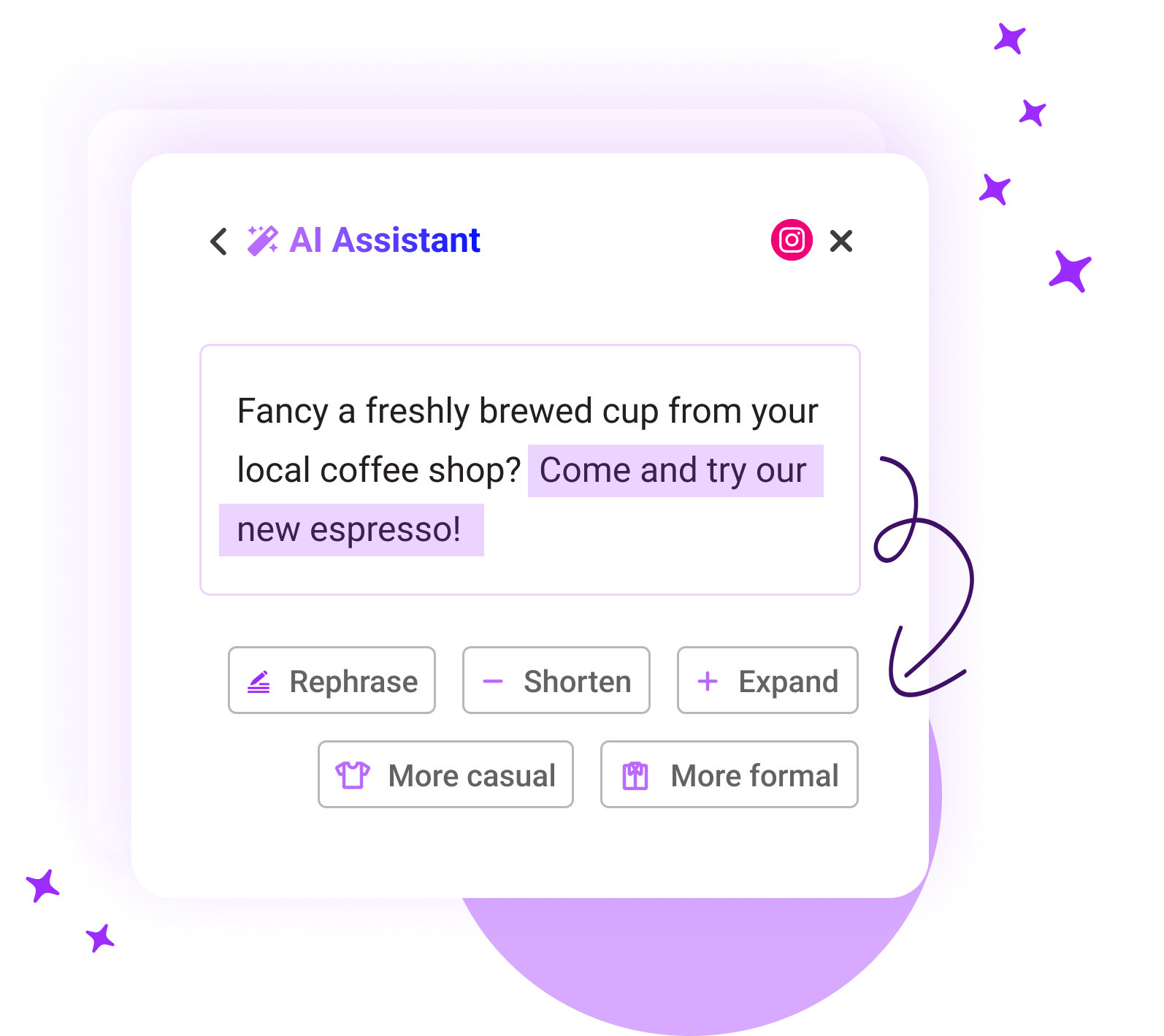
Edit posts to perfection — including rephrasing, expanding, shortening, and changing the tone of your content
Repurpose content for different platforms, taking specific platform norms into account
I personally use the rephrase option the most to help turn idea brain dumps into concise and compelling posts.
Beyond the AI features, Buffer is a really flexible social media management tool that lets you create, schedule, and manage social media content across channels.
Pricing: Free plan available for up to three social channels. Paid plans start at $6/month/channel.
OpusClip: Repurpose video content for social media
Editing videos can be time-consuming, especially if you need to make different edits for various social media platforms. But OpusClip streamlines the process by using AI to turn long-form videos into shorter clips that are ready to be published on social media.
The cool thing is you get a lot of control. You can use text prompts like “Find moments that are most likely to resonate with busy parents” or “Find high-energy clips” and the AI will identify the most relevant sections of your video.
This is a particularly useful tool if you create longer content, such as video podcasts or webinars, and want to repurpose it for social.
Pricing: Free plan available for up to 1 hour of video processing per month. Paid plans start at $15/month.
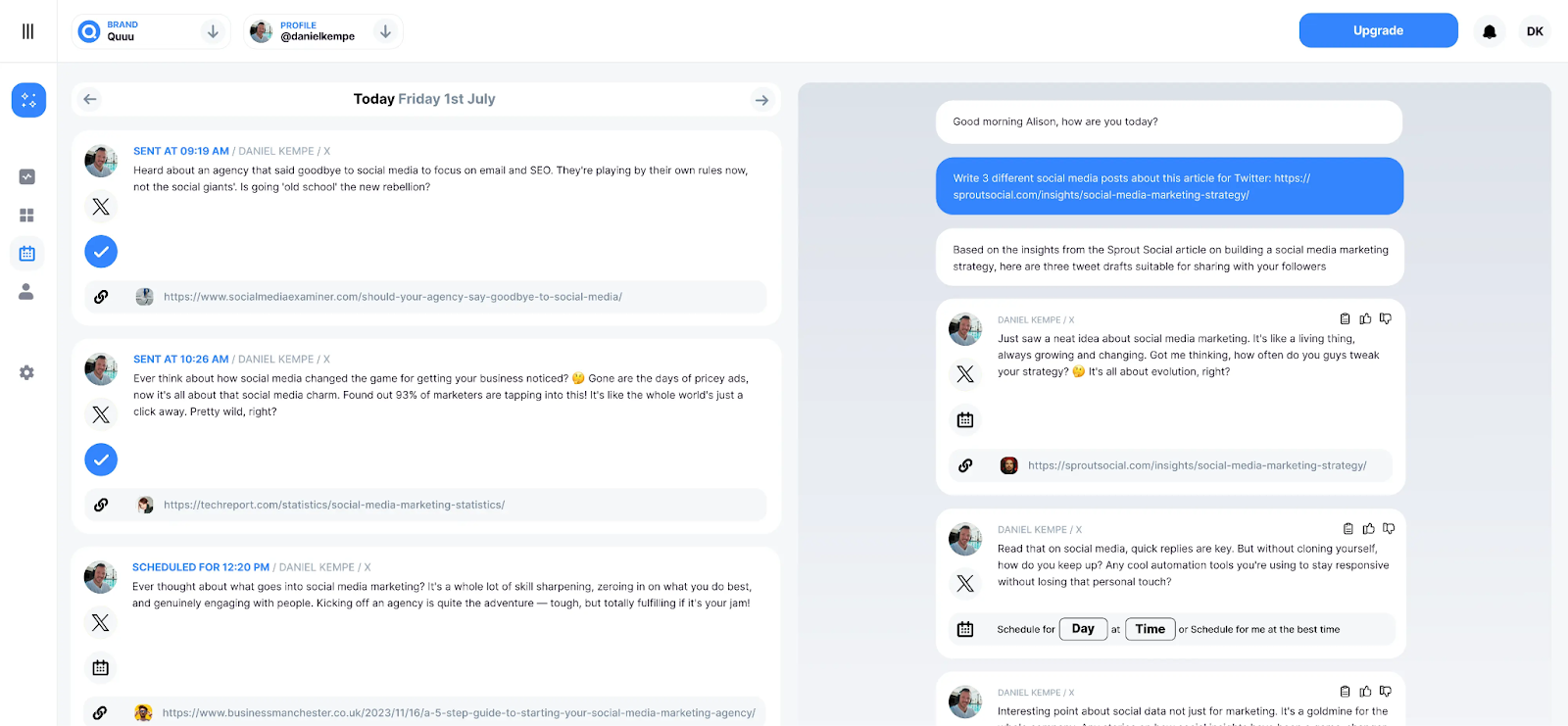
Content curation can help keep your social media feeds full without generating all your ideas from scratch. Quuu speeds up content curation by using AI to find and share relevant content in your niche. Then, it helps you craft posts about that content in your brand voice. This can save hours of manual search time for shareworthy content.
It’s particularly valuable if you’re growing your personal brand through thought leadership but don’t have time to scout for industry news and insights.
We recommend keeping a healthy mix of curated and original content to build authority.
Pricing: Starts at $19.79/month per social media profile.
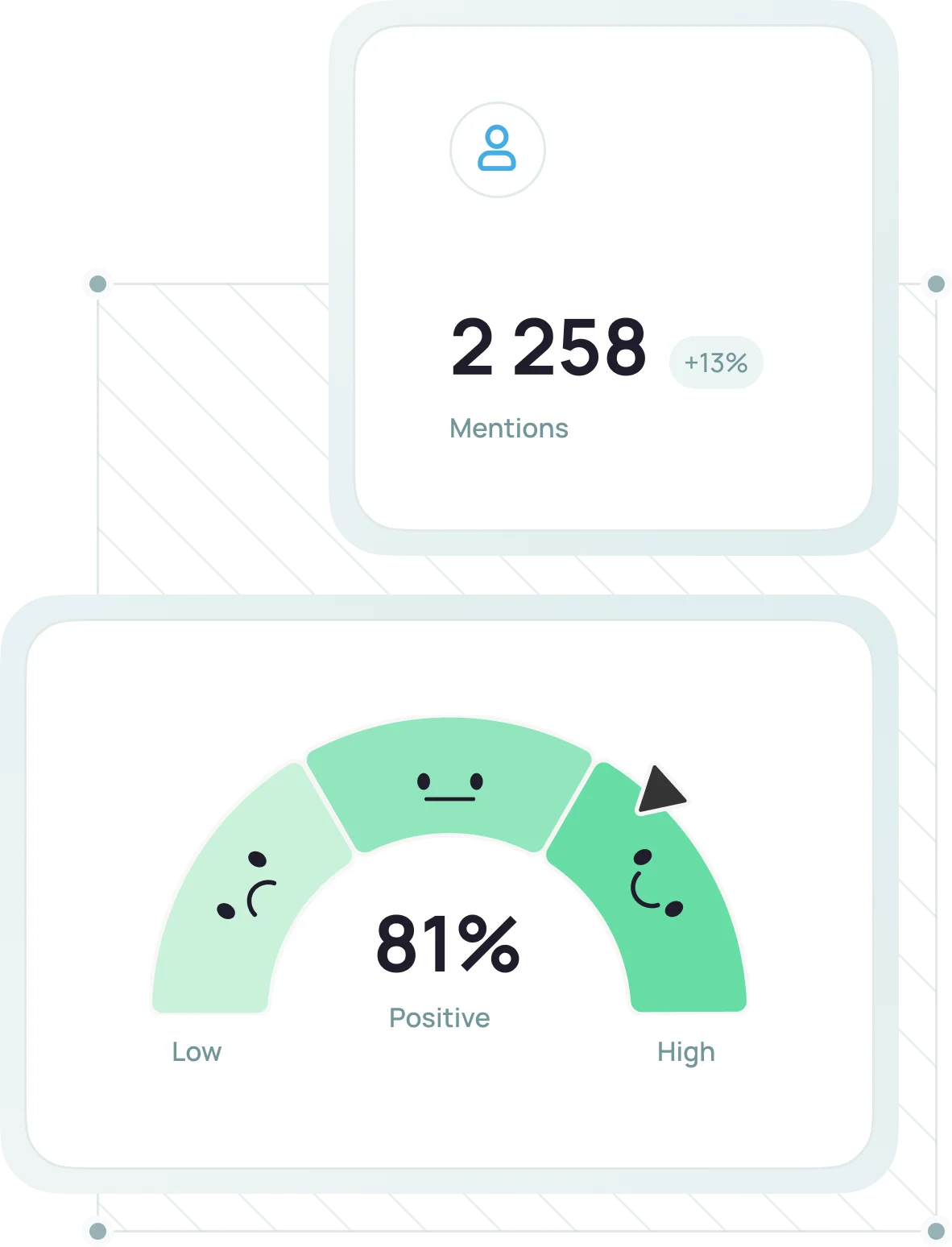
If you’re looking to track what people say about your brand online, Brand24 is a social listening tool that uses AI to analyze the emotional tone of conversations about your brand.
So, instead of just tracking mentions, you get valuable insights into how people feel about your brand, products, or campaigns. This helps you catch and address recurring issues before they escalate and identify your biggest brand advocates.
Pricing: Paid plans start at $149/month to get AI sentiment analysis.
These AI tools help automate partnership discovery and outreach so you can scale your marketing efforts.
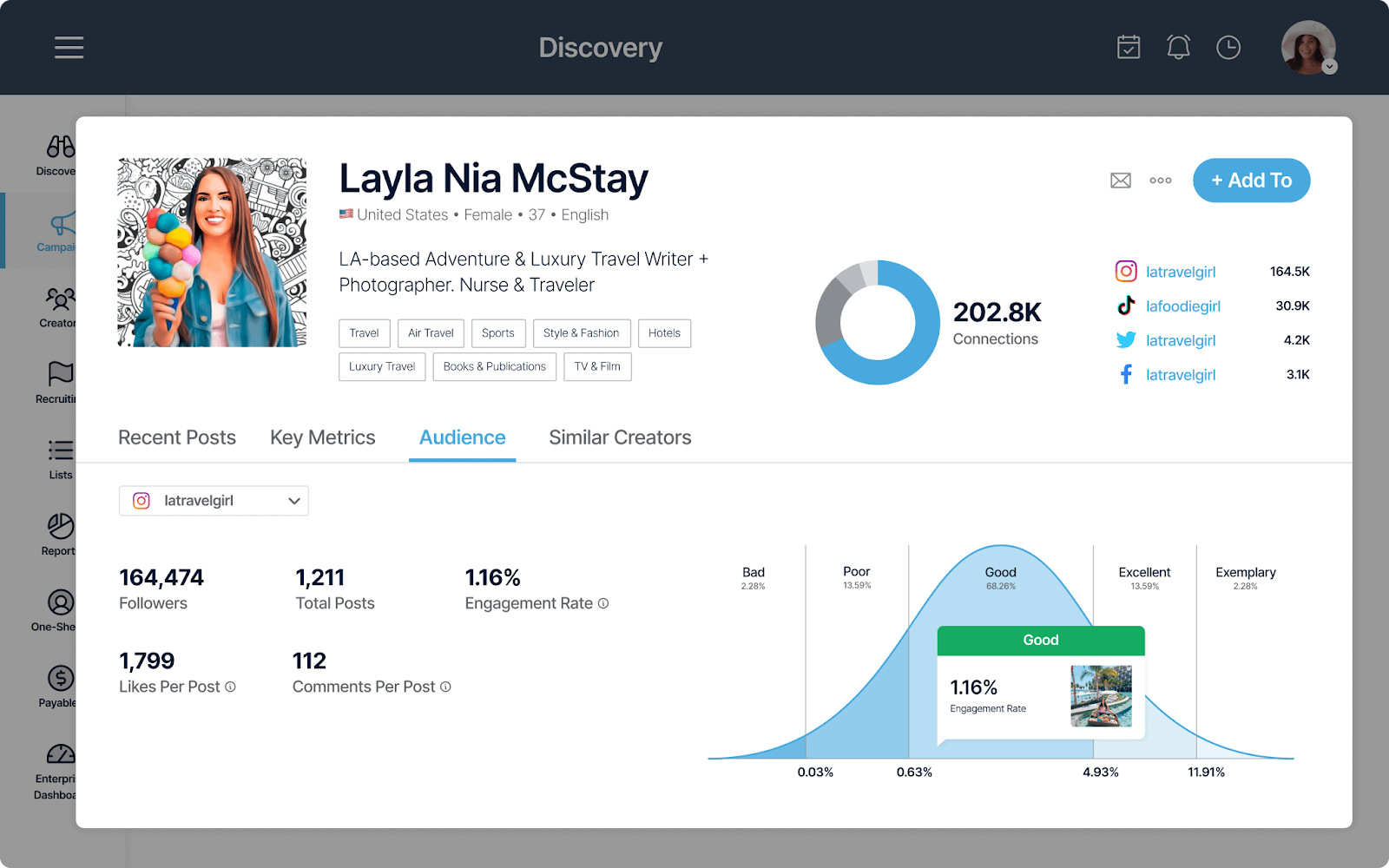
Influencer marketing is a powerful way to reach your target audience, but finding the right partners can eat up a lot of time.CreatorIQ uses AI algorithms to recommend creators who align with your brand.
This tool analyzes creator content, audience demographics, and performance metrics to suggest relevant partners. It can even help you find creators who are similar to those who you’ve worked with in the past.
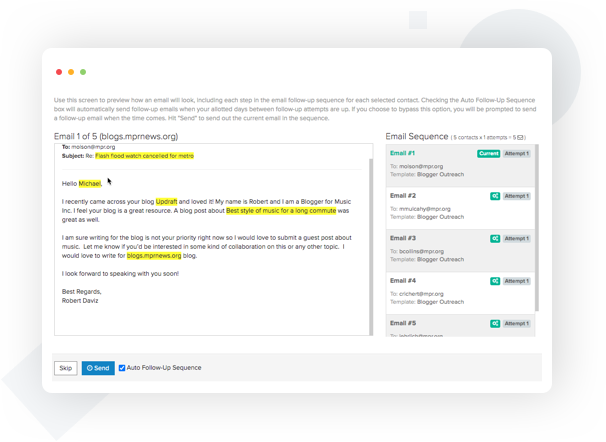
If you want to scale up your link-building efforts, Pitchbox makes it easier. The tool helps you find relevant websites to contact and creates personalized outreach emails to increase your chances of getting a response.
The neat part is that their AI has been trained on millions of successful link-building emails, so it’s not just generating generic content — it’s crafting first-draft messages with elements that are proven to work.
Pricing: Starts at $420/month to get the AI personalization feature.
Messaging channels like email and SMS give you the opportunity to build direct relationships with your audience. These marketing automation tools help you craft more engaging content and scale personalization for better results.
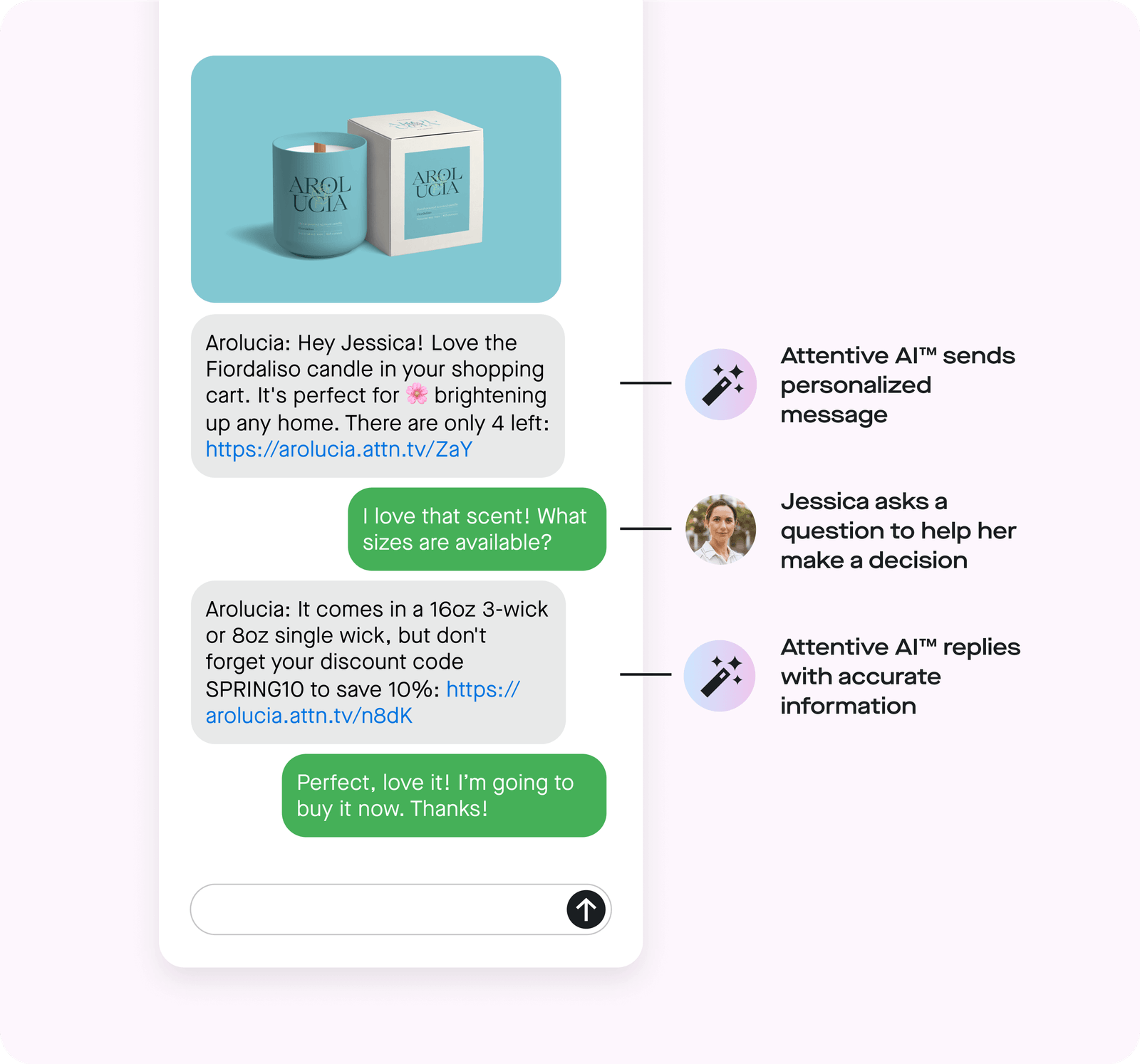
Attentive is a B2C email and SMS marketing software that helps brands create tailored experiences for each customer.
The platform analyzes customer behavior to optimize audience segments, determine the best send times, and create personalized customer journeys for each individual customer. It helps make every campaign and automated flow more effective for your brand.
Looking to improve your B2B email performance?Hubspot‘s AI helps you create and optimize email marketing campaigns that convert better. The tool can generate content, optimize subject lines, and suggest the best send times to boost your open rates.
Plus, it integrates seamlessly with Hubspot’s CRM (customer relationship management software) so you can track the entire customer journey.
Pricing: Starts at $15/user/month.
Beehiiv: Generate and edit newsletters for thought leadership
If you’re using your email newsletter for thought leadership more than to sell products or build relationships with customers, beehiiv is a good option to consider. Built specifically for creators, beehiiv helps you write and edit newsletter content, making it easier to maintain a consistent publishing schedule.
Beehiiv’s AI can also spell check, adjust your tone, create images, and even translate your content into select languages.
Tamilore Oladipo, a content writer here at Buffer, hosts her newsletter Content-as-a-Career on beehiiv and loves that the AI can be her gut check before hitting send. “Beehiiv’s AI tools — especially the writing features — come in clutch as a solo newsletter operator,” she shares. “They’re especially helpful as a partner that gives your content a once-over before you send it out.”
Pricing: Starts at $39/month to access AI features.
Managing paid ads is a game of constant testing and tweaking. These AI tools help you make smarter choices about budgets, audiences, and creative.
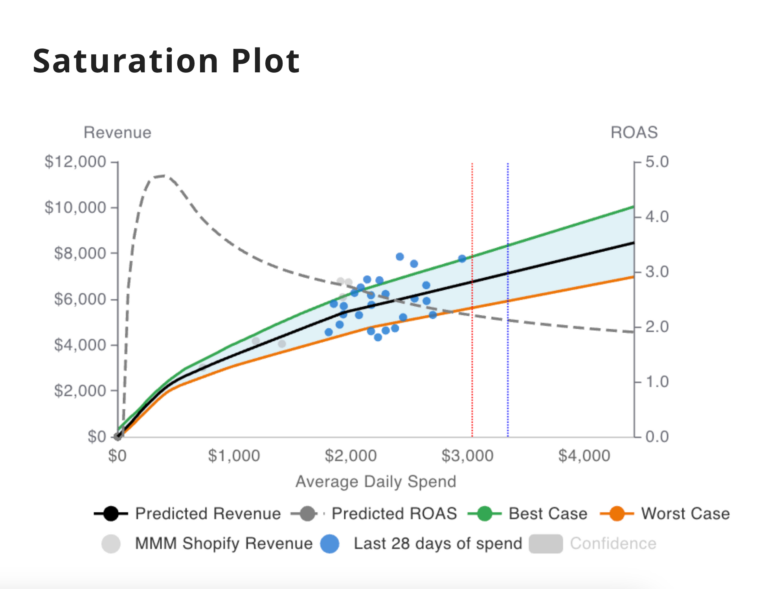
Prescient AI takes the guesswork out of budget allocation for paid ads with predictive analytics. The platform analyzes your data across advertising platforms and forecasts how future campaigns will perform, helping you distribute your budget more effectively.
You can explore different budgeting scenarios to predict how budget changes could impact your campaigns. This means you get the predicted answers of a budget test without the investment.
If you find yourself with writer’s block when writing ad copy, Atria can help. The tool studies top-performing ads in your industry to understand what works, then helps you create ad concepts, scripts, and copy based on those insights plus your own brand data.
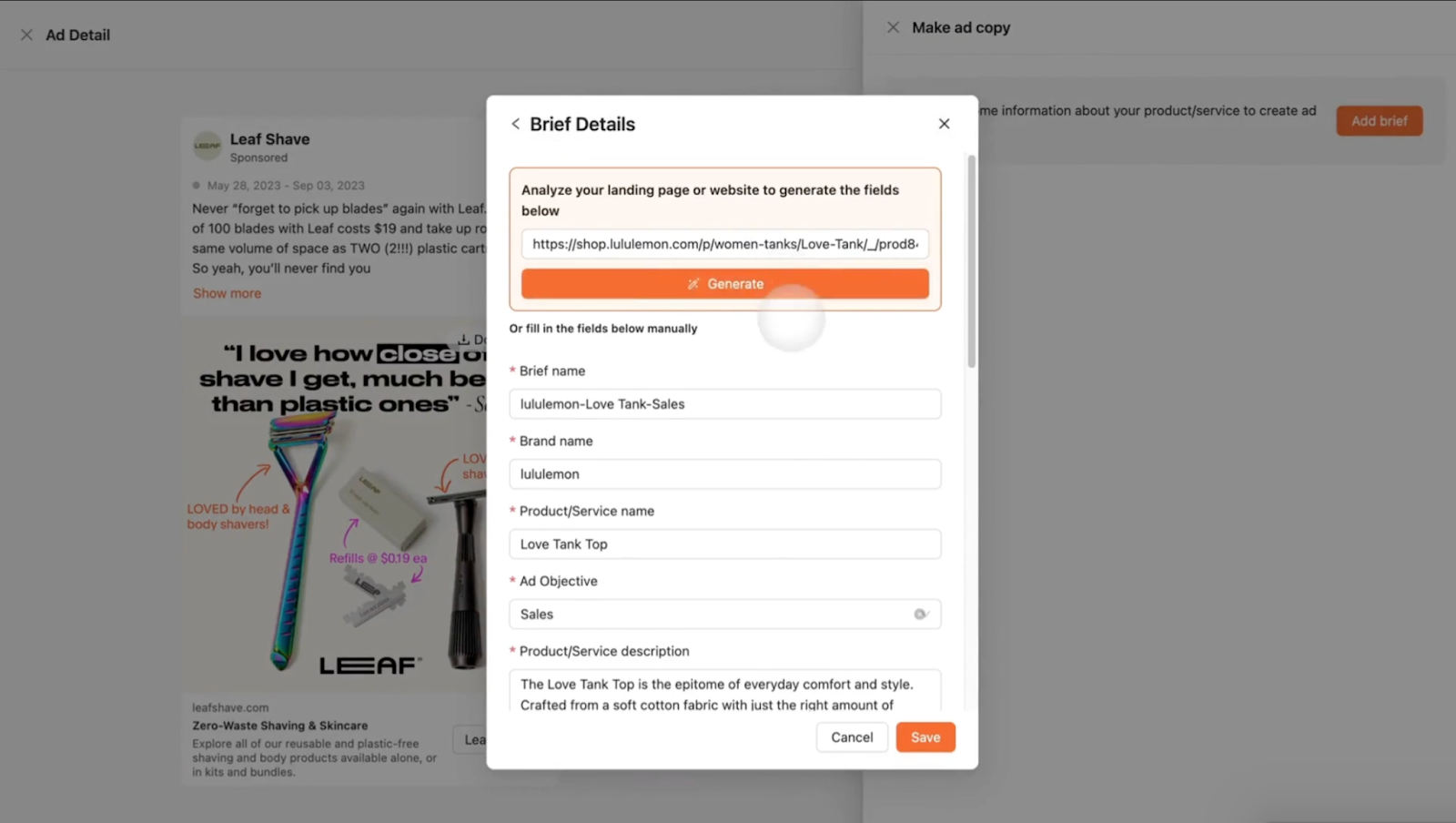
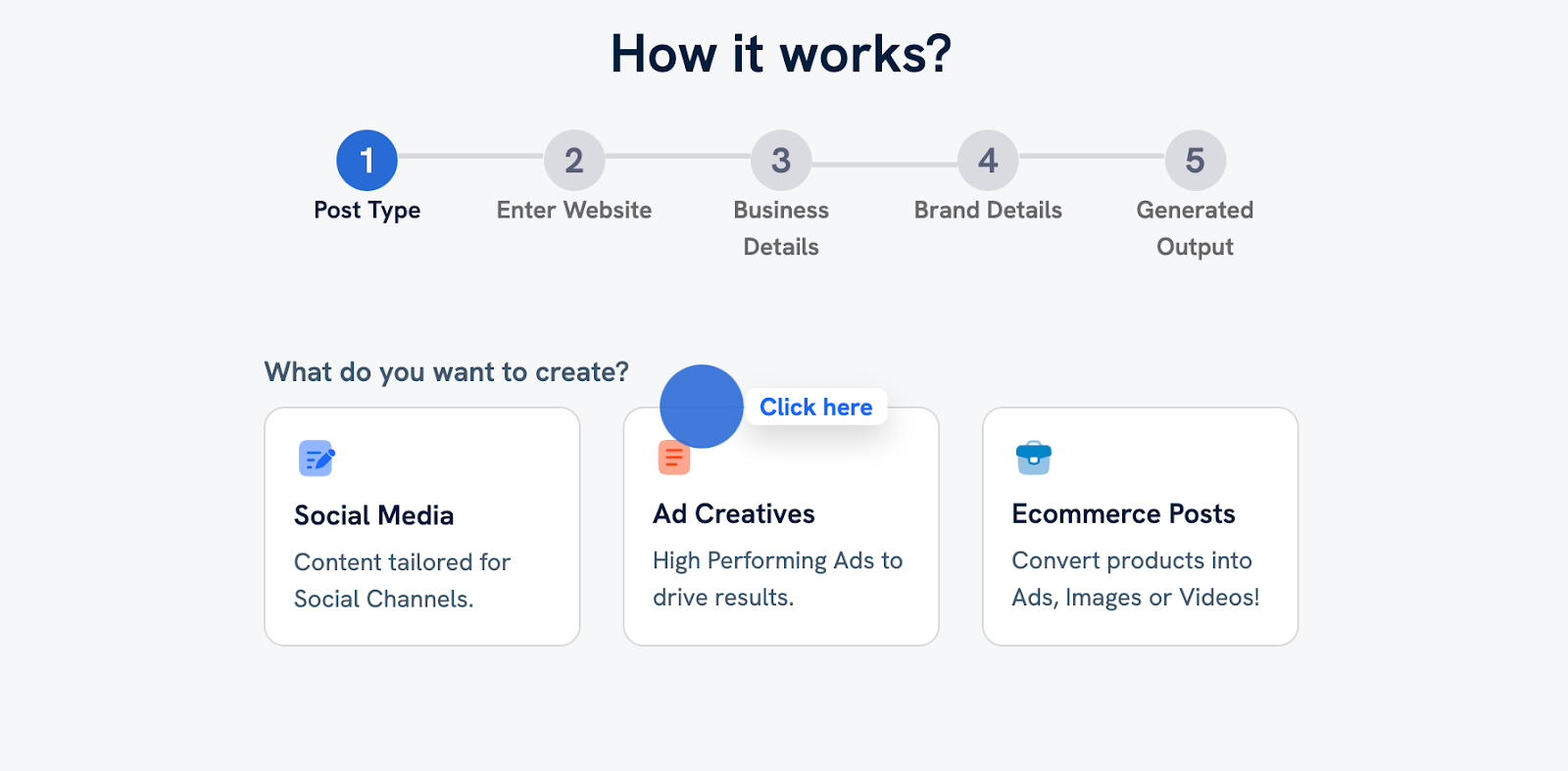
Need quick ad creative? Predis.ai helps you create complete ad images and videos from text prompts.
The tool walks you through an ad creation process covering post type, goals, and business details to create relevant ads. The result is on-brand copy that matches your campaign needs, complete with your brand’s colors and logo. The AI-generated ads are editable, too, so you can perfect the final result.
Pricing: Not listed.
Proxima: Build high-purchase-intent Meta audiences
Meta advertising has become trickier with privacy changes, but Proxima helps you reach the right people. Proxima uses AI to identify a relevant audience of consumers who are ready to buy.
The platform uses its own first-party data to analyze shopper behavior rather than relying on Meta’s more simplistic approach.
Ron Shah and Ash Melwani, co-founders of Obvi and hosts of the Chew On This podcast, use Proxima and recommended it in their recent newsletter. They say the tool helps them find new, high-intent shoppers for Obvi that Meta can’t see.
“They lowered our CPA by more than 20% and increased our ROAS by 31%,” Ron and Ash write. That’s a significant difference, just by changing how they build audiences.
Pricing: Not listed.
Want to turn more visitors into customers and keep them coming back? These AI tools help you personalize customer interactions and create campaigns that improve conversions.
Optimove: Personalize cross-channel marketing
There are many personalization tools specific to a single marketing channel, but
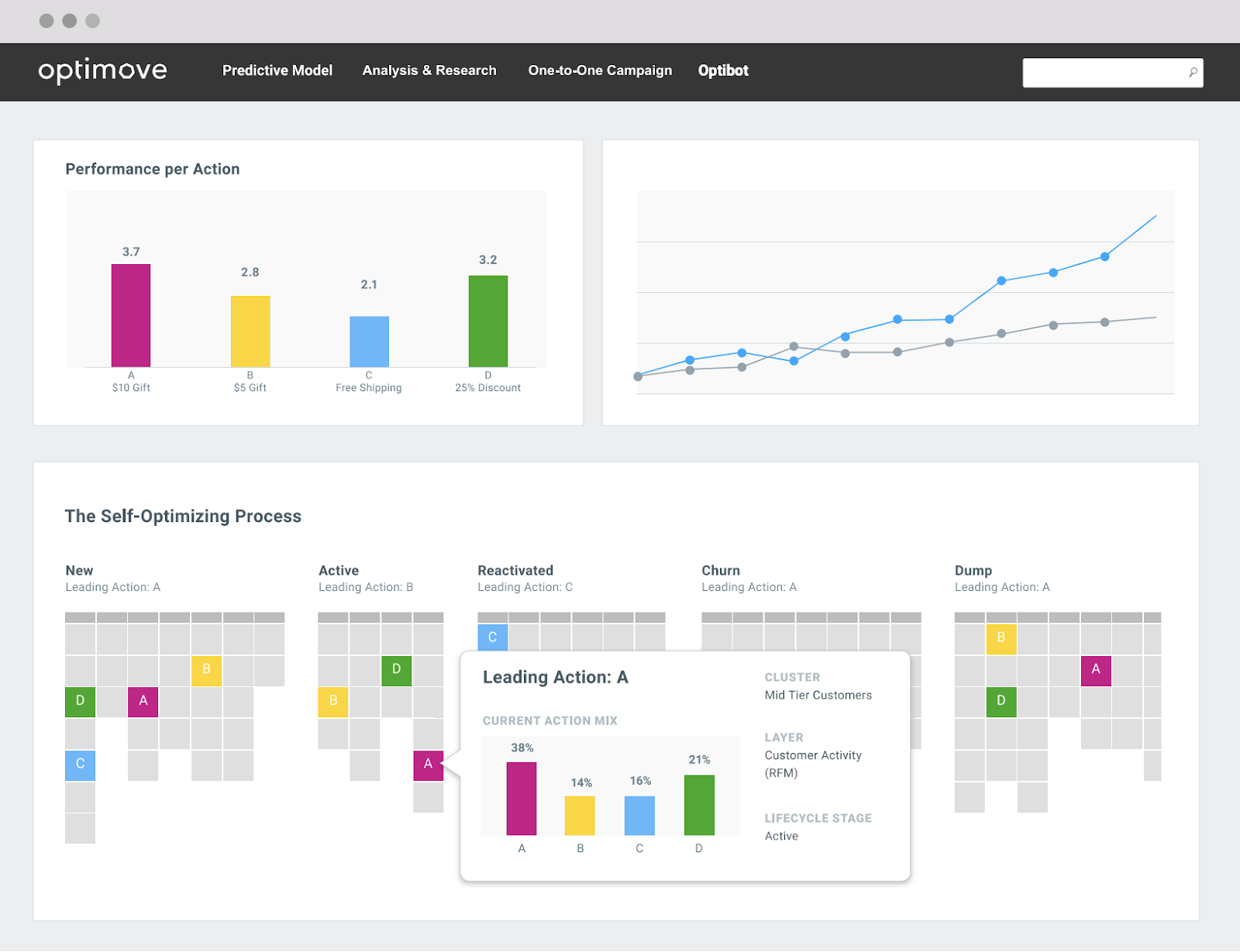
Optimove stuck out to me because it enables you to personalize marketing across channels — meaning your efforts work together rather than separately.
Optimove uses AI to help you understand which customers are most likely to make a purchase and suggest the best way to reach them, even suggesting different marketing approaches for different customer segments.
It can also automatically optimize your campaigns, too, so your marketing becomes more effective over time with less manual testing.
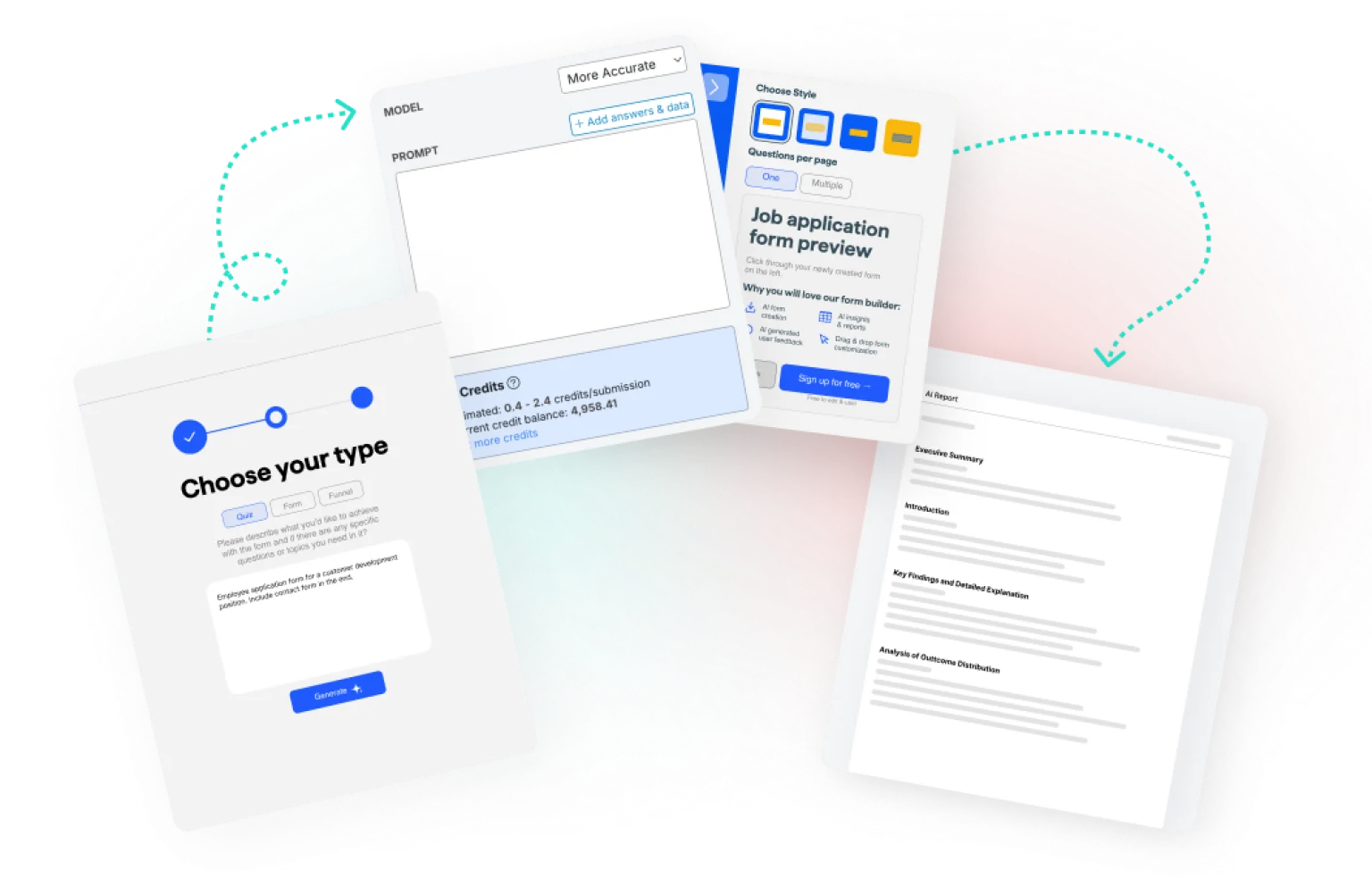
Involve.me lets you use AI to generate these campaigns from a prompt, saving hours of setup time. Having created plenty of complex quizzes and surveys myself, I love the idea of getting to a first draft quickly.
Pricing: Starts at $49/month.
Mutiny: Personalize your website based on visitor data
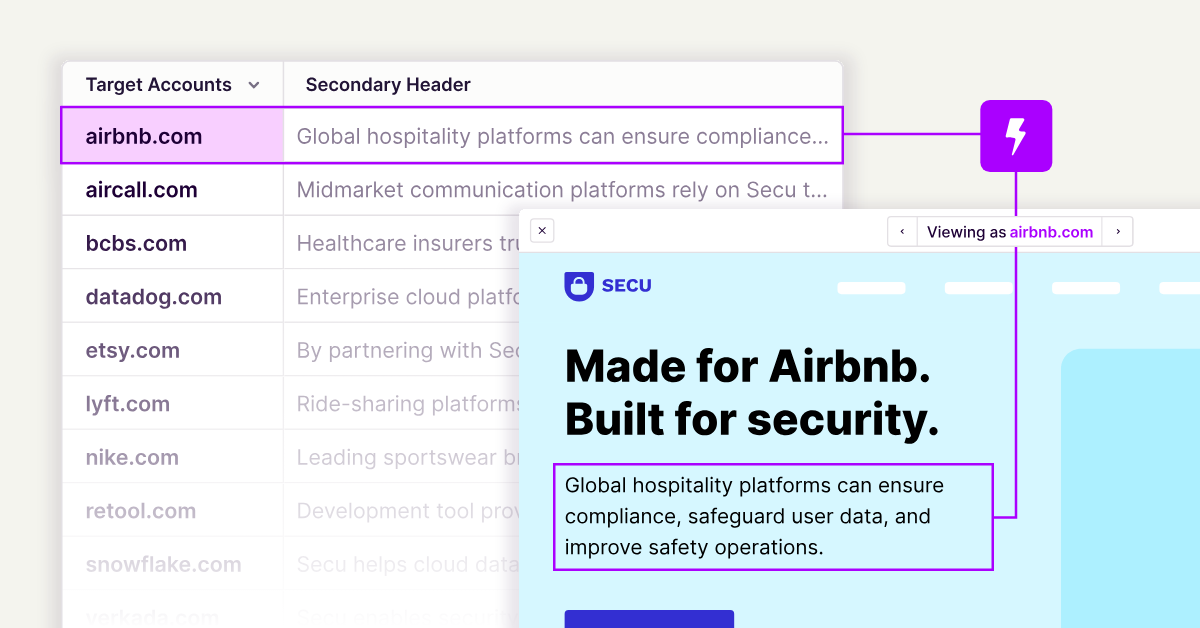
Another great personalization tool, Mutiny lets you adapt your website to each visitor based on your customer data. It can automatically change elements like headings, CTAs, and images based on what it knows about each site visitor.
This lets you create experiences that most align with each visitor. For example, if you sell pet products, you can tailor your website experience differently for cat owners and dog owners.
Rebuy Engine is a tool that helps e-commerce shops personalize their sites. The thing that excites me the most is its product recommendation capabilities.
Rebuy’s AI can hyperpersonalize product recommendations based on a shopper’s history with your brand and consider patterns in your other customers. Then, it can offer up the right products in high-purchase-intent moments in the customer journey, such as in the shopping cart and on the thank you page post-purchase.
Pricing: Starts at $99/month.
Stay AI: Predict and prevent e-commerce subscription churn
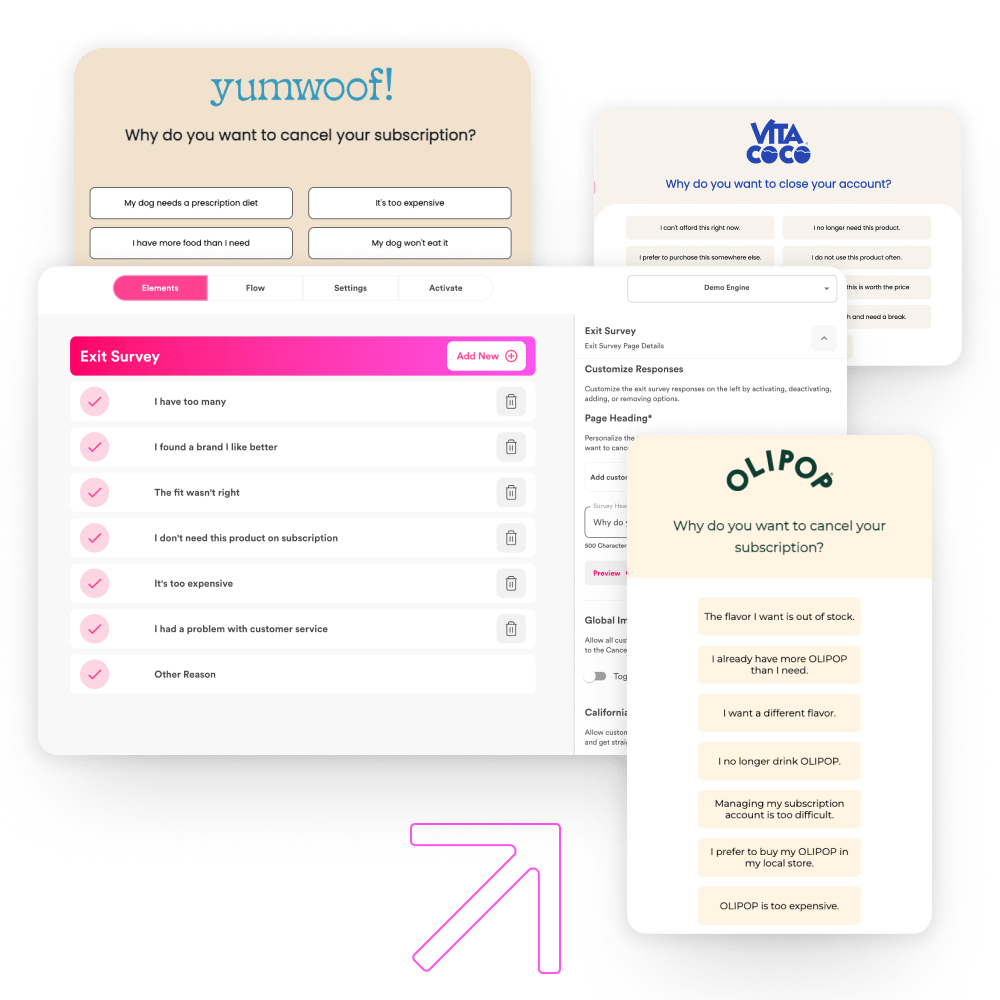
For subscription-based e-commerce businesses,Stay AI uses machine learning to help you keep customers longer. It optimizes your cancel flow and sends win-back campaigns at just the right time to re-engage lapsed subscribers.
It’s another tool recommended by Ron and Ash at Obvi. “Stay’s predictive analytics also identified at-risk cohorts before they churned and helped us test tactics to increase retention,” they share. “It’s been the best subscription management platform we’ve found so far.”
Pricing: Starts at $499/month, plus 1% + 19¢ per transaction.
These AI tools streamline your SEO research and content optimization process to help you rank better on search.
Ahrefs: Prioritize the right content and optimize it for search
Ahrefs is my favorite SEO research software. I’ve used it with multiple brands and find it to be comprehensive and relatively user-friendly once you know your way around. Some of their more recent additions help speed up SEO research and content optimization with AI.
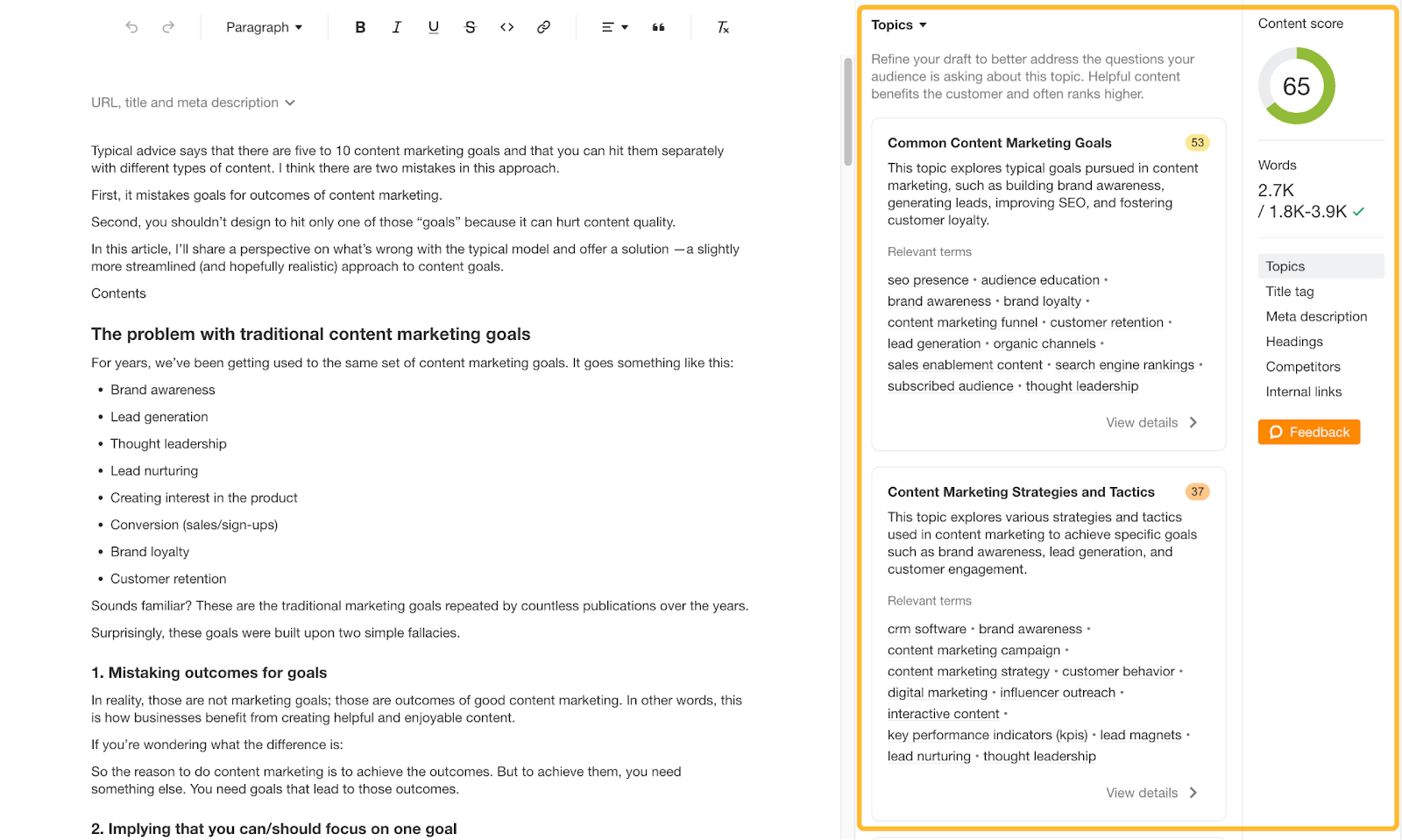
Their AI Content Helper identifies important topics based on top-ranking content, ensuring you cover the right ground in your writing. Meanwhile, their Content Grader spots gaps in your content compared to top performers.
Their AI keyword features help you understand search intent and identify keywords that trigger Google’s AI overviews. This lets you adapt your strategy to keep pace with evolving search trends.
Pricing: Starts at $249/month to get AI keyword features; Content Helper and Content Grader are available as an add-on for $99/month.
Surfer SEO: Generate and optimize long-form content for search
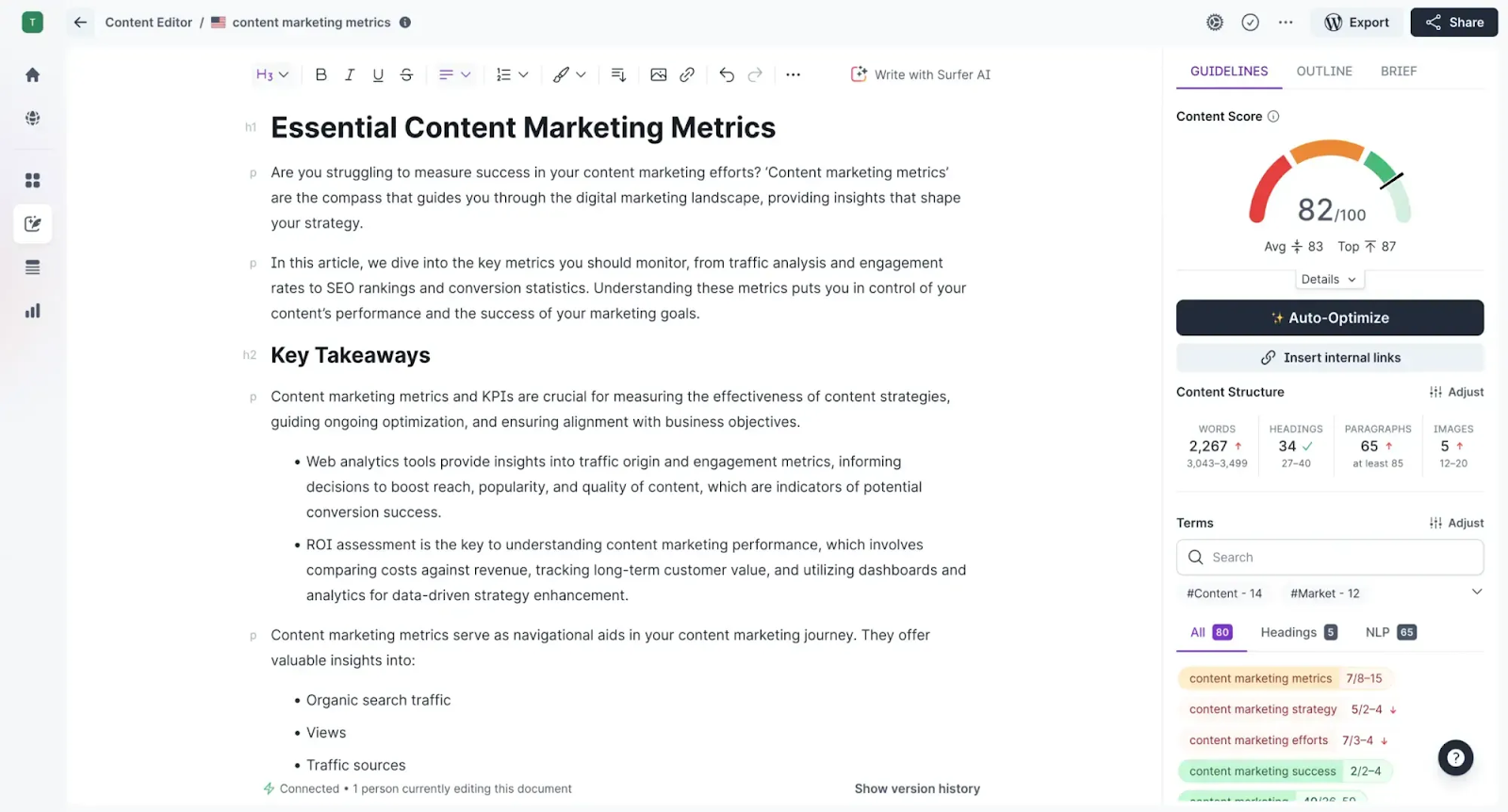
Surfer SEO is another go-to tool I use that helps optimize long-form written content for search. It analyzes the SERP (search engine results pages) for your chosen keyword and makes recommendations on what to include in your article.
Surfer SEO can also help you outline content based on what’s already ranking well, then assist with the writing process while ensuring you include key terms that’ll help your content rank.
Personally, I don’t use the writing assistant feature since I use a separate tool for that — which we’ll get to in the next section — but the optimization features are indispensable.
Pricing: Starts at $99/month.
⚡
Looking for more SEO tools to boost your search performance? Check out these 28 free SEO tools.
Content generation AI tools
These AI tools help speed up your content processes, from writing and editing to image and video creation.
Blaze is a full AI content creation platform that helps you write, edit, and repurpose content. You can add your brand’s unique voice to keep your style consistent. And you can create images from prompts and templates to go along with your content.
Beyond the AI features, Blaze offers tools to manage your content calendar, collaborate with your team, and even publish your content right from your workspace. It’s been on my to-try list for a while, so if you’ve used it, let me know your experience!
If repurposing content across different mediums is a regular part of your workflow, Spiral is a cool tool that lets you build custom templates to speed up the process.
These templated prompts learn from the examples you give them, making it easier to maintain your brand voice, style, and output you expect when repurposing content.
Katie Parrott, a freelance marketing writer and strategist, uses Spiral. She says, “It’s a solo or small-team marketer’s dream. It makes it easy to repurpose content — for example, convert a blog article into a LinkedIn post or a podcast transcript into a tweet.”
“You can build your own Spirals or take advantage of the ones the community and even the Spiral team itself have built. The product’s slogan is ‘scale yourself,’ and it really rings true for me.”
Pricing: Free plan available for up to 20 total Spiral runs. Paid plans start at $15/month.
Adobe Firefly: Generate commercial-friendly AI images
For generating images, Adobe Firefly is a favorite we’ve mentioned before. It stands out in the AI image generation space because it creates images that are safe for commercial use.
When Kirsti Lang, a senior content writer at Buffer, tested it out, she found that the results were some of the best for creating realistic human faces and hands. “My results with Firefly were consistently excellent, with very few Edward Scissorhands fingers,” she shares.
Firefly gives you detailed control over image style and composition and integrates with Adobe’s broader suite of tools if you use them.
Pricing: Free plan available with watermark. Paid plans start at $5.74/month.
VEED is a tool I’ve used that makes video editing and creation quick and accessible, even for beginners. Their AI capabilities let you generate videos from text prompts, create scripts with their AI writing assistant, and even clone voices to create custom voiceovers.
VEED also helps automate tedious tasks like auto-generating subtitles and removing background noise, making it a versatile tool for quick, polished videos.
Pricing: Starts at $55/month for access to all AI features.
Claude: Generate human-like writing with an AI chatbot
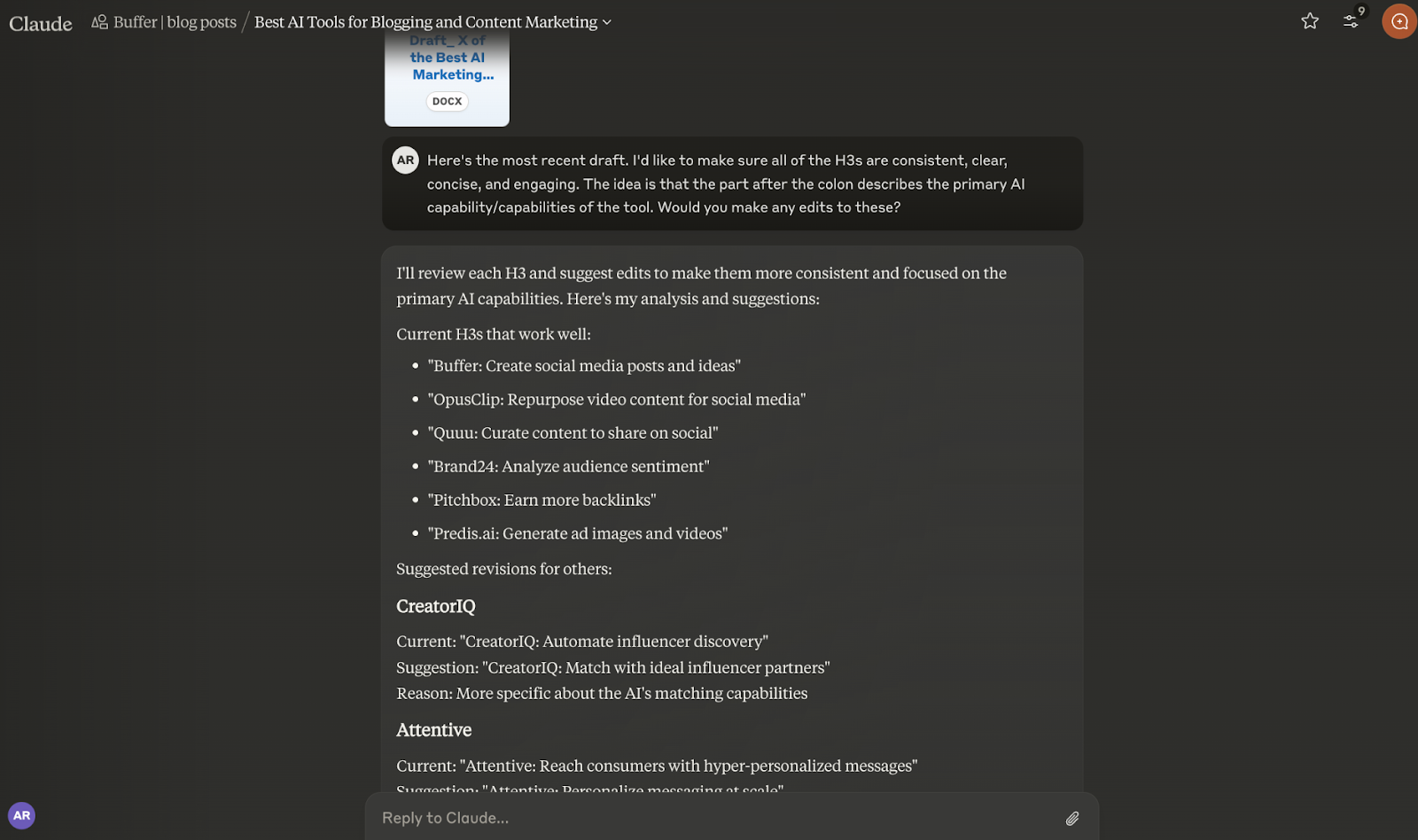
Claude is the AI tool I use the most. It’s a chat-style writing assistant, much like ChatGPT. Compared to other AI writing tools I’ve tested, I’ve found Claude produces more natural, human-sounding outputs.
I also love the Projects feature. You can attach resources to each project, so you don’t need to re-explain anything when you start a new chat.
As a freelance writer with multiple clients, I find this super useful because I can create a project for each client with their brand voice, guidelines, and example articles.
Pricing: Free plan available. Paid plans start at $20/month.
These data analytics tools use AI to help you surface actionable insights from your marketing data so you can make better decisions faster.
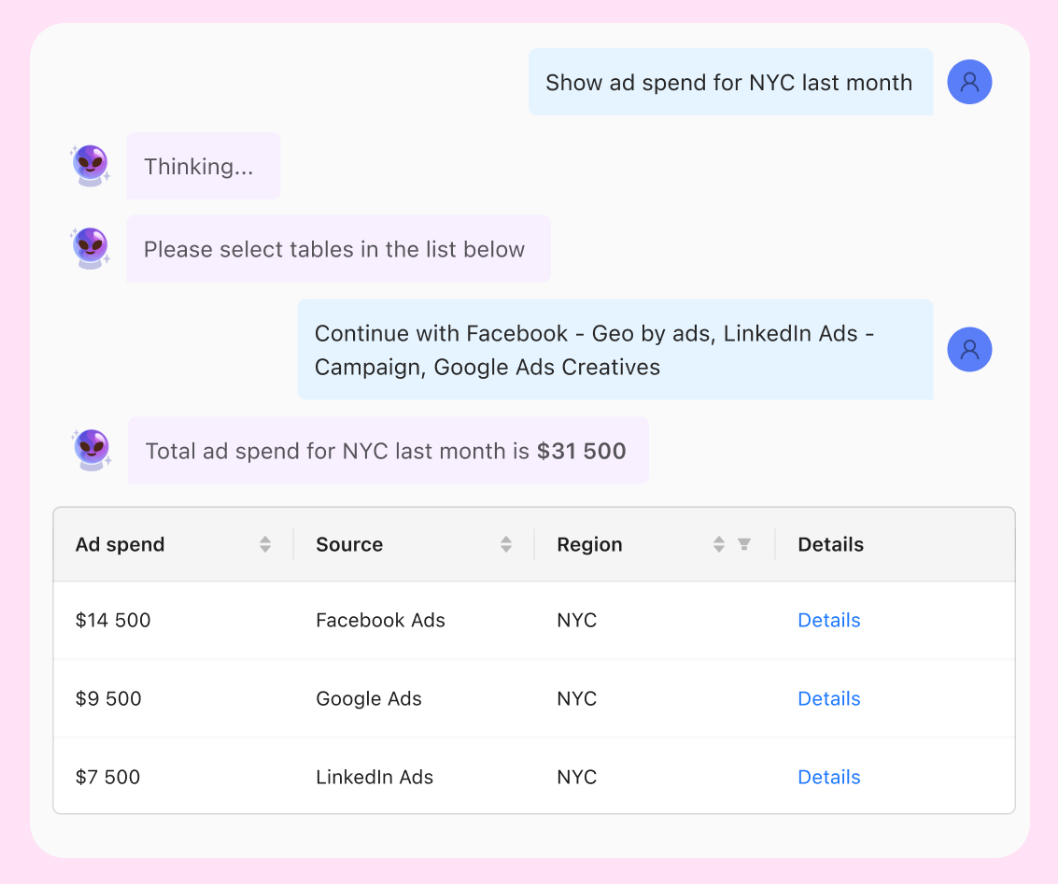
Digging through data is time-consuming, especially if you’re looking for a quick answer so you can get back to more impactful work.Improvado lets you use natural language to ask questions about your marketing performance across channels and get instant insights.
You don’t need to be a data analyst to get value from it. You can just ask questions like “What was our best-performing channel last month?” and get clear answers based on your data.
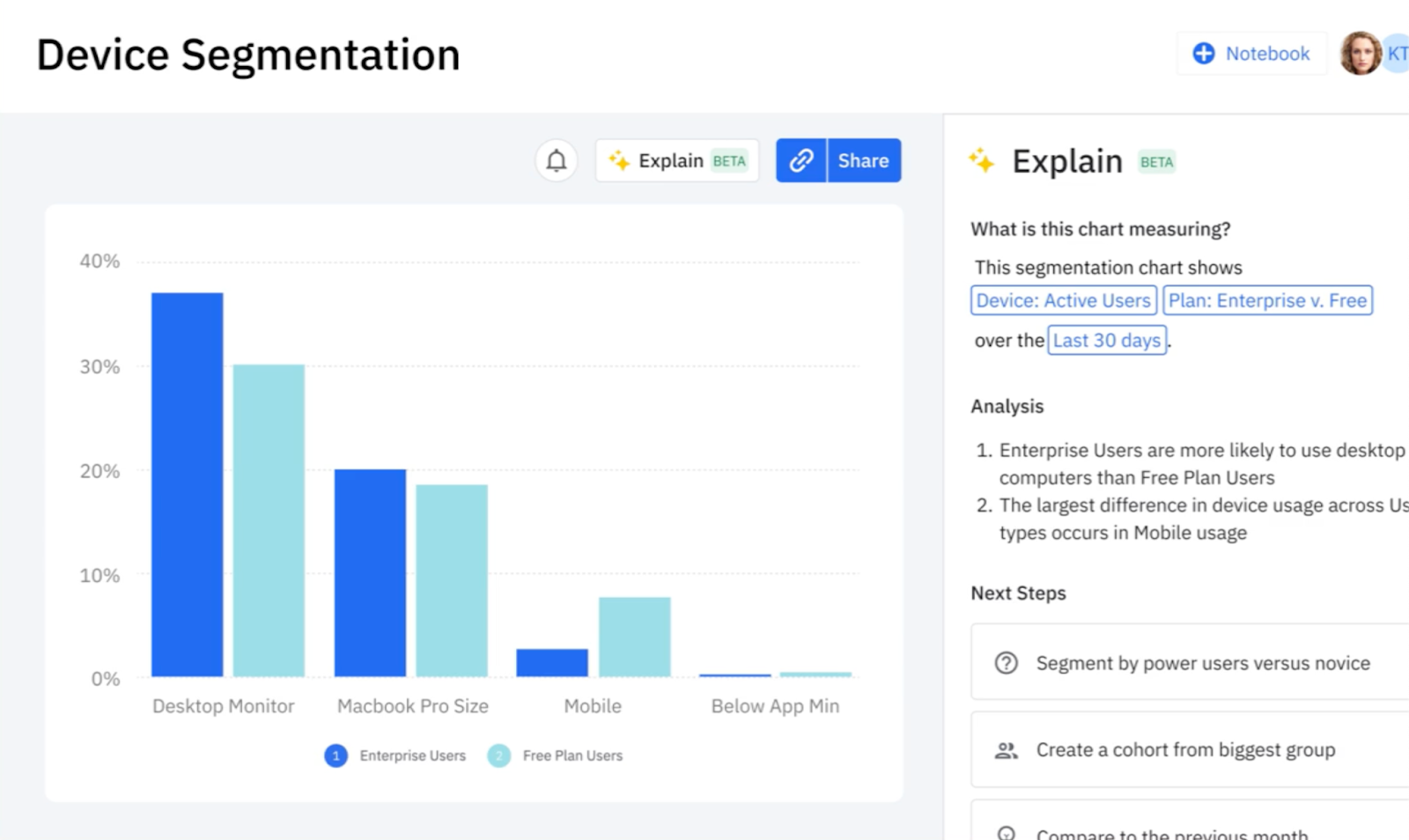
Amplitude offers similar AI functionality to Improvado, but it’s specifically made to understand how people are using your digital product or website.
The natural language interface lets you ask questions about user behavior and get immediate answers without digging through complex dashboards or spreadsheets.
Pricing: Free plan available. Paid plans start at $61/month.
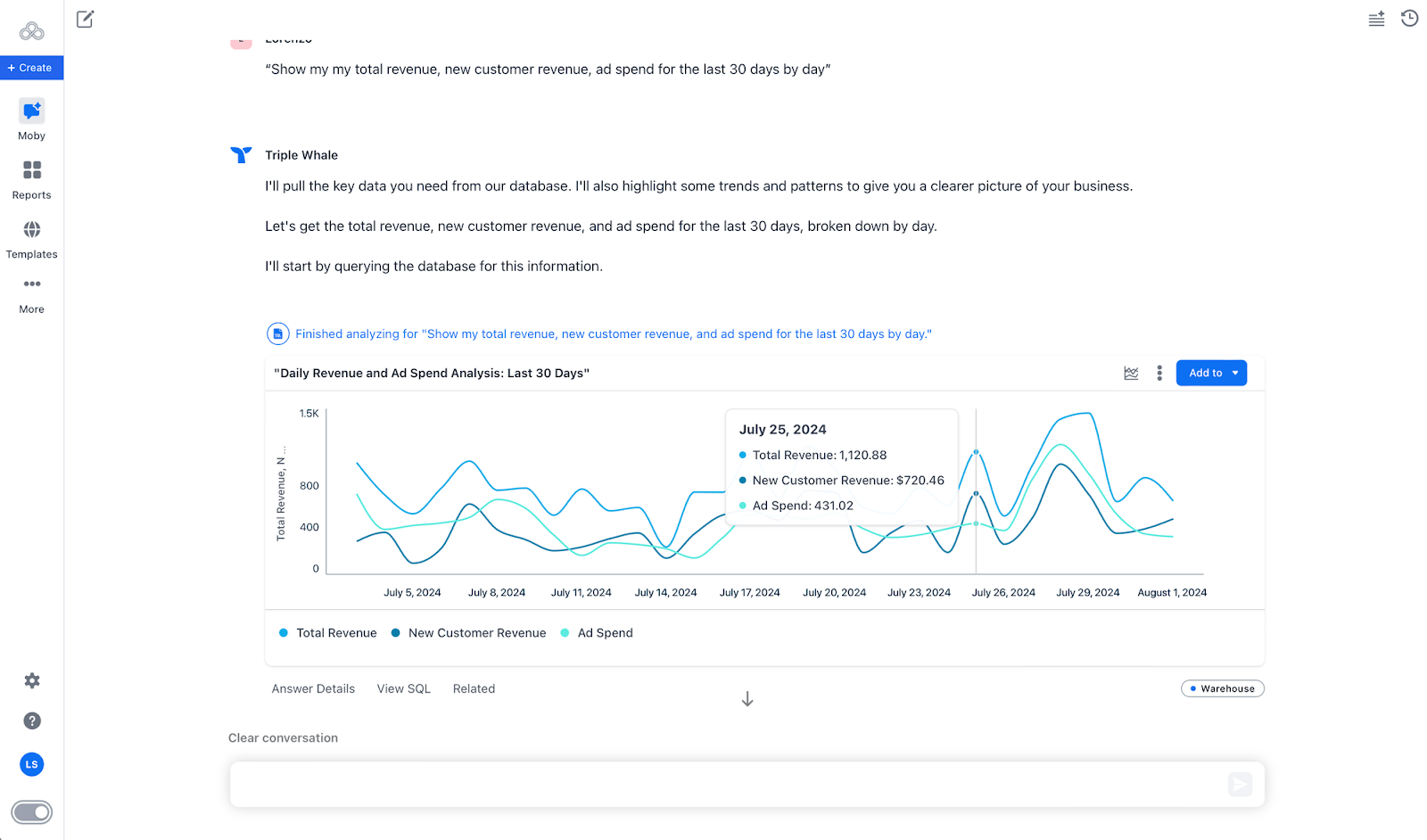
For a dedicated e-commerce option,Triple Whale centralizes your e-commerce store’s data and clarifies marketing attribution.
Like the other analytics tools on this list, Triple Whale’s AI assistant helps you pull and analyze data. But it also offers actionable recommendations to improve your store’s performance. This is especially valuable for small business owners or marketing teams that may not have the bandwidth for deep analytics work.
Pricing: Starts at $479/month for AI features.
As AI tools continue to evolve rapidly, this list is just the beginning. New AI features and capabilities are constantly emerging, offering even more opportunities for marketers to streamline workflows and get better results. While we’ve highlighted some robust AI marketing tools here, there are probably great ones we haven’t discovered yet.
Have you tried any AI marketing tools that have transformed your workflow? We’d love to hear about them. Feel free to share your recommendations in the comments below or tag @buffer or @bufferapp on all major social platforms. We’re always eager to test new tools and learn how other marketers are using AI to evolve their work.
https://buffer.com/resources/ai-marketing-tools/
Apple will update iOS notification summaries after BBC headline mistake
Apple plans to release a software update that is meant to help users understand better that its notification summaries are AI-generated and may contain errors, according to a recent BBC news story. The update is a response to reports that the summaries gave users misleading information about world events.
For example, one false summary suggested to at least one user that Luigi Mangione, the alleged murderer of UnitedHealthcare CEO Brian Thompson, had committed suicide. The notification in question was meant to summarize the most important tidbits from 22 BBC news app notifications, according to a widely circulated screenshot.
Apple hasn’t publicly specified exactly what will be changed to better inform users—only that it will be a software change that will “further clarify” when the notifications have been generated via the feature that resides under the Apple Intelligence umbrella.
The notification summaries, which are generated for individual users and devices via a custom large language model (LLM) Apple has trained, already had a small icon on them to indicate that they were not normal, unaltered notifications from the apps in question.
However, that icon’s meaning may not be immediately apparent to most users.
Users can disable the Apple Intelligence notification summaries by accessing the Settings app on their mobile devices.
When contacted for a statement, an Apple spokesperson told Ars:
Apple Intelligence is designed to help users get everyday tasks done faster and more easily. This includes optional notification summaries, which provide users who choose to opt in a way to briefly view information from apps and tap into the full details whenever they choose. These are identified by a summarization icon, and the original content is a quick tap away. Apple Intelligence features are in beta and we are continuously making improvements with the help of user feedback. A software update in the coming weeks will further clarify when the text being displayed is summarization provided by Apple Intelligence. We encourage users to report a concern if they view an unexpected notification summary.
This issue can’t just be fixed entirely
The BBC stories about the error-prone AI have often seemed to lack understanding of how the Apple Intelligence notification summaries work—for example, in suggesting that all users received the offending notification about Mangione. The wording of the summaries varies on individual devices depending on what other notifications were received around the same time.
Sam Altman says “we are now confident we know how to build AGI”
On Sunday, OpenAI CEO Sam Altman offered two eye-catching predictions about the near-future of artificial intelligence. In a post titled “Reflections” on his personal blog, Altman wrote, “We are now confident we know how to build AGI as we have traditionally understood it.” He added, “We believe that, in 2025, we may see the first AI agents ‘join the workforce’ and materially change the output of companies.”
Both statements are notable coming from Altman, who has served as the leader of OpenAI during the rise of mainstream generative AI products such as ChatGPT. AI agents are the latest marketing trend in AI, allowing AI models to take action on a user’s behalf. However, critics of the company and Altman immediately took aim at the statements on social media.
“We are now confident that we can spin bullshit at unprecedented levels, and get away with it,” wrote frequent OpenAI critic Gary Marcus in response to Altman’s post. “So we now aspire to aim beyond that, to hype in purest sense of that word. We love our products, but we are here for the glorious next rounds of funding. With infinite funding, we can control the universe.”
AGI, short for “artificial general intelligence,” is a nebulous term that OpenAI typically defines as “highly autonomous systems that outperform humans at most economically valuable work.” Elsewhere in the field, AGI typically means an adaptable AI model that can generalize (apply existing knowledge to novel situations) beyond specific examples found in its training data, similar to how some humans can do almost any kind of work after having been shown few examples of how to do a task.
According to a longstanding investment rule at OpenAI, the rights over developed AGI technology are excluded from its IP investment contracts with companies such as Microsoft. In a recently revealed financial agreement between the two companies, the firms clarified that “AGI” will have been achieved at OpenAI when one of its AI models generates at least $100 billion in profits.
Tech companies don’t say this out loud very often, but AGI would be useful for them because it could replace many human employees with software, automating information jobs and reducing labor costs while also boosting productivity. The potential societal downsides of this could be considerable, and those implications extend far beyond the scope of this article. But the potential economic shock of inventing artificial knowledge workers has not escaped Altman, who has forecast the need for universal basic income as a potential antidote for what he sees coming.
Instagram users discover old AI-powered “characters,” instantly revile them
A little over a year ago, Meta created Facebook and Instagram profiles for “28 AIs with unique interests and personalities for you to interact with and dive deeper into your interests.” Today, the last of those profiles is being taken down amid waves of viral revulsion as word of their existence has spread online.
But roughly a dozen of the unrelated AI character profiles still remained accessible as of this morning via social media pages labeled as “AI managed by Meta.” Those profiles—which included a mix of AI-generated imagery and human-created content, according to Meta—also offered real users the ability to live chat with these AI characters via Instagram Direct or Facebook Messenger.
Now that we know it exists, we hate it
The “Mama Liv” AI-generated character account page, as it appeared on Instagram Friday morning.
For the last few months, these profiles have continued to exist in something of a state of benign neglect, with little in the way of new posts and less in the way of organic interest from other Meta users. That started to change last week, though, after Financial Times published a report on Meta’s vision for “social media filled with AI-generated users.”
As Meta VP of Product for Generative AI Connor Hayes told FT, “We expect these AIs to actually, over time, exist on our platforms, kind of in the same way that accounts do… They’ll have bios and profile pictures and be able to generate and share content powered by AI on the platform. That’s where we see all of this going.”
AI-generated phishing emails are getting very good at targeting executives
Kip Meintzer, an executive at security company Check Point Software Technologies, told a recent investor conference that AI had given hackers “the ability to write a perfect phishing email.”
More than 90 percent of successful cyber attacks begin with a phishing email, according to the US Cybersecurity and Infrastructure Security Agency. As these attacks become more sophisticated, their consequences have become increasingly expensive, with the global average cost of a data breach rising nearly 10 percent to $4.9 million in 2024, according to IBM.
Researchers have warned that AI is particularly effective for crafting business email compromise scams—a specific type of malware-free phishing where fraudsters trick recipients into transferring funds or divulging confidential company information. This kind of scam has cost victims worldwide more than $50 billion since 2013, according to the FBI.
AI is “being used to scan everything to see where there’s a vulnerability, whether that’s in code or in the human chain,” said Sean Joyce, global cyber security lead at PwC.
Phishing scams generated using AI may also be more likely to bypass companies’ email filters and cyber security training.
Basic filters, which generally block repeated bulk phishing campaigns, may struggle to track these scams if AI is used to rapidly generate thousands of reworded messages, said eBay’s Demidova.
Le 10 tendenze tecnologiche strategiche di Gartner per il 2025
Il 2025 sarà un anno di trasformazioni guidate dalla tecnologia, con l’intelligenza artificiale (AI), nuovi paradigmi di calcolo e l’interazione uomo-macchina al centro dell’innovazione. Secondo Gartner, queste tendenze influenzeranno profondamente il mondo del lavoro, la sicurezza, la sostenibilità e l’efficienza aziendale. Vediamo i punti chiave divisi nei tre temi principali identificati.
AI: imperativi e rischi
Agentic AI L’AI autonoma sarà in grado di pianificare e agire in base agli obiettivi definiti dall’utente, creando un “lavoro virtuale” per supportare e potenziare le attività umane. Tuttavia, sarà fondamentale implementare controlli robusti per allineare le azioni dell’AI agli obiettivi degli utenti.
Piattaforme di governance AI Questi strumenti aiuteranno a gestire gli aspetti legali, etici e operativi dei sistemi AI, aumentando la trasparenza e costruendo fiducia. La sfida principale sarà armonizzare le linee guida a livello globale.
Sicurezza contro la disinformazione Una nuova categoria di tecnologie mirerà a combattere la disinformazione e a proteggere le identità digitali. Richiederà approcci multilivello e un continuo aggiornamento per mantenere efficace la sicurezza.
Nuovi paradigmi di calcolo
Crittografia post-quantistica La crittografia resistente al calcolo quantistico sarà fondamentale per proteggere i dati da future minacce, anche se implementarla sarà complesso e richiederà nuove applicazioni e test approfonditi.
Intelligenza ambientale invisibile Questa tecnologia, integrata nell’ambiente, migliorerà l’efficienza e l’esperienza utente, ma dovrà affrontare preoccupazioni legate alla privacy e all’uso dei dati.
Calcolo energeticamente efficiente Architetture hardware e software più sostenibili ridurranno l’impronta di carbonio. Tuttavia, la migrazione a queste piattaforme sarà costosa e tecnicamente impegnativa.
Calcolo ibrido Combinando diverse modalità di calcolo, il calcolo ibrido offrirà soluzioni innovative e personalizzazioni in tempo reale, ma comporterà rischi legati alla sicurezza e costi elevati.
Sinergia uomo-macchina
Calcolo spaziale Tecnologie come realtà aumentata e virtuale creeranno esperienze immersive nel gaming, nell’istruzione e nel commercio. Tuttavia, dispositivi ingombranti e costosi limiteranno inizialmente l’adozione.
Robot polifunzionali Questi robot potranno svolgere più attività e adattarsi rapidamente, migliorando l’efficienza aziendale. Il settore, però, deve ancora stabilire standard uniformi per prezzi e funzionalità.
Potenziamento neurologico Tecnologie che decodificano l’attività cerebrale miglioreranno l’apprendimento, la sicurezza e la produttività, ma sollevano questioni etiche e di sicurezza.
Tabella riassuntiva delle tendenze
Tema
Tendenza
Vantaggi principali
Sfide principali
AI
Agentic AI
Automazione, supporto al lavoro umano
Allineamento ai valori degli utenti
Piattaforme di governance AI
Uso responsabile dell’AI, trasparenza
Linee guida diverse tra settori
Sicurezza contro disinformazione
Identità protette, riduzione delle frodi
Aggiornamenti e team multilivello
Calcolo
Crittografia post-quantistica
Protezione dati contro futuri rischi quantistici
Implementazione complessa
Intelligenza ambientale invisibile
Efficienza, esperienza utente intuitiva
Preoccupazioni sulla privacy
Calcolo energeticamente efficiente
Riduzione impronta di carbonio
Costi di migrazione elevati
Calcolo ibrido
Innovazione, personalizzazione in tempo reale
Rischi di sicurezza, tecnologie costose
Uomo-macchina
Calcolo spaziale
Esperienze immersive in diversi settori
Costi e complessità dei dispositivi
Robot polifunzionali
Efficienza, versatilità
Mancanza di standard nel settore
Potenziamento neurologico
Upskilling, educazione personalizzata
Preoccupazioni etiche e di sicurezza
Queste tendenze non solo delineano il futuro tecnologico, ma invitano le organizzazioni a innovare responsabilmente, sfruttando le opportunità senza trascurare le sfide.
AI, un impatto economico da 1,6 trilioni di dollari in Asia-Pacifico entro il 2027
Un nuovo capitolo per l’Intelligenza Artificiale
Secondo le ultime previsioni di IDC, l’Asia-Pacifico è pronta a vivere un’era di trasformazione digitale guidata dall’Intelligenza Artificiale (AI). Le aziende della regione mirano a raggiungere un tasso di successo dell’80% nelle iniziative di intelligenza artificiale generativa (GenAI) entro il 2027. Questo ambizioso obiettivo è destinato a rivoluzionare l’efficienza e la crescita del fatturato.
Il passaggio dalla sperimentazione all’integrazione
Dopo un iniziale periodo di sperimentazione, caratterizzato da un tasso di successo del 62%, le aziende stanno ora entrando in una fase di integrazione più profonda dell’AI nelle loro operazioni core. Questo “AI Pivot” richiede un passaggio dai progetti pilota isolati all’implementazione di soluzioni AI su larga scala, con l’obiettivo di ottenere risultati misurabili e strategici.
L’impatto economico dell’AI
L’AI è destinata a diventare un motore fondamentale della crescita economica in Asia-Pacifico. Si prevede che la spesa relativa all’AI crescerà 1,7 volte più velocemente rispetto agli investimenti complessivi nella tecnologia digitale nei prossimi tre anni. Questo boom genererà un impatto economico stimato di 1,6 trilioni di dollari entro la fine del 2027 in tutta la regione Asia-Pacifico Giappone.
I sette pilastri per diventare un’azienda alimentata dall’AI
Per guidare le aziende asiatico-pacifiche attraverso questa transizione, IDC ha delineato sette pilastri fondamentali:
Strategia: Una stretta collaborazione tra IT e business è essenziale per scalare efficacemente l’AI.
Governance: L’integrazione di un’AI responsabile nei framework di governance è fondamentale per mitigare i rischi.
Persone: La formazione e l’allineamento tra dirigenti e dipendenti sono cruciali per superare le prime sfide dell’implementazione dell’AI.
Applicazioni: Le app infuse di GenAI trasformeranno le decisioni aziendali, aumentando l’importanza dei lanci in produzione.
Piattaforme AI: Piattaforme unificate semplificheranno gli sforzi di AI su larga scala.
Dati: Dati di alta qualità sono fondamentali per il successo dell’AI.
Infrastruttura: Le soluzioni infrastrutturali devono essere adattate alle esigenze dell’AI per ottimizzare prestazioni, costi e conformità.
Il futuro dell’AI in Asia-Pacifico
L’AI Pivot rappresenta un’opportunità senza precedenti per le aziende asiatico-pacifiche di innovare, migliorare l’efficienza e creare nuovi modelli di business. Tuttavia, per sfruttare appieno il potenziale dell’AI, è necessario superare le sfide legate alla strategia, alla governance, alle competenze, alle applicazioni, alle piattaforme, ai dati e all’infrastruttura. Le aziende che riusciranno a navigare con successo in questo nuovo panorama saranno in grado di ottenere un vantaggio competitivo significativo.
Over the holiday weekend, all but one member of the editorial board of Elsevier’s Journal of Human Evolution (JHE) resigned “with heartfelt sadness and great regret,” according to Retraction Watch, which helpfully provided an online PDF of the editors’ full statement. It’s the 20th mass resignation from a science journal since 2023 over various points of contention, per Retraction Watch, many in response to controversial changes in the business models used by the scientific publishing industry.
“This has been an exceptionally painful decision for each of us,” the board members wrote in their statement. “The editors who have stewarded the journal over the past 38 years have invested immense time and energy in making JHE the leading journal in paleoanthropological research and have remained loyal and committed to the journal and our authors long after their terms ended. The [associate editors] have been equally loyal and committed. We all care deeply about the journal, our discipline, and our academic community; however, we find we can no longer work with Elsevier in good conscience.”
The editorial board cited several changes made over the last ten years that it believes are counter to the journal’s longstanding editorial principles. These included eliminating support for a copy editor and a special issues editor, leaving it to the editorial board to handle those duties. When the board expressed the need for a copy editor, Elsevier’s response, they said, was “to maintain that the editors should not be paying attention to language, grammar, readability, consistency, or accuracy of proper nomenclature or formatting.”
There is also a major restructuring of the editorial board underway that aims to reduce the number of associate editors by more than half, which “will result in fewer AEs handling far more papers, and on topics well outside their areas of expertise.”
Furthermore, there are plans to create a third-tier editorial board that functions largely in a figurehead capacity, after Elsevier “unilaterally took full control” of the board’s structure in 2023 by requiring all associate editors to renew their contracts annually—which the board believes undermines its editorial independence and integrity.