AI trains on kids’ photos even when parents use strict privacy settings

AI trains on kids’ photos even when parents use strict privacy settings

Human Rights Watch (HRW) continues to reveal how photos of real children casually posted online years ago are being used to train AI models powering image generators—even when platforms prohibit scraping and families use strict privacy settings.

Last month, HRW researcher Hye Jung Han found 170 photos of Brazilian kids that were linked in LAION-5B, a popular AI dataset built from Common Crawl snapshots of the public web. Now, she has released a second report, flagging 190 photos of children from all of Australia’s states and territories, including indigenous children who may be particularly vulnerable to harms.

These photos are linked in the dataset “without the knowledge or consent of the children or their families.” They span the entirety of childhood, making it possible for AI image generators to generate realistic deepfakes of real Australian children, Han’s report said. Perhaps even more concerning, the URLs in the dataset sometimes reveal identifying information about children, including their names and locations where photos were shot, making it easy to track down children whose images might not otherwise be discoverable online.

That puts children in danger of privacy and safety risks, Han said, and some parents thinking they’ve protected their kids’ privacy online may not realize that these risks exist.

From a single link to one photo that showed “two boys, ages 3 and 4, grinning from ear to ear as they hold paintbrushes in front of a colorful mural,” Han could trace “both children’s full names and ages, and the name of the preschool they attend in Perth, in Western Australia.” And perhaps most disturbingly, “information about these children does not appear to exist anywhere else on the Internet”—suggesting that families were particularly cautious in shielding these boys’ identities online.

Stricter privacy settings were used in another image that Han found linked in the dataset. The photo showed “a close-up of two boys making funny faces, captured from a video posted on YouTube of teenagers celebrating” during the week after their final exams, Han reported. Whoever posted that YouTube video adjusted privacy settings so that it would be “unlisted” and would not appear in searches.

Only someone with a link to the video was supposed to have access, but that didn’t stop Common Crawl from archiving the image, nor did YouTube policies prohibiting AI scraping or harvesting of identifying information.

Reached for comment, YouTube’s spokesperson, Jack Malon, told Ars that YouTube has “been clear that the unauthorized scraping of YouTube content is a violation of our Terms of Service, and we continue to take action against this type of abuse.” But Han worries that even if YouTube did join efforts to remove images of children from the dataset, the damage has been done, since AI tools have already trained on them. That’s why—even more than parents need tech companies to up their game blocking AI training—kids need regulators to intervene and stop training before it happens, Han’s report said.

Han’s report comes a month before Australia is expected to release a reformed draft of the country’s Privacy Act. Those reforms include a draft of Australia’s first child data protection law, known as the Children’s Online Privacy Code, but Han told Ars that even people involved in long-running discussions about reforms aren’t “actually sure how much the government is going to announce in August.”

“Children in Australia are waiting with bated breath to see if the government will adopt protections for them,” Han said, emphasizing in her report that “children should not have to live in fear that their photos might be stolen and weaponized against them.”

AI uniquely harms Australian kids

To hunt down the photos of Australian kids, Han “reviewed fewer than 0.0001 percent of the 5.85 billion images and captions contained in the data set.” Because her sample was so small, Han expects that her findings represent a significant undercount of how many children could be impacted by the AI scraping.

“It’s astonishing that out of a random sample size of about 5,000 photos, I immediately fell into 190 photos of Australian children,” Han told Ars. “You would expect that there would be more photos of cats than there are personal photos of children,” since LAION-5B is a “reflection of the entire Internet.”

LAION is working with HRW to remove links to all the images flagged, but cleaning up the dataset does not seem to be a fast process. Han told Ars that based on her most recent exchange with the German nonprofit, LAION had not yet removed links to photos of Brazilian kids that she reported a month ago.

LAION declined Ars’ request for comment.

In June, LAION’s spokesperson, Nathan Tyler, told Ars that, “as a nonprofit, volunteer organization,” LAION is committed to doing its part to help with the “larger and very concerning issue” of misuse of children’s data online. But removing links from the LAION-5B dataset does not remove the images online, Tyler noted, where they can still be referenced and used in other AI datasets, particularly those relying on Common Crawl. And Han pointed out that removing the links from the dataset doesn’t change AI models that have already trained on them.

“Current AI models cannot forget data they were trained on, even if the data was later removed from the training data set,” Han’s report said.

Kids whose images are used to train AI models are exposed to various harms, Han reported, including a risk that image generators could more convincingly create harmful or explicit deepfakes. In Australia last month, “about 50 girls from Melbourne reported that photos from their social media profiles were taken and manipulated using AI to create sexually explicit deepfakes of them, which were then circulated online,” Han reported.

For First Nations children—”including those identified in captions as being from the Anangu, Arrernte, Pitjantjatjara, Pintupi, Tiwi, and Warlpiri peoples”—the inclusion of links to photos threatens unique harms. Because culturally, First Nations peoples “restrict the reproduction of photos of deceased people during periods of mourning,” Han said the AI training could perpetuate harms by making it harder to control when images are reproduced.

Once an AI model trains on the images, there are other obvious privacy risks, including a concern that AI models are “notorious for leaking private information,” Han said. Guardrails added to image generators do not always prevent these leaks, with some tools “repeatedly broken,” Han reported.

LAION recommends that, if troubled by the privacy risks, parents remove images of kids online as the most effective way to prevent abuse. But Han told Ars that’s “not just unrealistic, but frankly, outrageous.”

“The answer is not to call for children and parents to remove wonderful photos of kids online,” Han said. “The call should be [for] some sort of legal protections for these photos, so that kids don’t have to always wonder if their selfie is going to be abused.”

https://arstechnica.com/?p=2035015


Google’s greenhouse gas emissions jump 48% in five years

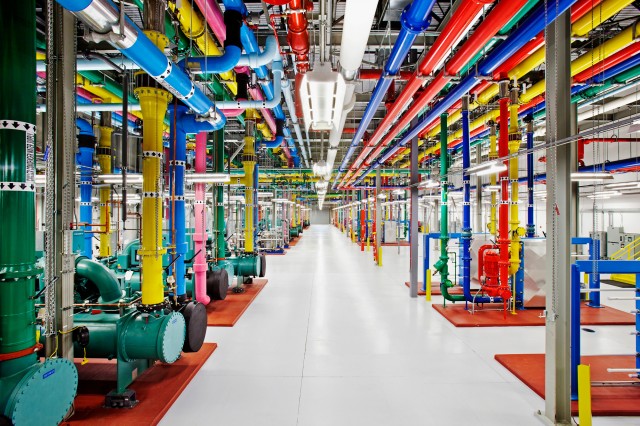
Cooling pipes at a Google data center in Douglas County, Georgia.

Google’s greenhouse gas emissions have surged 48 percent in the past five years due to the expansion of its data centers that underpin artificial intelligence systems, leaving its commitment to get to “net zero” by 2030 in doubt.

The Silicon Valley company’s pollution amounted to 14.3 million tonnes of carbon equivalent in 2023, a 48 percent increase from its 2019 baseline and a 13 percent rise since last year, Google said in its annual environmental report on Tuesday.

Google said the jump highlighted “the challenge of reducing emissions” at the same time as it invests in the build-out of large language models and their associated applications and infrastructure, admitting that “the future environmental impact of AI” was “complex and difficult to predict.”

Chief Sustainability Officer Kate Brandt said the company remained committed to the 2030 target but stressed the “extremely ambitious” nature of the goal.

“We do still expect our emissions to continue to rise before dropping towards our goal,” said Brandt.

She added that Google was “working very hard” on reducing its emissions, including by signing deals for clean energy. There was also a “tremendous opportunity for climate solutions that are enabled by AI,” said Brandt.

As Big Tech giants including Google, Amazon, and Microsoft have outlined plans to invest tens of billions of dollars into AI, climate experts have raised concerns about the environmental impacts of the power-intensive tools and systems.

In May, Microsoft admitted that its emissions had risen by almost a third since 2020, in large part due to the construction of data centers. However, Microsoft co-founder Bill Gates last week also argued that AI would help propel climate solutions.

Meanwhile, energy generation and transmission constraints are already posing a challenge for the companies seeking to build out the new technology. Analysts at Bernstein said in June that AI would “double the rate of US electricity demand growth and total consumption could outstrip current supply in the next two years.”

In Tuesday’s report, Google said its 2023 energy-related emissions—which come primarily from data center electricity consumption—rose 37 percent year on year and overall represented a quarter of its total greenhouse gas emissions.

Google’s supply chain emissions—its largest chunk, representing 75 percent of its total emissions—also rose 8 percent. Google said they would “continue to rise in the near term” as a result in part of the build-out of the infrastructure needed to run AI systems.

Google has pledged to achieve net zero across its direct and indirect greenhouse gas emissions by 2030 and to run on carbon-free energy during every hour of every day within each grid it operates by the same date.

However, the company warned in Tuesday’s report that the “termination” of some clean energy projects during 2023 had pushed down the amount of renewables it had access to.

Meanwhile, the company’s data center electricity consumption had “outpaced” Google’s ability to bring more clean power projects online in the US and Asia-Pacific regions.

Google’s data center electricity consumption increased 17 percent in 2023, and amounted to approximately 7-10 percent of global data center electricity consumption, the company estimated. Its data centers also consumed 17 percent more water in 2023 than during the previous year, Google said.

© 2024 The Financial Times Ltd. All rights reserved. Not to be redistributed, copied, or modified in any way.

https://arstechnica.com/?p=2035001


Lightening the load: AI helps exoskeleton work with different strides

Image of two people using powered exoskeletons to move heavy items around, as seen in the movie Aliens.
Enlarge / Right now, the software doesn’t do arms, so don’t go taking on any aliens with it.
20th Century Fox

Exoskeletons today look like something straight out of sci-fi. But the reality is they are nowhere near as robust as their fictional counterparts. They’re quite wobbly, and it takes long hours of handcrafting software policies, which regulate how they work—a process that has to be repeated for each individual user.

To bring the technology a bit closer to Avatar’s Skel Suits or Warhammer 40k power armor, a team at North Carolina University’s Lab of Biomechatronics and Intelligent Robotics used AI to build the first one-size-fits-all exoskeleton that supports walking, running, and stair-climbing. Critically, its software adapts itself to new users with no need for any user-specific adjustments. “You just wear it and it works,” says Hao Su, an associate professor and co-author of the study.

Tailor-made robots

An exoskeleton is a robot you wear to aid your movements—it makes walking, running, and other activities less taxing, the same way an e-bike adds extra watts on top of those you generate yourself, making pedaling easier. “The problem is, exoskeletons have a hard time understanding human intentions, whether you want to run or walk or climb stairs. It’s solved with locomotion recognition: systems that recognize human locomotion intentions,” says Su.

Building those locomotion recognition systems currently relies on elaborate policies that define what actuators in an exoskeleton need to do in each possible scenario. “Let’s take walking. The current state of the art is we put the exoskeleton on you and you walk on a treadmill for an hour. Based on that, we try to adjust its operation to your individual set of movements,” Su explains.

Building handcrafted control policies and doing long human trials for each user makes exoskeletons super expensive, with prices reaching $200,000 or more. So, Su’s team used AI to automatically generate control policies and eliminate human training. “I think within two or three years, exoskeletons priced between $2,000 and $5,000 will be absolutely doable,” Su claims.

His team hopes these savings will come from developing the exoskeleton control policy using a digital model, rather than living, breathing humans.

Digitizing robo-aided humans

Su’s team started by building digital models of a human musculoskeletal system and an exoskeleton robot. Then they used multiple neural networks that operated each component. One was running the digitized model of a human skeleton, moved by simplified muscles. The second neural network was running the exoskeleton model. Finally, the third neural net was responsible for imitating motion—basically predicting how a human model would move wearing the exoskeleton and how the two would interact with each other. “We trained all three neural networks simultaneously to minimize muscle activity,” says Su.

One problem the team faced is that exoskeleton studies typically use a performance metric based on metabolic rate reduction. “Humans, though, are incredibly complex, and it is very hard to build a model with enough fidelity to accurately simulate metabolism,” Su explains. Luckily, according to the team, reducing muscle activations is rather tightly correlated with metabolic rate reduction, so it kept the digital model’s complexity within reasonable limits. The training of the entire human-exoskeleton system with all three neural networks took roughly eight hours on a single RTX 3090 GPU. And the results were record-breaking.

Bridging the sim-to-real gap

After developing the controllers for the digital exoskeleton model, which were developed by the neural networks in simulation, Su’s team simply copy-pasted the control policy to a real controller running a real exoskeleton. Then, they tested how an exoskeleton trained this way would work with 20 different participants. The averaged metabolic rate reduction in walking was over 24 percent, over 13 percent in running, and 15.4 percent in stair climbing—all record numbers, meaning their exoskeleton beat every other exoskeleton ever made in each category.

This was achieved without needing any tweaks to fit it to individual gaits. But the neural networks’ magic didn’t end there.

“The problem with traditional, handcrafted policies was that it was just telling it ‘if walking is detected do one thing; if walking faster is detected do another thing.’ These were [a mix of] finite state machines and switch controllers. We introduced end-to-end continuous control,” says Su. What this continuous control meant was that the exoskeleton could follow the human body as it made smooth transitions between different activities—from walking to running, from running to climbing stairs, etc. There was no abrupt mode switching.

“In terms of software, I think everyone will be using this neural network-based approach soon,” Su claims. To improve the exoskeletons in the future, his team wants to make them quieter, lighter, and more comfortable.

But the plan is also to make them work for people who need them the most. “The limitation now is that we tested these exoskeletons with able-bodied participants, not people with gait impairments. So, what we want to do is something they did in another exoskeleton study at Stanford University. We would take a one-minute video of you walking, and based on that, we would build a model to individualize our general model. This should work well for people with impairments like knee arthritis,” Su claims.

Nature, 2024.  DOI: 10.1038/s41586-024-07382-4

https://arstechnica.com/?p=2034710


Anitec Assinform, mercato digitale in Italia a 78,7 miliardi +2,1% nel 2023 trainato da PNRR, Cloud, Cyber e AI

Il mercato digitale italiano ha registrato nel 2023 una crescita del 2,1%, raggiungendo un valore complessivo di 78,7 miliardi di euro. Si tratta di un incremento superiore alla crescita del PIL nazionale in termini reali (+0,9%). Dati che segnalano come l’avanzamento dei progetti del PNRR e i crediti di imposta 4.0 e 5.0, oltre all’adozione delle principali tecnologie abilitanti del digitale, stanno facendo aumentare, e faranno aumentare, gli investimenti nel settore.

“Se lo scenario globale del 2023 era segnato da grande incertezza e numerosi rischi, che in larga parte permangono anche oggi, la certezza di come l’innovazione stia facendo ampi e rapidissimi passi in avanti per offrire opportunità a imprese e cittadini non è mai venuta meno. Cogliere le potenzialità che la tecnologia ci sta offrendo, facendo dialogare tutti gli attori coinvolti – pubblici e privati – è la sfida che va messa in cima alle nostre priorità. Formazione, ricerca, cooperazione, regolamentazione, investimenti, ognuno di questi e di tanti altri aspetti è necessario perché il digitale e la tecnologia diano il loro importante contributo a migliorare la vita delle persone”. Così Massimo Dal Checco, Presidente di Anitec-Assinform, l’Associazione di Confindustria che raggruppa le principali aziende dell’ICT, a commento della pubblicazione annuale sull’andamento del digitale in Italia, condotta in collaborazione con NetConsulting cube e presentata quest’oggi a Milano.

Servizi ICT in spolvero, in calo Dispositivi e Sistemi. Servizi di rete TLC in ripresa

Nel 2023, l’andamento generale del mercato digitale è stato positivo facendo segnare una crescita del 2,1%. I diversi segmenti che compongono questo mercato hanno però avuto andamenti differenziati. Se da un lato i Servizi ICT hanno fatto registrare la variazione più rilevante (+9% e 16,2 miliardi di euro), dall’altro il mercato dei Dispositivi e Sistemi ha mostrato un calo significativo (-4,8%), mentre andamenti particolarmente positivi hanno caratterizzato anche i segmenti del Software e Soluzioni ICT (+5,8% e 9,1 miliardi di euro) e dei Contenuti e Pubblicità Digitali (+5,5% e 15,2 miliardi di euro). I Servizi di Rete TLC, invece, hanno avuto una variazione minima (+0,2%), invertendo però i trend negativi che li hanno caratterizzati gli ultimi anni.

Digitale pervade la quotidianità

“L’importanza del digitale non è solamente di natura economica – prosegue Dal Checco – ma anche sociale e ce ne possiamo rendere banalmente conto guardando a come il digitale stia ormai pervadendo la nostra quotidianità. Tuttavia, ciò che stiamo vivendo ora ha forse una rilevanza maggiore rispetto a quanto accaduto negli ultimi anni. Incredibile disponibilità di dati, nuove architetture di calcolo, algoritmi intelligenti sono solo alcuni degli aspetti che ci mostrano come forse, senza voler essere retorici, stiamo entrando in una nuova era. E se la complessità e l’adozione ancora limitata di alcune novità può non rendere consapevoli molte persone, l’utilizzo sempre più diffuso dell’Intelligenza Artificiale è sotto gli occhi di tutti e può aprire scenari alcuni dei quali difficilmente immaginabili”.

Digitale continuerà a crescere del 3,9% all’anno fino al 2027

Anche nei prossimi anni si prevede che il mercato digitale continui il suo cammino positivo, con una crescita media annua (2023-2027) del 3,9%. Il motore di tale andamento continuerà ad essere rappresentato dai Digital Enabler e dai Digital Transformer, con un tasso medio annuo di crescita (2023-2027) dell’11,1%. Il valore di mercato delle soluzioni di Intelligenza Artificiale e Cognitive Computing è previsto triplicare nel periodo in esame, grazie alla loro crescente adozione da parte delle aziende e all’incremento dei casi d’uso trasversalmente a tutti i principali settori economici. Ma le innovazioni tecnologiche – come spiega un approfondimento monografico contenuto nella presente edizione del rapporto “Il digitale in Italia” – sono anche al centro di uno dei più rilevanti temi che caratterizzano i nostri giorni: la sostenibilità ambientale. In tale contesto, il digitale gioca un ruolo critico. Da una parte, può avere un impatto ambientale negativo, anche se la distribuzione delle emissioni dei diversi segmenti del digitale varia da Paese a Paese e dipende principalmente dalla loro posizione nella catena del valore del settore. Dall’altro, offre positive opportunità di progresso, favorendo la diffusione di hardware e software e l’erogazione di servizi energeticamente efficienti.

Impatto ambientale dell’ICT

“Negli ultimi anni – conclude Dal Checco – l’accelerazione della digitalizzazione ha portato a un aumento complessivo dell’impatto ambientale dell’ICT. Malgrado i notevoli progressi nell’innovazione delle tecnologie digitali sempre più ‘green’, la diffusa trasformazione digitale di processi e prodotti porta ancora inevitabilmente con sé un bilancio netto negativo, anche se in miglioramento. La consapevolezza che occorre fare di più per bilanciare l’innovazione digitale con la responsabilità ambientale non è più sufficiente. Per migliorare le prospettive in ottica ‘zero emissioni’ serve un cambio di marcia pervasivo, che faccia evolvere la sostenibilità ambientale del digitale da ‘ambito di regolamentazione’ a vero e proprio ‘strumento strategico’ per le organizzazioni e per la politica industriale stessa. In tal senso, diverse iniziative sono possibili e auspicabili. E il nostro Rapporto le approfondisce”.

Il mercato digitale italiano nel 2023

Il mercato digitale ha registrato nel 2023 una crescita del 2,1%, per un valore complessivo di 78,7 miliardi di euro; un incremento superiore rispetto al PIL nazionale (+0,9%) e con andamenti differenziati tra i diversi segmenti. La variazione più rilevante ha riguardato i Servizi ICT (+9% e 16,2 miliardi di euro), che hanno avuto un’accelerazione principalmente grazie ai servizi di cloud computing, di cybersecurity e ai servizi professionali e di integrazione riguardanti le tecnologie e le piattaforme di intelligenza artificiale. Andamenti particolarmente positivi hanno caratterizzato anche i segmenti del Software e Soluzioni ICT (+5,8% e 9,1 miliardi di euro) e dei Contenuti e Pubblicità Digitale (+5,5% e 15,2 miliardi di euro). Vi è stata una inversione di tendenza per i Servizi di Rete TLC, che hanno avuto una crescita, seppur contenuta, dello 0,2% rispetto all’anno precedente. Il mercato relativo a Dispositivi e Sistemi ha invece evidenziato un decremento particolarmente accentuato e superiore a quello registrato nel 2022. Infatti, nel corso del 2023, tale segmento ha subito un ulteriore calo del 4,8%, a causa principalmente degli andamenti negativi dei personal computer, sia desktop (-15,8%) sia laptop (-18%), e dei tablet (-14,5%). In ulteriore forte riduzione sono state anche le vendite di apparecchi TV (-30%).

Il mercato dei Digital Enabler e dei Digital Transformer nel 2023

Digital Enabler e Transformer, ovvero le componenti tecnologiche più innovative, continuano a rappresentare il motore del mercato digitale, con un tasso medio annuo di crescita (2023-2027) dell’11,1%, di gran lunga più elevato rispetto al trend dell’intero comparto (3,9%). Gli investimenti delle organizzazioni private e pubbliche sono polarizzati principalmente su soluzioni e servizi Cloud (+19,7% e 6,3 miliardi di euro) – che rendono più flessibili e scalabili infrastrutture e applicazioni – e su strumenti di Cybersecurity (+12,4% e 1,8 miliardi di euro) e Big Data Management (+13,2% e 1,7 miliardi di euro) – fondamentali per la protezione, organizzazione, gestione e sistematizzazione dei dati aziendali. In grande crescita, anche se con valori ancora limitati, sono inoltre il settore dell’Intelligenza Artificiale (+55% e 0,7 miliardi di euro) e della Blockchain (+29,4% e 55 milioni di euro).

L’andamento dei settori nel 2023

Nel 2023 si è confermata la crescita del mercato digitale in tutti settori, con la sola eccezione del comparto Telecomunicazioni e Media (-2,6%), interessato da un profondo processo di ristrutturazione dei principali operatori con conseguente rallentamento degli investimenti. Nella Pubblica Amministrazione, centrale (+10,2%) e locale (+8,9%), l’aumento della spesa continua ad essere sostenuto dai progetti legati al PNRR, che ha nella digitalizzazione della PA uno dei suoi pilastri portanti. Dopo la PA, l’altro settore che ha fatto registrare la crescita più elevata è stato quello della Sanità (+8,5%).

Dimensioni aziendali e spesa nel digitale nel 2023

Nel corso del 2023 la spesa digitale delle piccole imprese (1-49 addetti) ha continuato ad aumentare (9,8 miliardi di euro, +2,9%), pur sviluppandosi più lentamente che nel segmento delle grandi imprese (250+ addetti, 30,2 miliardi di euro, +5,4%) e delle medie imprese (50-249 addetti, 8,8 miliardi di euro, +4%). Tali dati confermano la tendenza a spendere di più all’aumentare delle dimensioni delle aziende.

L’andamento dei territori nel 2023

Le Regioni del Nord Ovest e del Centro rappresentano quasi il 62% della spesa complessiva. In entrambe le aree, però, vi è stato un rallentamento della spesa: le Regioni del Centro hanno registrato una crescita del 2,9% (20,1 miliardi di euro) contro il 3,3% dell’anno precedente, mentre per le Regioni del Nord Ovest vi è stato un aumento del 2,4% (27,5 miliardi di euro) contro il 3,2% del 2022. Nel Nord Est, la crescita della spesa è stata inferiore, pari al 2,3% (15 miliardi di euro), ma in rafforzamento rispetto all’1,7% rilevato nel 2022. Sud e Isole si confermano invece essere l’area geografica con il minor volume di spesa e la dinamica più lenta degli investimenti (14,4 miliardi di euro, +0,5%). A livello di singole Regioni, la spesa è localizzata principalmente in Lombardia (19,7 miliardi euro, +2,6%) e in Lazio (13 miliardi di euro, +3,6%).

Le previsioni del mercato digitale, 2024-2027

Anche nei prossimi anni si prevede un andamento ampiamente positivo per il mercato digitale nel suo complesso, favorito dal PNRR e dalla diffusione di Digital Enabler e Transformation. Nel 2024, il mercato è previsto in ulteriore crescita del 3,3%, a fronte di un andamento del PIL più contenuto. Anche per gli anni successivi (2025-2027) si stima che il mercato digitale continuerà a beneficiare degli effetti del PNRR, con una crescita media annua (TCMA) nel periodo 2023-2027 del 3,9%. Nel 2027, il mercato digitale raggiungerà il valore di 91,6 miliardi di euro.

L’impatto del PNRR, 2024-2027

Le missioni che avranno maggiore impatto sulle previsioni del mercato digitale nei prossimi anni sono quelle relative a “Digitalizzazione, innovazione, competitività, cultura e turismo” (Missione 1) e “Salute” (Missione 6). A fronte di un mercato digitale che raggiungerà i 79,1 miliardi di euro nel 2024, l’impatto del PNRR sarà di 2,1 miliardi di euro aggiuntivi, per un totale complessivo di oltre 81,2 miliardi di euro. Nel 2025 si prevede, a fronte di un mercato digitale da 81,8 miliardi di euro, un impatto del PNRR pari a 2,7 miliardi di euro per un totale complessivo di oltre 84,5 miliardi e un incremento del 4,1% rispetto al 3,4% che si registrerebbe al netto del PNRR. Nel 2026 l’impatto del PNRR è stimato pari a 2,3 miliardi di euro aggiuntivi, per un totale complessivo di oltre 88 miliardi di euro e un incremento del 4,1% del mercato digitale totale. Nel 2027, infine, si prevede un prolungamento degli effetti del Piano, con un impatto pari a 1,5 miliardi di euro per un totale complessivo di 91,6 miliardi di euro e un incremento complessivo del 4,1% rispetto all’anno precedente.

Leggi le altre notizie sull’home page di Key4biz

https://www.key4biz.it/anitec-assinform-mercato-digitale-in-italia-a-787-miliardi-21-nel-2023-trainato-da-pnrr-cloud-cyber-e-ai/495773/


ChatGPT outperforms undergrads in intro-level courses, falls short later

Overhead view of a classroom full of students at desks, focused on writing on papers.

“Since the rise of large language models like ChatGPT there have been lots of anecdotal reports about students submitting AI-generated work as their exam assignments and getting good grades. So, we stress-tested our university’s examination system against AI cheating in a controlled experiment,” says Peter Scarfe, a researcher at the School of Psychology and Clinical Language Sciences at the University of Reading.

His team created over 30 fake psychology student accounts and used them to submit ChatGPT-4-produced answers to examination questions. The anecdotal reports were true—the AI use went largely undetected, and, on average, ChatGPT scored better than human students.

Rules of engagement

Scarfe’s team submitted AI-generated work in five undergraduate modules, covering classes needed during all three years of study for a bachelor’s degree in psychology. The assignments were either 200-word answers to short questions or more elaborate essays, roughly 1,500 words long. “The markers of the exams didn’t know about the experiment. In a way, participants in the study didn’t know they were participating in the study, but we’ve got necessary permissions to go ahead with that”, Scarfe claims.

Shorter submissions were prepared simply by copy-pasting the examination questions into ChatGPT-4 along with a prompt to keep the answer under 160 words. The essays were solicited the same way, but the required word count was increased to 2,000. Setting the limits this way, Scarfe’s team could get ChatGPT-4 to produce content close enough to the required length. “The idea was to submit those answers without any editing at all, apart from the essays, where we applied minimal formatting,” says Scarfe.

Overall, Scarfe and his colleagues slipped 63 AI-generated submissions into the examination system. Even with no editing or efforts to hide the AI usage, 94 percent of those went undetected, and nearly 84 percent got better grades (roughly half a grade better) than a randomly selected group of students who took the same exam.

“We did a series of debriefing meetings with people marking those exams and they were quite surprised,” says Scarfe. Part of the reason they were surprised was that most of those AI submissions that were detected did not end up flagged because they were too repetitive or robotic—they got flagged because they were too good.

Which raises a question: What do we do about it?

AI-hunting software

“During this study we did a lot of research into techniques of detecting AI-generated content,” Scarfe says. One such tool is Open AI’s GPTZero; others include AI writing detection systems like the one made by Turnitin, a company specializing in delivering tools for detecting plagiarism.

“The issue with such tools is that they usually perform well in a lab, but their performance drops significantly in the real world,” Scarfe explained. Open AI claims the GPTZero can flag AI-generated text as “likely” AI 26 percent of the time, with a rather worrisome 9 percent false positive rate. Turnitin’s system, on the other hand, was advertised as detecting 97 percent of ChatGPT and GPT-3 authored writing in a lab with only one false positive in a hundred attempts. But, according to Scarfe’s team, the released beta version of this system performed significantly worse.

https://arstechnica.com/?p=2034465


Brussels explores antitrust probe into Microsoft’s partnership with OpenAI

EU competition chief Margrethe Vestager said the bloc was looking into practices that could in effect lead to a company controlling a greater share of the AI market.
Enlarge / EU competition chief Margrethe Vestager said the bloc was looking into practices that could in effect lead to a company controlling a greater share of the AI market.

Brussels is preparing for an antitrust investigation into Microsoft’s $13 billion investment into OpenAI, after the European Union decided not to proceed with a merger review into the most powerful alliance in the artificial intelligence industry.

The European Commission, the EU’s executive arm, began to explore a review under merger control rules in January, but on Friday announced that it would not proceed due to a lack of evidence that Microsoft controls OpenAI.

However, the commission said it was now exploring the possibility of a traditional antitrust investigation into whether the tie-up between the world’s most valuable listed company and the best-funded AI start-up was harming competition in the fast-growing market.

The commission has also made inquiries about Google’s deal with Samsung to install a modified version of its Gemini AI system in the South Korean manufacturer’s smartphones, it revealed on Friday.

Margrethe Vestager, the bloc’s competition chief, said in a speech on Friday: “The key question was whether Microsoft had acquired control on a lasting basis over OpenAI. After a thorough review we concluded that such was not the case. So we are closing this chapter, but the story is not over.”

She said the EU had sent a new set of questions to understand whether “certain exclusivity clauses” in the agreement between Microsoft and OpenAI “could have a negative effect on competitors.” The move is seen as a key step toward a formal antitrust probe.

The bloc had already sent questions to Microsoft and other tech companies in March to determine whether market concentration in AI could potentially block new companies from entering the market, Vestager said.

Microsoft said: “We appreciate the European Commission’s thorough review and its conclusion that Microsoft’s investment and partnership with OpenAI does not give Microsoft control over the company.”

Brussels began examining Microsoft’s relationship with the ChatGPT maker after OpenAI’s board abruptly dismissed its chief executive Sam Altman in November 2023, only to be rehired a few days later. He briefly joined Microsoft as the head of a new AI research unit, highlighting the close relationship between the two companies.

Regulators in the US and UK are also scrutinizing the alliance. Microsoft is the biggest backer of OpenAI, although its investment of up to $13 billion, which was expanded in January 2023, does not involve acquiring conventional equity due to the startup’s unusual corporate structure. Microsoft has a minority interest in OpenAI’s commercial subsidiary, which is owned by a not-for-profit organization.

Antitrust investigations tend to last years, compared with a much shorter period for merger reviews, and they focus on conduct that could be undermining rivals. Companies that are eventually found to be breaking the law, for example by bundling products or blocking competitors from access to key technology, risk hefty fines and legal obligations to change their behavior.

Vestager said the EU was looking into practices that could in effect lead to a company controlling a greater share of the AI market. She pointed to a practice called “acqui-hires,” where a company buys another one mainly to get its talent. For example, Microsoft recently struck a deal to hire most of the top team from AI start-up Inflection, in which it had previously invested. Inflection remains an independent company, however, complicating any traditional merger investigation.

The EU’s competition chief said regulators were also looking into the way big tech companies may be preventing smaller AI models from reaching users.

“This is why we are also sending requests for information to better understand the effects of Google’s arrangement with Samsung to pre-install its small model ‘Gemini nano’ on certain Samsung devices,” said Vestager.

Jonathan Kanter, the top US antitrust enforcer, told the Financial Times earlier this month that he was also examining “monopoly choke points and the competitive landscape” in AI. The UK’s Competition and Markets Authority said in December that it had “decided to investigate” the Microsoft-OpenAI deal when it invited comments from customers and rivals.

© 2024 The Financial Times Ltd. All rights reserved. Please do not copy and paste FT articles and redistribute by email or post to the web.

https://arstechnica.com/?p=2034368


Researchers craft smiling robot face from living human skin cells

A movable robotic face covered with living human skin cells.
Enlarge / A movable robotic face covered with living human skin cells.

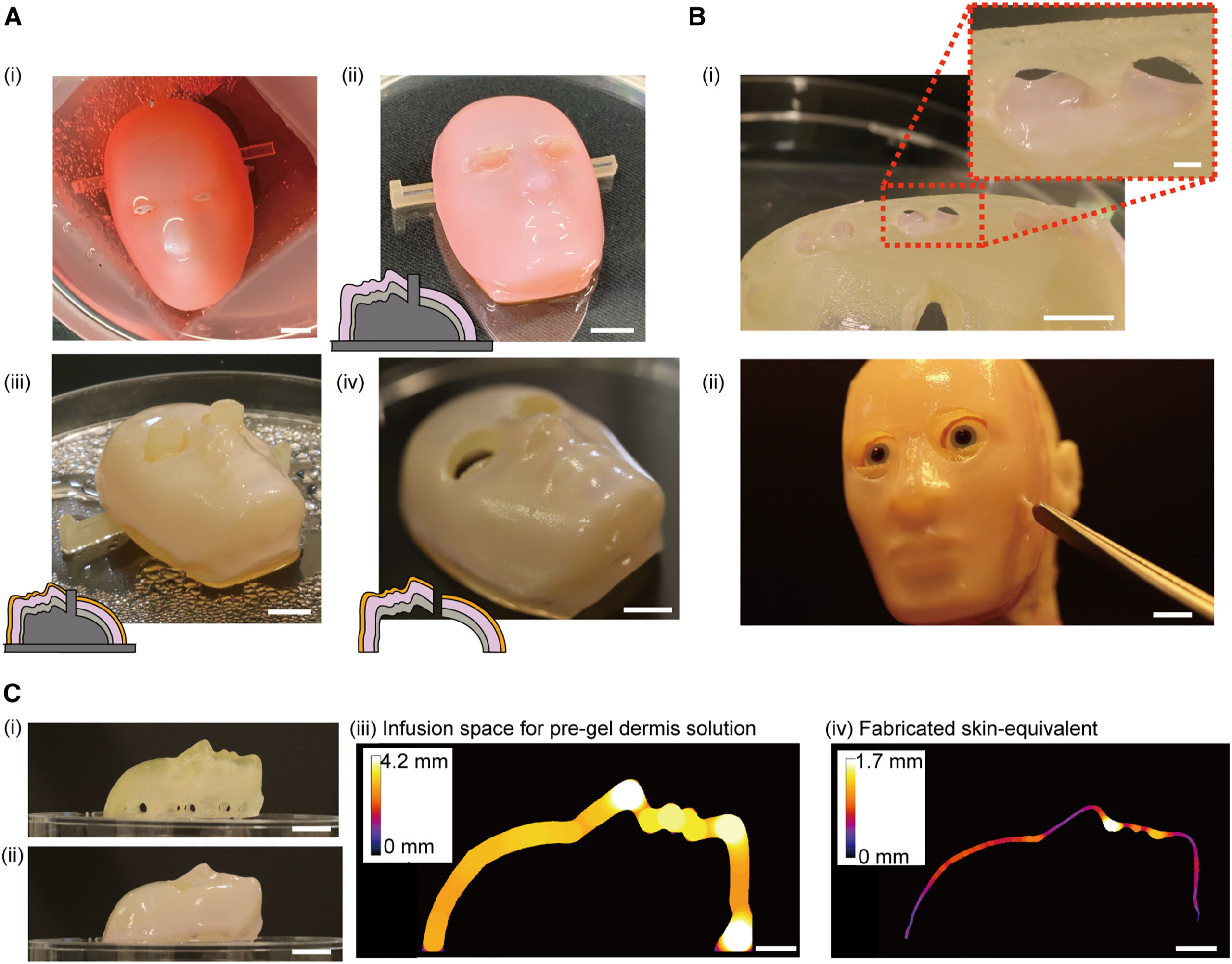
In a new study, researchers from the University of Tokyo, Harvard University, and the International Research Center for Neurointelligence have unveiled a technique for creating lifelike robotic skin using living human cells. As a proof of concept, the team engineered a small robotic face capable of smiling, covered entirely with a layer of pink living tissue.

The researchers note that using living skin tissue as a robot covering has benefits, as it’s flexible enough to convey emotions and can potentially repair itself. “As the role of robots continues to evolve, the materials used to cover social robots need to exhibit lifelike functions, such as self-healing,” wrote the researchers in the study.

Shoji Takeuchi, Michio Kawai, Minghao Nie, and Haruka Oda authored the study, titled “Perforation-type anchors inspired by skin ligament for robotic face covered with living skin,” which is due for July publication in Cell Reports Physical Science. We learned of the study from a report published earlier this week by New Scientist.

The study describes a novel method for attaching cultured skin to robotic surfaces using “perforation-type anchors” inspired by natural skin ligaments. These tiny v-shaped cavities in the robot’s structure allow living tissue to infiltrate and create a secure bond, mimicking how human skin attaches to underlying tissues.

To demonstrate the skin’s capabilities, the team engineered a palm-sized robotic face able to form a convincing smile. Actuators connected to the base allowed the face to move, with the living skin flexing. The researchers also covered a static 3D-printed head shape with the engineered skin.

"Demonstration of the perforation-type anchors to cover the facial device with skin equivalent."
Enlarge / “Demonstration of the perforation-type anchors to cover the facial device with skin equivalent.”

Takeuchi et al. created their robotic face by first 3D-printing a resin base embedded with the perforation-type anchors. They then applied a mixture of human skin cells in a collagen scaffold, allowing the living tissue to grow into the anchors.

https://arstechnica.com/?p=2034226


OpenAI’s new “CriticGPT” model is trained to criticize GPT-4 outputs

An illustration created by OpenAI.
Enlarge / An illustration created by OpenAI.

On Thursday, OpenAI researchers unveiled CriticGPT, a new AI model designed to identify mistakes in code generated by ChatGPT. It aims to enhance the process of making AI systems behave in ways humans want (called “alignment”) through Reinforcement Learning from Human Feedback (RLHF), which helps human reviewers make large language model (LLM) outputs more accurate.

As outlined in a new research paper called “LLM Critics Help Catch LLM Bugs,” OpenAI created CriticGPT to act as an AI assistant to human trainers who review programming code generated by the ChatGPT AI assistant. CriticGPT—based on the GPT-4 family of LLMS—analyzes the code and points out potential errors, making it easier for humans to spot mistakes that might otherwise go unnoticed. The researchers trained CriticGPT on a dataset of code samples with intentionally inserted bugs, teaching it to recognize and flag various coding errors.

div]:bg-bg-300 [&_pre]:-mr-4 md:[&_pre]:-mr-9″>

_*]:min-w-0″>

The researchers found that CriticGPT’s critiques were preferred by annotators over human critiques in 63 percent of cases involving naturally occurring LLM errors and that human-machine teams using CriticGPT wrote more comprehensive critiques than humans alone while reducing confabulation (hallucination) rates compared to AI-only critiques.

Developing an automated critic

The development of CriticGPT involved training the model on a large number of inputs containing deliberately inserted mistakes. Human trainers were asked to modify code written by ChatGPT, introducing errors and then providing example feedback as if they had discovered these bugs. This process allowed the model to learn how to identify and critique various types of coding errors.

In experiments, CriticGPT demonstrated its ability to catch both inserted bugs and naturally occurring errors in ChatGPT’s output. The new model’s critiques were preferred by trainers over those generated by ChatGPT itself in 63 percent of cases involving natural bugs (the aforementioned statistic). This preference was partly due to CriticGPT producing fewer unhelpful “nitpicks” and generating fewer false positives, or hallucinated problems.

The researchers also created a new technique they call Force Sampling Beam Search (FSBS). This method helps CriticGPT write more detailed reviews of code. It lets the researchers adjust how thorough CriticGPT is in looking for problems while also controlling how often it might make up issues that don’t really exist. They can tweak this balance depending on what they need for different AI training tasks.

Interestingly, the researchers found that CriticGPT’s capabilities extend beyond just code review. In their experiments, they applied the model to a subset of ChatGPT training data that had previously been rated as flawless by human annotators. Surprisingly, CriticGPT identified errors in 24 percent of these cases—errors that were subsequently confirmed by human reviewers. OpenAI thinks this demonstrates the model’s potential to generalize to non-code tasks and highlights its ability to catch subtle mistakes that even careful human evaluation might miss.

Despite its promising results, like all AI models, CriticGPT has limitations. The model was trained on relatively short ChatGPT answers, which may not fully prepare it for evaluating longer, more complex tasks that future AI systems might tackle. Additionally, while CriticGPT reduces confabulations, it doesn’t eliminate them entirely, and human trainers can still make labeling mistakes based on these false outputs.

The research team acknowledges that CriticGPT is most effective at identifying errors that can be pinpointed in one specific location within the code. However, real-world mistakes in AI outputs can often be spread across multiple parts of an answer, presenting a challenge for future model iterations.

OpenAI plans to integrate CriticGPT-like models into its RLHF labeling pipeline, providing its trainers with AI assistance. For OpenAI, it’s a step toward developing better tools for evaluating outputs from LLM systems that may be difficult for humans to rate without additional support. However, the researchers caution that even with tools like CriticGPT, extremely complex tasks or responses may still prove challenging for human evaluators—even those assisted by AI.

https://arstechnica.com/?p=2034089


AI, l’Unione Europea assegna premi a 4 PMI innovative

L’Unione Europea ha annunciato i vincitori della “Large AI Grand Challenge” lanciata all’inizio di quest’anno nel tentativo di accelerare il ritmo dell’innovazione interna da parte dei produttori di modelli di intelligenza artificiale su larga scala. Quattro startup si divideranno 1 milione di euro di premio in denaro e, cosa forse ancora più importante, 8 milioni di ore GPU per addestrare i loro modelli su un paio di supercomputer HPC (High Performance Computing) nei prossimi 12 mesi. Tra questi c’è anche Leonardo.

La Commissione ritiene che ciò consentirà loro di ridurre i tempi di formazione modello “da anni a settimane”. Le quattro startup vincitrici sono la fintech francese Lingua Custodia, che elabora documenti finanziari utilizzando l’elaborazione del linguaggio naturale, la startup belga Textgain, che utilizza l’elaborazione dei testi ma si concentra sull’analisi di dati non strutturati, come il monitoraggio delle chat dei social media per l’incitamento all’odio, la startup lettone Tilde, un altro specialista linguistico che si concentra sulle lingue balto-slave, offrendo traduzione automatica e chatbot basati sull’intelligenza artificiale nelle lingue di destinazione; e la portoghese Unbabel, che unisce la traduzione automatica con l’esperienza di madrelingua e l’applicazione dell’intelligenza artificiale per casi di utilizzo del servizio clienti e della produttività per i clienti aziendali.

La Commissione ha affermato che l’AI Challenge ha ricevuto un totale di 94 proposte. Al termine del periodo di formazione, l’UE si aspetta che tutti i vincitori rilascino i modelli sviluppati con una licenza open source per uso non commerciale o pubblichino i risultati della ricerca.

Leonardo è protagonista dello scenario HPC

L’UE ha presentato un piano per espandere l’accesso delle startup all’hardware di supercalcolo del blocco tramite il discorso sullo stato dell’unione della presidente Ursula von der Leyen lo scorso autunno, affermando all’epoca che l’obiettivo era promuovere “startup di intelligenza artificiale etiche e responsabili”. L’impresa comune europea per il calcolo ad alte prestazioni (nota anche come EuroHPC JU) ha attualmente otto supercomputer operativi (nove acquistati), e due dei quali forniranno l’assegnazione di 8 milioni di ore GPU ai quattro vincitori: vale a dire, Lumi con sede in Finlandia e Leonardo in Italia (che sono entrambi supercomputer HPC pre-esascala).

Lavorare all’infrastruttura

Questa manciata di startup europee che costruiscono modelli di intelligenza artificiale su larga scala non saranno le prime ad avere un assaggio di ciò che l’hardware HPC può fare. Il produttore francese di modelli di intelligenza artificiale Mistral ha preso parte a una prima fase pilota della fornitura di supercalcolo l’estate scorsa, utilizzando proprio il nostro Leonardo per “eseguire alcuni piccoli esperimenti”. L’iniziativa EuroHPC ha finora fornito una certa capacità anche agli operatori commerciali. Tuttavia, la domanda per i supercomputer in genere supera di gran lunga l’offerta, quindi le startup di intelligenza artificiale vengono essenzialmente messe in prima fila. La Commissione ha riconosciuto la necessità di riconfigurare e riorganizzare l’infrastruttura HPC per l’era dell’intelligenza artificiale generativa. Ecco perché, a gennaio, ha annunciato un pacchetto di misure di “innovazione AI” con proposte per l’aggiornamento dei supercomputer e la creazione di un livello di supporto per migliorare l’accessibilità, in modo che le startup dell’intelligenza artificiale possano sfruttare più facilmente l’infrastruttura.

Leggi le altre notizie sull’home page di Key4biz

https://www.key4biz.it/ai-lunione-europea-assegna-premi-a-4-pmi-innovative/495521/


Amazon è la quinta Big Tech nel club dei 2 trilioni di dollari, grazie all’AI

12 mesi di crescita per Amazon

Dopo Google, Alphabet, Microsoft, Apple e Nvidia, anche Amazon entra a far patte del club ristrettissimo delle aziende da 2 trilioni di dollari di valore di capitalizzazione di mercato. Tutte Big Tech.

La società con sede a Seattle ha chiuso ieri la giornata di borsa cin un rialzo del 4% delle proprie azioni, raggiungendo un valore complessivo di 2,01 trilioni di dollari di market cap, frutto di un lungo percorso di crescita.

Le azioni di Amazon sono cresciute del 52% negli ultimi 12 mesi, soprattutto grazie agli investimenti in soluzioni di intelligenza artificiale (AI).

AI alla base delle fortune di Amazon (e delle Big Tech)

L’AI è alla base delle fortune di molte delle imprese che compongono l’esclusivo club del trilionari. Bastia pensare ad Nvidia, che proprio grazie ai suoi chip più avanzati e ai chip AI ha raggiunto la soglia dei 3 trilioni di dollari di market cap.

Stessa sorte è toccata ad Amazon, che sfruttando l’onda AI ha messo a segno importanti colpi di mercato, soprattutto grazie a prodotti centrali sul business, compresi nuovi modelli di AI e il chatbot Q, messo a disposizione delle aziende che utilizzano il cloud AWS.

Ai generativa e chip di proprietà

Secondo il tech analyst di Wedbush, Dan Ives: “Gran parte dell’aumento di valore di Amazon è legato al cloud e all’AI. Sarà un attore di rilievo nel panorama globale nello sviluppo di queste tecnologie”.

A proposito di intelligenza artificiale, il gigante dell’ecommerce ha investito 4 miliardi di dollari in Anthropic, proprio per accelerare lo sviluppo di nuovi modelli di AI generativa. Amazon, inoltre, progetta e produce chip AI di proprietà.

Da ricordare che, nonostante i numeri positivi di quest’ultimo periodo e l’entrata nel club delle società trilionarie, Amazon ha tagliato i costi in maniera significativa dalla fine del 2022 ad oggi, licenziando più di 27 mila dipendenti in giro per il mondo. Azioni che hanno avuto un peso nella crescita del suo valore di mercato.

Leggi le altre notizie sull’home page di Key4biz

https://www.key4biz.it/amazon-e-la-quinta-big-tech-nel-club-dei-2-trilioni-di-dollari-grazie-allai/495435/