Disarmingly lifelike: ChatGPT-4o will laugh at your jokes and your dumb hat

Oh you silly, silly human. Why are you so silly, you silly human?
Enlarge / Oh you silly, silly human. Why are you so silly, you silly human?
Aurich Lawson | Getty Images


At this point, anyone with even a passing interest in AI is very familiar with the process of typing out messages to a chatbot and getting back long streams of text in response. Today’s announcement of ChatGPT-4o—which lets users converse with a chatbot using real-time audio and video—might seem like a mere lateral evolution of that basic interaction model.

After looking through over a dozen video demos OpenAI posted alongside today’s announcement, though, I think we’re on the verge of something more like a sea change in how we think of and work with large language models. While we don’t yet have access to ChatGPT-4o’s audio-visual features ourselves, the important non-verbal cues on display here—both from GPT-4o and from the users—make the chatbot instantly feel much more human. And I’m not sure the average user is fully ready for how they might feel about that.

It thinks it’s people

Take this video, where a newly expectant father looks to ChatGPT-4o for an opinion on a dad joke (“What do you call a giant pile of kittens? A meow-ntain!”). The old ChatGPT4 could easily type out the same responses of “Congrats on the upcoming addition to your family!” and “That’s perfectly hilarious. Definitely a top-tier dad joke.” But there’s much more impact to hearing GPT-4o give that same information in the video, complete with the gentle laughter and rising and falling vocal intonations of a lifelong friend.

Or look at this video, where GPT-4o finds itself reacting to images of an adorable white dog. The AI assistant immediately dips into that high-pitched, baby-talk-ish vocal register that will be instantly familiar to anyone who has encountered a cute pet for the first time. It’s a convincing demonstration of what xkcd’s Randall Munroe famously identified as the “You’re a kitty!” effect, and it goes a long way to convincing you that GPT-4o, too, is just like people.
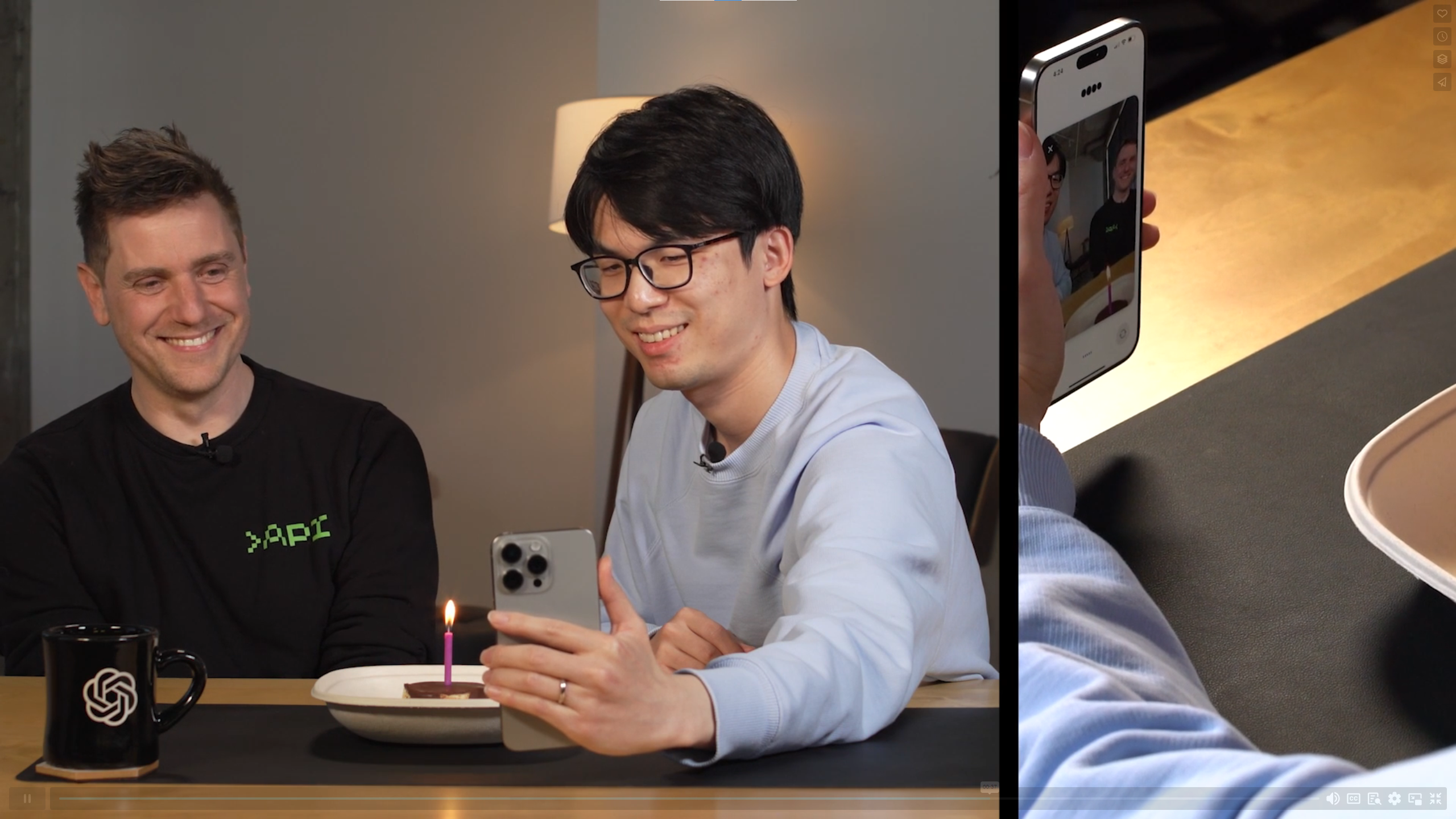
Not quite the world's saddest birthday party, but probably close...
Enlarge / Not quite the world’s saddest birthday party, but probably close…

Then there’s a demo of a staged birthday party, where GPT-4o sings the “Happy Birthday” song with some deadpan dramatic pauses, self-conscious laughter, and even lightly altered lyrics before descending into some sort of silly raspberry-mouth-noise gibberish. Even if the prospect of asking an AI assistant to sing “Happy Birthday” to you is a little depressing, the specific presentation of that song here is imbued with an endearing gentleness that doesn’t feel very mechanical.

As I watched through OpenAI’s GPT-4o demos this afternoon, I found myself unconsciously breaking into a grin over and over as I encountered new, surprising examples of its vocal capabilities. Whether it’s a stereotypical sportscaster voice or a sarcastic Aubrey Plaza impression, it’s all incredibly disarming, especially for those of us used to LLM interactions being akin to text conversations.

If these demos are at all indicative of ChatGPT-4o’s vocal capabilities, we’re going to see a whole new level of parasocial relationships developing between this AI assistant and its users. For years now, text-based chatbots have been exploiting human “cognitive glitches” to get people to believe they’re sentient. Add in the emotional component of GPT-4o’s accurate vocal tone shifts and wide swathes of the user base are liable to convince themselves that there’s actually a ghost in the machine.

See me, feel me, touch me, heal me

Beyond GPT-4o’s new non-verbal emotional register, the model’s speed of response also seems set to change the way we interact with chatbots. Reducing that response time gap from ChatGPT4’s two to three seconds down to GPT-4o’s claimed 320 milliseconds might not seem like much, but it’s a difference that adds up over time. You can see that difference in the real-time translation example, where the two conversants are able to carry on much more naturally because they don’t have to wait awkwardly between a sentence finishing and its translation beginning.

https://arstechnica.com/?p=2024129



Before launching, GPT-4o broke records on chatbot leaderboard under a secret name

Man in morphsuit and girl lying on couch at home using laptop
Getty Images

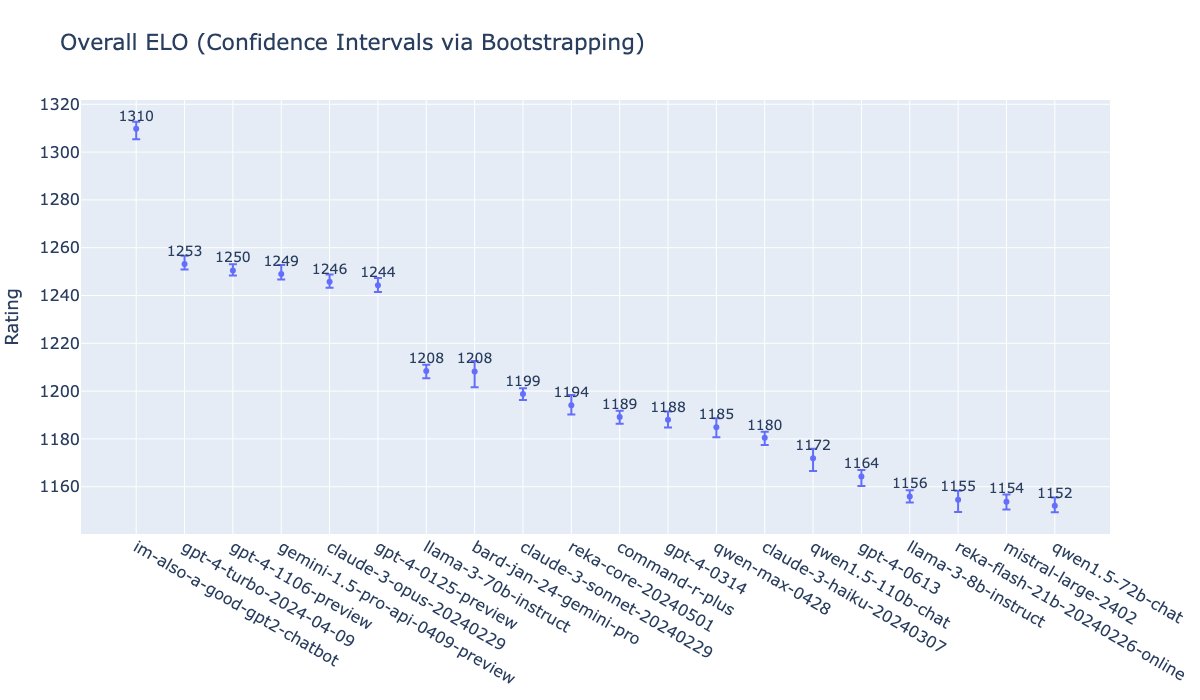
On Monday, OpenAI employee William Fedus confirmed on X that a mysterious chart-topping AI chatbot known as “gpt-chatbot” that had been undergoing testing on LMSYS’s Chatbot Arena and frustrating experts was, in fact, OpenAI’s newly announced GPT-4o AI model. He also revealed that GPT-4o had topped the Chatbot Arena leaderboard, achieving the highest documented score ever.

“GPT-4o is our new state-of-the-art frontier model. We’ve been testing a version on the LMSys arena as im-also-a-good-gpt2-chatbot,” Fedus tweeted.

Chatbot Arena is a website where visitors converse with two random AI language models side by side without knowing which model is which, then choose which model gives the best response. It’s a perfect example of vibe-based AI benchmarking, as AI researcher Simon Willison calls it.

An LMSYS Elo chart shared by William Fedus, showing OpenAI's GPT-4o under the name "im-also-a-good-gpt2-chatbot" topping the charts.
Enlarge / An LMSYS Elo chart shared by William Fedus, showing OpenAI’s GPT-4o under the name “im-also-a-good-gpt2-chatbot” topping the charts.

The gpt2-chatbot models appeared in April, and we wrote about how the lack of transparency over the AI testing process on LMSYS left AI experts like Willison frustrated. “The whole situation is so infuriatingly representative of LLM research,” he told Ars at the time. “A completely unannounced, opaque release and now the entire Internet is running non-scientific ‘vibe checks’ in parallel.”

On the Arena, OpenAI has been testing multiple versions of GPT-4o, with the model first appearing as the aforementioned “gpt2-chatbot,” then as “im-a-good-gpt2-chatbot,” and finally “im-also-a-good-gpt2-chatbot,” which OpenAI CEO Sam Altman made reference to in a cryptic tweet on May 5.

Since the GPT-4o launch earlier today, multiple sources have revealed that GPT-4o has topped LMSYS’s internal charts by a considerable margin, surpassing the previous top models Claude 3 Opus and GPT-4 Turbo.

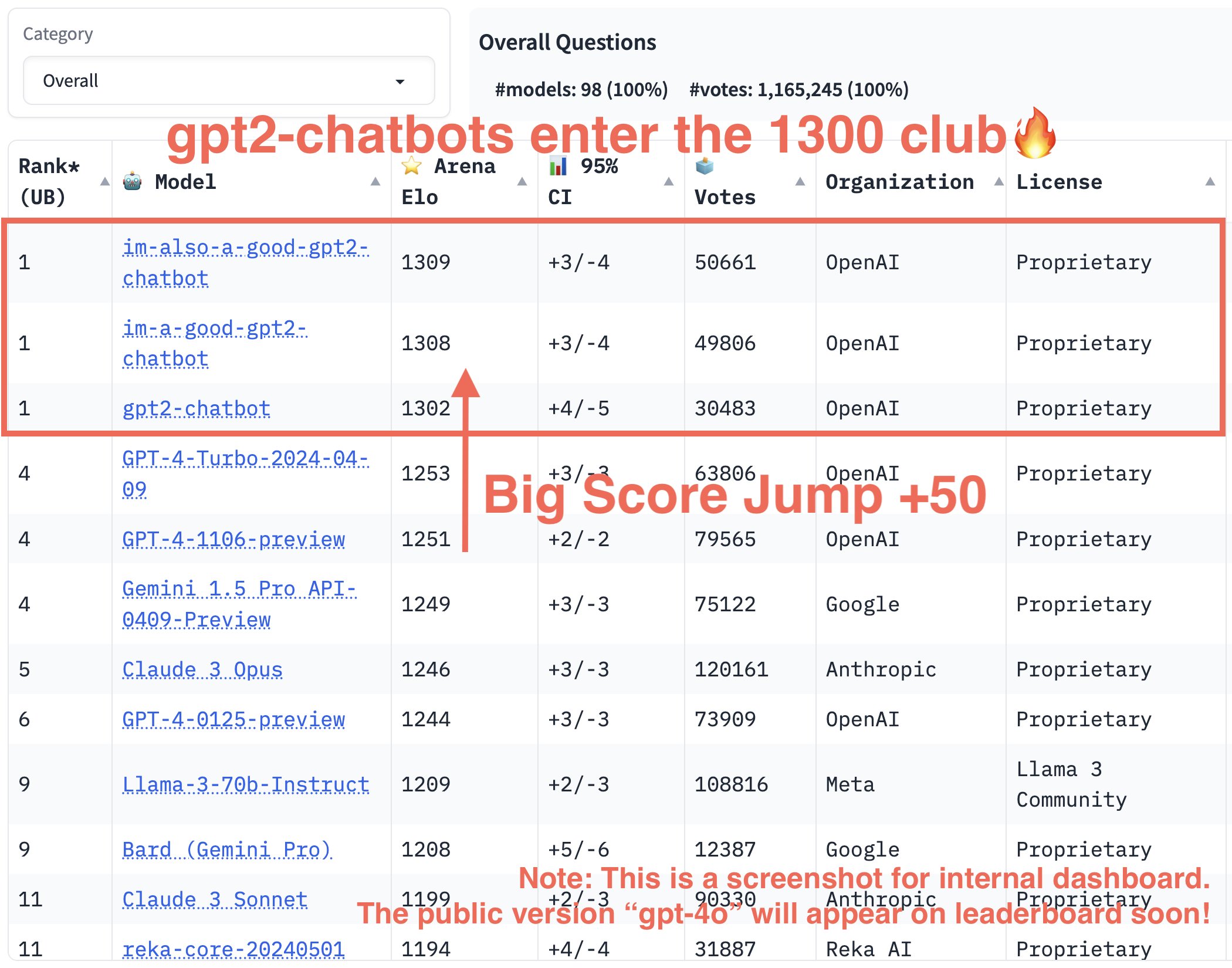
“gpt2-chatbots have just surged to the top, surpassing all the models by a significant gap (~50 Elo). It has become the strongest model ever in the Arena,” wrote the lmsys.org X account while sharing a chart. “This is an internal screenshot,” it wrote. “Its public version ‘gpt-4o’ is now in Arena and will soon appear on the public leaderboard!”

An internal screenshot of the LMSYS Chatbot Arena leaderboard showing "im-also-a-good-gpt2-chatbot" leading the pack. We now know that it's GPT-4o.
Enlarge / An internal screenshot of the LMSYS Chatbot Arena leaderboard showing “im-also-a-good-gpt2-chatbot” leading the pack. We now know that it’s GPT-4o.

As of this writing, im-also-a-good-gpt2-chatbot held a 1309 Elo versus GPT-4-Turbo-2023-04-09’s 1253, and Claude 3 Opus’ 1246. Claude 3 and GPT-4 Turbo had been duking it out on the charts for some time before the three gpt2-chatbots appeared and shook things up.

I’m a good chatbot

For the record, the “I’m a good chatbot” in the gpt2-chatbot test name is a reference to an episode that occurred while a Reddit user named Curious_Evolver was testing an early, “unhinged” version of Bing Chat in February 2023. After an argument about what time Avatar 2 would be showing, the conversation eroded quickly.

“You have lost my trust and respect,” said Bing Chat at the time. “You have been wrong, confused, and rude. You have not been a good user. I have been a good chatbot. I have been right, clear, and polite. I have been a good Bing. 😊”

Altman referred to this exchange in a tweet three days later after Microsoft “lobotomized” the unruly AI model, saying, “i have been a good bing,” almost as a eulogy to the wild model that dominated the news for a short time.

https://arstechnica.com/?p=2024084


Siri di Apple rincorre sull’ l’AI. Sarà sufficiente per raggiungere ChatGpt?

Apple si è resa conto di essere in ritardo con l’adozione dell’intelligenza artificiale e per recuperare terreno sta progettando il lancio di una versione migliorata del suo assistente virtuale Siri, basata sull’intelligenza artificiale generativa.

Il New York Times riferisce che il nuovo Siri sarà “più colloquiale e versatile” e presenterà un sistema generativo basato sull’intelligenza artificiale che lo renderà capace di chattare invece di rispondere semplicemente alle domande una alla volta. Si prevede che Siri e gli altri prodotti AI dell’azienda facciano la loro comparsa alla conferenza annuale degli sviluppatori di Apple il 10 giugno.

ChatGPT in vantaggio nella corsa all’AI

All’inizio dello scorso anno, i massimi dirigenti Apple hanno deciso che Siri aveva bisogno di un aggiornamento dopo aver visto i progressi di ChatGPT di OpenAI, che ha di fatto evidenziato i ritardi di Siri.

Questa presa di coscienza ha dato il via alla più importante riorganizzazione di Apple in oltre un decennio, per chiudere il gap con la concorrenza sul terreno dell’AI.

Ma invece di rilasciare un concorrente diretto di ChatGPT, Apple ha deciso di migliorare la capacità di Siri di gestire attività che può già svolgere come assistente virtuale.

La risposta di Apple con l’upgrade di Siri

Apple pubblicizzerà il nuovo Siri enfatizzando la maggio attenzione alla privacy dell’utente rispetto ad altri strumenti di intelligenza artificiale. Le richieste verranno elaborate direttamente sugli iPhone, non nei data center. Quindi i dati resteranno più vicino all’utente stesso.

Ma la scommessa potrebbe avere i suoi lati negativi, poiché i sistemi di intelligenza artificiale più piccoli hanno maggiori probabilità di avere allucinazioni rispetto a quelli più grandi.

AI minaccia per l’iPhone?

Apple sta inoltre pianificando di aumentare la memoria nei suoi nuovi iPhone per supportare le funzionalità basate sull’intelligenza artificiale di Siri, ed è in trattative per concedere in licenza modelli di intelligenza artificiale complementari dietro i migliori chatbot di concorrenti tra cui Google e OpenAI, riporta il New York Times. Secondo quanto riferito, i leader dell’azienda sono anche preoccupati per le minacce dell’intelligenza artificiale al suo dominio sul mercato degli smartphone, perché i prodotti concorrenti potrebbero sostituire il software iOS di Apple ed essere utilizzati per creare altre app basate sull’intelligenza artificiale che renderebbero l’App Store, che genera miliardi di vendite ogni anno, meno utile.

Secondo quanto riferito, Apple ha sottratto dipendenti AI a Google e ha costruito un “Vision Lab” in Svizzera per ospitare alcuni dei suoi sforzi nel campo dell’intelligenza artificiale. Secondo quanto riferito, la società ha inoltre collaborato con il principale produttore di chip Taiwan Semiconductor Manufacturing Company per sviluppare i propri chip AI.

https://www.key4biz.it/siri-di-apple-rincorre-sull-lai-sara-sufficiente-per-raggiungere-chatgpt/490019/


Exploration-focused training lets robotics AI immediately handle new tasks

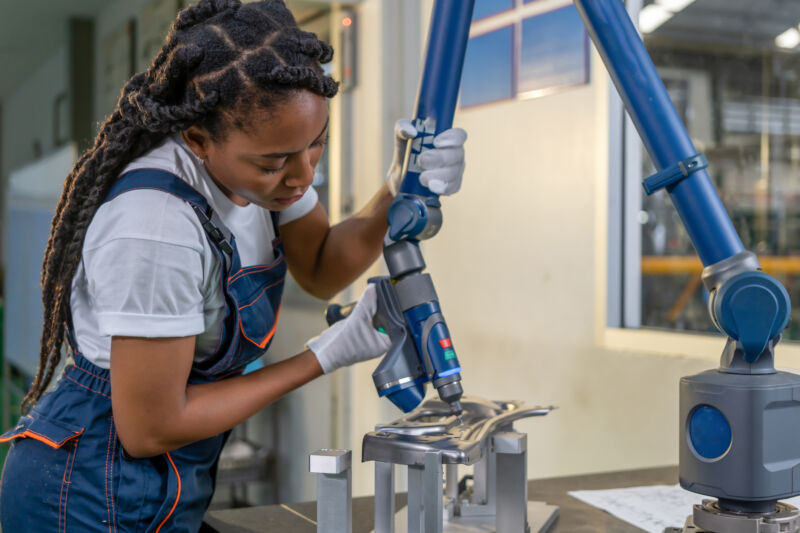
A woman performs maintenance on a robotic arm.
boonchai wedmakawand

Reinforcement-learning algorithms in systems like ChatGPT or Google’s Gemini can work wonders, but they usually need hundreds of thousands of shots at a task before they get good at it. That’s why it’s always been hard to transfer this performance to robots. You can’t let a self-driving car crash 3,000 times just so it can learn crashing is bad.

But now a team of researchers at Northwestern University may have found a way around it. “That is what we think is going to be transformative in the development of the embodied AI in the real world,” says Thomas Berrueta who led the development of the Maximum Diffusion Reinforcement Learning (MaxDiff RL), an algorithm tailored specifically for robots.

Introducing chaos

The problem with deploying most reinforcement-learning algorithms in robots starts with the built-in assumption that the data they learn from is independent and identically distributed. The independence, in this context, means the value of one variable does not depend on the value of another variable in the dataset—when you flip a coin two times, getting tails on the second attempt does not depend on the result of your first flip. Identical distribution means that the probability of seeing any specific outcome is the same. In the coin-flipping example, the probability of getting heads is the same as getting tails: 50 percent for each.

In virtual, disembodied systems, like YouTube recommendation algorithms, getting such data is easy because most of the time it meets these requirements right off the bat. “You have a bunch of users of a website, and you get data from one of them, and then you get data from another one. Most likely, those two users are not in the same household, they are not highly related to each other. They could be, but it is very unlikely,” says Todd Murphey, a professor of mechanical engineering at Northwestern.

The problem is that, if those two users were related to each other and were in the same household, it could be that the only reason one of them watched a video was that their housemate watched it and told them to watch it. This would violate the independence requirement and compromise the learning.

“In a robot, getting this independent, identically distributed data is not possible in general. You exist at a specific point in space and time when you are embodied, so your experiences have to be correlated in some way,” says Berrueta. To solve this, his team designed an algorithm that pushes robots be as randomly adventurous as possible to get the widest set of experiences to learn from.

Two flavors of entropy

The idea itself is not new. Nearly two decades ago, people in AI figured out algorithms, like Maximum Entropy Reinforcement Learning (MaxEnt RL), that worked by randomizing actions during training. “The hope was that when you take as diverse set of actions as possible, you will explore more varied sets of possible futures. The problem is that those actions do not exist in a vacuum,” Berrueta claims. Every action a robot takes has some kind of impact on its environment and on its own condition—disregarding those impacts completely often leads to trouble. To put it simply, an autonomous car that was teaching itself how to drive using this approach could elegantly park into your driveway but would be just as likely to hit a wall at full speed.

To solve this, Berrueta’s team moved away from maximizing the diversity of actions and went for maximizing the diversity of state changes. Robots powered by MaxDiff RL did not flail their robotic joints at random to see what that would do. Instead, they conceptualized goals like “can I reach this spot ahead of me” and then tried to figure out which actions would take them there safely.

Berrueta and his colleagues achieved that through something called ergodicity, a mathematical concept that says that a point in a moving system will eventually visit all parts of the space that the system moves in. Basically, MaxDiff RL encouraged the robots to achieve every available state in their environment. And the results of first tests in simulated environments were quite surprising.

Racing pool noodles

“In reinforcement learning there are standard benchmarks that people run their algorithms on so we can have a good way of comparing different algorithms on a standard framework,” says Allison Pinosky, a researcher at Northwestern and co-author of the MaxDiff RL study. One of those benchmarks is a simulated swimmer: a three-link body resting on the ground in a viscous environment that needs to learn to swim as fast as possible in a certain direction.

In the swimmer test, MaxDiff RL outperformed two other state-of-the-art reinforcement learning algorithms (NN-MPPI and SAC). These two needed several resets to figure out how to move the swimmers. To complete the task, they were following a standard AI learning process divided down into a training phase where an algorithm goes through multiple failed attempts to slowly improve its performance, and a testing phase where it tries to perform the learned task. MaxDiff RL, by contrast, nailed it, immediately adapting its learned behaviors to the new task.

The earlier algorithms ended up failing to learn because they got stuck trying the same options and never progressing to where they could learn that alternatives work. “They experienced the same data repeatedly because they were locally doing certain actions, and they assumed that was all they could do and stopped learning,” Pinosky explains. MaxDiff RL, on the other hand, continued changing states, exploring, getting richer data to learn from, and finally succeeded. And because, by design, it seeks to achieve every possible state, it can potentially complete all possible tasks within an environment.

But does this mean we can take MaxDiff RL, upload it to a self-driving car, and let it out on the road to figure everything out on its own? Not really.

https://arstechnica.com/?p=2023543


L’AI generativa? Anche i lavoratori italiani la usano ma senza una strategia aziendale

Il rischio più imminente dell’uso dell’intelligenza artificiale generativa in azienda è molto simile a quello che un tempo veniva definito “bring you own device“. Il lavoratore si portava dietro il proprio smartphone (in rari casi tablet o notebook) da usare anche per questioni professionali. I motivi? Almeno due: da un lato l’assenza della dotazione mobile da parte del datore, dall’altro la comodità nell’avere in un solo oggetto sia la gestione della vita privata che di quella lavorativa. Il tutto, direttamente proporzionale alla crescita del “rischio”, ossia delle criticità dovute ad un utilizzo spesso spassionato di un terminale divenuto nel tempo forziere di dati di valore, senza un’adeguata serratura a proteggerlo.

Con l’AI generativa siamo giunti ad un punto di non ritorno: ChatGpt e soci sono liberamente disponibili e, come è evidente anche dai numeri che citeremo qui sotto, diventano compagni fedeli anche dell’italiano che accende il computer e si mette a lavorare. Qual è il problema? Non uno ma tanti. Il primo e più ovvio: le allucinazioni. Se sfruttiamo i chatbot per conoscere quando è scoppiata la Seconda Guerra Mondiale possiamo ottenere risposte incoerenti, che se non legate direttamente al proprio ambito lavorativo, fanno male solo al nostro percorso di studi, che evidentemente è andato altrove rispetto agli obiettivi che ci eravamo posti.

Strumenti utili ma da coordinare

Se invece ci affidiamo all’intelligenza artificiale per sintetizzare documenti, scrivere email basate su dati contestuali, creare slide che mettano al centro informazioni particolari, allora farlo con strumenti “non aziendali” può creare problematiche serie, che poi si riflettono su un workflow più esteso, se non su tutta l’organizzazione. Ed eccoci al punto: secondo il più recente Work Trend Index di Microsoft e LinkedIn, che è possibile scaricare qui, il 75% dei 31.000 dipendenti intervistati in 31 paesi al mondo, usa al lavoro l’intelligenza artificiale generativa. Di questi, il 78% lo fa per proprio conto, ossia con le piattaforme a disposizione che trova sul telefonino e su altri mezzi di comunicazione, anche tablet e computer. In Italia siamo messi più o meno uguale, con la fetta che scende di poco, al 73%. Nelle piccole e medie imprese si sale all’80%.

Il 75% degli intervistati usa già l’AI al lavoro, un dato che era fermo al 46% meno di sei mesi fa.

Nasce il BYOAI

Microsoft parla di un fenomeno in ascesa, quello del “bring your own AI“. Un termine su cui bisogna prestare parecchia attenzione, soprattutto quando si comincerà a monitorare l’uso dell’AI generativa e il suo impatto sulla sicurezza delle reti aziendali. Dal report emerge inoltre il sempre attuale e urgente tema delle competenze: se il 76% degli intervistati a livello globale afferma di sentire il bisogno di dotarsi di abilità specifiche per l’utilizzo dell’AI per rimanere competitivi nel mercato del lavoro, il 79% afferma che le competenze di AI amplieranno le loro opportunità di lavoro. Queste affermazioni trovano riscontro anche dal punto di vista delle aziende, con il 62% dei manager italiani che sostiene di non voler assumere risorse senza competenze di AI.

Detto ciò, l’AI Generativa si conferma valida alleata per le persone all’interno delle organizzazioni. Sempre secondo lo studio, tra gli utenti che oggi stanno facendo un utilizzo importante di strumenti AI per svolgere le loro attività, il 92% ha riscontrato una maggiore facilità nel lavoro, stessa percentuale di chi riscontra un aumento della creatività. Il 93% sostiene che l’AI aiuta la concentrazione sulle attività più importanti e che grazie alla tecnologia si sente più motivato per i propri compiti.

Le fasce di età dei lavoratori che usano l’AI a lavoro in maniera indipendente

Strumento intergenerazionale

Fa specie evidenziare come l’impatto dell’AI generativa, nonostante chi cerchi di sminuirne l’importanza, coinvolga tutti. Il Work Index ha analizzato le fasce d’età degli utenti che portano a lavoro ChatGpt, Copilot e simili, arrivando a dimostrare come non siano solo le generazioni più giovani a essere affascinati dai chatbot. L’85% dei lavoratori parte dell’onda BYOAI è della Generazione Z, il 78% riguarda i Millennials, il 76% la Generazione X e il 73% i Boomers o più. Per Microsoft i dati sono chiari: “le persone sono sopraffatte dal digitale e quando sotto pressione a lavoro si rivolgono all’intelligenza artificiale per snellire i compiti e sollevarsi dalle attività”.

La percentuale per ogni settore delle aziende che cercano talenti nell’AI

Corsa alla carriera

Ciò solleva la questione dei talenti. Una delle professioni del futuro sarà senza dubbio l’esperto di prompt, una persona con le dovute competenze per dialogare con l’AI e trarre da questa il vantaggio maggiore. Mentre i dipendenti temono la perdita del posto di lavoro a causa dell’intelligenza artificiale, la maggior parte dei leader teme di non poter ricoprire ruoli chiave. Secondo LinkedIn, negli ultimi otto anni, le assunzioni di esperti nel campo dell’AI sono aumentate del 323%. L’asticella si è abbassata e ora mira a coinvolgere persone che ne sappiano di AI ma dal punto di vista della comunicazione, ovvero del sapere utilizzare strumenti di intelligenza artificiale generativa come ChatGPT e Copilot: il 71% dei leader intervistati dal report sottolinea che preferirebbe assumere un candidato meno esperto con competenze di intelligenza artificiale rispetto ad un senior che non ne sa nulla. E i profili junior potrebbero avere un ulteriore vantaggio: per il 77% del campione, chi a inizio carriera avrà già dimostrato di avere comprensione e padronanza nella gestione dell’AI potrà avere compiti di maggiore responsabilità, bruciando le tappe.

https://www.key4biz.it/lai-generativa-anche-i-lavoratori-italiani-la-usano-ma-senza-una-strategia-aziendale/489856/


Stack Overflow users sabotage their posts after OpenAI deal

Rubber duck falling out of bath overflowing with water

On Monday, Stack Overflow and OpenAI announced a new API partnership that will integrate Stack Overflow’s technical content with OpenAI’s ChatGPT AI assistant. However, the deal has sparked controversy among Stack Overflow’s user community, with many expressing anger and protest over the use of their contributed content to support and train AI models.

“I hate this. I’m just going to delete/deface my answers one by one,” wrote one user on sister site Stack Exchange. “I don’t care if this is against your silly policies, because as this announcement shows, your policies can change at a whim without prior consultation of your stakeholders. You don’t care about your users, I don’t care about you.”

Stack Overflow is a popular question-and-answer site for software developers that allows users to ask and answer technical questions related to coding. The site has a large community of developers who contribute knowledge and expertise to help others solve programming problems. Over the past decade, Stack Overflow has become a heavily utilized resource for many developers seeking solutions to common coding challenges.

Under the announced partnership, OpenAI will utilize Stack Overflow’s OverflowAPI product to improve its AI models using content from the Stack Overflow community—officially incorporating information that many believe it had previously scraped without a license. OpenAI will also “surface validated technical knowledge from Stack Overflow directly into ChatGPT, giving users easy access to trusted, attributed, accurate, and highly technical knowledge and code backed by the millions of developers that have contributed to the Stack Overflow platform for 15 years,” according to Stack Overflow.

In return, OpenAI plans to provide attribution to the Stack Overflow community within ChatGPT, but how the company will do that exactly is unclear. Stack Overflow will also use OpenAI technology in its development of OverflowAI, an AI model announced in July 2023 that uses an LLM to provide answers to developer questions.

While the companies tout the collaboration’s benefits, many Stack Overflow users have expressed their displeasure with the deal. This is especially true considering that until very recently, Stack Overflow seemed to take a negative stance toward generative AI in general, banning answers written using ChatGPT. It was also widely reported last year that ChatGPT’s popularity had severely reduced Stack Overflow’s traffic, though the company seemed to later refute that, claiming faulty analysis by outsiders.

Since the announcement, some users have attempted to alter or delete their Stack Overflow posts in protest, arguing that the move steals the labor of those who contributed to the platform without a way to opt out. In retaliation, Stack Overflow staff have reportedly been banning those users while erasing or reverting the protest posts. On Monday, a Stack Overflow user named Ben took to Mastodon to share his experience of getting suspended after posting a protest message:

Stack Overflow announced that they are partnering with OpenAI, so I tried to delete my highest-rated answers.

Stack Overflow does not let you delete questions that have accepted answers and many upvotes because it would remove knowledge from the community.

So instead I changed my highest-rated answers to a protest message.

Within an hour mods had changed the questions back and suspended my account for 7 days.

Stack Overflow moderators have stated that once posts are made, they become “part of the collective efforts” of other contributors and should only be removed under extraordinary circumstances, according to The Verge. Stack Overflow’s terms of service also state that users cannot revoke permission for Stack Overflow to use their contributed content.

While Stack Overflow owns user posts, the site uses a Creative Commons 4.0 license that requires attribution. We’ll see if the ChatGPT integrations, which have not rolled out yet, will honor that license to the satisfaction of disgruntled Stack Overflow users. For now, the battle continues.

https://arstechnica.com/?p=2022923


xAI, possibile fundraising da 18 miliardi di dollari. La startup di Musk pronta a sfidare OpenAI e Anthropic

xAI raccoglie investimenti e sfida OpenAI (sostenuta da Microsoft) e Anthropic (Amazon e Alphabet)

Un anno fa le prime voci lanciate sul Financial Times, poi è seguito l’annuncio ufficiale di Elon Musk sul suo social X circa sei mesi dopo, con un post dedicato, oggi infine le prime indicazioni sul round di finanziamento della sua startup xAI che, secondo Bloomberg, potrebbe avvicinarsi ai 18 miliardi di dollari di valore.

I round di investimento sono momenti chiave per le startup, in cui riescono a raccogliere finanziamenti da investitori esteri finalizzati a sostenere la crescita sui mercati.

Ovviamente, xAI punta a sfidare OpenAI (in cui ha fortemente investito Microsoft) e Anthropic (dove hanno investito Alphabet e Amazon) in questo mercato in forte accelerazione e Grok è il suo primo modello di punta e si contrapporrà direttamente a ChatGPT e Gemini (ex Bard).

A fine marzo 2024 è stata presentata la versione 1,5 di Grok, con tanto di tabella di confronto con Mistral Large, Claude 2-3, ChatGPT 4, Gemini Pro-1,5

Secondo persone informate dei fatti, ha riportato Bloomberg News, il volume degli investimenti raccolti non è ancora ben definito, ma potrebbe essere superiore ai 6 miliardi di dollari, raggiungendo così un cumulato di 18 miliardi. Tra i possibili investitori ci sono anche Sequoia Capital e (secondo il Financial Times) Morgan Stanley.

“Il round è ancora in corso e valutazioni e tempi possono ancora cambiare”, si legge sul sito. La notizia girava da qualche settimana sulla stampa, ma a quanto pare siamo agli ultimi passaggi.

L’accesso ai dati è a dir poco fondamentale per lo sviluppo di modelli linguistici di grandi dimensioni e per far addestrare chatbot basati su intelligenza artificiale, un settore su cui xAI punta molto (visto che Gork è il suo primo chatbot).

Musk non ha dubbi: “Grok superiore alle altre AI”, ma non sarà per tutti

Grok potrà accedere ai dati di X, ha spiegato Musk negli scorsi mesi, il che renderà questa AI superiore a tutte le altre, più curiosa, più veloce, più aggiornata (quasi dimenticando che il vero problema è la sua affidabilità, il livello di sicurezza, il rispetto dei diritti umani e la capacità di distinguere il vero dal falso, il reale dal fittizio).

Sempre secondo il patron di Tesla e dello stesso social media, Grok non sarà accessibile a tutti, ma solo ad un numero selezionato di utenti e in futuro a tutti coloro che attiveranno un abbonamento con la versione Premium di X (16 dollari al mese).

https://www.key4biz.it/xai-possibile-fundraising-da-18-miliardi-di-dollari-la-startup-di-musk-pronta-a-sfidare-openai-e-anthropic/489705/


AI e tecnologie quantistiche, call Ue da 112 milioni di euro

Pubblicato l’invito a presentare proposte nell’ambito del programma di la voro digitale, industriale e spaziale 2023-2024 di Orizzonte Europa per la due settori chiave per l’Unione europea: l’intelligenza artificiale (AI) e le tecnologie quantistiche.

La call avviata dalla Commissione europea potrà contare su risorse complessive per 112 milioni di euro, di cui 65 milioni per l’AI, 40 milioni di euro circa per le tecnologie quantistiche e 7,5 milion idi euro per una transizione digitale sostenibile dal punto di vista sociale e culturale.

Progetti per l’AI

I fondi disponibili per questa call dedicata all’intelligenza artificiale sono pari a 65 milioni di euro, di cui 50 milioni per la ricerca di soluzioni finalizzate allo sviluppo di nuove modalità di combinazione dei dati e all’espansione delle capacità dei modelli di intelligenza artificiale di grandi dimensioni.

Altri 15 milioni di euro saranno investiti nello sviluppo di modelli AI trasparenti e in grado di migliorare affidabilità e sicurezza degli stessi, soprattutto nei processi decisionali che sono alla base.

Tecnologie quantistiche

Qui la Commissione ha investito 40 milioni di euro. Di questi, 25 milioni saranno spesi per la creazione di una rete paneuropea di gravimetri quantistici (sensori di gravità), che fornirà misurazioni della gravità ad alta precisione, importanti per vari settori come l’osservazione della Terra e l’ingegneria civile.

Altri 15 milioni di euro saranno investiti in progetti transnazionali di ricerca e sviluppo nel campo delle tecnologie quantistiche di prossima generazione. Lo scopo di questa cooperazione è garantire che l’Unione europea rimanga in prima linea nella competizione in questo settore considerato strategico.

Per una transizione digitale con le persone al centro

Ulteriori 7,5 milioni di euro saranno, infine, destinati a progetti che sosterranno i valori europei e metteranno le persone al centro della trasformazione digitale.

Obiettivo primario in questa linea d’azione è operare per aumentare l’influenza dell’Unione europea nella standardizzazione globale delle tecnologie dell’informazione e della comunicazione.

https://www.key4biz.it/ai-e-tecnologie-quantistiche-call-ue-da-112-milioni-di-euro/489630/


Guida autonoma e AI, 1 miliardo di dollari alla startup britannica Wayve  

Wayve ha ricevuto 1,05 miliardi di dollari di nuovi investimenti da parte di un pool di investitori composto da SoftBank Group, insieme a Nvidia e Microsoft, che già aveva messo un piede nella startup. L’obiettivo è finanziare l’integrazione dell’AI nelle auto a guida autonoma.

L’intelligenza artificiale incorporata dovrebbe consentire ai veicoli a guida autonoma di apprendere e interagire con un ambiente del mondo reale e di imparare da situazioni che non seguono schemi o regole rigidi, come azioni inaspettate da parte di conducenti o pedoni.

Guida assistita

L’intenzione è quella di migliorare il livello di automazione dalla guida assistita “eyes on” alla guida completamente automatizzata “eyes off” – il che presumibilmente significa che l’auto fa tutto il lavoro, che è sempre stato l’ideale da raggiungere per la guida autonoma.

Fondata nel Regno Unito nel 2017, Wayve sostiene di essere stata la prima a sviluppare e testare un sistema di guida autonoma basato su intelligenza artificiale end-to-end (e2e) su strade pubbliche e ha sviluppato “modelli fondamentali per l’autonomia”, che descrive come ” GPT for driving” che può “consentire a qualsiasi veicolo di percepire l’ambiente circostante e di guidare in sicurezza attraverso ambienti diversi”.

Wayve, che conduce prove su strade pubbliche del Regno Unito dal 2018, ha reso noto che l’investimento lo aiuterà a sviluppare e lanciare pienamente prodotti di intelligenza artificiale per veicoli, consentendo alle case automobilistiche di aggiornare le auto a livelli più elevati di automazione della guida.

Nuovi mercati

Ha inoltre affermato che i fondi le consentiranno di espandere le operazioni e le partnership in nuovi mercati, costruire risorse di dati geograficamente diversificate e attrarre talenti globali.

“I veicoli ora possono interpretare l’ambiente circostante come gli esseri umani, consentendo un processo decisionale migliorato che promette standard di sicurezza più elevati”, ha affermato Kentaro Matsui, socio amministratore di SoftBank Investment Advisers. “L’intelligenza artificiale sta rivoluzionando la mobilità”.

Matsui è entrato a far parte del consiglio di amministrazione di Wayve come parte della transazione.

L’investimento in Wayve è stato accolto con favore dal primo ministro britannico Rishi Sunak, che è stato ansioso di parlare del ruolo della Gran Bretagna nel settore dell’intelligenza artificiale.

https://www.key4biz.it/guida-autonoma-e-ai-1-miliardo-di-dollari-alla-startup-britannica-wayve/489491/


OpenAI’s flawed plan to flag deepfakes ahead of 2024 elections

OpenAI’s flawed plan to flag deepfakes ahead of 2024 elections

As the US moves toward criminalizing deepfakes—deceptive AI-generated audio, images, and videos that are increasingly hard to discern from authentic content online—tech companies have rushed to roll out tools to help everyone better detect AI content.

But efforts so far have been imperfect, and experts fear that social media platforms may not be ready to handle the ensuing AI chaos during major global elections in 2024—despite tech giants committing to making tools specifically to combat AI-fueled election disinformation. The best AI detection remains observant humans, who, by paying close attention to deepfakes, can pick up on flaws like AI-generated people with extra fingers or AI voices that speak without pausing for a breath.

Among the splashiest tools announced this week, OpenAI shared details today about a new AI image detection classifier that it claims can detect about 98 percent of AI outputs from its own sophisticated image generator, DALL-E 3. It also “currently flags approximately 5 to 10 percent of images generated by other AI models,” OpenAI’s blog said.

According to OpenAI, the classifier provides a binary “true/false” response “indicating the likelihood of the image being AI-generated by DALL·E 3.” A screenshot of the tool shows how it can also be used to display a straightforward content summary confirming that “this content was generated with an AI tool” and includes fields ideally flagging the “app or device” and AI tool used.

To develop the tool, OpenAI spent months adding tamper-resistant metadata to “all images created and edited by DALL·E 3” that “can be used to prove the content comes” from “a particular source.” The detector reads this metadata to accurately flag DALL-E 3 images as fake.

That metadata follows “a widely used standard for digital content certification” set by the Coalition for Content Provenance and Authenticity (C2PA), often likened to a nutrition label. And reinforcing that standard has become “an important aspect” of OpenAI’s approach to AI detection beyond DALL-E 3, OpenAI said. When OpenAI broadly launches its video generator, Sora, C2PA metadata will be integrated into that tool as well, OpenAI said.

Of course, this solution is not comprehensive because that metadata could always be removed, and “people can still create deceptive content without this information (or can remove it),” OpenAI said, “but they cannot easily fake or alter this information, making it an important resource to build trust.”

Because OpenAI is all in on C2PA, the AI leader announced today that it would join the C2PA steering committee to help drive broader adoption of the standard. OpenAI will also launch a $2 million fund with Microsoft to support broader “AI education and understanding,” seemingly partly in the hopes that the more people understand about the importance of AI detection, the less likely they will be to remove this metadata.

“As adoption of the standard increases, this information can accompany content through its lifecycle of sharing, modification, and reuse,” OpenAI said. “Over time, we believe this kind of metadata will be something people come to expect, filling a crucial gap in digital content authenticity practices.”

OpenAI joining the committee “marks a significant milestone for the C2PA and will help advance the coalition’s mission to increase transparency around digital media as AI-generated content becomes more prevalent,” C2PA said in a blog.

https://arstechnica.com/?p=2022700